
Żurek: The Sour Rye Starter Behind a Polish Soup
Żurek
Żurek gets its tang from fermented rye flour. Follow the starter into an everyday regional bowl or an Easter soup with white sausage and eggs, and learn what to look for when buying zakwas.
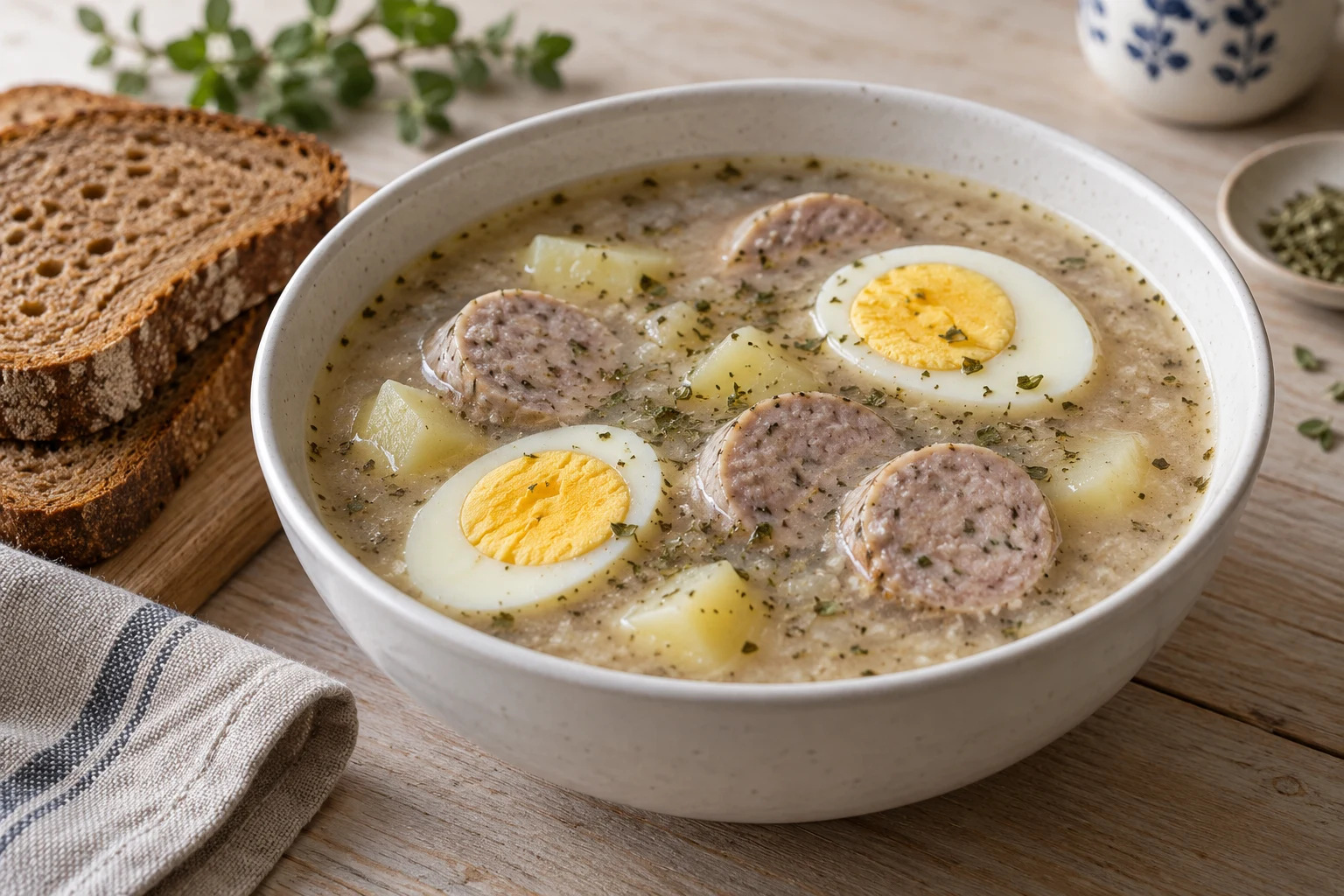
The sourness begins before the soup pot
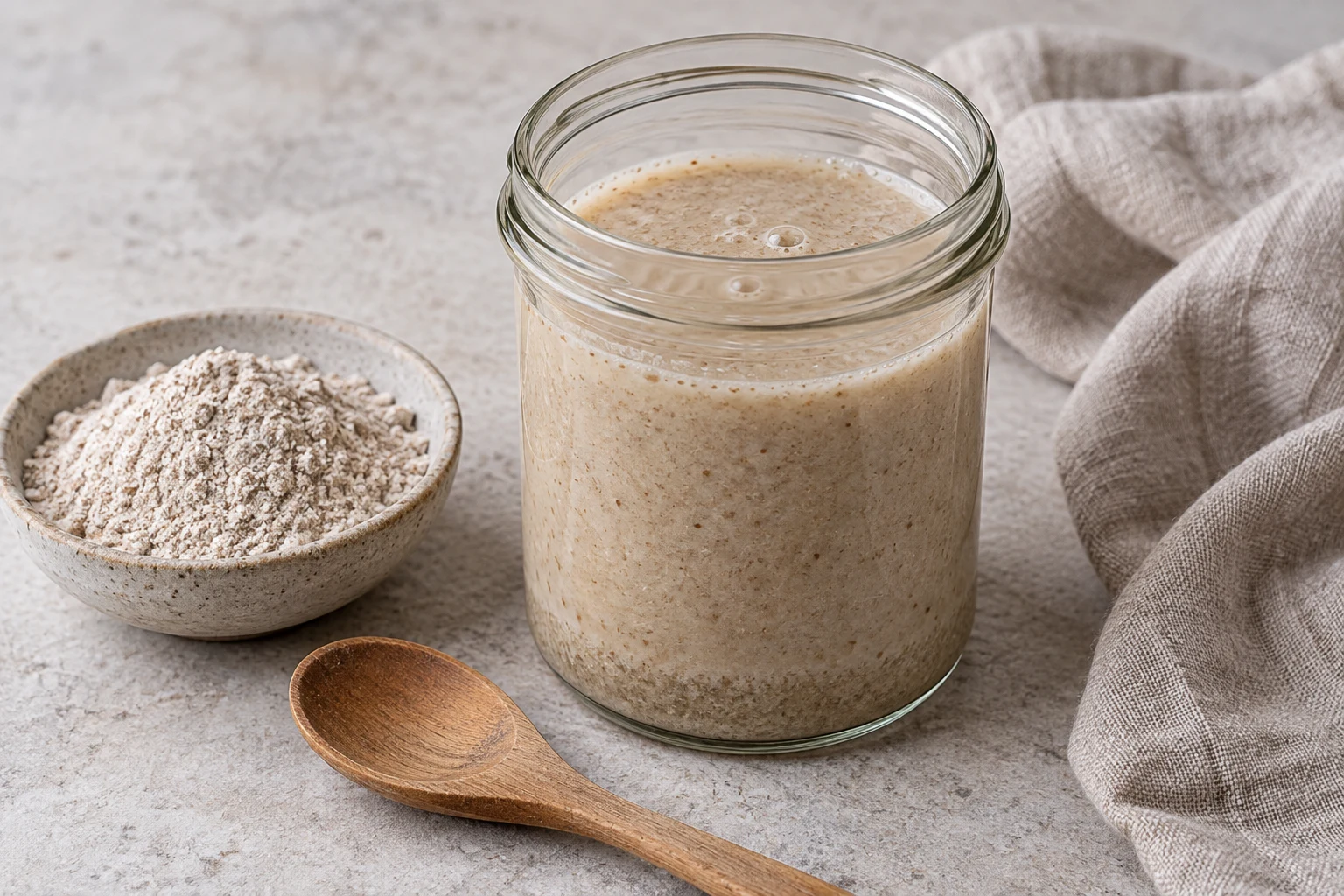
A bowl of żurek can arrive with white sausage, hard-boiled eggs, potatoes and a creamy-looking broth. Its defining ingredient is less visible: zakwas, a starter made by souring rye flour in water. Poland’s tourism organisation describes that fermented wholemeal-rye base as the source of the soup’s characteristic acidic aroma and taste.
Cream may soften or whiten the finished bowl, while broth and meat build another layer of flavour. Neither explains the sourness on its own. When choosing a recipe or reading a menu, ask first about the starter, then about the stock and garnishes. That order makes sense of bowls that look quite different yet belong to the same family.
Read the bowl in three layers
- Sour base
- Fermented rye starter
- Broth
- A choice that changes the bowl
- Service
- Garnishes and accompaniments
Zakwas contributes the grain-derived sourness; it is an ingredient added to the soup, rather than a name for the finished meal.
Vegetable, meat or bone-based versions appear in the sources. Smoked meat or dried mushrooms may add another flavour, depending on the preparation.
Eggs, white sausage, potatoes and bread identify particular versions or occasions. They should not be treated as a fixed checklist for all żurek.
Kuyavia records an everyday soup
The Polish agriculture ministry’s entry for żur kujawski places the dish in Kuyavia, where older accounts record it as an ordinary breakfast eaten with potatoes and bread. Its description includes a pale, opaque soup with a sour flavour. This is useful context for anyone who encounters żurek only at an Easter table: the regional record extends well beyond a holiday.
The same entry allows considerable variation. Potatoes can cook in the soup or separately before the soup is ladled over them; sausage may be present or absent. It also records richer holiday preparations using broth left from cooking smoked ham. Everyday thrift and festive abundance are related uses of the sour base, with a different table setting around each.
The richer bowl has its own occasion
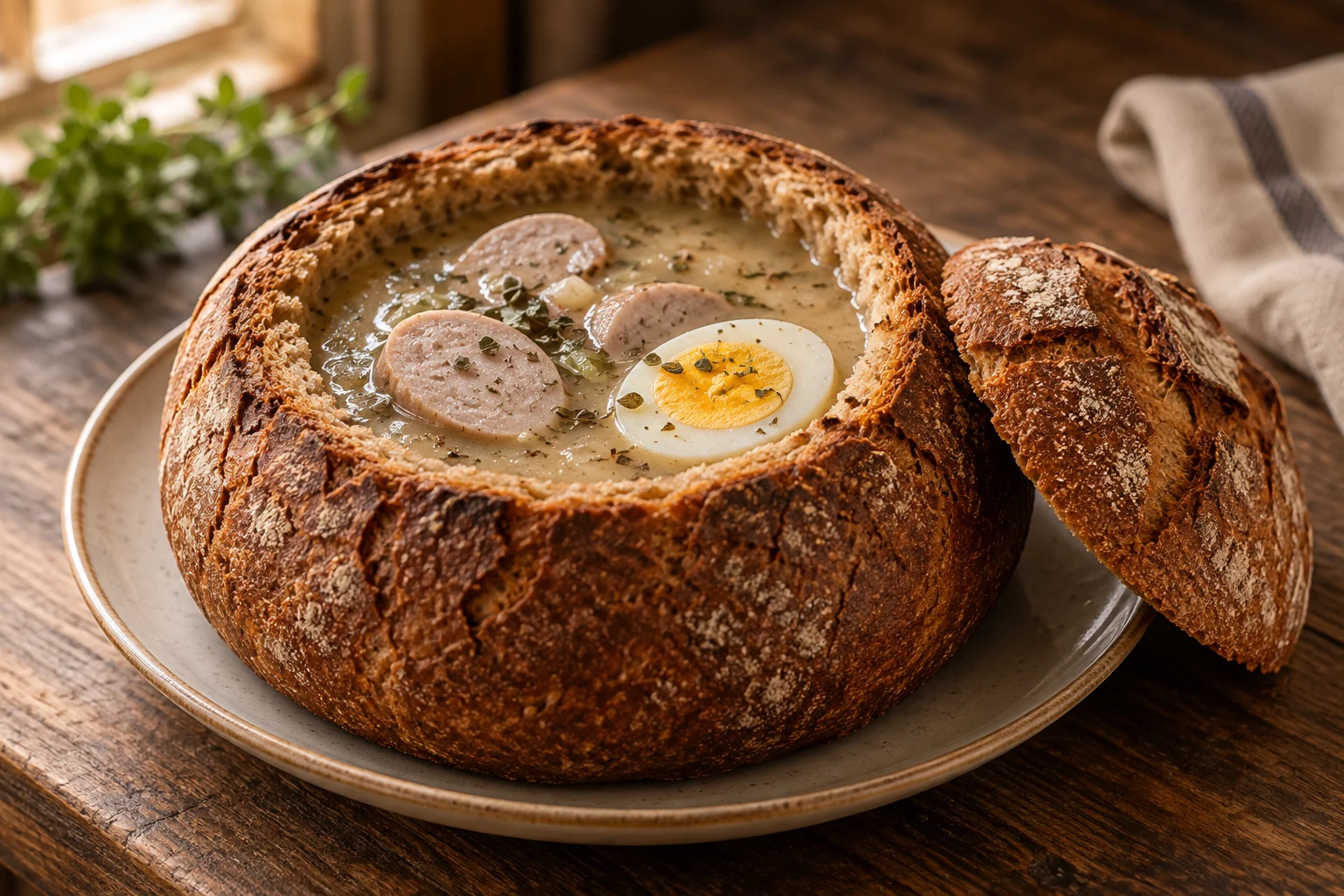
Culture.pl, published by the Adam Mickiewicz Institute, describes two broad contemporary directions: a leaner soup associated with fasting and a richer version for holidays, family gatherings or weddings. The latter commonly gains boiled eggs and biała kiełbasa, Polish white pork sausage. Sometimes it appears inside a hollowed loaf of bread.
Anna’s Polish Your Kitchen account gives a more personal Easter example: smoky broth, white sausage, marjoram and garlic, with egg halves placed in the serving bowls. Horseradish adds a sharper finish at her family’s table. Treat that as one documented household preparation. It supplies a practical model without making every optional addition compulsory.
Buying starter makes the first bowl easier to plan
Polish Your Kitchen suggests looking for a prepared starter labelled Zakwas na Żur in Polish food shops. Check that the product is the sour starter intended for soup, then use the directions of the complete recipe you choose. A jar’s consistency and flavour belong to that product; the amount cannot be inferred reliably from a photograph or transferred automatically from another cook’s method.
In Anna’s method, the broth is prepared first and the strained starter is added later, followed by marjoram and garlic. Eggs are a serving garnish rather than something boiled into the sour broth. That separation is a useful way to plan the meal: establish the stock, incorporate the starter according to the recipe, and prepare the additions for the bowls. It also makes substitutions easier to understand without confusing the soup’s acid base with its festive finish.
Research notes
Sources for the starter and its regional uses
Tourism and linguistic sources establish the base ingredient and flexible names. A Polish regional-food record supplies the everyday Kuyavian setting, Culture.pl describes broader occasions, and a named cook provides a clearly attributed Easter preparation.
- Poland Travel — Żurek, a Polish soup Official tourism account describes rye-flour starter, sourness, varied broths and regional service.
- Polish Ministry of Agriculture — Żur kujawski Regional-food record cites everyday breakfast, potatoes, optional sausage and richer holiday stock.
- Culture.pl — Poland’s Most Original Soup: Żur Adam Mickiewicz Institute account covers lean and festive versions and cautions against rigid naming divisions.
- Polish Your Kitchen — Anna’s sour rye soup Named cook documents a family Easter preparation, buying zakwas, staged cooking and egg service.
- National Centre for Culture — Żurek and white borscht Linguistic account explains diminutive, word origin and regional naming overlap.
Keep exploring
More stories for your table

Polish cuisine Dumplings
Meat Pierogi: Make the Filling Moist Before You Fold
Turn cooked soup beef into Polish meat pierogi. Learn how onion, carrot and a little broth soften the filling, then make a complete home adaptation.
Polish cuisine Cheese dumplings
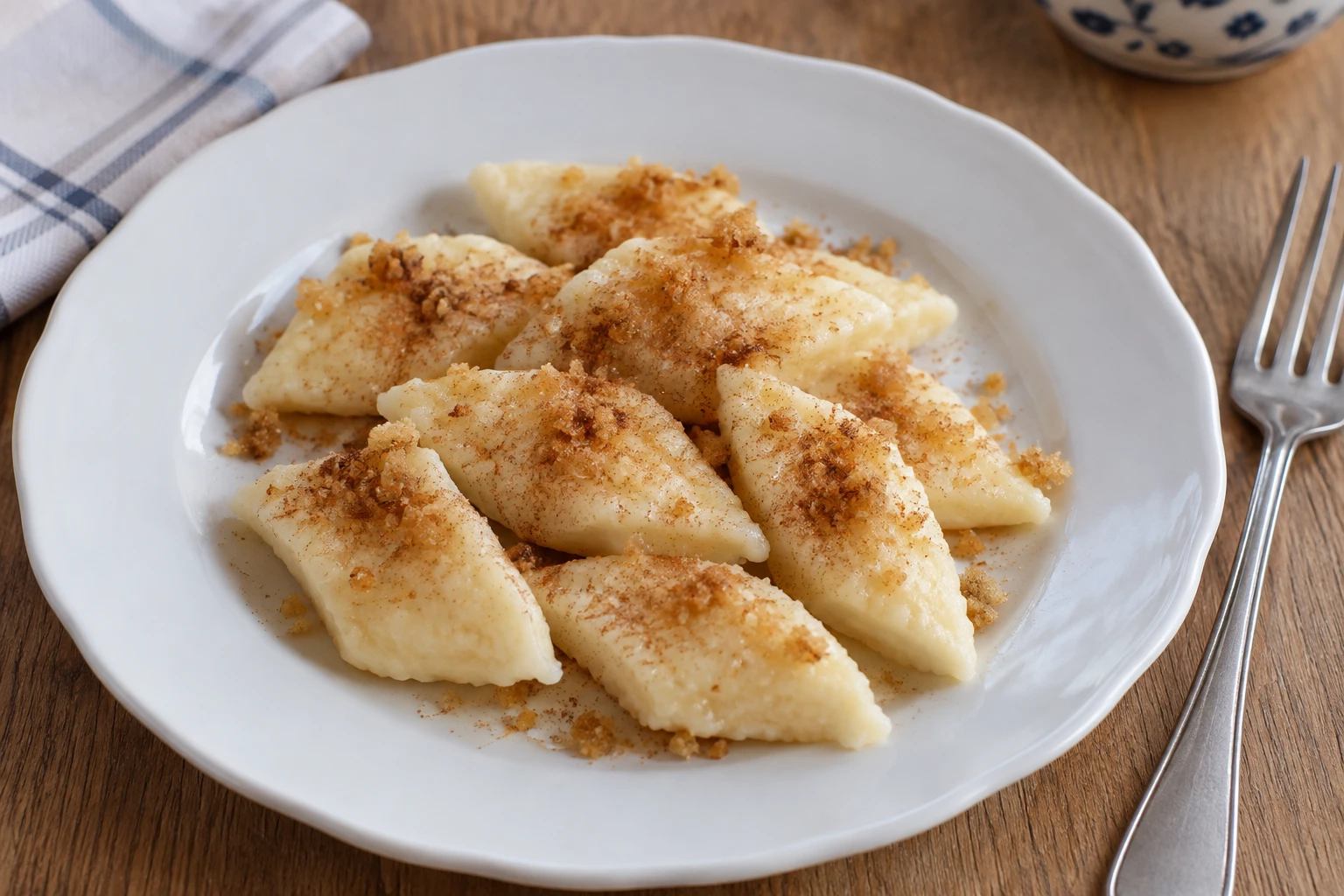
Leniwe: The Cheese Is Already in the Dough
Polish leniwe mix twaróg into the dough before shaping. Firm cheese, careful flour choices and named sweet or savoury finishes explain these simple dumplings.
Nepalese cuisine Fermented vegetables
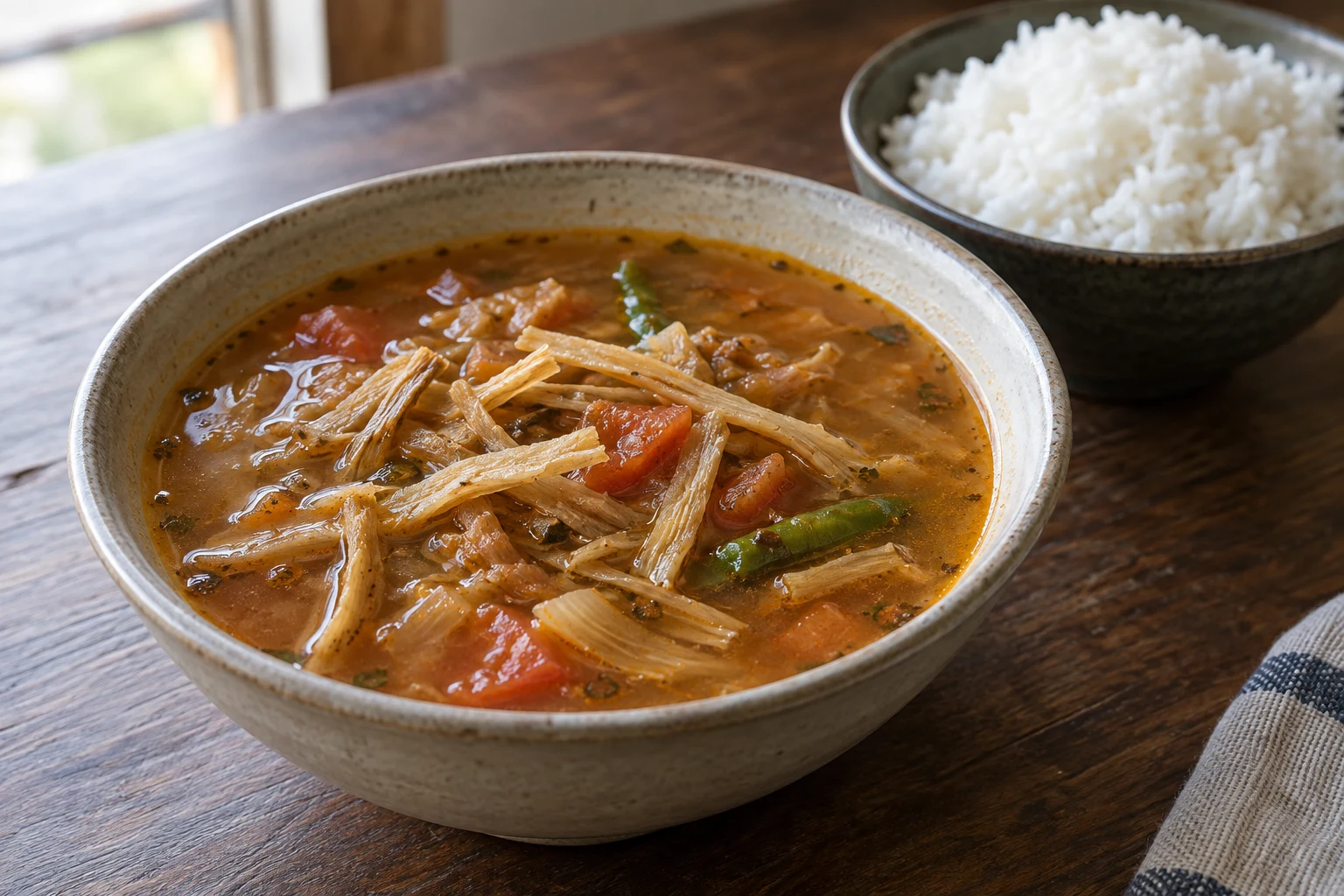
Sinki: The Radish Root Behind the Sour Broth
Fermented radish root gives sinki its sour character. Learn how it differs from leafy gundruk, why drying matters, and how prepared sinki becomes soup.