
Polish Chicken Liver: Let the Apples Keep Their Shape
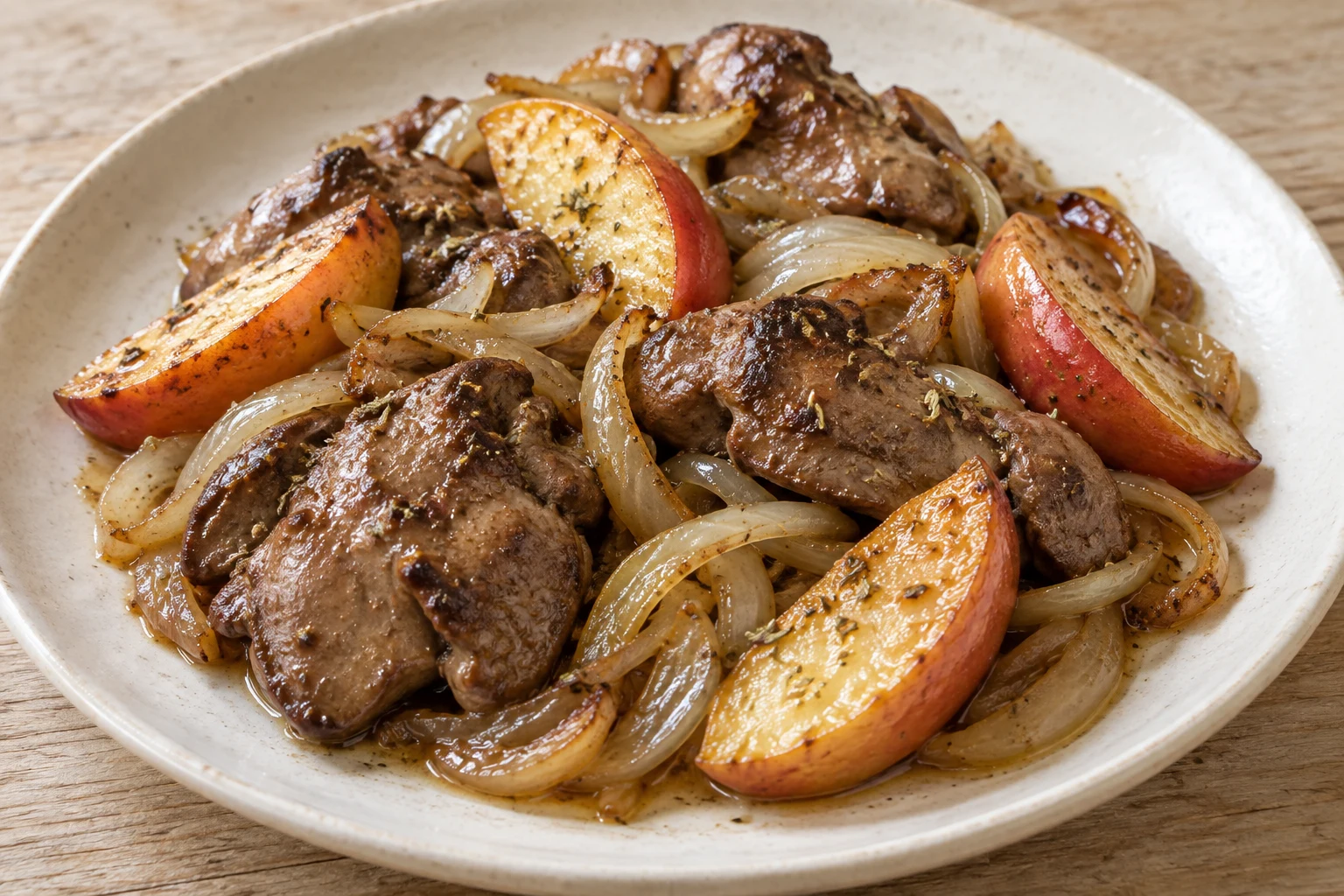
Wątróbka drobiowa z cebulą i jabłkiem
The apple can become part of the pan juices or stay in browned wedges beside the liver. For the second finish, give the onions time to soften, cook the fruit separately and bring the components together only at the end.
Poland
Choose the apple’s role
Chicken liver with onions and apples appears across Polish home-cooking sources. The 2015 collection Swojskie specjały powiatu bydgoskiego records Ewa Szczepińska’s version from Salno: the liver meets the onions, while the apples cook in a separate pan with marjoram. The fruit is a component with its own preparation, rather than a garnish added raw.
The combination also leaves room for a cook’s interpretation. Karol Okrasa’s version for Kuchnia Lidla adds a honey-and-balsamic glaze and serves the apples alongside. The recipe here takes a simpler route, with lightly floured liver, softened onion and pan-fried apple wedges. Its aim is to retain those three textures through the final toss.
Separate wedges or a softer finish?
The Polish recipes offer two useful approaches. Decide how you want the apple to arrive on the plate before starting the pans.
Cook the fruit separately
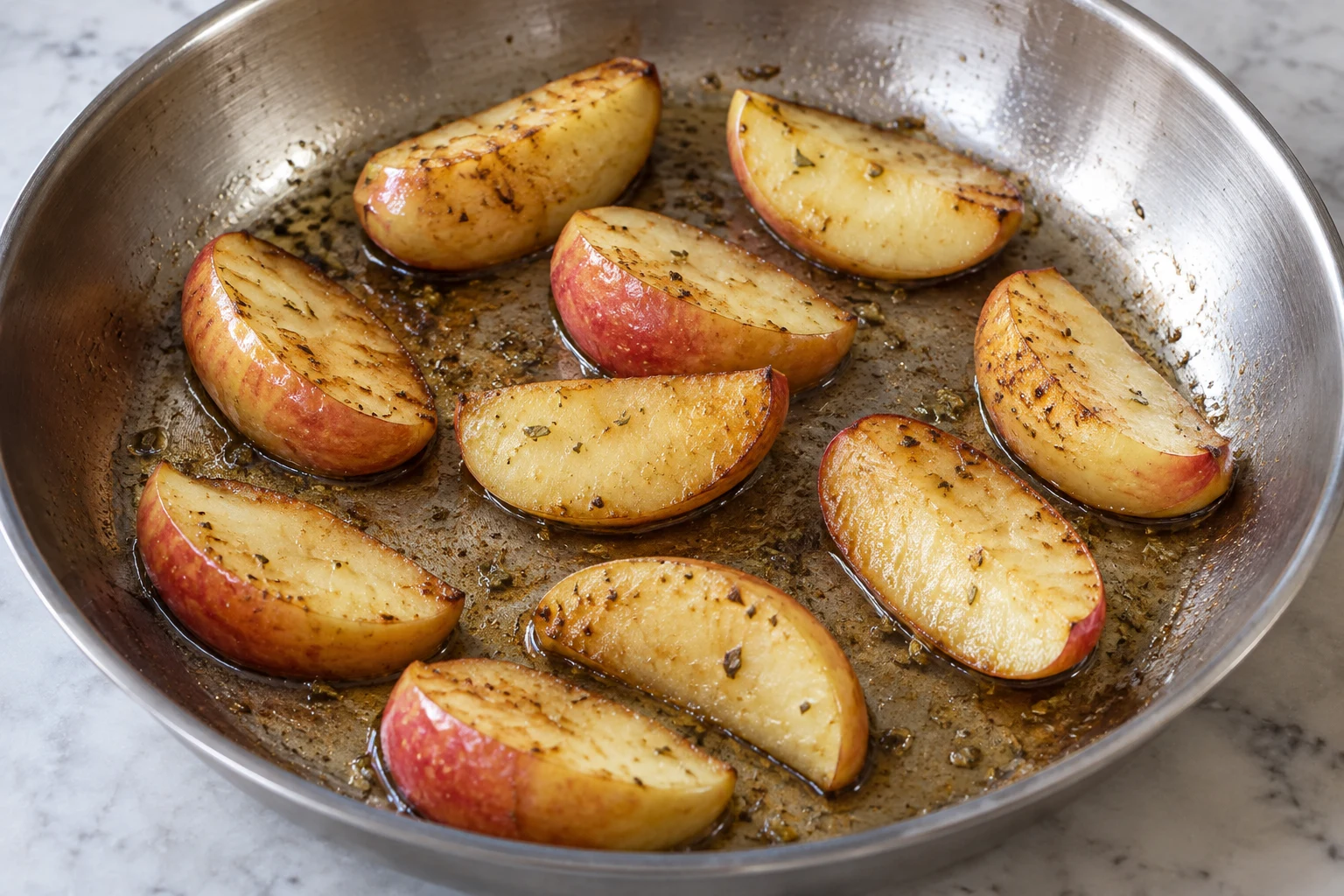
Both the Bydgoszcz collection and Przepisy.pl give the apples their own cooking stage. Przepisy.pl adds the prepared fruit and onions to the liver near the end. This is the approach used below, with firm apple wedges kept out of the liver pan until serving.
- Best for distinct pieces of browned fruit.
- Finish the onions before starting the liver batches.
Let the fruit simmer with the dish
AniaGotuje.pl starts with firm, slightly tart apples, adds them to the onions and later finishes the dish under a lid. The apples soften further and release juice during that final cooking. That choice makes sense when softer fruit and shared pan juices are the desired result.
- A documented alternative with a different apple texture.
- The fruit and liver spend more of the finish together.
Before combining
Give each pan a clear job
A home adaptation
Chicken liver with onions and apples
Serves 4. Allow about 15 minutes to prepare and 40 minutes to cook, around 55 minutes total. This adaptation draws on the Polish recipes below; it has not been kitchen-tested. Use a broad 28–30 cm frying pan, a second pan for the apples and a thin-tip food thermometer. The liver’s measured temperature determines when it is ready.
Ingredients
For the two pans
- 600 g chicken livers, refrigerated and fully thawed if frozen
- 300 g onions, weighed before peeling
- 300 g firm, slightly tart apples, weighed before coring
- 60 ml / 4 tbsp rapeseed or other neutral cooking oil, divided
- 20 g plain wheat flour
- 60 ml / 4 tbsp water
- 1 tsp dried marjoram
- ¾ tsp fine salt
- ¼ tsp ground black pepper
Method
- 1
Prepare the components.
Peel the onions and cut into thin half-moons. Wash and core the apples, leave the skins on and cut into wedges about 1.5 cm thick at the outer edge. On a separate board, trim tough connective tissue from the livers and separate joined lobes; pat dry with paper towels. Do not rinse the raw livers. Wash hands and clean the board and utensils after handling them. Keep the livers refrigerated until their pan is ready.
- 2
Soften the onions; brown the apples.
Warm 1 tablespoon of oil in the broad pan over medium heat. Add the onions and cook for 12–15 minutes, stirring, until soft, translucent and lightly golden; lower the heat if the edges darken before the centers soften. Transfer to a clean bowl. Meanwhile, heat 1 tablespoon of oil in the second pan. Cook the apple wedges over medium heat for 6–10 minutes, turning onto their cut faces, until lightly browned and just tender. Add the marjoram for the final minute, then take the pan off the heat.
- 3
Cook the first liver batch through.
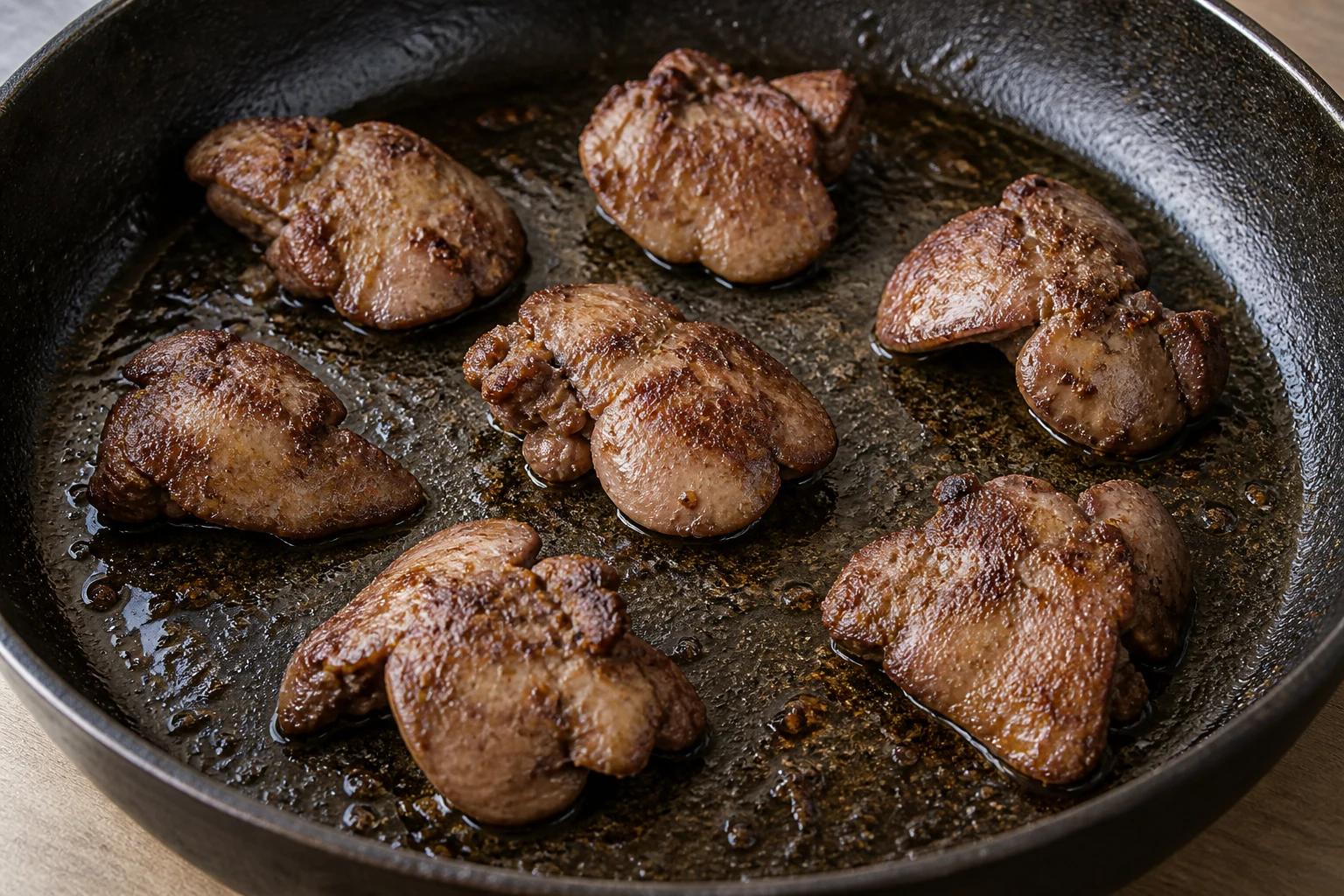
Put the flour on a plate. Lightly coat half the livers, shaking off excess. Heat 1 tablespoon of oil in the broad pan over medium heat and arrange the pieces in one layer with space between them. Cook for about 3–4 minutes per side, then measure the temperature in the thickest centers, checking pieces of different sizes. Every piece must reach at least 165°F / 74°C before removal. Continue cooking as needed; lower the heat and cover briefly if the outside browns too quickly. Transfer the fully cooked pieces to a clean plate.
- 4
Cook the second batch and loosen the pan juices.
Coat the remaining livers with the remaining flour and repeat with the last tablespoon of oil, again cooking every piece to at least 165°F / 74°C before moving it to the cooked-liver plate. Discard unused flour that touched raw liver. With the pan over low heat, carefully add the 60 ml water and stir for about a minute to loosen the browned deposits; leave any blackened deposits behind.
- 5
Combine briefly and serve.
Return all the liver and onions to the broad pan, add the salt and pepper, and turn gently for 1–2 minutes until hot. Fold in the apples and their pan juices off the heat, or arrange the wedges over the servings to protect their shape. Serve immediately. Boiled potatoes or bread can accompany the dish; they are serving suggestions and are not included in the recipe quantities.
Research notes
Sources and further reading
Four Polish culinary sources establish the dish and its variations. Current FoodSafety.gov and CDC guidance informs the temperature and handling instructions in this adaptation.
- Swojskie specjały powiatu bydgoskiego — 2015 collection Page 102 credits Ewa Szczepińska of Salno and cooks the apples separately. The recipe is evidence of local practice, not an origin claim.
- Przepisy.pl — Wątróbka drobiowa z jabłkiem A flour-coated version with marjoram and apples prepared before final combination.
- Karol Okrasa, Kuchnia Lidla — Liver, onion and apple A named variation with separate apple preparation and a honey-and-balsamic glaze. This article uses the official measured poultry endpoint.
- AniaGotuje.pl — Wątróbka z jabłkiem Firm, slightly tart apples and a covered finish provide the contrasting method.
- FoodSafety.gov — Safe minimum internal temperatures Poultry, including giblets, and reheated leftovers: 165°F / 74°C measured with a thermometer.
- CDC — Chicken and food poisoning Raw-poultry handling, separation of equipment and prompt refrigeration.
Keep exploring
More stories for your table
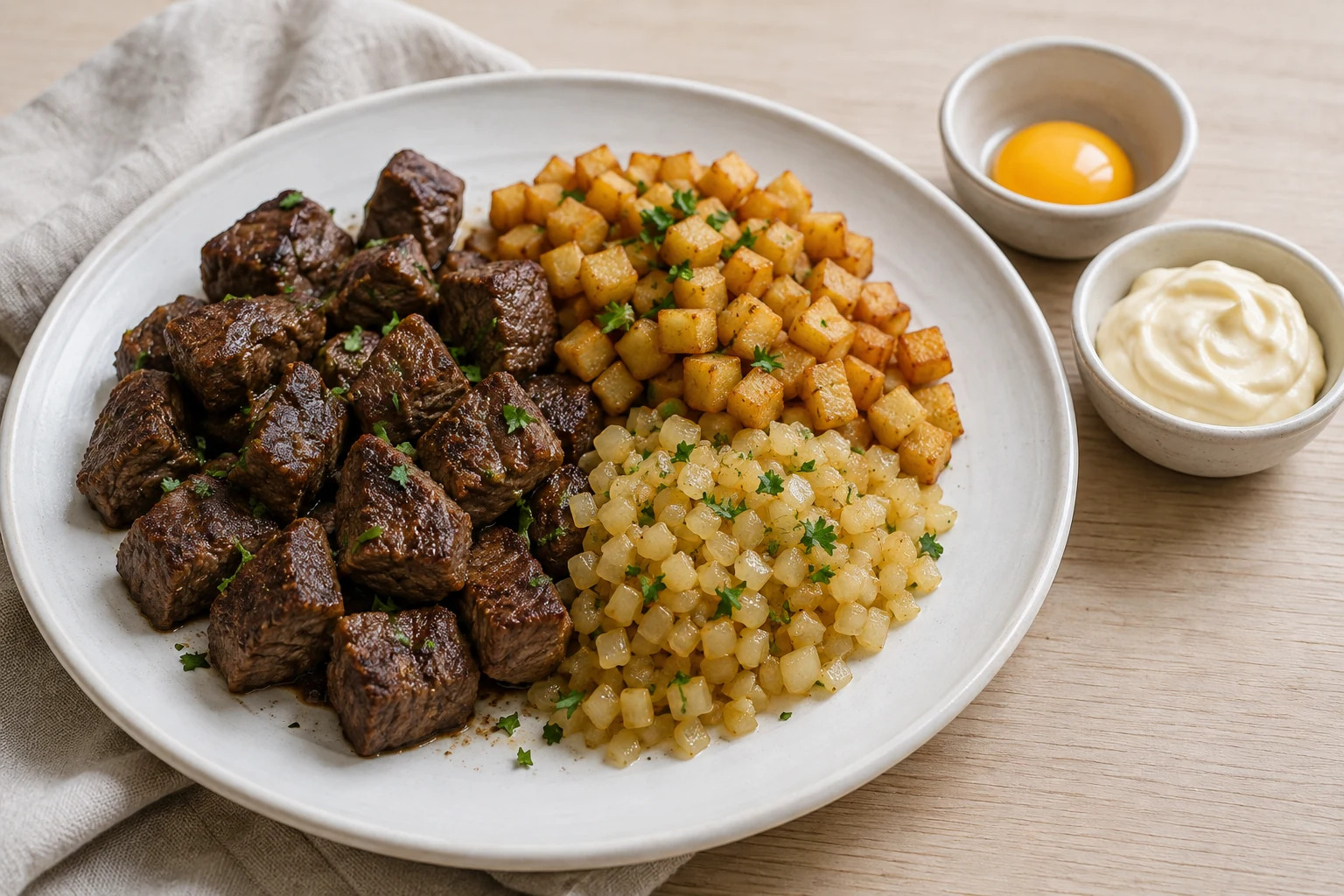
SwedenBeef and potatoes
Biff Rydberg: A Swedish Lesson in Timing
Crisp potatoes, soft onions and browned beef need different treatment. Learn the timing behind Sweden’s Biff Rydberg, compare two mustard creams and cook a home adaptation.

PortugalSeafood
Polvo à Lagareiro: The Olive Oil Is the Sauce
Tender octopus, lightly cracked potatoes and a garlic-and-olive-oil finish: understand the separate cooking jobs behind Portuguese polvo à lagareiro.
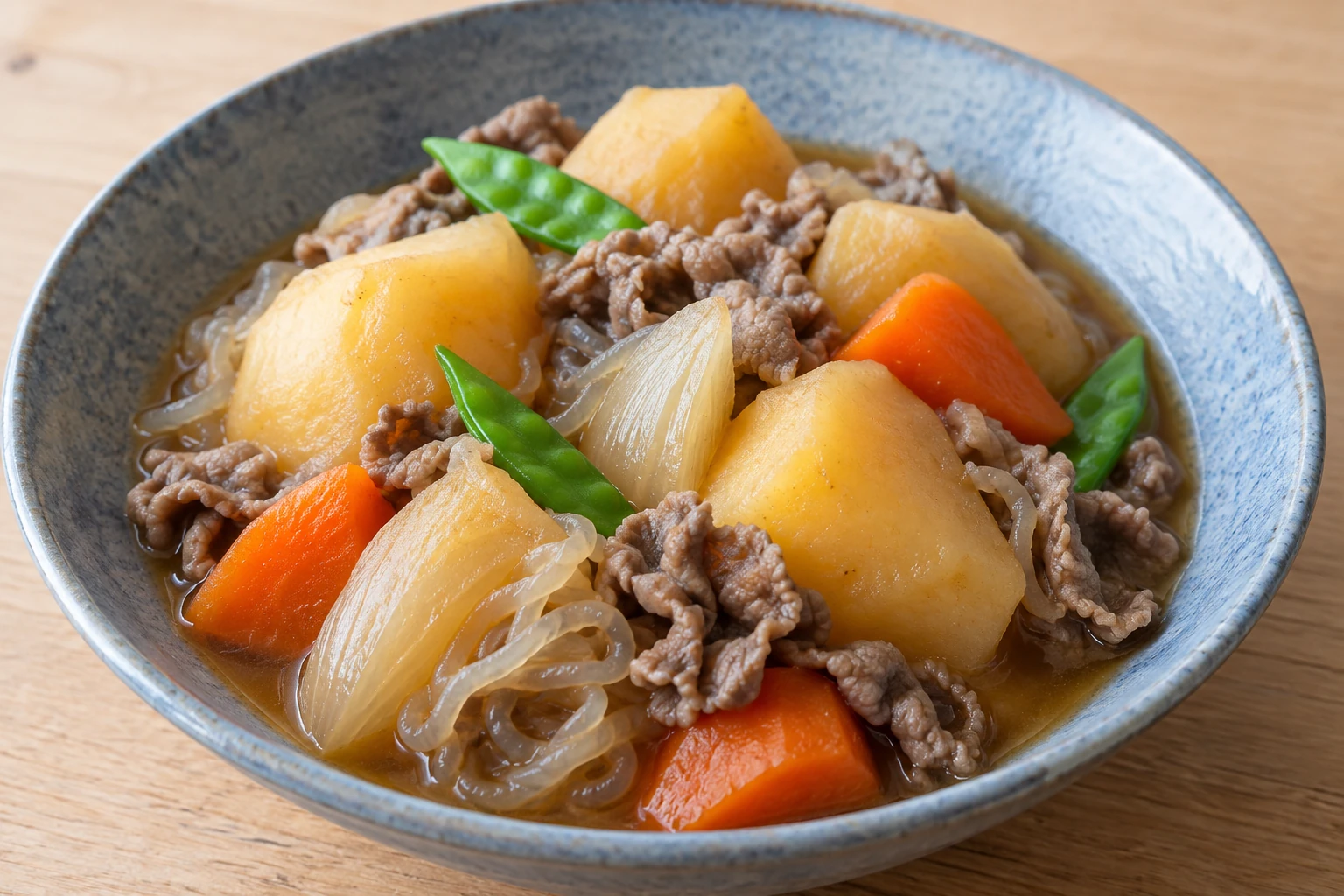
JapanMeat & potato simmer
Nikujaga: Keep the Potatoes in One Piece
A gentle simmer, thin beef and a lid resting on the food help nikujaga’s potatoes stay intact. Learn the technique and make a complete four-serving home adaptation.