
Sernik: read the cheese before choosing the cake
Sernik
Polish sernik begins with twaróg. Compare crustless and pastry-based cakes, folded egg whites and cooling choices before picking a recipe.
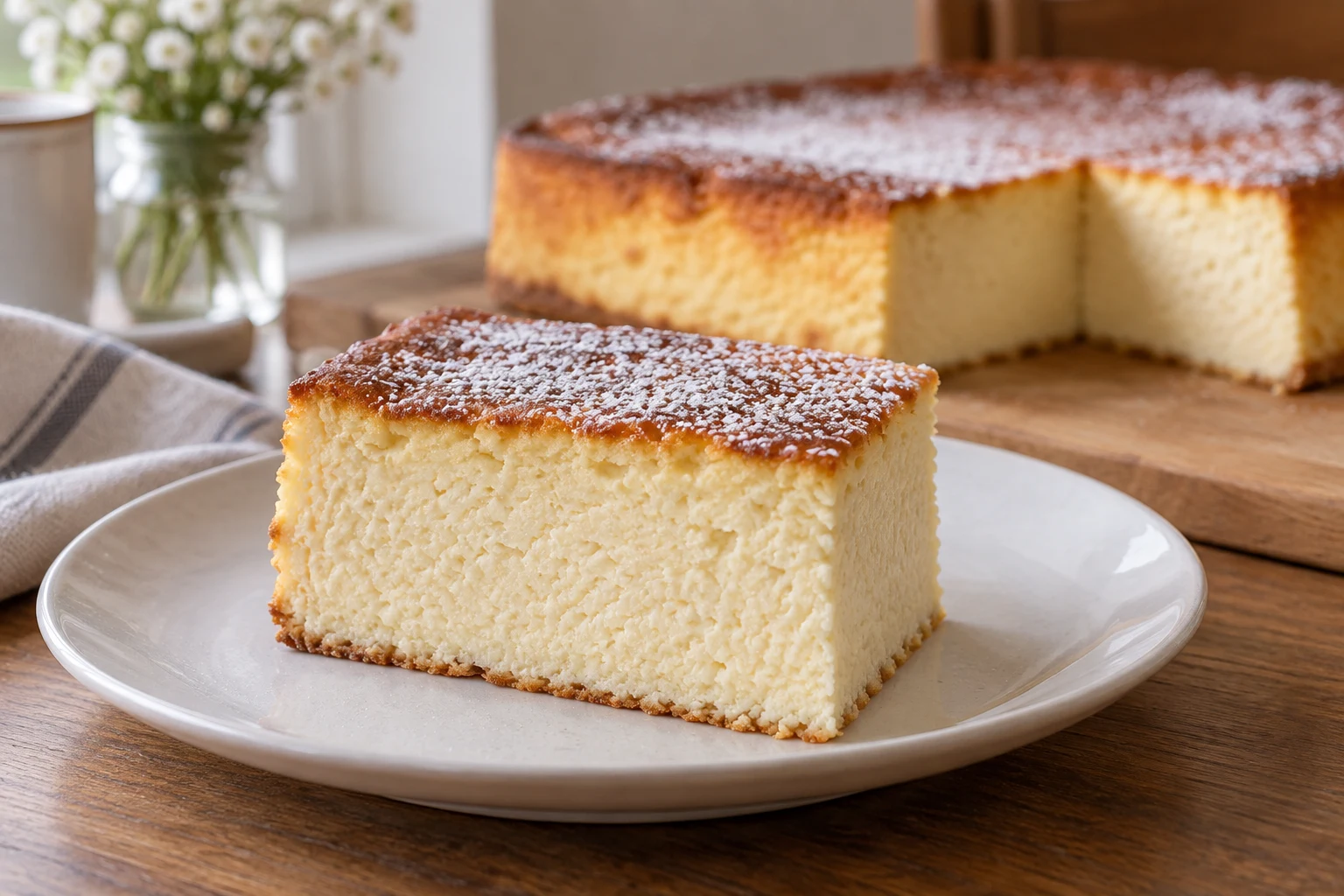
A slice of sernik can arrive as a simple square with a golden top, a wedge without a base, or a pastry-lined cake with dried fruit. The name gives you the cheesecake family; the cut face tells you which member is on the plate. Before deciding how it should taste or behave in the oven, look at the cheese and the way the recipe builds around it.
Three published recipes called traditional sernik make different choices about the base, additional cream and flavourings. Comparing them is a better guide to the cake than expecting every Polish cheesecake to be one fixed, uniformly creamy style.
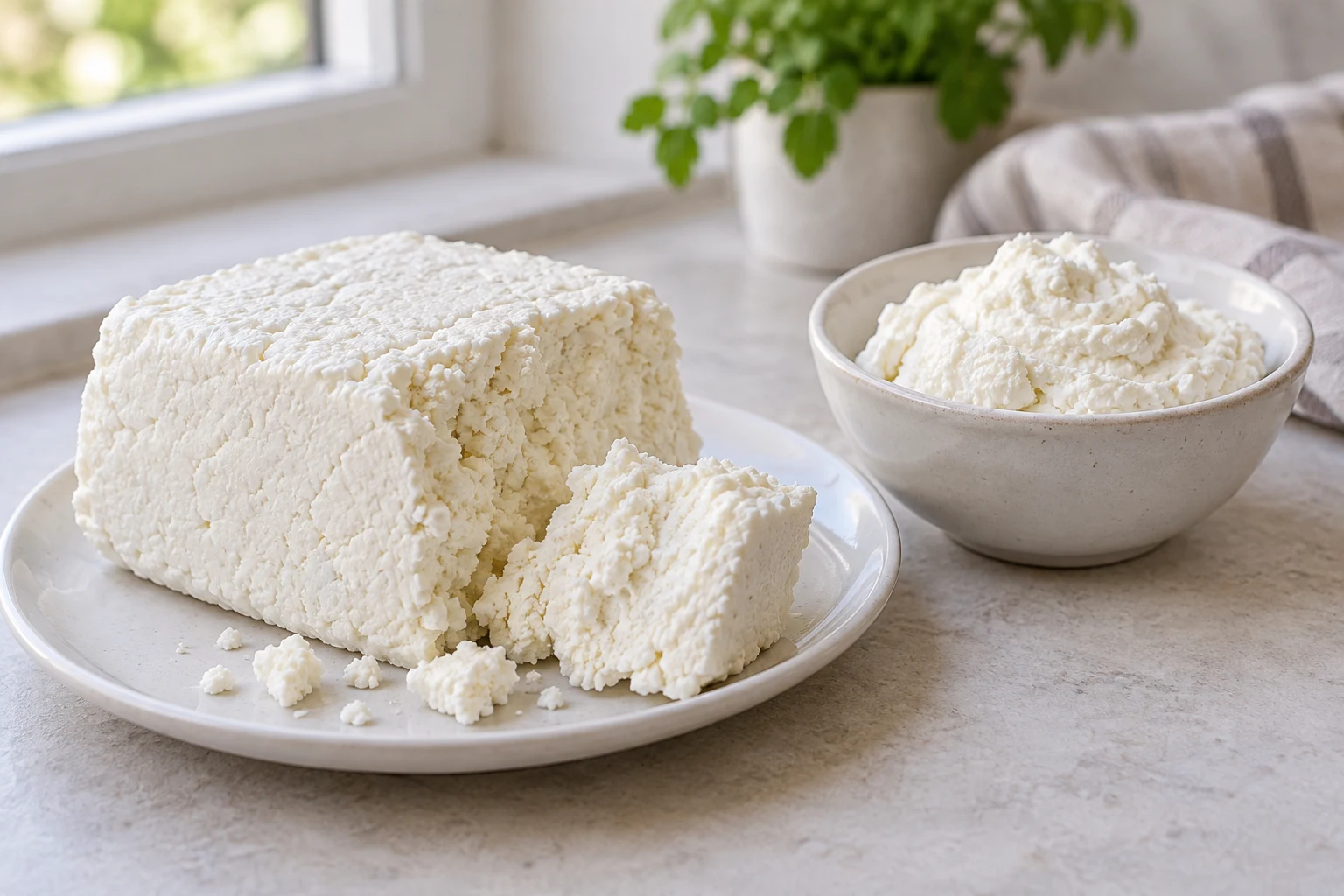
Twaróg is a starting point, not a perfect English translation
Culture.pl’s guide to Polish dairy describes quark as an approximate translation of twaróg, a term covering several fresh curd cheeses. It also notes that producers sell a blended version for cheesecakes. The word on an imported recipe therefore needs more attention than simply choosing the first soft white cheese in the supermarket.
Ania Gotuje specifies full-fat curd ground twice, or a good-quality ready-ground cheese that is not thin and runny. Lois Britton’s Polish Housewife recipe likewise calls for smoothing the twaróg through a sieve or a processor. For either method, the intended starting texture is worth checking before eggs, butter and sugar hide it from view.
Three recipes, three useful distinctions
These are choices made by the named authors, rather than rules imposed on every sernik.
Ania Gotuje: plain and crustless
Full-fat twaróg, eggs, butter, starch and a little wheat flour form a cake without a pastry base. The author favours a rectangular pan for lower, easy-to-serve portions and usually leaves out added aromas and dried fruit.
Kwestia Smaku: cream in the filling
This crustless version includes cream as well as butter, eggs and ground twaróg. Vanilla or citrus peel can provide flavour. A springform pan gives a different presentation from a shallow rectangular tray.
Polish Housewife: pastry and cranberries
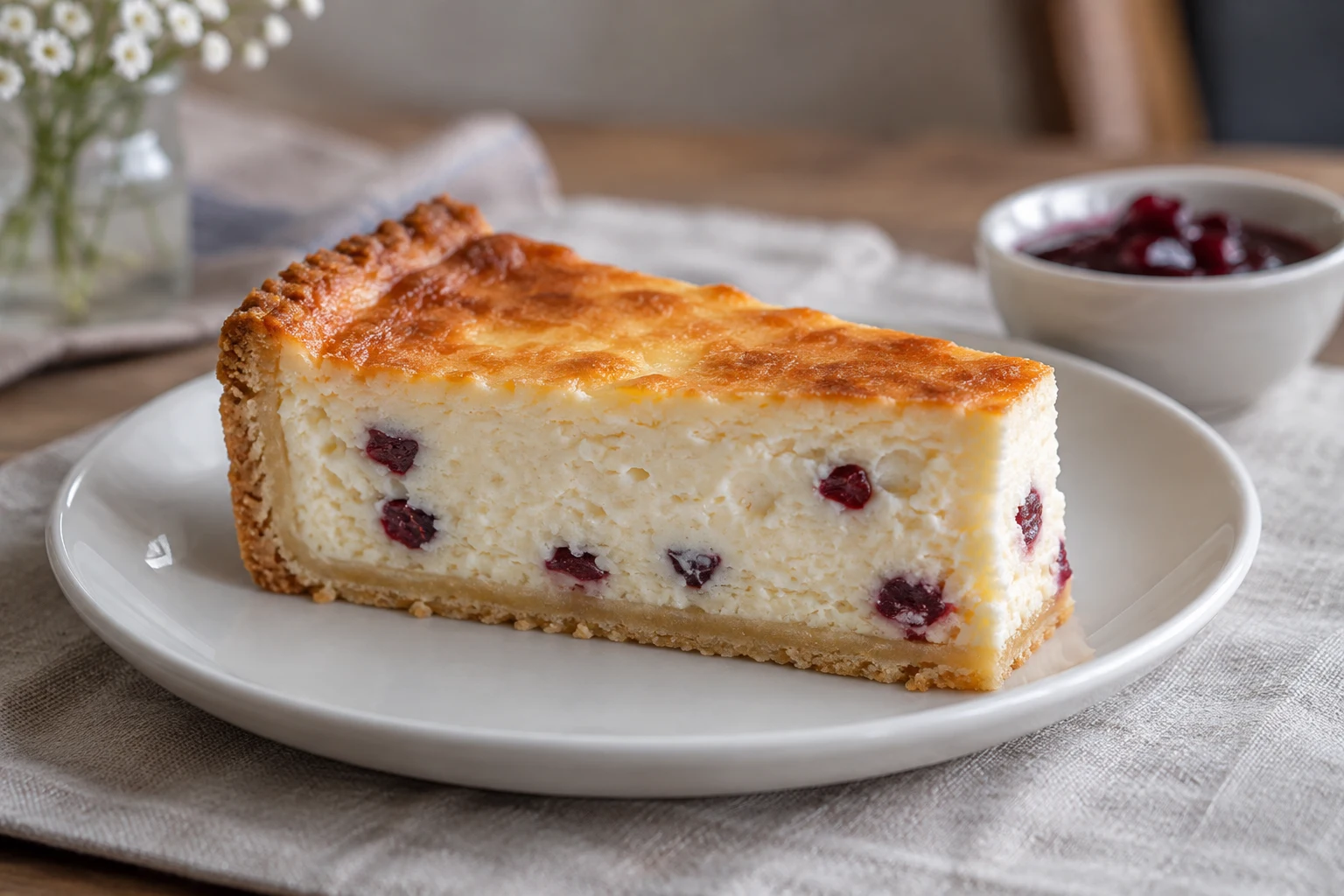
Britton lines her pan with shortcrust pastry and puts chopped dried cranberries in the curd filling. An optional pastry lattice and a separately served berry sauce offer further choices.
Notice when the egg whites enter
All three recipes separate the eggs. Their fillings bring together the curd and the yolk mixture before gently incorporating beaten whites. This is a different mixing sequence from putting all the eggs into the bowl and beating the entire batter at once.
Kwestia Smaku first beats butter with yolks and sugar, then adds cheese, cream and starch; the whites enter at the end. Keep that sequence visible when reading a recipe. Instructions such as “mix until smooth” earlier in the method and “fold gently” later describe different jobs, even though both use the same bowl.
The pan is part of the method
A cake’s outline is easy to dismiss as decoration, but it also tells you how the filling was spread through the pan. Ania Gotuje explicitly adjusts the baking time when using a smaller pan. That makes copying a photograph’s height a poor reason to change the tin without rereading the method.
Decide whether you want neat low rectangles, taller wedges or a pastry edge before beginning. Then follow a recipe written for that form. A crust also introduces another texture and another preparation stage; it is a meaningful choice even when the filling ingredients look familiar.
A rise and a fall need context
Ania Gotuje warns that her cake can settle after baking. Kwestia Smaku instructs readers to cool its cake gradually, opening the oven door little by little before removal. Britton asks for complete cooling before serving. The common lesson is to read the finish, rather than treating the oven timer as the end of the job.
A photograph showing a perfectly level top cannot tell you which cooling method the baker used. Assess the result against the recipe you chose, including its expected settling and serving texture. A modestly lowered centre by itself does not explain what happened throughout the cake.
Let the filling lead the finish
Powdered sugar, chocolate topping and fruit sauce all appear among the serving options in these references. A small separate portion of sauce is especially useful when you want to explore the cheese filling first, then decide how much fruit to add.
The cake needs no argument about whether raisins belong in every sernik. A plain slice and a fruit-studded slice offer different experiences, and both can be described clearly. At a counter, those concrete details are more helpful than the single promise that a cake is “traditional”.
Research notes
Cheese context and recipe comparisons
A Polish cultural institution’s dairy guide and three independently published recipes support this guide. No combined recipe is proposed.
- Culture.pl — A Mini-Guide to Polish Dairy Twaróg terminology and cheesecake-ready blended curd; unrelated nutrition assertions are not used.
- Ania Gotuje — Sernik tradycyjny Full-fat, ground curd; crustless rectangular cake; pan-size and cooling details.
- Kwestia Smaku — Sernik tradycyjny Cream-containing filling, separated eggs and gradual cooling; no storage claim repeated.
- Lois Britton, Polish Housewife — Sernik Shortcrust pastry, prepared curd, cranberries and complete cooling.
Keep exploring
More stories for your table
Polish cuisine Cheese dumplings
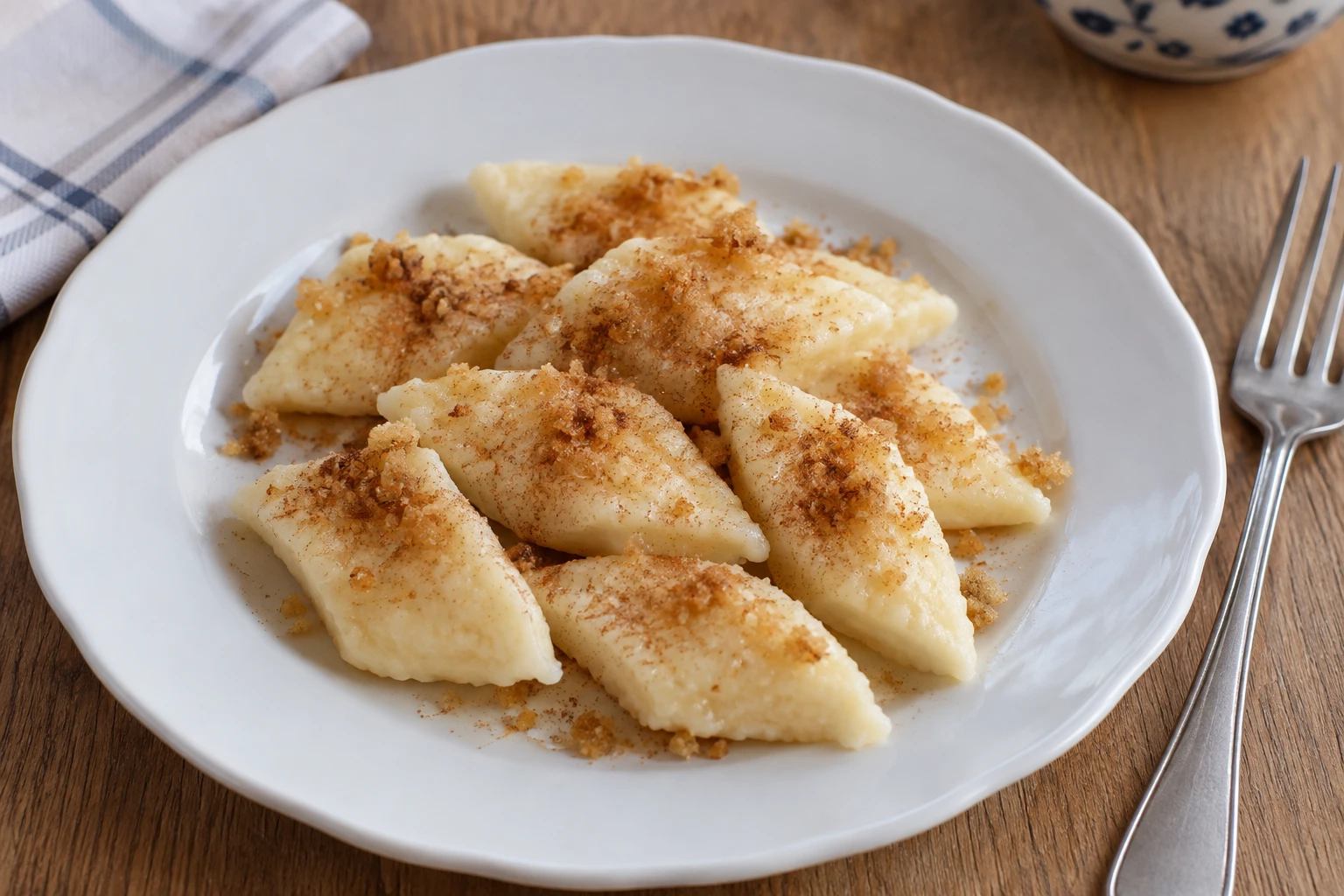
Leniwe: The Cheese Is Already in the Dough
Polish leniwe mix twaróg into the dough before shaping. Firm cheese, careful flour choices and named sweet or savoury finishes explain these simple dumplings.
Polish cuisine Soup
White Borscht: Read the Starter First
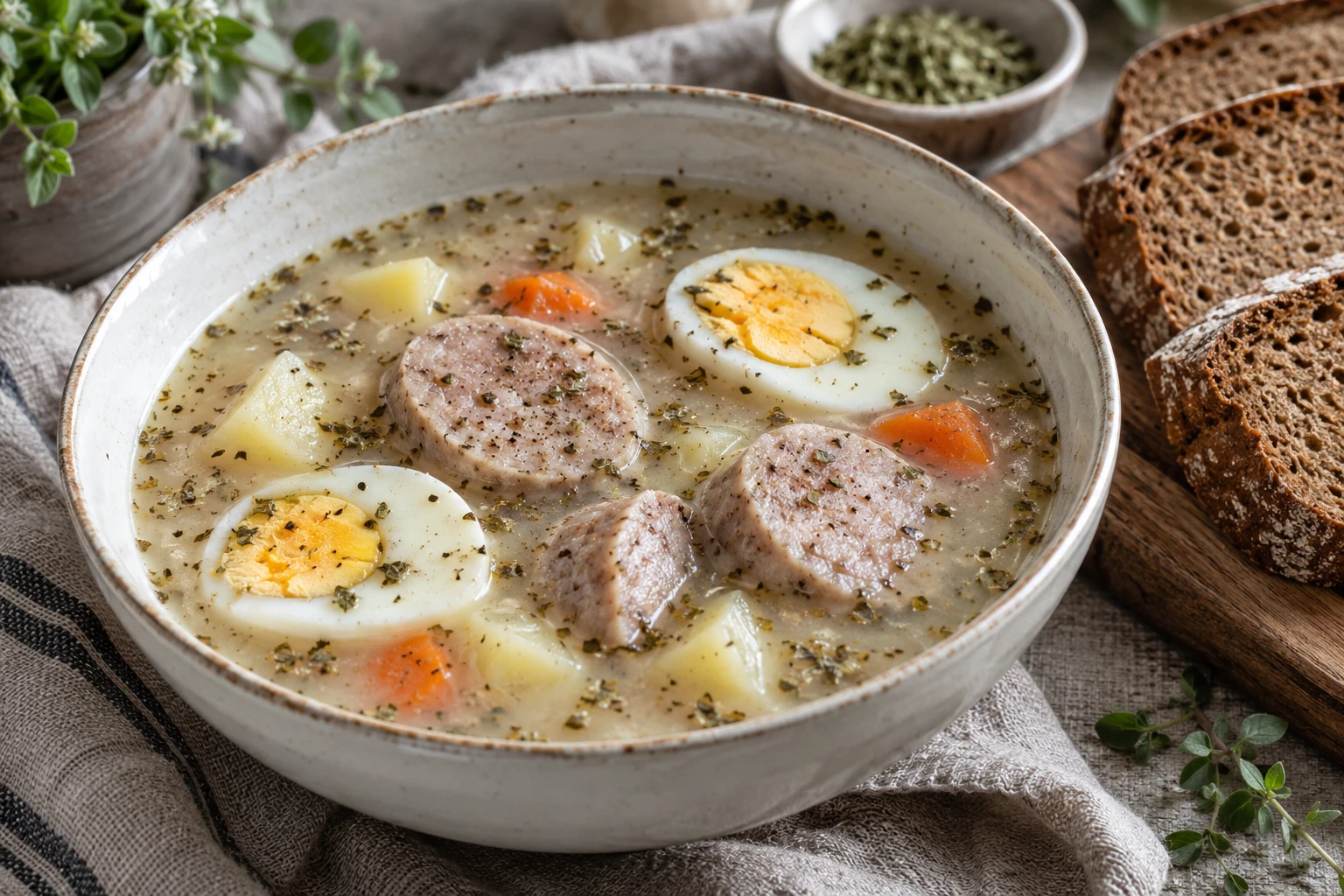
Polish white borscht brings sour starter, savory broth and substantial garnishes together. Its name varies, while the flour sediment and cream finish need deliberate handling.
Russian cuisine Apple sponge cake
Sharlotka: apples held in a light egg sponge
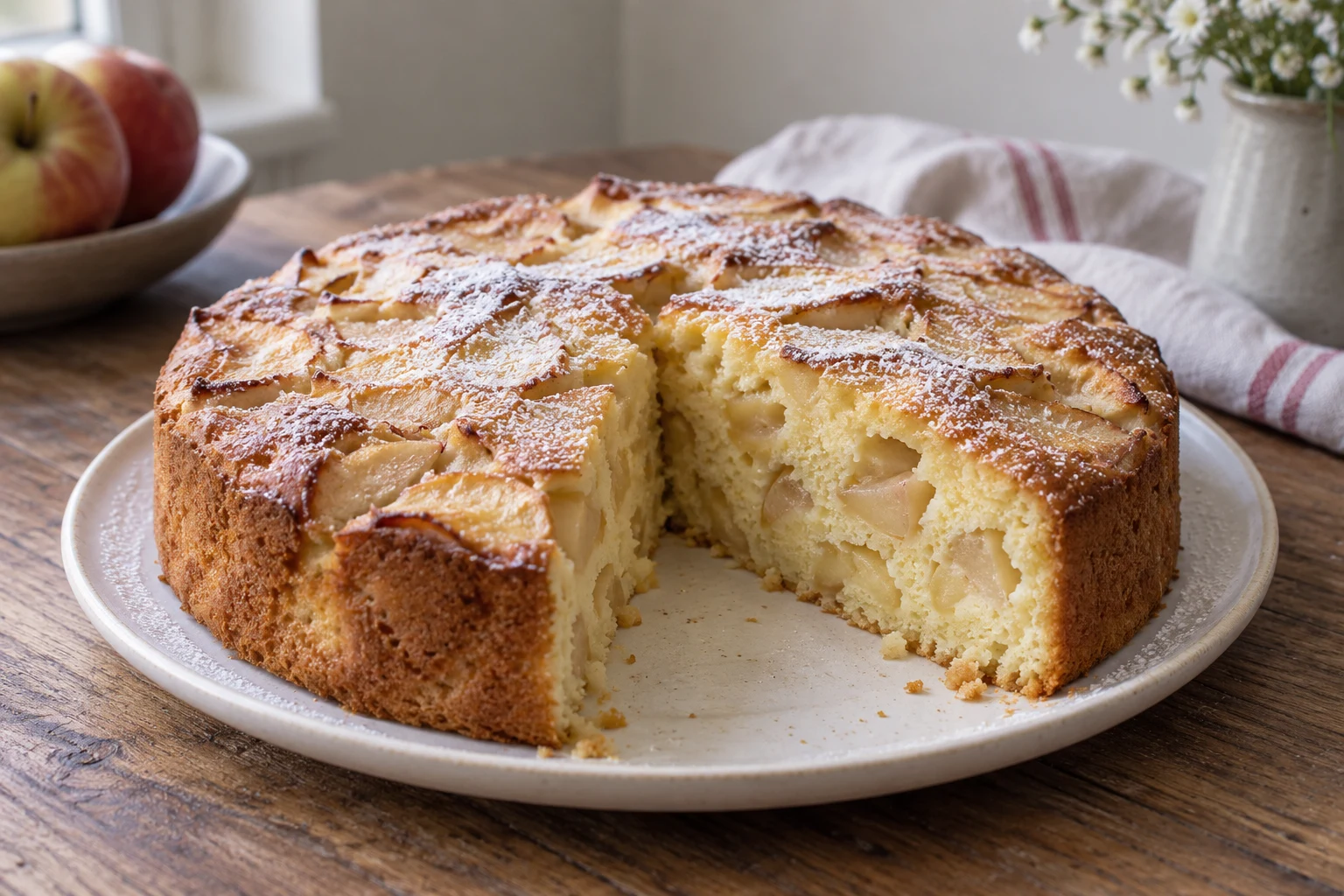
Sharlotka brings apples and whipped-egg sponge together. Compare fruit placement, batter cues and a sour-cream variation before choosing a recipe.