
Oscypek: Reading Poland’s Smoked Mountain Cheese
Oscypek
A patterned spindle is an invitation to look closer. The story of oscypek connects mountain milk, a demanding shaping craft and a protected name that does not belong to every smoked cheese in Podhale.
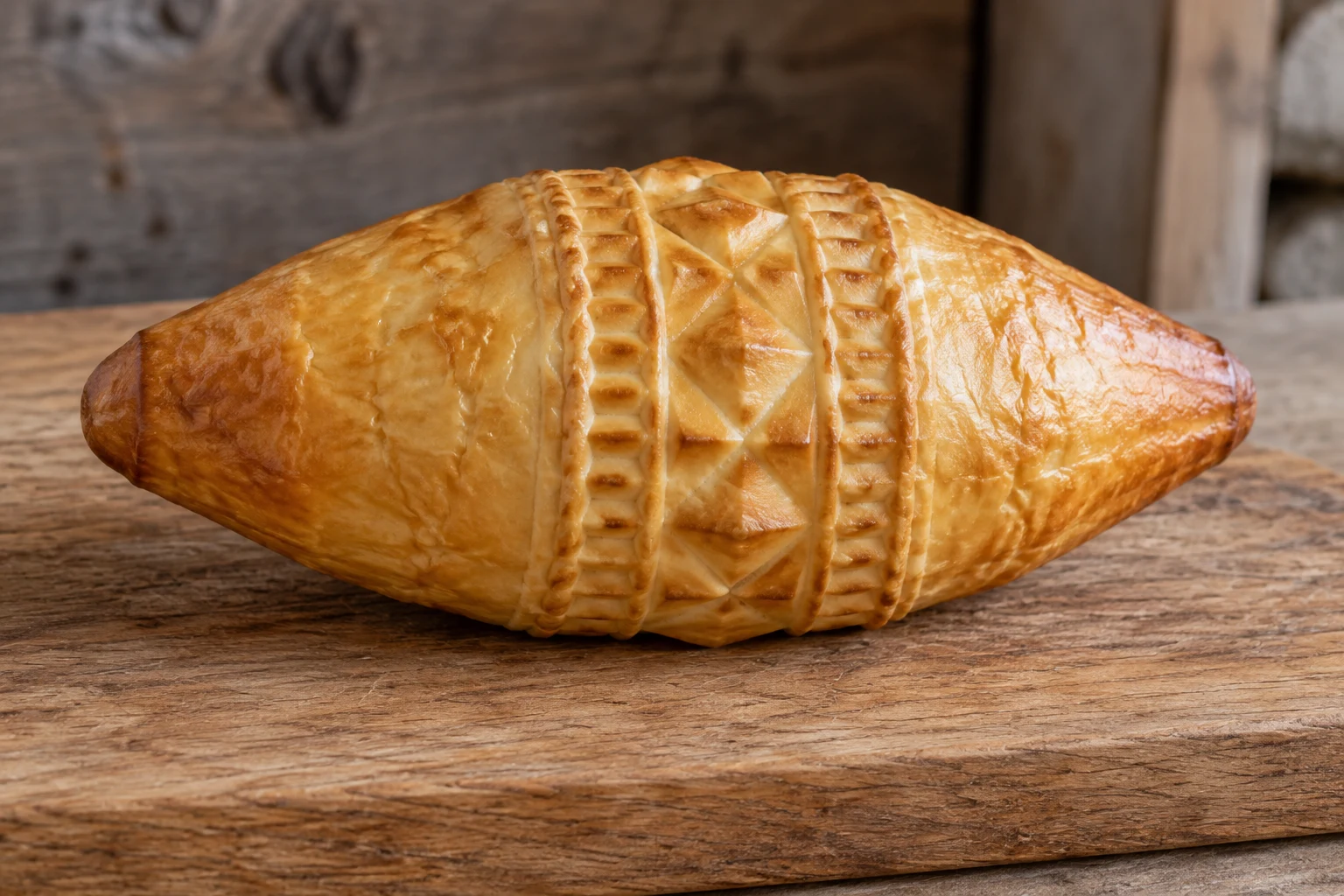
What are you buying when you buy oscypek?
A smoked golden cheese can announce itself before the first slice: tapering ends, a patterned middle and a compact rind. Oscypek is associated with Podhale in southern Poland, where the shepherd’s hut, or bacówka, belongs to a wider culture of seasonal grazing and milk processing. Yet the shape and aroma are only the visible part of its identity.
The name carries a specific protected designation of origin. Poland’s food-quality inspectorate advises buyers to ask for the producer’s name or quality documentation rather than rely on a stall’s appearance. That is a useful distinction for a visitor: understanding the craft helps you appreciate the cheese, while checking its producer establishes what the picture cannot.
The identity behind the shape
- Milk
- At least 60% sheep’s milk
- Whole cheese
- A double cone or spindle
- Season
- Made from May to September
- Place
- A defined southern Polish area
The specification permits cow’s milk, but no more than 40%; it specifies Polish Mountain Sheep and, when used, Polish Red Cow milk.
The official description gives a length of 17–23 cm and weight of 600–800 g, with a light cream interior and straw-to-light-brown rind.
The production season follows mountain sheep milking. Season is a clue to ask about, rather than a substitute for traceability.
The designation includes specified areas in Małopolska and Silesia. “From the mountains” alone is too broad a description.
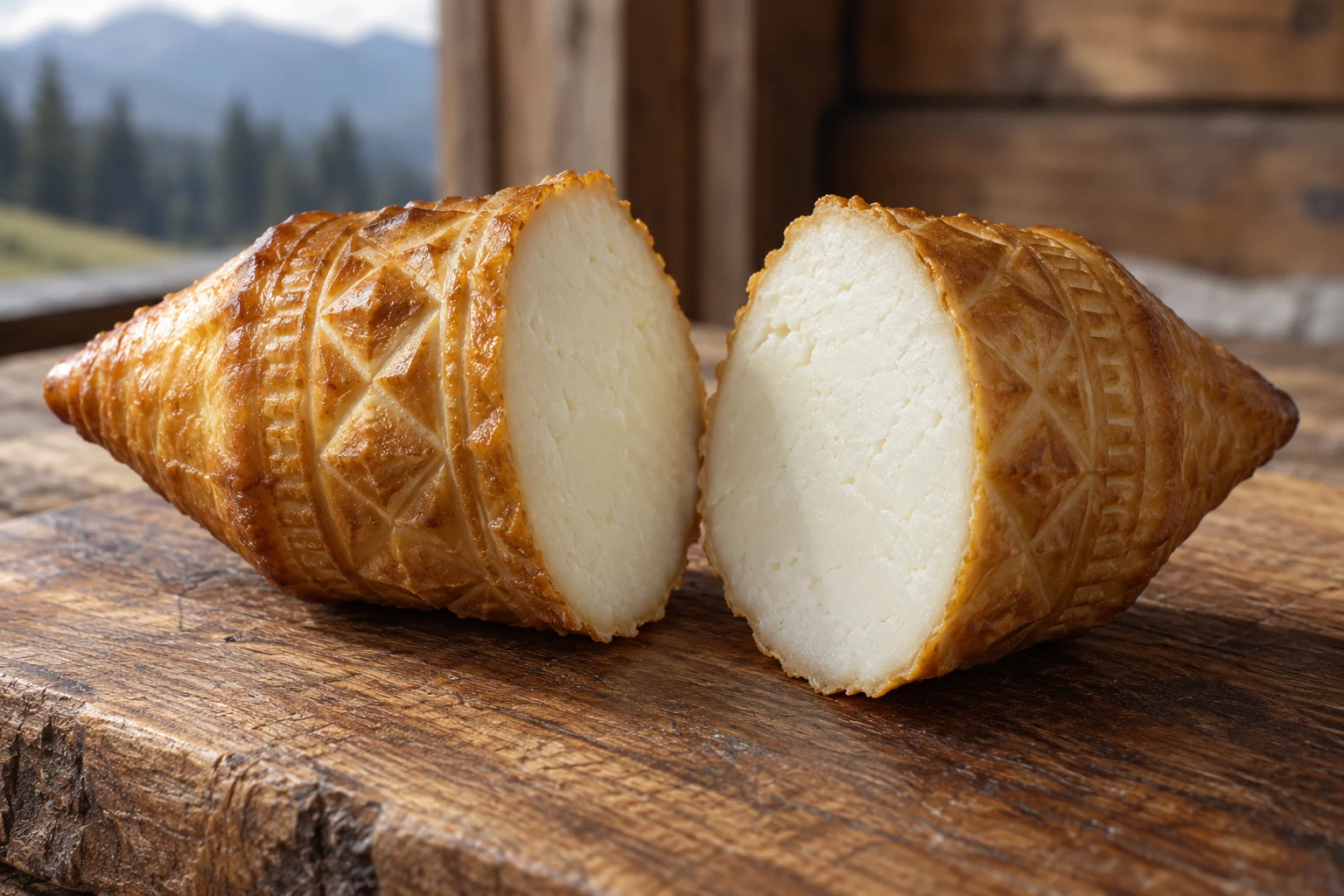
The ornament is made before the smoke
The EU specification describes a sequence that turns coagulated milk into a worked, pressed mass. The cheesemaker forms a ball, shapes it along a skewer into the double cone and places a ring around its widest point. When the ring comes away, the cheese keeps the moulded ornament. The pattern is an impression in the food, rather than decoration added at the table.
Brine, drying and cold smoke follow shaping. The application specification describes brining for up to 24 hours, drying for 12–24 hours and smoking for three to seven days. These are descriptions of an established production method, not directions for making raw-milk cheese in a domestic kitchen. They explain why the surface and interior tell different stories: the pressed cheese forms the body, while salt and smoke finish it.
Slow Food’s producer account adds a useful view of the labour: warm water keeps the curd workable as the cheesemaker kneads and presses it. Read alongside the official process, the spindle becomes evidence of sustained handling. Its beauty is tied to work that also removes whey and creates the finished form.
Three names worth keeping separate
Oscypek
A substantial smoked spindle governed by its own milk, size, production-area and seasonal requirements. Its protected name is the starting point for a conversation about the producer.
- Pressed, patterned spindle
- Sheep’s milk predominates
Redykołka
A smaller protected mountain cheese, often shaped as a miniature animal, heart or spindle. Small smoked cheeses on a grill should not automatically be treated as miniature oscypek.
- Small decorative forms
- A separate protected identity
Gołka
A smoked cow’s-milk cheese generally formed as a cylinder. Culture.pl and the Polish inspectorate distinguish it from the sheep-milk-based spindle.
- Cow’s milk
- Cylindrical form
A craft history, rather than one inventor
The EU application connects the cheese to Wallachian shepherding culture and documents cheesemaking in the region through the 1416 charter of Ochotnica. Later evidence becomes more specific: eighteenth-century rules describe hut cheesemaking, and nineteenth-century writers describe summer huts, shepherding equipment and the cheese itself. These records establish a continuing practice; they do not identify a single first cheesemaker.
That history also makes the product more than a souvenir. Oscypek belongs to a seasonal system in which grazing, milking, huts and skilled producers are connected. Buying a traceable cheese means engaging with that system as well as the dramatic shape on the board.
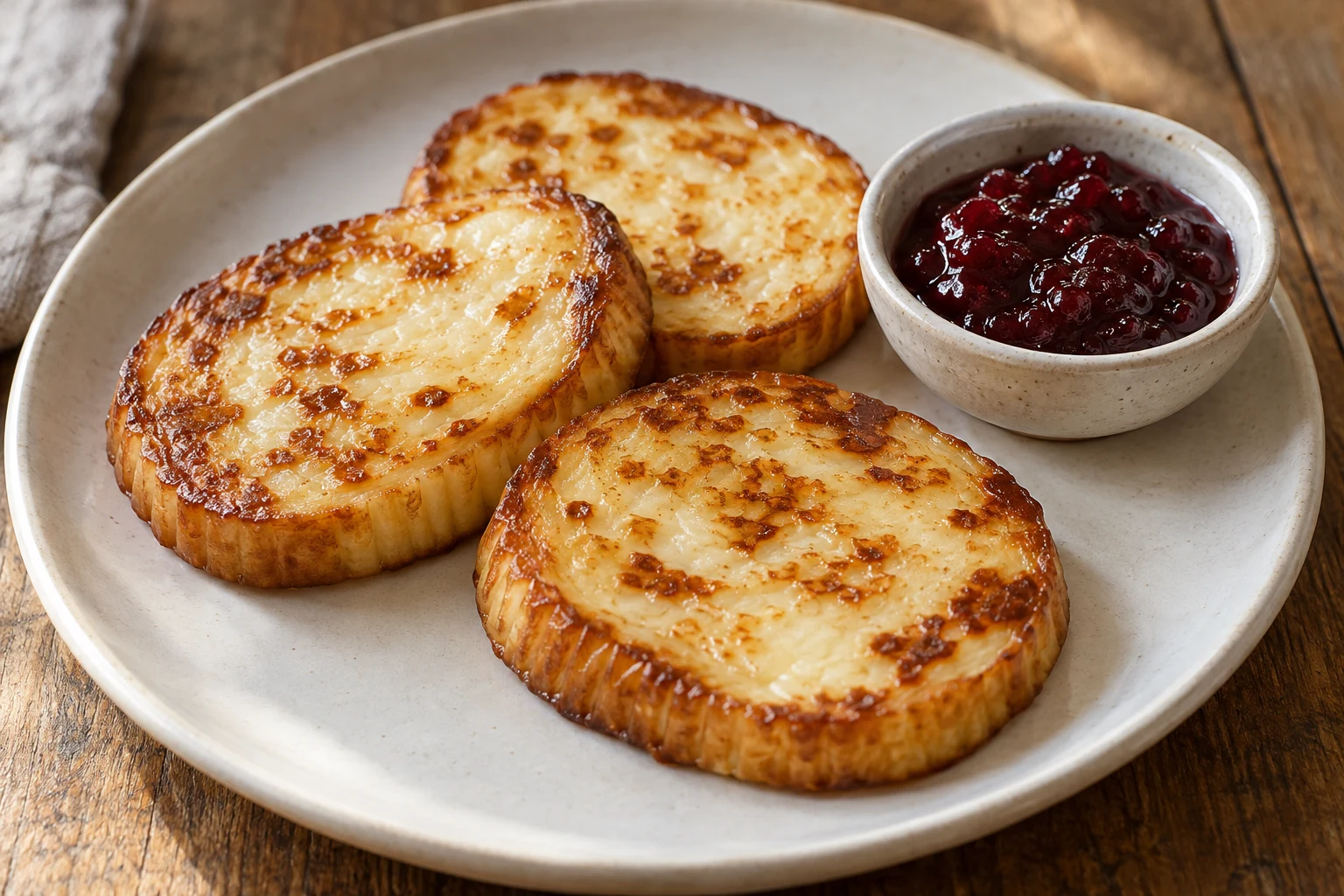
Slice first, then decide whether to warm it
Culture.pl describes sliced cheese and hearth-fried service with cranberry marmalade; Slow Food also records thin slices and grilling. These are different ways to meet the same compact cheese. A cool slice makes the rind-to-interior contrast easy to examine. Warmed slices give the surface a chance to brown and put the smoky aroma closer to the centre of the experience.
A small amount of fruit preserve lets the salty cheese stay prominent. The pairing is a serving suggestion documented by the cultural source, not a required ingredient in the cheese. Keep the producer’s identity separate from the way a restaurant plates it: a condiment can change, while the protected production requirements remain.
Oscypek contains milk, and traditional production uses rennet; do not assume that a cheese is suitable for a vegetarian diet without asking how its rennet is sourced. This article follows the production and buying story rather than offering a home cheesemaking recipe.
Research notes
Sources and distinctions
The EU specification and Polish buyer guidance establish the protected identity; the cultural and producer accounts explain craft and service. Technical differences are resolved in favour of the specification rather than blended into a new method.
- European Union — oscypek application specification Defines milk breeds and proportions, shape, area, seasonal production, processing stages and documentary history.
- Polish IJHARS — informed buying guide Practical official guidance on oscypek identity, producer certification and the distinction from redykołka and gołka.
- Culture.pl — Polish Food 101: Oscypek Adam Mickiewicz Institute account of seasonal craft, related cheeses and sliced or hearth-fried service with cranberry marmalade.
- Slow Food Foundation — Oscypek Presidium Producer-focused account of curd working, wooden-ring ornament, compact texture and sliced or grilled service.
Keep exploring
More stories for your table
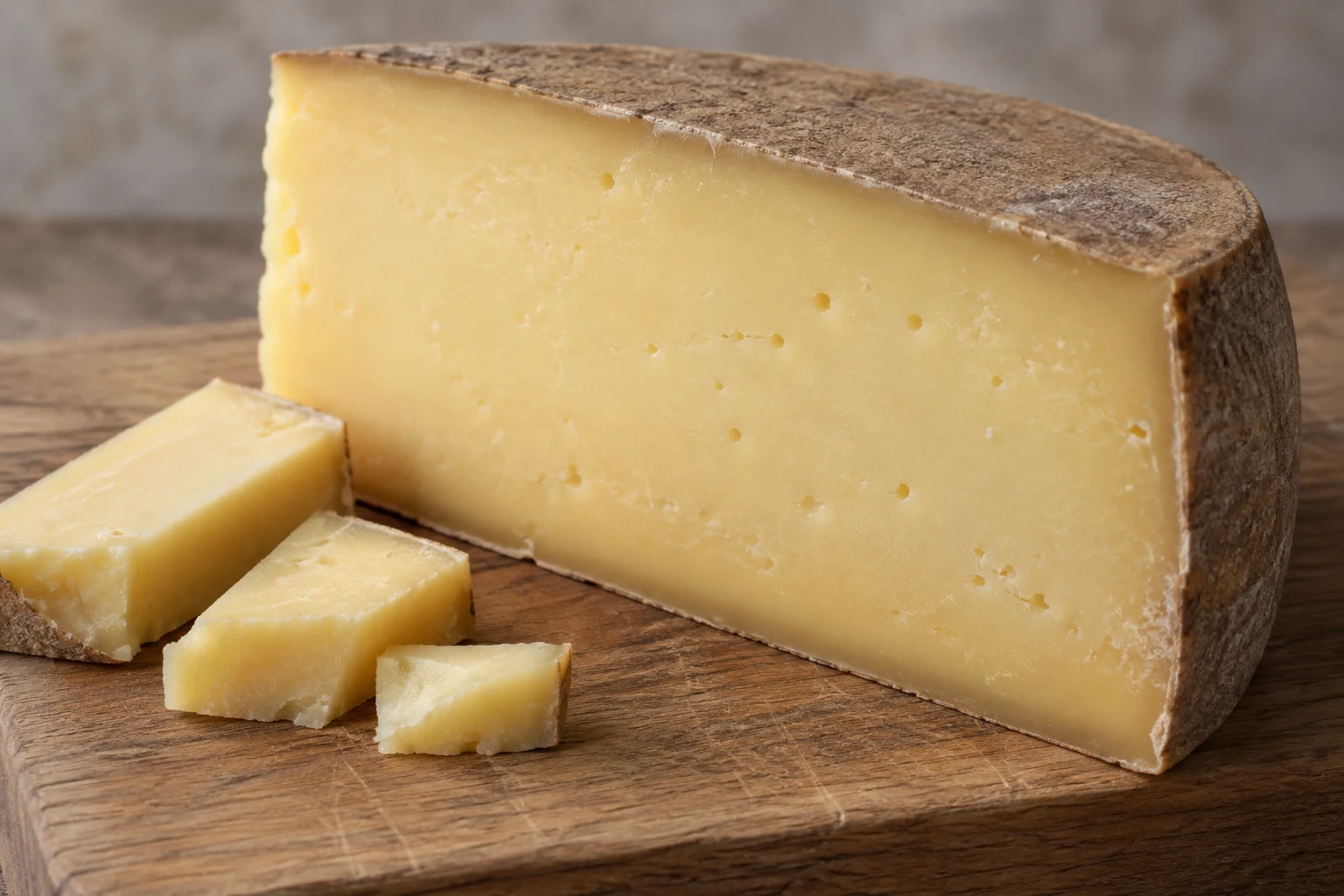
FranceJura cheese
Comté: A Wheel’s Age Is Only Part of Its Story
Comté connects Jura milk producers, village fruitières and specialist affineurs. Learn why season, dairy and cellar matter alongside age, and how to make a more useful comparison at the cheese counter.
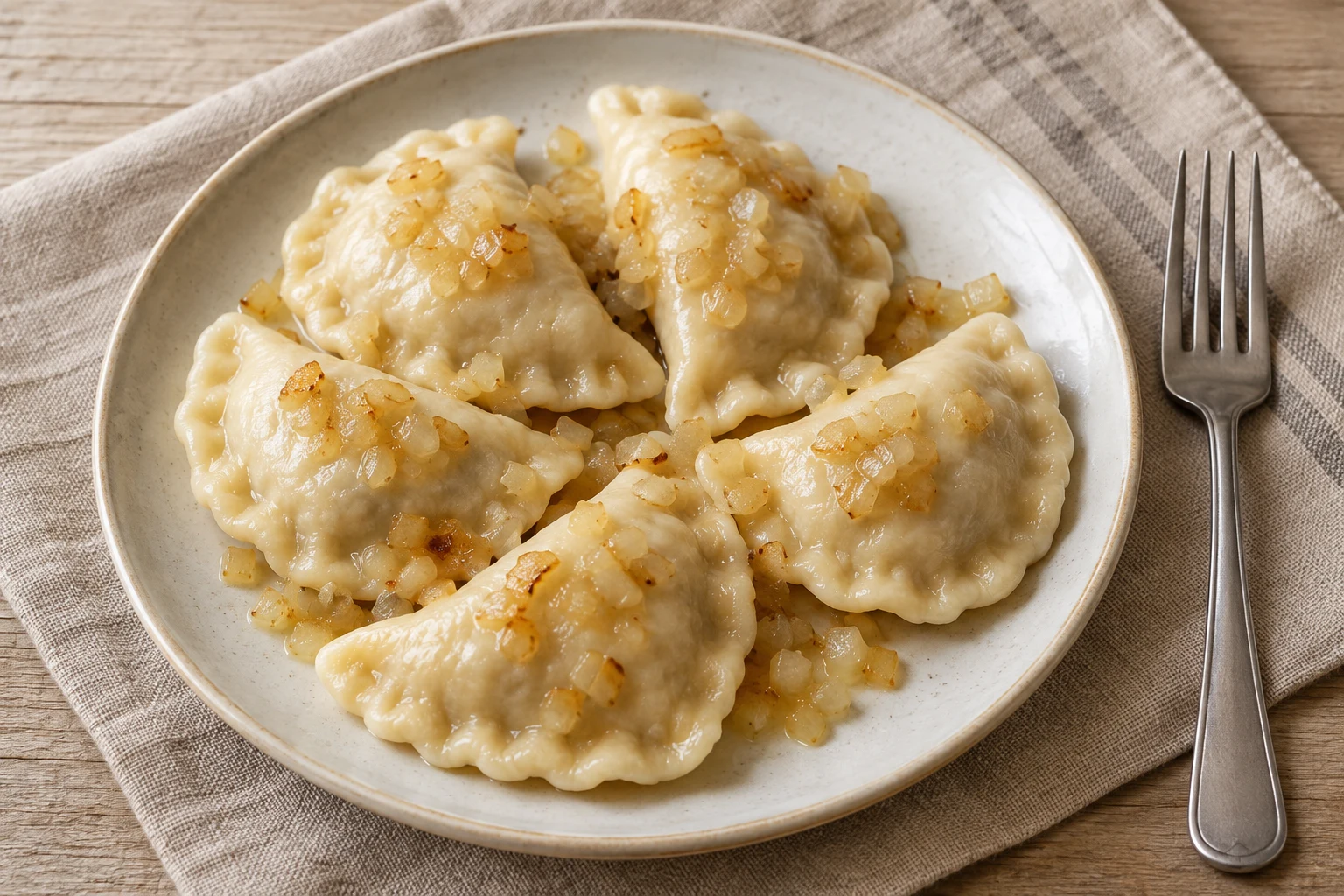
PolandDumplings
Meat Pierogi: Make the Filling Moist Before You Fold
Turn cooked soup beef into Polish meat pierogi. Learn how onion, carrot and a little broth soften the filling, then make a complete home adaptation.
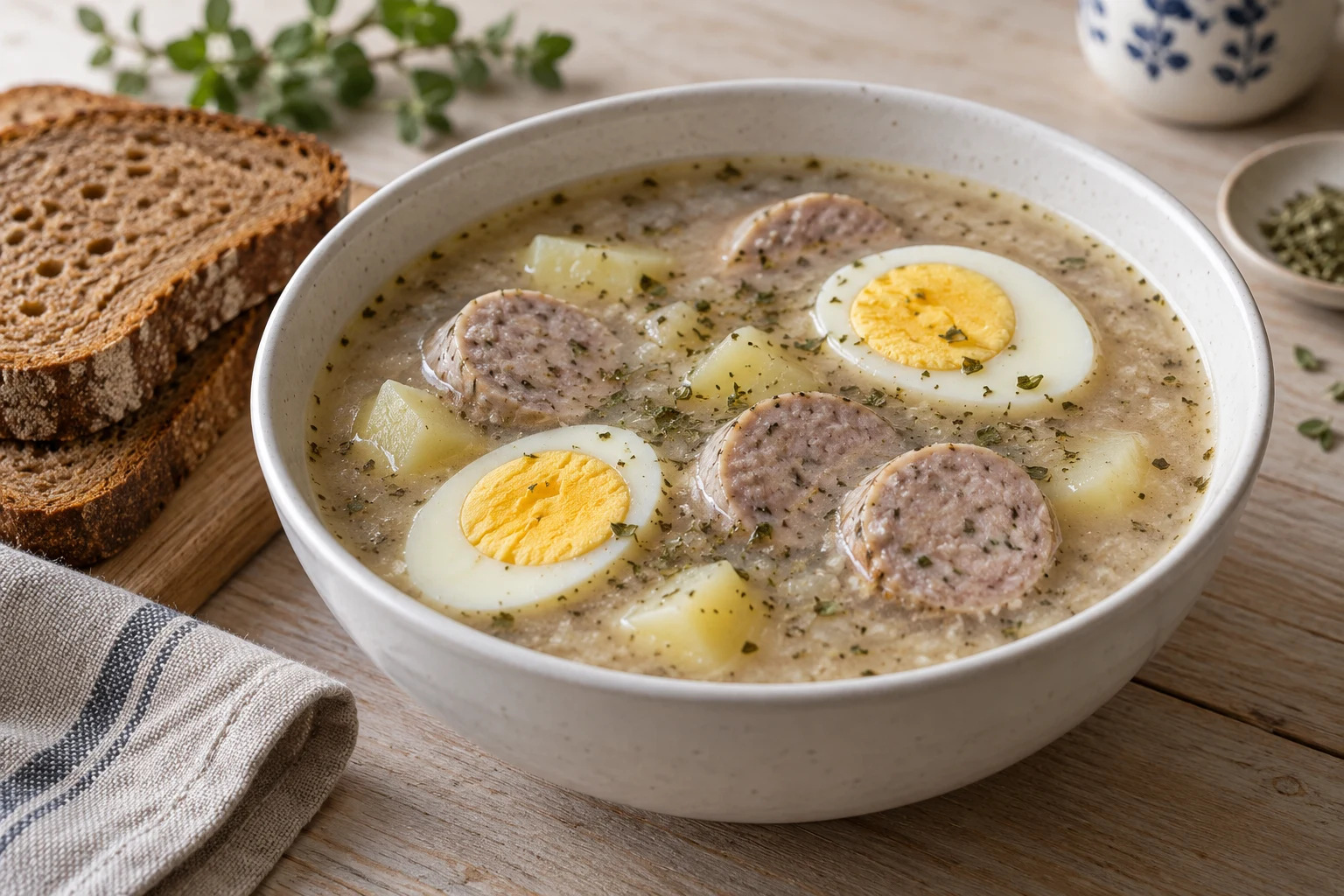
PolandSour rye soup
Żurek: The Sour Rye Starter Behind a Polish Soup
Żurek gets its tang from fermented rye flour. Follow the starter into an everyday regional bowl or an Easter soup with white sausage and eggs, and learn what to look for when buying zakwas.