
Meat Pierogi: Make the Filling Moist Before You Fold
Pierogi z mięsem
Soup meat has another meal in it. For Polish meat pierogi, grinding and seasoning the cooked beef comes before the folding—and the filling needs enough moisture to hold together without wetting the seam.
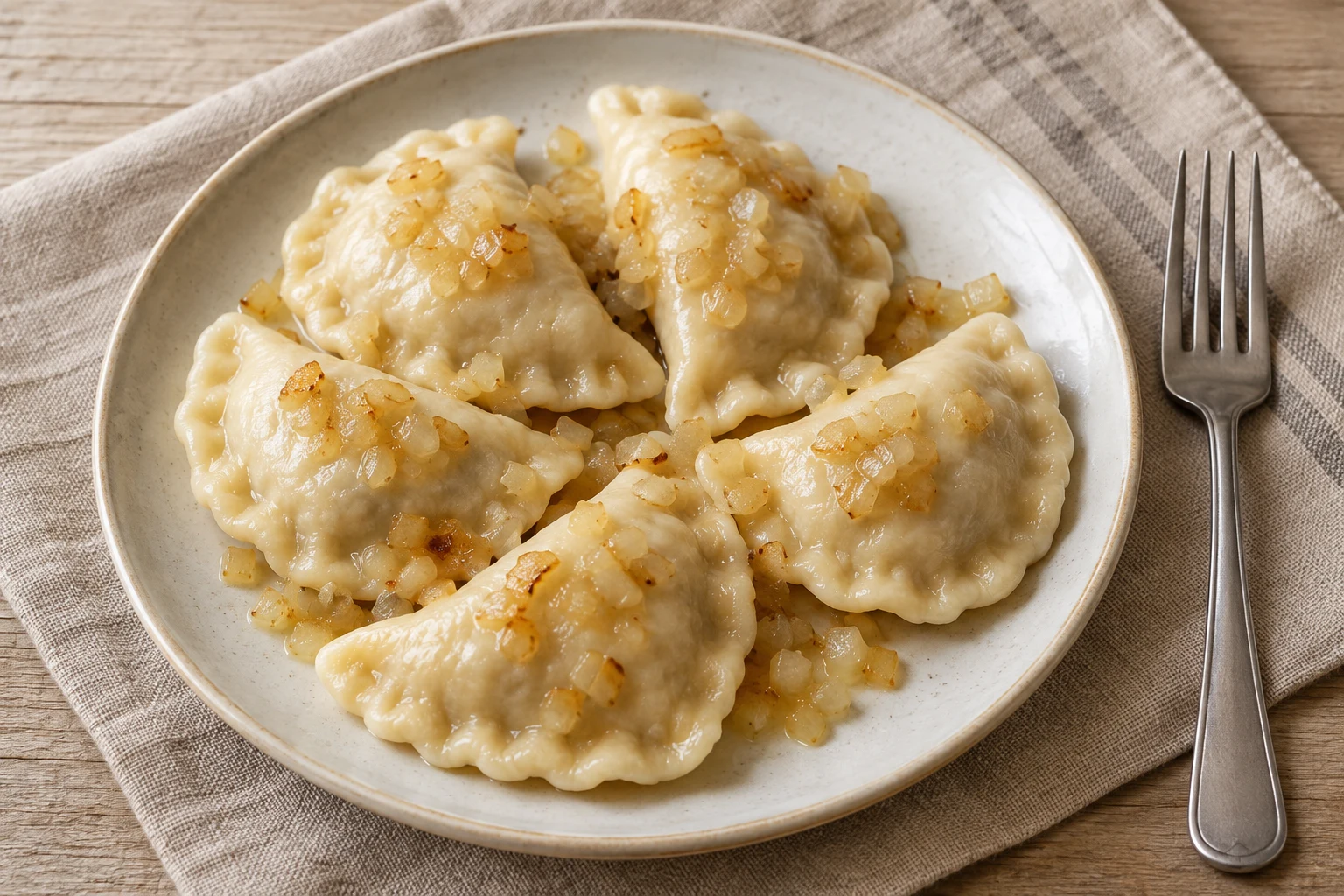
After the soup, before the dough
What makes cooked soup meat worth putting inside a dumpling? Pierogi z mięsem—pierogi with meat—offer a useful answer. The beef can already be tender yet still feel fibrous in a large piece. Grinding turns it into a filling that can be mixed with softened onion and seasoned throughout. Culture.pl’s guide describes meat pierogi as a family of fillings made from cooked, ground meat, enclosed in the familiar semicircular wrapper.
The link to soup is explicit in Polish home recipes. Olga Smile recalls her grandmother using beef from rosół for dumpling fillings. Kwestia Smaku uses meat and vegetables left from broth; AniaGotuje starts with cooked beef and onion, with soup vegetables as a possible addition. These are documented household approaches, with room for different meats and additions.
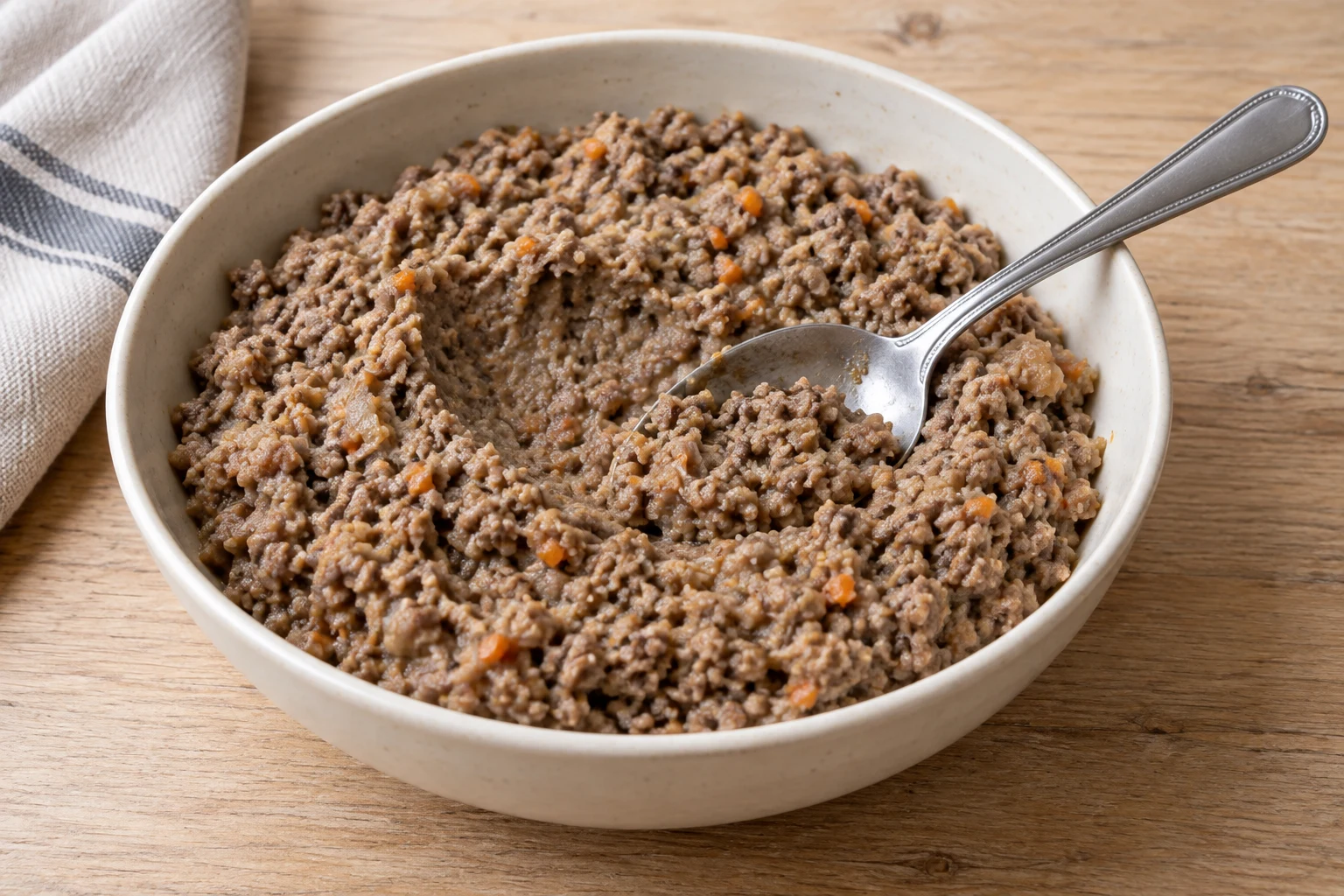
A cooked filling gives you a chance to adjust its texture before enclosing it. In the adaptation below, a little cooked carrot joins the beef and onion. Broth is added only if needed. The amount depends on how dry the meat is after its first cooking, so the useful target is a spoonful that gathers together without releasing liquid.
Read the filling before you fold
Olga Smile’s filling notes describe correcting consistency in either direction. The decisions below turn that advice into a check at the bowl.
It crumbles apart
Mix in a small spoonful of broth, then check again. Cooked onion and soup vegetables also contribute moisture; AniaGotuje specifically notes the effect of adding the vegetables. Pouring in all the available stock at once makes it harder to stop at the right point.
It holds a soft mound
Stop adding liquid. The mixture should be easy to portion while keeping the dough’s sealing edge clean. Kwestia Smaku stresses that filling caught in the join interferes with closing the dumpling.
Liquid collects around it
Do not put a wet spoonful into the wrapper. Olga Smile suggests cooking an overly loose filling in a pan to reduce it. Let it cool promptly in a shallow container before shaping; adding more dry flour to the wrapper would leave the filling problem unresolved.
Home adaptation
Beef pierogi with carrot and onion
Makes about 32 pierogi, or 4 main-course servings. Allow about 1 hour 45 minutes, including a 30-minute dough rest; shaping speed will vary. Start with already-cooked, chilled beef from broth, weighed after removing bones and tough gristle. This adaptation combines the cooked-meat methods of Kwestia Smaku and AniaGotuje with Olga Smile’s broth adjustment. It has not been kitchen-tested.
Ingredients
Dough
- 300 g, plus a little for dusting plain wheat flour (all-purpose)
- 180 ml, plus 5–10 ml if needed hot water
- 15 ml (1 tbsp) neutral oil
- ½ tsp fine salt
Filling and onion topping
- 400 g cooked boneless beef from broth, chilled and trimmed
- 75 g cooked carrot from the soup, drained and chilled
- 300 g peeled onion, finely diced; half of the cooked mixture goes into the filling and half on top
- 30 ml (2 tbsp) neutral oil, for the onions
- Up to 60 ml (4 tbsp), as needed cold beef broth, preferably lightly salted
- ¼ tsp, or to taste fine salt for the filling
- ½ tsp ground black pepper
For boiling
- 3 litres water
- 2 tsp fine salt
Method
- 1
Make and rest the dough.
Combine the 300 g flour and ½ tsp salt. Stir in 180 ml hot water and the 15 ml oil with a spoon. Once comfortable to handle, knead for 7–8 minutes until smooth and pliable. If dry crumbs remain, work in the extra water a teaspoon at a time. Cover and rest for 30 minutes. Cook the onions during this rest.
- 2
Cook the onions and divide them.
Heat the 30 ml oil in a wide frying pan over medium-low heat. Add all 300 g diced onion and cook for 12–15 minutes, stirring, until soft and lightly golden. Divide the cooked onion and its oil into two equal portions. Refrigerate one portion in a shallow container for serving. Spread the other in a shallow dish to lose its heat while the dough rests.
- 3
Grind and adjust the filling.
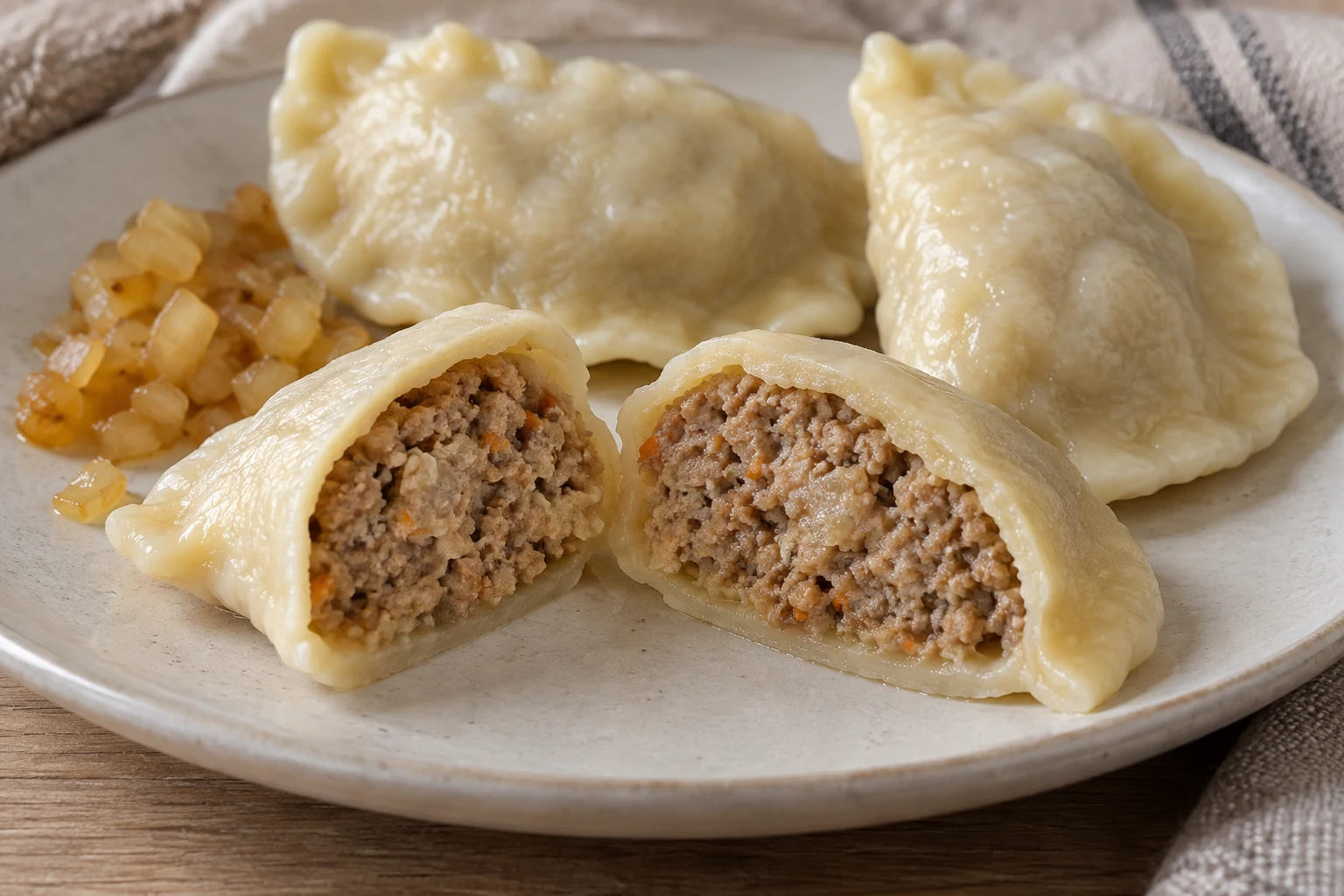
Cut the chilled cooked beef into small pieces. Pass it, the carrot and the cooled filling portion of onion through a meat grinder, or pulse them in a food processor until finely chopped and cohesive. Mix in the pepper and filling salt, adjusting for the broth’s seasoning. If the mixture crumbles rather than gathering, add cold broth one tablespoon at a time, up to 60 ml. Stop when a spoonful holds together with no free liquid. Keep the filling refrigerated until shaping.
- 4
Fill and seal the crescents.
Divide the dough into four pieces and keep three covered. On a lightly floured surface, roll one piece about 2.5 mm thick and cut 8 cm rounds. Put roughly 1 rounded tablespoon of filling, about 19–20 g, in each centre. Fold in half, ease out trapped air and pinch the curved edge firmly, leaving it free of filling. If the dough edge has dried, dampen it lightly with water before sealing. Keep shaped pierogi covered on a lightly floured tray. Repeat, rerolling the scraps; aim for about 32 and adjust the last portions to use the filling evenly. Keep filling not currently in use chilled.
- 5
Boil, check the centre and serve.
Bring the 3 litres water and 2 tsp salt to a boil in a large pot. Add 8–10 pierogi at a time, gently freeing any stuck to the bottom. Once the water returns to a boil, reduce to a steady gentle boil. Begin checking 3–4 minutes after they rise: the dough must be tender, with no floury layer, and the centre of the filling must reach 165°F (74°C) on a food thermometer. Continue cooking if either check fails. Lift out with a slotted spoon and drain well. Reheat the reserved onion in its pan until steaming hot, then divide it over the four servings.
Research notes
Sources behind the filling
Polish cultural and cooking sources establish the cooked-meat approach and its variations. Official guidance supplies the storage and reheating checks used in this adaptation.
- Magdalena Kasprzyk-Chevriaux, Culture.pl — Polish Food 101: Pierogi Polish dumpling shape, cooked-and-ground meat fillings and customary toppings.
- Kwestia Smaku — Pierogi z mięsem Soup meat and vegetables, cooked onion, filling options and clean sealing edges.
- AniaGotuje — Pierogi z mięsem Cooked beef filling, onion, vegetable moisture and a hot-water dough method.
- Olga Smile — Pierogi z mięsem z rosołu Family use of soup beef and adjustments for a dry or overly loose filling.
- Kwestia Smaku — Ciasto na pierogi Dough resting, rolling thickness and checking the cooked wrapper.
- FDA — Are You Storing Food Safely? Refrigerator temperature and room-temperature time limits for perishable food.
- FoodSafety.gov — Cold Food Storage Chart Refrigerated storage windows for cooked meat and soups.
- FoodSafety.gov — Safe Minimum Internal Temperatures A thermometer check of 165°F (74°C) for reheated leftovers.
Keep exploring
More stories for your table
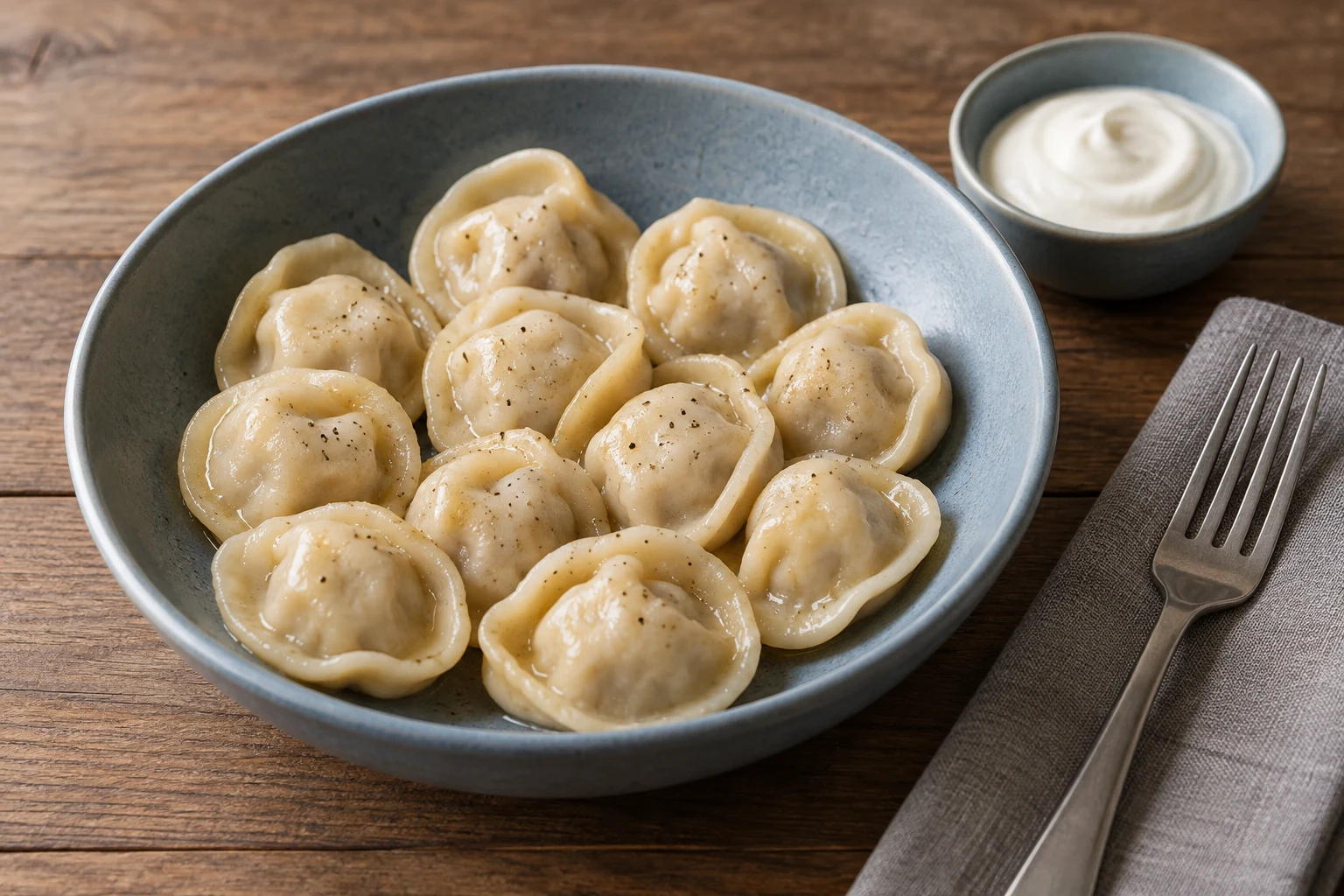
RussiaDumplings
Pelmeni: The Shared Work Behind a Quick Meal
Pelmeni turn a session of rolling, filling and folding into meals for later. Explore their regional context, how to freeze a batch, and two ways to serve it.
PolandPoultry
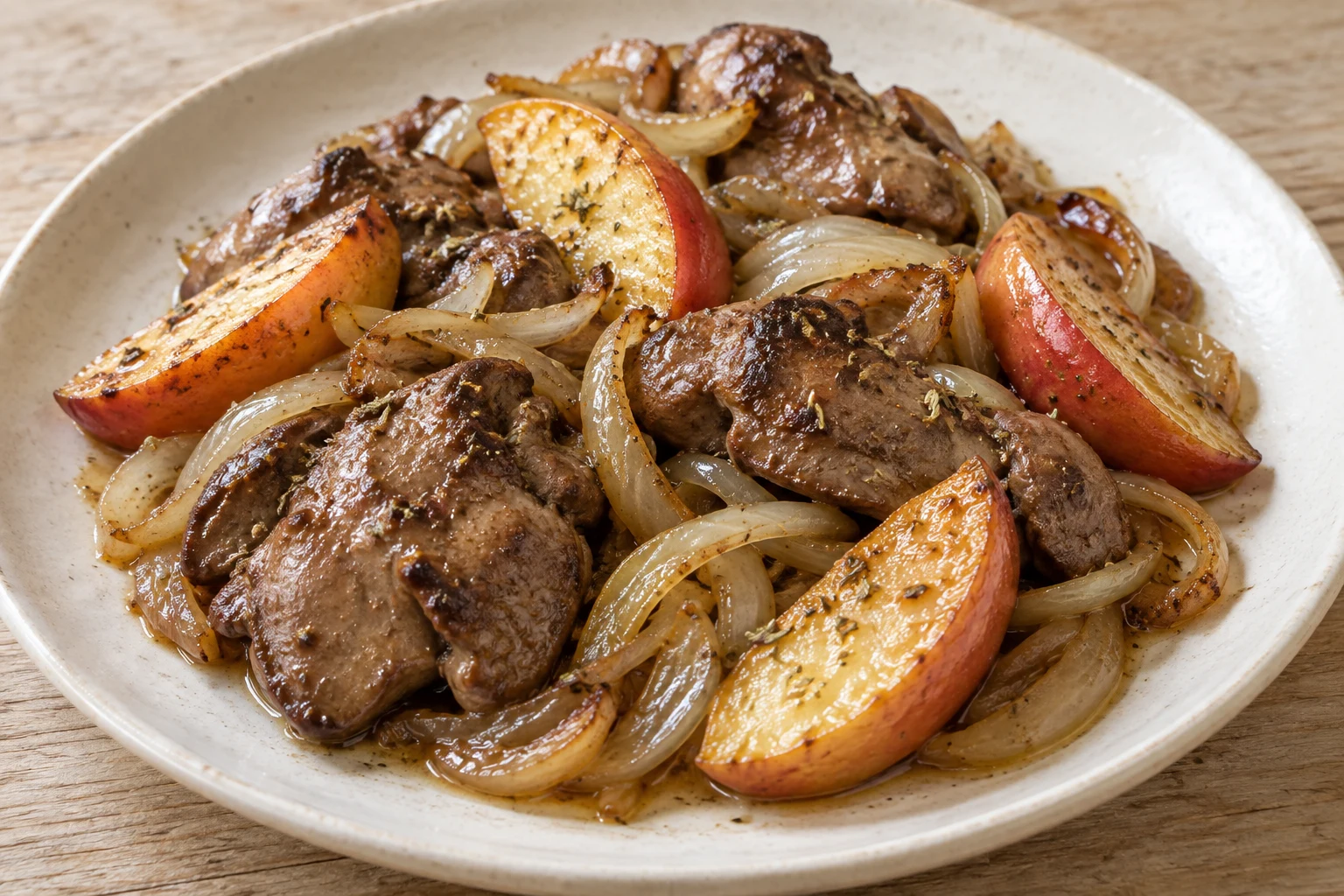
Polish Chicken Liver: Let the Apples Keep Their Shape
Cook Polish chicken liver with soft onions and distinct apple wedges. A comparison of local methods leads to a complete recipe with a measured safe finish.
JapanMeat & potato simmer
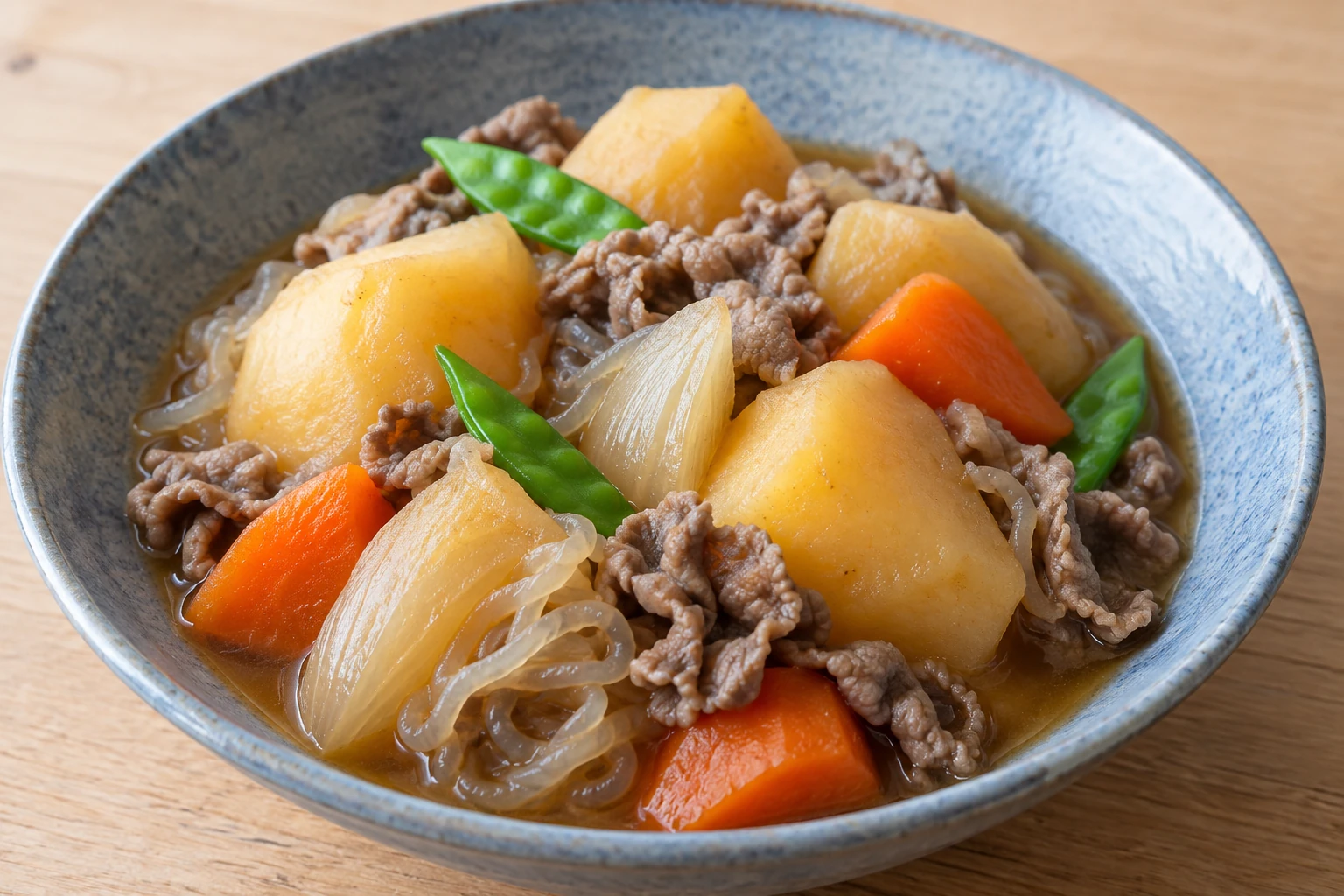
Nikujaga: Keep the Potatoes in One Piece
A gentle simmer, thin beef and a lid resting on the food help nikujaga’s potatoes stay intact. Learn the technique and make a complete four-serving home adaptation.