
Leniwe: The Cheese Is Already in the Dough
Kluski leniwe
Polish leniwe mix twaróg into the dough before shaping. Firm cheese, careful flour choices and named sweet or savoury finishes explain these simple dumplings.
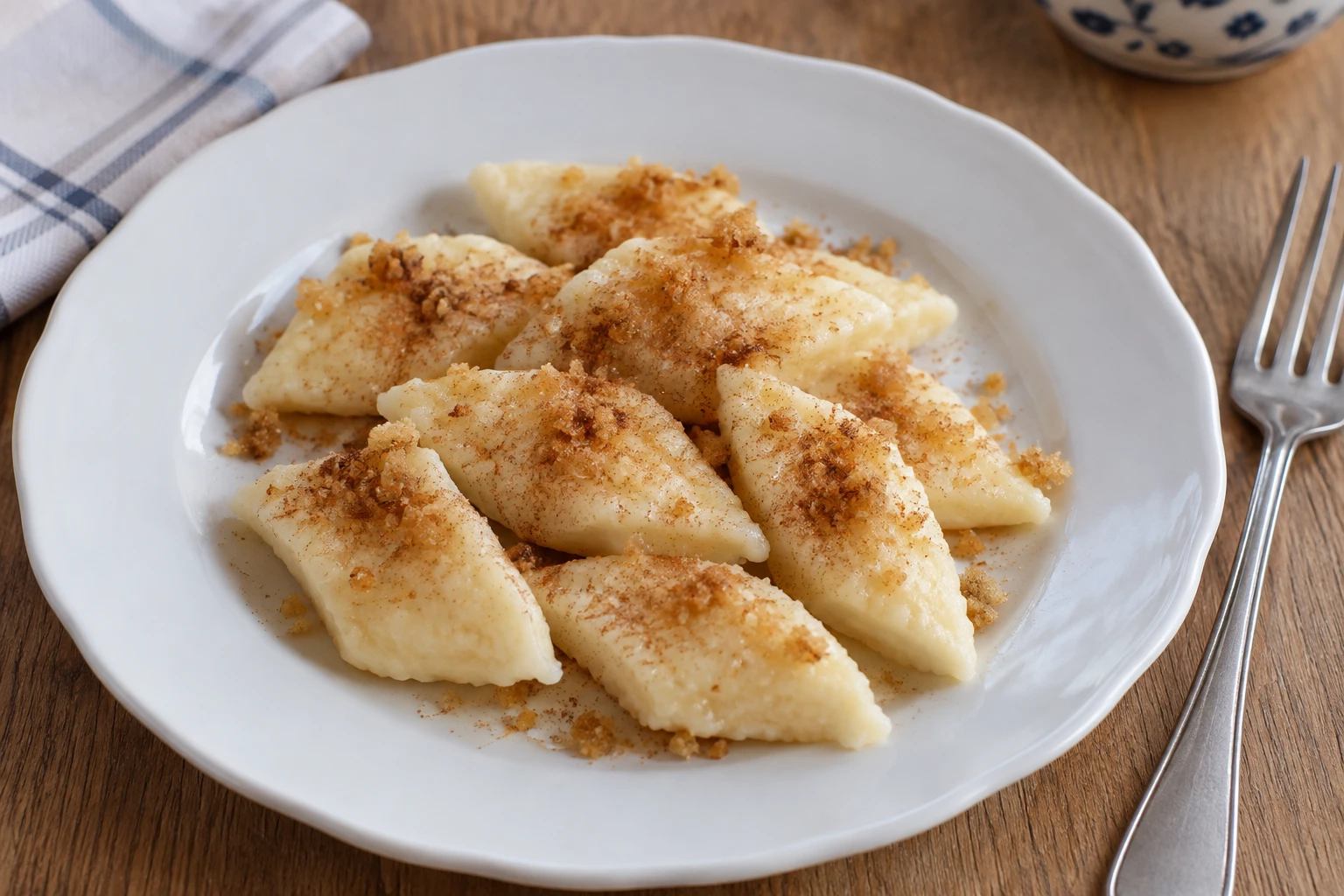
A cheese dumpling with one mixture
Kluski leniwe and pierogi leniwe name the same kind of Polish cheese dumpling in the recipes here. The word pierogi can suggest a filled parcel, but these have another structure: twaróg, egg and flour are mixed together before the dough is shaped and boiled. There is no separate cheese filling to enclose.
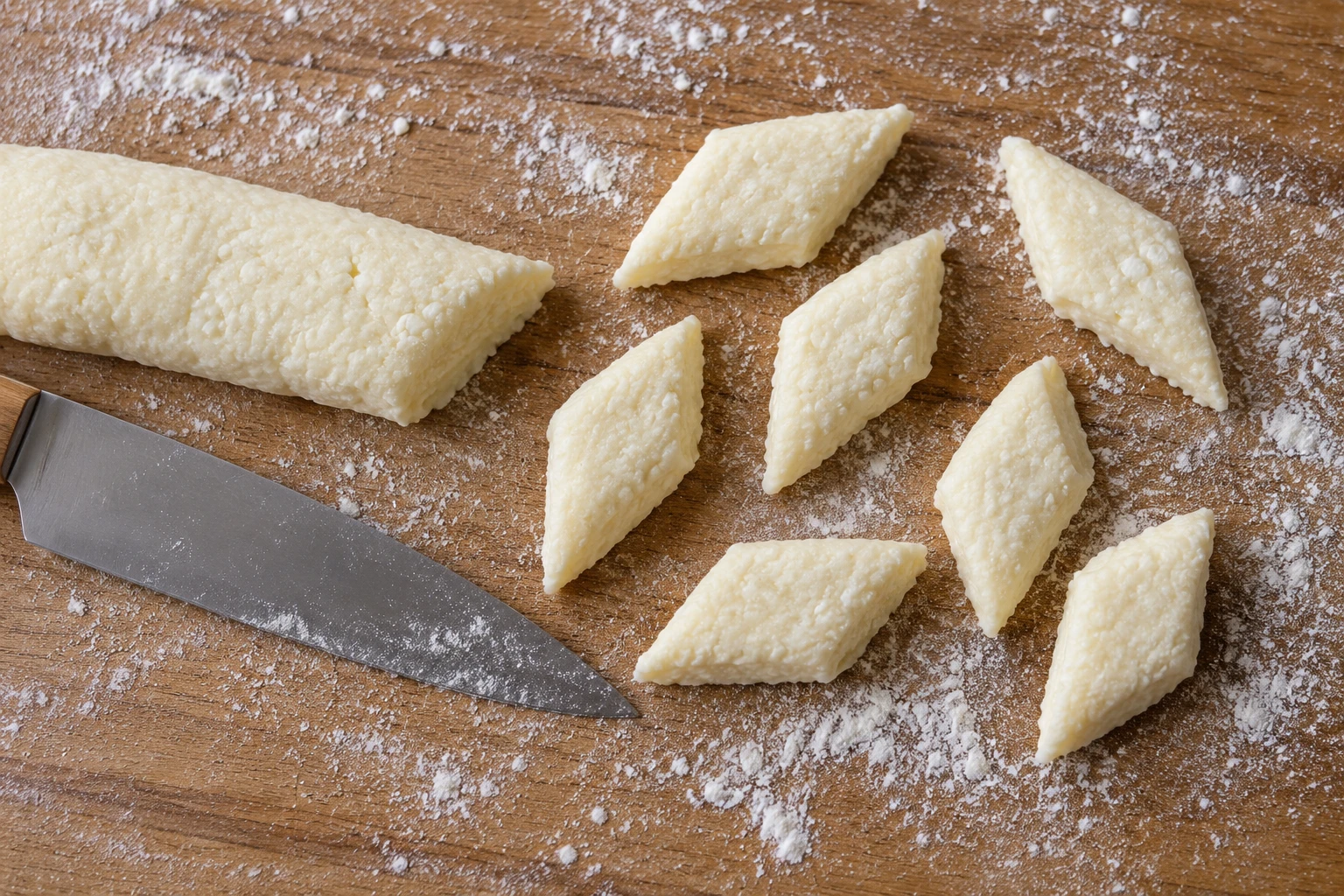
Magdalena Kasprzyk-Chevriaux’s Culture.pl guide places leniwe among Poland’s many forms of kluski. It describes dough rolled and cut into small diagonal pieces. That structure is the useful distinction to remember at a menu or a mixing bowl. The cheese belongs throughout the dumpling, while the sauce or topping is chosen for the finished plate.
Start with the cheese the recipe expects
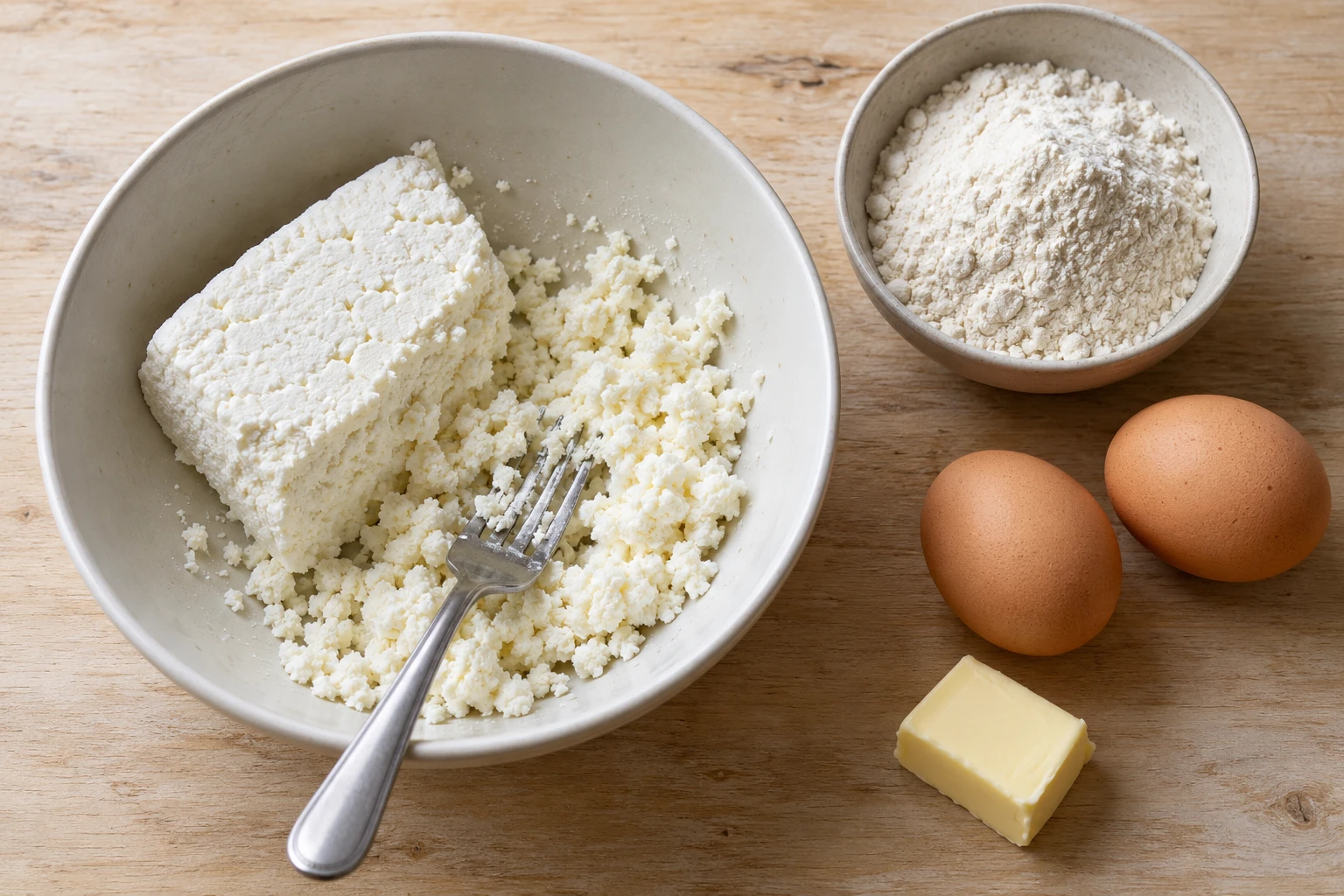
AniaGotuje chooses firm twaróg sold in blocks or paper-wrapped portions rather than looser ground cheesecake cheese from a tub. She grinds or presses it before mixing. The condition of the cheese matters; the label white cheese alone does not establish how it will behave.
That is a reason to read the ingredient line before adapting the dough. A compact curd and a loose cheese mixture begin with different amounts of moisture. The recipe’s flour allowance makes more sense when its stated cheese is in front of you.
Two egg methods, kept with their recipes
Both use cheese dough, but the mixing sequences differ.
A whole egg mixed into the cheese
Kwestia Smaku’s ingredient list uses whole egg with fatty twaróg. The preparation crushes the cheese with egg and salt, then quickly combines it with wheat flour and a little potato starch. Potato starch in this formula is not a portion of mashed potatoes.
Whites folded in separately
AniaGotuje separates the eggs, mixes yolks with the cheese and later folds in beaten whites. She warns against adding more flour simply because this mixture feels sticky: in her preparation, extra flour makes the dumplings harder.
Shape promptly, without a filling stage
Kwestia Smaku briefly brings its ingredients together, divides the dough and rolls each portion into a log. A broad knife flattens the roll before diagonal cutting. The board can receive a little flour as needed, but the object is still to handle a soft cheese dough.
The similarity to another cut dumpling does not establish its ingredients. AniaGotuje specifically describes her family’s leniwe without cooked potatoes, while acknowledging that some households use them. Treat that as a difference between recipes rather than deciding a dumpling’s contents from its outline alone.
Watch the dumplings in the water
- 01
Use the chosen dough’s method
AniaGotuje cooks in batches with the water bubbling gently rather than vigorously. Her soft whipped-white preparation has its own handling instructions; it should not inherit an unrelated dough’s cooking clock.
- 02
Check the centre
Moje Gotowanie’s published preparation checks one dumpling after the pieces rise, to establish that it is cooked rather than raw inside. Rising is a useful cue to inspect the batch, not a reason to ignore the centre.
- 03
Lift and drain
The same preparation lifts the cooked dumplings with a slotted spoon and drains them. Have the topping ready so that the finished dumplings can be dressed after leaving the water.
Breadcrumbs are one finish; sage butter is another
Kwestia Smaku lightly browns breadcrumbs in a pan before adding butter and stirring the topping together. This gives the pale dumplings a distinct crumb finish without hiding their shape beneath a heavy sauce.
For a savoury example, Marysia Przybyszewska’s recipe in the Expo 2015 cookbook Apetyt na Polskę dresses leniwe with garlic-and-sage brown butter. She watches the butter in a pale-bottomed pan, adds the aromatics when it becomes golden brown and immediately transfers it to a cold vessel. Her named version shows that leniwe need not always arrive as a sweet plate.
Choose that finish as part of a complete preparation. The cheese dough remains the centre of the dish; breadcrumb butter and aromatic brown butter give it different settings at the table.
Research notes
Sources and dough choices
Original Polish preparations support the cheese and mixing distinctions. The cultural guide cites the Expo chef’s savoury example, so those two references share that recipe lineage.
- AniaGotuje: Kluski leniwe Firm twaróg, separated eggs, flour restraint, gentle batch cooking and acknowledged household potato variations.
- Kwestia Smaku: Leniwe Whole-egg ingredient method, wheat flour with potato starch, diagonal shaping and buttered breadcrumbs.
- Moje Gotowanie: Leniwe preparation from its October 2016 magazine Cooking-stage check of a dumpling’s centre, slotted-spoon removal and draining; its later baked variation is not reproduced.
- Culture.pl: Magdalena Kasprzyk-Chevriaux’s Polish dumpling guide Leniwe’s mixed-dough structure within the broader kluski family and a named savoury interpretation.
- Apetyt na Polskę: Marysia Przybyszewska’s leniwe, printed pages 88–89 Expo 2015 bilingual cookbook: garlic-and-sage brown butter and its transfer out of the hot pan.
Keep exploring
More stories for your table
Polish cuisine Baked cheesecakes
Sernik: read the cheese before choosing the cake
Polish sernik begins with twaróg. Compare crustless and pastry-based cakes, folded egg whites and cooling choices before picking a recipe.
Polish cuisine Dumplings
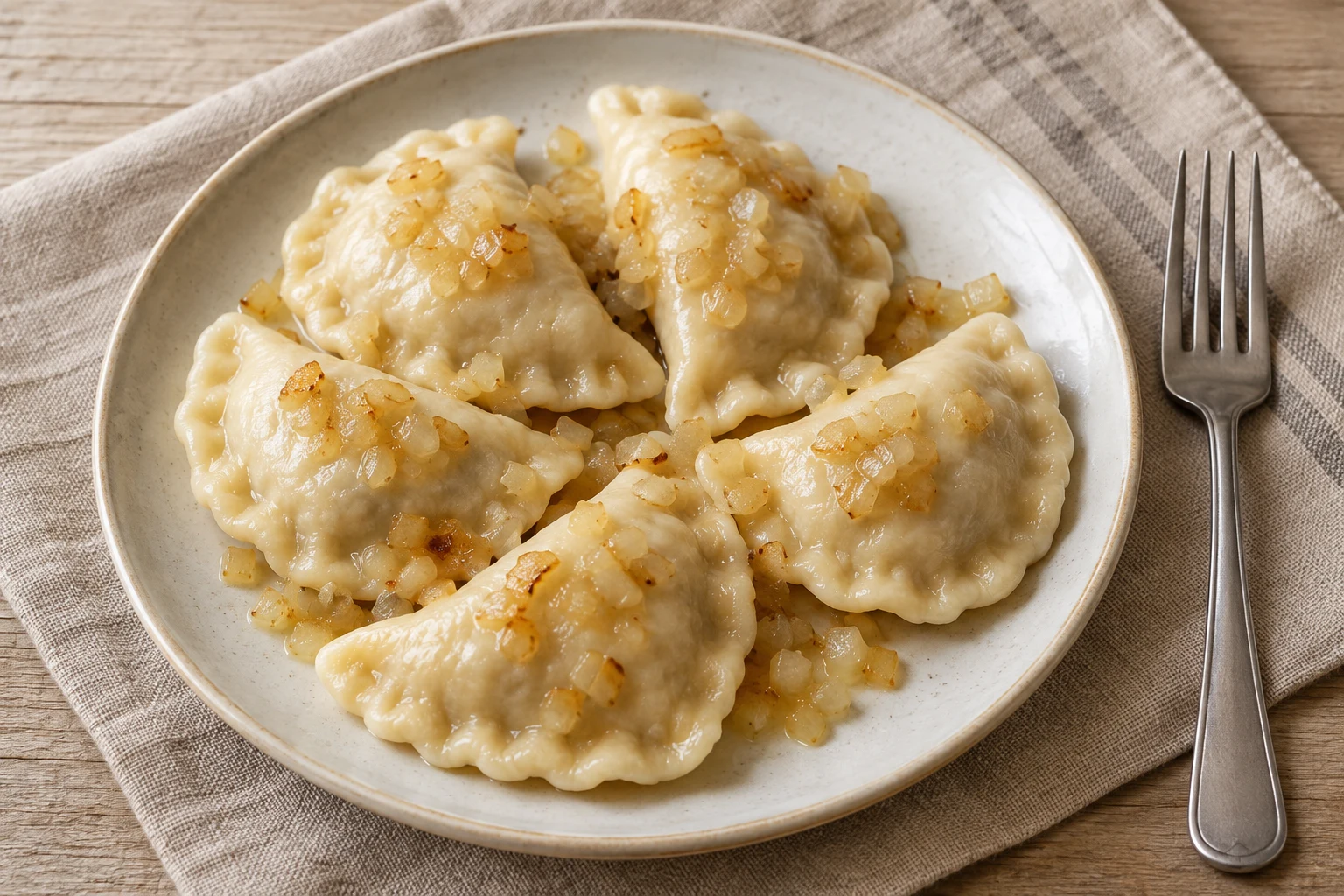
Meat Pierogi: Make the Filling Moist Before You Fold
Turn cooked soup beef into Polish meat pierogi. Learn how onion, carrot and a little broth soften the filling, then make a complete home adaptation.
Georgian cuisine Open cheese bread
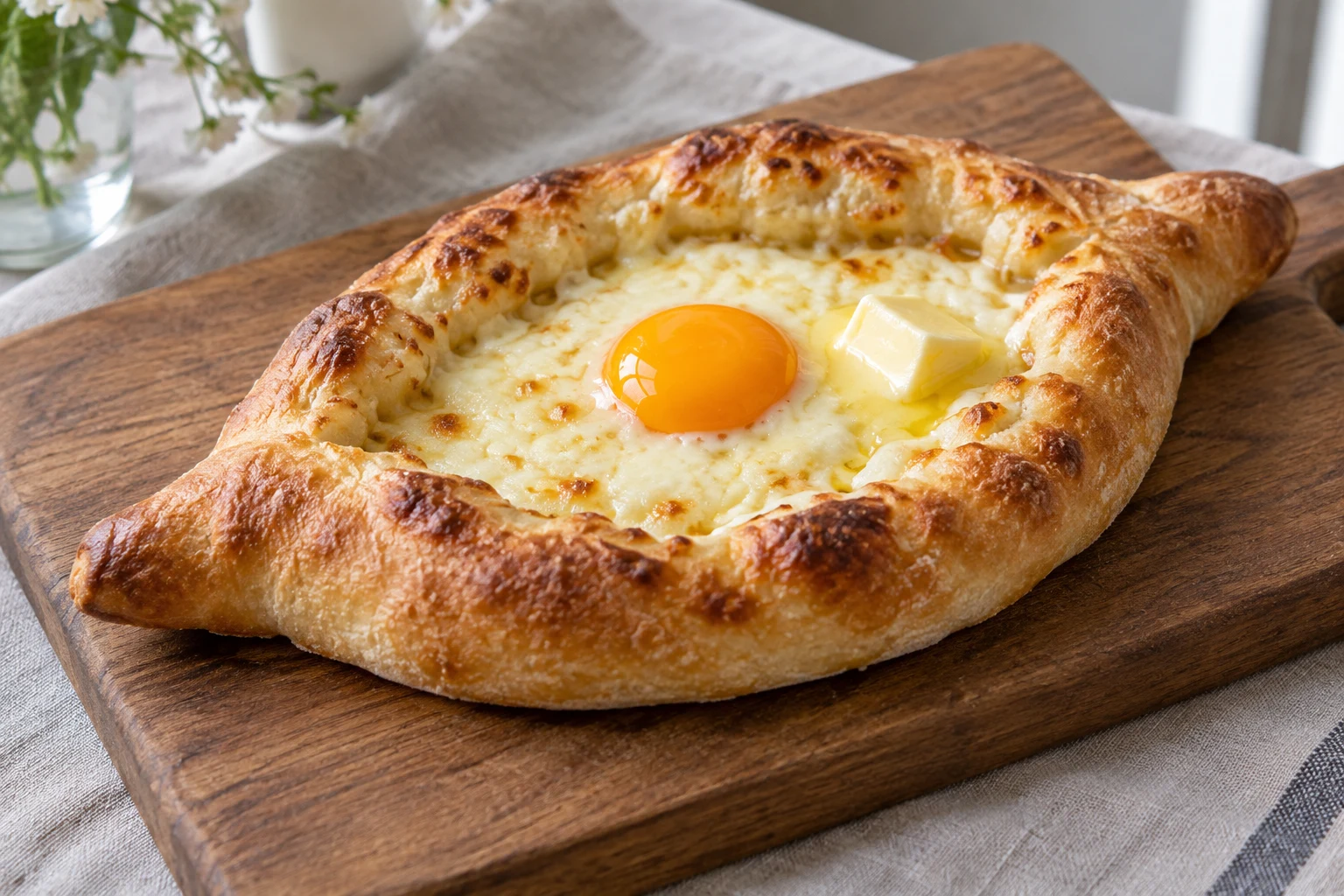
Adjarian khachapuri: read the boat before the first bite
Understand the open boat of Adjarian khachapuri, its late egg finish and regional identity, with clear distinctions between Georgian and adapted cheese recipes.