
Rocoto relleno: Arequipa’s stuffed hot pepper
Rocoto relleno
The round pepper is the centre of the plate. Its filling, cap and potato accompaniment turn rocoto relleno into a study in heat, tenderness and texture.
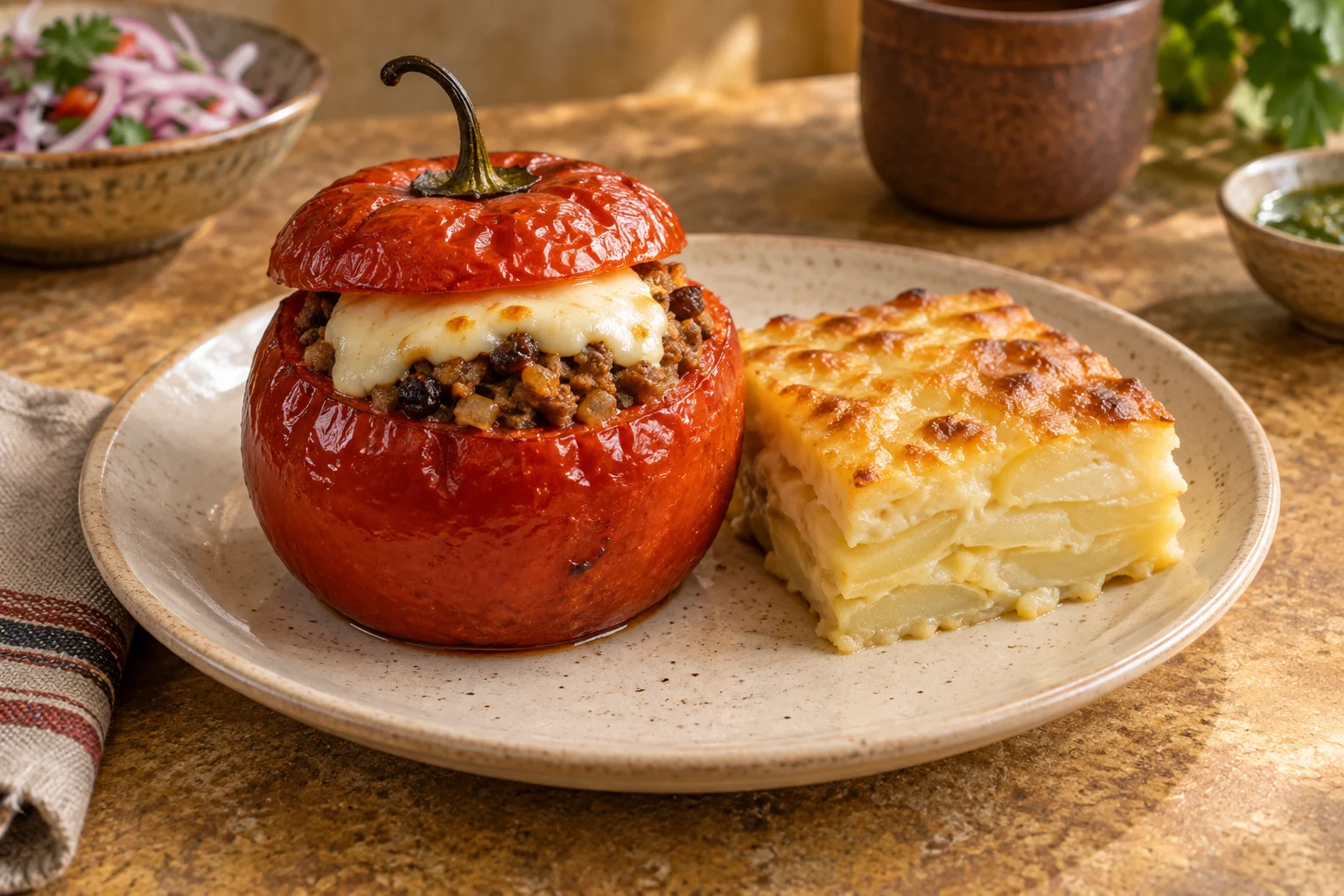
Arequipa, Peru
A hot pepper with a full meal inside
Rocoto relleno takes a round, thick-fleshed hot pepper, opens it at the top and fills the cavity with a savoury meat mixture. Cheese sits under or near the cap, and the stuffed pepper goes into the oven. PROMPERÚ identifies it with Arequipa and pairs it with pastel de papa. The result brings together a juicy shell, a seasoned filling and a softer potato companion.
The pepper may resemble a small sweet pepper at first glance, but rocoto remains a hot ingredient. Tamara Andersen’s account of cooking with rocoto and manzano peppers stresses that difference. A bell-pepper substitution can carry a similar filling, but it changes a central flavour of the dish.
Read the dish in three parts
For a recipe you choose, check the shell, filling and oven finish separately. Each has a different job.
- 01
Keep the shell whole
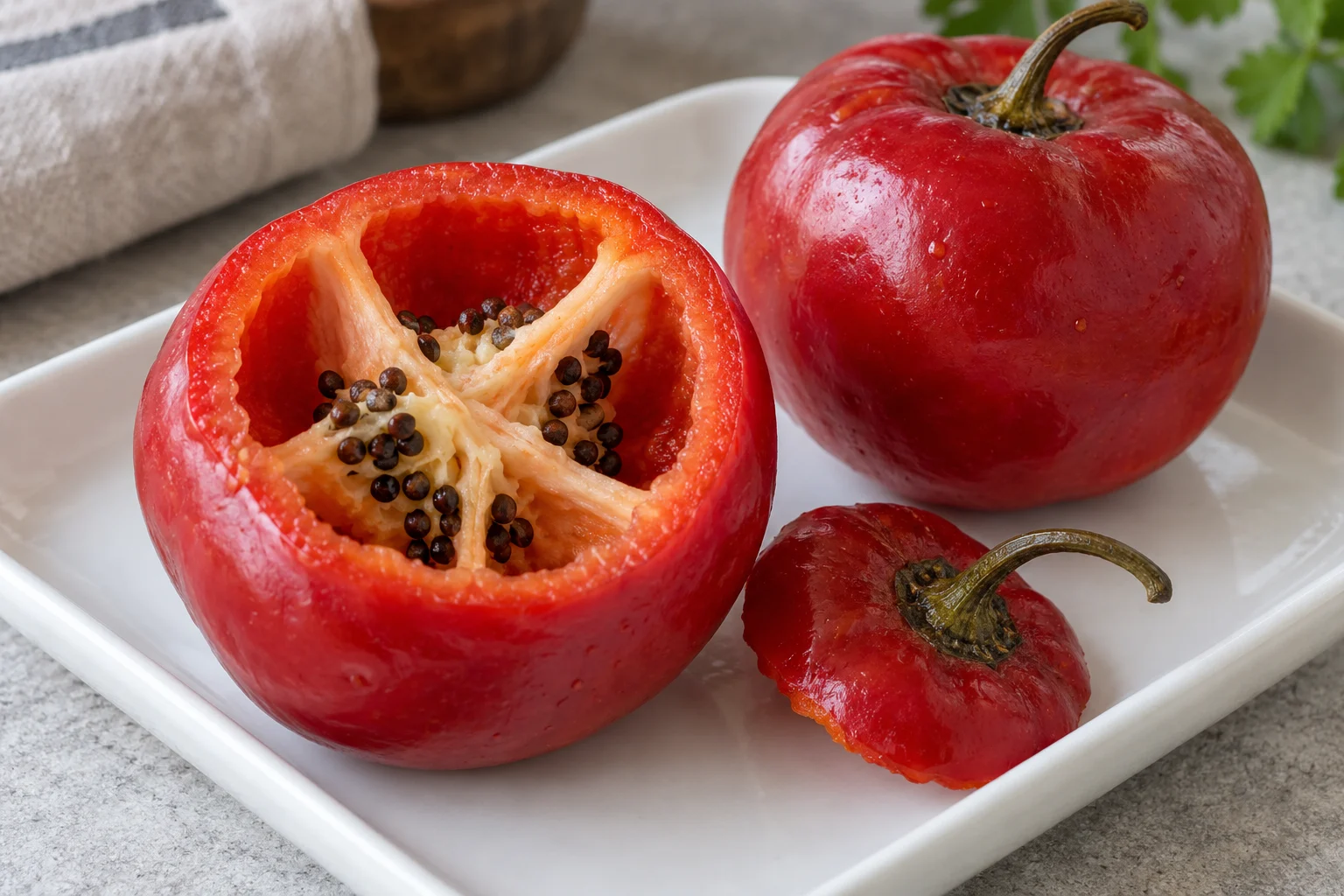
Cut a shallow cap around the stem, then remove the seeds and pale inner ribs with a spoon. Keep the bottom and walls intact so the filling has a vessel. Gloves are useful when working with hot peppers; avoid touching your eyes. Peppers of similar size are easier to arrange and finish together.
- 02
Reduce heat without promising mildness
Gastón Acurio’s recipe in Chasqui calls for three blanchings in sweetened water. PROMPERÚ describes a water, salt and vinegar treatment. These are different preparations rather than a single fixed rule. Follow the chosen recipe’s sequence and change the water when directed. Rocoto can still be hot afterward; repeated treatment does not guarantee a mild pepper.
- 03
Drain before stuffing
Let prepared peppers drain with their openings downward, then set them upright in a snug baking dish. A puddle left inside dilutes the filling. Keep the caps with the shells, especially when sizes differ. The walls should hold their shape; a shell already collapsing needs particularly gentle handling.
- 04
Make a cohesive filling
Cook the filling separately before assembling the peppers. Finely diced meat gives distinct small bites; ground meat gives a finer texture. Onion should be softened, and any added stock should become part of a moist mixture rather than remain as free liquid. Spoon the filling in without crushing it into a dense plug.
- 05
Check beneath the cheese
A golden surface only tells you about the top. Follow the recipe’s oven temperature and time, then check the centre. FoodSafety.gov gives 71°C / 160°F for ground beef or pork and 74°C / 165°F for a meat-containing casserole. For an assembled meat-filled bake, use the latter centre-temperature check; do not judge it by melted cheese alone.
The filling has room for variation
These three recipes share a stuffed rocoto but arrange its contents differently.
Diced meat and a binder
Acurio’s Chasqui version combines diced beef and pork with ají panca. Crushed biscuits bind the filling, while a milk-and-egg mixture and cheese finish the baking dish. It also includes cooked potato slices.
- A distinct diced texture.
- The surrounding bake is part of this version.
A picantería’s meat mixture
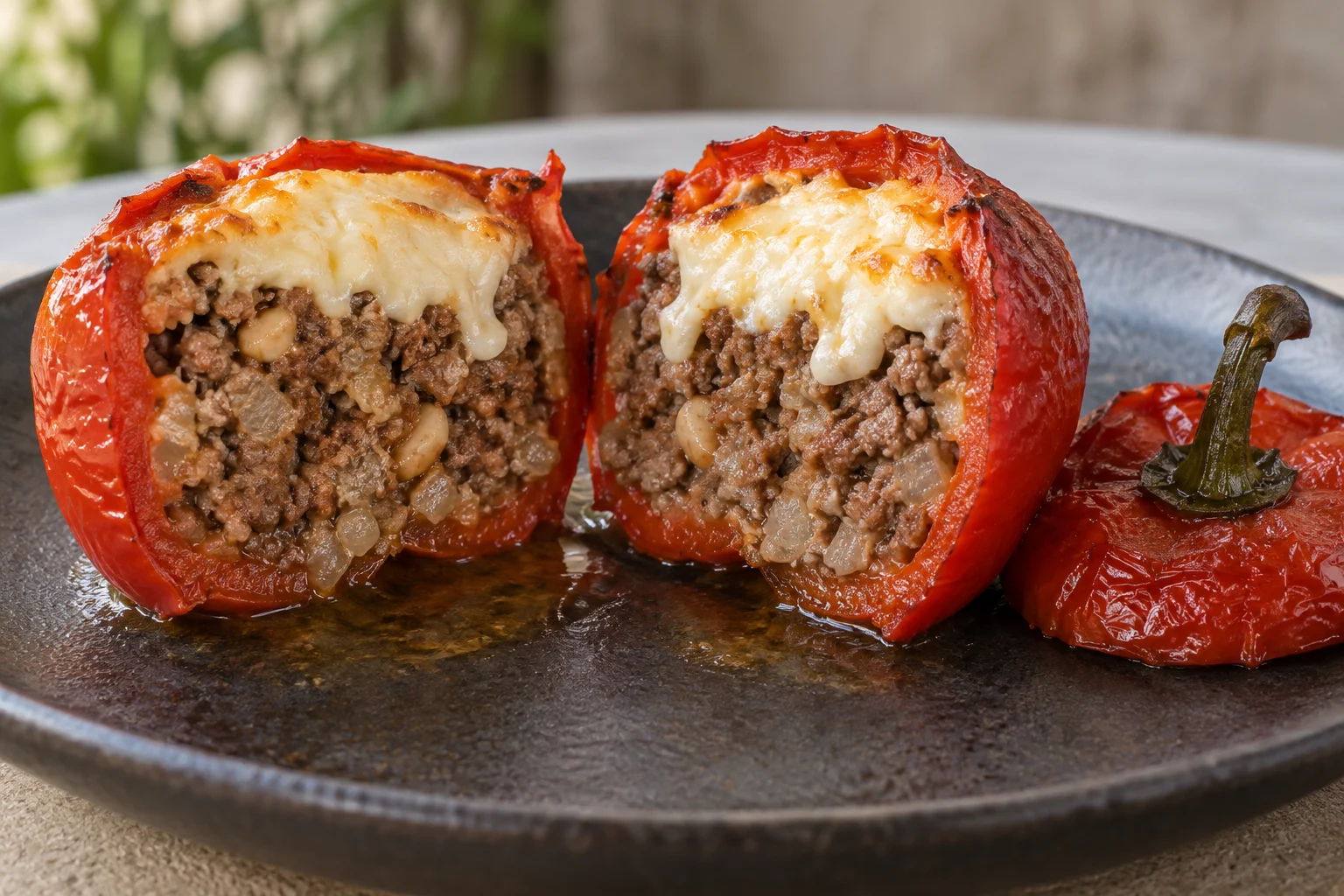
The Antuquita monograph describes beef and pork browned separately before joining an onion, garlic and ají panca base. Ground toasted peanuts and oregano complete the mixture; cheese and the pepper cap sit above it.
- Peanut contributes body.
- The recipe belongs to a named family kitchen.
Ground-meat adaptation
Andersen uses ground bison or beef and adds chopped hard-cooked egg, raisins, olives, peanuts and cotija. Her queso fresco topping replaces the milk-and-egg surround. These additions describe her version, rather than mandatory ingredients for every rocoto relleno.
- Sweet and salty pieces punctuate the filling.
- Cheese is also mixed into the meat.
The potato belongs beside it
Pastel de papa gives the plate a layered, creamy accompaniment. The Antuquita account also records baked potato as an older serving style, alongside the potato bake used today. Plain baked potato and a milk-and-cheese potato dish offer different textures, so decide on the accompaniment when planning the pepper’s finishing style. A rich surrounding milk mixture plus a creamy potato bake makes a different plate from a pepper baked on its own.
Rocoto relleno also lives within the picantería meal. Antuquita’s account describes customers requesting it alongside other preparations, including the mixed plates called dobles and triples. That context helps explain why one stuffed pepper can share a plate with potatoes and other dishes. Begin with a bite that includes shell and filling together: that is where the pepper’s heat meets the meat, cheese and softened onion.
Research notes
Recipes and the Arequipa table
Peruvian cultural and tourism sources establish the regional setting. Named recipes show how the filling and bake can vary.
- PROMPERÚ: rocoto relleno and Arequipa Regional setting, pepper preparation and pastel de papa accompaniment.
- Chasqui, page 9: Gastón Acurio’s rocoto relleno Recipe credited to Perú, Una Aventura Culinaria (2002): diced meat, binder and milk-and-egg bake.
- Picantería Antuquita: Preservación, tradición y emprendimiento Family recipe on printed pages 24–25, potato accompaniments and mixed-plate context.
- Tamara Andersen: Rocoto Relleno Explicit ground-meat adaptation and practical account of pepper preparation.
- FoodSafety.gov: cooking temperature chart Ground-meat and casserole centre-temperature checks.
Keep exploring
More stories for your table
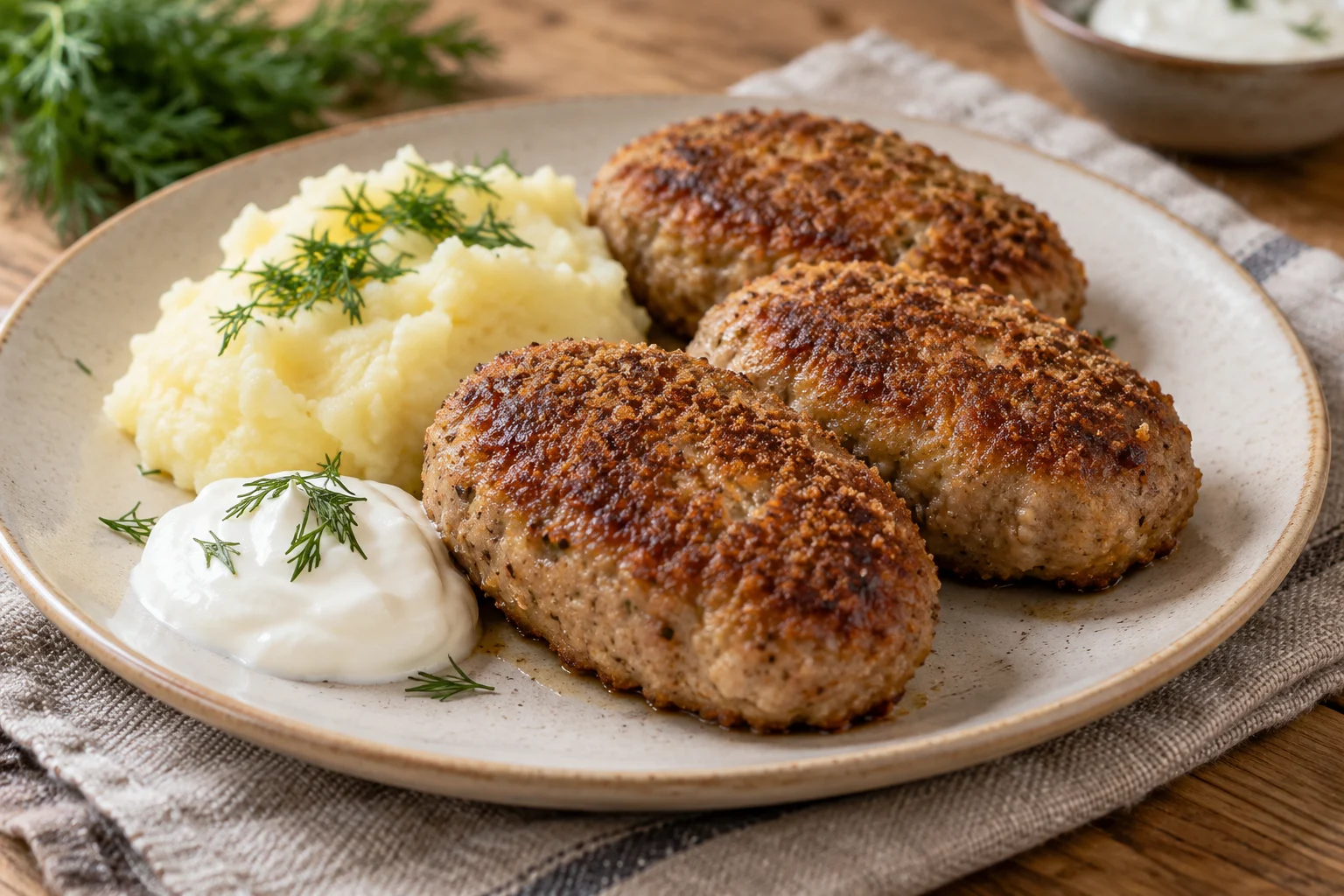
Russian cuisine Stuffed patties
Zrazy: closing a mushroom centre inside a meat patty
Russian home-style mushroom-filled zrazy, with an original beef-and-pork recipe and practical guidance for a dry filling, a closed seam and a fully cooked centre.
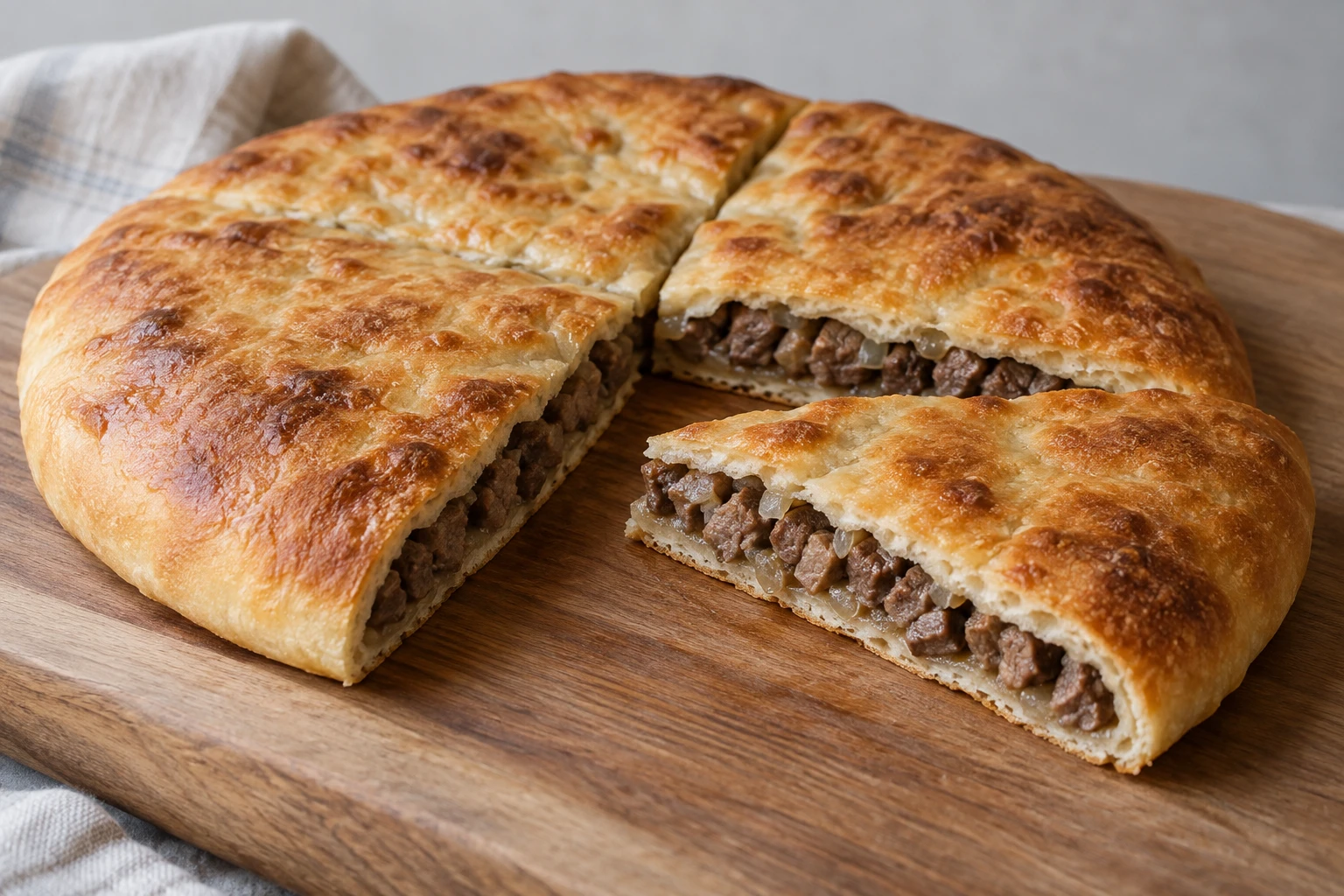
Georgian cuisine Filled bread
Kubdari: Chopped Meat, Sealed Bread
A Svan meat bread whose character comes from chopped filling, fragrant spices and a carefully closed dough, with a household baking recipe.
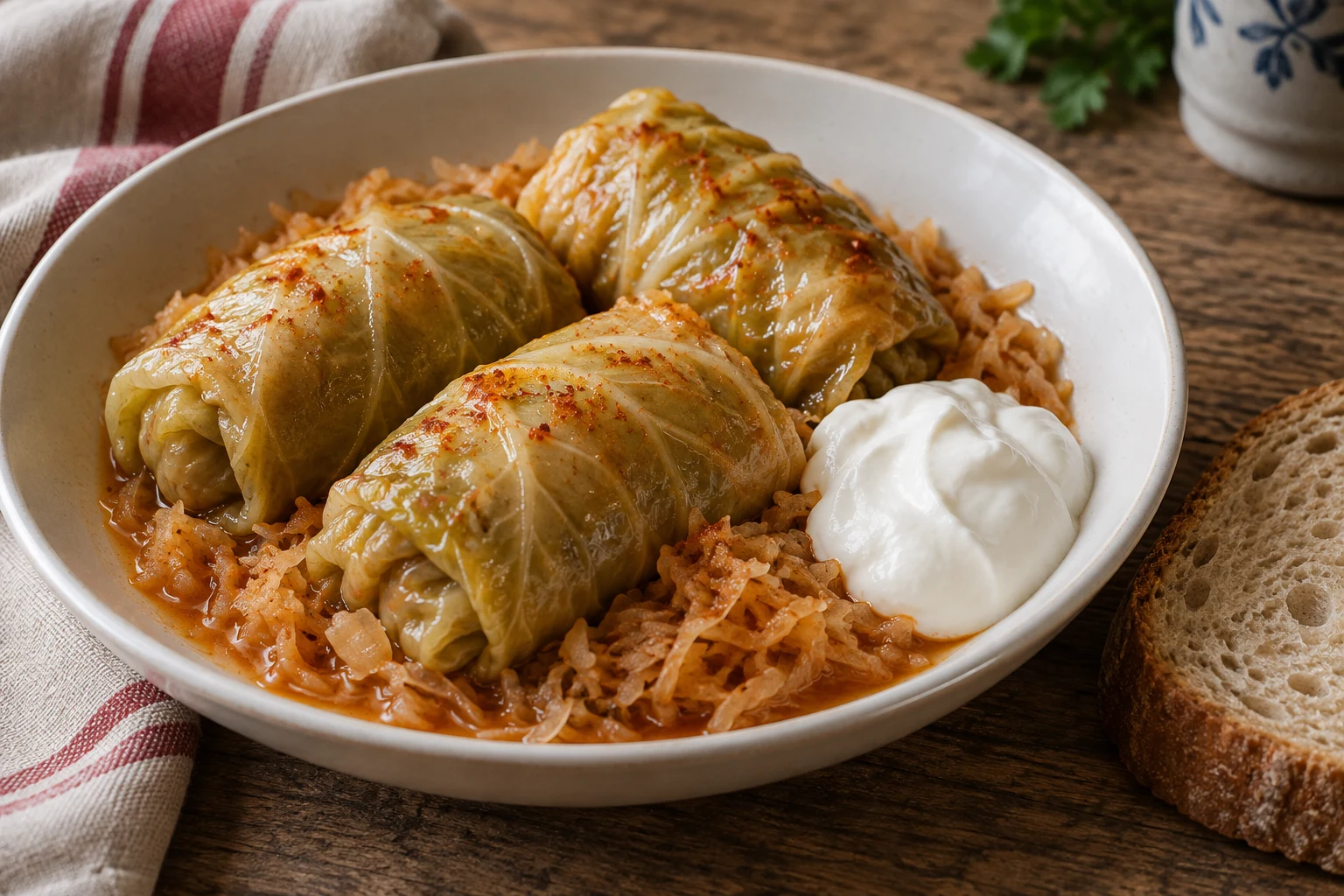
Hungarian cuisine Stuffed cabbage
Töltött Káposzta: Cabbage in Two Roles
Hungarian stuffed cabbage combines a leaf-wrapped filling with cabbage in the cooking pot. Explore sour and fresh leaves, a Szabolcs tomato variation, and the dish’s place at festive tables.