
Mazamorra morada: from purple corn liquid to pudding
Mazamorra morada
Purple-corn liquid, cooked fruit and starch form mazamorra morada. Explore the method and its separate arroz con leche pairing, el clásico.
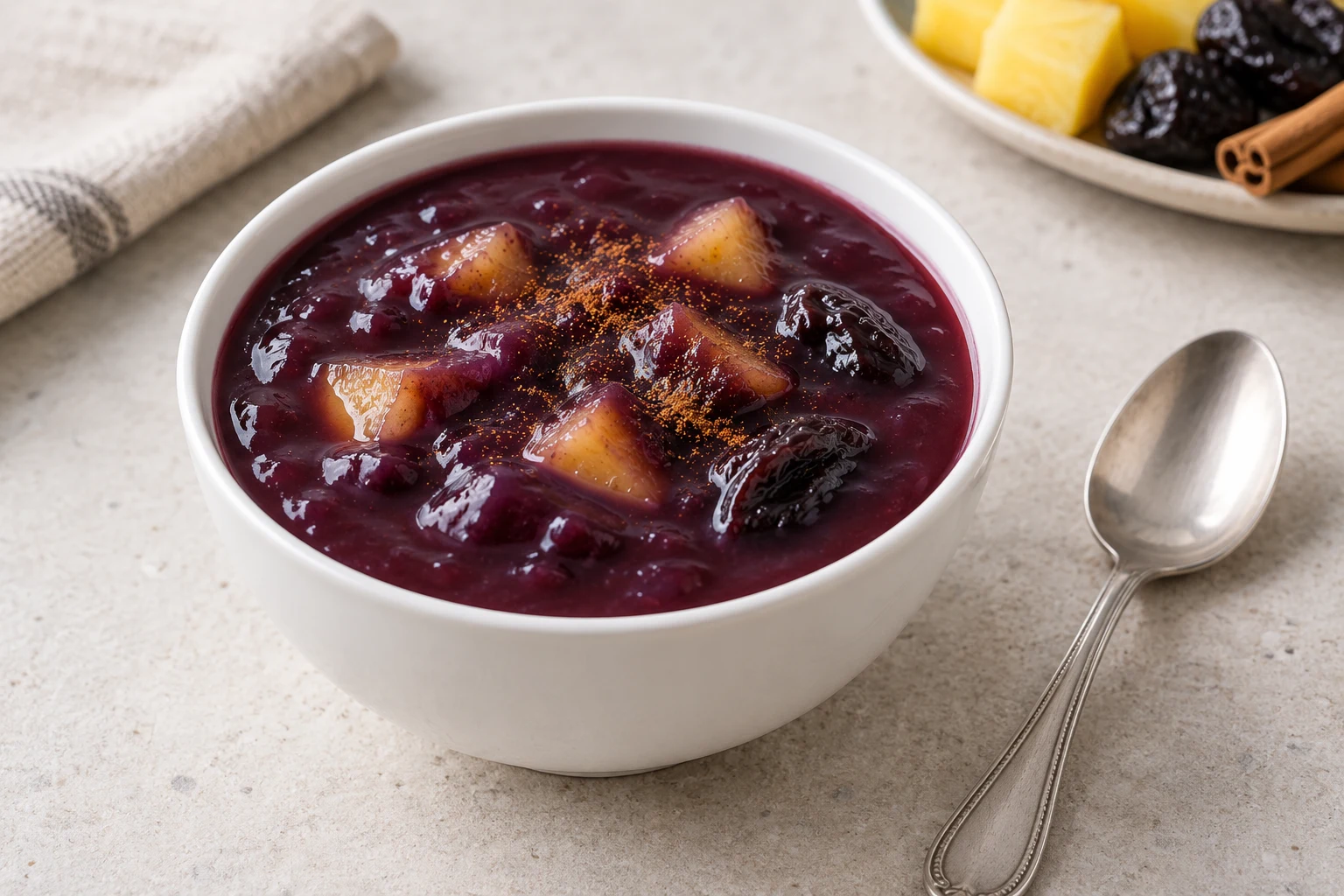
The colour begins before the pudding
Mazamorra morada is unmistakable at the spoon: purple, glossy and interrupted by soft fruit. Its colour comes from a cooked purple-corn liquid, strained before the pudding stage in the Peru Delights method. The finished dessert is a different preparation from whole-corn porridge.
That first distinction makes the rest easier to follow. The cooked corn liquid carries flavour and colour; fruit adds pieces to chew; starch turns the preparation into something you can spoon. The name describes a particular Peruvian pudding, while the recipes consulted leave room for different fruit selections and serving preferences.
Follow the liquid through the method
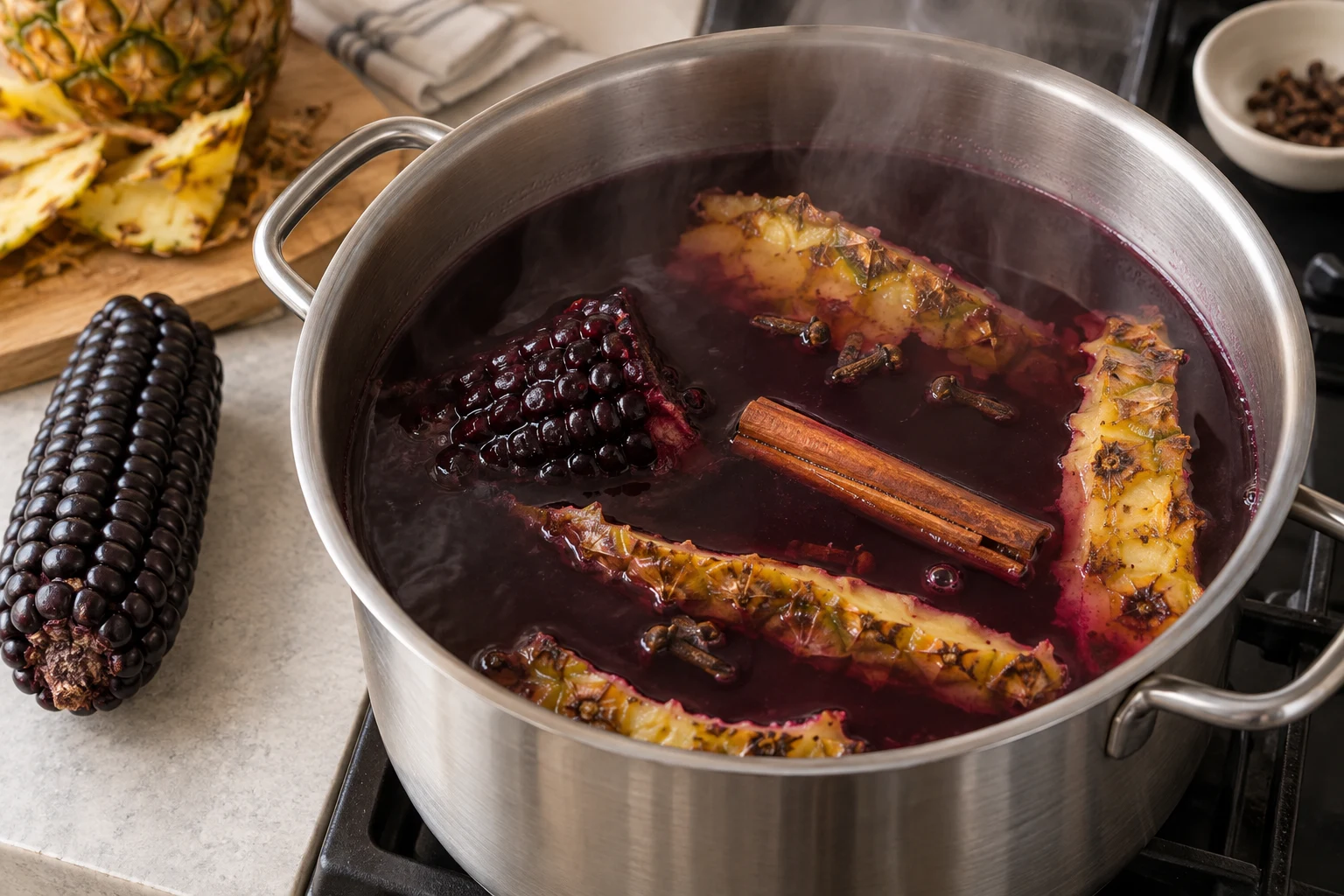
These stages help you read the Peru Delights method. Use its complete instructions when cooking.
- Extract
Cook and strain
Corn, fruit peels and spices flavour the water, then are strained away.
- Build
Soften the fruit
Fresh and dried fruit cook with sugar in the strained liquid before thickening.
- Thicken
Add the dispersed starch
Dispersed starch thickens the pudding with stirring; lime and a cinnamon garnish finish this version.
Read the starch name carefully
Peru Delights specifies sweet potato starch, allows regular potato starch, and distinguishes it from potato flour. Read the ingredient name carefully: related powders need not serve the same purpose. Keep a substitution with the method and amounts that propose it.
Roxana Salaverry's Thermomix Peru version takes another route, using chuño dispersed in cold chicha morada. It begins with several dried fruits soaked separately and then uses appliance settings for the cooking stages. Those settings belong to that machine recipe. They should not be translated directly into a saucepan schedule or combined with another recipe's starch quantity.
A fruit pudding, then an optional pairing
Mazamorra on its own
A plain serving lets you notice the purple liquid's spice and the fruit's texture. Salaverry's version uses several dried-fruit types, with cinnamon, cloves and fig leaves adding its particular aromatic profile.
- A fruit list identifies a specific recipe rather than one mandatory mixture.
- The purple pudding remains a complete serving by itself.
With arroz con leche
El Comercio's combined recipe prepares the rice pudding separately in milk with cinnamon and orange peel. It then places that pale preparation and the purple mazamorra together in dessert dishes.
- The rice belongs to the accompanying dessert.
- A two-colour serving does not mean milk was stirred into the purple base.
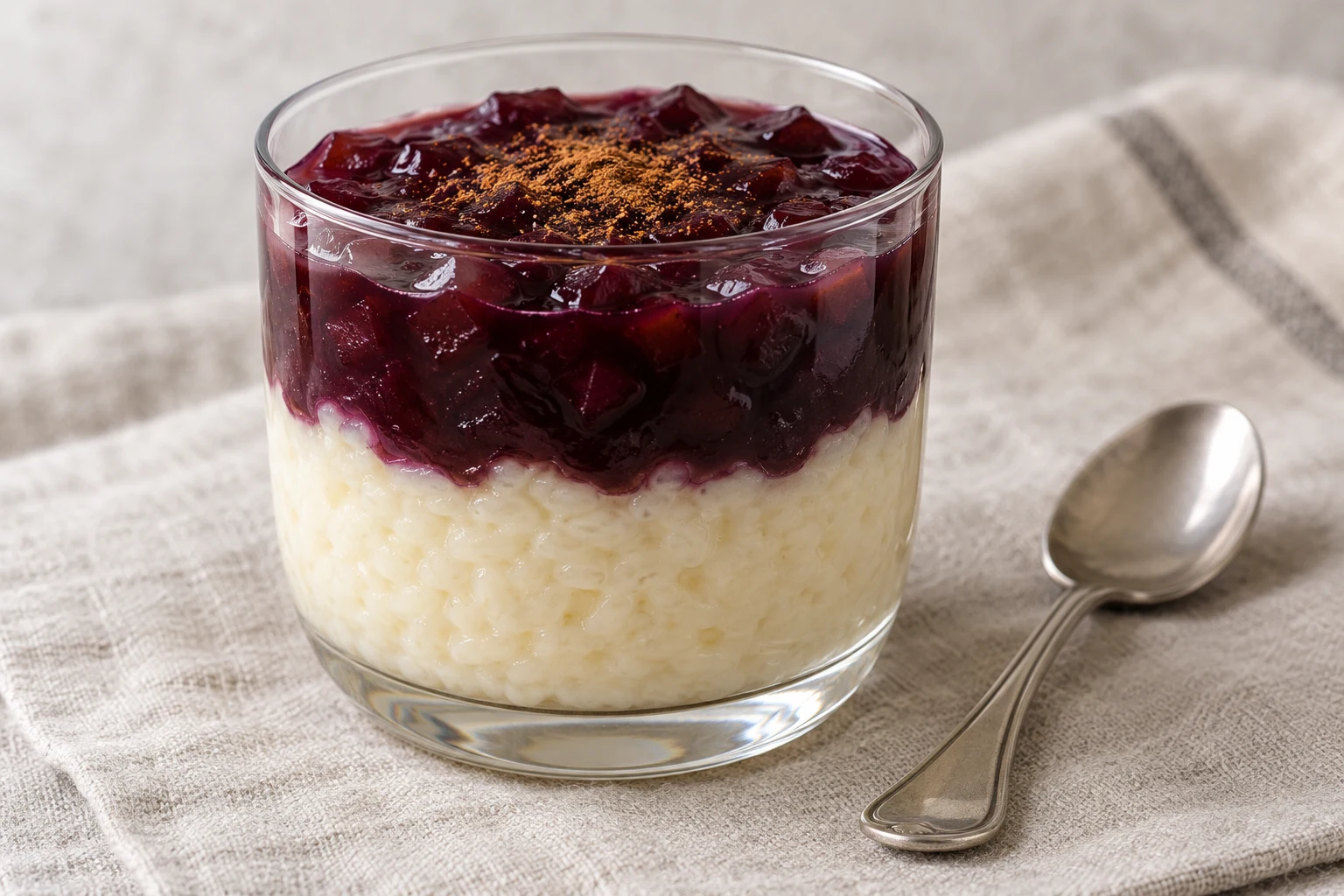
El clásico keeps the two preparations visible
PROMPERU's October food feature describes mazamorra morada alongside arroz con leche as the clásico limeño. Its contrast is easy to appreciate: the dark fruit pudding and the pale rice pudding share a dish while retaining different textures. The illustrated glass follows one possible layered presentation; the pairing matters more than a prescribed vessel.
El Comercio also gives the purple side its own fruit preparation, using apple, quince and pitted prunes before adding dispersed chuño. That differs from the other opened fruit lists. When cooking the pair, follow the selected complete recipes for both parts rather than assuming that every ingredient mentioned across these sources belongs in one pan.
A dessert in the purple-month repertoire
October supplies a cultural setting as well as a colour association. PROMPERU's feature places the dessert among foods enjoyed during the month connected with Señor de los Milagros observances, alongside other sweets and savoury dishes. This gives context for encountering mazamorra in that seasonal repertoire; it does not restrict the pudding to one month or explain its invention.
For a first taste, try a spoonful of purple pudding alone. If rice pudding accompanies it, taste the pale portion separately, then combine a little of each. You can decide whether the pairing's contrast is what you enjoy most or whether you prefer to keep the fruit and spice in the foreground.
Research notes
Method, variation and serving context
An official tourism account and three independently published recipe sources support the strained-liquid method, starch distinctions, appliance variation and arroz con leche pairing.
- PROMPERU: foods of the purple month October context and the clásico limeño rice-pudding pairing.
- Peru Delights: mazamorra morada Strained corn liquid, fruit stages and a starch-versus-flour distinction.
- El Comercio: mazamorra and arroz con leche A fruit-specific purple pudding paired with separately cooked rice pudding.
- Roxana Salaverry: Thermomix Peru mazamorra A dried-fruit and chuño variation with explicit appliance settings.
Keep exploring
More stories for your table
Greek cuisine Semolina dessert
Semolina Halvas: Toast First, Set Later
Greek semolina halvas depends on golden toasted grain and a thickened pot before it sets. A six-portion recipe explains both checkpoints and allows cooling time.
Peruvian cuisine Soup
Caldo de Gallina: Let the Hen Set the Pace
A satisfying Peruvian hen soup depends on timing the meat, yellow potatoes and long noodles separately. The garnish belongs to the final minute.
Turkish cuisine Rice pudding
Sütlaç: Soft Rice, Milk and a Browned Finish
Sütlaç can be a plain chilled rice pudding or fırın sütlaç with a browned oven finish. Understand the tender grains, different thickening methods and the pudding-shop setting.