
Kaleh Pacheh: Broth, Bread and a Choice of Cuts
کلهپاچه
Iran’s sheep-head-and-trotter breakfast is a spread of textures: a warm broth, separately served cuts, flatbread and citrus chosen at the table.
A soup name, a meal in several parts
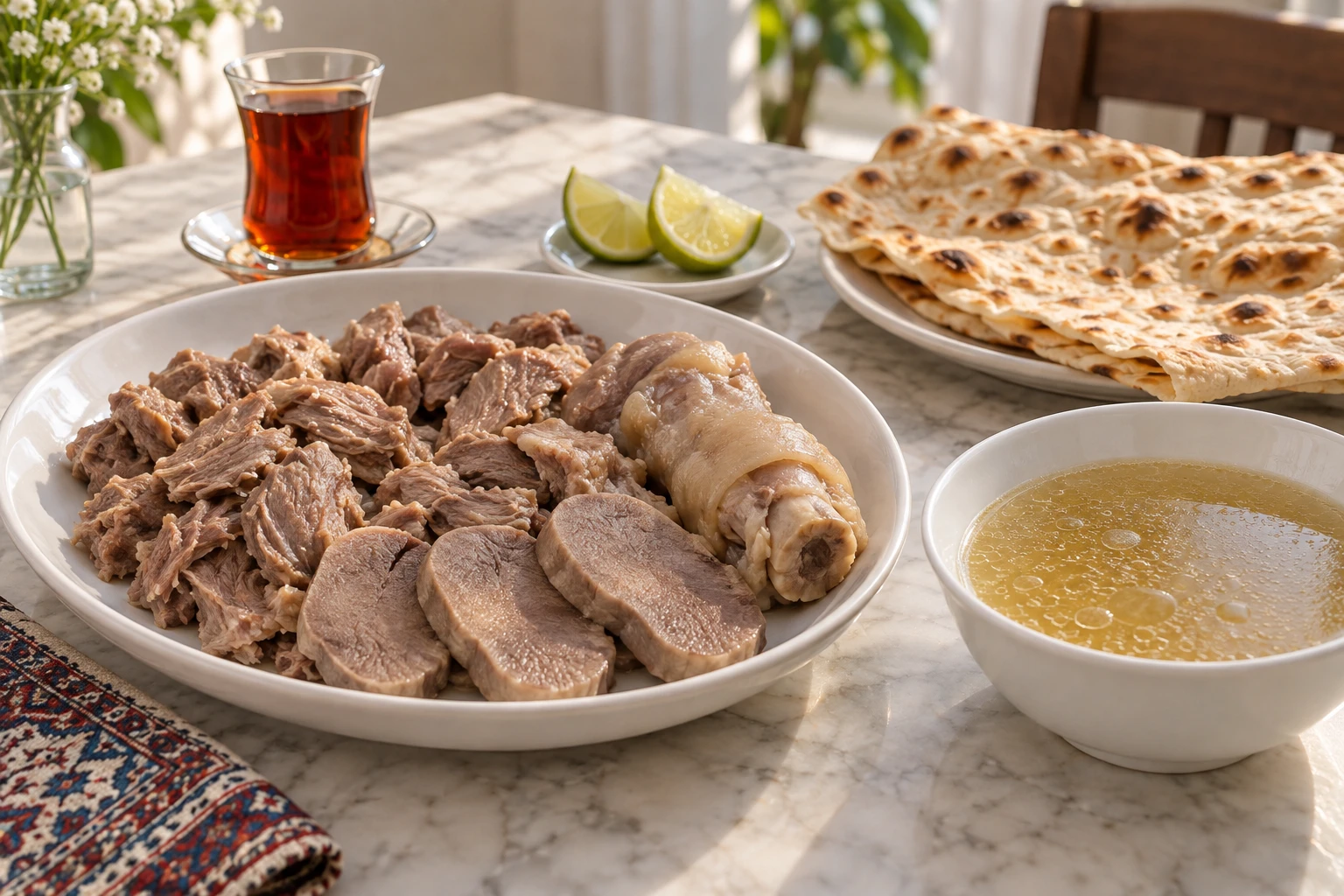
Kaleh Pacheh is made from sheep’s head and trotters, but a serving need not arrive as one crowded bowl. Broth, edible cuts, bread and citrus can each have their own place at the table. Seeing those components separately makes the meal easier to understand: the liquid and the meat offer different ways into it.
Encyclopaedia Iranica describes a set as one head and four trotters. That term identifies the ingredients of a preparation, rather than telling a diner exactly what a particular plate will contain. Ask which cuts and how much broth come with a serving; the answer matters more than assuming every bowl is identical.
The specialist shop shapes the breakfast
Etrat Elahi’s Iranica entry links the dish to specialist kalla-pazi shops and traditional morning service. Long preparation helps explain that relationship. The work begins well before the diner sits down, so a breakfast can represent the previous evening’s cooking rather than a quick meal made after waking.
Visit Iran also names Kale Pazi and Tabbakhi as specialist establishments, while noting family consumption. These are useful terms to recognize on a food description. They describe a setting organized around the dish, where knowing which parts you prefer becomes part of choosing a meal. Morning service is a documented association; it is not a promise of current opening hours at any individual shop.
Know what you are choosing
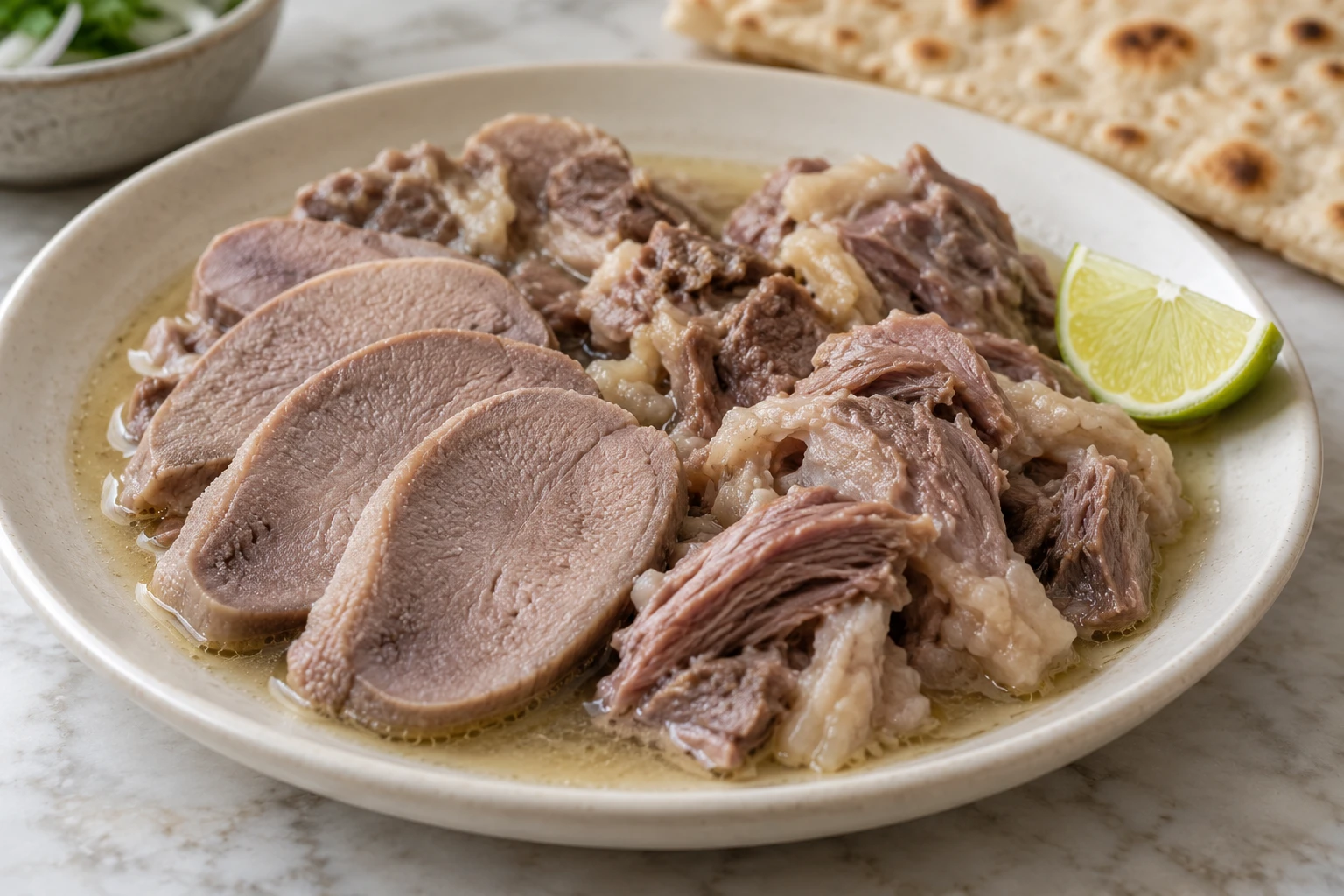
- Tongue
- A distinct cut
- Banā goosh
- Meat near the ear
- Trotters
- The other half of the name
Listed separately among the edible head parts. Ask for the particular cut rather than treating all head meat as the same.
Visit Iran identifies this named part alongside tongue, face meat and other cuts.
The feet are part of the defining head-and-trotter combination, with their own texture after long cooking.
Preference is part of the tradition
In her memoir A Sip, A Bite, A Mouthful, Afsaneh Hojabri describes liking the soft brain and the more grainy tongue while being less drawn to several other parts. Her account is valuable because it preserves preference: enjoying Kaleh Pacheh does not mean enjoying every component equally.
Use that distinction when approaching a serving. A slice of tongue and a spoonful of soft meat need not offer the same bite, even after sharing a pot. Ask what is available, start with a cut you want to taste and let the broth accompany it. The dish’s variety becomes clearer when the pieces retain their identities.
The broth can lead
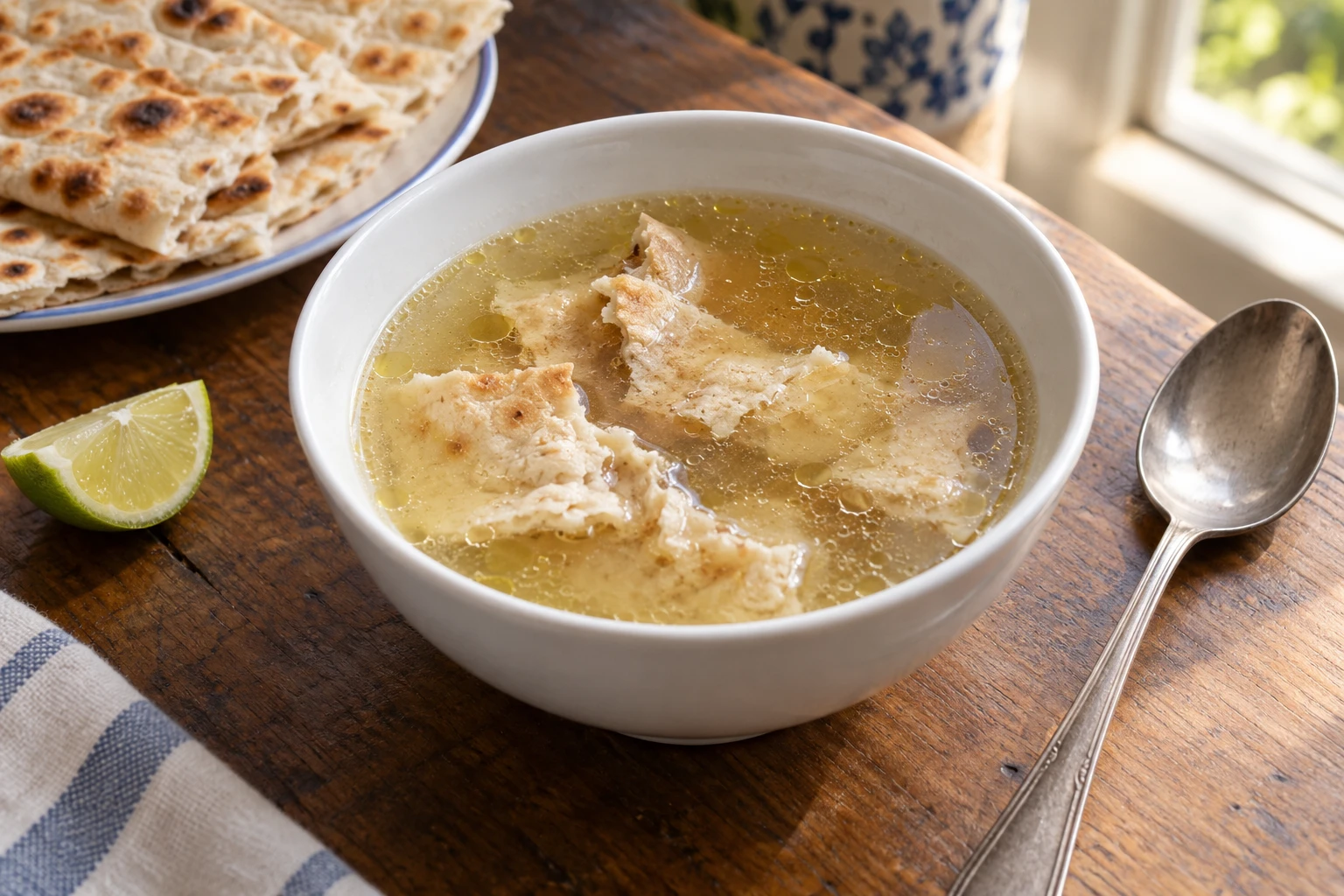
Visit Iran describes the cooking broth as an opening part of the meal. Gastro Obscura notes lavash served with it and diners adding pieces of bread to the liquid. This creates two different bites from the same bowl: a spoonful of broth, then bread that has absorbed some of it.
Try a little broth before adding citrus or bread. Then tear in a small piece of flatbread and notice how its edges soften. Dip rather than soak if you want more of the bread’s original texture. Lime is a documented table accompaniment, so its amount can be adjusted after tasting instead of making the whole serving equally sharp.
The structure travels, the details change
Tobias Müller’s personal interpretation for Der Standard serves cooked meat and soup in two separate bowls, with bread and lemon. He describes an evening meal using lamb heads in a European kitchen. It is a useful example of the serving structure carrying across a different setting, while the timing and ingredients belong to his own adaptation.
At the table, the practical choices remain concrete: which cut, how much broth, what bread and how much citrus. That combination gives Kaleh Pacheh more range than its short name suggests. A bowl of broth can begin the meal; separate cuts can follow at the pace and in the order each diner prefers.
Research notes
Sources behind this article
- Encyclopaedia Iranica — Etrat Elahi, Kalla-pāča Documents the head-and-trotter combination, specialist cooks and the dish’s association with morning service.
- Visit Iran — Kale Pache Describes the named cuts, specialist restaurants and broth served as an opening part of the meal.
- Afsaneh Hojabri — A Sip, A Bite, A Mouthful Her food memoir’s breakfast chapter describes distinct textures, separately served parts, flatbread, broth and lime; PDFpages37–39.
- Gastro Obscura — Kaleh Pacheh A food account of the morning soup describes lavash, bread added to broth and lime as a table accompaniment.
- Der Standard — Tobias Müller’s Kaleh Pacheh A clearly personal European interpretation serves cooked head meat and soup separately with bread and lemon; useful as a comparison rather than a rule for Iran.
Keep exploring
More stories for your table
Persian cuisine Grilled kebabs
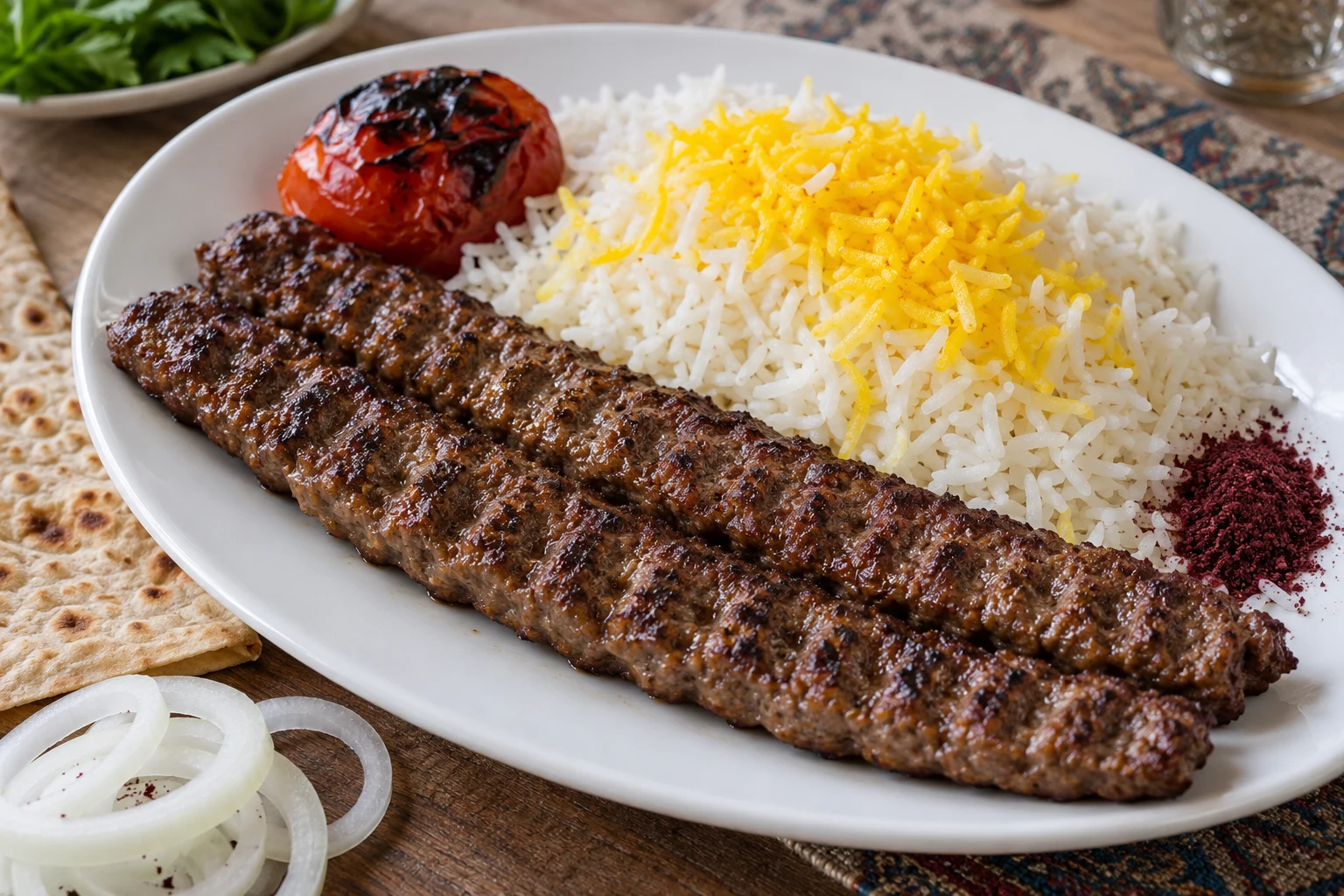
Koobideh: How the Meat Holds the Skewer
Iranian koobideh turns ground meat and onion into a long ridged kebab. Onion moisture, a cohesive mixture and broad skewers explain the preparation’s distinctive shape.
Persian cuisine Wheat and meat porridge
Halim-e Gandom: The Long Stir Before Breakfast
How Iranian halim turns wheat and meat into a thick breakfast porridge through patient stirring, and why cooks often finish the savory bowl with cinnamon and sugar.
Persian cuisine Eggplant and yogurt
Borani Bademjan: Prepare the Eggplant for Yogurt
Persian eggplant borani can be blended with yogurt or topped with it. Tender flesh and managed moisture help either finish keep its intended texture.