
Adas polo: keep the grains distinct and the sweetness deliberate
عدس پلو
Persian lentil rice brings together earthy lentils, fragrant rice, and optional sweet toppings. Its texture depends on choosing and following one cooking method.
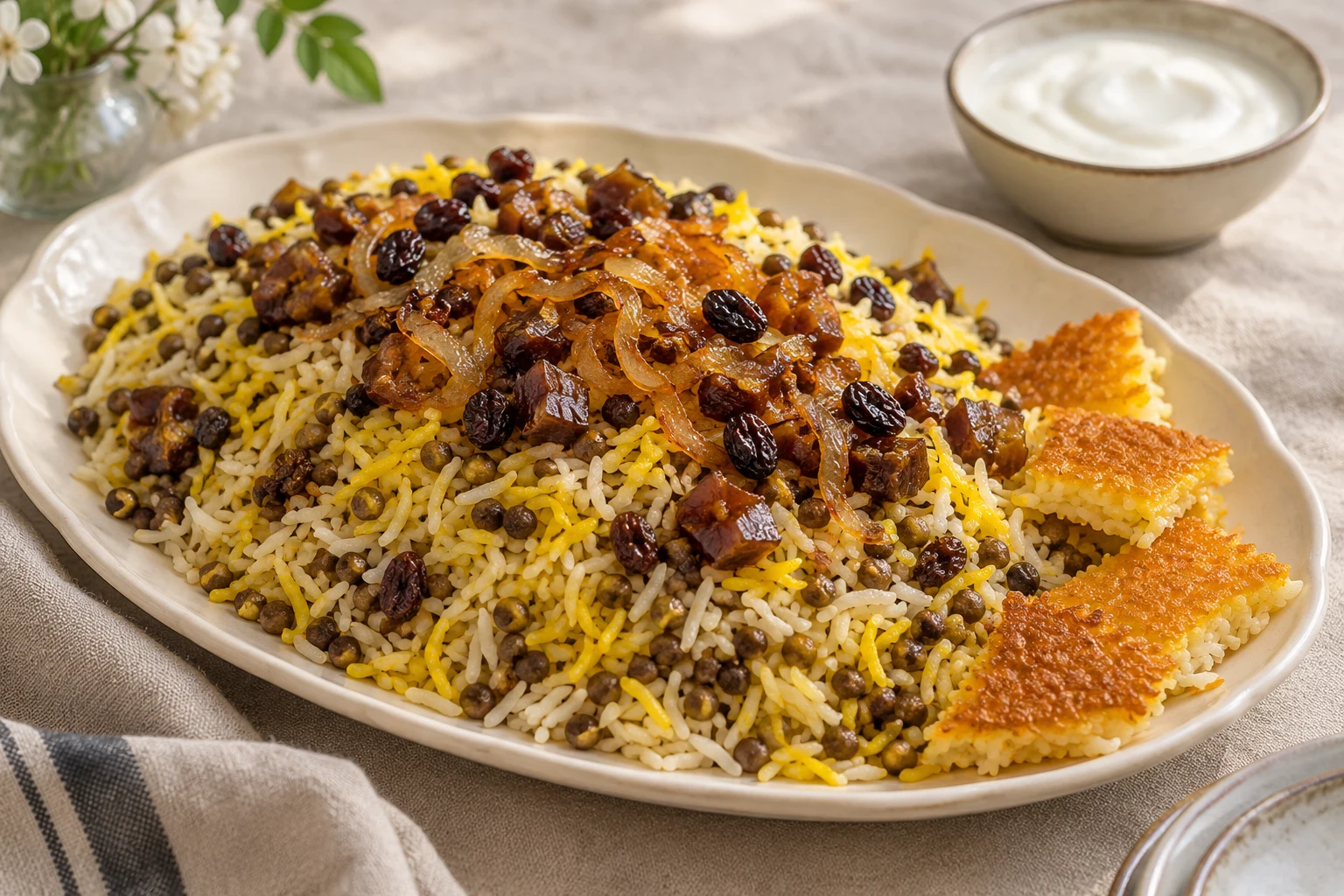
A simple name, several textures
Adas polo means lentil rice. That straightforward name leaves room for a dish with several distinct effects: soft but intact lentils, separate grains of rice, a sweet accent from dried fruit, and, in some methods, a crisp bottom crust. The useful challenge is to bring those elements together without making them all feel alike.
Ayeh Manfre describes the version she learned from her mother, with separately parboiled rice and lentils, optional saffron and spices, and an onion-and-fruit topping. Samira offers another formula with a ground-beef accompaniment. Yasmin Fahr's family recipe uses a different combined cooking sequence. They share an idea, while giving the cook different instructions to reach it.
Choose the method before measuring water
Separate preparation, then layering
Manfre cooks the lentils separately and drains the parboiled rice before layering them for a low-heat finish. Her lentils retain a slight bite at that intermediate stage, leaving room for the later cooking.
A combined cooking sequence
Fahr begins the rice with a measured amount of water and adds the rinsed dry lentils to that pot. Her recipe continues with a covered low-heat stage and introduces the onion-and-fruit mixture during cooking. This has its own water and timing instructions.
The stages belong together
Those two sequences are a reason to select a complete recipe, rather than treating every lentil-rice instruction as interchangeable. Drained parboiled rice starts the final stage in a different condition from rice still cooking in measured water. So do lentils that have been separately simmered and lentils added dry to the same pot.
If you prefer the layered method, choose a formula written for it. If you want Fahr's combined approach, use her ingredient proportions and stages. Moving one instruction between them without adjusting the rest makes the outcome harder to predict. A coherent method gives you a result you can evaluate before changing it next time.
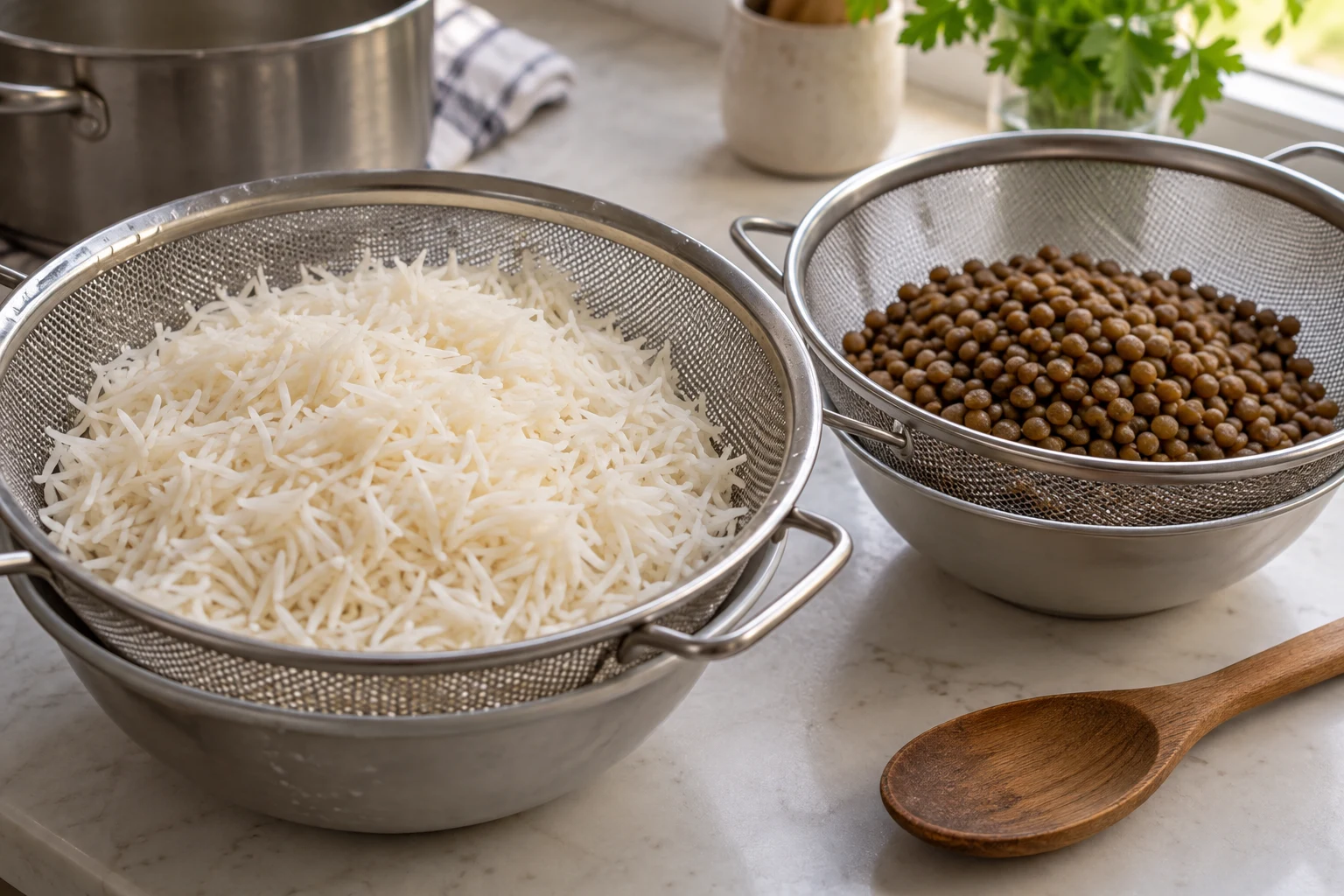
Three checks for a layered version
Use your selected recipe for quantities and cooking times; these comparisons explain the texture decisions.
- 01
Choose lentils that suit the method
Samira specifies brown lentils and cooks them until they are soft but still hold their shape. Manfre uses green or brown lentils and advises against red lentils in her double-cooking method.
- 02
Read the intermediate rice cue
Samira describes parboiled grains that have softened outside while retaining firmness inside. That is an intermediate texture before steaming, not a suggestion to serve hard-centered rice.
- 03
Keep the finish gentle
Manfre stresses a low-heat steaming stage and warns against rushing the crust formation. Attend to the pot and recipe cues instead of trying to obtain a darker crust by simply increasing the heat.
The topping brings a separate accent
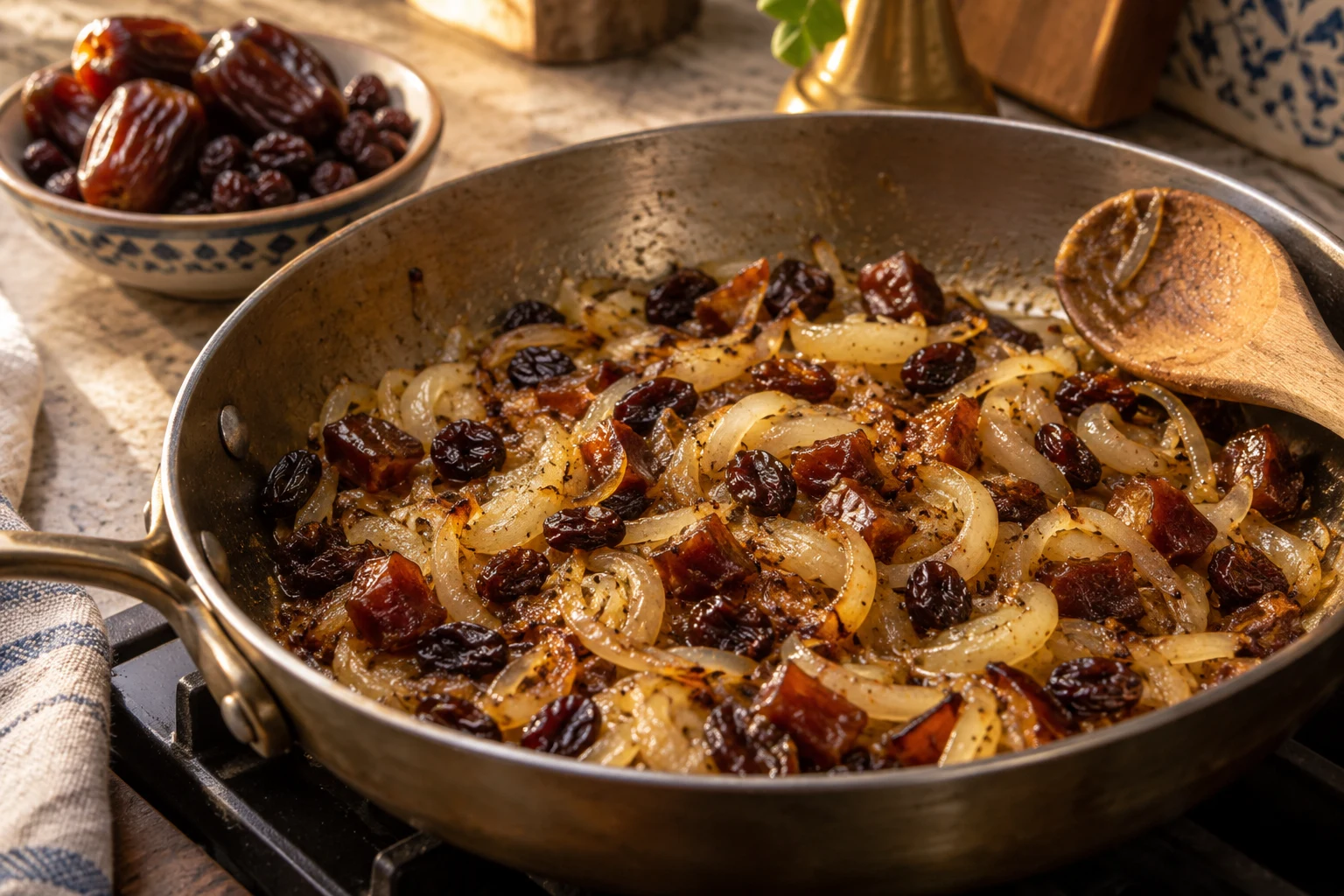
Raisins and dates appear in all three cooking examples, but their placement differs. Manfre cooks them with browned onions as a topping. Fahr incorporates her onion-and-fruit mixture into the rice partway through cooking. Samira prepares raisins and dates separately from both the rice and her ground-beef mixture. These choices change how evenly the sweet elements are distributed.
For a first attempt, follow the arrangement in the recipe you choose. A topping lets you see where the fruit is concentrated and choose how much to take with a spoonful. Incorporating it into the pot gives a different pattern. Neither asks for the entire platter to taste like dried fruit; rice and lentils still provide the main body of the dish.
Set out the rice with a clear serving plan
A meatless version can center the rice and lentils themselves. Samira's ground-beef accompaniment is a separate direction, with its own onion and spice preparation. Manfre explicitly permits serving her dish as a vegetarian main or alongside meat. Decide that role before adding another component to cook.
For a simpler accompaniment, Ped Asgarian's contribution to Feeding Bristol's Cupboard Cooking booklet suggests plain yogurt and cucumber slices. Those give the meal a cool element without requiring another hot pan. The booklet is used here for that serving idea; the three linked cooking methods provide the technique comparisons.
On the platter, keep the grains, topping, and crust easy to see. If you are making a crisp bottom, plan its serving stage with the same care as the rice: a delicate mound and a crunchy piece offer different pleasures. Adas polo becomes more legible when those choices are deliberate, from the lentil you buy to the topping you put on the final spoonful.
Research notes
Sources and method comparisons
Three original cooks supply contrasting methods. A named contributor to a community cooking booklet supplies the yogurt-and-cucumber serving example.
- Ayeh Manfre: Persian lentil rice Family method with separately prepared rice and lentils, low-heat steaming, and onion-fruit topping.
- Cooking With Samira: adas polo Brown lentils, intermediate rice cue, potato crust, and separately prepared ground-beef and fruit accompaniments.
- Yasmin Fahr, The Kitchn: adas polo Family combined rice-and-lentil sequence, fruit incorporation, rice crust, and firsthand discussion of learning its release.
- Ped Asgarian, Feeding Bristol: Cupboard Cooking, page 26 Named contributor's plain-yogurt and cucumber serving suggestion; used for accompaniment, not cooking proportions.
Keep exploring
More stories for your table
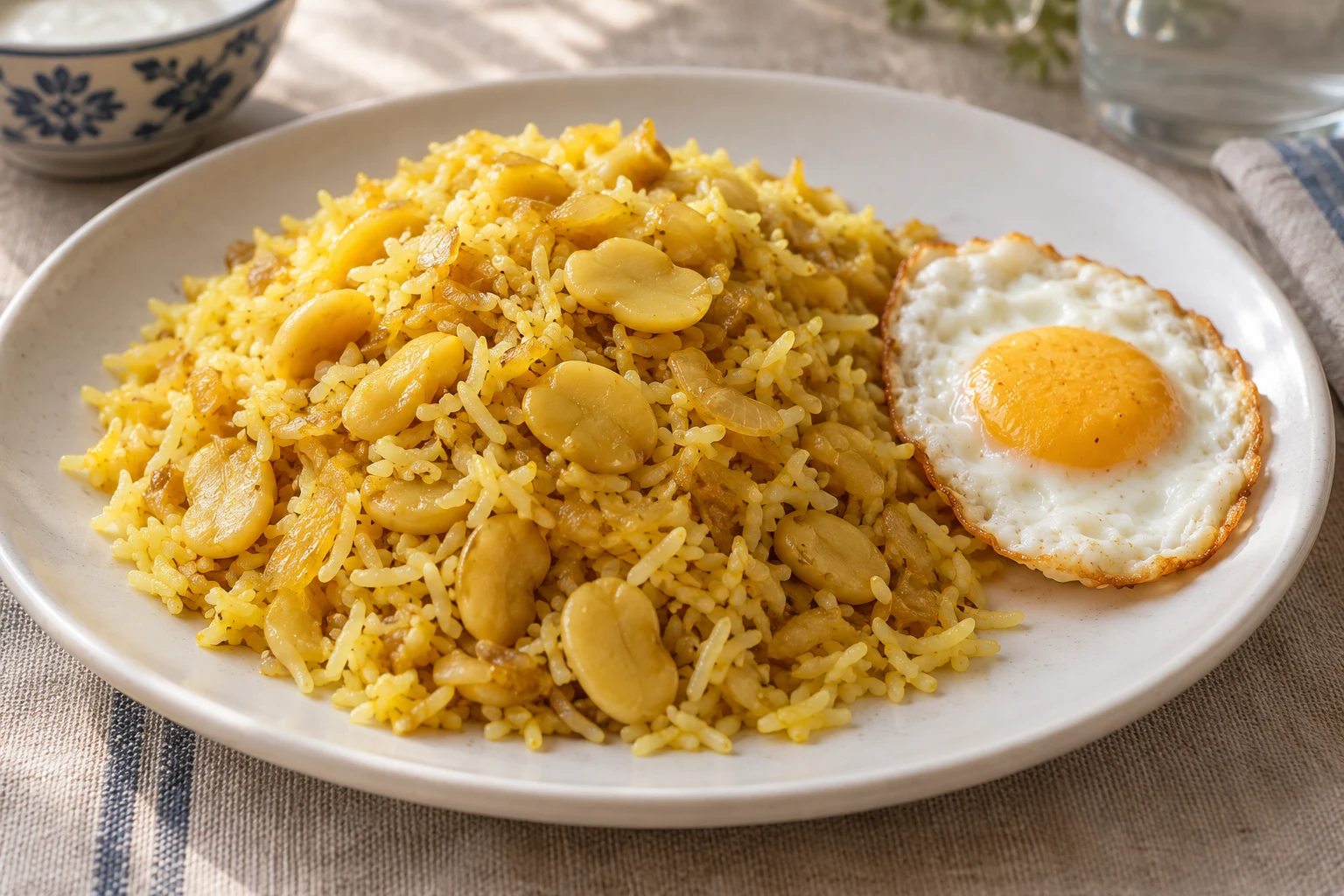
Persian cuisine Turmeric rice
Dam Pokhtak: Match the Beans to the Rice
Iranian turmeric rice depends on getting the beans tender before the rice dries out. Understand split fava beans, the covered finish, and simple accompaniments.
Persian cuisine Eggplant and yogurt
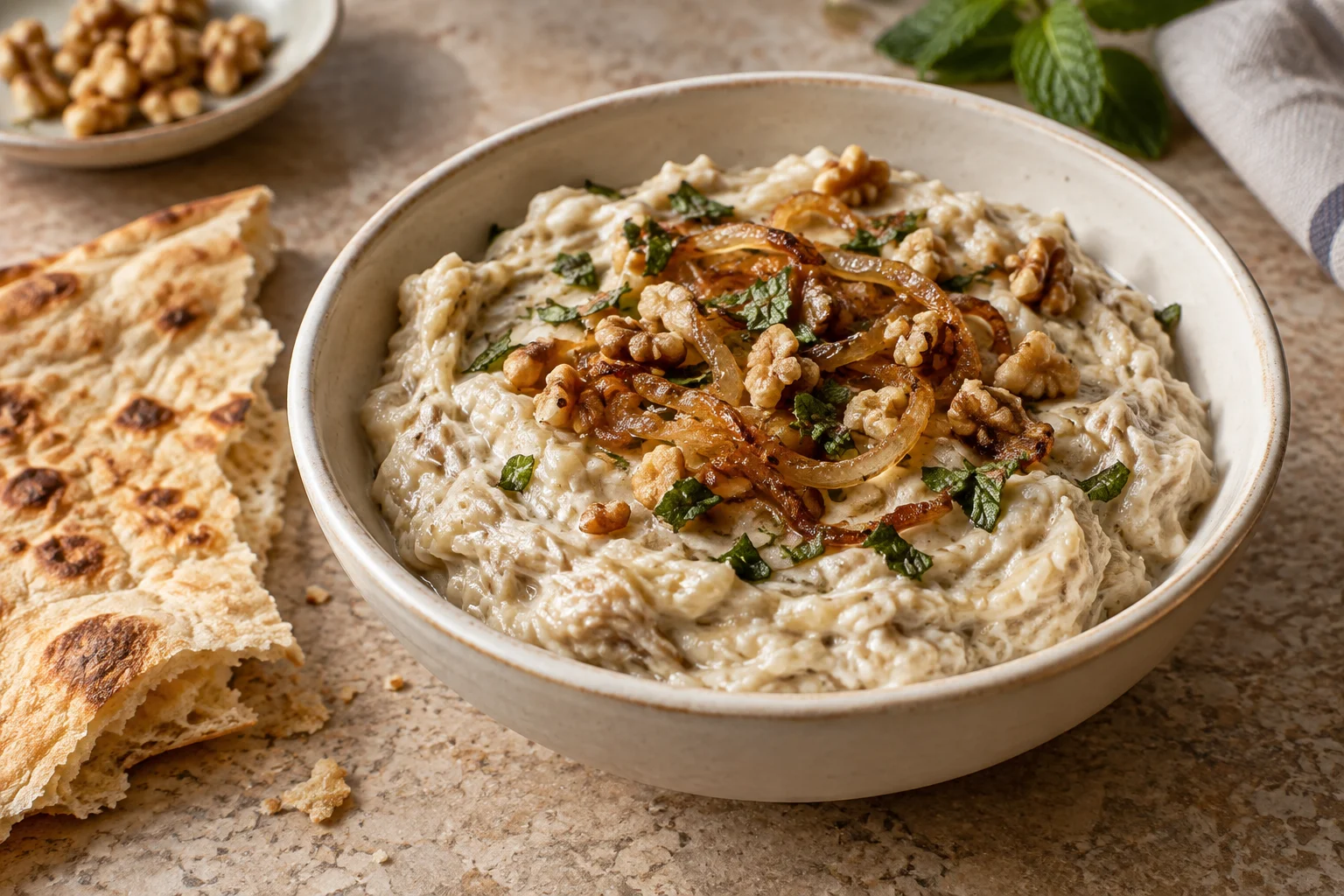
Borani Bademjan: Prepare the Eggplant for Yogurt
Persian eggplant borani can be blended with yogurt or topped with it. Tender flesh and managed moisture help either finish keep its intended texture.
Egyptian cuisine Sweet couscous
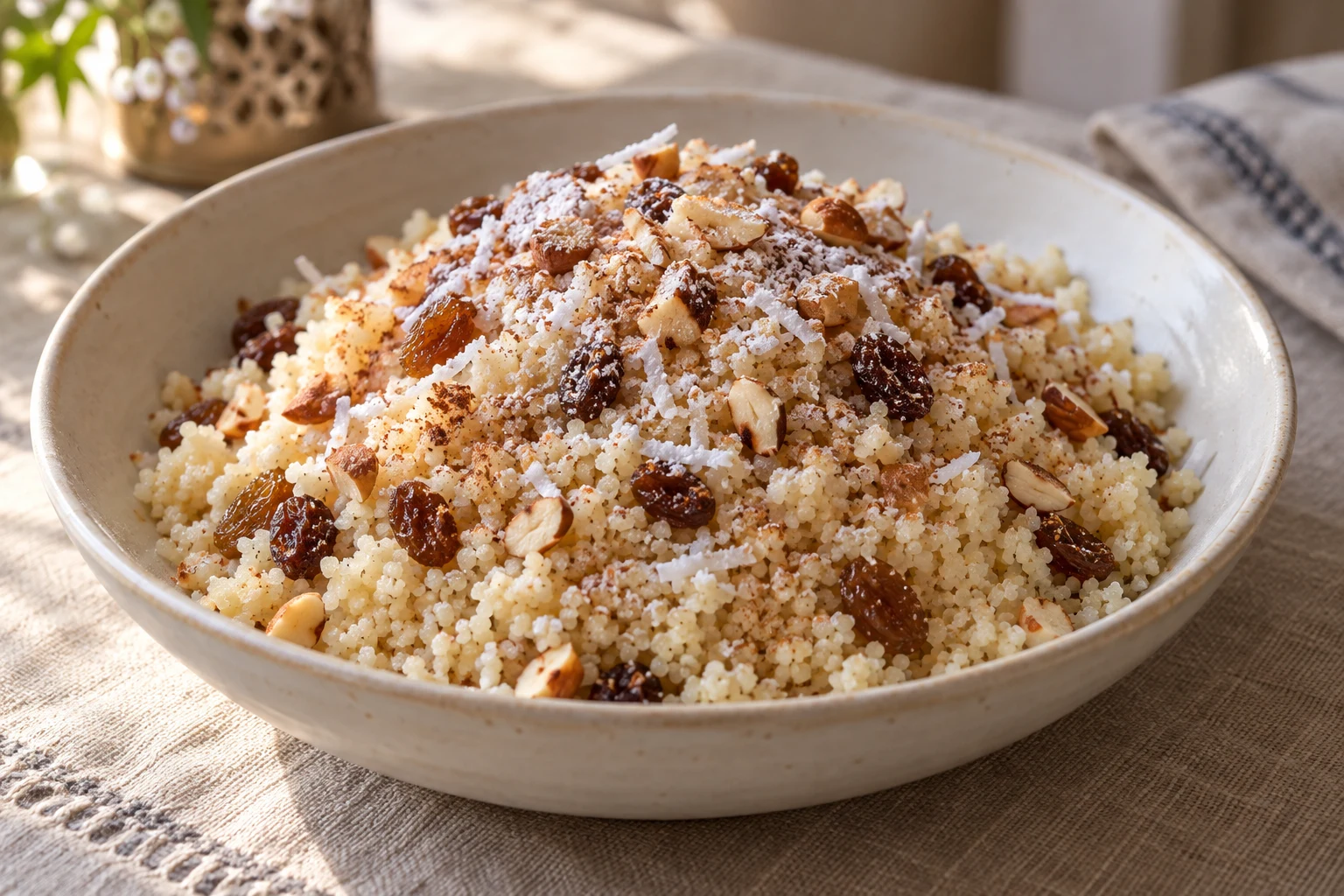
Egyptian Sweet Couscous: Loose Grains Before the Sugar
Butter, powdered sugar, raisins, and nuts turn couscous into an Egyptian sweet dish. Choose a cooking route that matches the grains and finish each serving lightly.