
Koobideh: How the Meat Holds the Skewer
کباب کوبیده
Iranian koobideh turns ground meat and onion into a long ridged kebab. Onion moisture, a cohesive mixture and broad skewers explain the preparation’s distinctive shape.
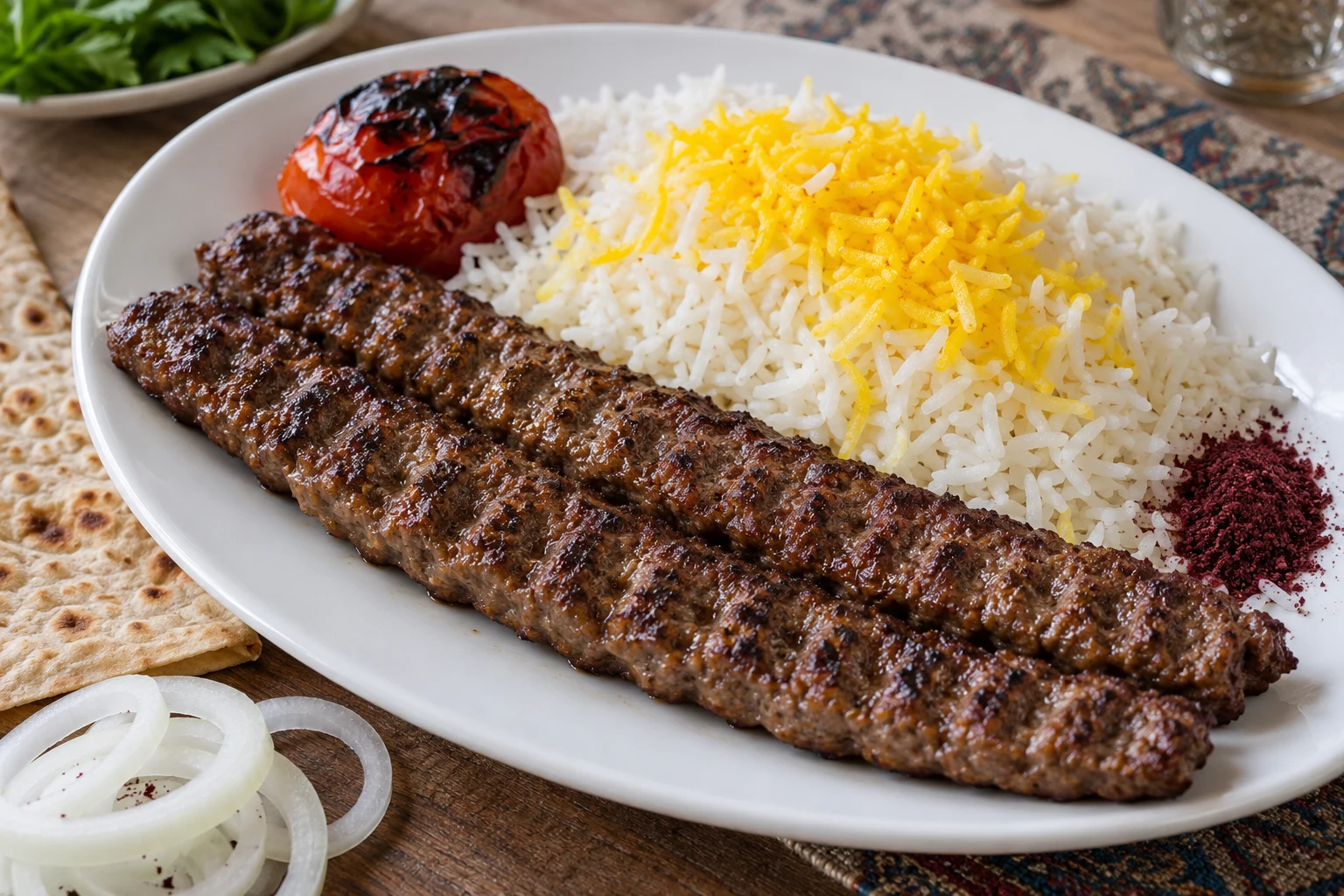
A long kebab begins in a bowl
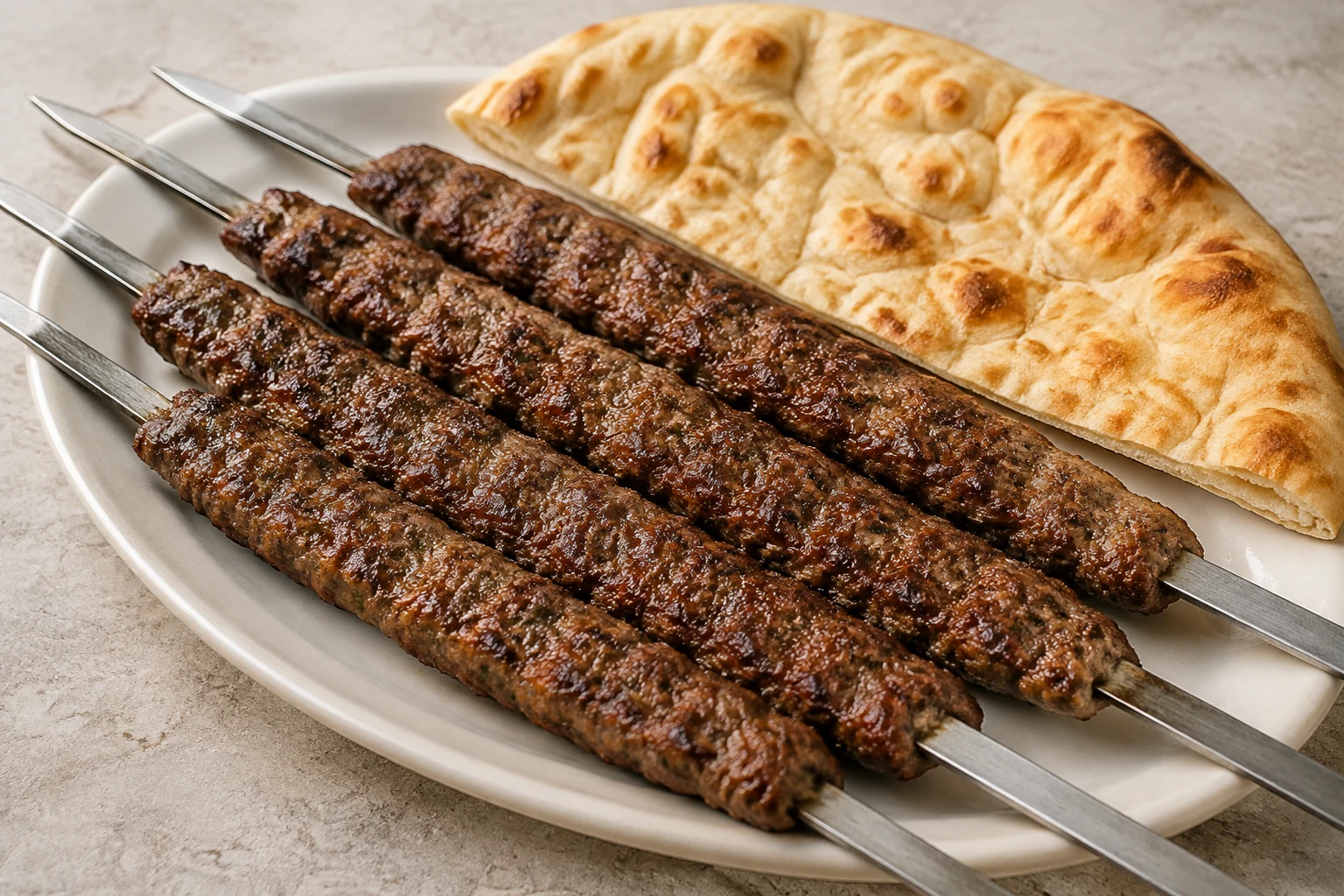
Koobideh is Iranian kabab made from ground lamb, beef or a mixture of the two. Its repeating ridges and long flattened shape distinguish it from a skewer threaded with cubes of meat. Before it reaches the grill, the mixture must already be able to hold itself together around a broad metal blade.
That is the question worth asking when the dish seems deceptively simple: how does soft minced meat stay on a skewer? Homa at Persian Mama and Hami Sharafi at I Got It From My Maman both treat the preparation as a sequence of texture decisions. Onion moisture, mixing and shaping all matter; the final outline records those decisions.
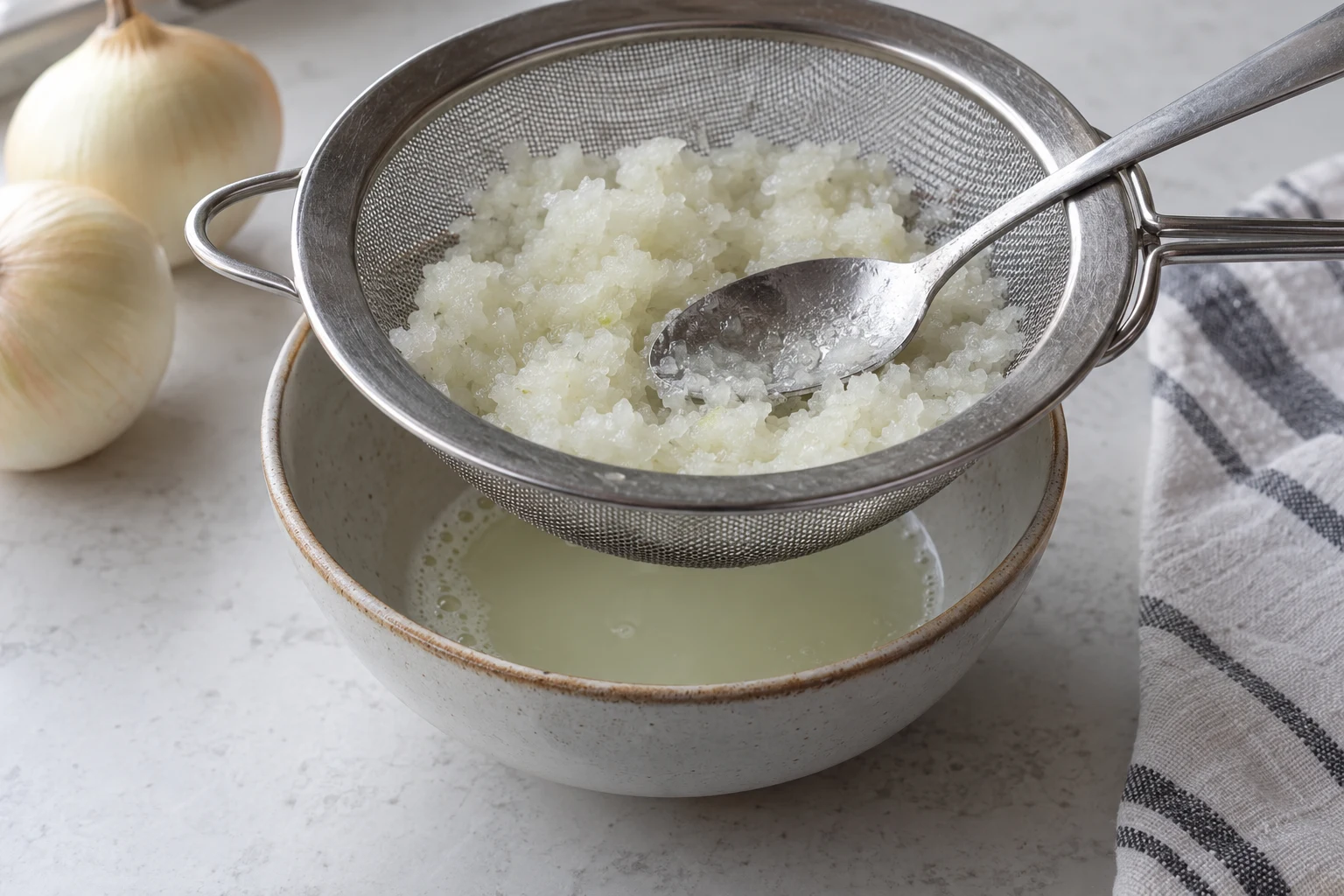
The onion brings flavor and liquid
Persian Mama processes onion and presses its pulp in a sieve. Sharafi grates it and squeezes out most of the moisture, while cautioning against making it completely dry. These are recognizably related approaches, but their wording does not justify a universal instruction to squeeze every trace of juice away.
The useful distinction is between onion pulp and free liquid. Keep the preparation within the recipe you choose, because the onion amount is part of that recipe’s balance. A pile of grated onion plus all the juice it releases is not the same ingredient condition as the drained pulp those cooks specify.
From loose mince to an even strip
- 01
Mix for cohesion
Both cooks work the meat and onion until the mixture becomes cohesive and sticky. Simply stirring until the ingredients look distributed misses the texture they describe.
- 02
Use the intended support
Their preparations use broad, flat metal skewers. Shape the mixture evenly around the blade and leave exposed ends for supporting and handling the skewer.
- 03
Make the ridges without breaking the strip
Sharafi describes pressing regular indentations while avoiding gaps that expose the metal. The goal is a continuous kebab with relatively even thickness, rather than a row of separate meatballs.
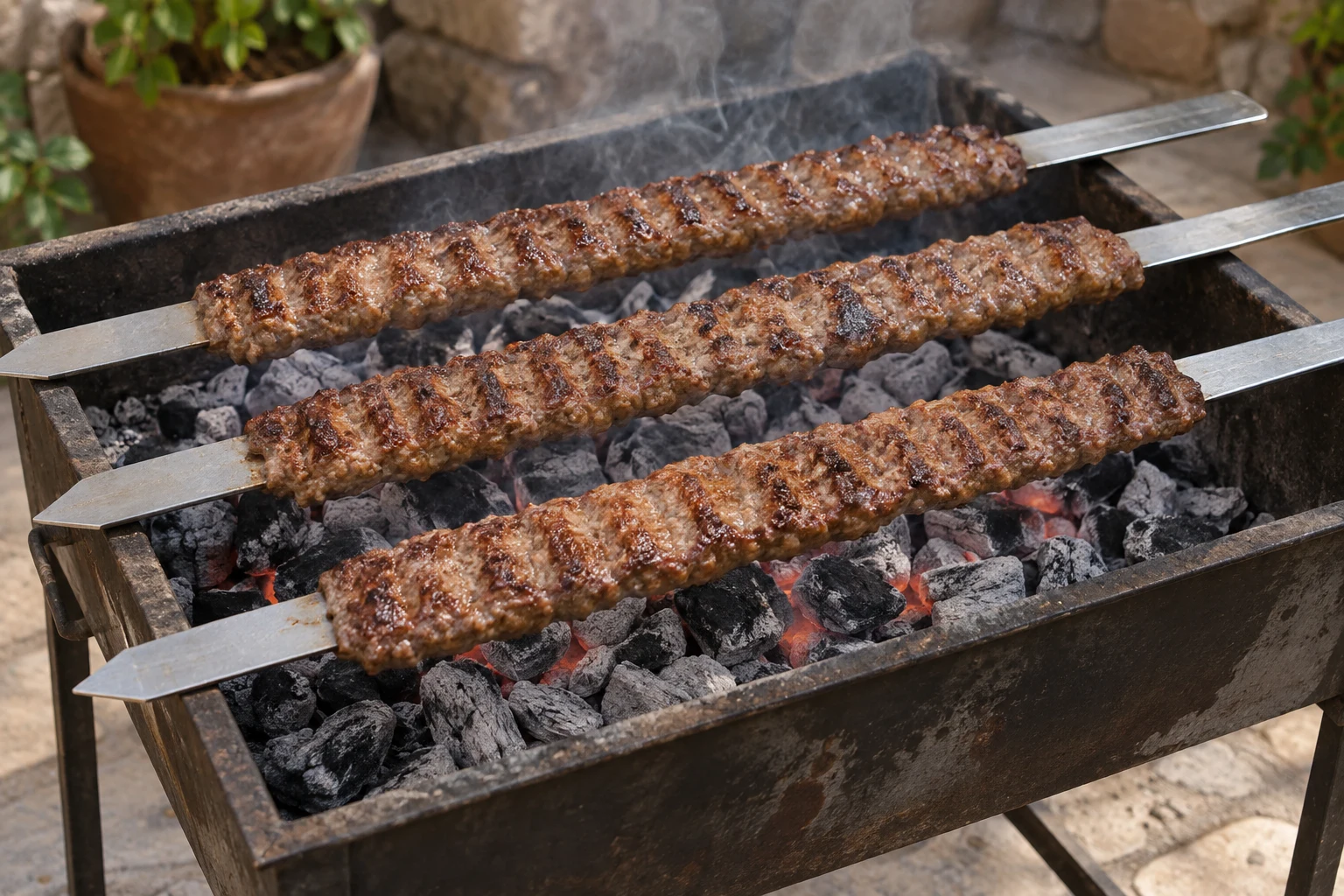
Firm the surface on both sides
Persian Mama and Sharafi explain early, repeated turning rather than waiting for one entire side to finish before moving the skewer. Their stated aim is to firm the meat around its support on both sides. Both also keep the prepared meat from resting directly on a tray surface, which could disturb its shape when lifted.
Sharafi refrigerates the mixture before shaping and returns it to the fridge if it becomes too warm and soft. Follow that handling approach while preparing the grill. The observations here explain the technique; they do not replace a complete recipe or make a short printed grill time a reliable test of doneness.
The same dish can have different ingredient choices
With egg
Persian Mama and Iran Chamber Society include egg in their mixtures. Persian Mama’s version also uses garlic and a butter finish.
Without egg in the listed mixture
Sharafi’s recipe uses meat, onion and seasonings, with baking soda described as optional. His finish is saffron butter. These differences are choices in named recipes, not a reason to combine all their additions.
Rice and bread offer different ways to serve it
Iran Chamber Society presents rice or bread service, with grilled tomatoes and optional sumac. Sharafi likewise describes both and adds basil and sliced onion to his preferred bread serving. The sour seasoning and vegetables sit alongside the meat rather than needing to disappear into its mixture.
Iran Chamber also describes an oven alternative when skewers or a barbecue are unavailable. That is useful to recognize as another preparation route, with a different support and heat source. Choose a complete method suited to the equipment you have, while retaining the ground-meat temperature check.
Research notes
Sources for texture, service and doneness
Three independent Iranian cooking accounts support the preparation; the federal food-safety chart supplies the ground-meat temperature.
- Homa, Persian Mama: Kabob Koobideh Original illustrated method for drained onion, cohesive meat, wide skewers and early turning.
- Hami Sharafi: Kabab Koobideh Original recipe explaining onion moisture, refrigerated resting, even shaping, turning and service.
- Iran Chamber Society: Kabab Koobideh Iranian recipe with egg, metal-skewer and oven methods, rice or bread, tomato and sumac.
- FoodSafety.gov: Safe Minimum Internal Temperatures Official thermometer-based 160°F / 71°C guidance for ground beef and lamb.
Keep exploring
More stories for your table
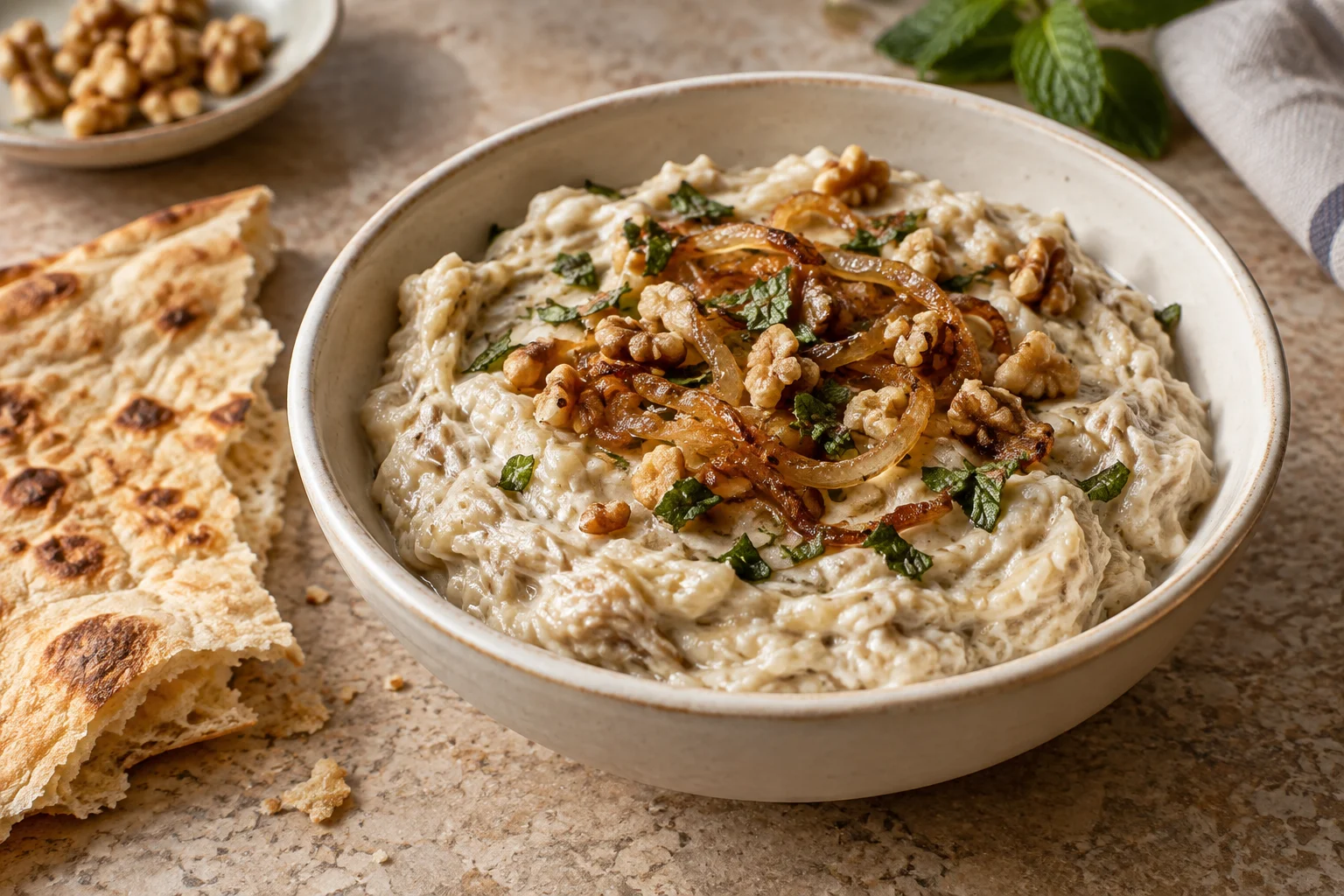
Persian cuisine Eggplant and yogurt
Borani Bademjan: Prepare the Eggplant for Yogurt
Persian eggplant borani can be blended with yogurt or topped with it. Tender flesh and managed moisture help either finish keep its intended texture.
Afghan cuisine Kebab techniques
Afghan Lula Kebab: Grilled Skewers, Fried Rolls
Afghan lula and lola kebab recipes take two distinct paths. Compare grilled mince with fried meat-and-potato rolls, their ingredients, texture and cooking order.
Turkish cuisine Regional meatballs
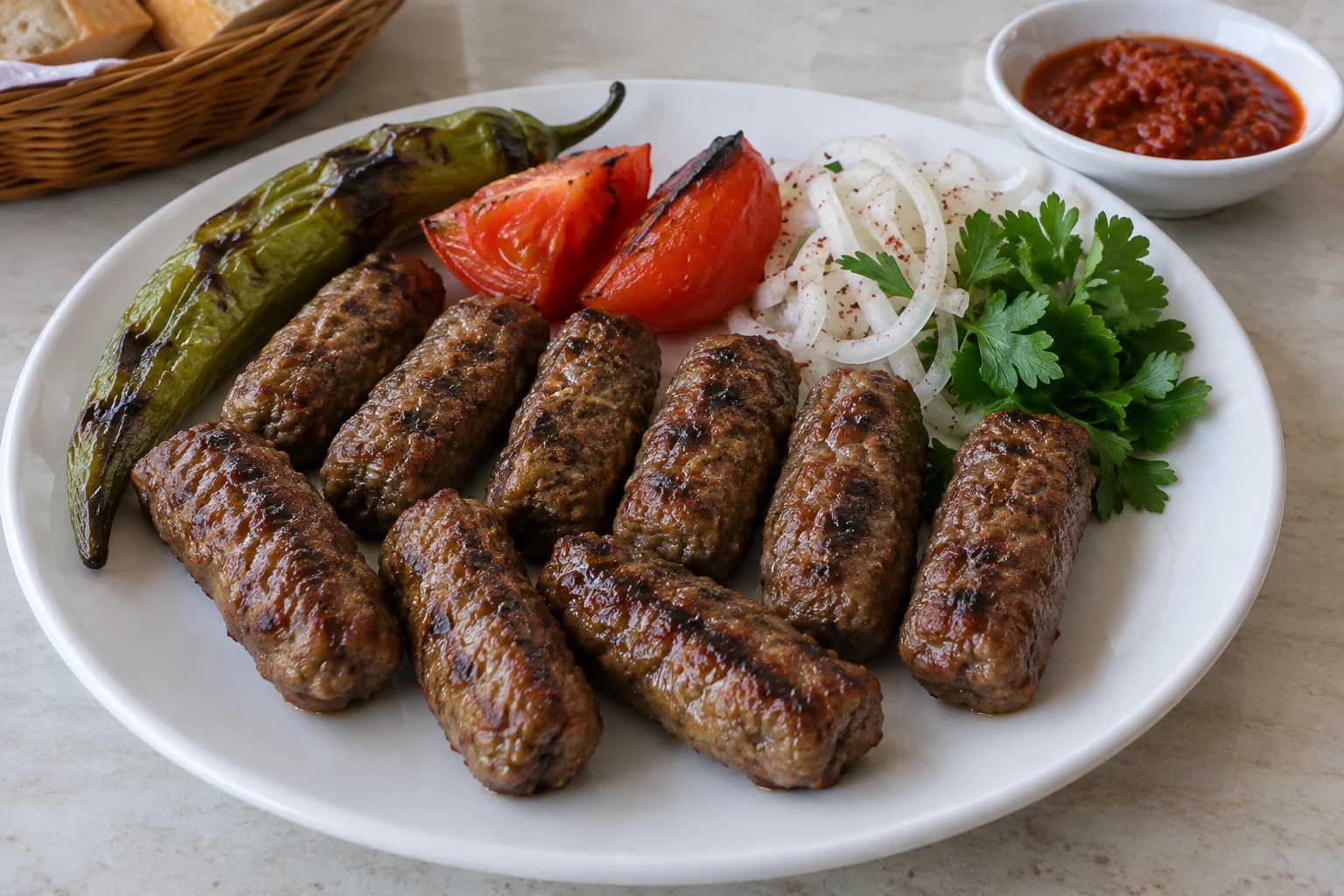
Tekirdağ Köftesi: More Than a Short Cylinder
The small grilled meatballs of Tekirdağ have a registered regional specification. Compare its ingredient and resting rules with clearly identified home adaptations.