
Halim-e Gandom: The Long Stir Before Breakfast
حلیم گندم
Iranian halim is made from wheat and meat, yet a good spoonful shows almost no separate grain or fiber. The change takes time and work—and helps explain both the morning halim shop and the shared pot prepared for others.
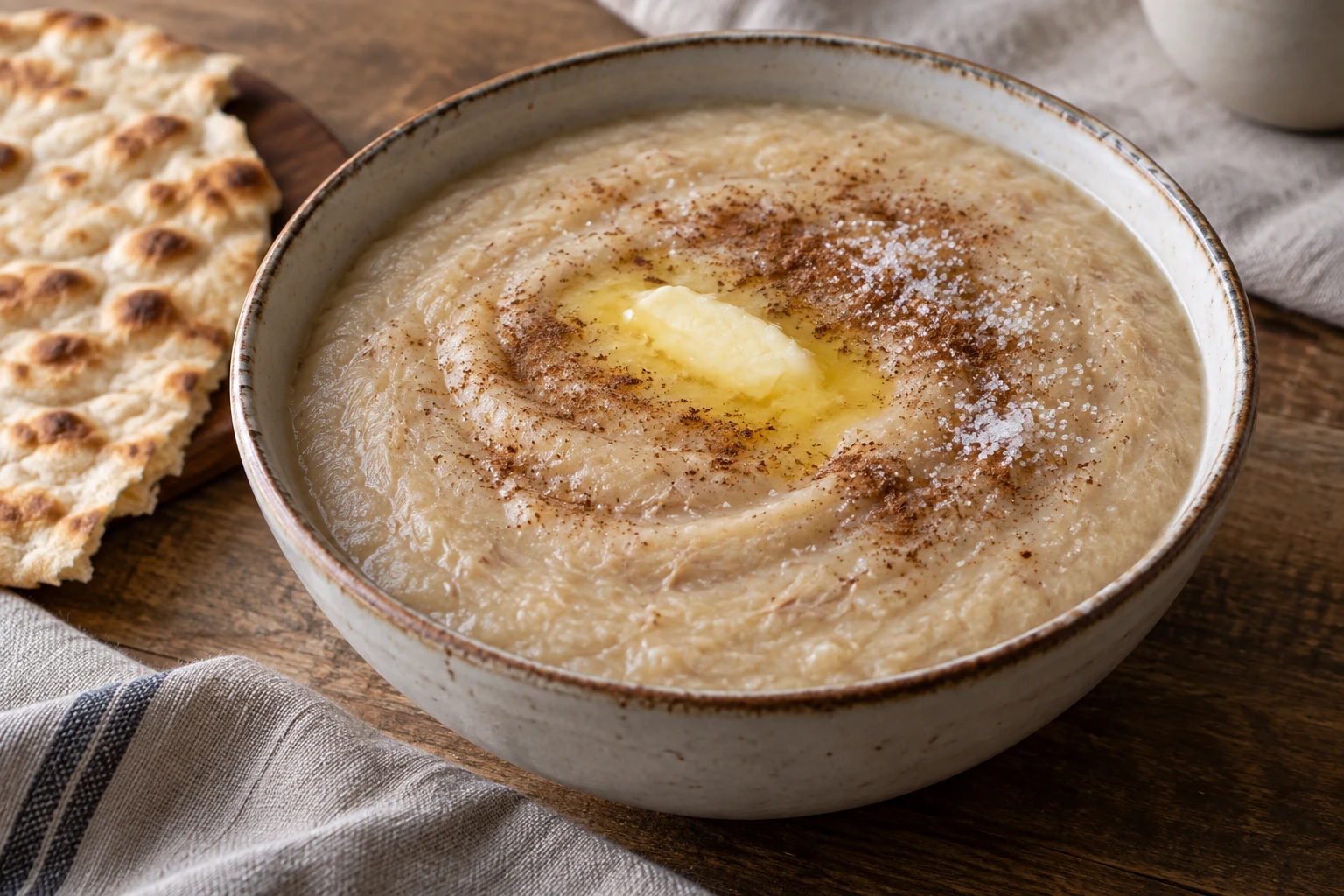
The question in the bowl
Where did the grain and meat go?
Halim-e gandom begins with wheat and meat, but the finished Iranian breakfast is neither a bowl of visible grains nor a stew of shredded lamb. Encyclopaedia Iranica describes the goal as a thick mixture in which the two are difficult to tell apart. The texture, rather than a long list of spices, is the work that defines the dish.
The wheat is softened; the meat is cooked until it can be pulled apart; then both are worked together. Iranian cooks also make versions with turkey or other poultry. Mehr News distinguishes this wheat-and-meat halim from ash-e halim, a different dish that adds legumes. The similar names do not make their ingredients interchangeable.
A change in texture
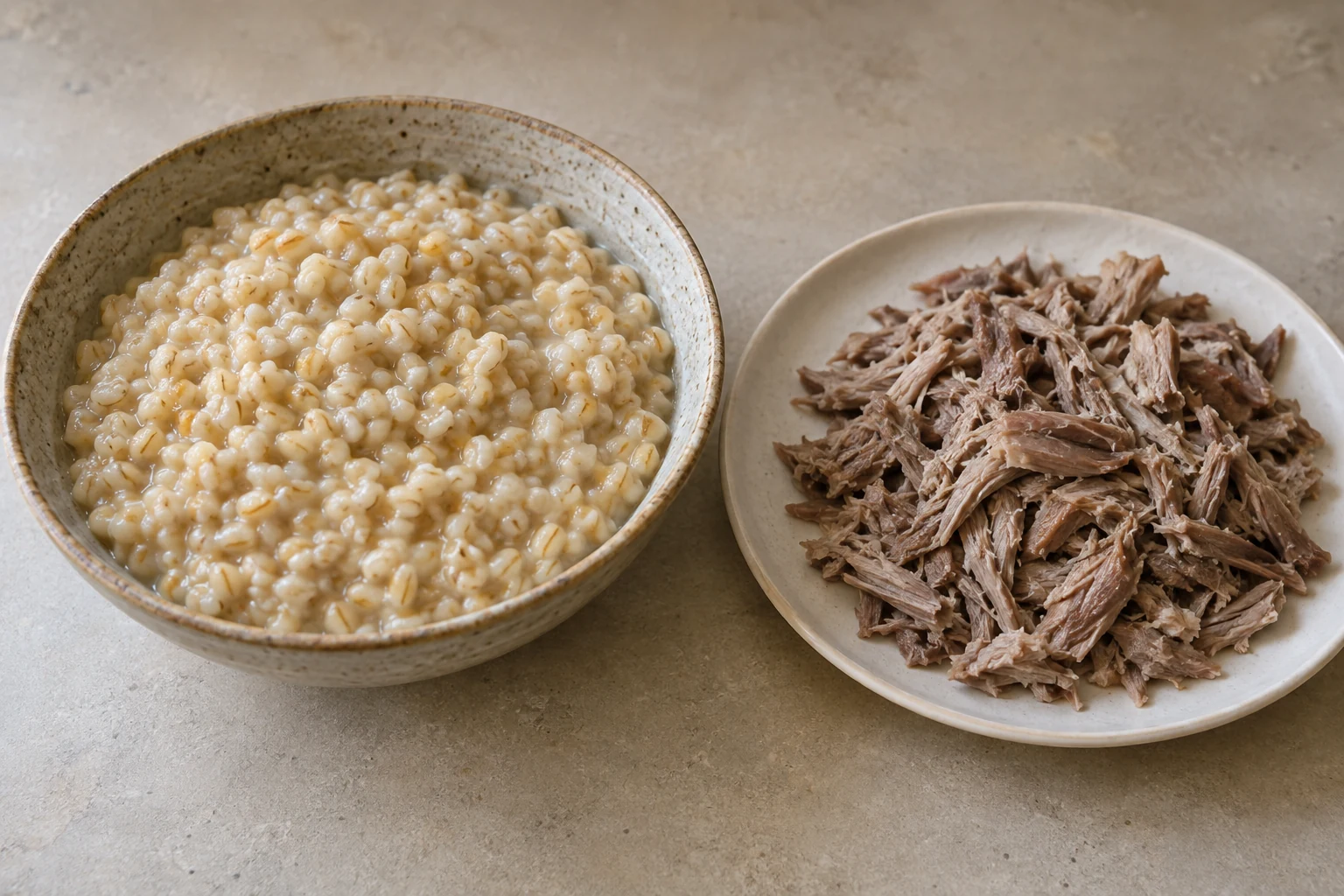
Separate ingredients, shared texture
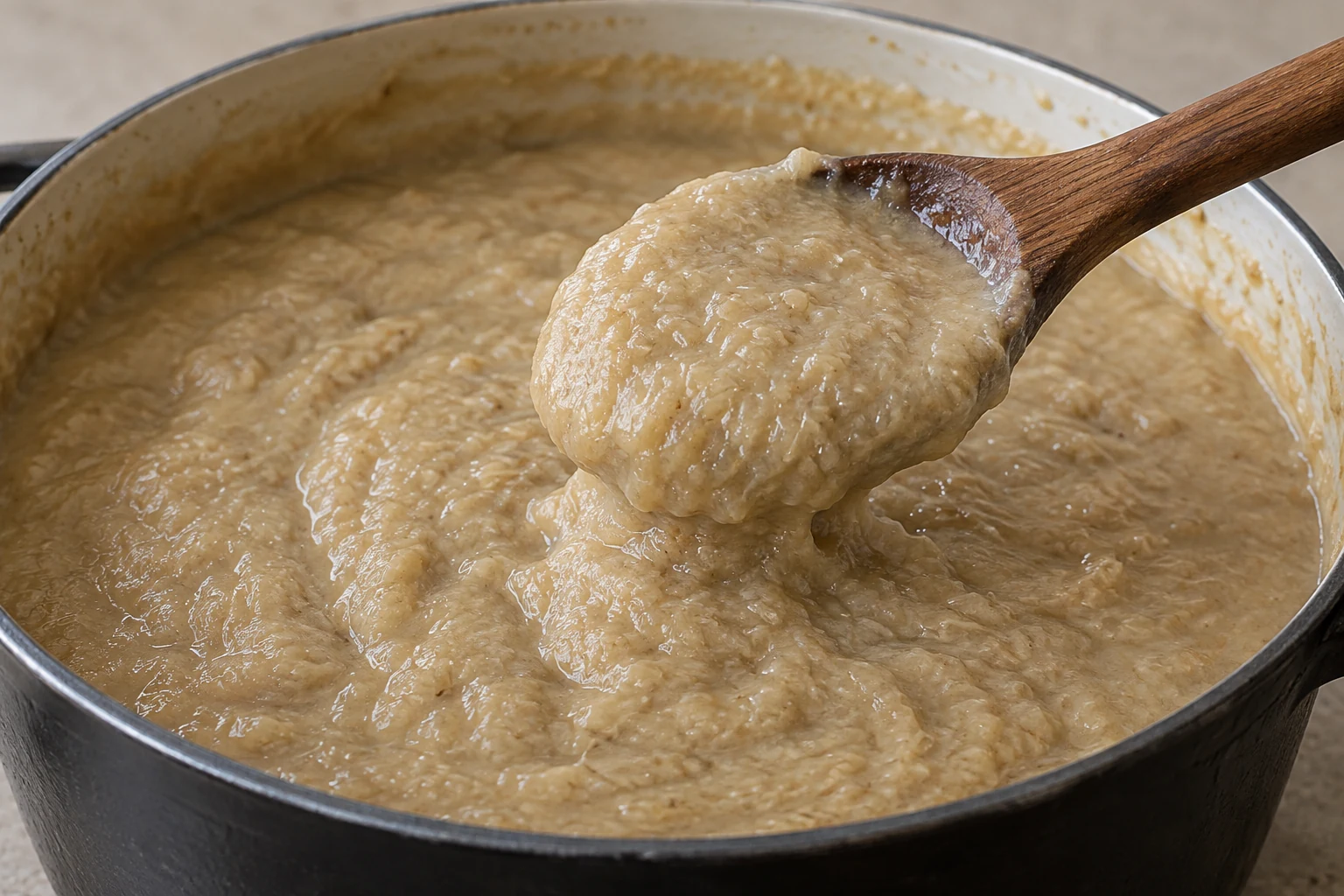
The contrast between soft grain, fine meat fibers, and the cohesive finished pot explains more than an ingredient list alone.
The documented craft
Cook first, then work the mixture
Published accounts vary in their exact sequence and scale. These are the common transformations they describe, without pretending to offer a tested home recipe.
- 01
Soften the wheat
Peeled or pelted wheat can break down into a smooth body when cooked thoroughly. One Iranian cooking account recommends removing the outer skins if whole wheat berries are used, because intact bran changes the final texture.
- 02
Make the meat fine
Encyclopaedia Iranica describes cooked lamb combined with partly cooked wheat; a Persian-American cookbook also records a turkey version. The meat needs to be tender enough to separate into fine strands before it can disappear into the grain.
- 03
Beat until the parts meet
The mixture is stirred and beaten until it becomes thick and cohesive rather than grainy with pieces of meat. Iranica describes large paddles and hours of work for traditional large pots; the observable end point is the nearly seamless spoonful.
Who stirs the pot?
A breakfast built around labor
Because the process takes sustained attention, halim-pazi became a trade: Encyclopaedia Iranica describes specialists selling the porridge in bazaars, while families cooking at home could take turns stirring through the night. An Iranian writer for TASTE likewise describes buying it from shops rather than making it every morning.
That same labor can become communal. In an ISNA interview, a tourism scholar describes relatives taking turns at large pots of nazri halim prepared for distribution during Muharram, with stirring continuing into the morning. This is a documented occasion for the dish, alongside ordinary winter breakfasts; neither setting explains every bowl.
Research notes
Sources behind this story
A scholarly reference, Iranian reporting, firsthand food writing, and a published cookbook excerpt support the ingredient, texture, labor, and serving details. Historical origin claims for the wider dish family are outside this account.
- Encyclopaedia Iranica — Ḥalim Scholarly account of wheat and lamb, prolonged beating, breakfast shops, and household stirring.
- TASTE — The morning magic of Iranian halim Iranian writer on pelted wheat, cohesive texture, shop purchase, and the butter-cinnamon-sugar finish.
- Mehr News — Traditional foods of Markazi Province Iranian reporting distinguishes wheat-and-meat halim from the legume-containing dish ash-e halim.
- ISNA interview, republished by SHMI — Halim and nazri Tourism scholar describes overnight communal stirring, Muharram distribution, and regional topping differences.
- Iranian.com — Joy of Persian Cooking excerpt Attributed Persian-American cookbook recipe documents a turkey version and cinnamon with sugar served beside the bowl.
Keep exploring
More stories for your table
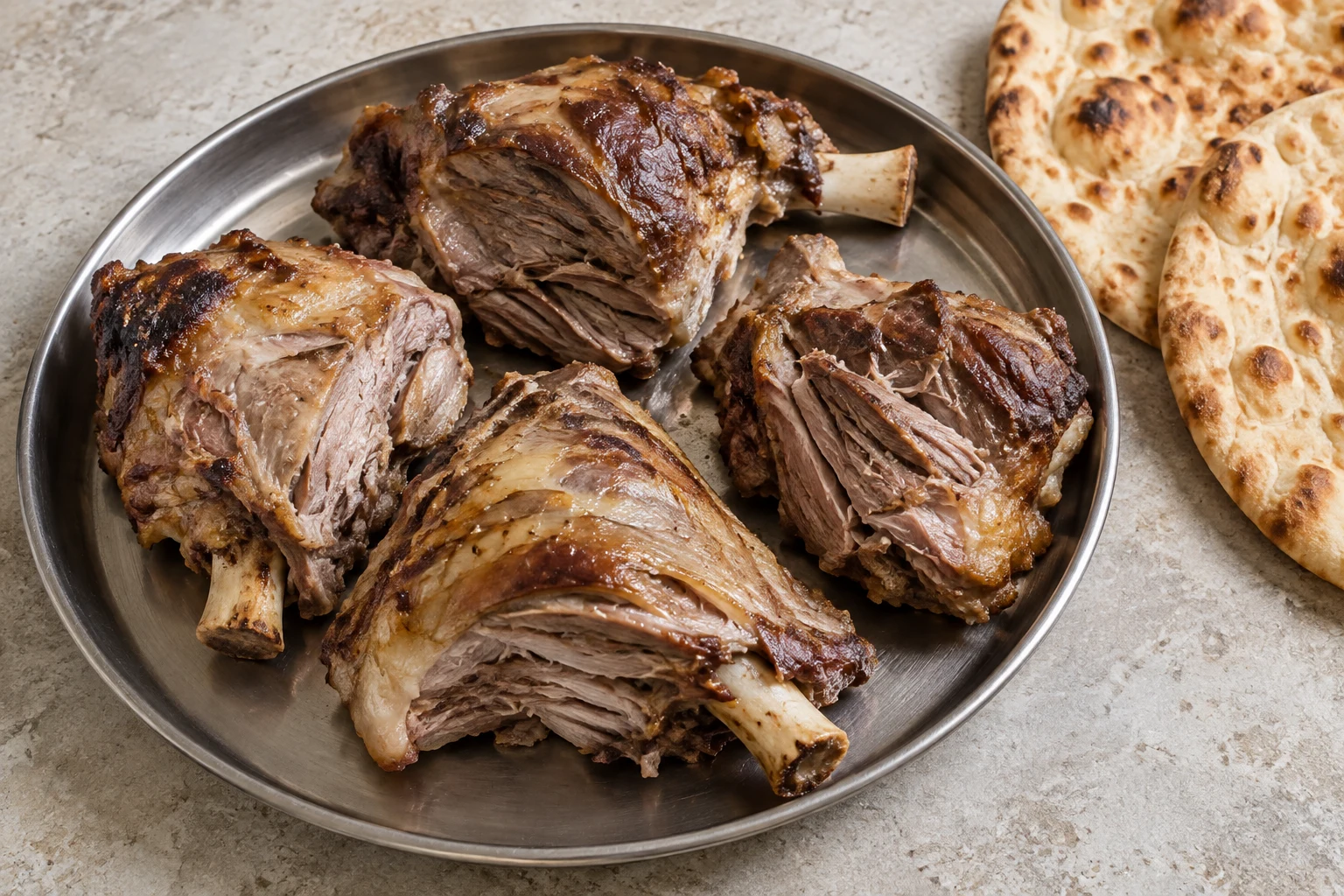
PakistanRoasted meat
Balochi Sajji: The Roast Before the Gathering
From lamb joints brought to Quetta’s Eid roasting shops to chicken portioned onto bread, sajji connects a patient roast with the meal that follows.
PolandDumplings
Meat Pierogi: Make the Filling Moist Before You Fold
Turn cooked soup beef into Polish meat pierogi. Learn how onion, carrot and a little broth soften the filling, then make a complete home adaptation.
SpainPastry
Ensaïmada: The Layers Inside Mallorca’s Spiral
How thin dough, pork lard and a long rest shape Mallorca’s ensaïmada—and why squash preserve and cream become part of the pastry in different ways.