
Borani Bademjan: Prepare the Eggplant for Yogurt
Borani bademjan
Yogurt supplies a creamy finish, but the eggplant needs its own attention first. Softening, draining and reducing determine what that finish can do.
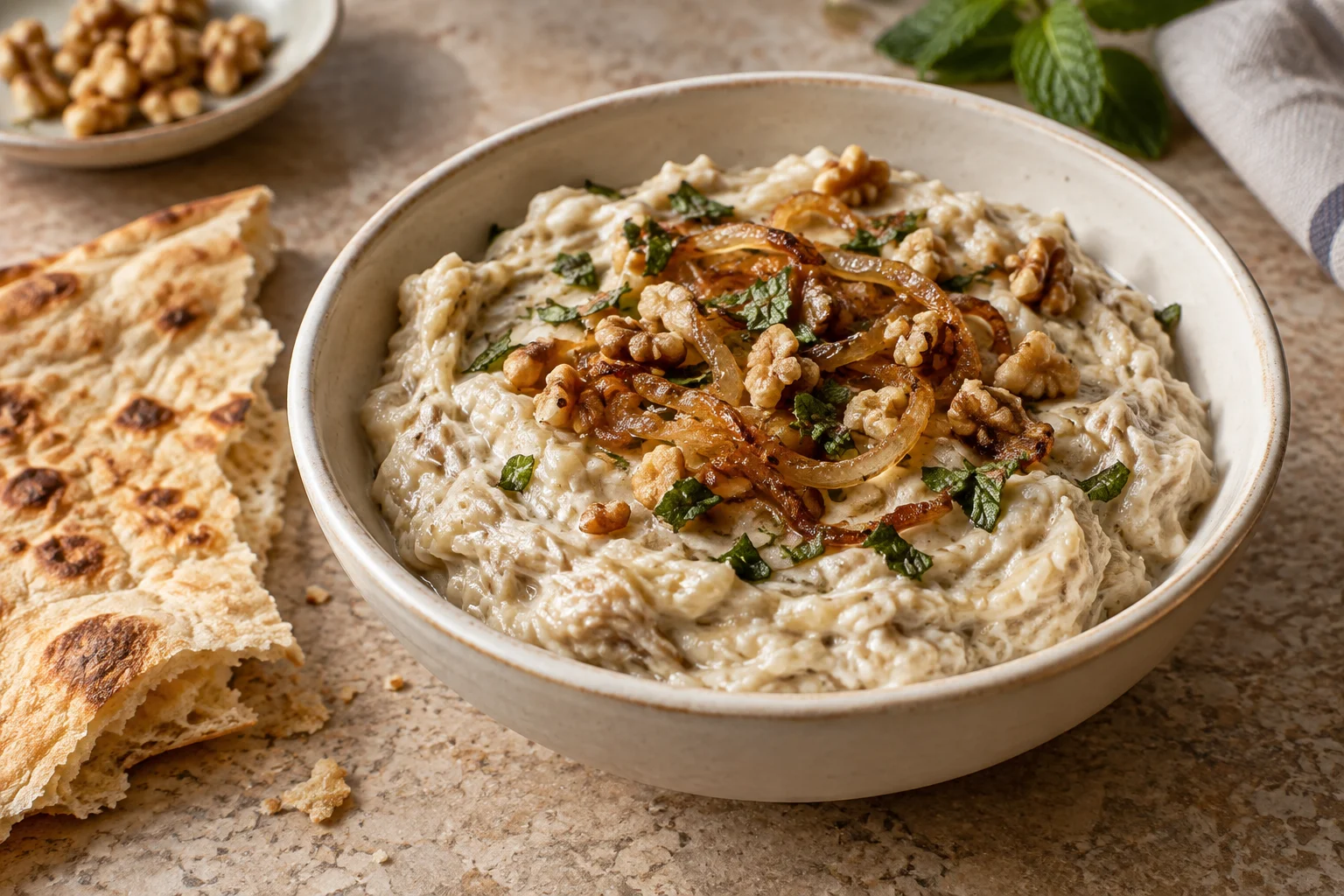
The work begins before the yogurt
Borani bademjan brings eggplant and yogurt together in Persian cooking. The recipes reviewed here show more than one arrangement: a pale dip with yogurt mixed through it, or a cooked eggplant base with yogurt spooned over the surface. That visible difference begins with how the vegetable is prepared.
Eggplant that remains firm will leave hard pieces in the spread. Eggplant carrying a lot of loose cooking liquid can make the finish looser than intended. Before deciding on garnish, give the flesh time to soften and choose how the recipe will handle its moisture. Yogurt then joins a prepared base rather than taking on the job of correcting one.
Check the center, not just the surface
Sep Esmaili Campos of Sep Cooks roasts peeled slices until browned and completely soft, describing a fork entering without resistance. Omid Roustaei’s recipe for PCC Community Markets instead bakes whole eggplants, then cools, peels and drains them. Both methods ask the flesh to become tender before the dip is finished.
Use the chosen recipe’s heat and timing, but inspect a thick part as well as an attractive browned edge. The piece should yield readily to the tool you will use to break it down. Color on the outside does not tell you whether the center is ready to mash.
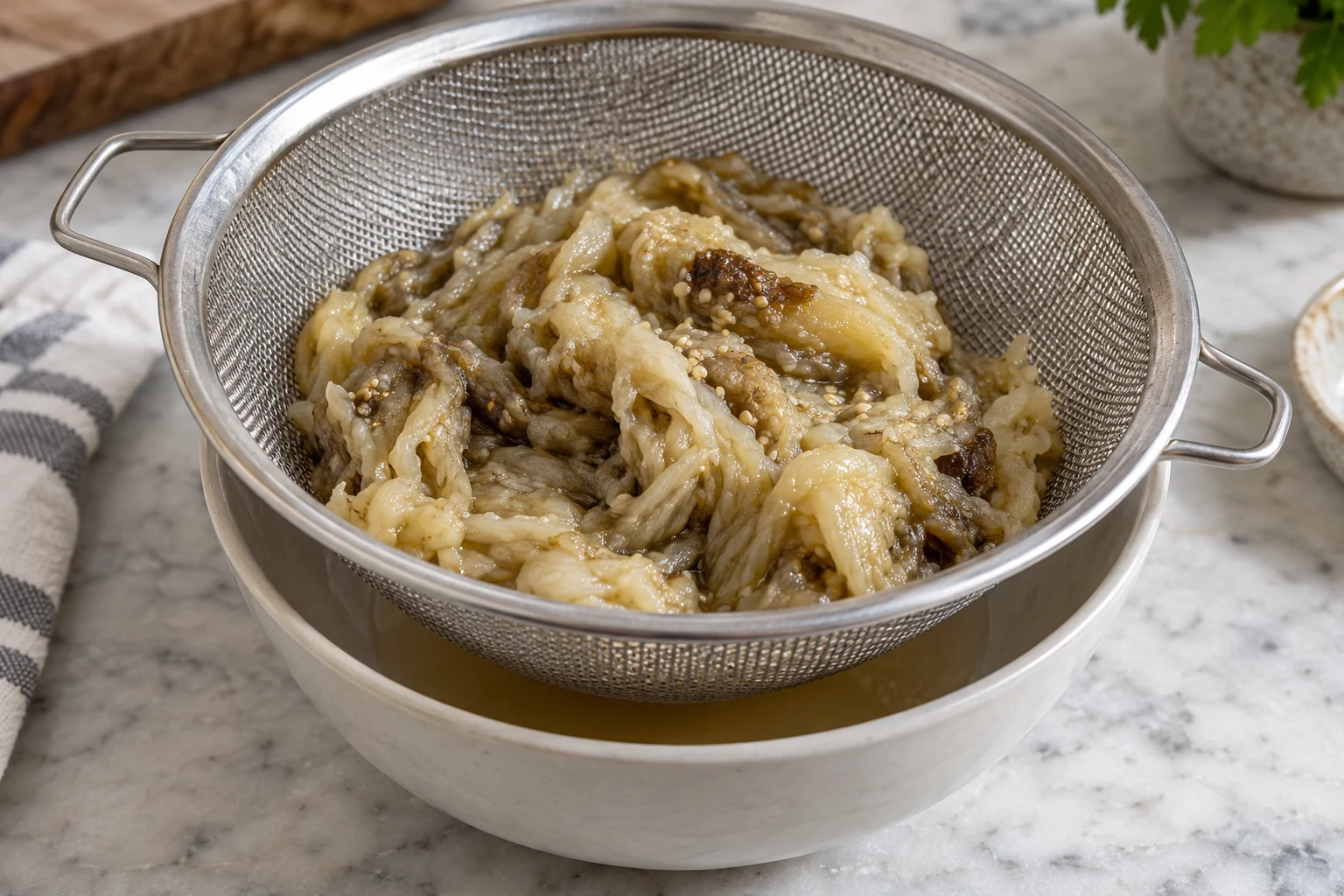
Draining and reducing are two useful routes
Saveur’s published borani recipe puts scooped cooked flesh in a colander for 20 minutes. It then cooks that eggplant with browned onion and garlic until liquid evaporates. The colander and the pan handle moisture at different stages; neither requires turning the flesh into a dry, crumbly ingredient.
Campos takes a different path. Roasted eggplant enters a tomato-and-onion mixture with added water, then simmers while being broken up until the mixture thickens. Homa at Persian Mama similarly stews baked or fried eggplant in a tomato-garlic sauce and cooks off most of the liquid. Follow one complete route so the water added during cooking has a clear purpose and endpoint.
Salting belongs to a particular method
Campos salts peeled slices, lets moisture bead on their surface and pats them dry before roasting. Homa says she does not salt or soak her eggplants beforehand. These are the cooks’ different practices, so an introductory guide should not turn either into a rule for every borani.
Choose a published method that suits your preparation, then retain its sequence. Adding an extra salting stage to another recipe also changes how much seasoning reaches the dish. Taste the prepared base and its yogurt together before making the final salt adjustment.
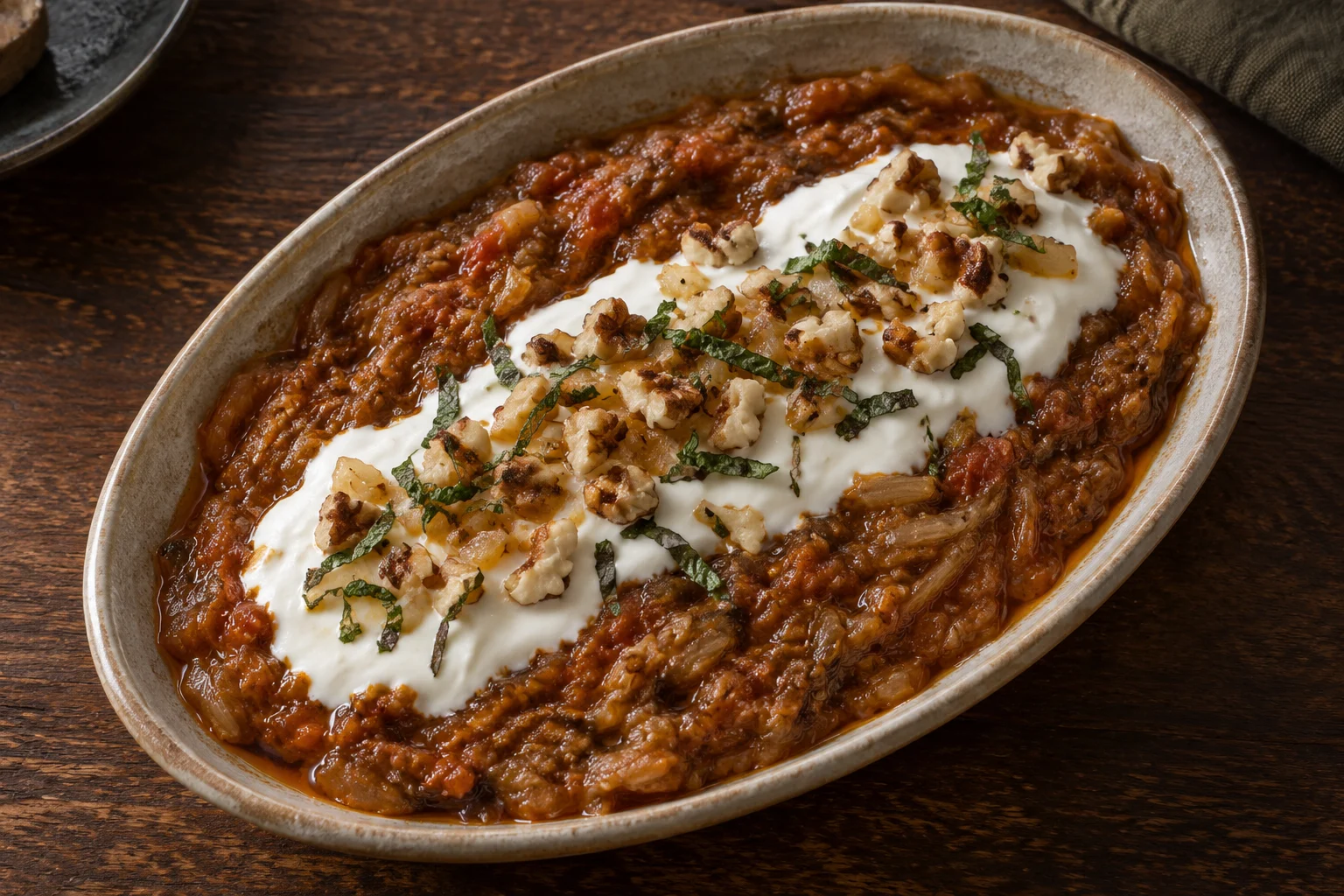
Let the finish explain the bowl
Roustaei roughly purées his eggplant and onion mixture, retaining some visible pieces, with yogurt, mint and lime in the mixture. Saveur also folds yogurt into the cooked base, then adds saffron, caramelized onion, garlic chips and walnuts. A blended dip can therefore still have a textured finish.
Homa’s tomato-rich version keeps the yogurt visibly separate and adds a cooked onion-and-walnut topping, with mint optional. A spoonful can pick up both the darker eggplant and the white yogurt. This arrangement offers a different balance of textures without requiring every ingredient to disappear into a processor.
Serve with bread suited to scooping the chosen consistency. Homa suggests toasted sangak or another flatbread; Roustaei offers lavash or pita. Begin with a modest garnish so the soft eggplant remains easy to find in a mouthful. If serving guests, remember that the versions illustrated contain dairy and walnuts.
Research notes
Sources and finishing styles
Four independent original recipe sources were opened and read. Their different yogurt and moisture choices remain attributed. This is a method guide, and all images are generated illustrations.
- Persian Mama — Homa’s borani bademjan Original recipe stews eggplant in a tomato-garlic sauce, reduces the liquid and spoons yogurt over the finished base, with onion, walnuts and optional mint.
- PCC Community Markets — Omid Roustaei’s eggplant and yogurt dip Cooking instructor’s original recipe bakes whole eggplant, drains it and makes a roughly puréed dip with yogurt, walnuts, mint and lime.
- Sep Cooks — Sep Esmaili Campos’s eggplant borani Cook’s own method salts and roasts slices until fork-tender, then reduces them in an aromatic tomato mixture before folding in yogurt.
- Saveur — eggplant and yogurt dip Original 2012 editorial recipe drains baked flesh, evaporates further moisture in the pan and finishes the yogurt dip with onions, garlic chips, saffron and walnuts.
Keep exploring
More stories for your table
Persian cuisine Grilled kebabs
Koobideh: How the Meat Holds the Skewer
Iranian koobideh turns ground meat and onion into a long ridged kebab. Onion moisture, a cohesive mixture and broad skewers explain the preparation’s distinctive shape.
Persian cuisine Rice and lentils
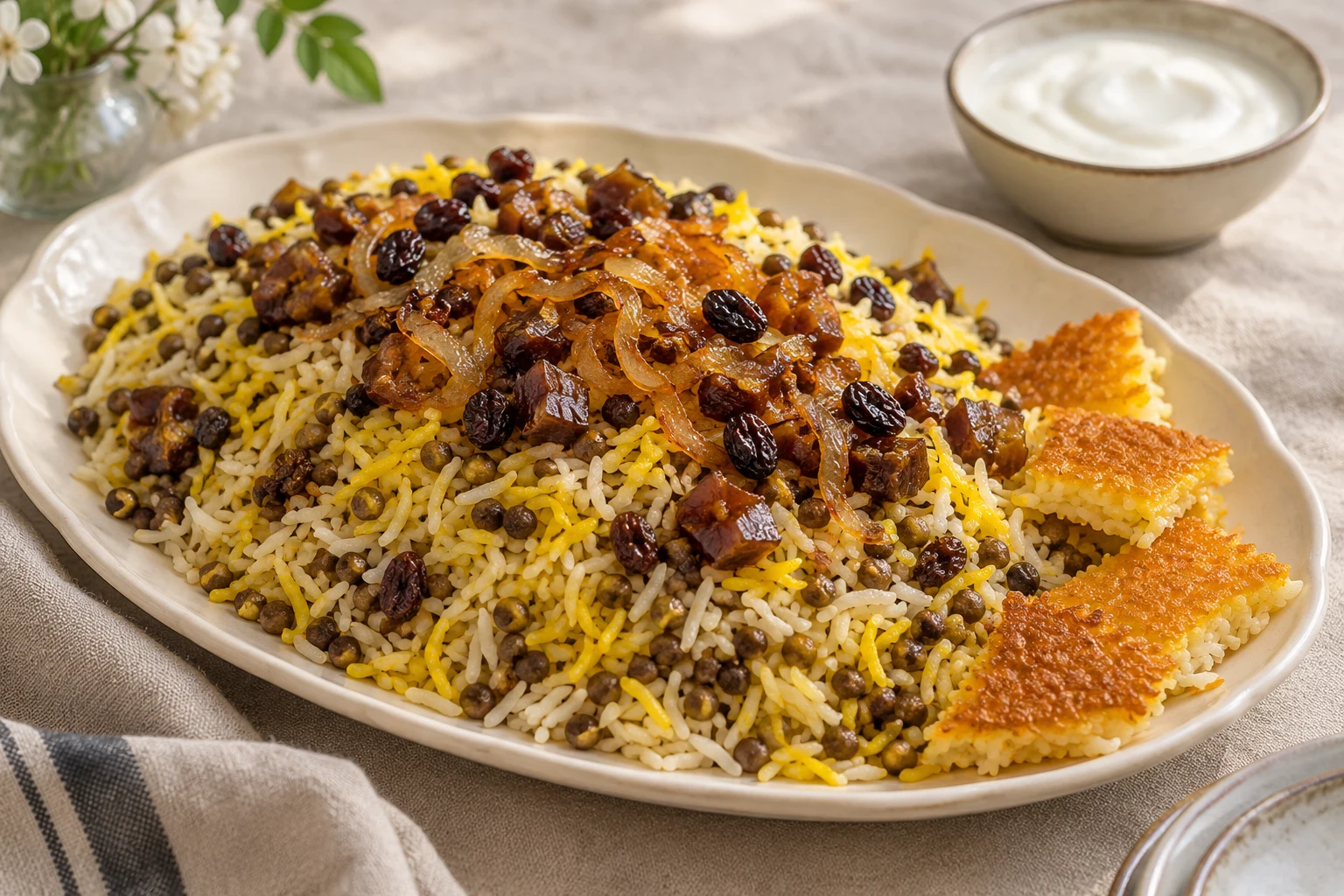
Adas polo: keep the grains distinct and the sweetness deliberate
Persian lentil rice brings together earthy lentils, fragrant rice, and optional sweet toppings. Its texture depends on choosing and following one cooking method.
Turkish cuisine Lamb and eggplant
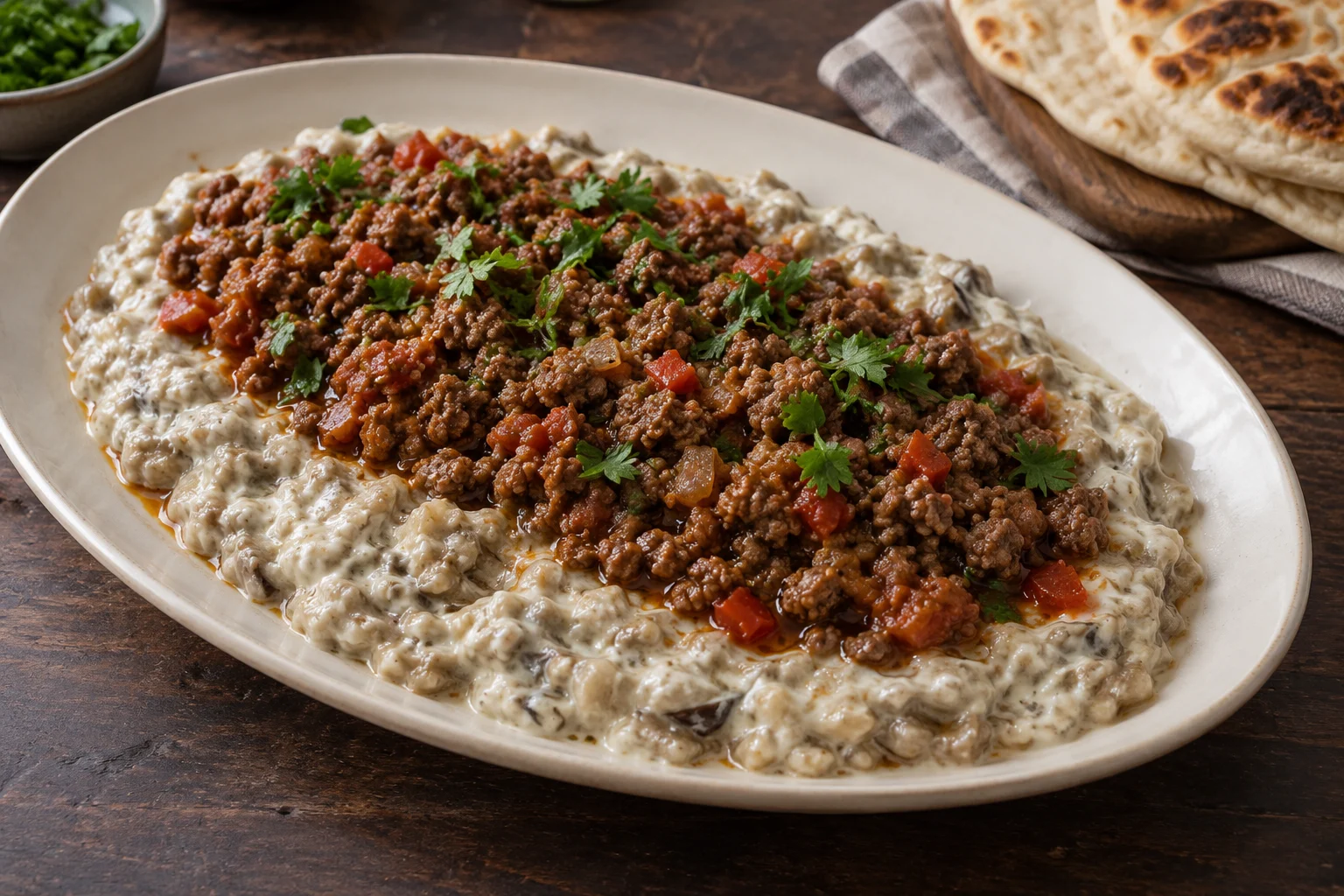
Ali Nazik: Bring the Meat to a Prepared Eggplant Base
Ali Nazik joins hot meat with soft eggplant and garlic yogurt. Compare documented meat preparations and learn how to coordinate the two components.