
Dam Pokhtak: Match the Beans to the Rice
دمپختک
Golden rice, soft onion, and broad beans make a generous plate from a short ingredient list. The useful decision comes before the pot: choose your beans, then choose a method that gives them enough time.
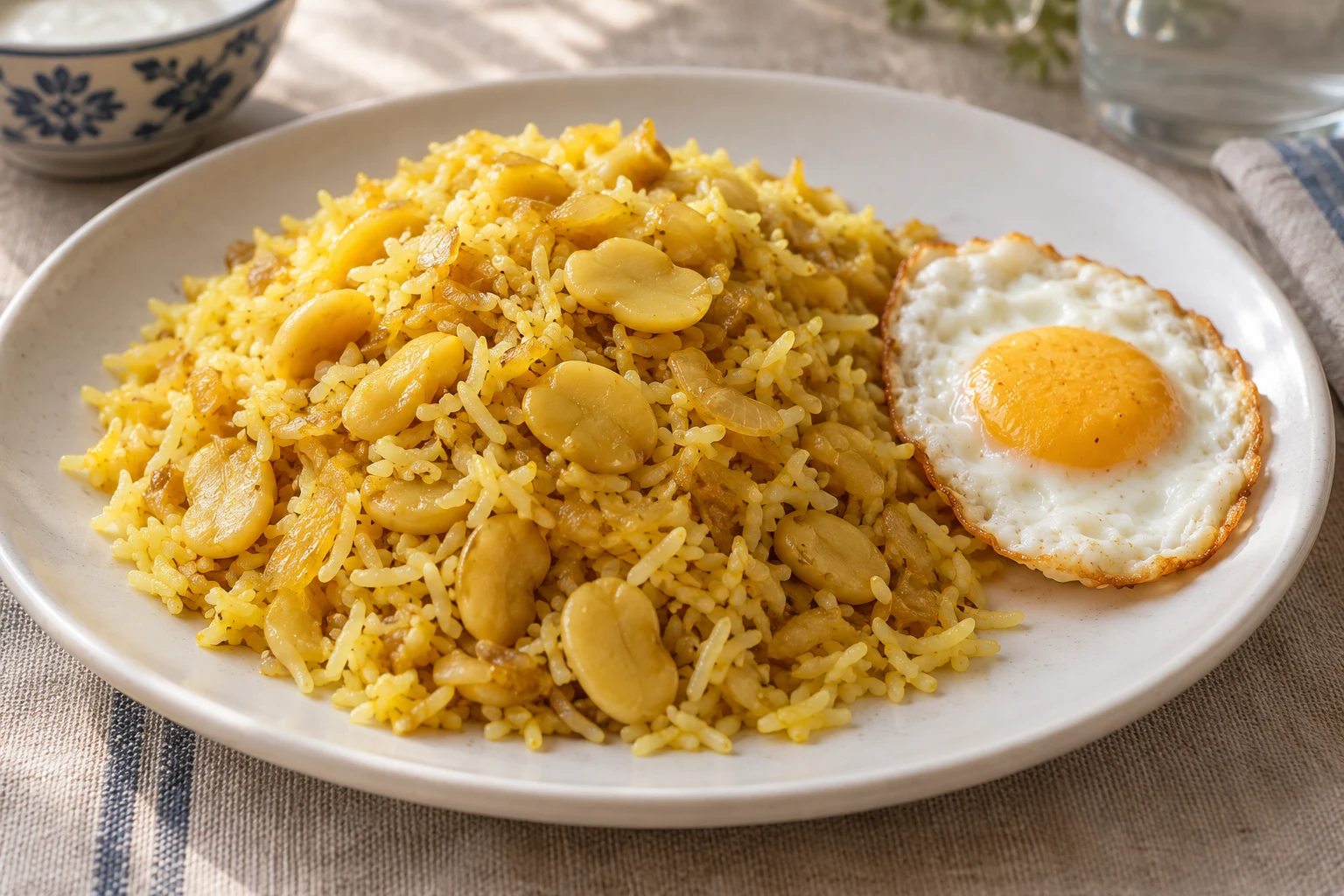
A yellow rice dish with a bean question
Dam pokhtak, also written dampokhtak, brings rice, onion, turmeric, and beans together in an Iranian home-style dish. Hami Sharafi also calls his preparation dami baghali. His version and Samira's use dried split fava beans: peeled broad beans whose pale halves become tender among the grains.
The yellow color can come from turmeric alone. In her Persian-language home recipe, Behnaz explicitly says she did not use saffron. Her plate also includes eggs, while other writers suggest salad, herbs, or yogurt. These are useful serving choices, rather than a compulsory set of garnishes.
Look at the packet before borrowing a cooking time. Yellow split peas, dried large lima beans, fresh green broad beans, and peeled split fava beans are different ingredients. A similar color or an English recipe title does not make their preparation interchangeable.
Three methods, three starting points
Split fava beans, together with rice
Sharafi soaks the beans for several hours, then combines them with washed rice after cooking the onion and spices. His water and covered finish belong to that full method; they are not a universal ratio for every pot.
Split fava beans, with a head start
Samira first simmers soaked beans with the seasoned onion until they have softened somewhat. Rice joins later. This separates part of the beans' cooking from the rice's absorption stage.
A documented lima-bean variation
Cooking and Cooking uses dried large lima beans and describes soaking, peeling when necessary, and cooking them before adding rice. Follow that ingredient's preparation if choosing the variation; do not treat it as a direct swap into a split-fava recipe.
Build flavor before building steam
The onion is part of the dish's sweetness and body. Let it soften and take on a golden color without turning acrid. Turmeric meets the hot fat briefly, then liquid carries its color through the pot. Dark, scorched spice will give a very different result from a gently aromatic onion base.
If the bean packet or your experience suggests a long cooking time, a method with a separate bean stage offers more control. Check a bean before committing the rice to its final covered stage. A hard center needs further cooking; a bean that collapses at a touch may break up when mixed.
Behnaz's home version also gives soaked yellow broad beans an initial simmer. She aims to soften them without making them mushy before adding rice. The practical distinction is between allowing for bean tenderness and simply waiting until the rice looks yellow.
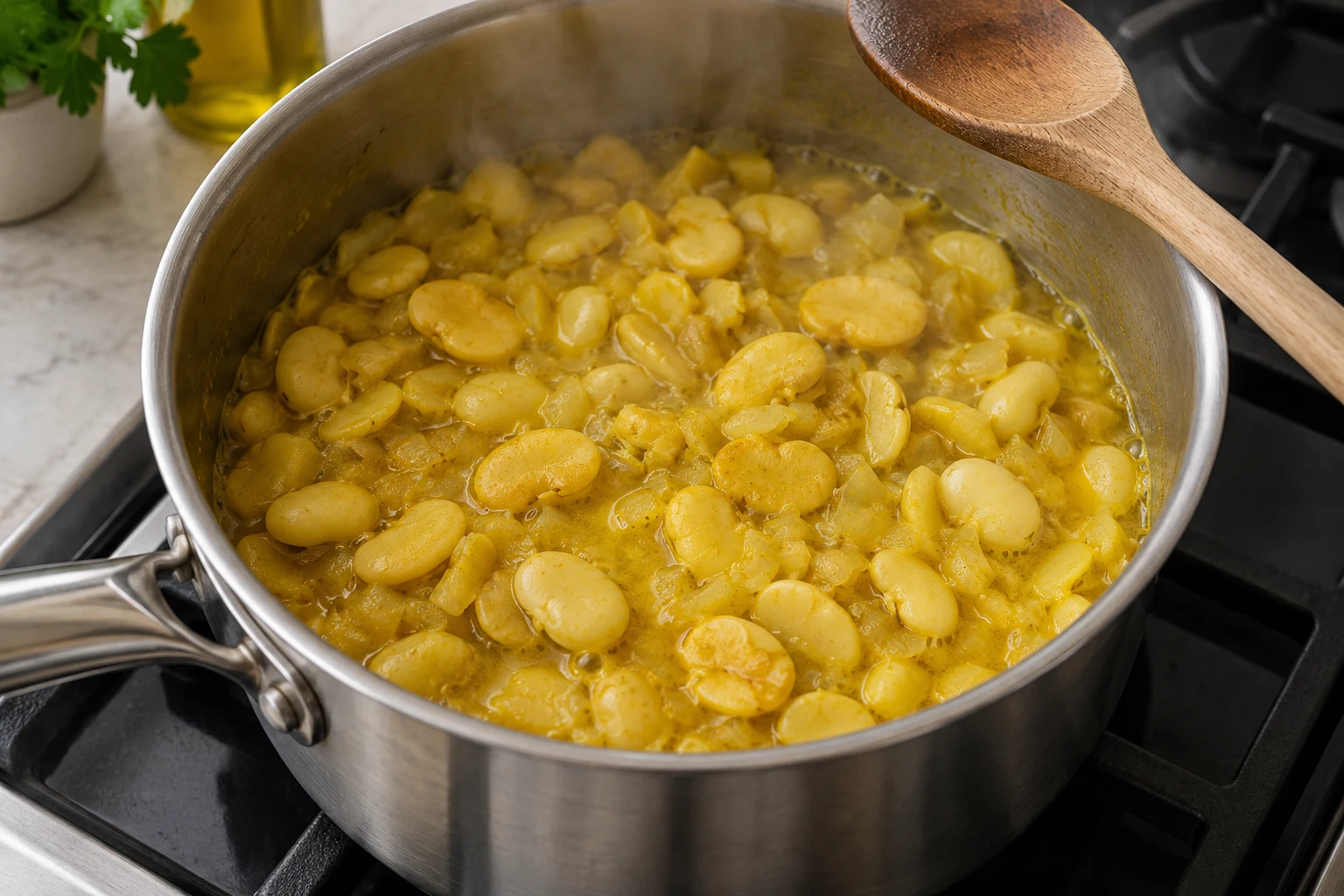
Watch the change from simmering to steaming
Rice variety, soaking, pot width, and the bean stage all change how much liquid remains. Choose one complete recipe for quantities and timing. Combining the water from an all-in-one method with beans that have already simmered in another can leave you with more liquid than the rice needs.
The open simmer and the covered finish do different jobs. First the rice takes up the cooking liquid; later a close-fitting lid helps finish the grains over gentle heat. Sharafi describes small openings appearing in the rice as the liquid reduces. That is a cue within his method, not a substitute for checking the rice and beans.
If using a cloth under the lid as some writers do, secure its ends well away from the burner and hot surfaces. A good lid matters more than leaving loose fabric near heat. Avoid repeatedly stirring the rice as it finishes: the aim is tender grains and beans rather than a mashed mixture.
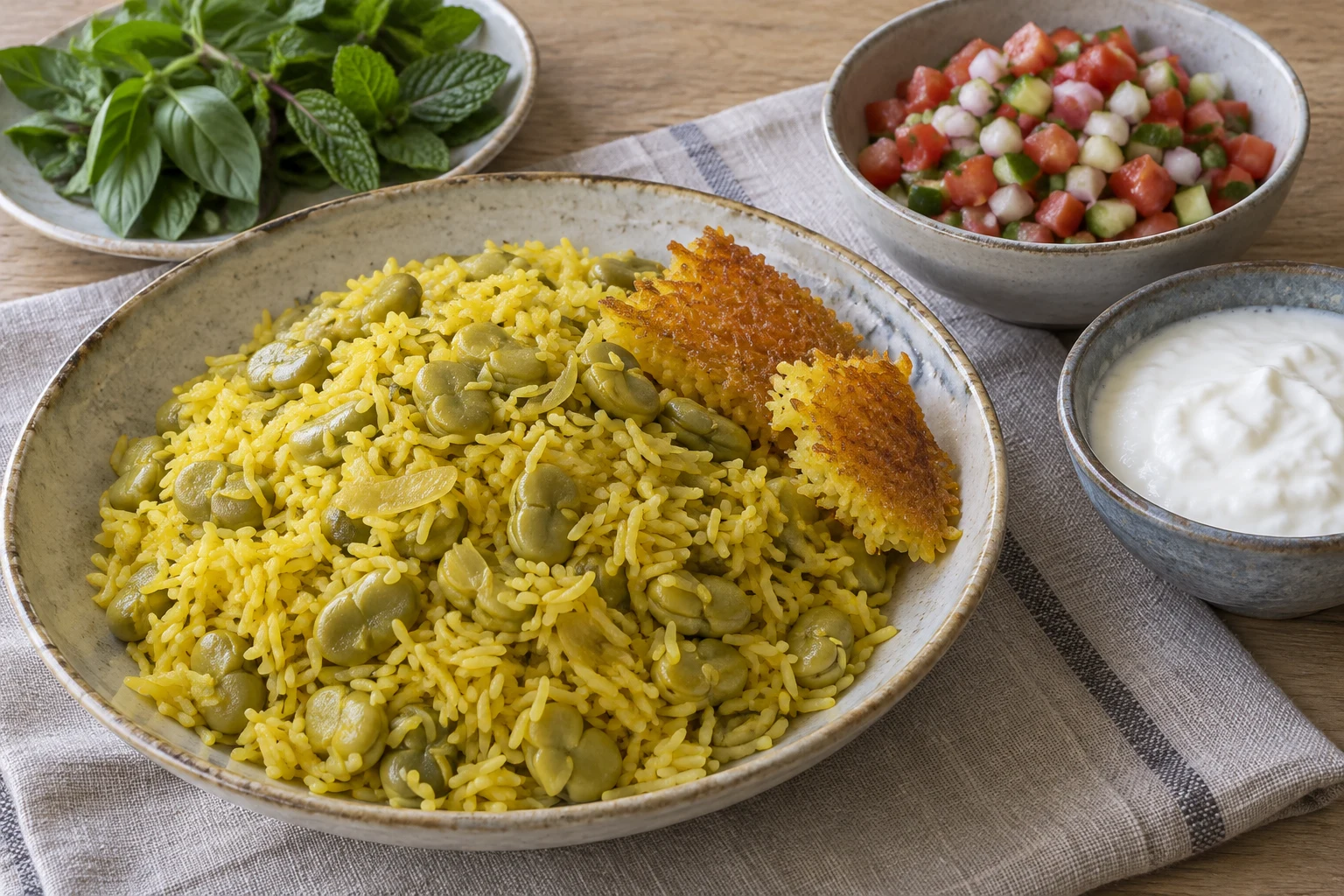
Keep the accompaniments simple
A fried egg is an easy addition, with the white and yolk cooked firm for this serving. A bowl of Shirazi-style tomato, cucumber, and onion salad brings a cool, fresh bite. Plain yogurt, herbs, or pickles can sit alongside the rice so each person chooses what to add.
Some methods encourage a browned rice crust, or tahdig, at the bottom. Serve any successful crust separately from the fluffy rice; its crispness is a different pleasure. Behnaz also offers meat as a personal addition, but the rice-and-bean base does not require it.
Plan leftovers while serving, rather than leaving the whole pot to cool slowly. The Food Standards Agency advises cooling cooked rice promptly, ideally within an hour, using smaller portions. Refrigerate it, eat within 24 hours, and reheat only once until steaming hot throughout.
Research notes
Recipes and further reading
The recipes below document different bean choices and cooking sequences. Use one complete method for a measured preparation; the rice guidance covers safe storage after cooking.
- Hami Sharafi: Dam Pokhtak Persian cook's split-fava version, with turmeric, onion, an absorption stage, and a covered finish.
- Cooking with Samira: Dampokhtak Recipe developer's method gives soaked split fava beans an initial simmer before the rice.
- Cooking and Cooking: Dami-e Baghali A specifically documented dried-lima-bean variation, including separate soaking and cooking instructions.
- Behnaz: دمپختک باقالی زرد Named home cook's Persian-language split-broad-bean version, including egg, tahdig, and optional personal additions.
- Food Standards Agency: Home food fact checker Official rice advice on prompt cooling, refrigeration for no more than one day, and reheating once.
- FoodSafety.gov: Safe minimum internal temperatures Official guidance to cook egg whites and yolks firm.
Keep exploring
More stories for your table
Persian cuisine Eggplant and yogurt
Borani Bademjan: Prepare the Eggplant for Yogurt
Persian eggplant borani can be blended with yogurt or topped with it. Tender flesh and managed moisture help either finish keep its intended texture.
Persian cuisine Grilled kebabs
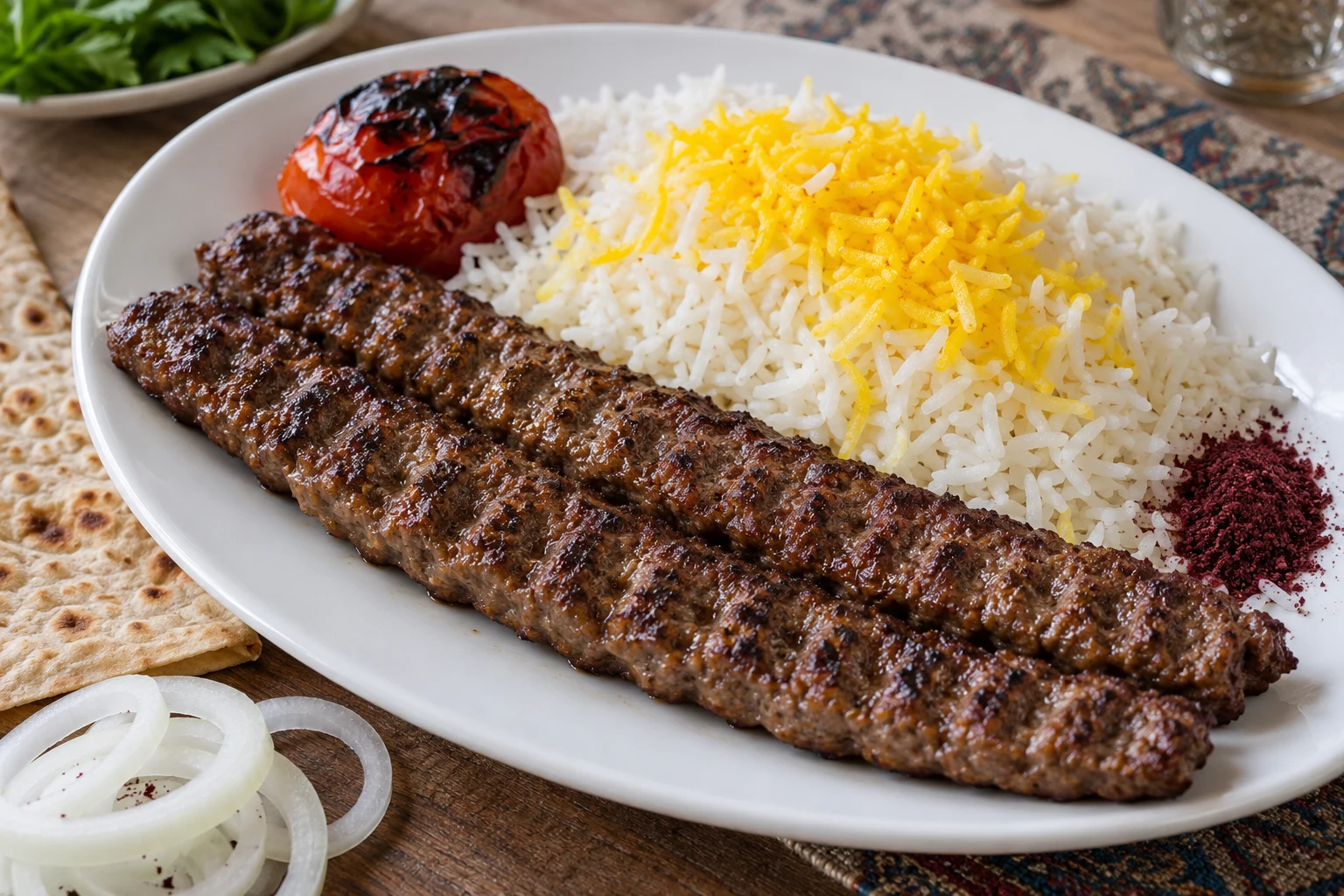
Koobideh: How the Meat Holds the Skewer
Iranian koobideh turns ground meat and onion into a long ridged kebab. Onion moisture, a cohesive mixture and broad skewers explain the preparation’s distinctive shape.
Brazilian cuisine Rice
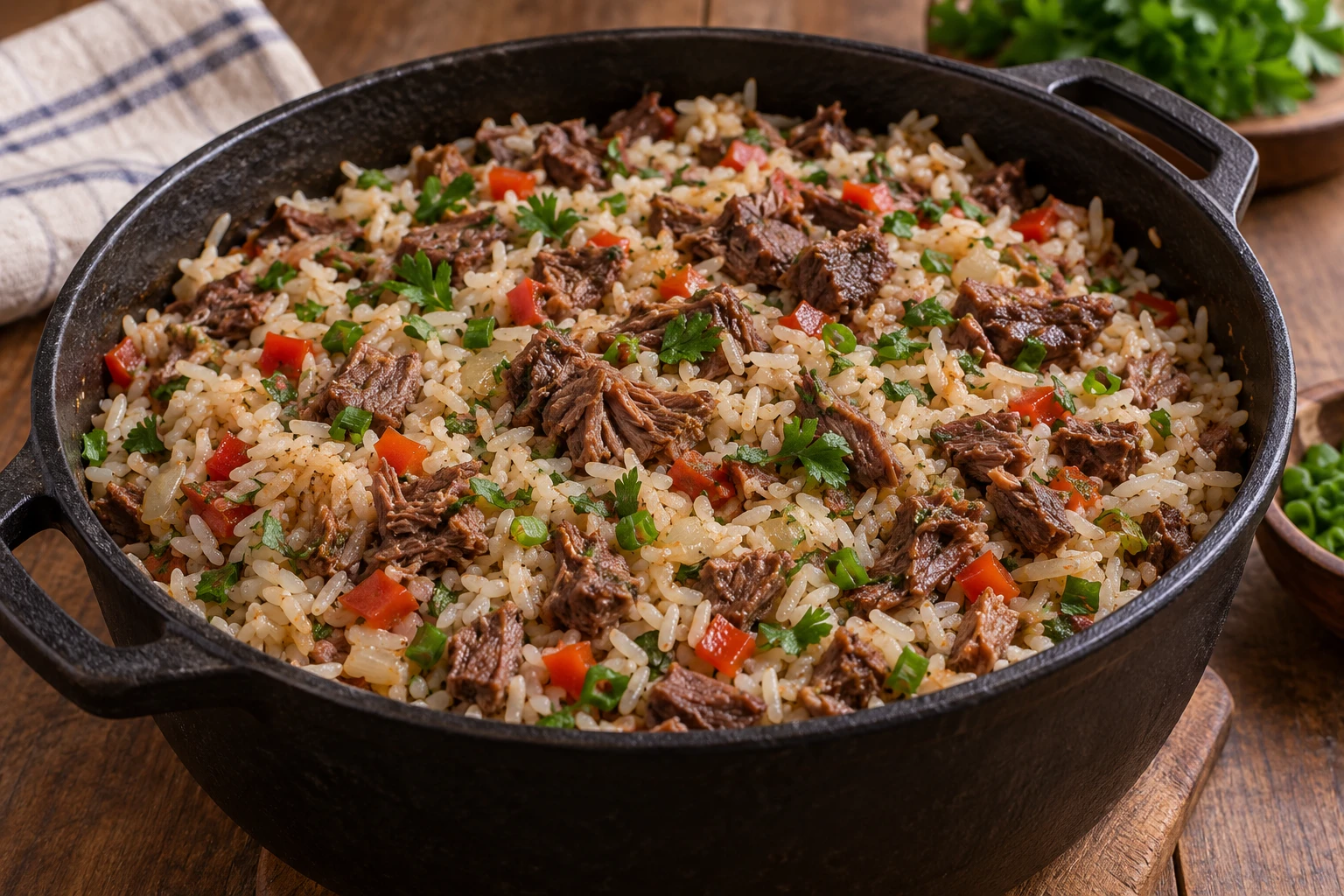
Arroz Carreteiro: Before the Rice Enters
Prepared charque, browned meat and the order of additions shape Brazil’s arroz carreteiro. Four cooks show how tomato, extra meats and fresh finishes change the pot.