
Balochi Sajji: The Roast Before the Gathering
Sajji
A joint of lamb brought to a roasting shop and a chicken divided onto bread can both belong to sajji’s story. In Balochistan, the patient work at the skewers leads toward a gathering; at the table, portions, bread and finishing spices shape the meal.
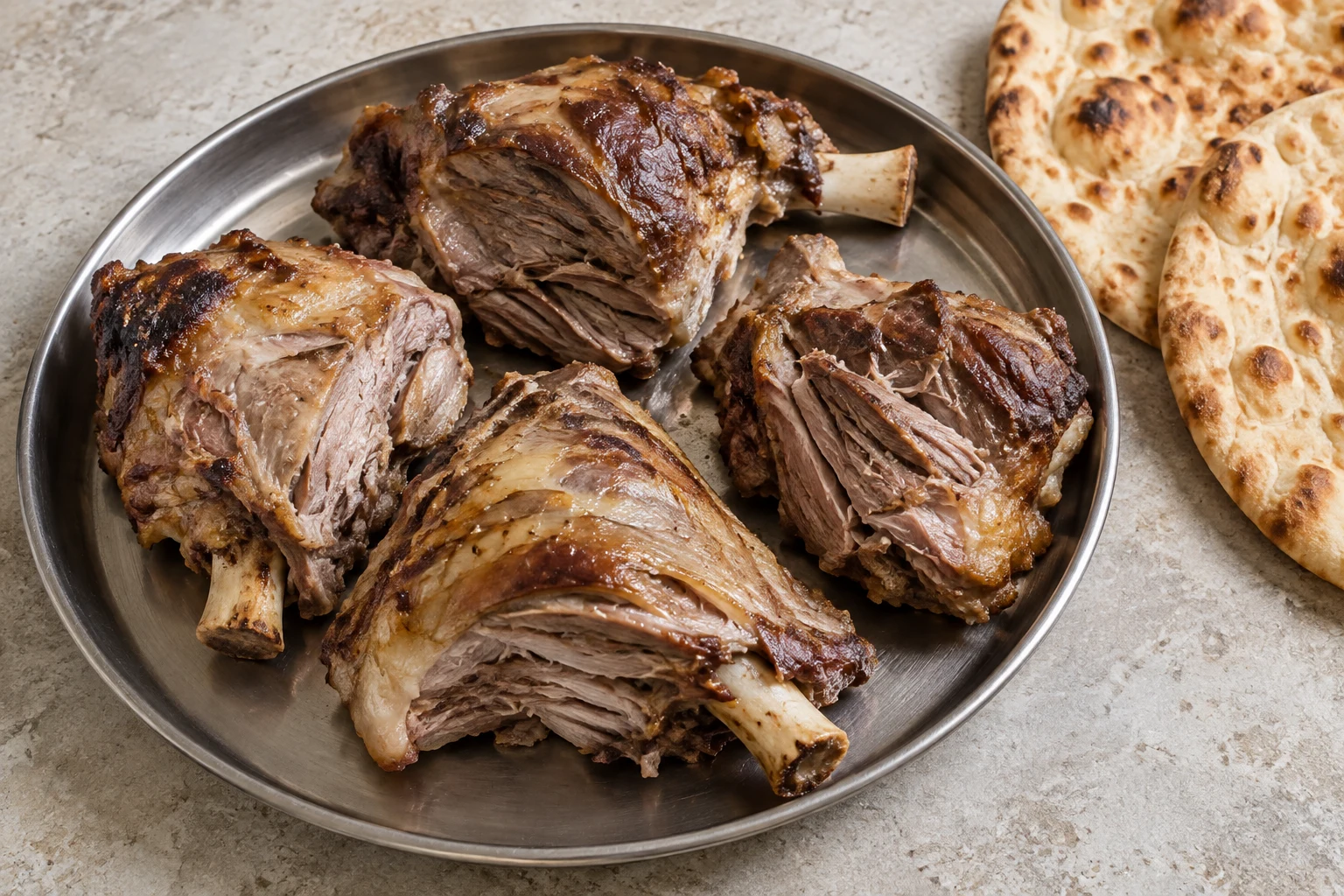
Before the guests sit down
Bring the meat; leave time for the roast
Reporting from Quetta during Eid al-Adha in July 2021, Saadullah Akhter described customers bringing thigh and shoulder pieces from their sacrificial animals to sajji shops. Cook Muhammad Abid salted the meat before slow roasting it on large skewers over coal. The finished lamb or goat would become part of an Eid dinner.
That account shows a cooking service woven into a gathering: the customer supplies the meat, while the specialist supplies the roasting skill and time. In a separate ethnographic study, Rahim Bakhsh and Sarfraz Khan describe sajji at guest visits, picnics and Eid celebrations. Their research links the dish to the way meat is offered and shared, as well as to the way it is cooked.
A joint, a bird, then portions
Sajji need not mean an intact animal. Bakhsh and Khan describe lamb or goat divided at the joints, salted and placed on skewers near a fire. Their account distinguishes meat presented in portions to guests from a larger piece shared among friends and relatives. The roasting unit and the serving portion are different decisions.
Chicken belongs to the documented range too. Akhter’s reporting describes it as a quicker, less expensive version, and SOCH Outreach Foundation’s Quetta exhibit follows whole chickens through salting, skewering, roasting and cutting. Its wider Balochistan exhibit emphasizes the cook’s attention to the intensity of the fire. The common thread is sustained attention to roasting substantial pieces, rather than a single required cut.
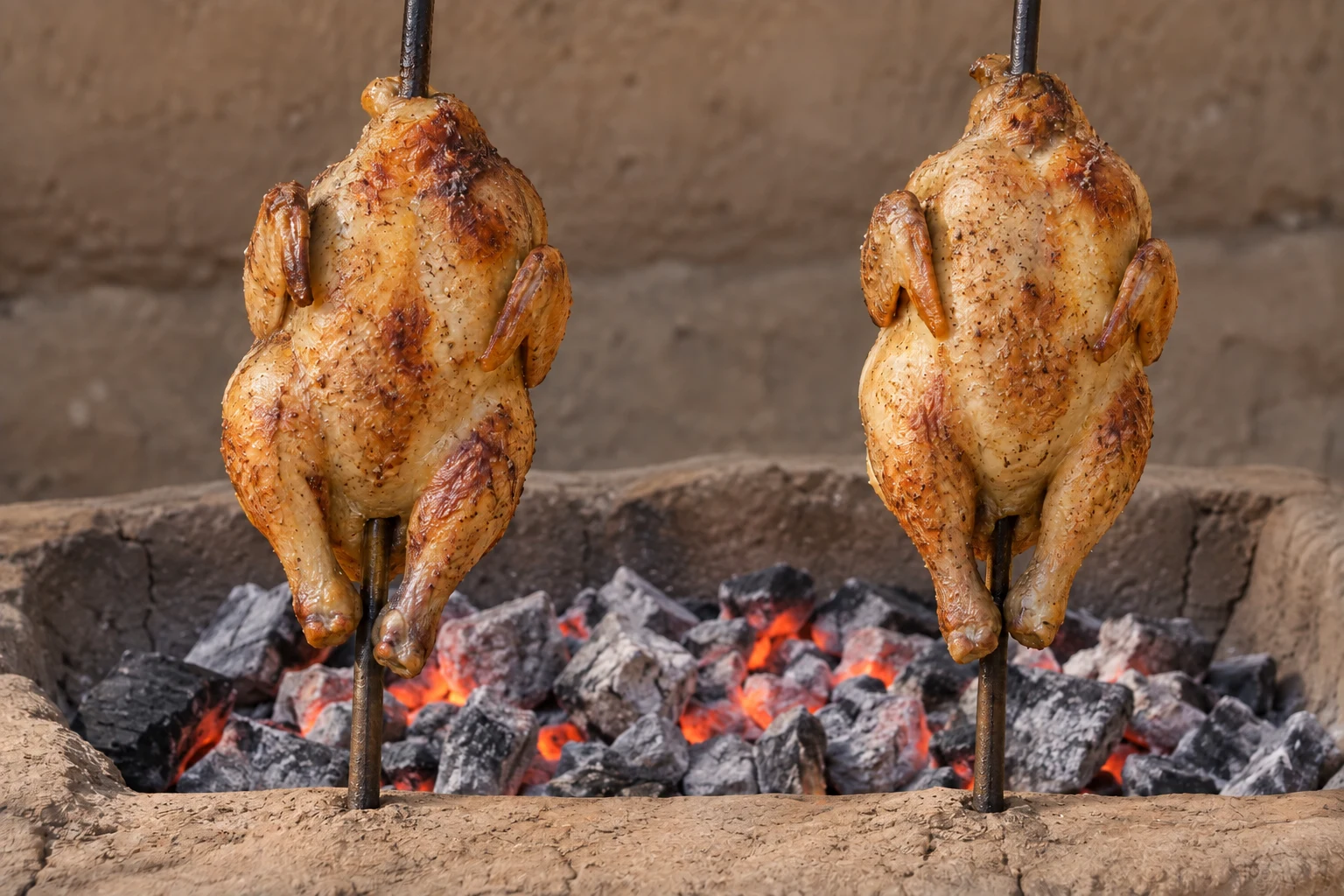
Ask when the seasoning arrives
Before roasting
The Quetta cooks in Akhter’s report describe seasoning centred on salt. SOCH likewise records ample salt with minimal spices in its chicken preparation. These accounts give the meat and the roast a central role without establishing one recipe for every sajji cook.
At the table
In SOCH’s account of Lehri Sajji House, the cooked chicken is cut up, set on bread and given masala if the customer wants it. That finishing dusting is a separate choice from seasoning before roasting. A spicy surface alone does not tell you what went onto the raw meat.
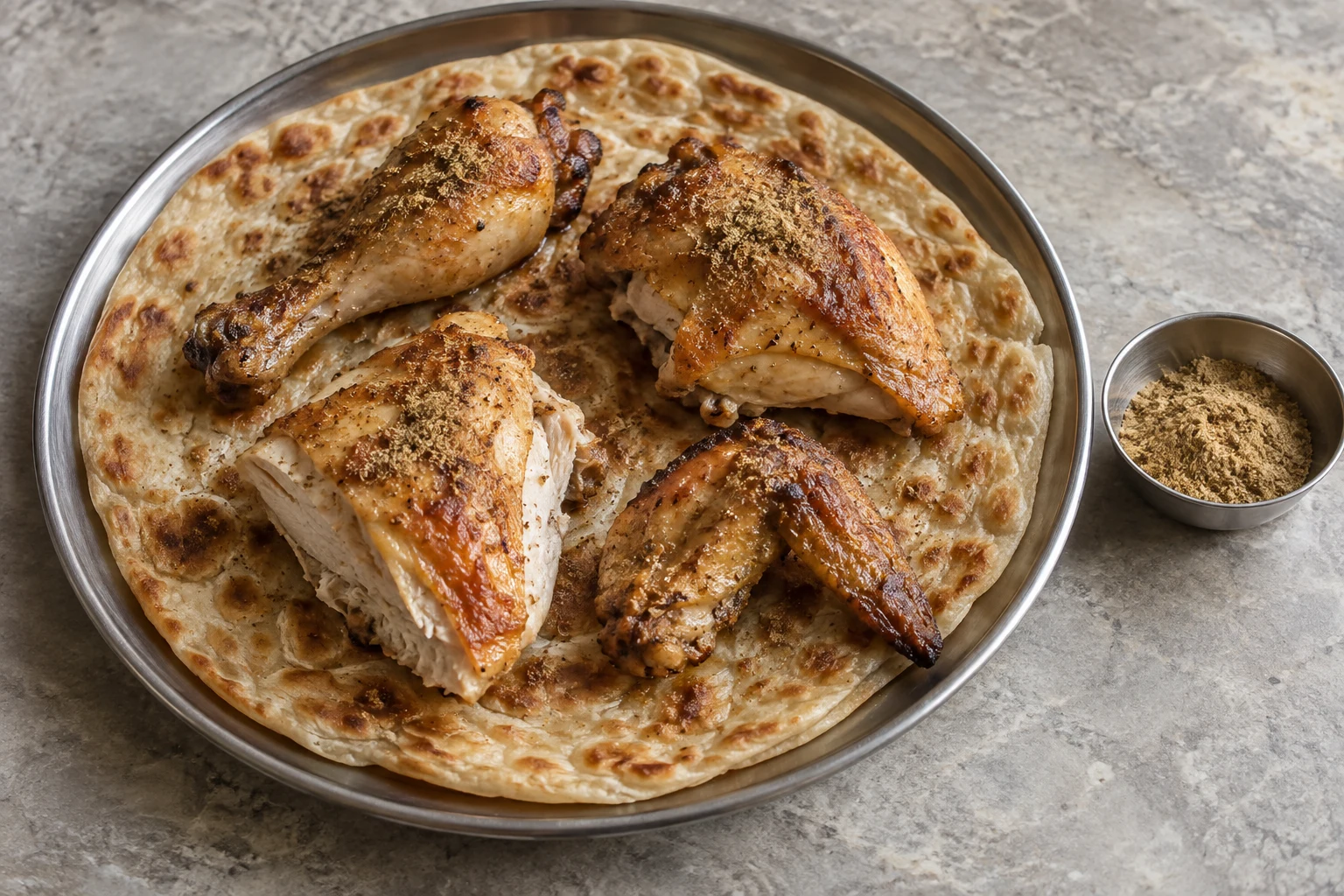
The bread changes the serving
SOCH documents naan, kaak and paratha with sajji. Kaak is bread baked around a heated stone; paratha can sit directly beneath the cut chicken. Bread is part of how a substantial roast becomes a meal that can be picked apart and shared.
A 2009 Dawn review describes Karachi chicken sajji with tangy seasoning, lemon and chapattis.
Reading a sajji menu
Three questions worth asking
Use the differences in these documented servings to understand the plate being offered.
- 01
Which meat and which portion?
Ask whether the order is lamb, goat or chicken, and whether the quoted portion is a joint, a whole bird or a share of one. The name sajji alone does not settle the size of the meal.
- 02
Is the masala added after roasting?
If you want to taste the salt-led roast before its finishing spices, ask how the shop serves it and whether that final seasoning is optional.
- 03
Which bread comes with it?
Naan, kaak and paratha are documented accompaniments, with different forms and textures. Ask which is included and whether the meat arrives on it or alongside it.
Research notes
Sources and documented examples
The story draws on field research, Quetta reporting and SOCH’s culinary documentation. Restaurant examples describe the particular service recorded by each source; they are not a single compulsory formula for Balochi sajji.
- Saadullah Akhter — Sajji at Eid al-Adha in Balochistan Quetta reporting from July 2021: customer-supplied sacrificial cuts, salt-led roasting and chicken as another version.
- Rahim Bakhsh and Sarfraz Khan — Traditional Food Delicacies across the Balochistan Ethnographic study, 2020; methods on page 3 and sajji preparation, occasions and shared service on pages 3–4.
- SOCH Outreach Foundation — Quetta’s Meaty Gems: Rosh and Sajji Whole-chicken preparation and the separate cutting, bread and optional-masala serving stage.
- SOCH Outreach Foundation — Food From Balochistan: Love and Memory Sajji fire management and bread accompaniments; the exhibit treats khaddi kebab separately.
- Dawn — Scrumptious sajji A Karachi restaurant review.
Keep exploring
More stories for your table

PakistanChicken
Pakistani Chicken Shawarma: From Pan to Pita
Explore Pakistani home versions of chicken shawarma: pan versus oven cooking, two sauce approaches, and a complete adaptation for soft pita pockets.
ArgentinaSteak sandwich
Córdoba’s Lomito: Start with the Bread
Explore Córdoba’s Argentine steak sandwich through its soft bread, thin beef and complete filling, with a practical lomito recipe for two.
AfghanistanKebab techniques
Afghan Lula Kebab: Grilled Skewers, Fried Rolls
Afghan lula and lola kebab recipes take two distinct paths. Compare grilled mince with fried meat-and-potato rolls, their ingredients, texture and cooking order.