
Bhat: Plain Rice with Room for the Rest
Bhat
A bowl of bhat can be very simple. Its role becomes clearer when the rice, lentils, vegetables and achar stay visible as separate parts of the meal—and when the rice method fits the grain and equipment.
Start with the rice, then read the meal
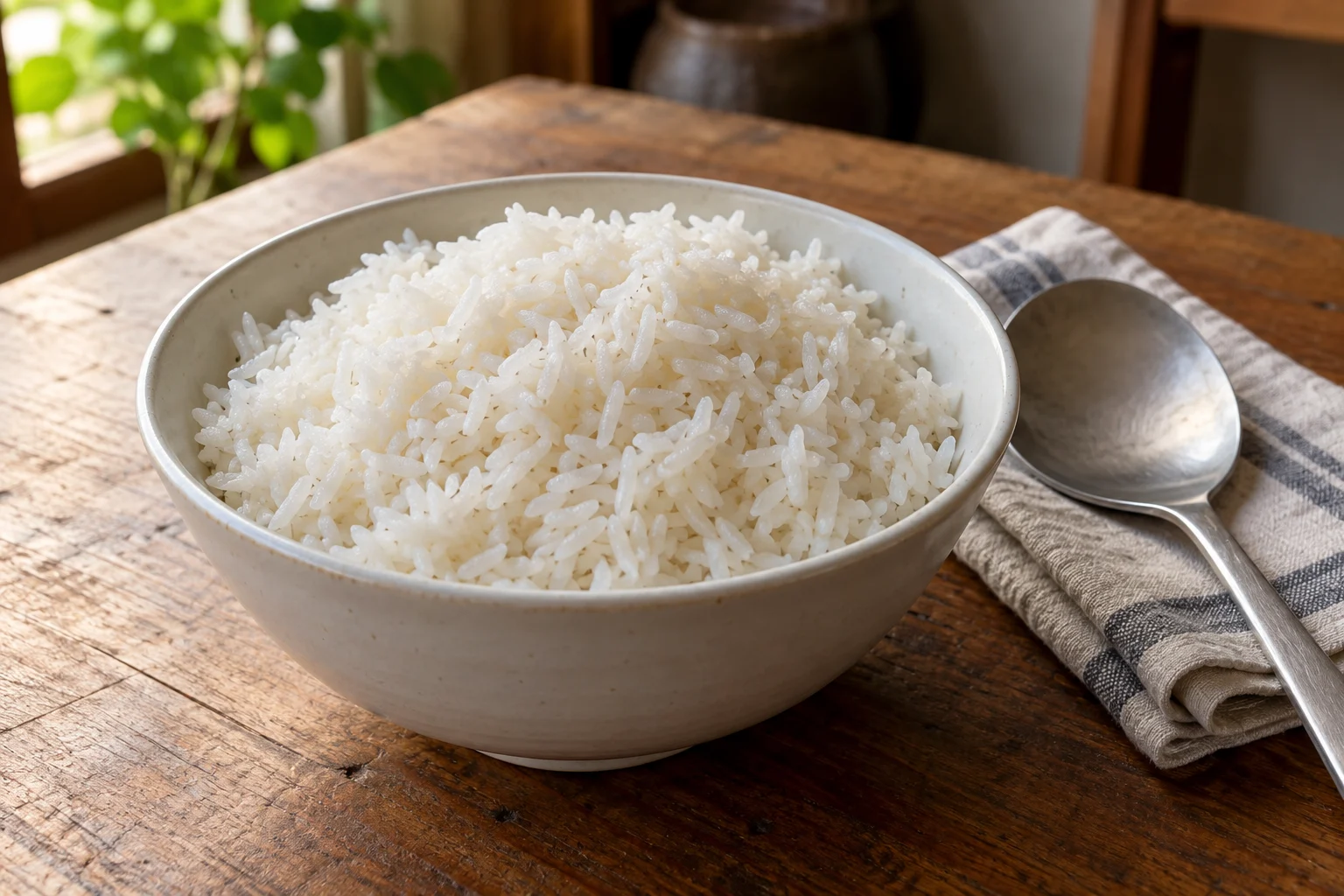
Bhat means the cooked rice on the plate, rather than the entire collection of dishes beside it. In a dal bhat meal, rice has a relationship with lentils, vegetables and other accompaniments, but it remains a component with its own preparation. Keeping that distinction clear helps both when ordering a meal and when planning one at home.
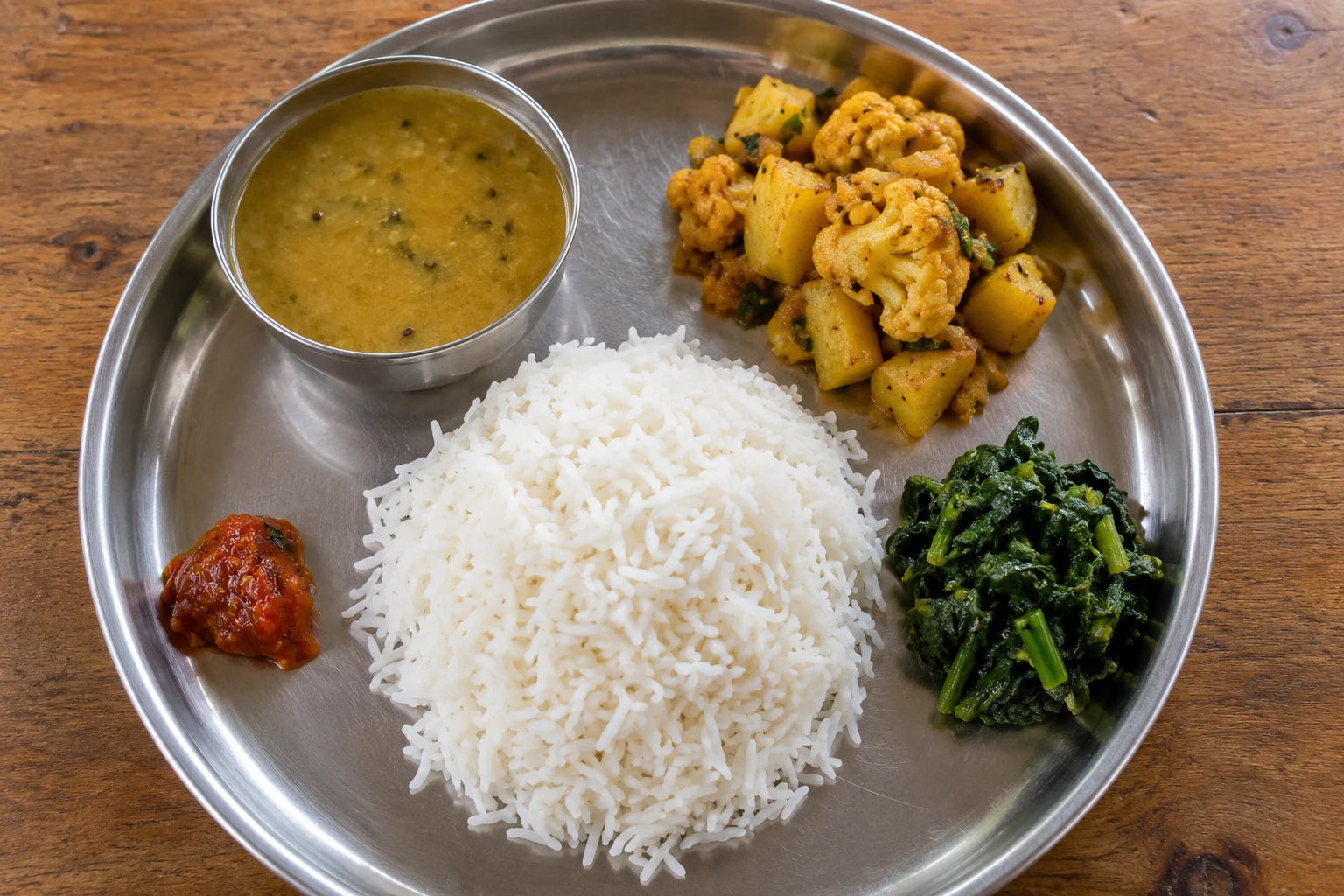
Plain rice leaves room for a spoonful of dal, a vegetable curry or a little achar to change the next mouthful. That is a useful way to read our meal image: the white rice is not missing a garnish. The surrounding foods supply separate choices of liquid, seasoning and texture. You can appreciate the rice as rice before deciding how much of each accompaniment to bring together.
Names that describe different stages
- Chamal
- Uncooked rice
- Bhat
- Cooked rice
- Bhuteko bhat
- Fried rice
The UK Nepal Friendship Society’s glossary distinguishes the grain before cooking from bhat.
The same glossary gives umaaleko bhaat for boiled rice. Here, bhat is the plain cooked component.
The community cookbook identifies this as a different preparation, not another name for the plain rice shown here.
The sources do not give one universal ratio
Three independently published preparations make the variation visible. Read the water, grain, preparation and equipment together.
A heritage-book preparation
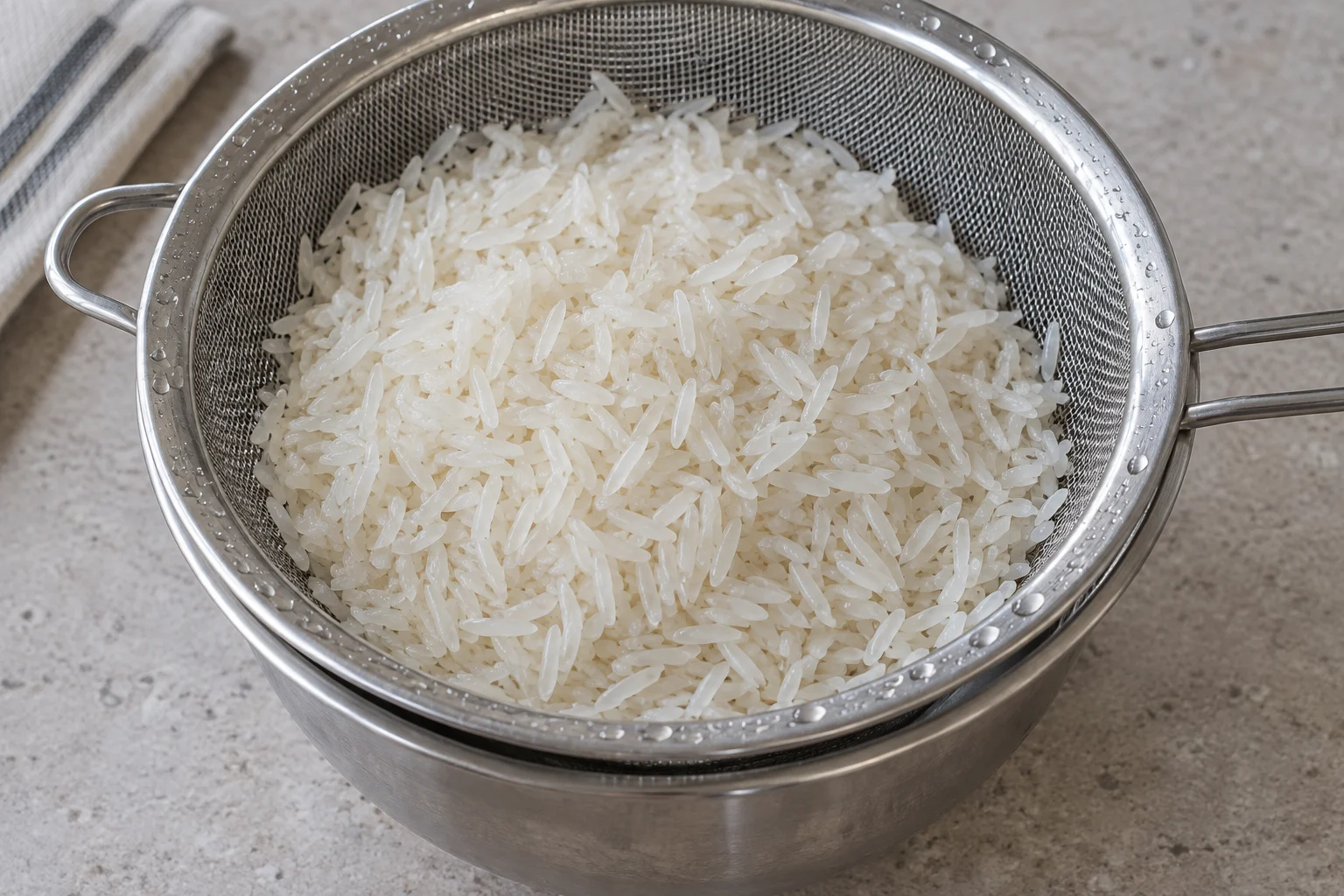
Nepal Tourism Board’s 2018 cookbook lists two cups of rice and four of water. It rinses and soaks the grain for an hour, then boils and gently cooks it covered, checking doneness.
A basmati absorption method
Explore Nepal lists two cups each of basmati and water. It rinses the rice, then cooks it covered over lower heat after bringing it to a boil. Butter, salt and sugar are explicitly optional in that particular published version; a rice cooker is also offered.
A family’s usual equipment
Maya Limbu’s dal bhat in Fairfield City’s community cookbook tells readers to use their usual stove or rice-cooker method. It gives a usual two-to-one water ratio while explicitly allowing variation with equipment and personal preference. That qualification matters as much as the number.
A ratio is only one part of the instruction
These differences are a reason to keep a rice method together. Choose a preparation written for the rice and equipment you are actually using, including any rinsing or soaking stage it specifies. Combining one source’s water quantity with another source’s preparation and cooking schedule produces a new method, rather than faithfully following either.
If you use the Explore Nepal version, its optional additions remain choices within that version. The heritage cookbook’s bhat ingredient list is simply rice and water. Neither list establishes a rule that every bowl in Nepal must contain butter, sugar or an identical variety of rice. A plain-looking bowl can come from a specific household practice without announcing that practice on its surface.
Plan a meal in parts
- 01
Choose the rice preparation first
Decide which complete rice method you are using and identify its preparation stage. If it includes soaking, place that in the schedule before the cooking starts. A rice cooker and a covered saucepan are different equipment choices, even when the finished component has the same name.
- 02
Give the accompaniments their own pans
The heritage cookbook writes bhat, dal and tarkari as separate preparations. That separation is useful for planning: rice cooking does not automatically complete the lentils or vegetables. List the other components you intend to serve and follow their individual methods.
- 03
Assemble without making every option compulsory
Use the plate to keep the components recognizable. Rice and dal provide the named pairing; the particular vegetables and other sides can follow the complete meal you have chosen. Our image shows one vegetarian arrangement, rather than a required inventory for every Nepali household.
A familiar meal can carry a family’s choices
The heritage cookbook connects rice choices to taste, cost and availability, and vegetables to geography, season and family preference. Asking what a cook uses is more revealing than expecting an identical platter everywhere.
Maya Limbu’s contribution, shared with help from her mother, pairs rice and dal with a chicken preparation. In the UK Nepal Friendship Society cookbook, Rina Adhikari describes serving her chicken curry with bhat and dal, with greens, achar or vegetable curry as choices alongside. These named family accounts show how the plain rice stays familiar while the surrounding dinner remains personal.
Research notes
Plain rice, heritage methods and family accounts
The rice page supplies one specific absorption method. The national heritage cookbook and two community publications explain the meal’s components while preserving preparation and household variation.
- Explore Nepal: Nepali steamed rice (Bhat) Complete basmati absorption preparation, with rinsing, optional additions and a rice-cooker alternative.
- Nepal Tourism Board: Nepali Heritage Cook Book, pages 64–67 2018 publication with national hospitality and chefs’ associations; separate bhat, dal and tarkari methods and an account of ingredient variation.
- Fairfield City: Maya Limbu’s Dal Bhat, pages 39–42 Named family contribution with her mother; rice preparation explicitly varies with equipment and preference, paired with dal and chicken.
- UK Nepal Friendship Society: Traditional & Contemporary Nepali Home-Cooking Cooked/uncooked rice glossary and named family accounts, including Rina Adhikari’s rice-and-dal accompaniments to chicken curry.
Keep exploring
More stories for your table
Nepalese cuisine Fermented vegetables
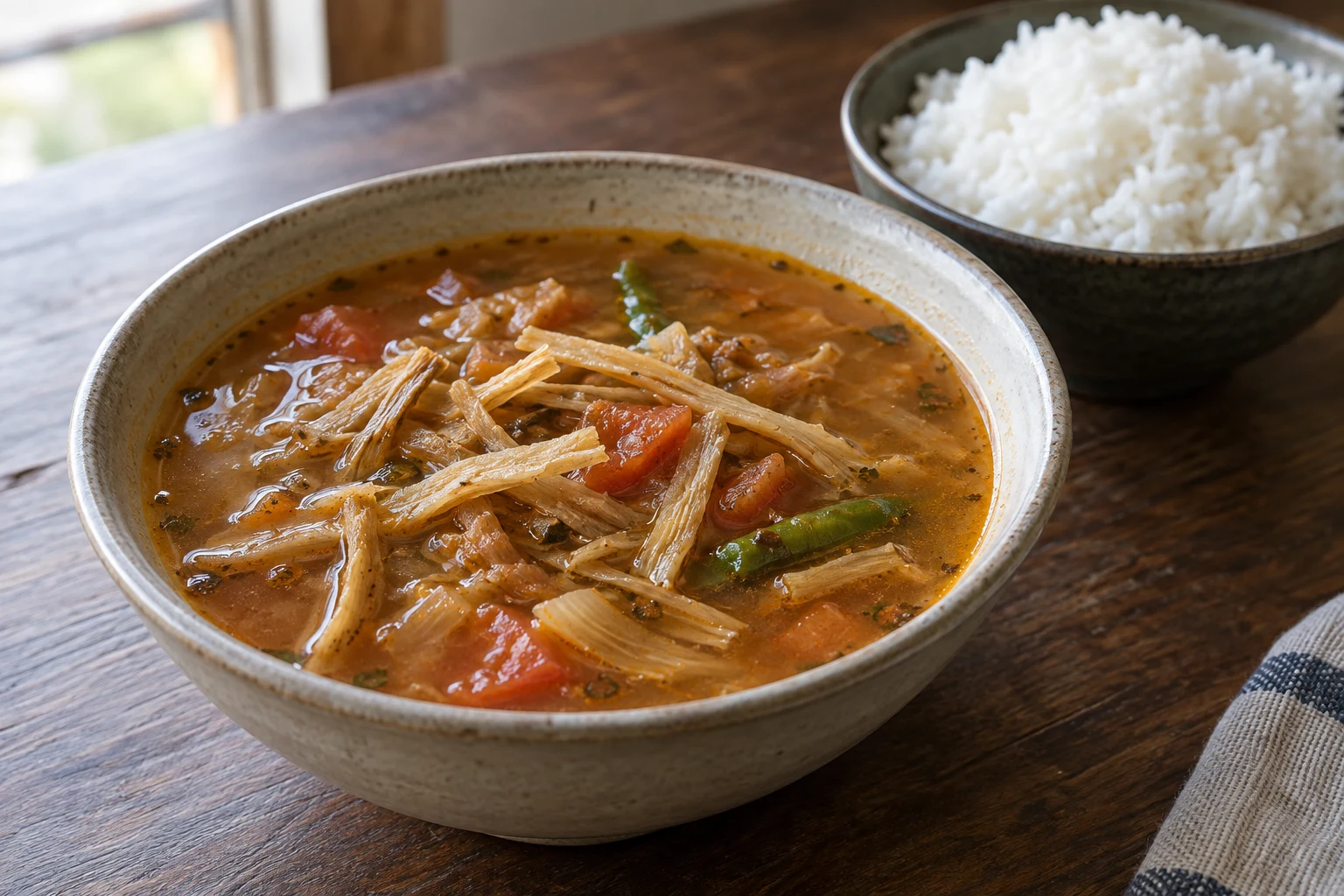
Sinki: The Radish Root Behind the Sour Broth
Fermented radish root gives sinki its sour character. Learn how it differs from leafy gundruk, why drying matters, and how prepared sinki becomes soup.

Nepalese cuisine Egg curry
Nepali Egg Curry: A Surface Worth Frying
Explore Nepali egg curry through the difference between a fried whole egg, a carefully sauced half and the tomato-based gravy around them.
Russian cuisine Buckwheat porridge
Buckwheat Kasha: A Pantry Word and a Bowl of Home
The word kasha can name a broad family of porridges or toasted buckwheat on an English label. Learn which groats to buy, how cooking methods differ and why a plain bowl carries family meaning.