
Bhutan: The Cook Before the Pan
भुटन
The pan gives bhutan its browned edges and fragrant coating. The cooking that makes the offal ready for that pan is a separate task, shaped by the pieces a cook has chosen.
One name, several combinations
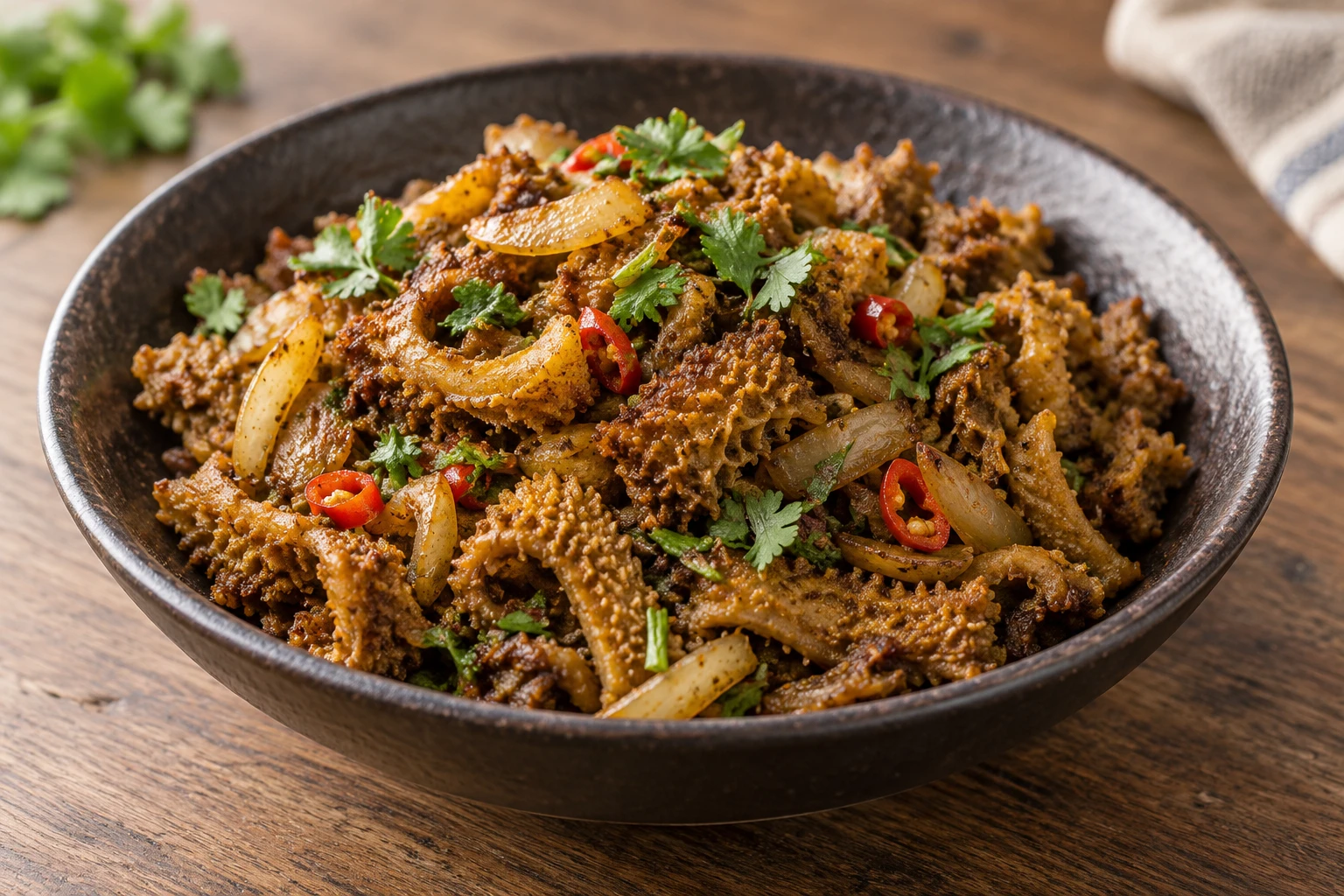
Bhutan is a Nepali offal dish, also written bhuttan in English. A goat version is often called khasi ko bhutan. Chef Binod Baral describes substantial variation among households: stomach and intestines may lead the mixture, while other cooks include organs such as liver, heart or kidneys. The name alone cannot tell a diner exactly what is on the plate.
Goat is only part of the story. Renu Twanabasu's reporting from Bhaktapur describes bhutan among buffalo dishes at a Newar khaja shop. Separate Patan interviews by Sushma Barali also mention goat and buffalo versions. Asking which animal and which parts are used is a more useful first question than expecting a single standard mixture.
Preparation and finishing have different jobs
Baral describes a sequence of boiling the offal before frying it with aromatics. The first stage prepares the chosen pieces; the pan then develops a spiced, browned surface. Bhancha's photographed stomach-led version emphasizes draining before oil and adding some ground spices late to protect them from burning.
These accounts do not establish one short cooking time for every organ. A clean-looking piece may still be raw, and a blanched piece may still be tough. For the household version below, buy plain goat tripe that the supplier explicitly confirms is fully cooked and ready to eat. Follow its storage and use instructions. Cleaned or partially cooked tripe requires a separate appropriate preparation and cannot go straight into this recipe.
A tripe-only household version
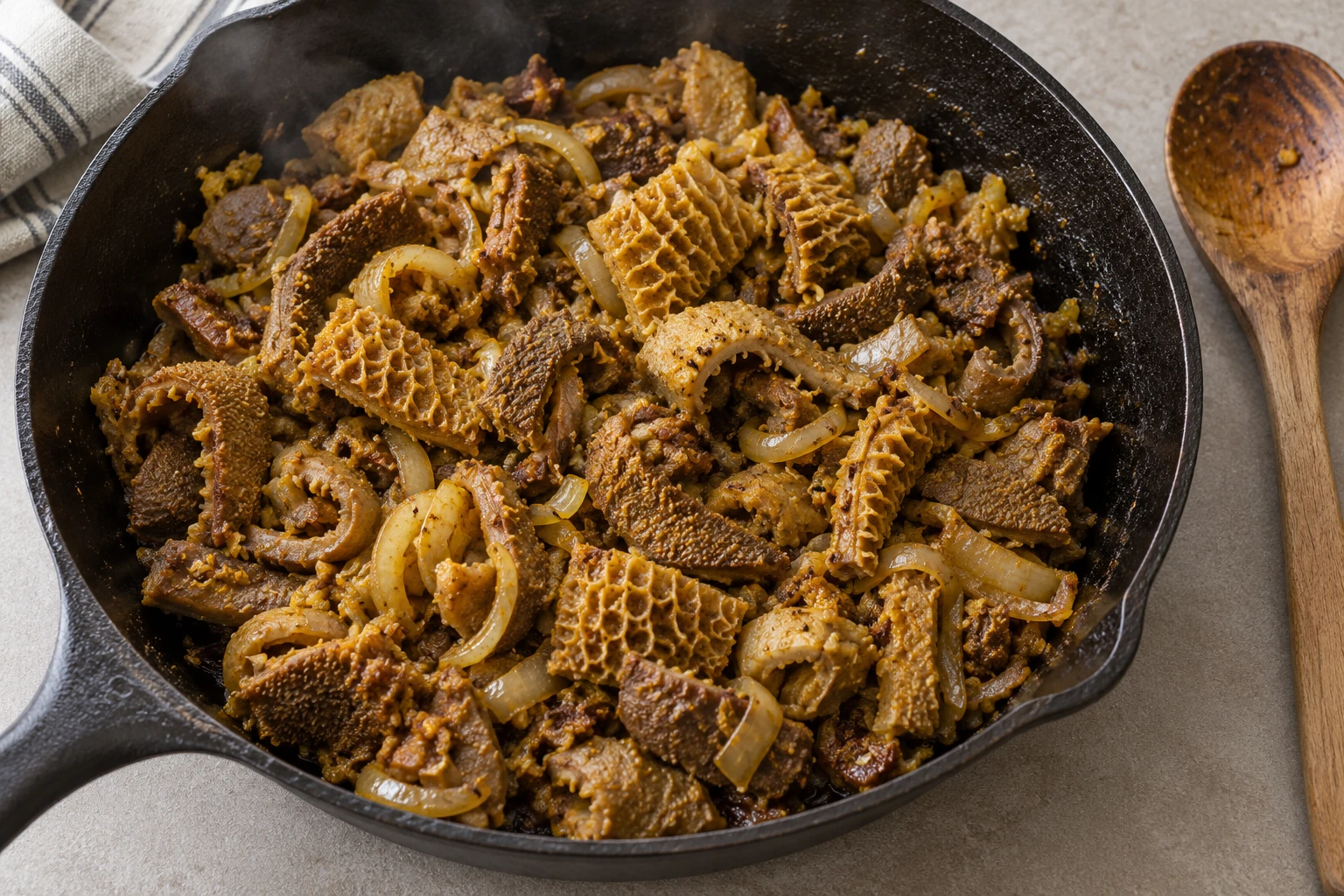
Bhutan-style cooked tripe with onions
This finishing recipe makes four snack portions. It begins with fully cooked goat tripe and uses a restrained spice mixture; it is one interpretation of a varied dish. Estimated time: 15 minutes to prepare and 25 minutes at the stove.
Ingredients
For the pan
- 600 g plain fully cooked, ready-to-eat goat tripe, chilled; not merely cleaned or blanched
- 150 g onion, thinly sliced
- 2 tbsp neutral cooking oil, or food-grade mustard oil labeled for cooking
- 2 tsp finely grated ginger
- 3 cloves garlic, finely chopped
- ½ tsp ground turmeric
- 1 tsp each ground cumin and ground coriander
- ½ tsp garam masala
- ¼–½ tsp chili powder, to taste
- ½ tsp fine salt, plus more if needed
- 2 tbsp water, with a little extra if needed
To serve
- 1 tbsp lemon juice, optional
- 2 tbsp chopped fresh coriander
- a little sliced fresh chili and chopped onion, optional
- chiura (ready-to-eat beaten rice), for four small portions
Method
- 1
Prepare the cooked pieces
Cut the fully cooked tripe into bite-size pieces, roughly 2 cm across. Drain any packing liquid and pat the pieces dry with clean kitchen paper. Keep them chilled while preparing the onion and spices. Wash fresh garnish before chopping it.
- 2
Soften the onion
Warm the oil in a wide, heavy frying pan over medium heat. Cook the sliced onion for about 7–8 minutes, stirring, until soft and lightly golden. Add the ginger and garlic and stir for about one minute. Lower the heat if either begins to darken quickly.
- 3
Reheat and brown
Add the tripe and salt. Spread it over the pan and cook for an estimated 10–12 minutes, turning regularly so surfaces can brown. Check several thick pieces with a food thermometer: use 74°C / 165°F as the reheating target. If the pan dries before the pieces heat through, add a spoonful of water and continue cooking; elapsed time and brown color are insufficient checks.
- 4
Add the ground spices
Lower the heat. Mix turmeric, cumin, coriander, garam masala and chili powder with the two tablespoons of water. Stir this into the pan for 1–2 minutes, until the coating clings and excess liquid evaporates. Add a little more water if the spices threaten to catch, rather than scorching them.
- 5
Finish and portion
Take the pan off the heat. Add optional lemon juice, taste the fully cooked mixture and adjust salt. Scatter coriander and optional fresh chili over it. Serve immediately in small portions with chiura and a little chopped onion if wanted.
Keep the portion part of the meal
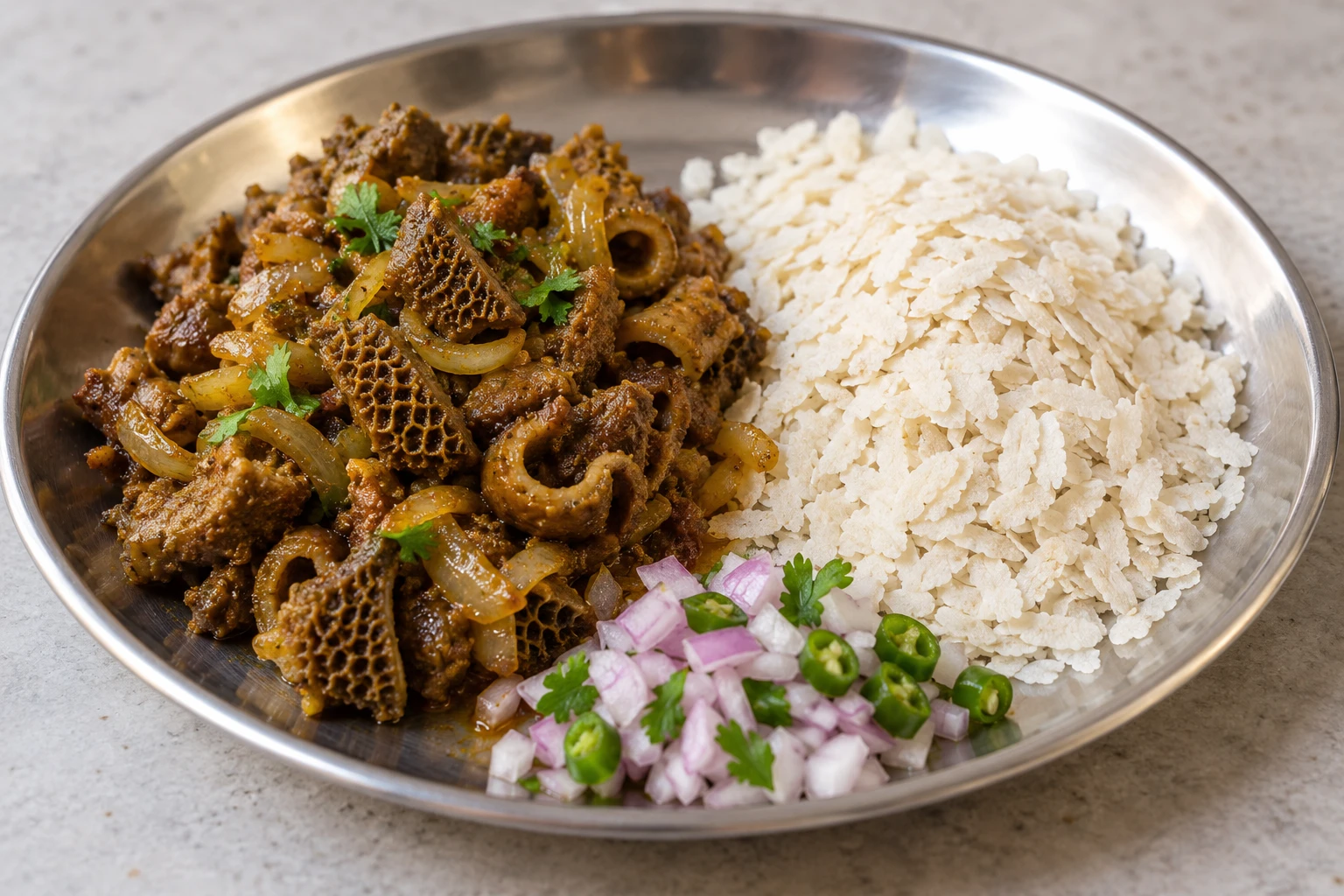
Chiura is beaten rice, with a flat shape and a dry bite that contrasts with the fried offal. Twanabasu's Bhaktapur report records customers ordering the two together. A small serving lets the seasoning and the texture remain enjoyable without making a whole meal depend on one rich component.
In Amar B. Shrestha's account of a Newar feast, bhuttan appears among several distinct meat preparations. Fried stomach and intestinal pieces, sautéed liver and stuffed lungs have separate names and roles. A plate of mixed offal should not erase those distinctions, and this simple tripe version does not stand in for an entire feast.
Research notes
Sources behind this article
- Binod Baral — Bhutan: A cultural symbol in Nepal A chef's firsthand account of household variation and the preparatory cook followed by a spiced pan finish.
- Bhancha — Khasi ko bhutan Original photographed stomach-led preparation; informs draining, seasoning sequence and serving, with home entrail cleaning omitted.
- Renu Twanabasu, Nagarik — Newar meat dishes Original Bhaktapur interviews about buffalo preparations and bhutan with chiura.
- Sushma Barali, Nagarik — Popular Newar meat dishes Separate Patan reporting that identifies goat and buffalo bhutan as a snack.
- Amar B. Shrestha, ECS Nepal — A Feast Fit for Kings An authored account of Newar feast service and the distinction between several offal dishes.
- FoodSafety.gov — Safe minimum internal temperatures Official thermometer and reheating guidance for the already cooked ingredient.
- FoodSafety.gov — Four steps to food safety Official separation, produce washing, cooking and chilling guidance.
Keep exploring
More stories for your table
Nepalese cuisineNewar cuisine Offal dish
Nhepu: Brain Fry at the Newar Table
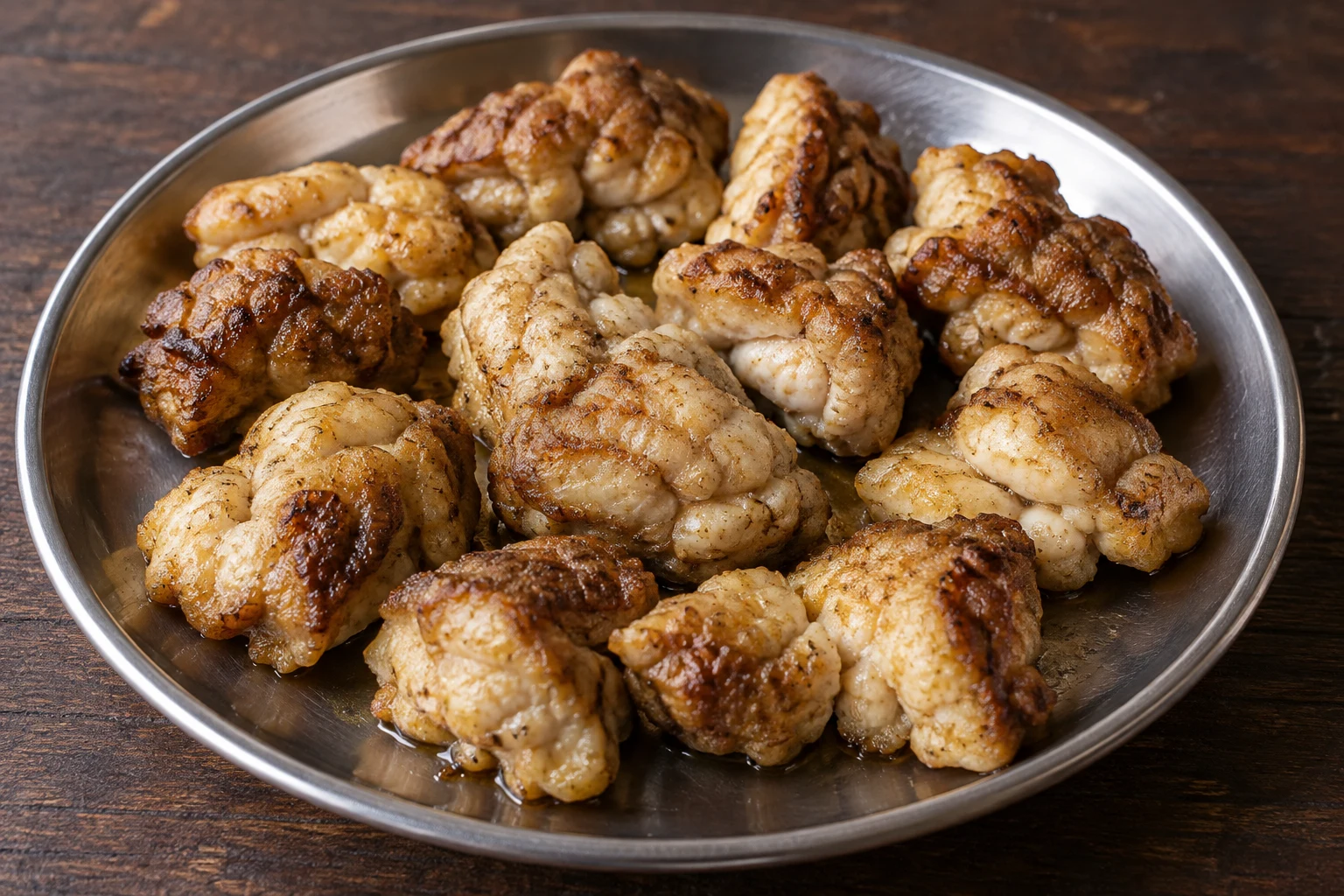
Boiled, then fried, buffalo brain belongs to a varied Newar table. Follow its names, its tender texture and its place in feasts and neighborhood bhattis.
Nepalese cuisine Spiced meat snack
Taas: the tawa, the garlic and the whole snack plate
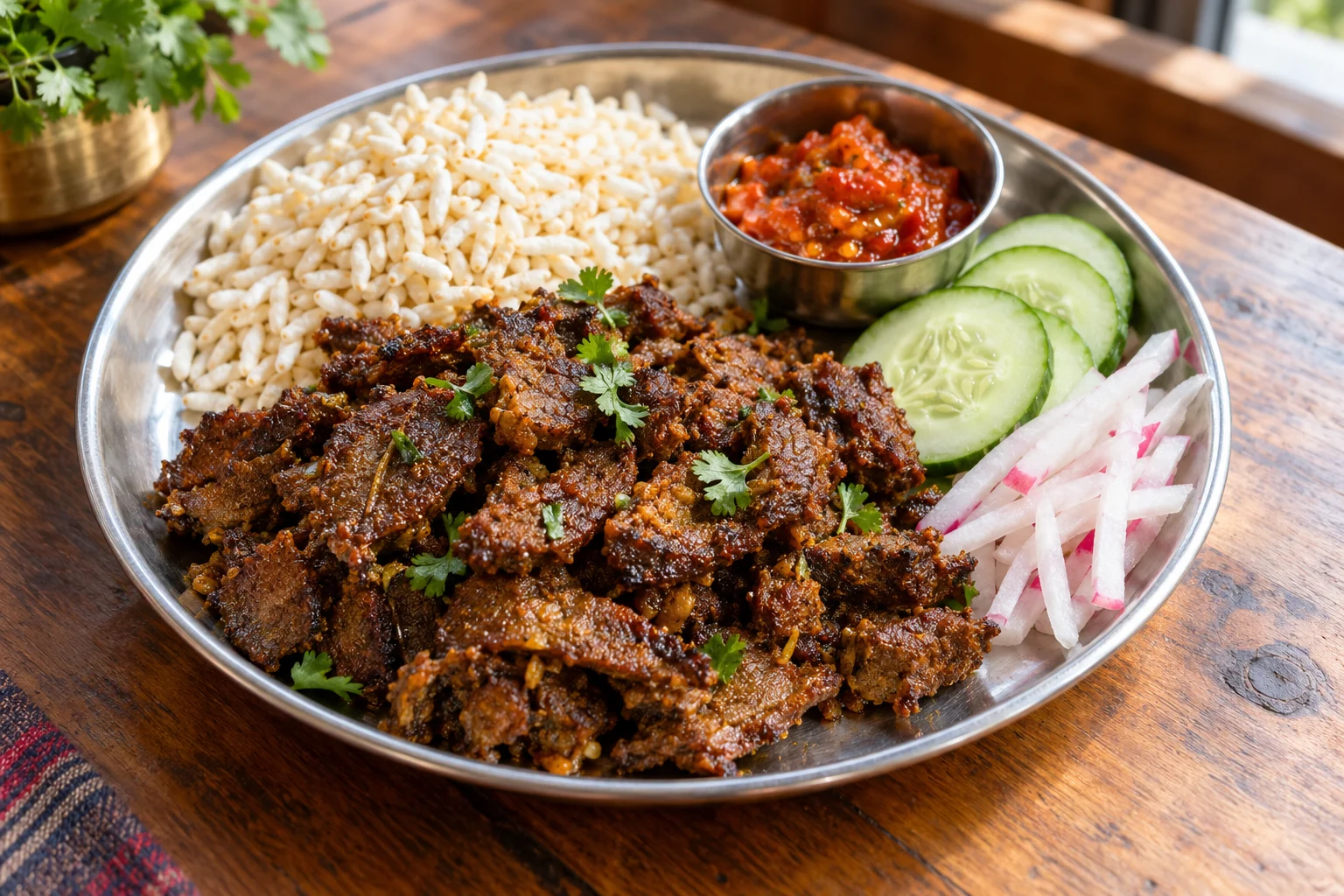
A practical guide to Nepali taas: spiced griddle-cooked meat, separate fried garlic, puffed or beaten rice and sharp achar, with cues for browning without scorching.
Nepalese cuisine Egg curry
Nepali Egg Curry: A Surface Worth Frying
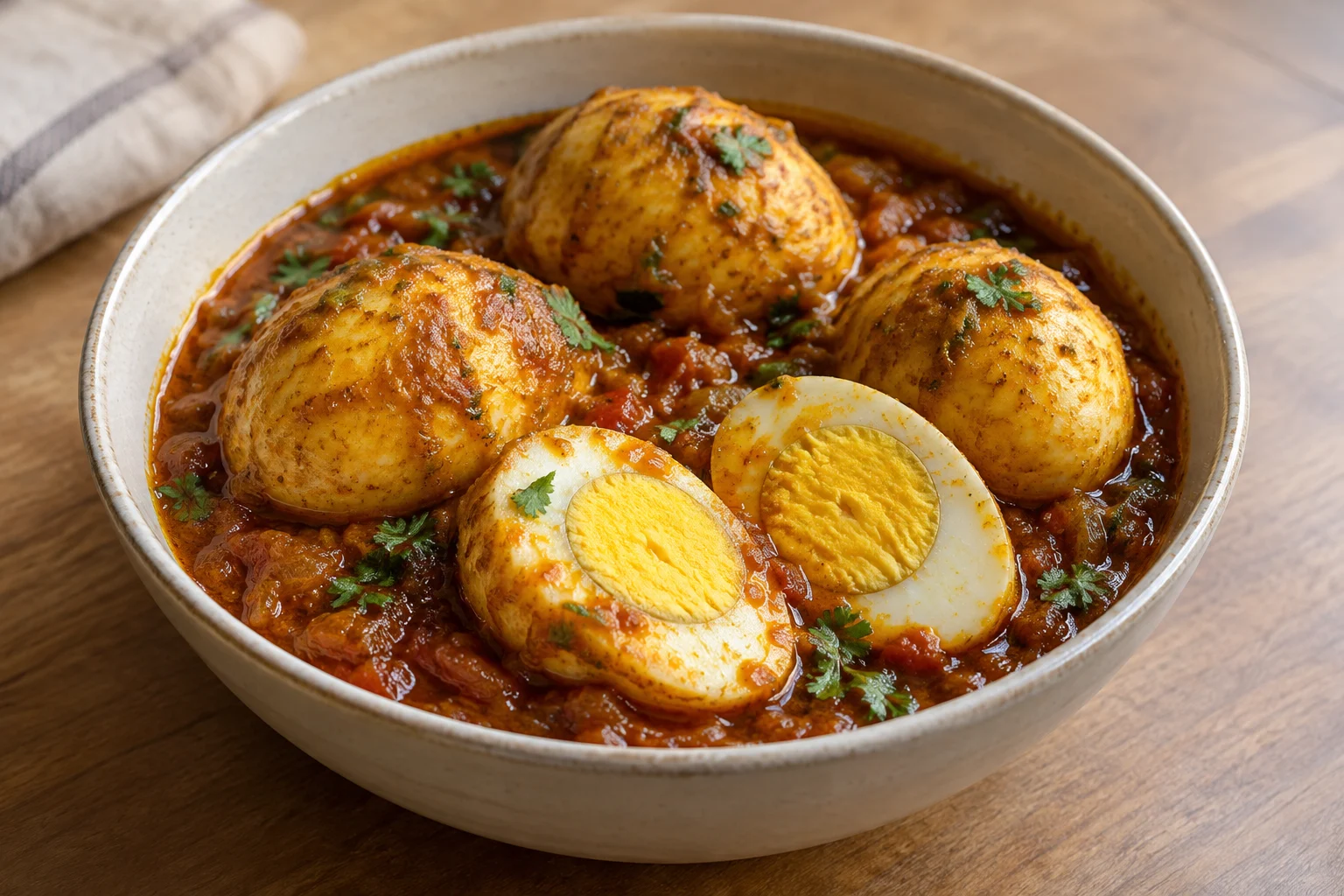
Explore Nepali egg curry through the difference between a fried whole egg, a carefully sauced half and the tomato-based gravy around them.