
Nepali Egg Curry: A Surface Worth Frying
अण्डा करी
Boiling, frying and simmering are separate acts in a Nepali egg curry. The order explains the golden surface of a whole egg—and why another documented preparation handles egg halves much more gently.
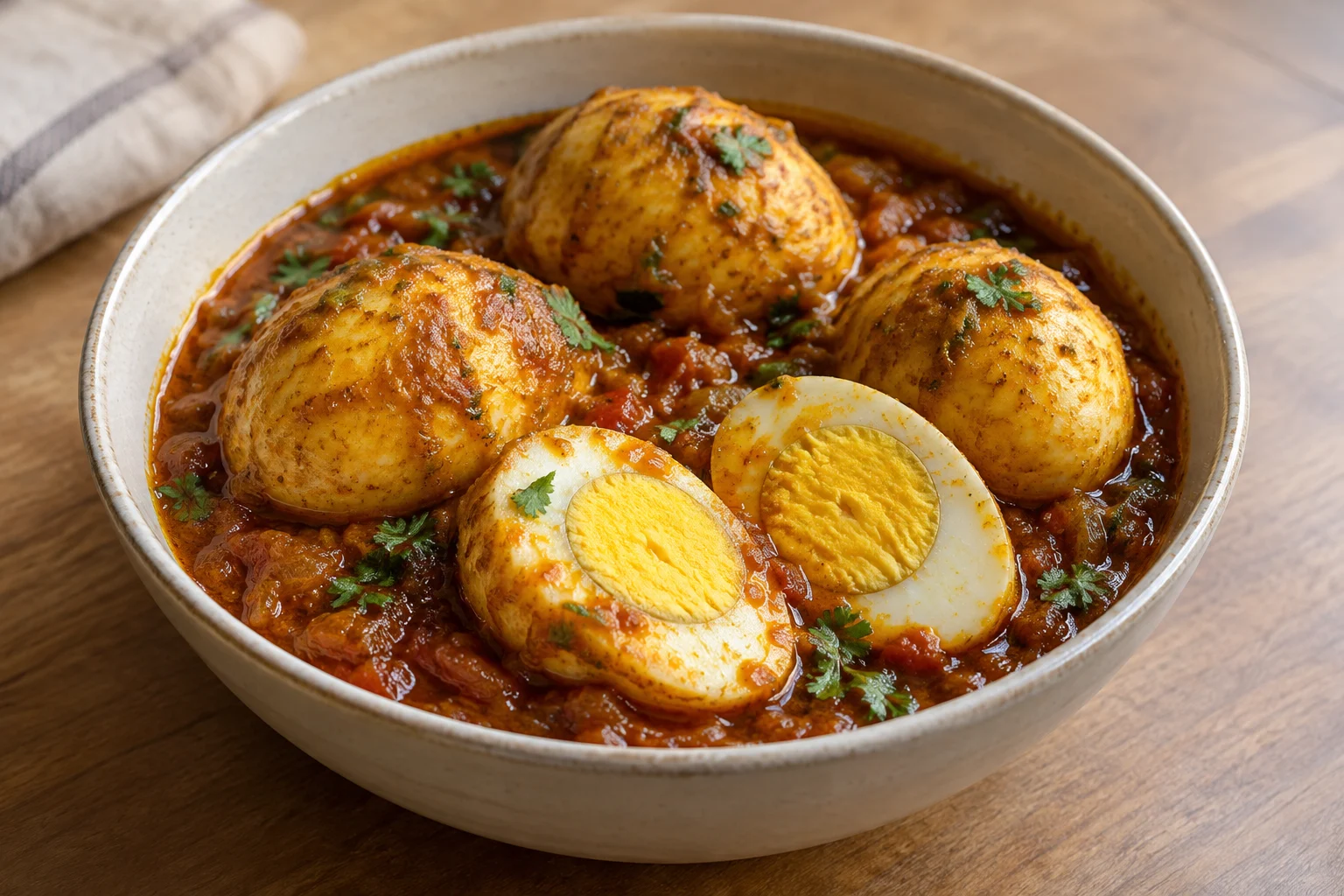
The egg has a preparation of its own
An egg curry can appear to be a simple meeting of eggs and gravy. In the Nepali preparations considered here, the egg has already passed through an important stage before that meeting: it has been hard-boiled and peeled. In some versions it is then fried separately. Its golden exterior does not come from leaving a raw egg in tomato sauce.
Jyoti Pathak’s Food and Flavours from Nepal describes an egg curry with onion-and-tomato gravy and rice or roti. The family cook behind Foods of Nepal describes a version learned at home in Dadeldhura, while Chef Suni publishes a Nepali-style sequence beginning with boiled eggs and a separate spice-colored frying stage. Together they establish a home-cooking subject with a useful technical question: what should happen to the egg before the sauce is ready?
Whole and fried, or halved and gently sauced?
Both are documented ways to make Nepalese egg curry. Their different handling is more informative than declaring one shape the only correct one.
Fry the whole cooked egg
Foods of Nepal fries boiled eggs with seasonings, holds them aside and adds them whole near the end of cooking. The writer describes a seasoned exterior and sometimes halves the eggs after serving. Chef Suni likewise separates a turmeric-and-chili egg-frying stage from the later onion-and-tomato sauce.
Keep the halves intact
Ghillie Basan’s Nepalese curry for BBC Radio Scotland halves hard-boiled eggs before they join the dish. It builds a tomato sauce with yogurt, then slips in the halves and spoons sauce over them. This method does not rely on a separately fried whole-egg exterior.
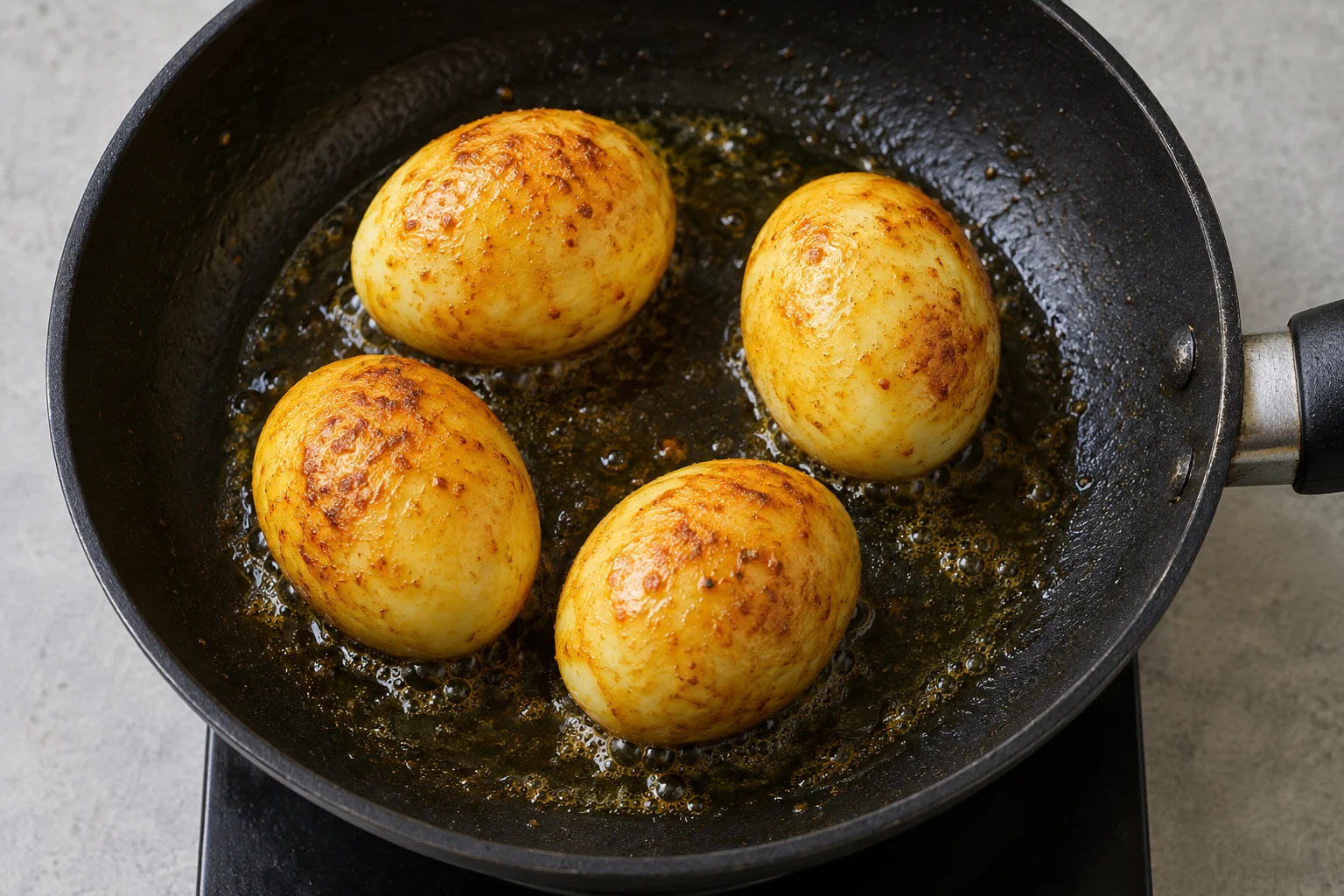
The sauce decides the next move
Pathak’s public description places onion and tomato at the center of the gravy. Chef Suni’s written directions make that base more visible: cumin and whole spices enter the pan, followed by onion cooked until golden, ginger and garlic, powdered spices and tomato puree. The eggs’ brief, separate fry therefore belongs to a longer sauce-building sequence.
The BBC preparation takes a different route. Its aromatic paste contains green chili, garlic and ginger. Tomato and spices form a thick sauce before yogurt is stirred in gradually and the sauce is loosened with water. It is a documented yogurt-containing version, so a blanket rule that Nepali egg curry never contains dairy would miss part of the evidence.
Foods of Nepal also includes potatoes in the family version. That is a specific ingredient choice, rather than a reason to add potatoes to every egg curry. The useful decision at home is to select a complete formulation and keep its order intact: potatoes, a yogurt-enriched sauce and a plain tomato-onion gravy do not require identical handling.
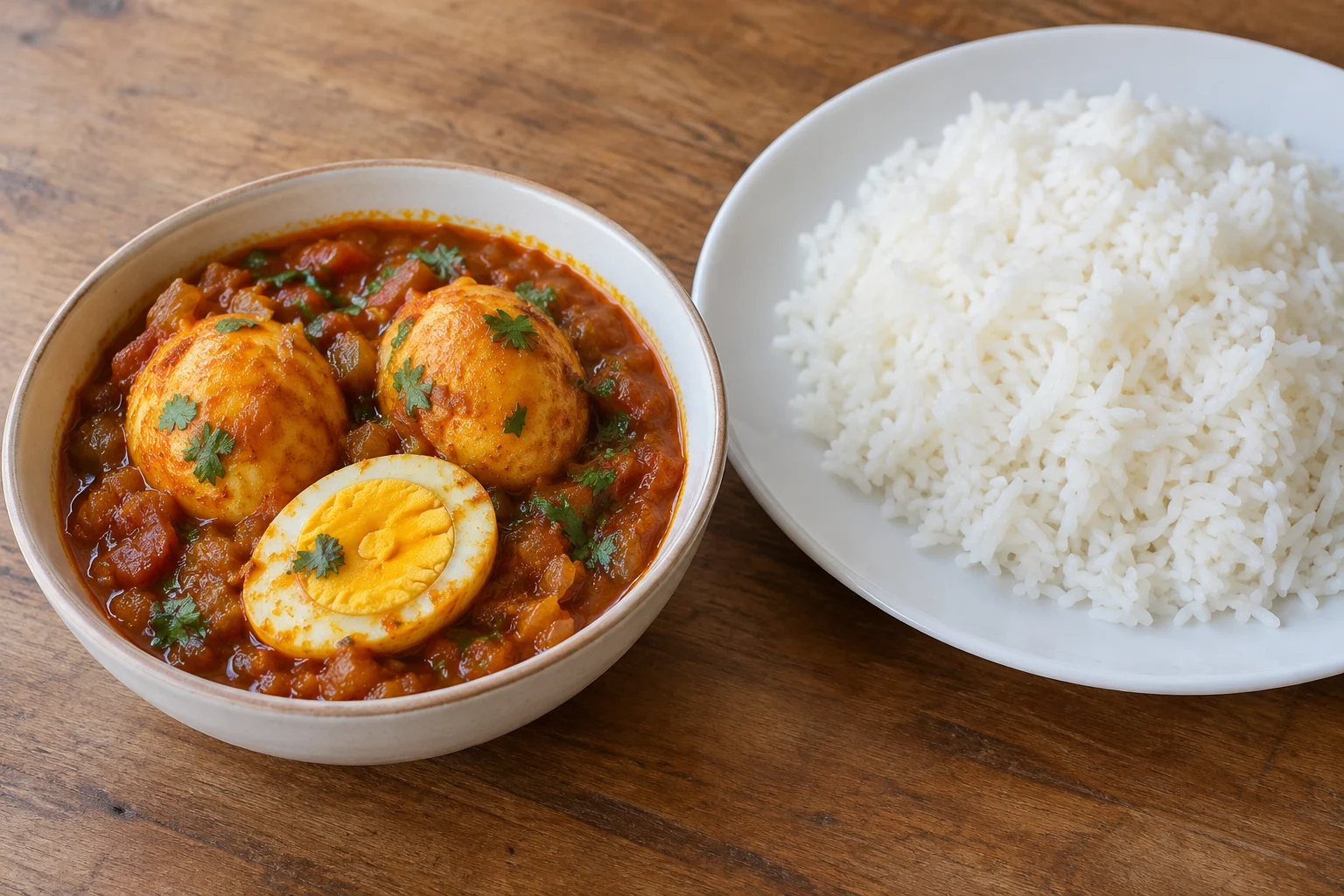
Handle the egg that you actually have
- 01
Begin with a fully cooked center
The source preparations call for hard-boiled eggs. FDA guidance says both yolk and white should be firm. A runny center belongs to a different result from the egg structure these curry methods describe.
- 02
Let the sauce reach its stage first
In Chef Suni’s method, the onion becomes golden and the tomato sauce receives its own cooking time. Adding eggs is not a substitute for developing that base. The fried eggs can wait briefly while the separate sauce stage is completed.
- 03
Respect a cut yolk
Basan’s directions spoon sauce over the halves after placing them in the pan. That gentle motion makes sense for an exposed cooked yolk: it can remain a recognizable half rather than being broken throughout the gravy. Foods of Nepal similarly advises gentle stirring to keep the eggs intact.
A spoonful of gravy completes the bite
The accompaniments follow the particular preparation. Foods of Nepal serves boiled rice, and Pathak suggests rice, roti and a fresh salad. Basan offers flatbread with yogurt and achaar, a pickle. These are useful service options: rice can receive a spoonful of gravy, while bread can gather sauce around a piece of egg. The curry’s character comes from the relationship among its prepared egg, finished gravy and accompaniment, not from an elaborate garnish.
Research notes
Preparations and safety guidance
These sources document particular Nepali egg curries and their handling. They support a comparison rather than one combined recipe or a claim that every household follows the same method.
- Jyoti Pathak: Egg Curry, Food and Flavours from Nepal Public introduction establishes onion-tomato gravy and rice/roti service; the paywalled remainder is not used.
- Foods of Nepal: family egg curry Documents a Dadeldhura-learned version with boiled whole eggs fried separately, potatoes, gentle final handling and rice.
- Chef Suni: Anda Curry Nepali Style Creator-written description documents separate boiled-egg frying and the golden-onion, spice and tomato sauce sequence.
- BBC Radio Scotland / Ghillie Basan: Nepalese egg curry Full recipe documents hard-boiled halves, a tomato-yogurt sauce, careful spooning and flatbread/achaar service.
- FDA: Egg safety Current official guidance for firm yolks and whites, prompt serving, refrigeration and reheating cooked egg dishes.
Keep exploring
More stories for your table
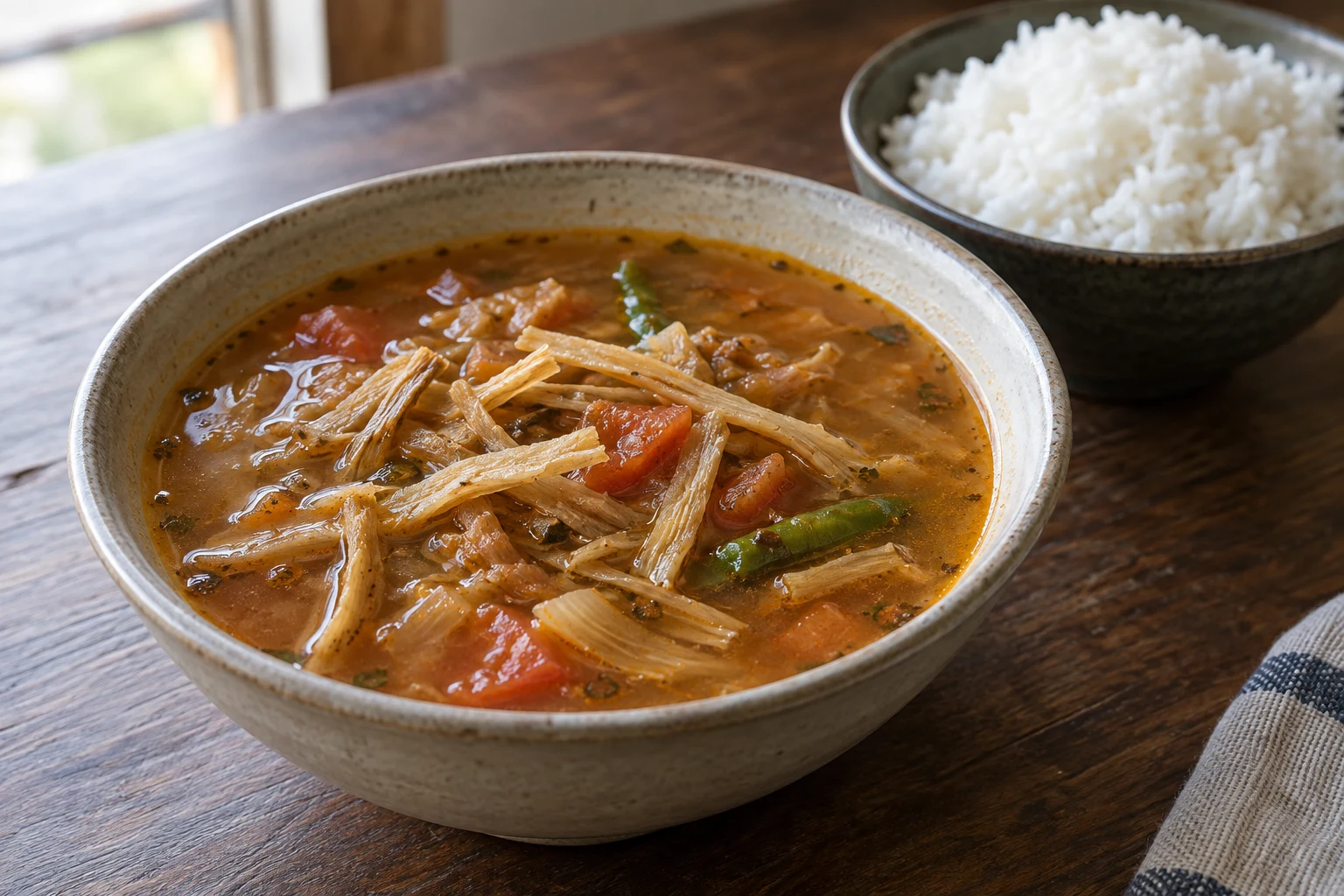
Nepalese cuisine Fermented vegetables
Sinki: The Radish Root Behind the Sour Broth
Fermented radish root gives sinki its sour character. Learn how it differs from leafy gundruk, why drying matters, and how prepared sinki becomes soup.
Nepalese cuisine Cooked rice
Bhat: Plain Rice with Room for the Rest
Understand Nepali bhat as cooked rice: its place beside dal and tarkari, the distinction from uncooked chamal, and why documented rice methods use different ratios.
Colombian cuisine Chicken stew
Sudado de Pollo: Read the Potato Schedule
Cook a Colombian-style sudado de pollo with a tomato base and a separate potato stage. Includes a complete stovetop adaptation and documented household variations.