
Coconut sticky rice: three ways to finish the grains
Kaung Nyin Pyan Paung
Compare double-steamed sticky rice, a remembered family dessert and Karen coconut-coated rice balls through their distinct finishes.
Ask where the coconut goes
Coconut sticky rice can describe more than one finish. Coconut milk may join partly steamed grains before another steaming, sweetened milk may be mixed into finished rice, or grated coconut may coat a shaped portion.
Three published preparations make those choices concrete: Myanmar International TV’s Kaung Nyin Pyan Paung, Kamu Aye’s family dessert shared through Katanning’s Cooking to Connect project, and a Karen community recipe published by Bendigo Foodshare. Each begins with whole sticky rice, but the sequence changes what reaches the plate.
Follow one finishing sequence
Steam twice
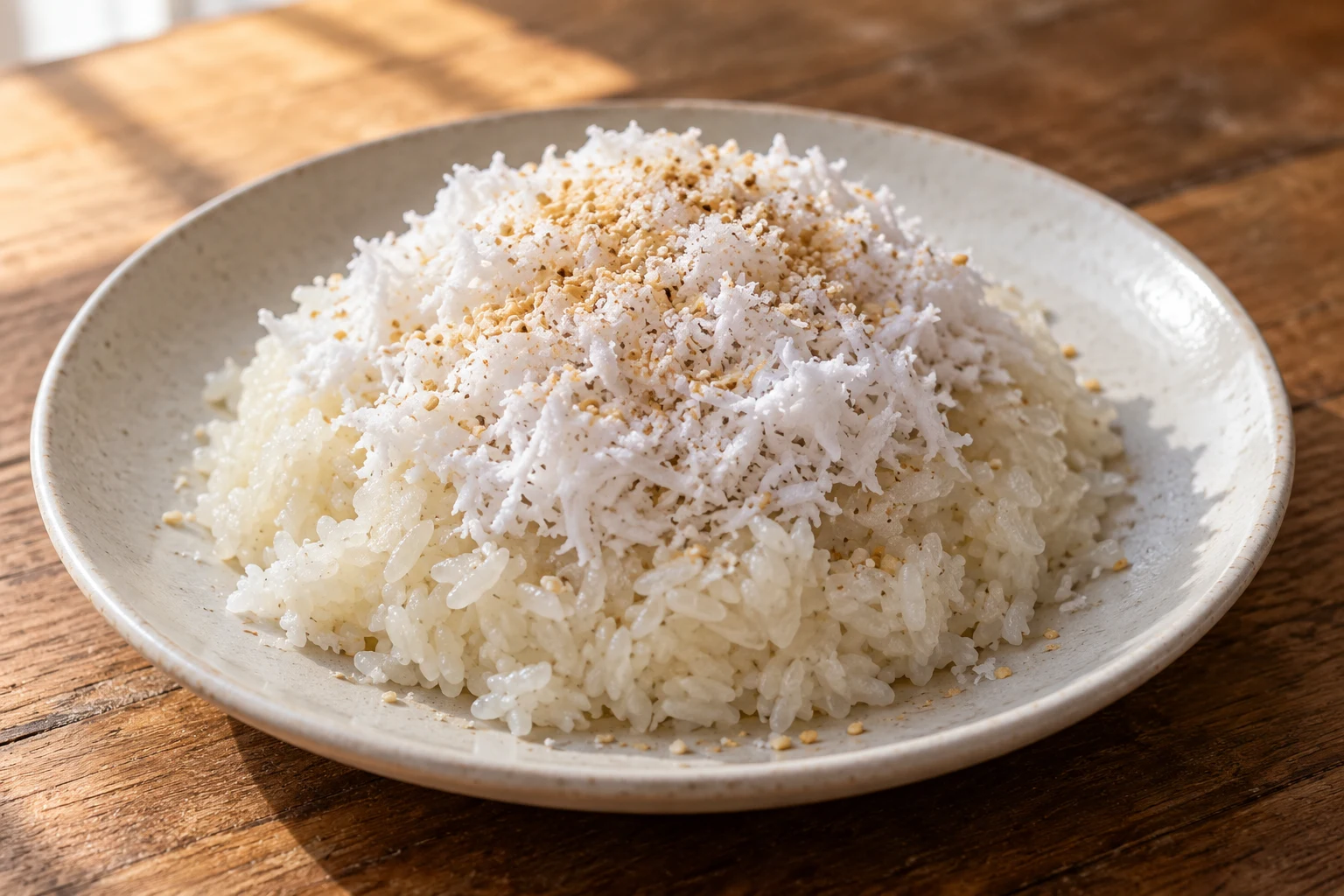
Myanmar International TV first steams soaked glutinous rice, then mixes in coconut milk and grated coconut before returning it to steam. Grated coconut and pounded sesame salt finish the serving. Its ingredient list has no added sugar, so sweetness is not the organising feature.
Mix with sweetened milk
Kamu Aye’s shared recipe steams the rice separately. Warm coconut milk carries dissolved palm sugar and salt into the cooked grains. The mixture goes onto a wide plate and is served with mango. Choose this complete recipe when you want that particular sweet finish.
Shape and coat
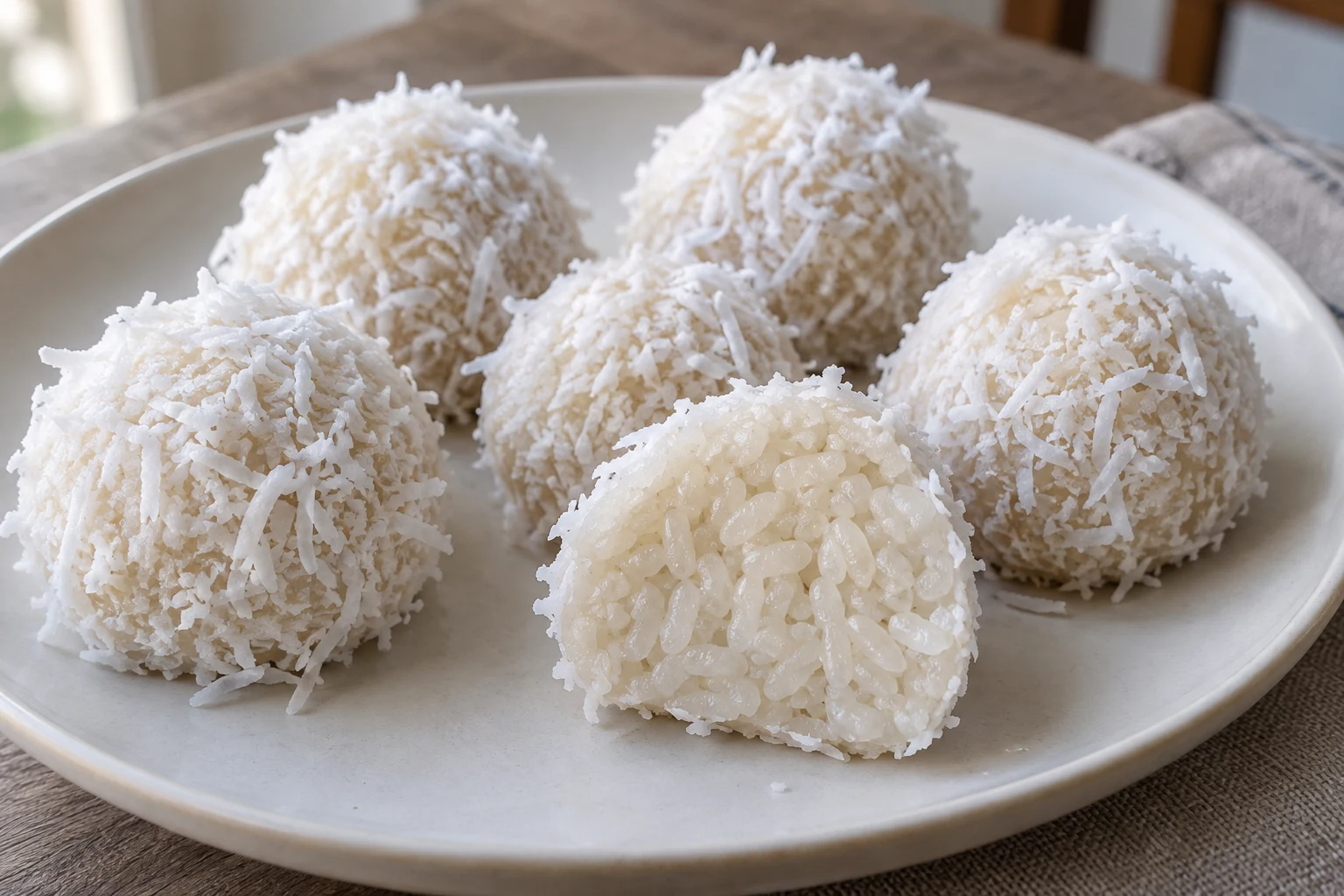
Bendigo Foodshare’s Karen-contributed recipe mixes cooked sticky rice with sweetened coconut milk, then rolls portions in shredded coconut. Whole grains remain the interior ingredient. It is a distinct preparation from a smooth dumpling made by kneading rice flour.
Keep the steam and the cooking water separate
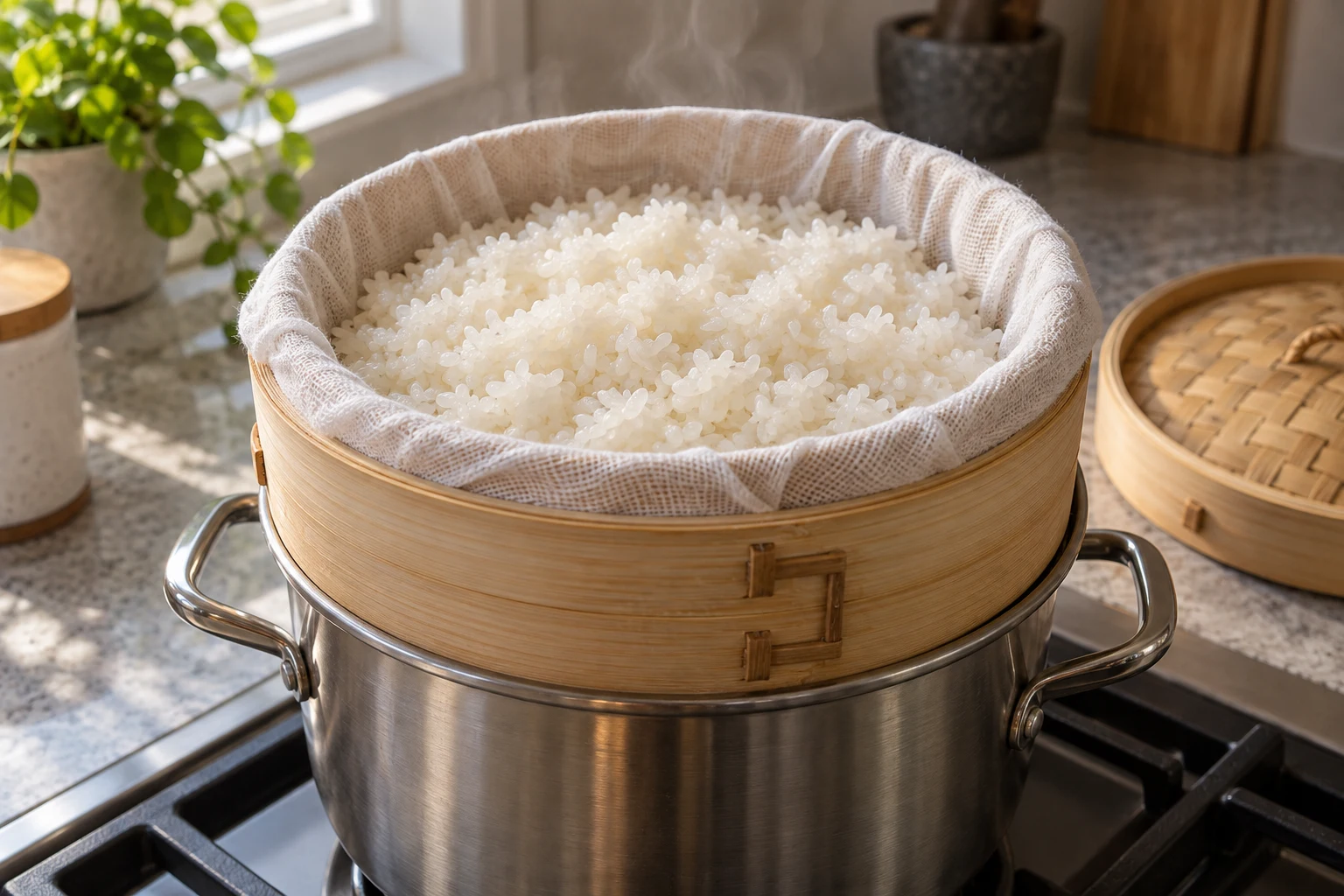
The Katanning recipe explicitly places the rice above the boiling water. Judy Leung’s separate sticky-rice technique at The Woks of Life also describes an elevated steaming setup. Before starting, check how the selected recipe positions the grains and how the lid fits.
Keep enough water in the lower pot to generate steam, checking it during cooking so the pot does not run dry. The steamer photograph shows the relationship between grains, cloth and pot; it is useful to establish that arrangement before handling a hot basket.
Leung’s method aims to keep the cooked kernels relatively separate. That is useful when the next step is mixing: you can distribute coconut through the grains before deciding whether to leave them in a mound or shape individual portions.
Whole grains, two visible forms
The steamer keeps the rice loose enough to mix; the coated portions show how cooked grains can hold a shape.
A recipe remembered across generations
Clarice Aye’s account accompanies the Katanning recipe. Her mother, Kamu Aye, came from Myanmar and learned the dish by watching her own mother cook outside over a fire with a steaming basket. Sharing it preserves a particular family memory.
That account gives the sweet preparation a more precise setting than a broad claim about what every household eats. The published method and the family story belong together: they identify the cook behind the rice, palm sugar and coconut milk combination.
Read the finishing ingredients before shopping
- Double-steamed serving
- Coconut and sesame salt
- Family dessert
- Palm sugar and mango
- Coated portions
- Rice and shredded coconut
The Myanmar TV method uses both milk and grated coconut. Have the topping ready as a separate part of the finish.
In Kamu Aye’s version, palm sugar sweetens the coconut milk; mango belongs to the final serving. Adding either to another method would be an adaptation.
The Karen community method gives you a shaped portion with a different exterior. Keep the coconut for coating distinct from the coconut milk mixed through the rice.
Name the form you want to serve
Bendigo Foodshare credits its rice-ball recipe to a member of the Karen community and associates it with community celebrations. Its shaping directions are useful for a cook planning individual portions rather than a mound of rice.
When choosing a recipe, consider the serving form as well as the ingredient names. A plated mound, a wide sweetened mixture and coconut-coated balls call for different finishing decisions. Use the directions for the form you have chosen instead of transferring a shaping step into every coconut-rice dish.
Research notes
Sources behind this article
- Myanmar International TV — Kaung Nyin Pyan Paung Original double-steaming method and coconut-sesame finish.
- Cooking to Connect — Kamu and Clarice Aye Complete family recipe and first-person account, two-page booklet.
- Bendigo Foodshare — Coconut Sticky Rice Balls Independent Karen community contribution, PDF page 48.
- Food Standards Agency — cooked rice guidance Prompt chilling, refrigerated storage and once-only reheating.
- Judy Leung — steamed sticky rice Separate original technique for an elevated steamer and distinct cooked kernels.
Keep exploring
More stories for your table
Japanese cuisine Celebration rice
Sekihan: Red Rice, Different Beans, Shared Celebrations
Sekihan links red-tinted sticky rice with important occasions, but its sweetness and beans vary by region. Compare azuki rice, Hokkaido’s sweetened-bean version and Akita’s tenko azuki tradition.
Indonesian cuisine Fruit salad
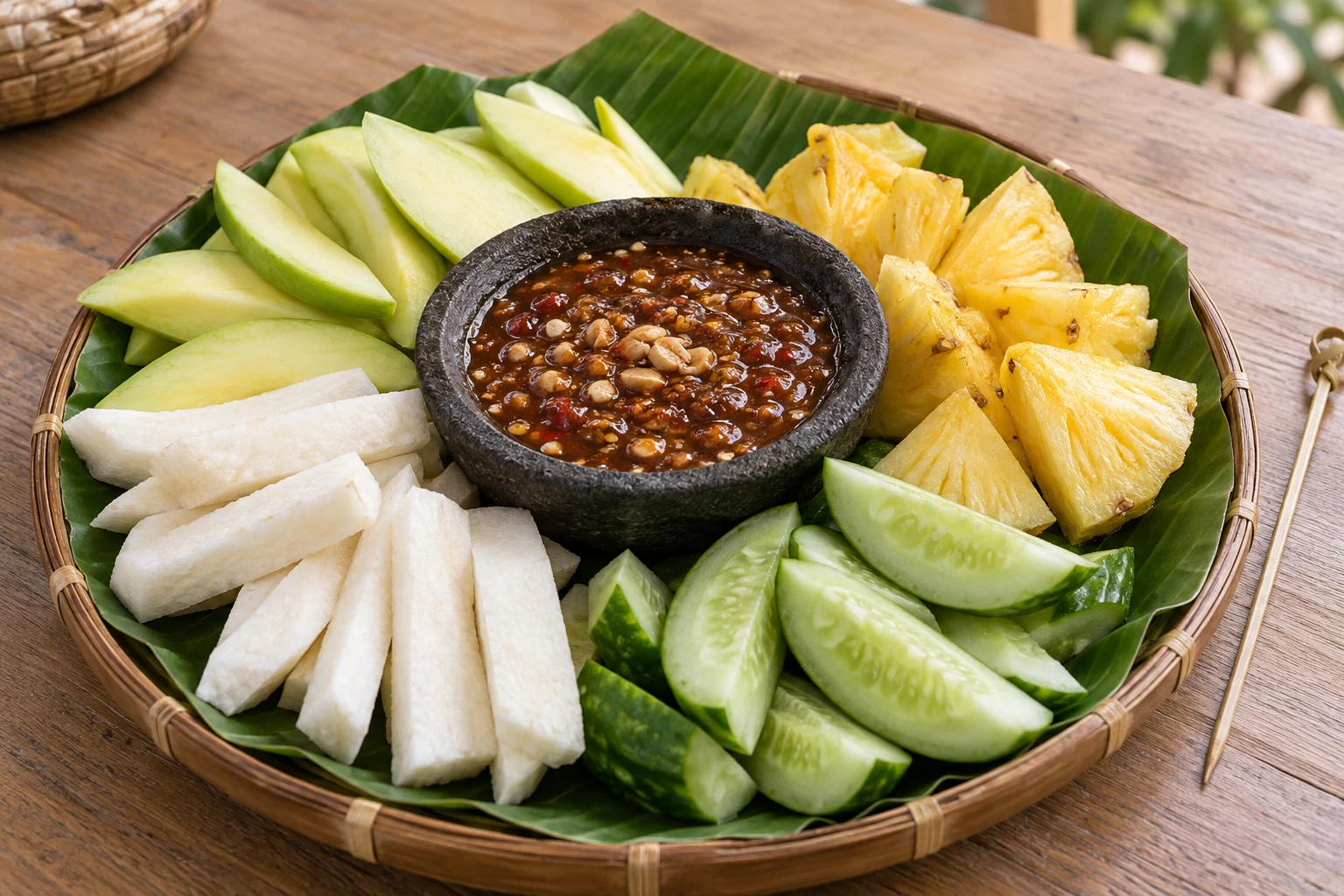
Rujak buah: firm fruit meets spicy palm-sugar sauce
Choose crisp fruit, understand palm-sugar dressing variations and make a complete vegetarian adaptation of Indonesian rujak buah.
Malaysian cuisine Rice dessert
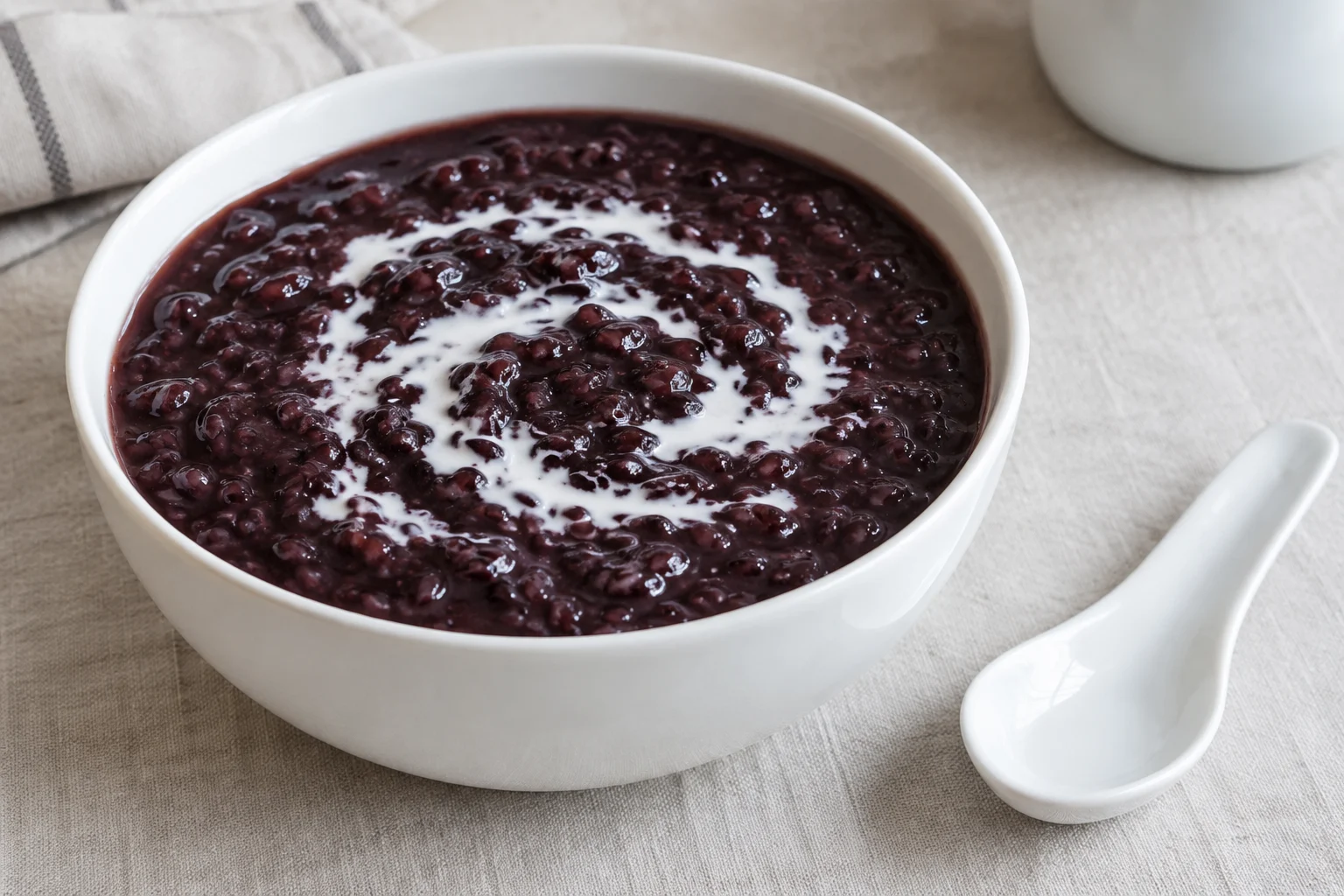
Bubur Pulut Hitam: A Dark Bowl, a White Finish
Malaysian cooks show how black glutinous rice becomes a spoonable dessert, with different soaking methods and a separate coconut finish.