
Shrimp Tagine: Give the Tomatoes a Head Start
Tajine de crevettes
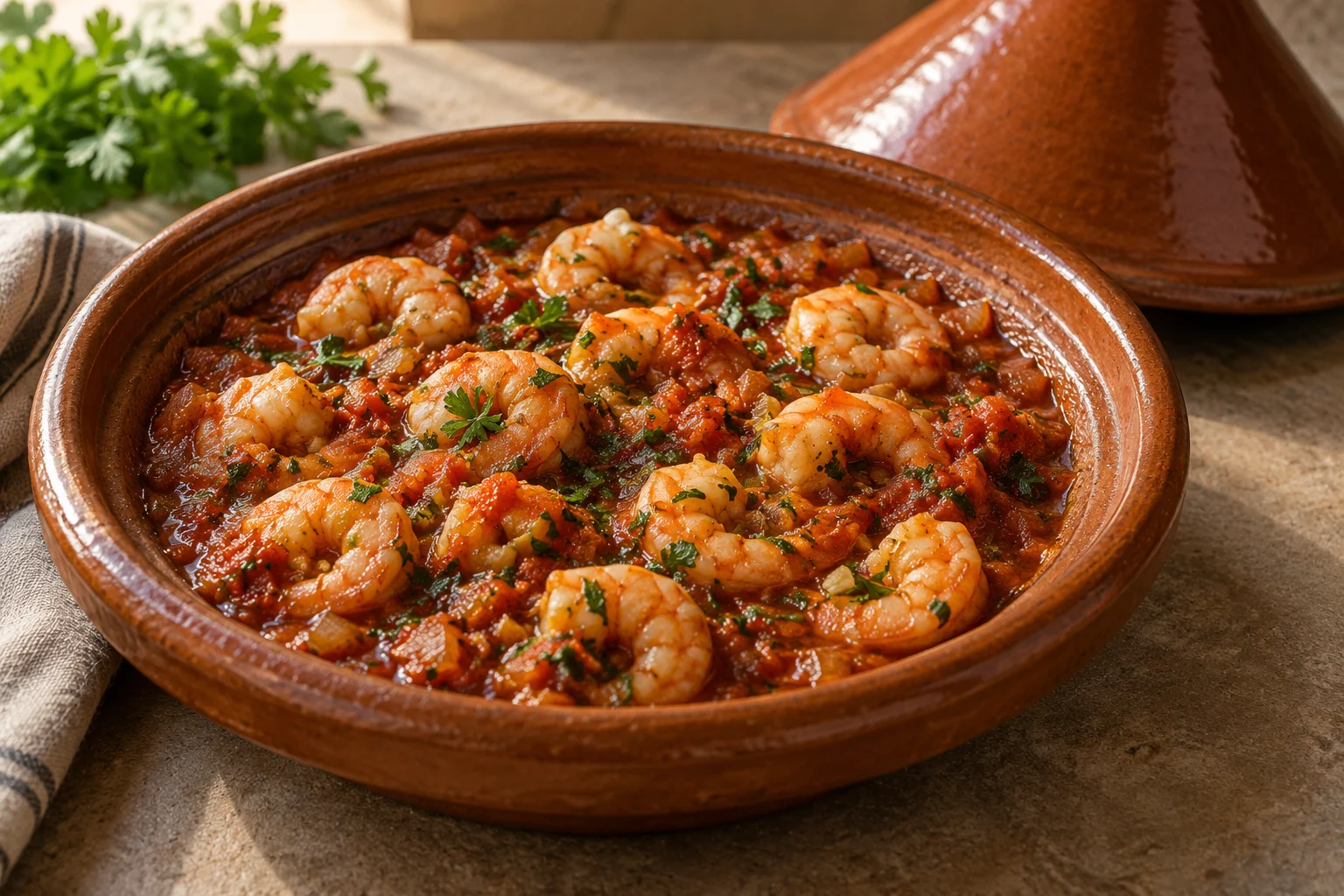
The tomatoes and the shrimp have different work to do. Two documented Moroccan preparations start with a tomato base and add the shrimp later—a useful order to keep when cooking a smaller version in a skillet.
A developed sauce, then the shrimp
A shrimp tagine rewards patience in one place and restraint in another. The tomato base needs its own cooking stage; the shrimp join a sauce that is already taking shape. That order appears in Katia Essyad’s shrimp tagine for Casablanca Market and in Cuisine de Fadila’s chermoula version. It is a practical common thread even though their seasonings and accompaniments differ.
Essyad cooks grated tomato and garlic until the tomato deepens in color, adds herbs and spices, then places the shrimp on top. Fadila begins with onion, followed by grated tomato, tomato paste and chermoula, before adding shrimp, red pepper and preserved lemon. The lesson is not to copy a long meat-stew schedule simply because both dishes use the name tagine. Here, the sauce gets the head start.
Recognize the seasoning relationship
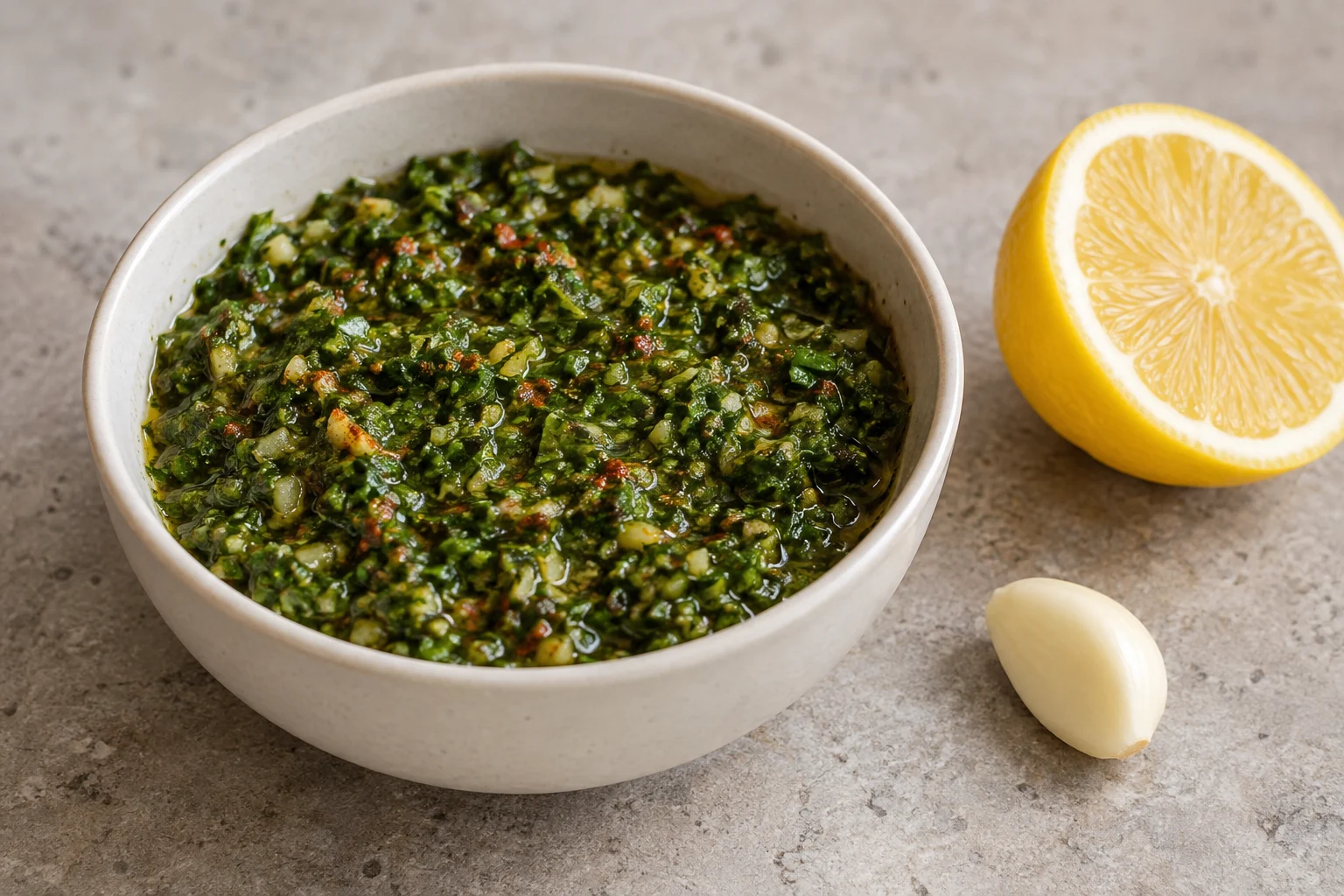
Chermoula is a family of Moroccan herb-and-spice mixtures, rather than one compulsory green paste. Nada Kiffa, writing for Taste of Maroc, describes fresh coriander and parsley, garlic, cumin, paprika, oil and acidic ingredients, with variations in color, herb balance and consistency. She notes that the mixture can season the cooking liquid as well as act as a marinade or condiment.
That makes the shrimp recipes easier to read. Fadila prepares a mixture of herbs, garlic and spices as chermoula. Essyad lists comparable herbs and spices directly in the tagine, alongside harissa and preserved-lemon puree. A cook should follow the actual formulation rather than add an extra bowl of seasoning just because the ingredients were not grouped under a separate heading.
Keep the two schedules visible
- 01
Watch the tomato base
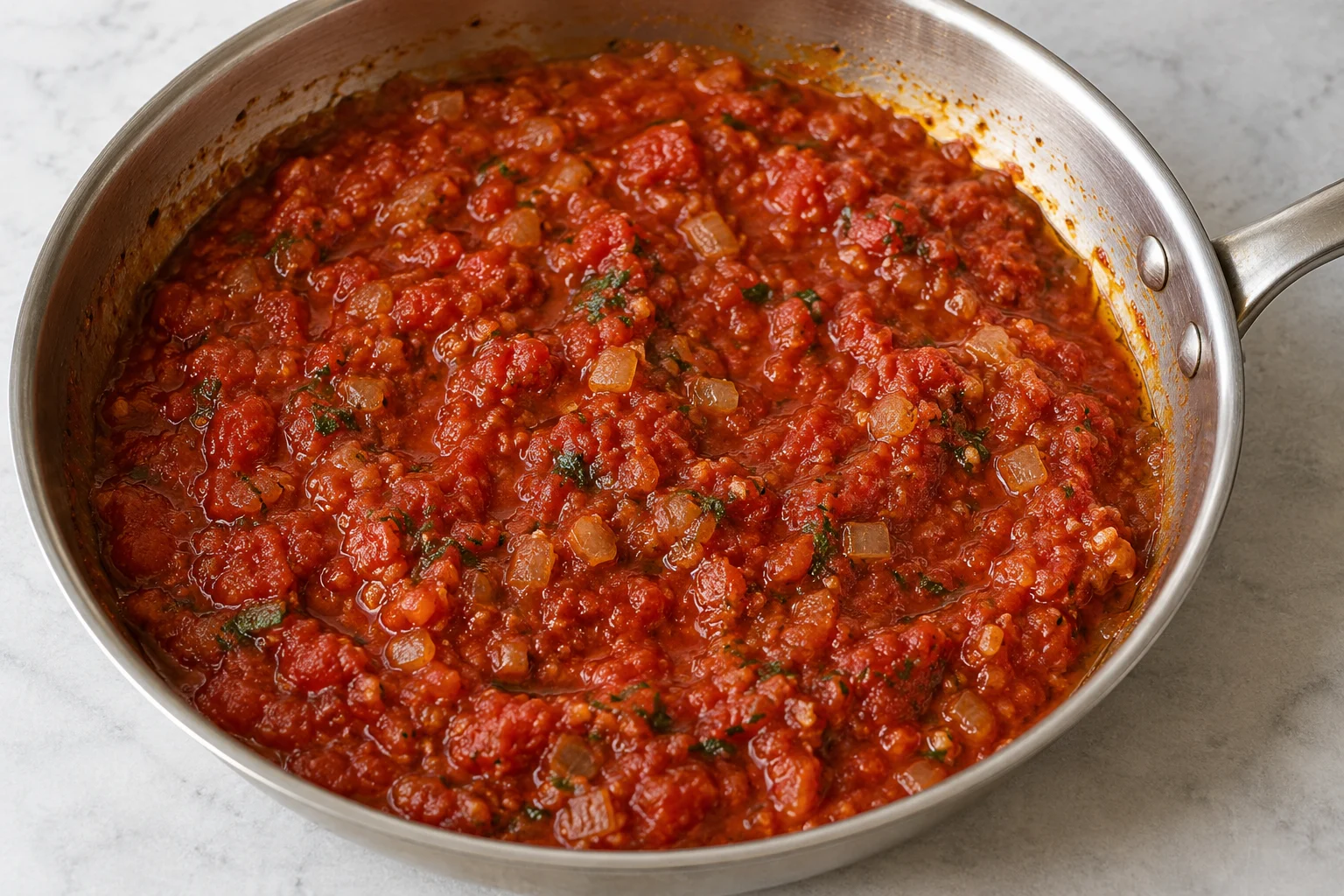
Before adding shellfish, look for softened tomato flesh and a sauce with body. Essyad’s source uses a deeper red tomato color as a cue; the adaptation below also checks whether the sauce still looks watery.
- 02
Bring the herbs into the sauce
Finely chop the herbs before combining them with garlic and spices. Kiffa warns that unchopped herbs can make a stringy mixture when pounded. A coarse, cohesive seasoning is easier to distribute than long stems.
- 03
Finish according to the seafood
Shrimp size and the pan affect timing. FDA guidance calls for seafood to reach 145°F/63°C, and describes cooked shrimp flesh as firm, pearly and opaque. Those cues matter more than stretching the shrimp stage to match a different recipe.
A small pan version
Tomato and chermoula shrimp
An editorial home-kitchen adaptation of the sauce-first methods, using a lidded skillet. It keeps herbs, garlic, cumin and paprika together and uses fresh lemon juice instead of preserved lemon. Makes 3servings; allow about 40minutes.
Ingredients
For the pan
- 500 g raw shrimp, peeled and deveined, tails removed
- 600 g ripe tomatoes, finely chopped
- 150 g onion, finely chopped
- 30 ml / 2 tbsp olive oil, divided equally between the herb mixture and pan
- ½ tsp fine salt, plus more only if needed
- up to 50 ml water, only if the sauce becomes too dry
Coarse herb mixture
- 15 g fresh cilantro leaves and tender stems, finely chopped
- 15 g flat-leaf parsley leaves, finely chopped
- 3 cloves garlic, finely crushed
- 1 tsp ground cumin
- 1 tsp sweet paprika
- ¼ tsp, optional ground chili
- 20 ml fresh lemon juice
Method
- 1
Prepare the seasoning and shrimp.
If frozen, thaw the shrimp overnight in the refrigerator. Keep them chilled while preparing the sauce. Combine the chopped herbs, garlic, cumin, paprika, optional chili, lemon juice and 15 ml of the oil into a coarse moist mixture.
- 2
Build the tomato base.
Warm the remaining 15 ml oil in a wide skillet over medium heat. Cook the onion for about 5 minutes until softened. Add the tomatoes and salt; simmer uncovered for about 15 minutes, stirring occasionally, until the tomatoes collapse and the sauce thickens. Add a little of the optional water only if it threatens to stick before the tomatoes soften.
- 3
Add the herb mixture.
Stir the coarse herb mixture into the tomato base and cook gently for 1 minute. Taste the cooked sauce and adjust salt if necessary. The sauce should coat a spoon rather than resemble a thin broth.
- 4
Give the shrimp their final stage.
Place the shrimp in the sauce and cover. Cook gently for about 3–5 minutes, turning once, until the thickest shrimp reaches145°F/63°C and its flesh is firm, pearly and opaque. Continue briefly if needed to reach doneness, then remove the pan from the heat and serve promptly.
Research notes
Methods behind the adaptation
The shrimp sources independently document the sauce-first order. The chermoula source explains ingredient variation, and FDA supplies the current seafood handling and doneness guidance.
- Katia Essyad / Casablanca Market: Shrimp Tagine Grated tomatoes develop first; herbs and spices precede shrimp. Its pasta, nut and olive service stays attributed.
- Cuisine de Fadila: shrimp tagine with chermoula Independent Moroccan preparation with onion and tomato base, then shrimp, pepper and preserved lemon.
- Nada Kiffa / Taste of Maroc: Chermoula Explains Moroccan herb, garlic, spice and acid relationships, variable consistency and the need to chop herbs.
- FDA: Fresh and frozen seafood safety Current official refrigeration, thawing,145°F cooking and firm/pearly/opaque shrimp guidance.
Keep exploring
More stories for your table
Moroccan cuisine Couscous
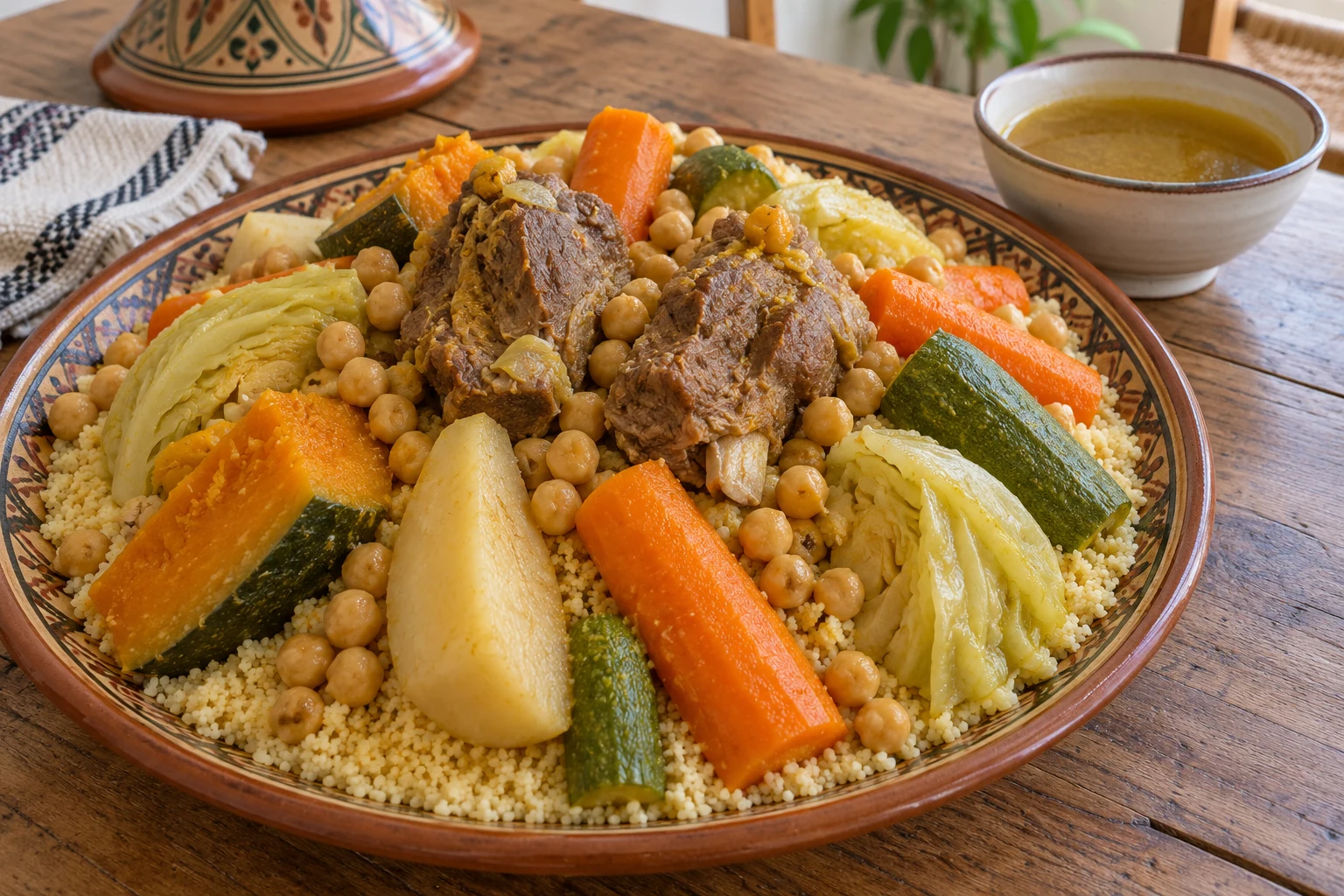
Couscous with Seven Vegetables: Save Room for the Broth
Light grains, tender vegetables and generous broth make Moroccan seven-vegetable couscous a meal. Choose the steaming method before planning the pot.
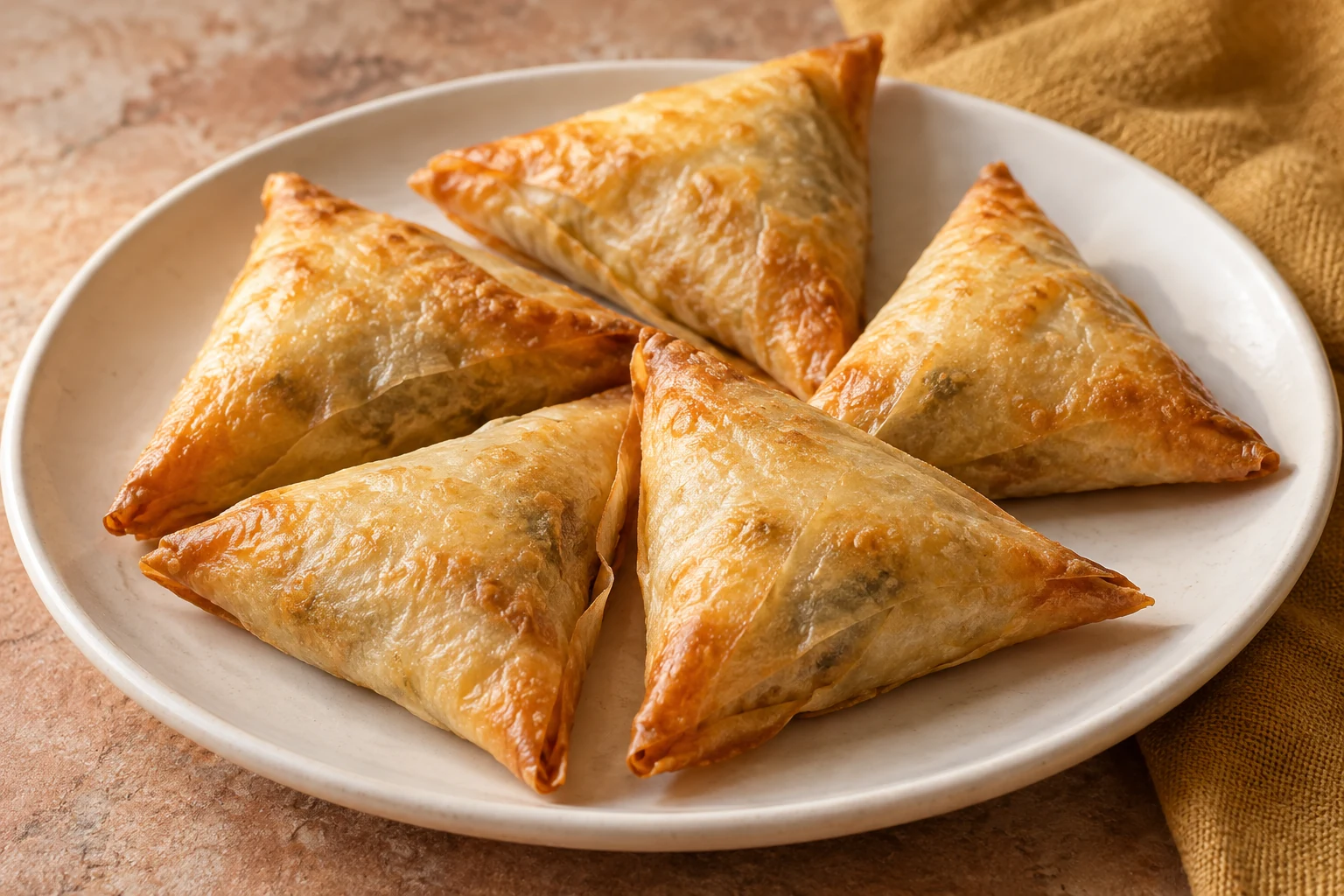
Moroccan cuisine Savory pastries
Fish Briouats: Three Fillings Behind the Fold
Compare three documented Moroccan fish-briouat fillings: sardines, white fish with olives, and fish with vermicelli and vegetables.
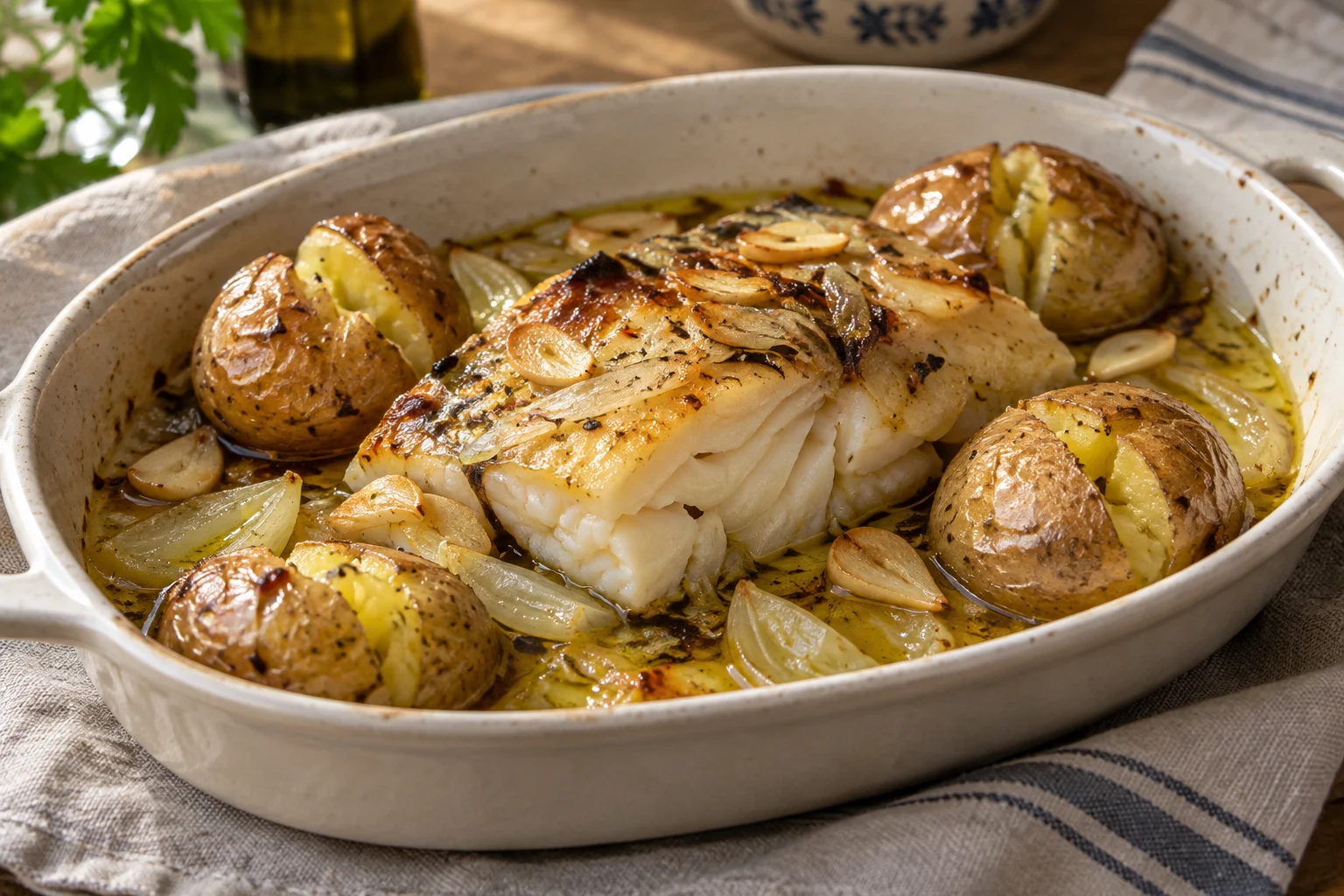
Portuguese cuisine Salt cod and potatoes
Bacalhau à Lagareiro: Open the Potato for the Oil
Read Portuguese bacalhau à lagareiro through its cracked potatoes and garlic oil. Compare documented roasting and grilling methods and plan the salt-cod preparation.