
Briouats: A Small Filling, a Closed Fold
Briouates
Thin pastry has a small job with large consequences: hold the filling, survive the fold, and turn crisp. The triangle begins before the first corner moves.
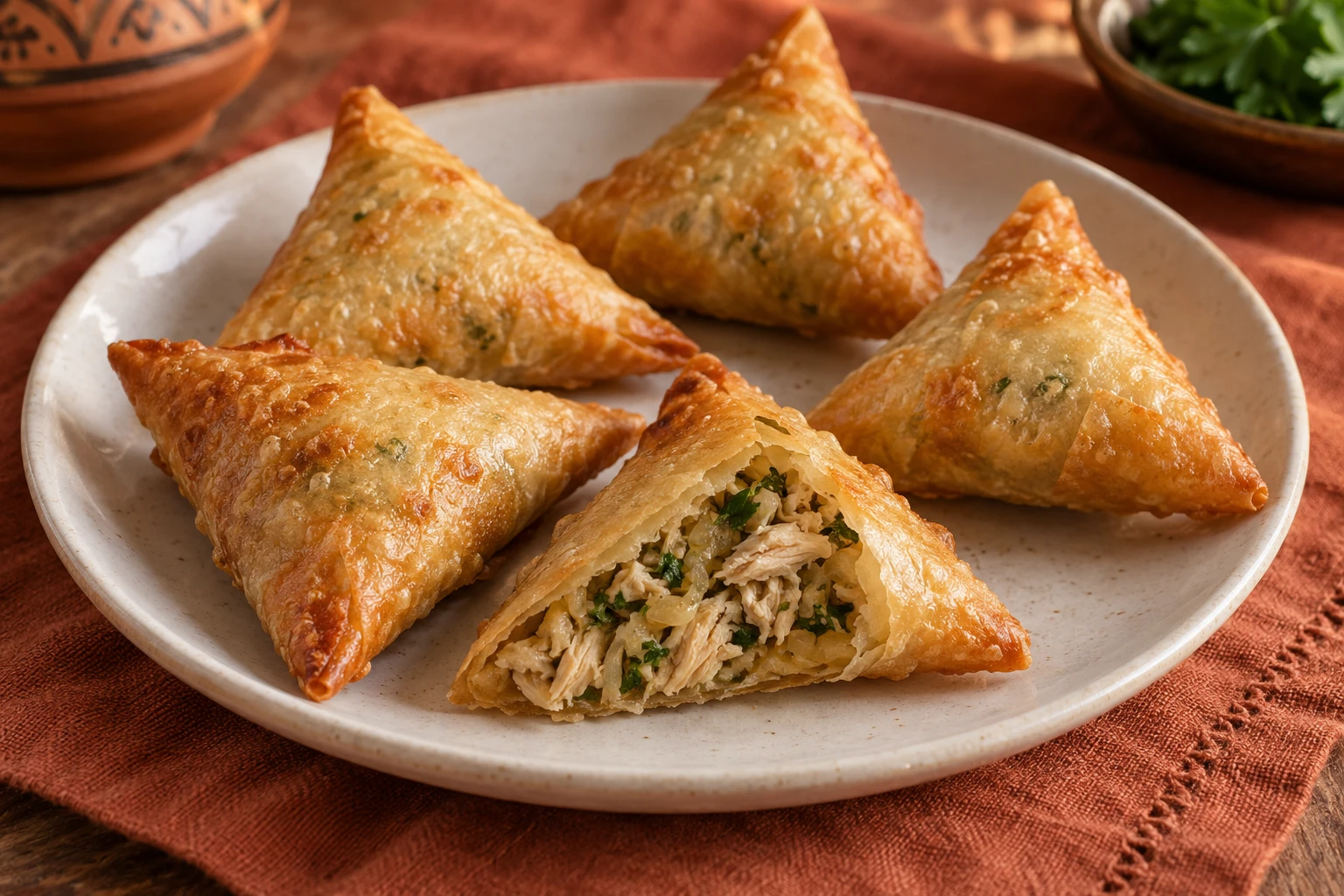
Read the filling before the fold
Moroccan briouats wrap a small filling in thin pastry, often as triangles. For a savory chicken version, the useful question is how that filling will sit inside the wrapper. A mound that closes comfortably is easier to fold than a generous pile that pushes against every edge.
Choumicha Chafay cooks her minced chicken with onion, herbs and spices, then lets it cool before combining it with ground sweetened almonds. That is a particular sweet-savory filling, not evidence that every chicken briouat needs sugar. Her method uses pastilla sheets, closes the final flap with egg white, and offers frying or a butter-brushed oven finish.
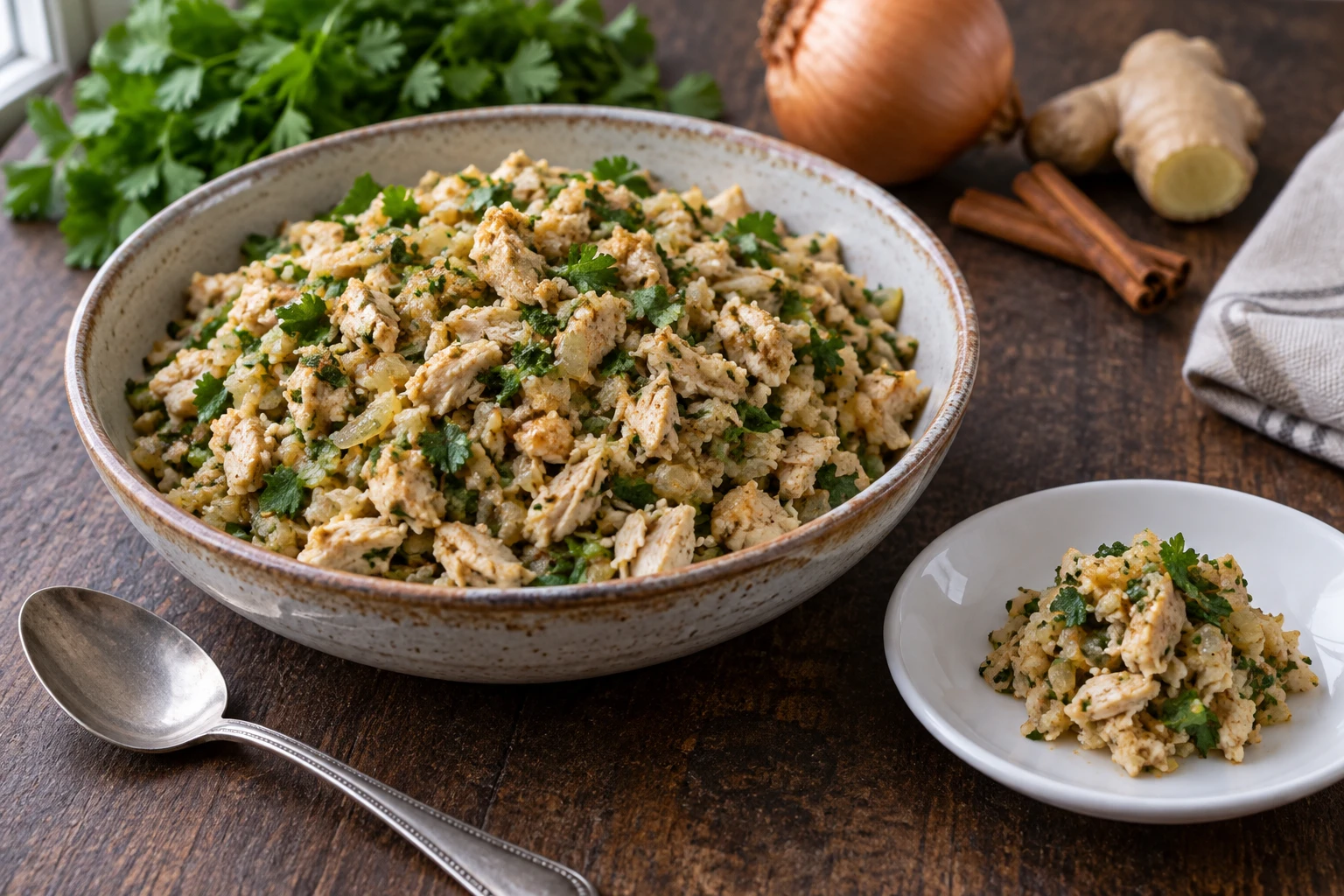
Two chicken starting points
Cook the filling first
Choumicha starts with raw minced chicken and cooks it before wrapping. The pastry stage follows the completed filling stage; a golden shell is not the instruction for cooking raw chicken inside.
Begin with cooked chicken
Kevin's Silk Road Recipes adaptation uses finely chopped rotisserie chicken, warmed with onion, spices and fresh herbs, then cooled. It is an accessible baked filo version. The chicken, pastry preparation and oven method belong to that recipe together.
The wrapper changes the work
Christine Benlafquih describes warqa as paper-thin North African pastry and notes that filo is a more fragile, flakier substitute. In her almond briouat recipe, she adjusts the pastry layers and even discusses thicker flour-based spring-roll wrappers. These are practical substitutions, with different handling requirements, rather than identical sheets under several names.
That distinction explains why a layer count from one recipe cannot be transferred automatically to another. Kevin's savory filo instructions use several layers, while other cooks work with a different stack. Read the folding instructions beside the pastry specification, before cutting an entire packet. A torn first strip is a reason to reassess the handling, rather than rush through the rest.
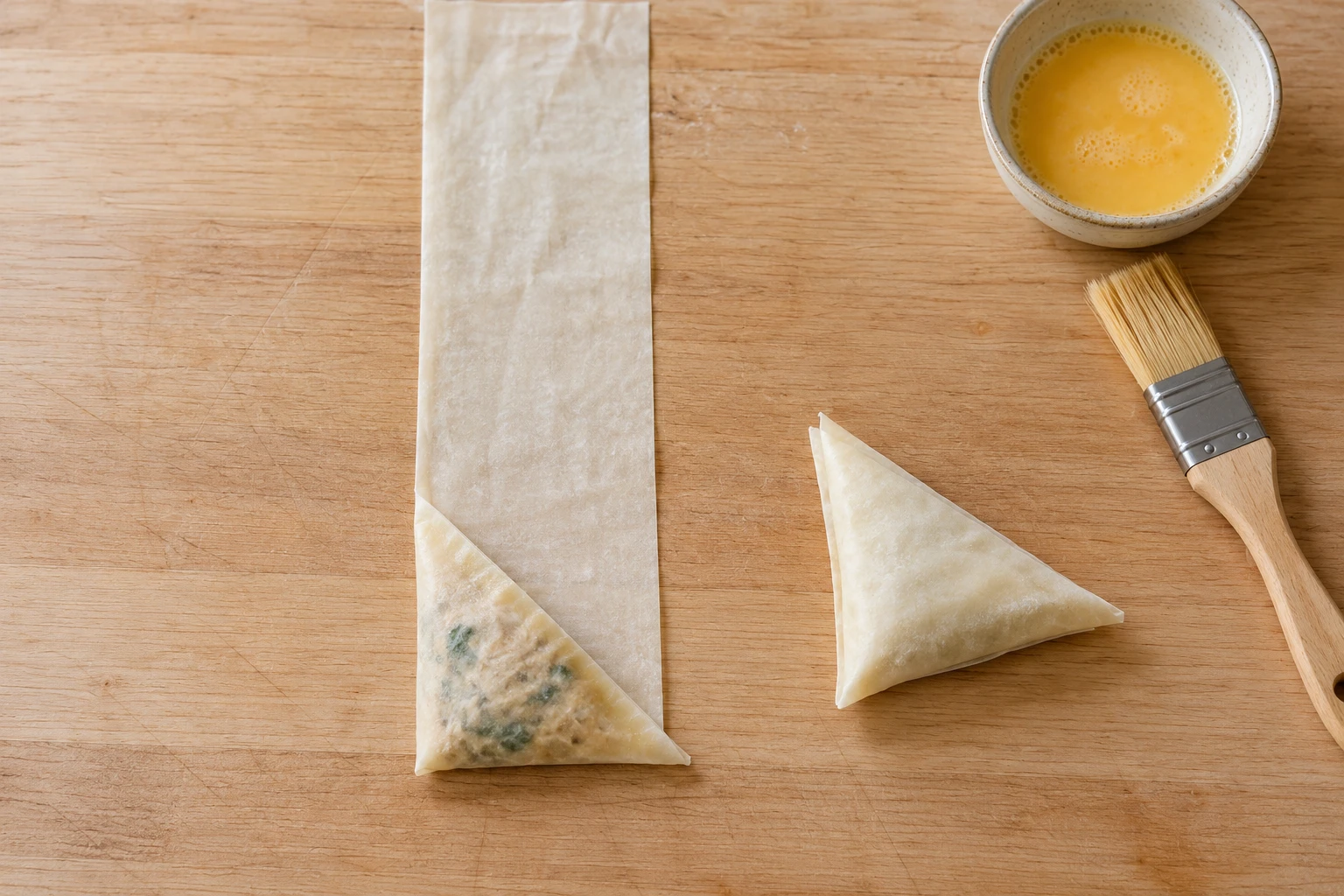
What the triangle needs
These checkpoints explain the fold; use a complete recipe for the filling, layer count and cooking instructions.
- 01
Keep the waiting sheets protected
For her baked almond adaptation, Anneka Manning covers the filo stack with a dry tea towel and then a damp one. This protects the waiting pastry while a single strip is handled. Her filling and honey finish remain specific to that sweet recipe.
- 02
Establish the first corner
Place a manageable portion near one end of a long strip. Fold a corner over it so a triangle forms and its outer edge stays straight. The first enclosure sets the shape that moves up the remaining pastry.
- 03
Alternate without overfilling
Carry the triangle from one side of the strip to the other, following the recipe's folds. If filling escapes before the parcel closes, reduce the portion rather than stretching thin dough around the same mound.
- 04
Finish with the specified seal
Egg white, beaten egg, egg yolk and butter appear in different published methods. Follow the seal chosen for your wrapper and cooking method; they are not one universal instruction.
A variation should say what it changes
Danny Kingston's Great British Chefs recipe openly calls its chicken, manchego and chorizo filling a Spanish twist. It cools the cooked onion and chorizo before combining them with cooked chicken and cheese, uses buttered filo, and bakes the parcels. It shows how the folding structure can travel without making those ingredients a Moroccan default.
Sweet briouats need the same clarity. Benlafquih fries almond-filled triangles and soaks them in honey; Manning bakes her almond version before adding honey syrup. Neither finish should quietly migrate into a savory chicken method. Decide which version you are making, then judge its shell and filling together. A closed triangle with a crisp exterior is the result of several small choices made in the right order.
Research notes
Sources
Savory recipes and clearly identified sweet adaptations explain filling, wrapper and folding differences.
- Choumicha Chafay: Chicken and almond briouates Cooked minced filling, pastilla sheets and two cooking options.
- Kevin: Savory chicken briouats A baked adaptation using cooked chicken and layered filo.
- Christine Benlafquih: Almond briouats Warqa substitutions and a distinct fried, honey-coated sweet version.
- Anneka Manning: Baked almond briouats Protected filo stack, triangular folding and a sweet baked finish.
- Danny Kingston: Chicken, manchego and chorizo briouats An explicitly Spanish adaptation with cooled filling and buttered filo.
Keep exploring
More stories for your table
Moroccan cuisine Savory pastries
Fish Briouats: Three Fillings Behind the Fold
Compare three documented Moroccan fish-briouat fillings: sardines, white fish with olives, and fish with vermicelli and vegetables.
Moroccan cuisine Couscous
Couscous with Seven Vegetables: Save Room for the Broth
Light grains, tender vegetables and generous broth make Moroccan seven-vegetable couscous a meal. Choose the steaming method before planning the pot.
Spanish cuisine Pastry
Ensaïmada: The Layers Inside Mallorca’s Spiral
How thin dough, pork lard and a long rest shape Mallorca’s ensaïmada—and why squash preserve and cream become part of the pastry in different ways.