
Khlii: The Meat, the Fat and the Breakfast
الخليع
A spoonful carries more than meat. Its fat and seasoned fragments can shape the whole dish.
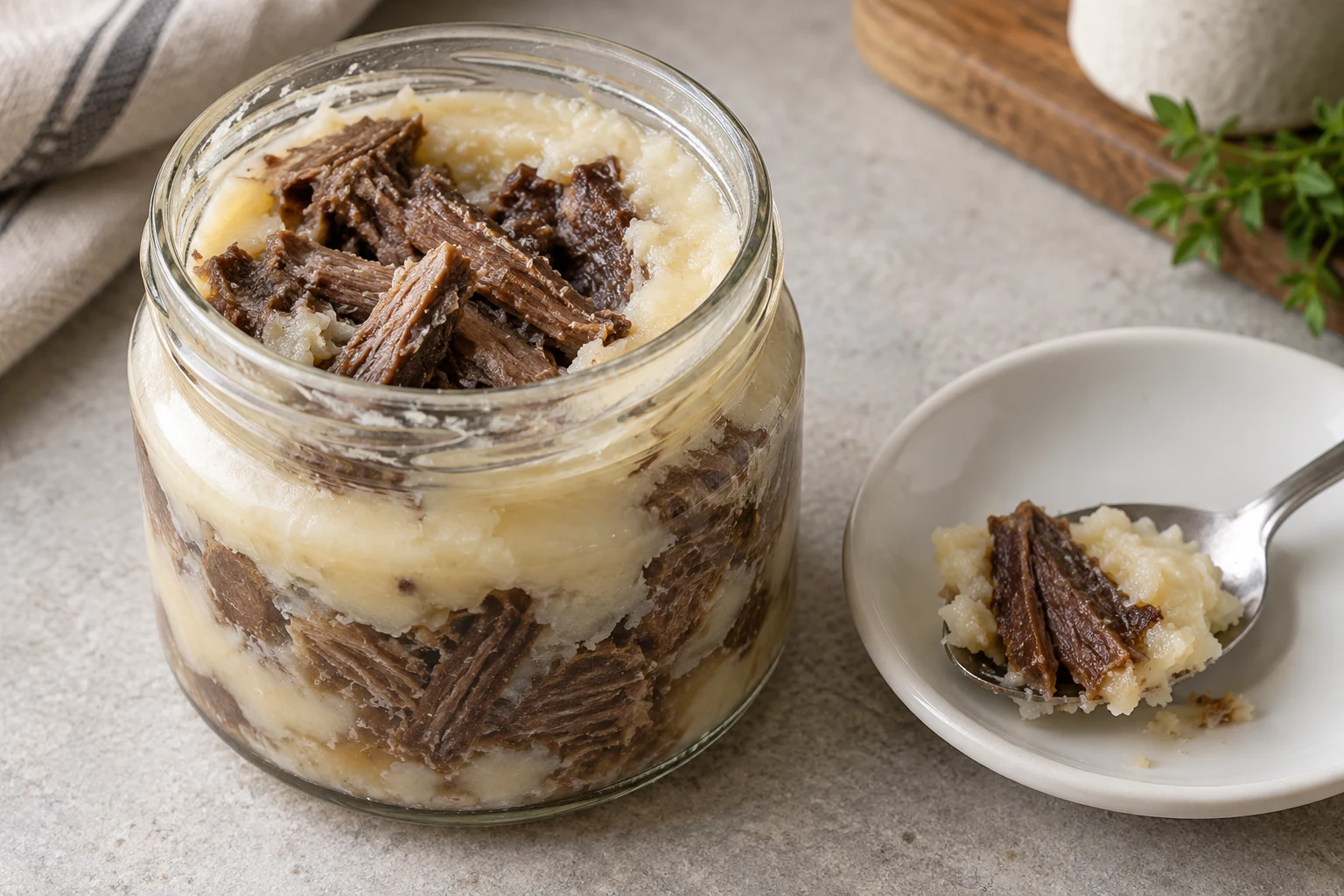
Look beyond the meat in the jar
Khlii, also written khlea, is Moroccan spiced meat that has been dried and then cooked confit-style. A jar may show dark strips against pale, solidified fat. Once warmed, that fat becomes part of the cooking medium, while the meat brings a concentrated, seasoned bite. Treating the jar as nothing but leftover fat misses much of its purpose.
Slow Food’s Ark of Taste records khilii in the Fes region, describing a mutton version and its place in preserving meat before widespread refrigeration. A Moroccan gastronomy study hosted by WIPO describes beef-based preparations and their association with Fes and Marrakech. Together, they give a more useful picture than insisting on one animal or one spelling.
Three words explain the transformation
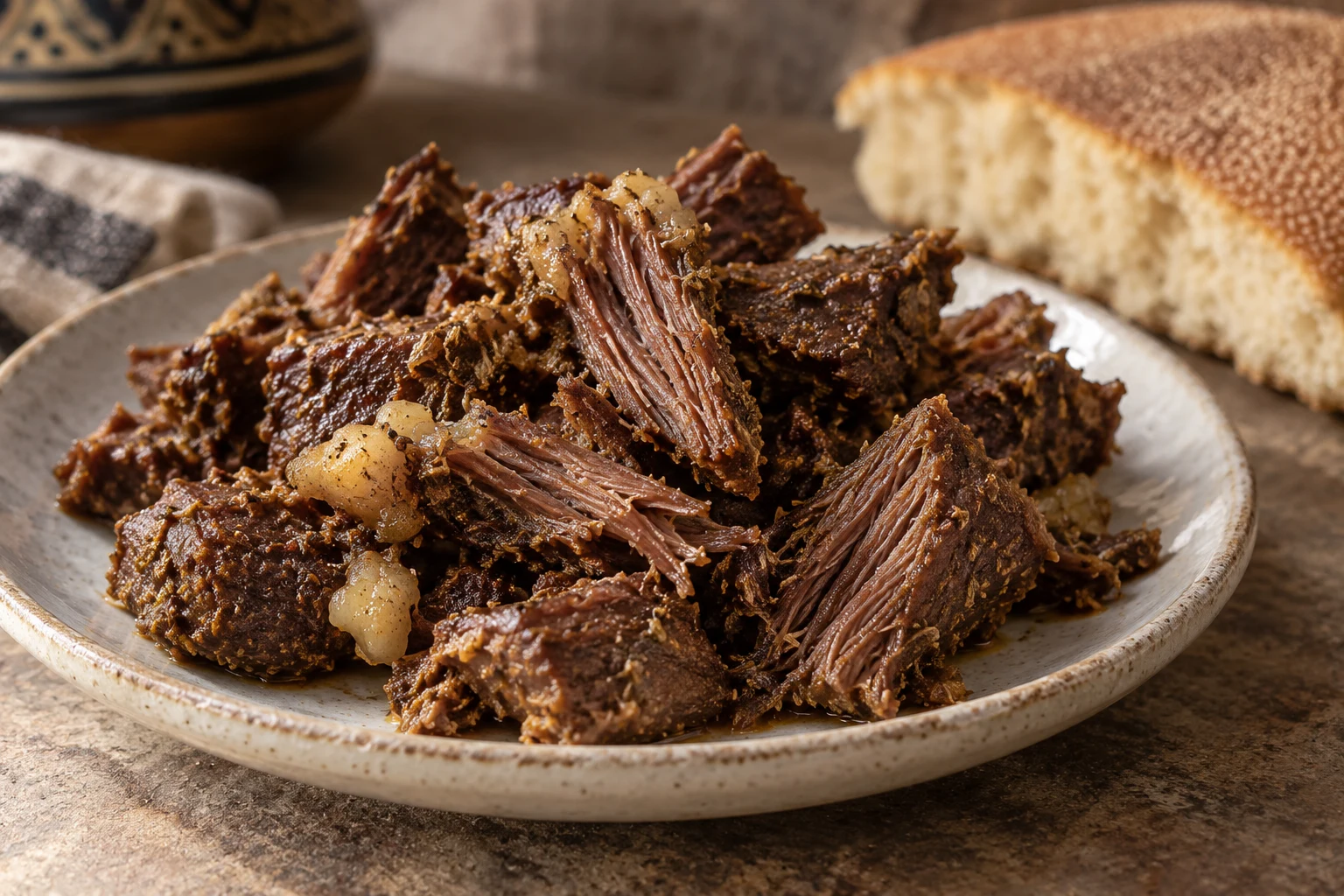
Gueddid is the cured, dried meat that precedes traditional khlii. Khlii is the later confited ingredient. Agriss, with spellings including agriche or agrisse, refers to the seasoned fragments and sediment from the cooking. Nada Kiffa’s Taste of Maroc account keeps these parts distinct: the strips, the fat and the sediment each have culinary uses.
Salma’s Cuisinons en Couleurs report follows a family preparing a large batch in Fes. She describes spicing and drying beef, then cooking it in a large pot with fat and olive oil. She also records a separate approach in which dried meat is steamed and held in olive oil. This is a witnessed account of skilled preparation, rather than proof that every household follows the same process.
The distinction matters when you shop. Ask whether you are buying dried meat, finished khlii, or a jar rich in the cooking sediment. They share a family of flavors, but they are different ingredients to put into a pan.
Start with eggs and bread
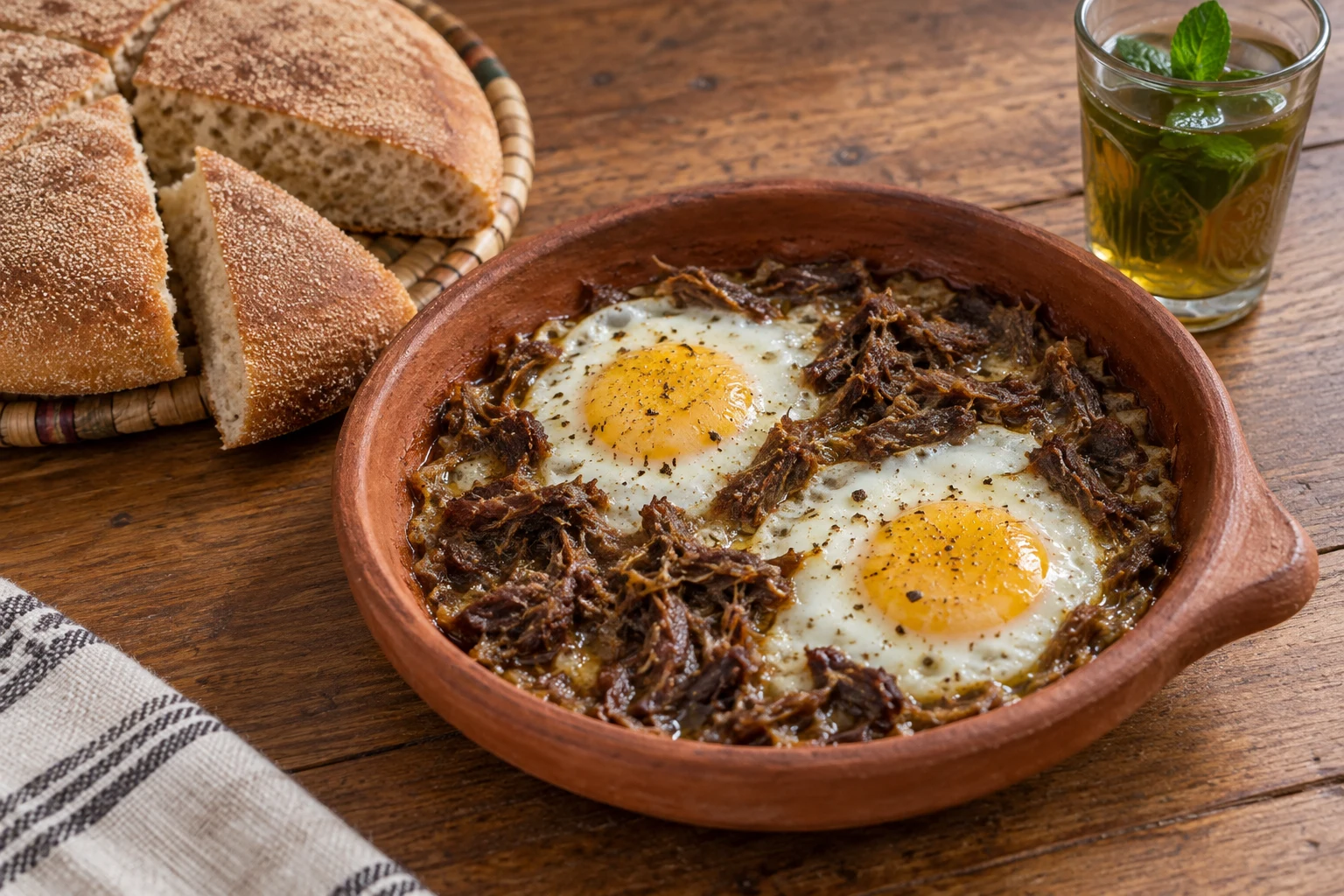
The WIPO-hosted study describes khlii with eggs as a familiar Moroccan breakfast that can also appear at other meals. Slow Food records eggs, folded bread and legumes among its uses. This is a versatile ingredient, even if breakfast is the easiest place to meet it.
For a quick egg dish, small pieces are more practical than long strips. Taste of Maroc recommends cutting the meat smaller for preparations with little cooking time. Let the product’s directions govern reheating, then use enough of its fat to coat the pan without adding a second generous pour of oil. Cook the eggs until their whites and yolks are firm; FoodSafety.gov gives that guidance for whole eggs.
Bread provides something plain to alternate with the rich meat and egg. Leave additional salt until you can assess the finished seasoning. The aim is to carry khlii through the meal, rather than to make every bite as concentrated as a spoonful straight from the jar.
A shortcut changes the ingredient
Azlin Bloor’s LinsFood recipe explicitly skips the dried-meat stage, using fresh beef or lamb for a preparation she calls M’qila Slaouia. She learned her version at a café in Salé and describes refrigerated storage. That makes it a useful comparison with traditional dried-meat khlii, without pretending the two processes produce an identical result.
If you are choosing between products or recipes, check that distinction before expecting the same texture or keeping time. A familiar name on its own does not tell you whether meat was dried first, how it was processed or how the maker intends it to be stored.
Use the richness deliberately
LinsFood also points to the flavored fat as useful in its own right, and to khlii in stuffed breads and soups. In a dish with legumes, let a modest amount supply a contrast to the beans. In bread, think about where the small pieces sit so the filling spreads through several bites.
Return the unused product to the storage conditions specified by its maker and use clean utensils when taking out a portion. Keep the meat, fat and sediment in mind as related tools: you can choose how much richness and how many distinct pieces a dish needs.
Research notes
Sources and further reading
Moroccan writers, a witnessed family preparation, a culinary instructor and heritage organizations document different versions and uses. Historical preservation descriptions are kept separate from modern product storage guidance.
- Nada Kiffa, Taste of Maroc: Khlii or khlea Gueddid, confited meat, agriss and the use of smaller pieces in quick dishes.
- Cuisinons en Couleurs: A family’s khlii preparation in Fes A firsthand report of the large-batch process, its sediments and a separate olive-oil method.
- Slow Food Foundation: Khilii dried meat Fes heritage, mutton preparation and uses with eggs, folded bread and legumes.
- Azlin Bloor, LinsFood: Khlea and M’qila Slaouia A clearly identified fresh-meat shortcut learned in Salé, plus flavored-fat and bread uses.
- WIPO: Moroccan gastronomy scoping study, dish 12 Pages 50–51 of the PDF discuss khlii with eggs, Moroccan regions, variant meats and bread or legume uses.
- FoodSafety.gov: Safe cooking temperatures Whole eggs should be cooked until the whites and yolks are firm.
Keep exploring
More stories for your table
Moroccan cuisine Couscous
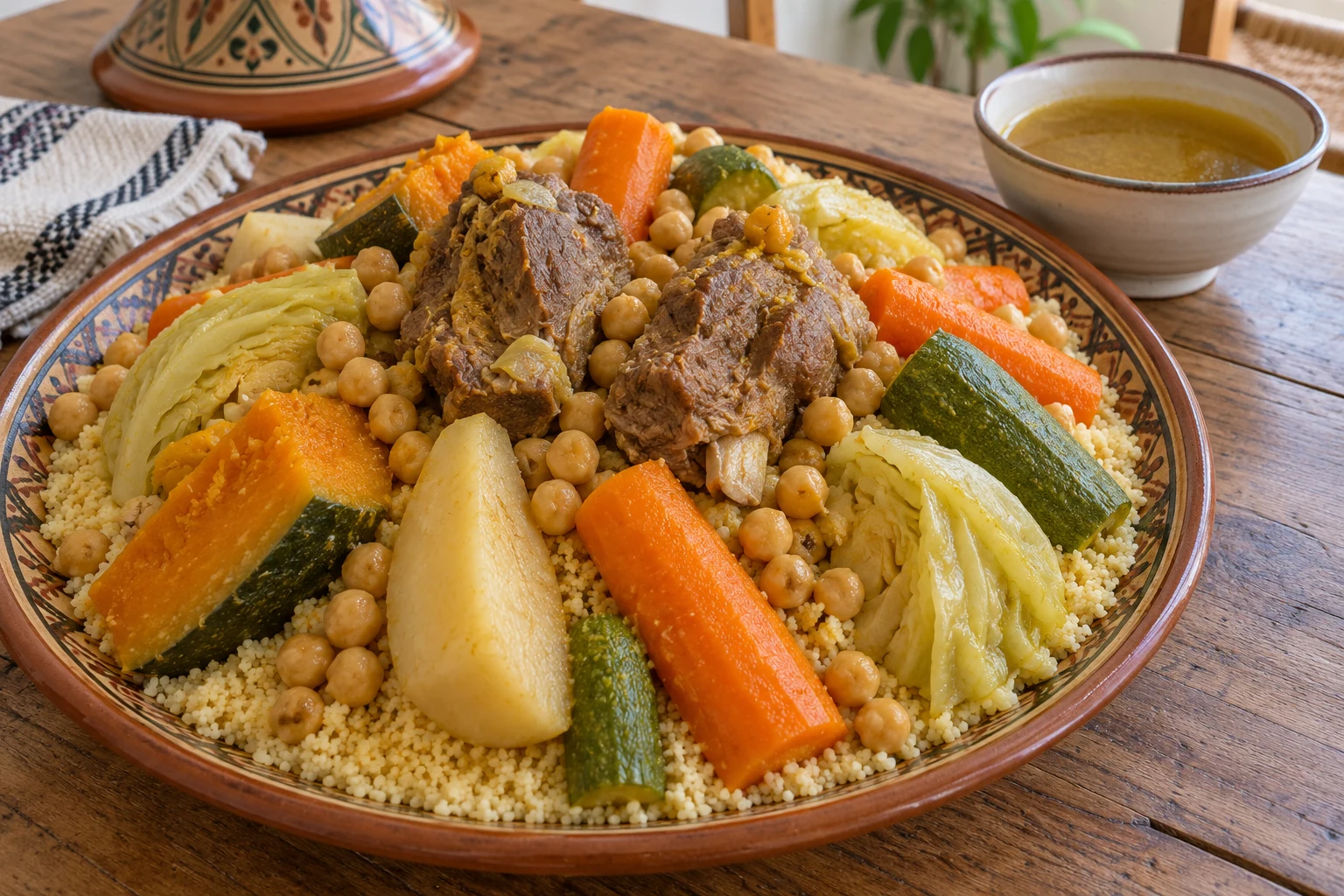
Couscous with Seven Vegetables: Save Room for the Broth
Light grains, tender vegetables and generous broth make Moroccan seven-vegetable couscous a meal. Choose the steaming method before planning the pot.
Moroccan cuisine Pastry
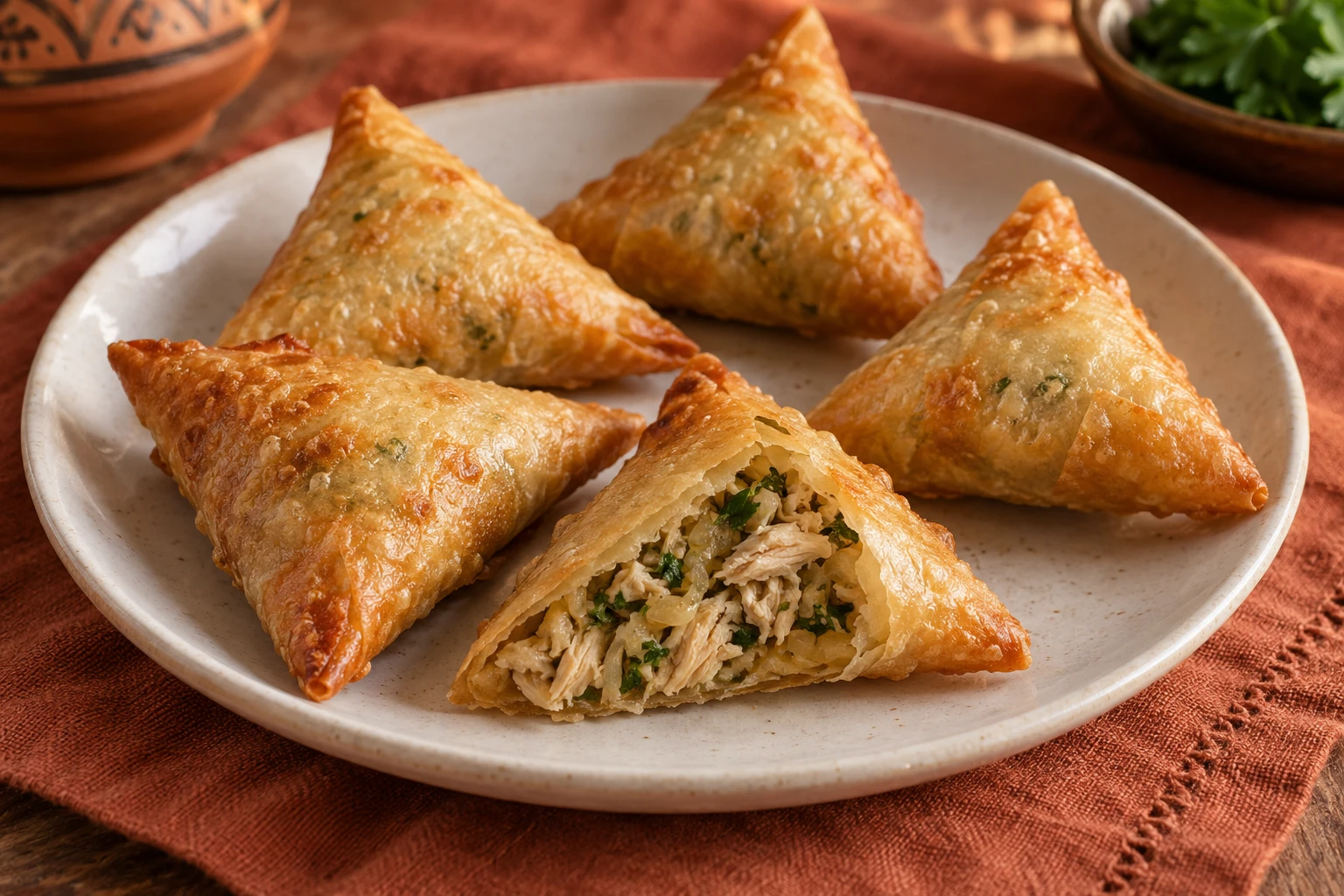
Briouats: A Small Filling, a Closed Fold
Savory Moroccan briouats depend on a compact cooked filling and a closed triangular fold. Read the wrapper and finishing method together before adapting a batch.
Moroccan cuisine Seafood tagine
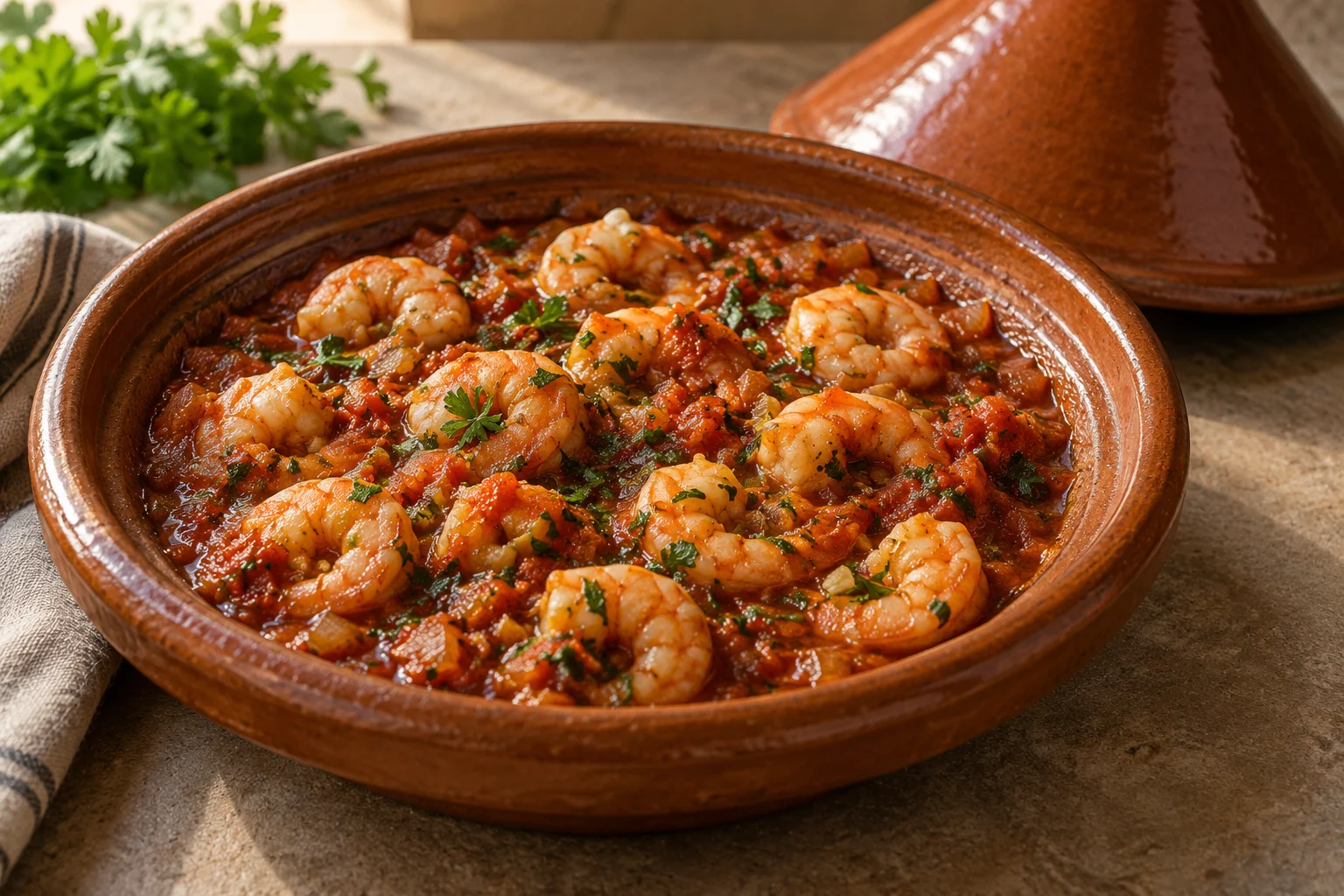
Shrimp Tagine: Give the Tomatoes a Head Start
Build a Moroccan shrimp tagine by developing the tomato sauce first, then adding shellfish. Learn chermoula choices and a complete skillet adaptation.