
Msemen: The Layers Before the Pan
مسمن
A square of msemen can look substantial on the plate, yet pull apart into thin, supple sheets. That contrast starts on an oiled work surface, long before the bread reaches the griddle.
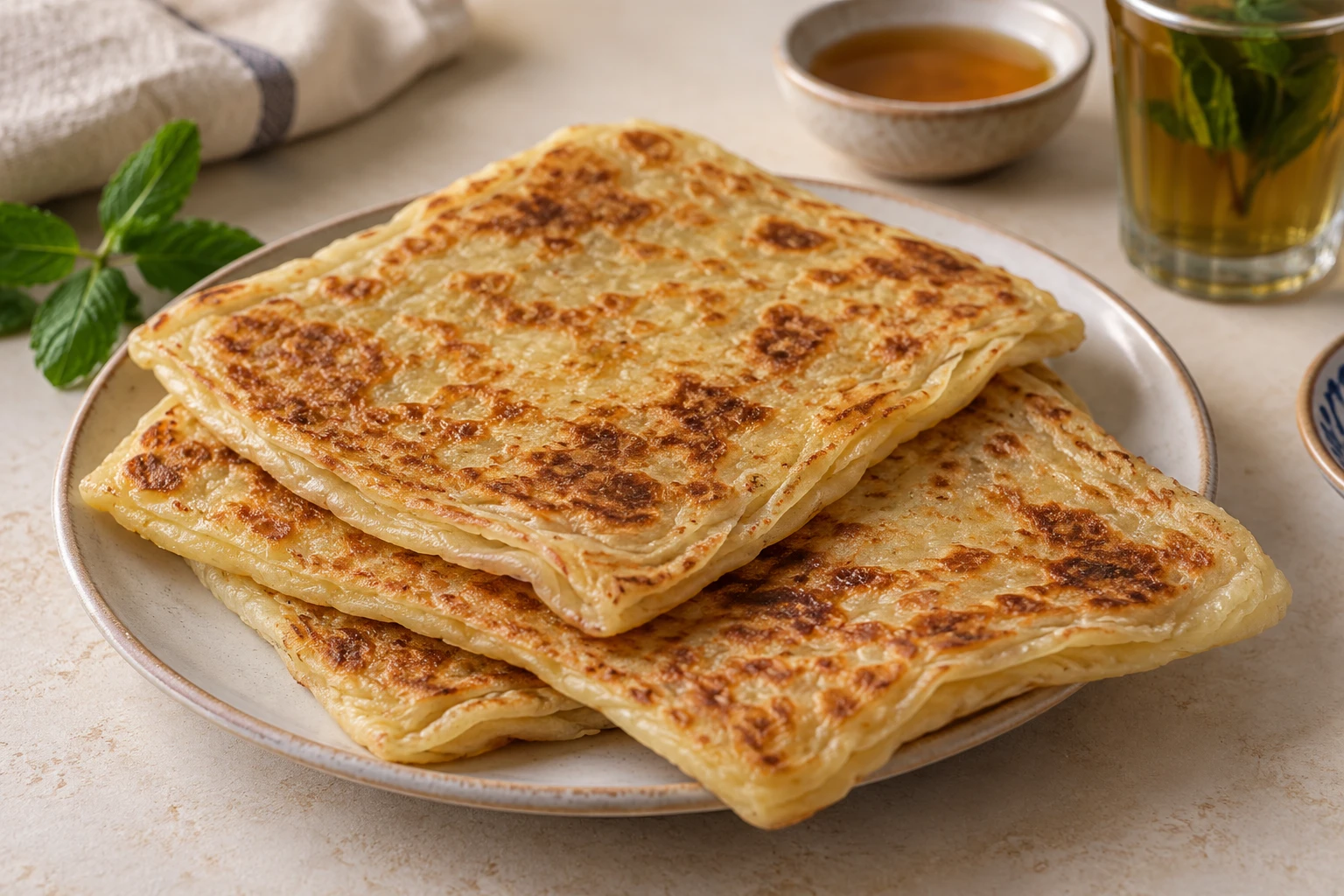
A square made from a sheet
Msemen belongs on Moroccan breakfast and tea tables, eaten plain or with sweet and savory accompaniments. The dough is handled as bread dough: kneaded, rested and stretched. Its layers come from folding that stretched sheet with fat between the folds.
A hot piece has several things happening at once. The pan-facing surface takes on browned patches; the edges catch a little crispness; the center remains pliable enough to tear. A thick dough square that browns before its middle cooks misses that balance, however attractive its outside looks.
Three useful checkpoints
- Before stretching
- Soft and elastic
- Before folding
- Almost translucent
- Before cooking
- Wide and fairly flat
Knead until the dough is smooth, then cover the divided balls so their surfaces stay supple.
Oil helps fingers glide. A thin sheet creates thin layers; folding a thick sheet only stacks thick dough.
Rest the folded square, then press it gently wider. It should enter the pan as a flatbread.
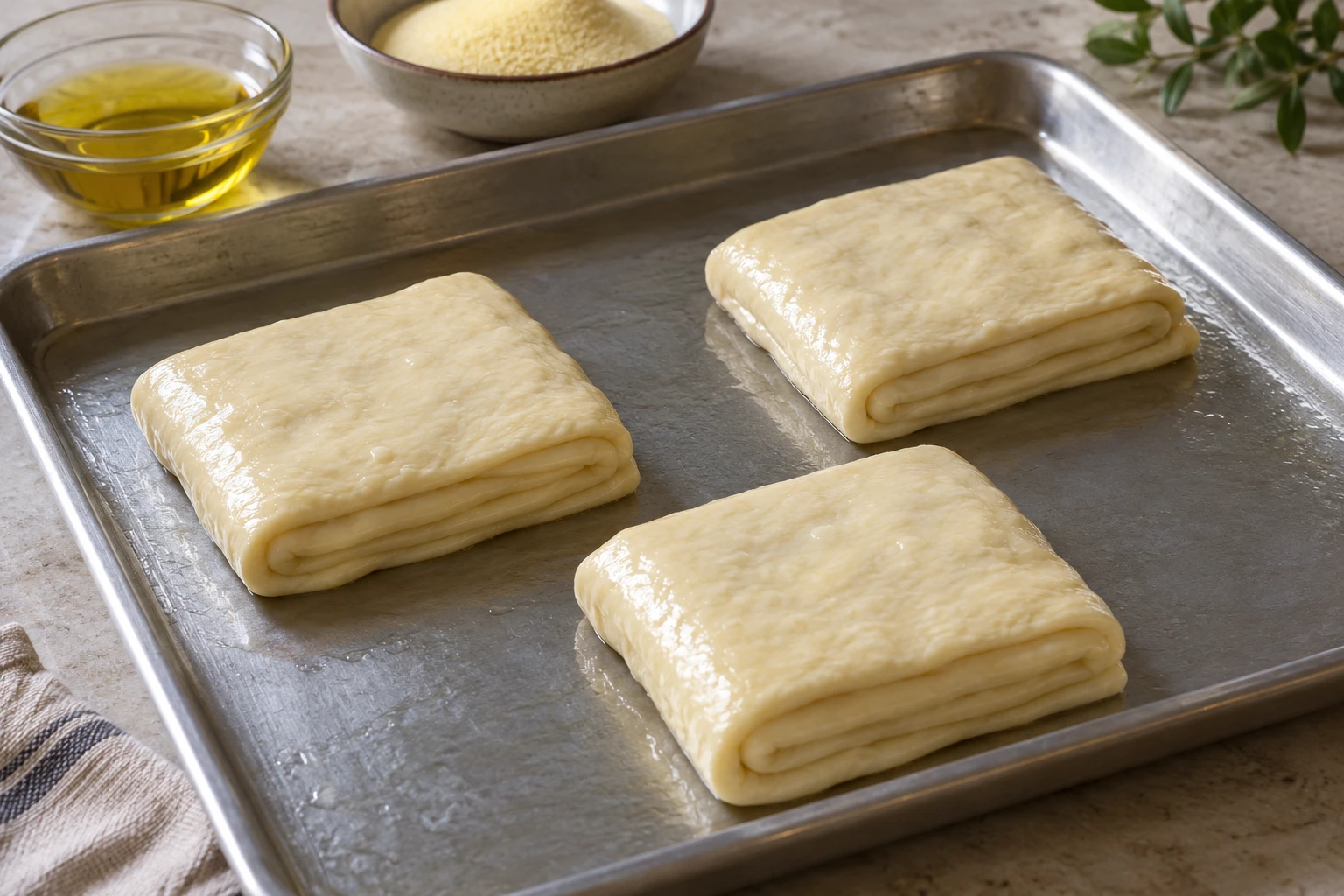
A household version
Six plain msemen
This small batch uses no yeast or baking powder. It makes six medium squares, about 14–16 cm across. Allow roughly 80 minutes for preparation including covered rests, then 25 minutes to cook in batches; these are estimates.
Ingredients
Dough
- 300 g plain all-purpose wheat flour
- 100 g extra-fine durum wheat semolina
- 5 g fine salt
- 240 ml lukewarm water, plus up to 20 ml more if needed
Folding and cooking
- 45 ml neutral vegetable oil, plus a little extra for hands or tray if needed
- 30 g unsalted butter, very soft
- 20 g extra-fine semolina for light sprinkling
Method
- 1
Make a supple dough
Mix the flour, semolina and salt; work in the water. Knead for about 10 minutes until smooth and elastic. If firm or crumbly, add the reserved water a teaspoon at a time. Divide into six smooth balls, oil lightly and cover. Rest for 30 minutes.
- 2
Stretch one ball
Lightly oil a clean work surface and your hands. Press a ball outward from its center, gently extending the edges until the sheet is nearly translucent. If it keeps shrinking back, cover it and wait another 5–10 minutes. Keep the other balls covered.
- 3
Build the square
Smear a little butter across the sheet and scatter a light pinch of semolina. Fold one side over the middle third, then the opposite side over that. Lightly butter and sprinkle the strip; fold its ends over the center in the same way. Place the square on an oiled tray. Repeat, keeping the squares covered, and let them relax for about 15 minutes.
- 4
Flatten and griddle
Heat a heavy frying pan over medium heat and wipe it with oil. Begin with the first folded square. With oiled fingers, press it to roughly 14–16 cm wide and 4–5 mm thick. Cook about 3–5 minutes total, turning several times, until both faces are golden and the center is cooked with no gummy raw dough. Lower the heat if the surface darkens too quickly.
- 5
Serve while warm
Transfer to a rack while cooking the rest. Serve warm, with honey alongside if desired. Tear a piece to check the thin interior layers; give any undercooked square more gentle pan time.
The folds are shared; formulas vary
Flour and leavening
Christine Benlafquih uses a flour-heavy mixture and a tiny amount of yeast. Nargisse Benkabbou uses equal flour and semolina without leavening. Hervé Palmieri's Rabat-inspired version puts baking powder in the folding mixture. These are choices within the dish, rather than one obligatory formula.
Plain or filled
Nadia Terry's vegetable version folds a filling inside and wraps the square in another thin sheet. That gives a different eating experience from plain msemen with a topping. Learn the plain square first; extra filling also needs room within the folds.
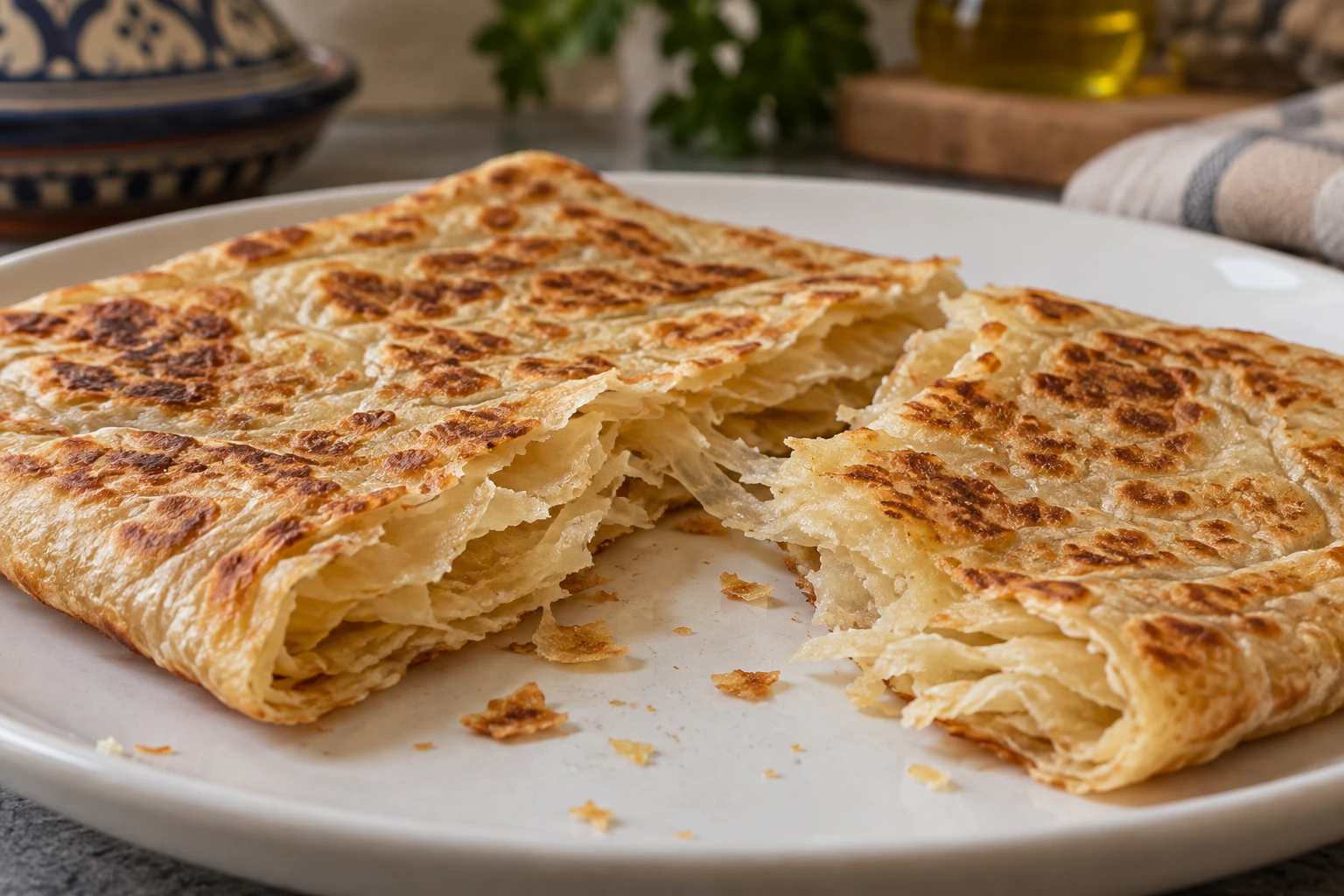
Keep the bread in view
Honey can sit beside the bread so each bite gets as much sweetness as wanted. Butter, jam or a savory accompaniment offer other directions. Try a plain corner first: it makes the difference between the toasted surface and the supple folds easier to notice.
The last useful decision is heat. Turning repeatedly gives both surfaces time on the pan without leaving one face to scorch. If a square colors too fast, reduce the heat before cooking the next. Thin stretching and patient cooking work together; a golden surface alone does not tell the whole story.
Research notes
Sources behind this article
- Christine Benlafquih — Taste of Maroc Plain msemen, letter folds, pan cooking and Moroccan breakfast or tea service.
- Nargisse Benkabbou — My Moroccan Food An unleavened equal-flour-and-semolina version, covered rests and final flattening.
- Hervé Palmieri — Hervé Cuisine Rabat class-inspired formula, extra-fine semolina, staged rests and baking powder variation.
- Nadia Terry — Royal Voluntary Service A vegetable-filled folded version with another dough sheet around the square.
Keep exploring
More stories for your table
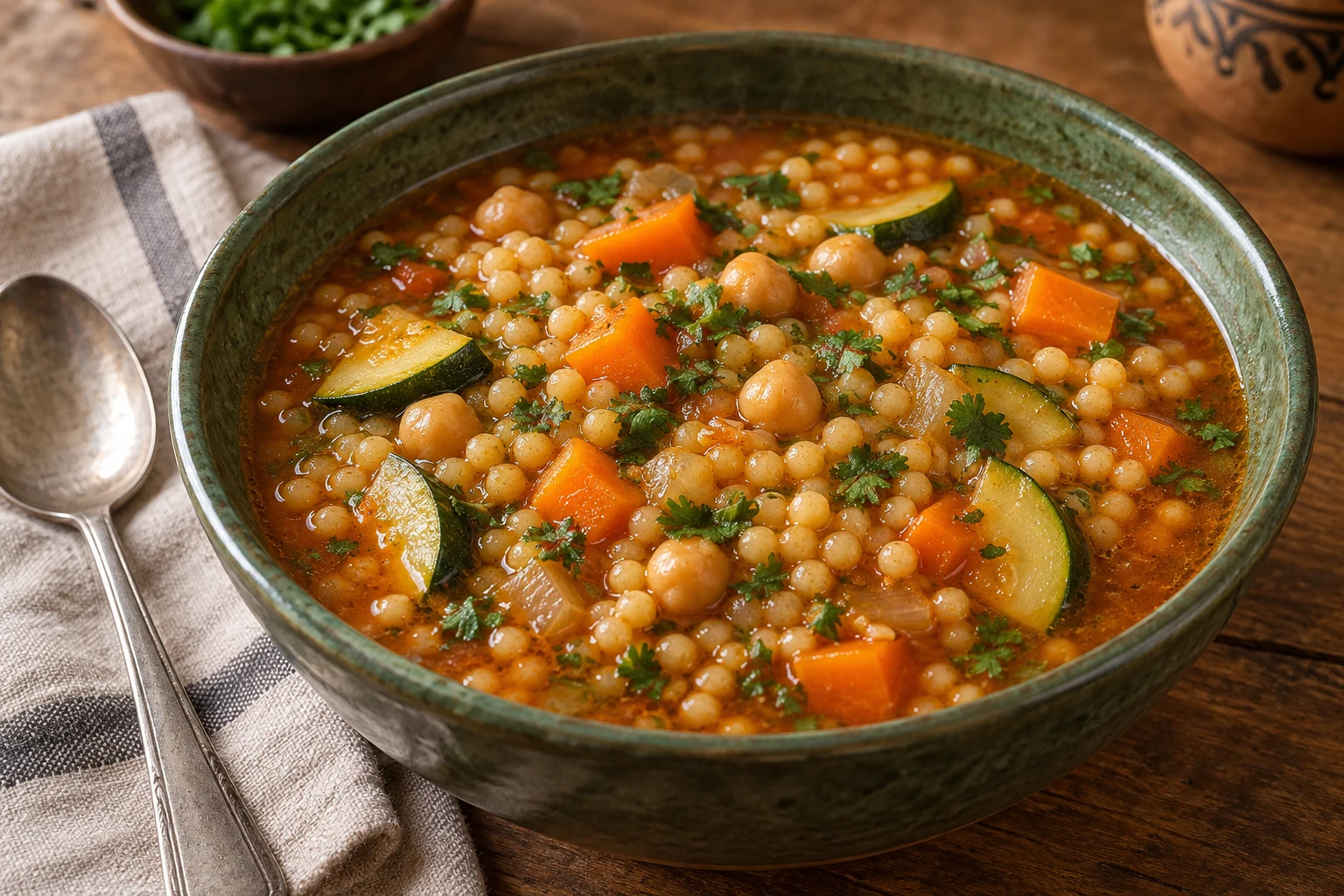
Moroccan cuisine Soups
Berkoukech: Moroccan Mhamsa Soup
A Moroccan soup built around round mhamsa pasta, with a complete vegetable-and-chickpea adaptation and advice for keeping plenty of broth.

Moroccan cuisine Avocado smoothie
Moroccan Avocado Smoothie: Blend, Taste, Then Sweeten
A two-glass avocado and milk smoothie with three separate checks: smooth blending, an easy pour and sweetness to taste. Keep fruit and nut variations distinct.
Ethiopian cuisine Fermented flatbread
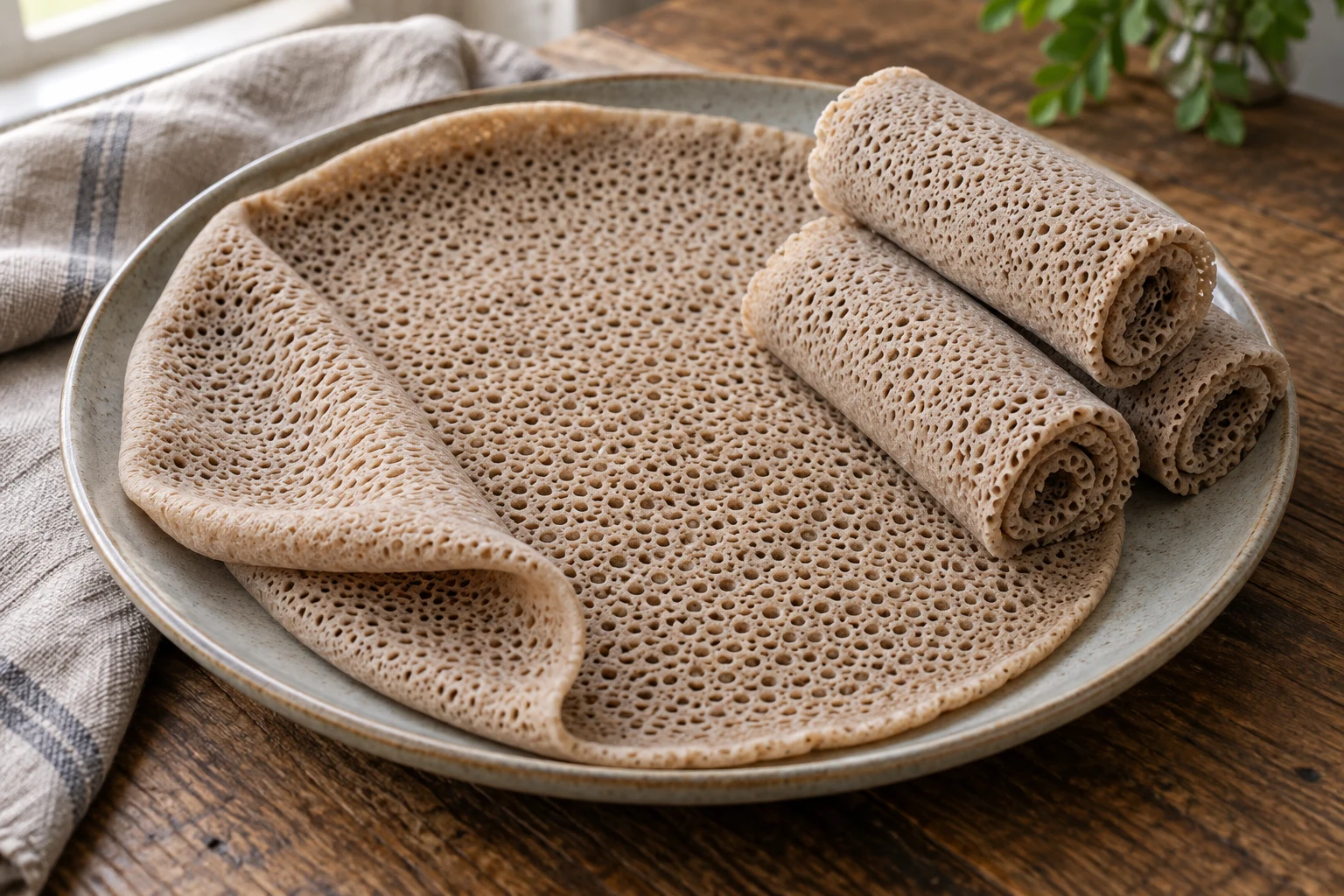
Injera: read the grain, the eyes and the soft fold
A guide to Ethiopian injera: teff colours and flour blends, the cooked batter called absit, one-sided covered cooking, and serving a soft porous bread.