
Couscous with Seven Vegetables: Save Room for the Broth
كسكس سبع خضار
The vegetables should keep their shapes. The grains should stay loose. The broth brings the platter together.
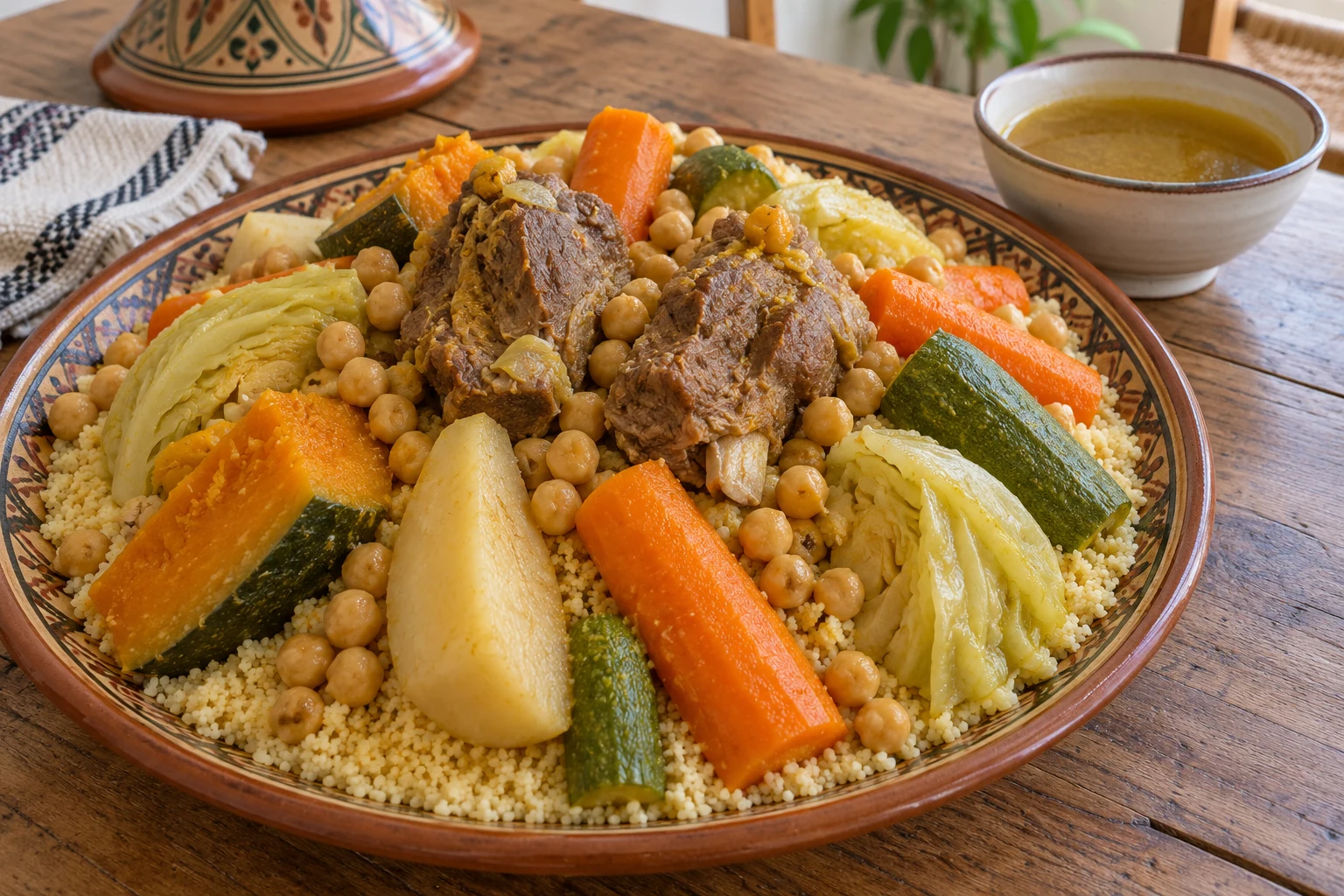
A whole meal on one platter
Couscous with seven vegetables is more than a bowl of grains decorated with whatever is left in the fridge. The vegetables cook in a seasoned broth, the grains become light enough to receive it, and the platter brings those parts together. Meat is common in the documented recipes, but a vegetable version has its own clear place.
In material shared with Growing Chefs! Ontario, Khaoula El Milouay recalls her extended family gathering for couscous after Friday prayer in Morocco. Her account describes a meal around which people assemble. That is a useful scale to keep in mind: a broad platter with a generous mix, rather than a small side salad.
Decide which grains you bought
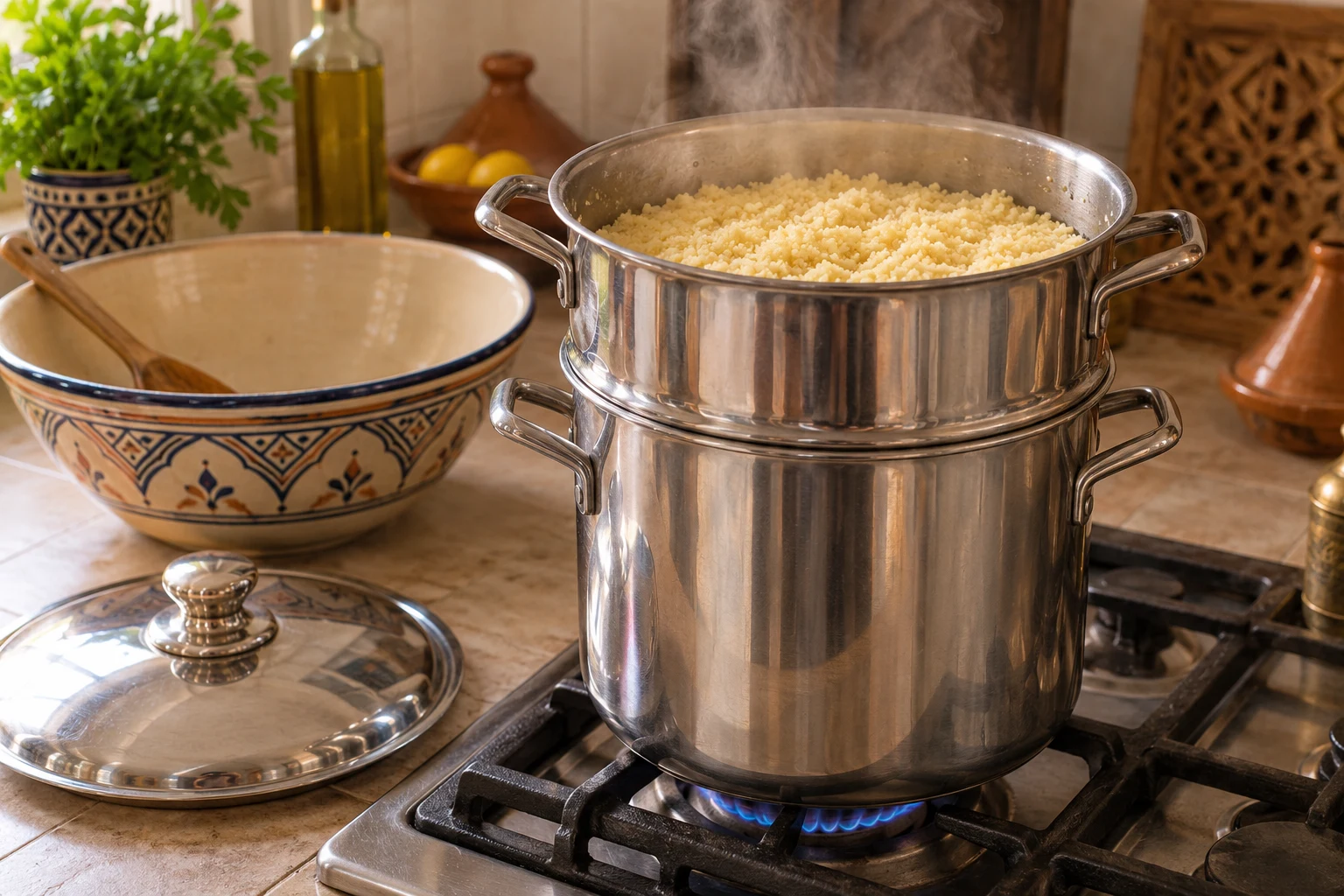
Cooking With Alia and Taste of Maroc specify non-instant couscous for their repeated steaming methods. These grains are moistened and loosened, steamed above the broth, then returned to a wide dish between passes. The process asks for a couscoussier or an appropriate fitted steamer and a place to work with the grains.
Khaoula’s Ontario adaptation instead prepares couscous in a covered bowl with hot liquid while the vegetables simmer separately. It offers a practical contrast for cooks using quick-cooking products. Check your packet before choosing a method; use its instructions for liquid and timing if you take that route. A bowl-rest method and repeated steaming are different preparations, even when both lead to a vegetable-topped meal.
Use the breaks between steaming passes
Salma’s Cuisinons en Couleurs recipe moves the steamed grains into a large vessel, lets them cool, adds a little water and loosens them before returning them to the steamer. That pause is part of the method. It gives you a chance to find compacted patches before they harden into the same lump through another pass.
Use a spoon or fork while the grains are hot, and wait until they are comfortably cool before handling them. Lift and separate rather than pressing them into a dense bed. Taste a few grains near the end: they should be tender and distinct, rather than gritty in the middle or wet enough to mash together.
Repeated steaming also creates checkpoints for the lower pot. It does not guarantee that the meat or vegetables will be ready at the exact moment the grains finish.
Let the vegetables arrive in stages
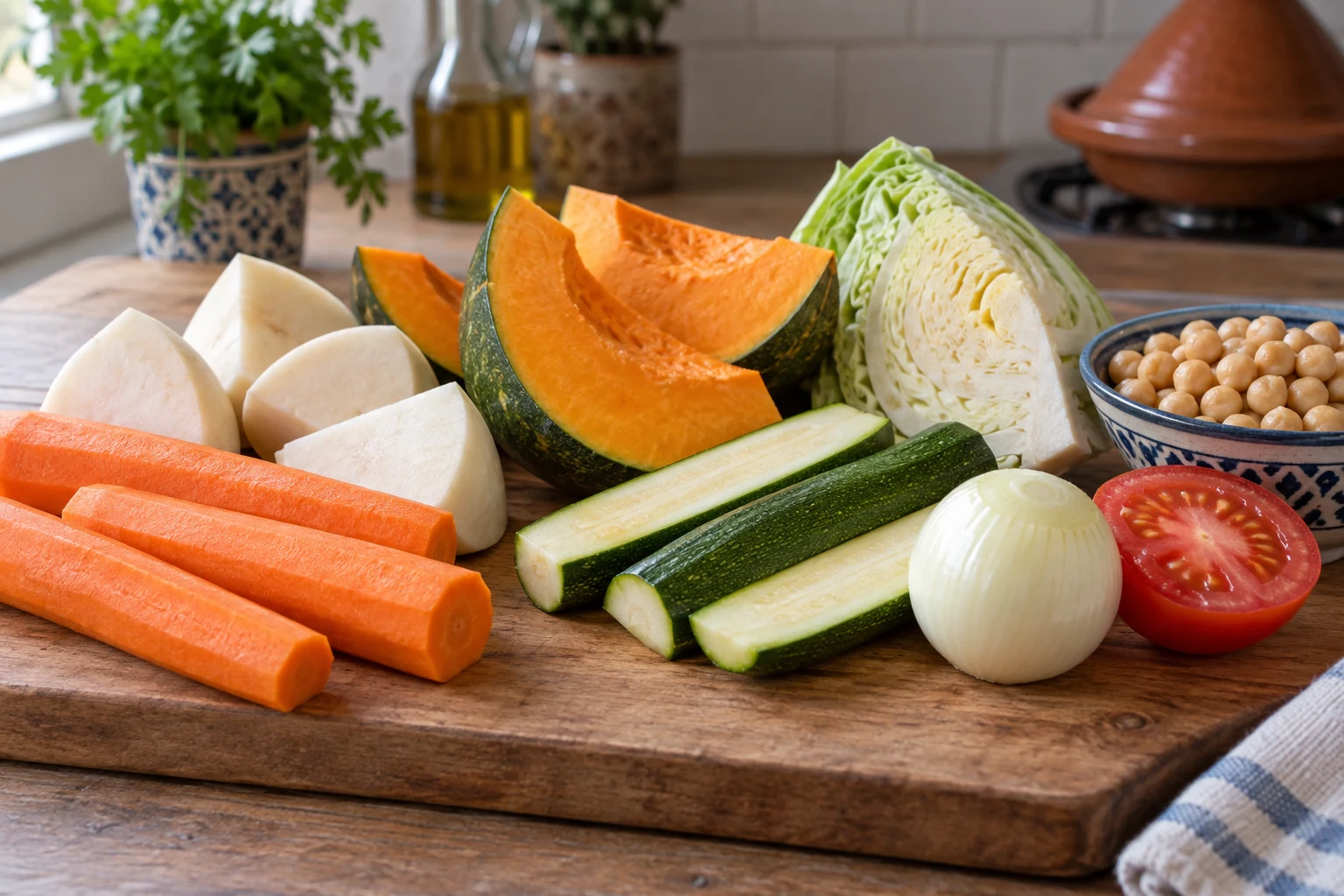
Alia gives root vegetables a head start, then adds zucchini, pumpkin and cabbage. Her recipe also removes pieces that are ready while the rest continue cooking. That is more revealing than a single cooking time: even vegetables added together may finish differently.
Keep a slotted spoon and a holding dish nearby. Test a thick piece with a knife, then lift it out carefully if it is tender enough. Return finished vegetables to warm through when the other components are ready. The aim is a platter of recognizable pieces, rather than making every vegetable dissolve to accommodate the slowest one.
Dried chickpeas need preparation and time in the pot; canned chickpeas are already cooked. Taste of Maroc adds drained canned chickpeas near the finish. Choose which kind you have before planning the sequence.
Keep broth available until the last serving
Salma arranges the meat in the center and vegetables around it, with broth either poured over or served separately. Alia also offers a bowl alongside. Start with enough broth to moisten the grains, then let diners add more. A broad platter can look abundant and still eat dry if its liquid was reduced too far or forgotten in the kitchen.
For a vegetarian meal, make the broth without meat and check stock ingredients. Butter or smen used to finish the grains adds dairy; the usual wheat couscous contains gluten. Serve the version you have made clearly, with the tender vegetables and liquid doing their share of the work.
Research notes
Sources and further reading
Three Moroccan recipe writers document repeated steaming and platter assembly. Khaoula El Milouay’s school-program contribution provides family context and a clearly different quick preparation.
- Christine Benlafquih, Taste of Maroc: Seven-vegetable couscous Flexible vegetables, non-instant grains, chickpea timing and a meatless option.
- Cooking With Alia: Couscous with seven vegetables Arabic dish name, staged vegetables, repeated steaming and extra broth alongside.
- Salma, Cuisinons en Couleurs: Meat and vegetable couscous Cooling and loosening grains between steaming passes, then arranging a shared platter.
- Khaoula El Milouay and Growing Chefs! Ontario: Moroccan couscous A firsthand family memory and school-program adaptation with covered-bowl couscous and vegetable stew.
Keep exploring
More stories for your table
Moroccan cuisine Seafood tagine
Shrimp Tagine: Give the Tomatoes a Head Start
Build a Moroccan shrimp tagine by developing the tomato sauce first, then adding shellfish. Learn chermoula choices and a complete skillet adaptation.
Moroccan cuisine Pastry
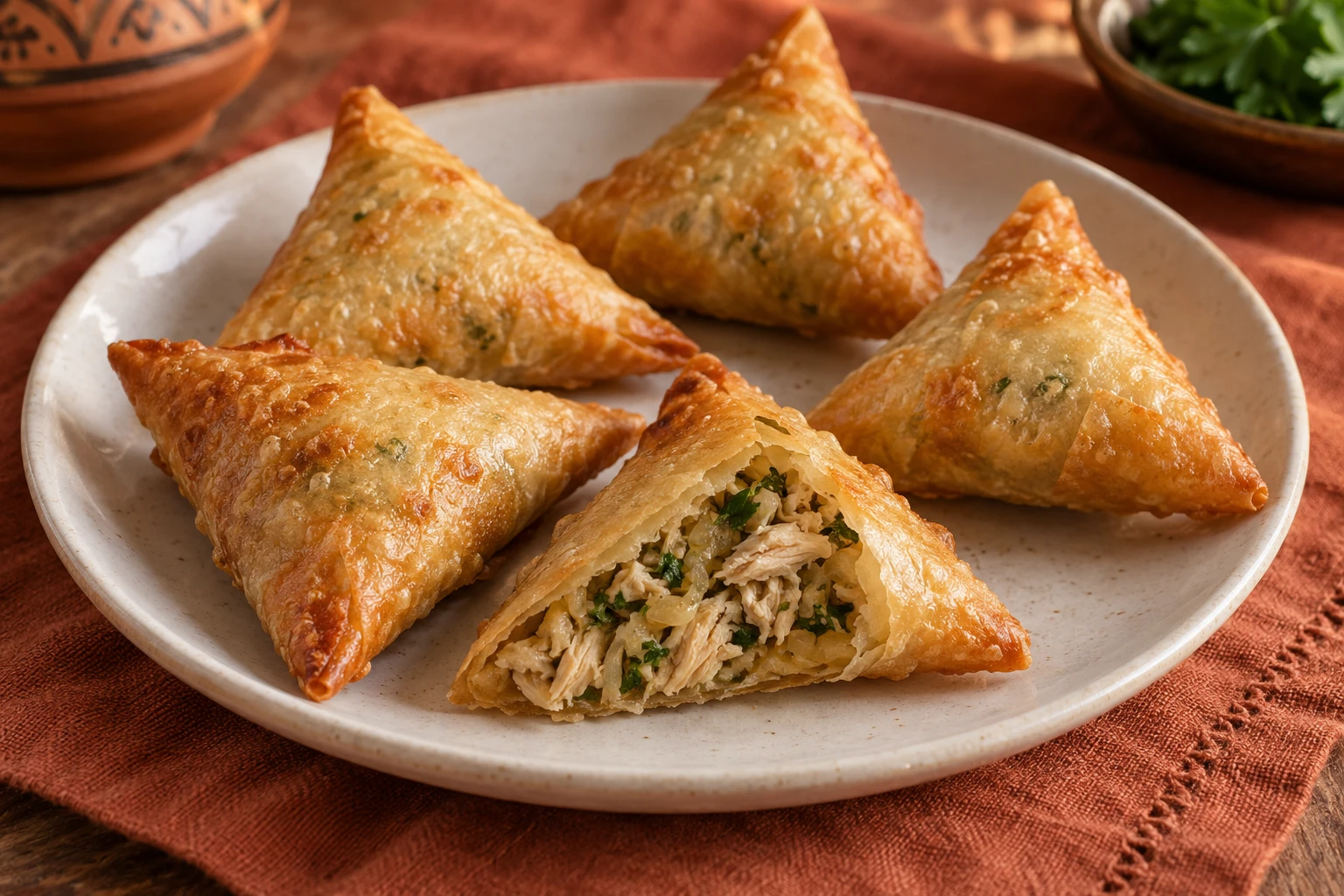
Briouats: A Small Filling, a Closed Fold
Savory Moroccan briouats depend on a compact cooked filling and a closed triangular fold. Read the wrapper and finishing method together before adapting a batch.
Moroccan cuisine Preserved Meat
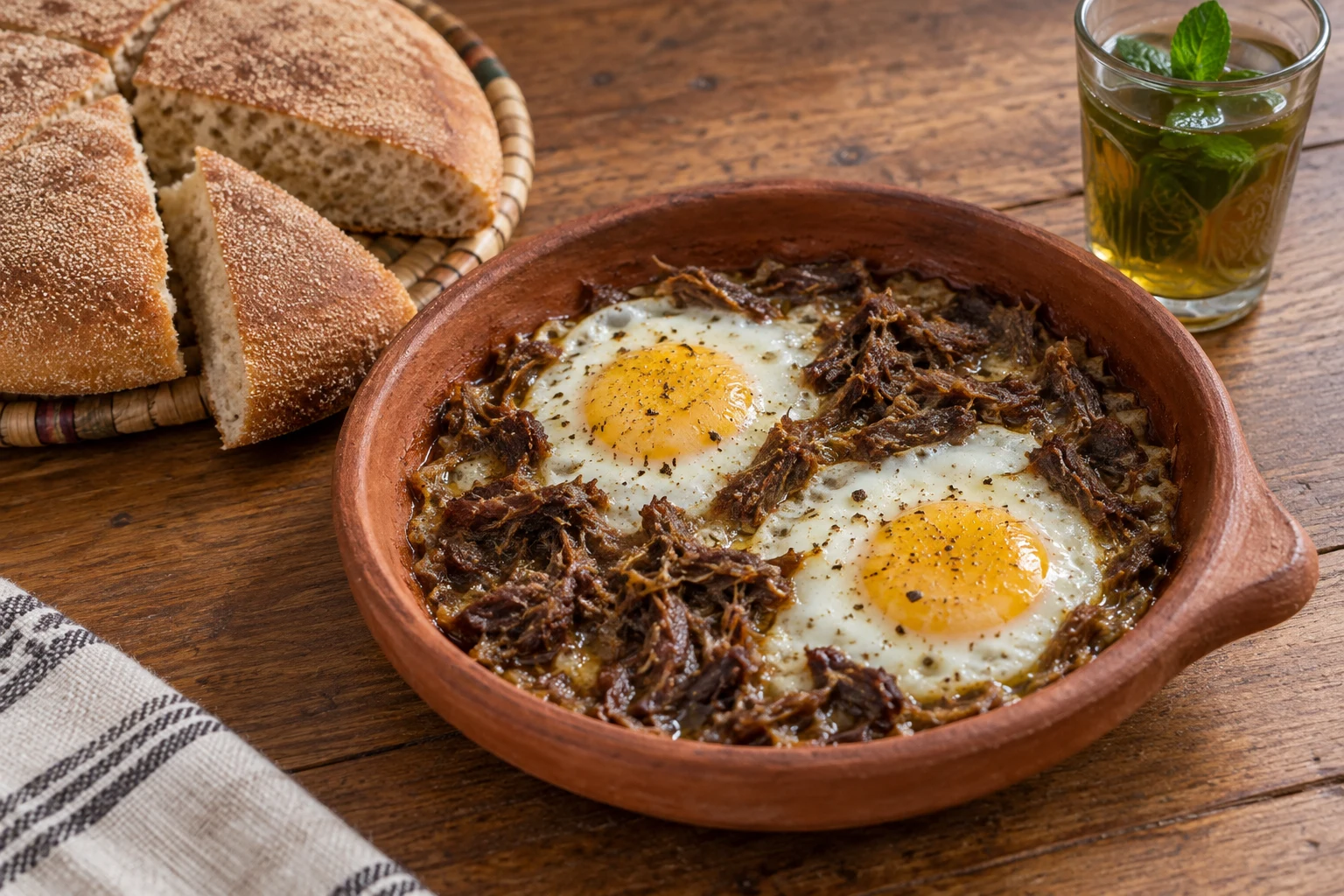
Khlii: The Meat, the Fat and the Breakfast
Moroccan khlii brings spiced meat and its cooking fat to eggs, breads and legumes. Understanding the jar helps you use it with a lighter hand.