
Pipián rojo: how toasted seeds give a red sauce its body
Pipián rojo
Understand the seed mixtures, chile toasting, grinding choices and serving options that shape Mexican pipián rojo.
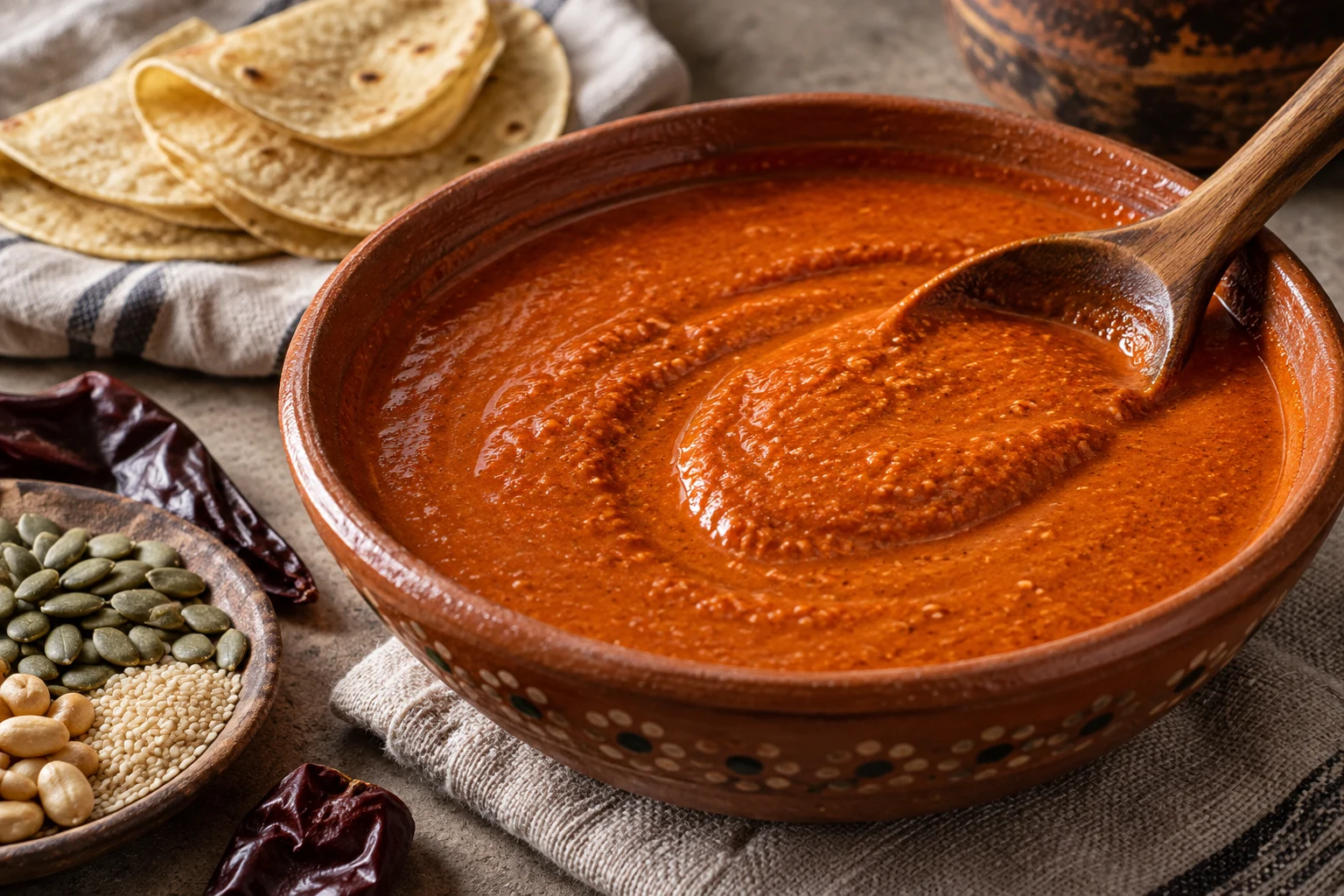
Pipián rojo is a sauce with substance. Ground seeds or nuts support the red dried-chile mixture, giving it enough body to settle over food instead of running away like a thin broth. A spoonful should bring the sauce's texture into the same bite as the meat or vegetable beneath it.
The name gives a direction, not a single fixed ingredient list. Ricardo Muñoz Zurita's Larousse recipe combines pumpkin seeds, peanuts and sesame with red chiles. Mely Martínez uses that same three-part seed-and-nut family in her own preparation. Hank Shaw takes another route with pine nuts and sesame. Read the chosen recipe before buying a generic bag of 'pipián ingredients': the blend is part of its character.
Look beyond the red color
Red chiles and ground seeds do different work in the sauce. Larousse distinguishes red pipián from green and beige versions through the ingredients used to build each one. That helps explain why a red bowl is not simply green pipián with food coloring, or a tomato salsa made thicker.
The word 'creamy' can describe the texture without identifying an added dairy ingredient. Check the actual formula. These cited preparations build that texture through their seed mixtures, liquid and grinding; their serving fats and stocks vary too. For dietary choices, knowing whether the cook used lard, meat broth, vegetable stock or oil matters as much as the visible topping.
Four decisions before the sauce reaches the plate
Use these checks alongside one complete recipe from the sources. They explain method choices rather than supply a combined ingredient formula.
- 01
Toast by ingredient
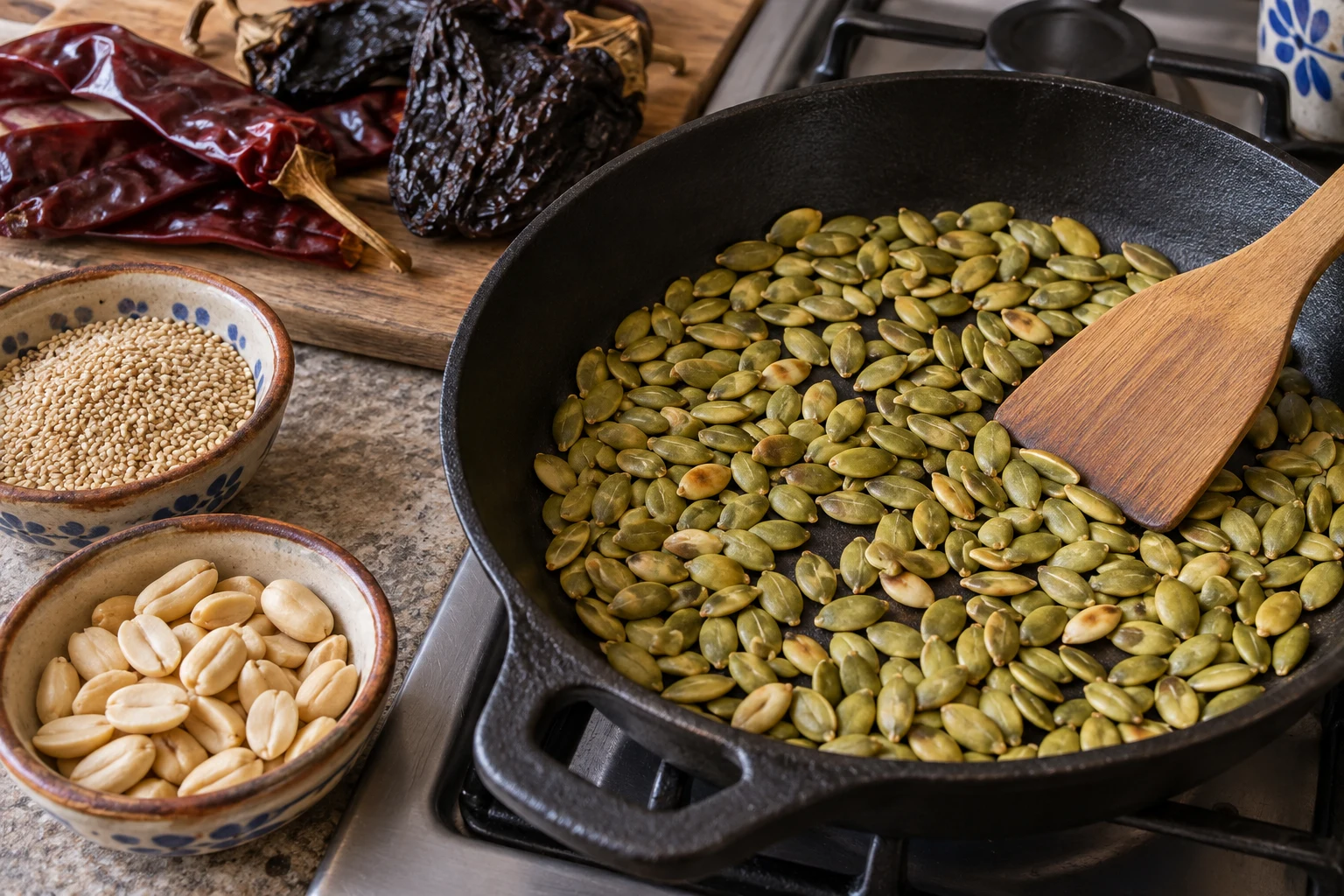
Mely toasts peanuts, pumpkin seeds and sesame in separate turns. This lets each batch leave the pan when ready. Keep seeds moving and remove them before they scorch; a darker burn is not an extra stage of flavor-building.
- 02
Distinguish toast from char
Hank deliberately treats dried chiles differently from onion, tomato and garlic. His chiles get brief aromatic toasting, while the vegetables get stronger blackening. Copying the vegetable's appearance onto the chiles would miss that distinction.
- 03
Choose the grinding target
Larousse calls for a fine, smooth blend that does not need straining. Mike Hultquist offers reprocessing and straining for a smoother finish. Irene starts by grinding seeds with liquid before adding softened peppers and roasted aromatics. Follow the chosen sequence and let heated ingredients cool before blending.
- 04
Control the final body
Add the recipe's liquid gradually when adjusting a thick sauce. Mely uses broth or water when hers becomes too dense; Mike also loosens with stock. Judge the texture at serving temperature, after the sauce's final cooking, rather than assuming the blender paste is the finished consistency.
Whole spices and ground spices need different handling
Irene's sunchoke version makes a specific adjustment for ground spices: she blooms them in the final pan's oil rather than attempting to dry-roast and collect fine powders. That is a useful reason to read instructions as well as an ingredient list. Swapping ground cinnamon for a piece of cinnamon changes the handling, even if the flavor sounds similar.
Different formulas also build body differently. Mike includes a corn tortilla in his cookbook-informed adaptation; the other recipes discussed here do not require that same addition. A thicker result is therefore not evidence that every pipián needs bread or tortilla. Adjust within the preparation you chose before borrowing another cook's thickener.
Give the sauce enough room
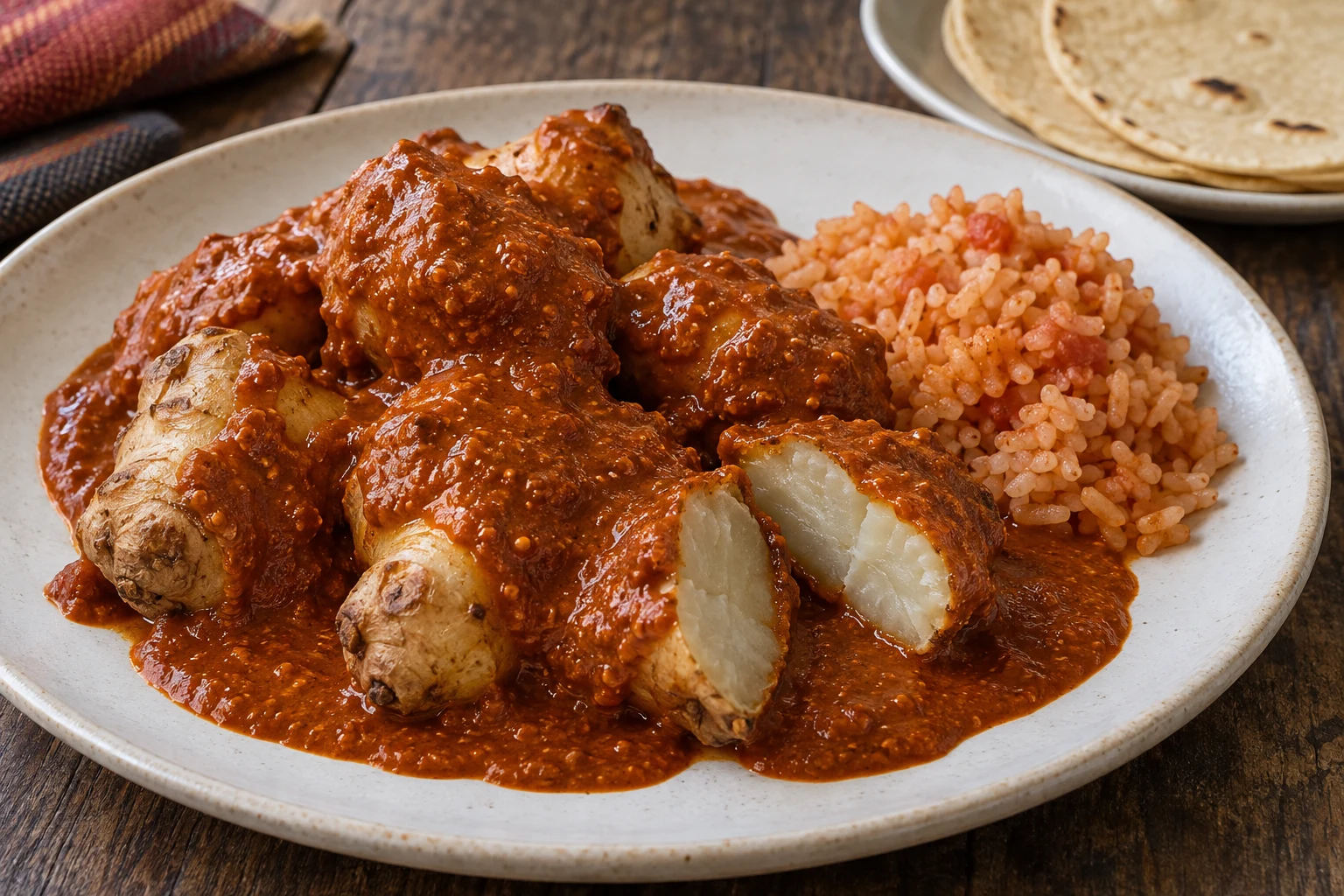
Larousse serves the cooked meat with plenty of sauce, making pipián a substantial part of the plate. Irene demonstrates a contemporary meatless option with roasted sunchokes, using water and omitting pork. Rice and warm corn tortillas appear alongside both her vegetable version and Mely's pork preparation.
Ask about peanuts, sesame and any tree nuts when ordering. A pumpkin-seed description does not rule out the other ingredients used in these recipes. For a vegetarian serving, confirm the cooking fat and liquid as well as the absence of meat. The red sauce itself cannot answer those questions by sight.
Research notes
Sources behind this article
- Mely Martínez · Mexico In My Kitchen Original home preparation with three seed-and-nut components, separate toasting and liquid adjustment.
- Ricardo Muñoz Zurita · Larousse Cocina Primary publisher recipe from Los clásicos de la cocina mexicana, including seed mixtures, fine grinding and generous sauce service.
- Hank Shaw · Hunter Angler Gardener Cook Original pine-nut and sesame variation with a clear distinction between toasting chiles and charring aromatics.
- Irene · My Slice of Mexico Documented original adjustments for ground spices and a roasted-sunchoke vegetable serving.
- Mike Hultquist · Chili Pepper Madness The author's cookbook-informed adaptation offers a tortilla thickener, optional straining and stock adjustment.
Keep exploring
More stories for your table
Mexican cuisine Noodle soup
Sopa de Fideo: Have the Tomato Ready Before the Noodles Toast
A brothy Mexican sopa de fideo starts with short wheat noodles lightly toasted in oil. Prepare the tomato base first, then make this four-serving soup.

Mexican cuisine Corn soup
Pozole: Follow the Corn, Then the Broth
Explore the corn at the heart of Mexican pozole, the different methods behind white, red and green broths, and the seasonings that finish each bowl.
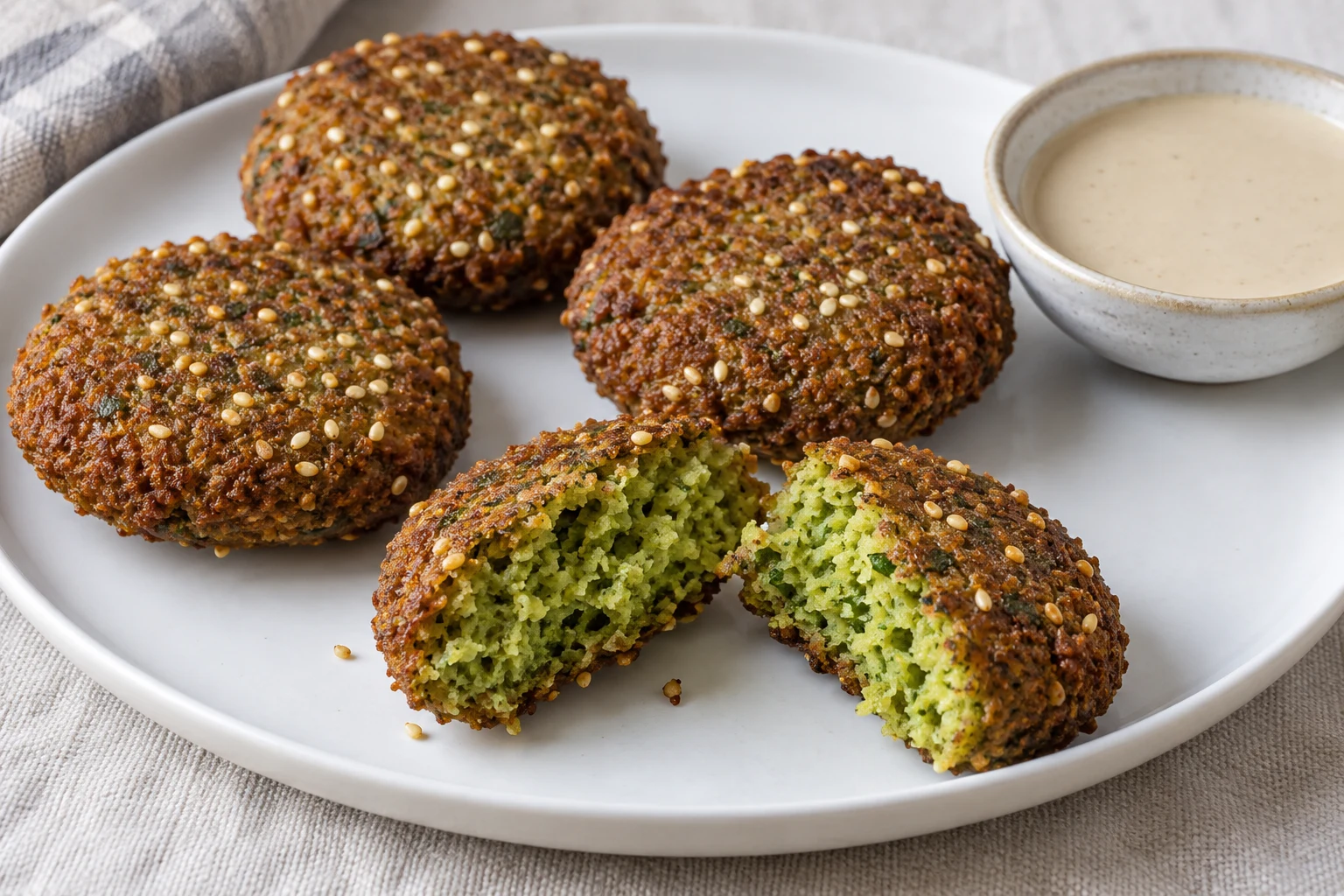
Egyptian cuisine Fava bean fritters
Ta’ameya: fava beans and herbs beneath a fried crust
Read Egyptian ta’ameya through its fava beans, green herbs and fried crust, with named recipe differences and a flatbread serving that keeps the fritter visible.