
Sopa de Fideo: Have the Tomato Ready Before the Noodles Toast
Sopa de fideo
The dry noodles turn golden quickly. A blended tomato mixture waiting beside the stove lets you move straight from that brief stage into the soup.
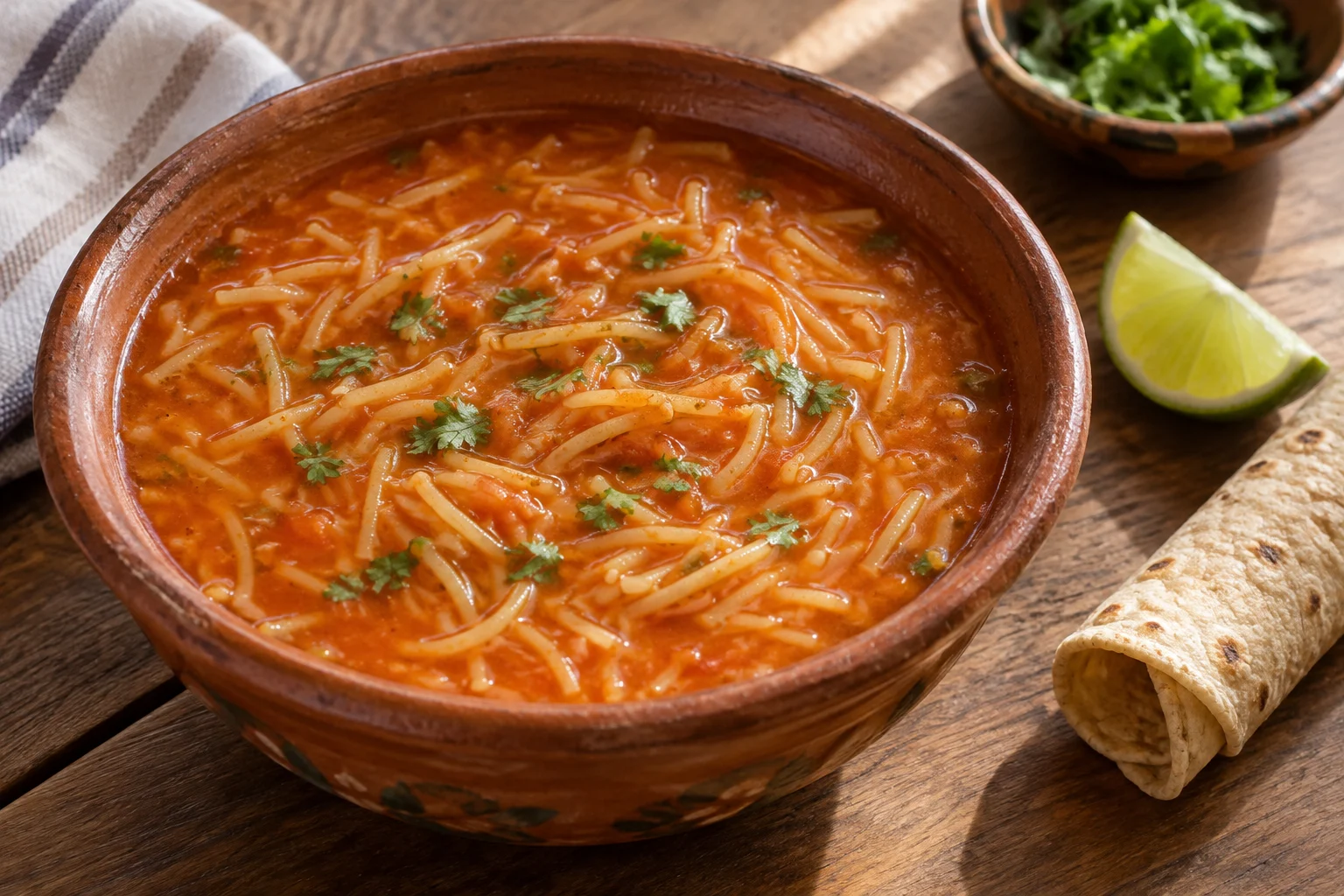
A spoonful of home cooking
Small noodles, plenty of broth
Sopa de fideo is a familiar Mexican tomato-broth soup built around thin wheat pasta. Mely Martínez describes it at the midday home meal and in small family restaurants called fondas. The noodles are often sold already cut short; that size matters when the utensil is a soup spoon. Long strands can be broken before cooking.
This article makes the brothy version, also called sopa aguada or sopa caldosa. Sopa seca de fideo uses a different final balance, with much less free liquid. Decide which result you want before reaching for the pasta packet. Here, a serving should carry tender noodles and tomato broth together.
What to have beside the stove
- The pasta
- Short wheat fideo
- The tomato
- Blended and waiting
- The endpoint
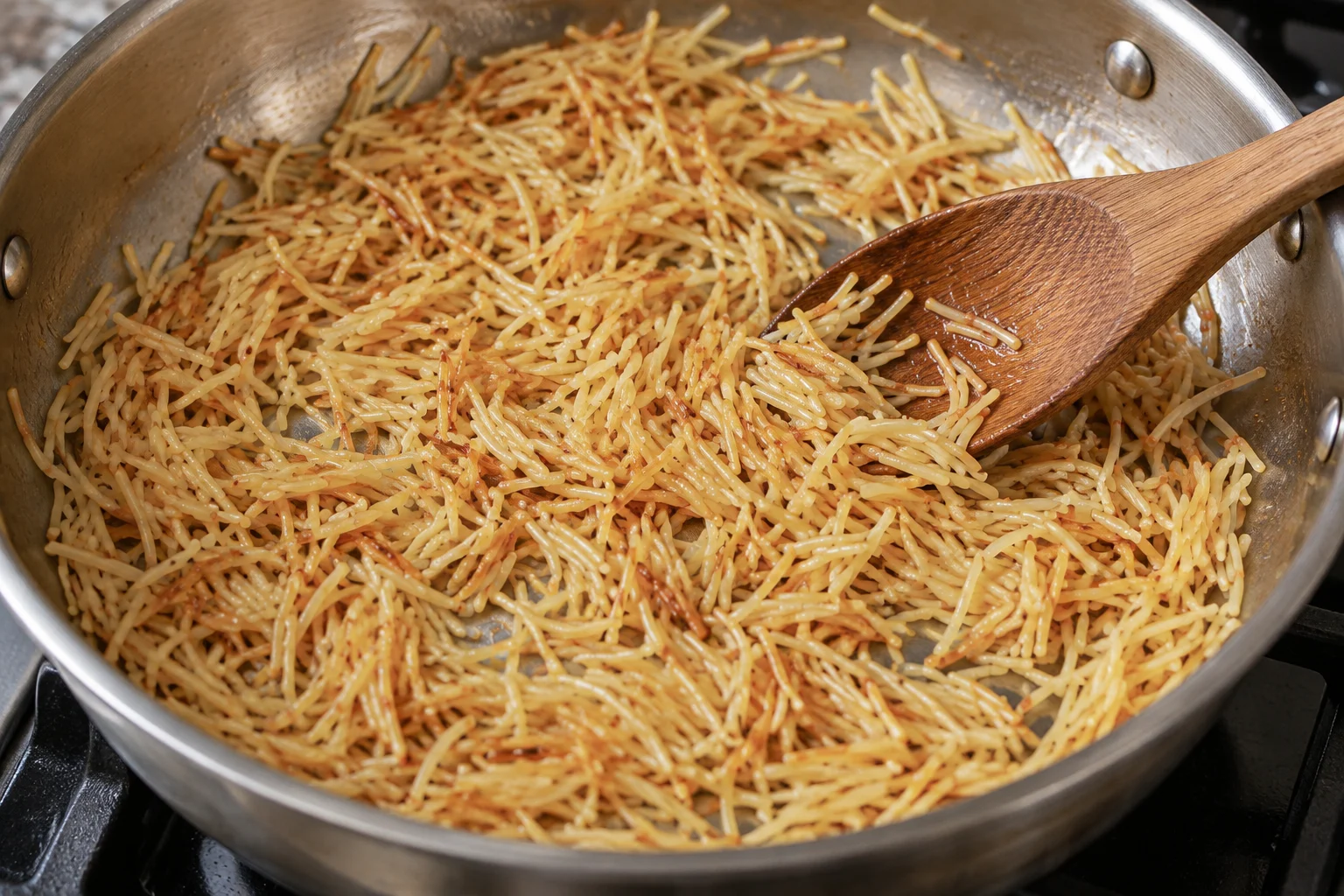
- Lightly golden
Use fine vermicelli or angel hair broken into pieces roughly 2–3 cm long if necessary.
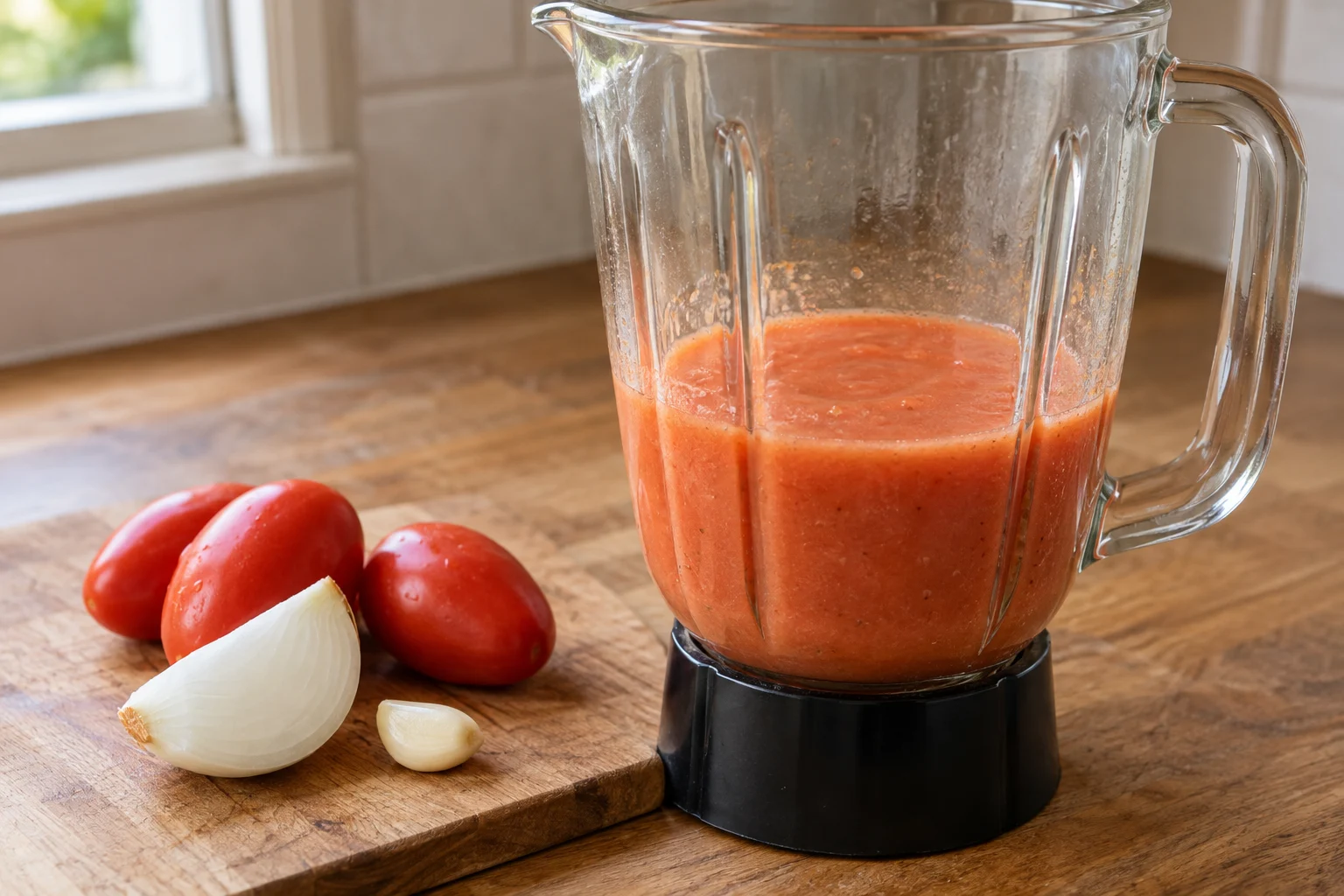
Tomato, onion and garlic should be smooth before the oil is heated.
Watch and stir the noodles; browning is a short stage, not a dark crust to develop.
Two preparations that keep the sequence simple
Blend first; then watch the dry pasta as it changes color. The pictures illustrate separate stages, before the broth goes in.
The recipes agree on the order, with room for choice
The four original Mexican author recipes consulted all brown the pasta in oil before adding tomato and the remaining liquid. Their seasonings vary. Yvette Marquez-Sharpnack includes cumin, cilantro and bouillon; Alejandra Graf offers water or vegetable broth. None of those additions has to become a requirement for every household version.
Straining is another choice. Isabel Orozco-Moore strains her blended tomato mixture; Martínez describes it as a matter of preference. For the simple recipe below, blend thoroughly and keep the mixture unstrained. If you prefer a very smooth broth, pass it through a fine sieve before starting the noodles. Have it ready either way: the pot needs your attention once toasting begins.
Four soup bowls
Simple brothy sopa de fideo
A vegetable-broth version based on the shared sequence in the original recipes. Allow about 10 minutes to prepare and 20 to cook; pasta thickness determines the final simmer.
Ingredients
For the soup
- 200 g short wheat fideo noodles, or fine wheat vermicelli broken into 2–3 cm lengths
- 300 g ripe Roma tomatoes, quartered
- 75 g white onion, cut into pieces
- 2 cloves garlic, peeled
- 2 tablespoons neutral vegetable oil, about 30 ml
- 1.5 litres vegetable broth, preferably lightly salted, plus a little extra if needed
- To taste salt and ground black pepper
Optional finishes
- Chopped cilantro, lime wedges and warm corn tortillas
- Diced avocado or a little crumbled queso fresco, if desired
Method
- 1
Blend before heating the pot
Blend the tomatoes, onion and garlic with 150 ml of the measured broth until smooth. Set the mixture beside the stove. Keep the remaining 1.35 litres of broth ready. If straining, do it now rather than while the pasta is browning.
- 2
Toast the short noodles
Warm the oil in a roomy pot over medium heat. Add the dry fideos and stir frequently for about 3–4 minutes, until some noodles turn lightly golden. Reduce the heat if they color rapidly. Do not wait for all the pasta to turn dark brown.
- 3
Cook the tomato, then add broth
Lower the heat and carefully pour in the tomato mixture; hot oil can splatter. Stir for 3–5 minutes as the mixture cooks. Add the remaining broth, bring to a simmer, then reduce the heat to maintain gentle bubbling.
- 4
Stop when the pasta is tender
Simmer for about 8–10 minutes, stirring occasionally and checking the noodle texture near the end. Follow the pasta’s thickness rather than the clock alone. Add a little extra hot broth if needed to retain a clearly soupy consistency. Taste before adding salt and pepper.
- 5
Ladle and finish
Divide between four bowls, distributing noodles and broth together. Add cilantro or a squeeze of lime as desired, with tortillas alongside. Avocado and queso fresco are optional; the cheese adds dairy.
Keep the last ladle as brothy as the first
Graf notes that the texture changes as the noodles continue absorbing liquid. Serve soon after they become tender rather than leaving the pot simmering while arranging the table. A little additional hot broth can restore the balance; more cooking cannot make an over-soft noodle firm again.
Set optional finishes on the table so each bowl can stay simple or take a little lime, avocado or cheese. Begin with one small addition and taste. The lightly toasted pasta and tomato broth already provide the main character of the soup.
Research notes
Original recipes consulted
Four Mexican cookbook authors provide the soup context, shared cooking sequence and documented household variations. The recipe here is an editorial adaptation, not a claim of kitchen testing.
- Mely Martínez — Sopa de Fideo Mexicana Original recipe explains short spoon-sized fideos, fonda and home-meal context, light toasting and optional straining.
- Yvette Marquez-Sharpnack — Sopa de Fideo, Muy Bueno Original family recipe distinguishes brothy soup from fideo seco and emphasizes toasted pasta, variable seasoning and checking pasta thickness.
- Alejandra Graf — Sopa de fideo, Piloncillo & Vainilla Original family recipe describes close attention during browning, broth or water options and continuing liquid absorption.
- Isabel Orozco-Moore — Sopa de Fideo, Isabel Eats Original recipe uses a strained tomato-onion-garlic base and lightly toasted short wheat noodles; documents optional seasonings and finishes.
Keep exploring
More stories for your table

Mexican cuisine Corn soup
Pozole: Follow the Corn, Then the Broth
Explore the corn at the heart of Mexican pozole, the different methods behind white, red and green broths, and the seasonings that finish each bowl.
Nepalese cuisine Fermented vegetables
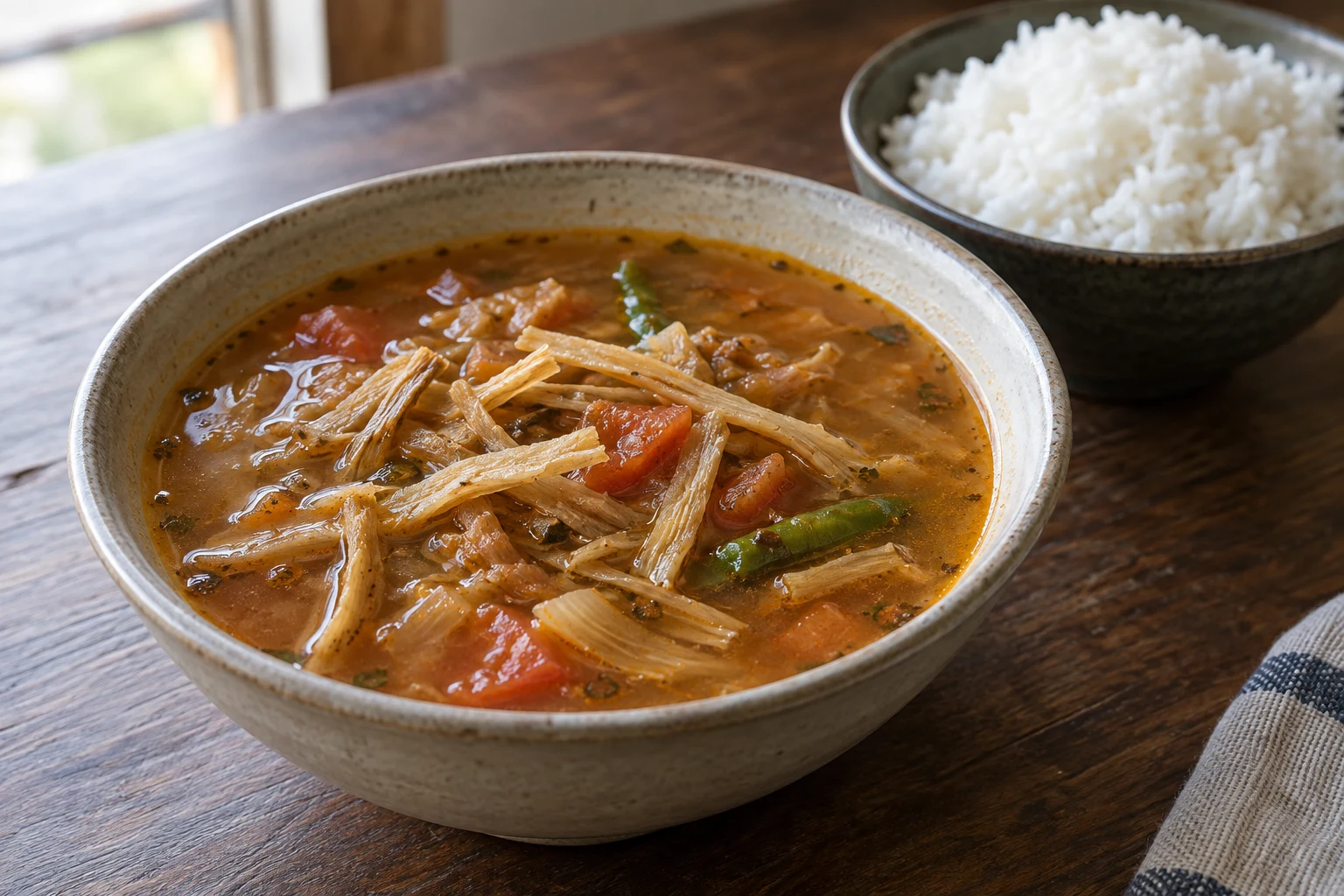
Sinki: The Radish Root Behind the Sour Broth
Fermented radish root gives sinki its sour character. Learn how it differs from leafy gundruk, why drying matters, and how prepared sinki becomes soup.
Japanese cuisine Wheat noodles
Udon: choose the serving before the topping
Hot soup and chilled dipping reveal different sides of udon. Read regional styles, noodle handling and sauce choices before choosing a topping.