
Man’oushe: From Za’atar Paste to Breakfast
منقوشة زعتر
Za’atar man’oushe brings a fragrant topping and a warm, flexible bread to the Lebanese breakfast table. Its simple appearance conceals several choices: how to mix the topping, where to put the heat, and when to add the cool accompaniments.
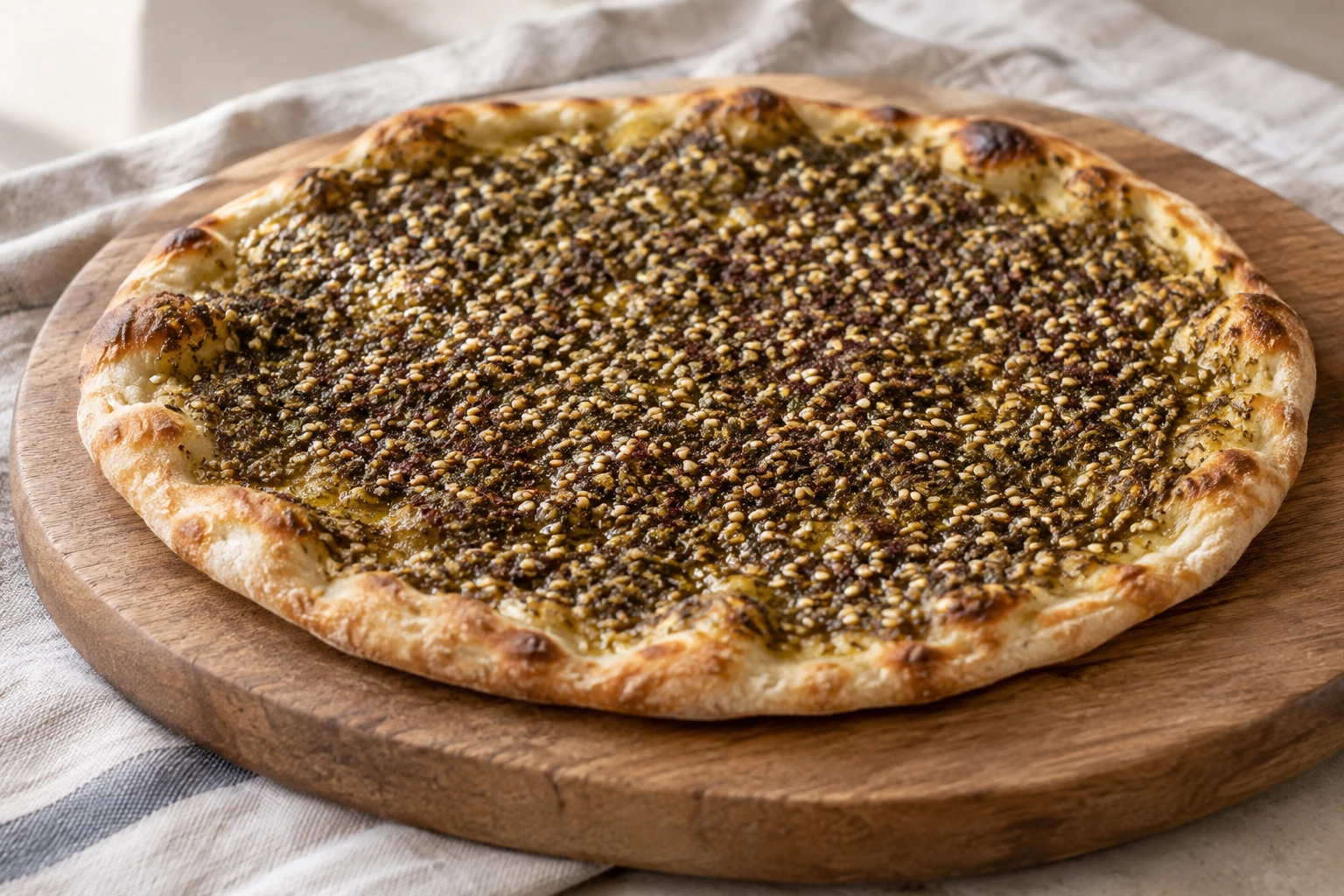
A bread made to be eaten warm
A man’oushe can arrive open on a plate or folded for carrying. For the za’atar version, the essential relationship is bread beneath an oil-bound herb topping. The rim may blister and brown while the centre stays flexible enough to bend. It is that combination, rather than a tall loaf or a pocket waiting to be filled, that matters here.
Lebanese cookbook author Maureen Abood describes both street-corner bakery service and breads eaten in El Mtein, where tomatoes, cucumbers and mint accompanied a wider range of toppings. Her account gives the bread a place in daily eating without requiring an invention legend. Za’atar is one important version of man’oushe, not the name of every topping.
Read the topping as a mixture
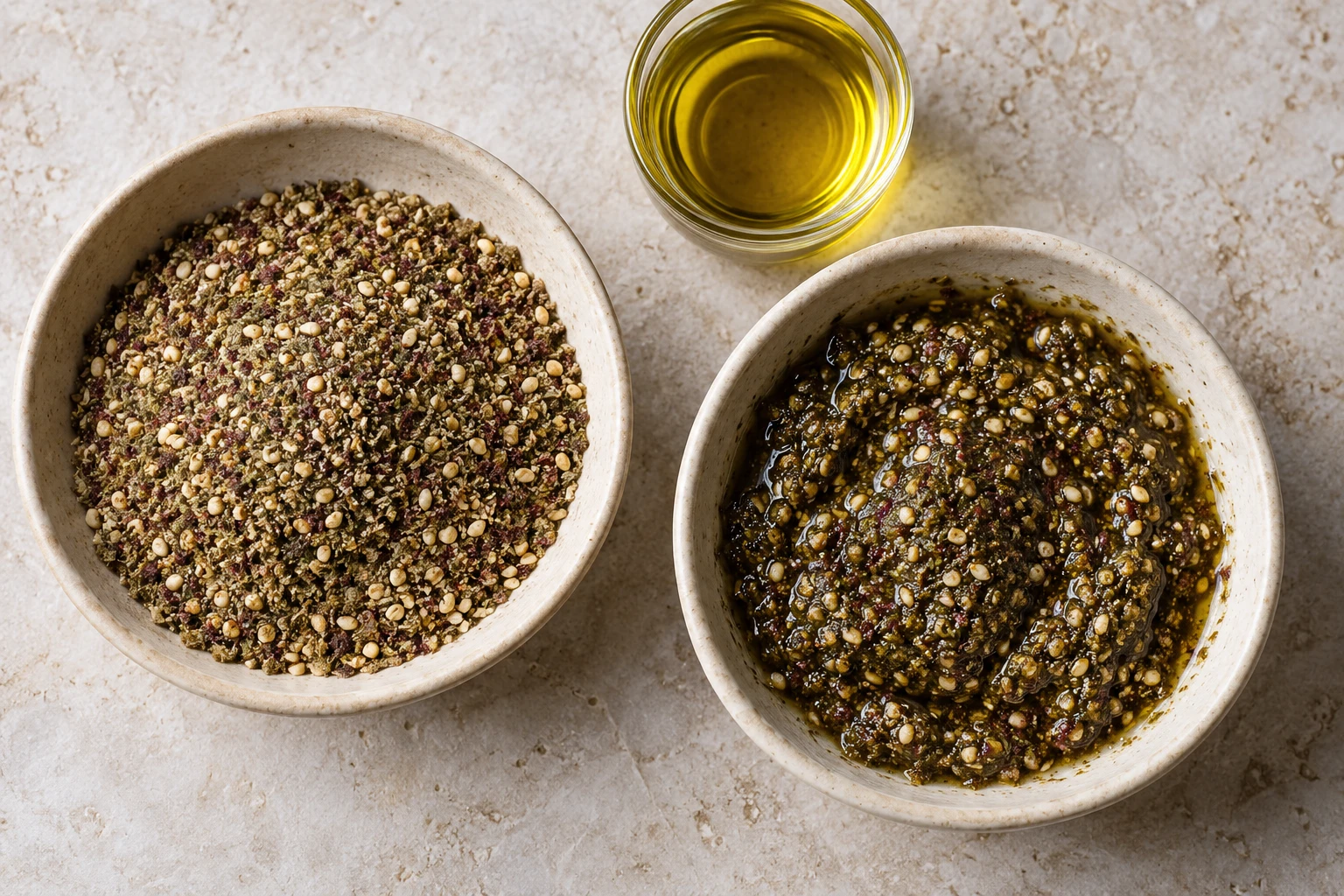
- Herbs
- The aromatic base
- Sumac
- A tart component
- Sesame
- Texture in the spread
- Olive oil
- Turns seasoning into a paste
The sources describe dried thyme or related herb blends. A purchased za’atar blend is a mixture, so read its ingredients rather than assuming a universal formula.
Sumac supplies the tang in the herb blend. It is distinct from the sesame seeds and need not dominate the colour of the finished bread.
Toasted sesame seeds bring a visible seed texture. They also make sesame an allergen to check before serving.
Mixing the blend with oil gives an even spread. Some blends already contain salt; King Arthur’s recipe makes extra salt conditional on that fact.
Two published methods, two sequences
A topping and a bread identity do not make every home method interchangeable. These named recipes put the za’atar on at different moments.
Hot-surface baking
Maureen Abood’s recipe published by King Arthur starts with a yeasted dough. It preheats a steel, stone or heavy inverted tray, rolls the bread thin, pricks it, then spreads the za’atar mixture before baking. The bread and topping pass through the short bake together.
- Yeasted dough
- Topping before baking
- Preheated surface beneath the bread
Saveur’s skillet version
Saveur’s Fouad Kassab recipe uses a flour-and-water dough with oil and salt, without yeast. It cooks the bread in an oiled skillet, turns it, then spreads on the za’atar mixture after cooking. This is a documented home method with its own sequence, rather than a substitute instruction inside the oven formula.
- No yeast in this formula
- Bread turned in a skillet
- Topping after cooking
What to watch in an oven version
These are technique cues from the cited recipes, not a new combined formula. Choose one complete recipe for its quantities, temperatures and timing.
- 01
Give the baking surface time to heat
Abood’s earlier recipe uses a baking stone or an inverted heavy sheet pan; the later King Arthur version also offers steel. Preheat the surface with the oven according to the recipe. Sliding dough onto hot material changes the bake compared with starting on a cold tray.
- 02
Let the dough relax when it resists
Sylvia Fountaine’s method rests portions before rolling and pauses again when dough springs back. She suggests baking a first bread to decide whether the remaining pieces should be thicker or thinner. A small trial is useful when your goal is a supple fold rather than a crisp snack.
- 03
Spread the mixture, then judge the bread
For a version topped before baking, mix the oil and za’atar together and distribute the mixture across the rolled surface, retaining the bare rim specified by the recipe. Look for the bread’s prescribed golden edges instead of trying to make a dark herb topping turn the colour of plain dough.
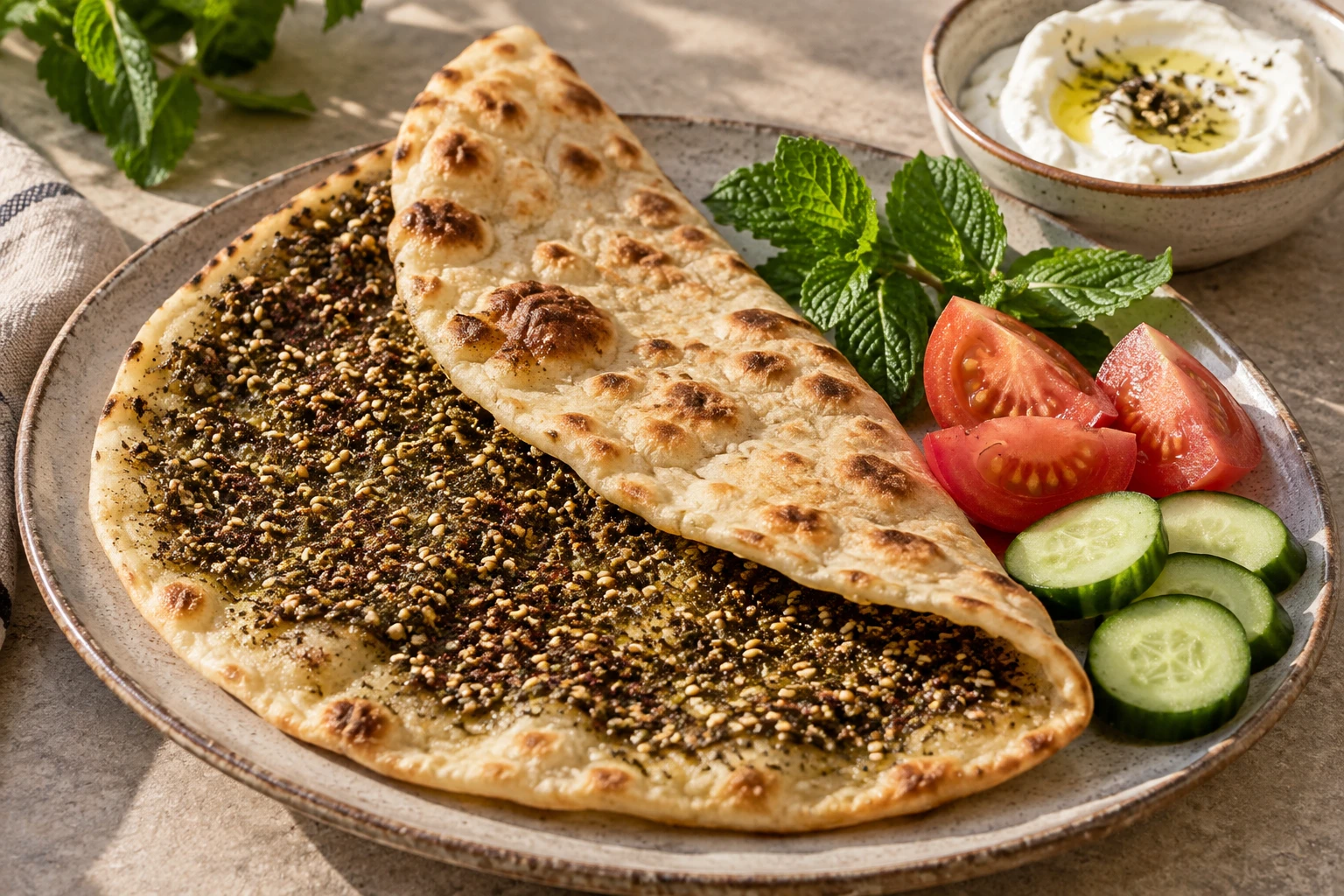
Breakfast has a hot part and a cool part
Tomato, cucumber and mint can be added after the bread has cooked, or offered beside it. Labneh gives another option: a cool, creamy accompaniment to the oil-rich herb topping. Abood describes tearing bread to eat with garnishes or putting them on the bread and folding it. King Arthur likewise offers quartering or folding for service.
Saveur places Kassab’s family version around Lebanon’s autumn olive harvest, when new-season olive oil is part of the appeal. Its tomato, mint and olive finish belongs to that particular account; it should not be turned into a rule for every bakery. Your Lebanon’s named adaptation offers further vegetables and labneh, while using baking powder in its dough. The useful lesson is to recognise which details define the chosen version and which belong to the way it is served.
Research notes
Sources and complete recipes
The comparison keeps the named recipes separate. Maureen Abood’s own article and the King Arthur recipe share an author and are treated as one cookbook lineage; the other accounts provide additional evidence.
- Maureen Abood — Lebanese man’oushe Lebanese cookbook author’s bakery observations, oven adaptation, texture and folding guidance.
- King Arthur Baking — Za’atar Manakeesh Maureen Abood’s Lebanese Baking recipe, including a hot baking surface, docking and topping before baking.
- Your Lebanon — Zaatar Manoushe A named cook’s baking-powder adaptation and the thyme, sesame, sumac and oil topping.
- Saveur — Man’oushé bil Za’atar Fouad Kassab’s family olive-harvest context and a skillet method with topping added after cooking.
- Feasting at Home — Man’oushe Sylvia Fountaine’s yeasted home version and practical notes on adjusting thickness and resting dough.
Keep exploring
More stories for your table
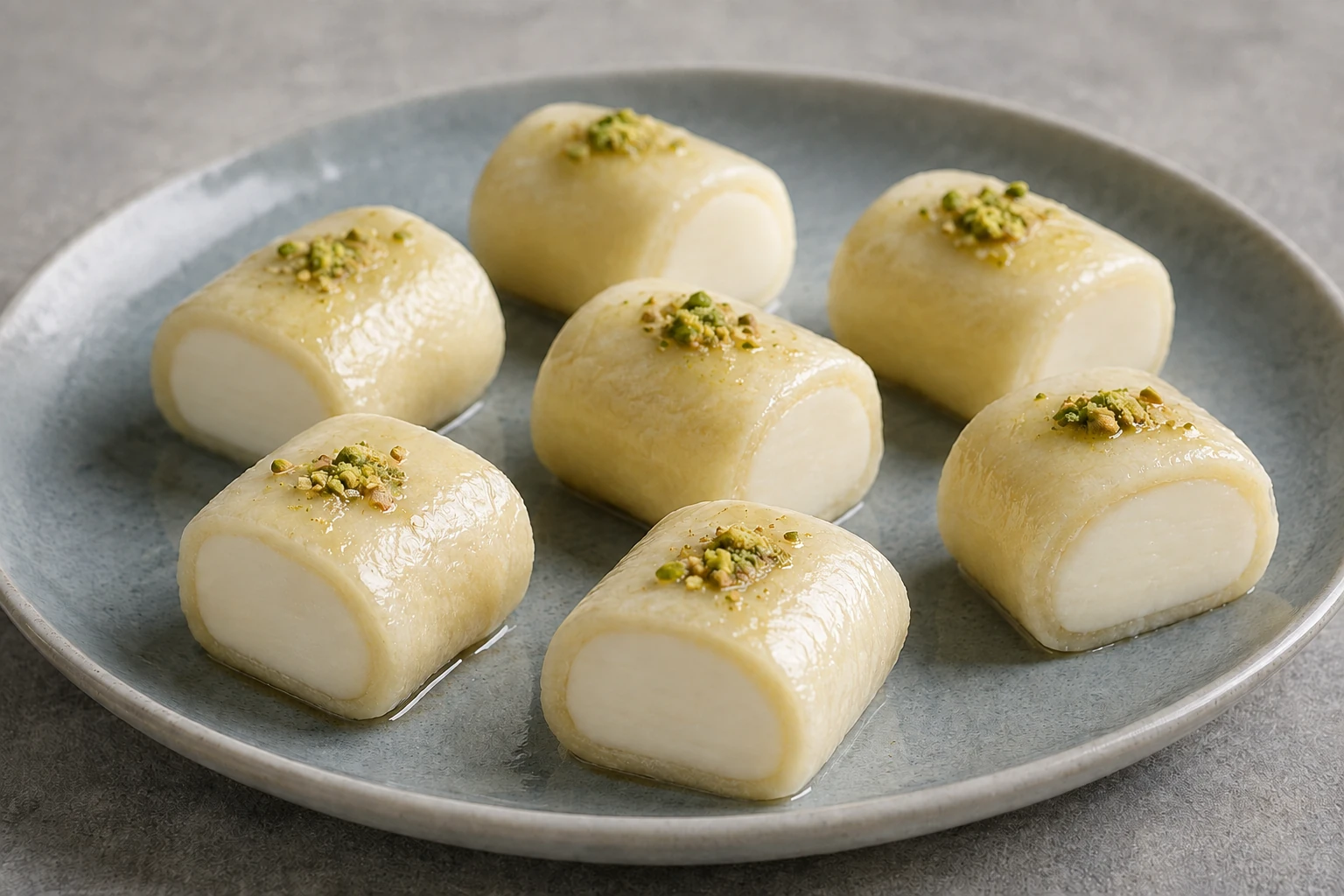
LebanonSweet cheese dessert
Halawet el Jibn: When Cheese Becomes the Wrapper
How halawet el jibn turns cheese and semolina into a cream-filled sheet, with documented Tripoli serving styles and a practical mozzarella adaptation.
CubaBread
Pan Cubano: The Crust, the Crumb and the Line on Top
Cuban bread pairs a crisp, flaky exterior with a soft white interior. Follow the lengthwise split from Tampa’s palmetto leaves to practical home shaping.
IranWheat and meat porridge
Halim-e Gandom: The Long Stir Before Breakfast
How Iranian halim turns wheat and meat into a thick breakfast porridge through patient stirring, and why cooks often finish the savory bowl with cinnamon and sugar.