
Musabaha: a warm bowl that keeps its chickpeas
Musabaha
Make a modest bowl of warm musabaha with tender chickpeas, lemony tahini and a fork. Compare chunky approaches and choose accompaniments that add crunch.
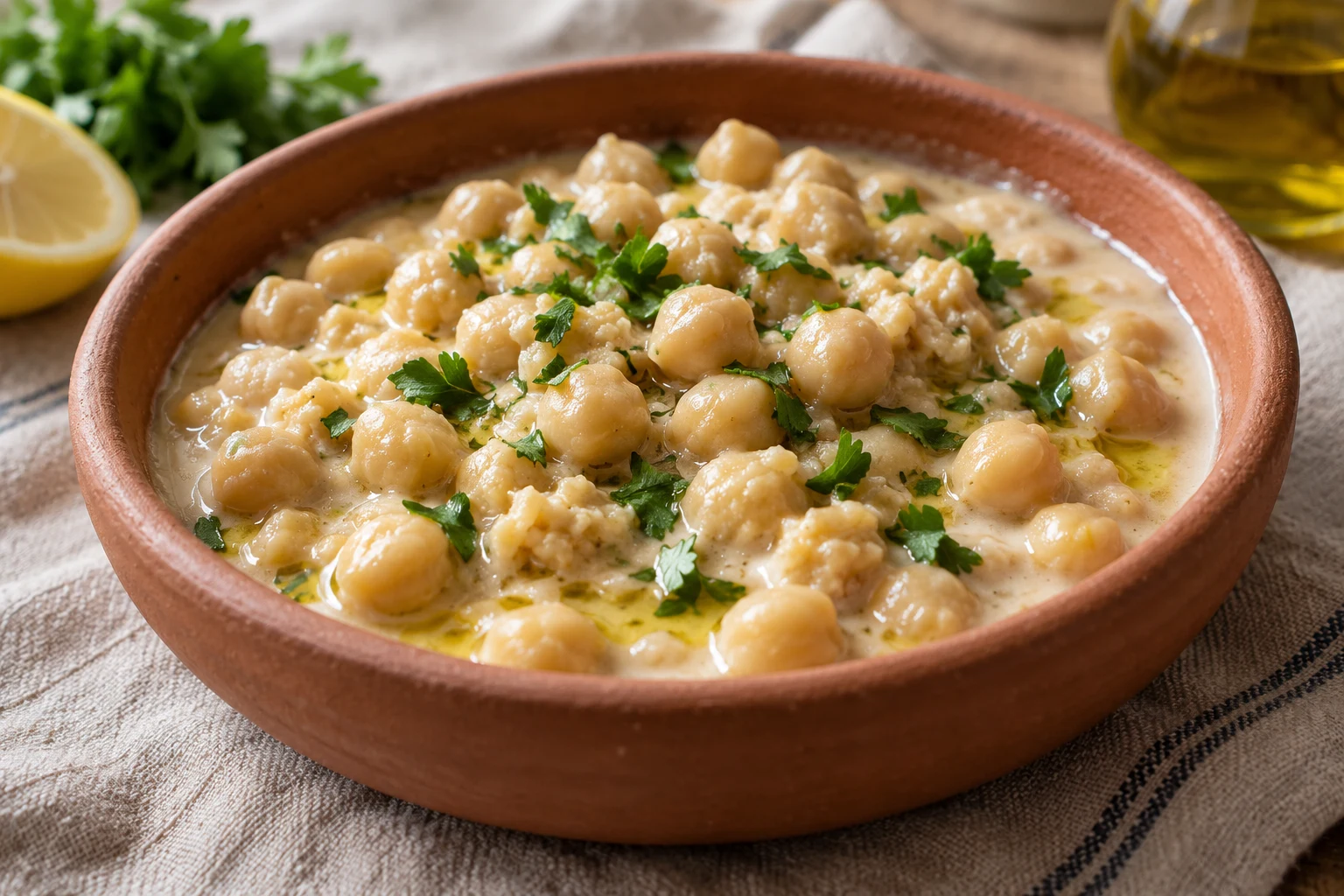
Musabaha uses familiar hummus ingredients in a different arrangement. Warm cooked chickpeas remain whole or lightly crushed in a sauce of tahini, lemon and garlic. Some of the beans thicken the sauce; others stay distinct on the spoon. The result is a bowl to eat with bread, with enough substance for breakfast or a light meal.
Lebanese cooks Hadia Zebib and Yosra of Zaatar and Zaytoun both present the dish within a breakfast spread. It also belongs to the wider Levantine repertoire. Here, the useful distinction is the treatment of the chickpeas. A smooth hummus decorated with a few beans does not explain the same texture as a bowl whose body still contains them.
Two ways to leave texture in the bowl
Keep the fork in charge
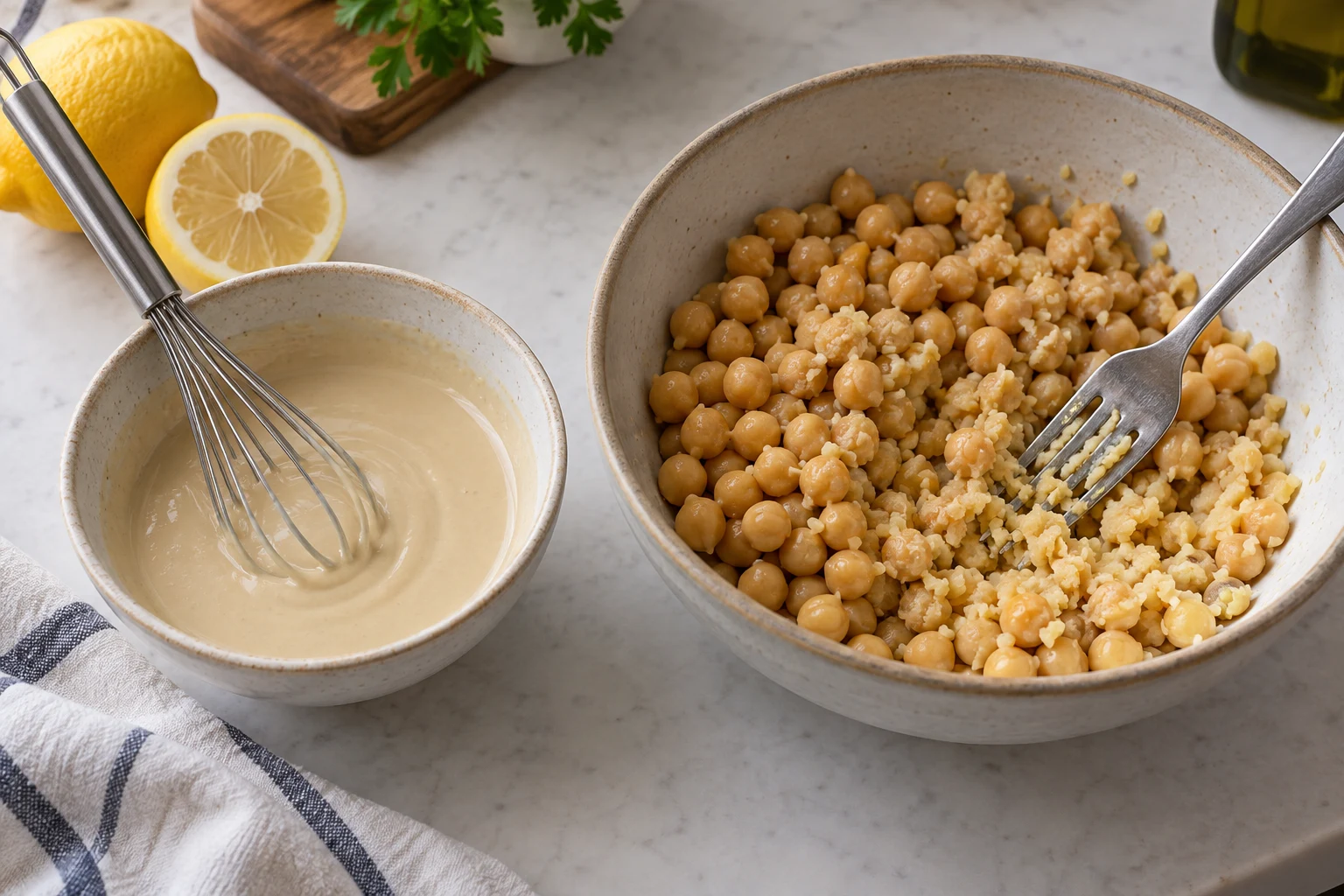
Hadia coats warm chickpeas with a separately whisked tahini sauce and roughly crushes them. Yosra uses a fork to press some of the beans, while Vidar Bergum stops at a thick, uneven consistency with plenty left whole. This approach lets you see each change as you work.
Blend a base, then fold
Agnieszka at Wholly Tasteful reserves whole chickpeas, purées the remainder with the sauce ingredients and then combines the two textures. It gives a smoother background without losing the beans. Choose this arrangement deliberately; puréeing the entire batch removes the very contrast the dish offers.
Soft beans matter more than a perfect shape
Daniel Gritzer stresses cooking the chickpeas until very tender. The target is a yielding mouthful, even if a few beans break. Keeping a chickpea whole is not a reason to preserve a firm or gritty centre. The fork should crush it readily instead of chasing it around the bowl.
Cooks differ on the starting point. Hadia strongly prefers chickpeas cooked from dried, while Yosra explicitly uses canned chickpeas for a small meal. Wholly Tasteful simmers canned beans further to soften them. The adaptation below starts with cooked canned beans and uses softness as its check, rather than claiming that every can will behave identically.
Stir the tahini jar before measuring so the oil and settled paste are combined. When lemon and water meet tahini, it can briefly become thicker. Hadia's method continues whisking until smooth. Add liquid gradually and assess the finished sauce: it needs to travel between the beans, rather than sit over them as a heavy lump.
Cook it at home
Small-batch canned-chickpea musabaha
An original home adaptation for three modest snack portions, served warm. Times are estimates; allow longer if the chickpeas resist a fork.
Ingredients
For the bowl
- 400 g canned chickpeas, drained and rinsed
- 200 ml water for heating, plus more if needed
- 70 g well-stirred tahini
- 30 ml fresh lemon juice
- 60 ml water for the sauce
- 1 small clove garlic, finely crushed
- ¼ teaspoon fine salt, then adjust to taste
- ¼ teaspoon ground cumin
- 15 ml extra virgin olive oil
- 5 g parsley, finely chopped
- To serve soft flatbread
Method
- 1
Warm and soften
Put the drained chickpeas and 200 ml water in a small saucepan. Bring to a simmer, cover and cook gently for about 10–15 minutes, until a chickpea crushes easily with a fork. Check the pot and add a little water if it is drying out. Drain the beans and keep them warm.
- 2
Whisk the sauce
Mix tahini, lemon juice, garlic, salt and cumin in a bowl. Whisk in the 60 ml sauce water in three additions until smooth. If still too stiff to flow from a spoon, add one extra tablespoon of water and whisk again.
- 3
Combine without puréeing
In a serving bowl, fork-crush roughly a third of the warm chickpeas. Add the remaining beans and sauce; fold together. Taste a combined spoonful and adjust salt or lemon if needed. Drizzle with olive oil, scatter parsley and serve straight away with flatbread.
From the mixing bowl to the table
Give the soft bowl something crisp alongside
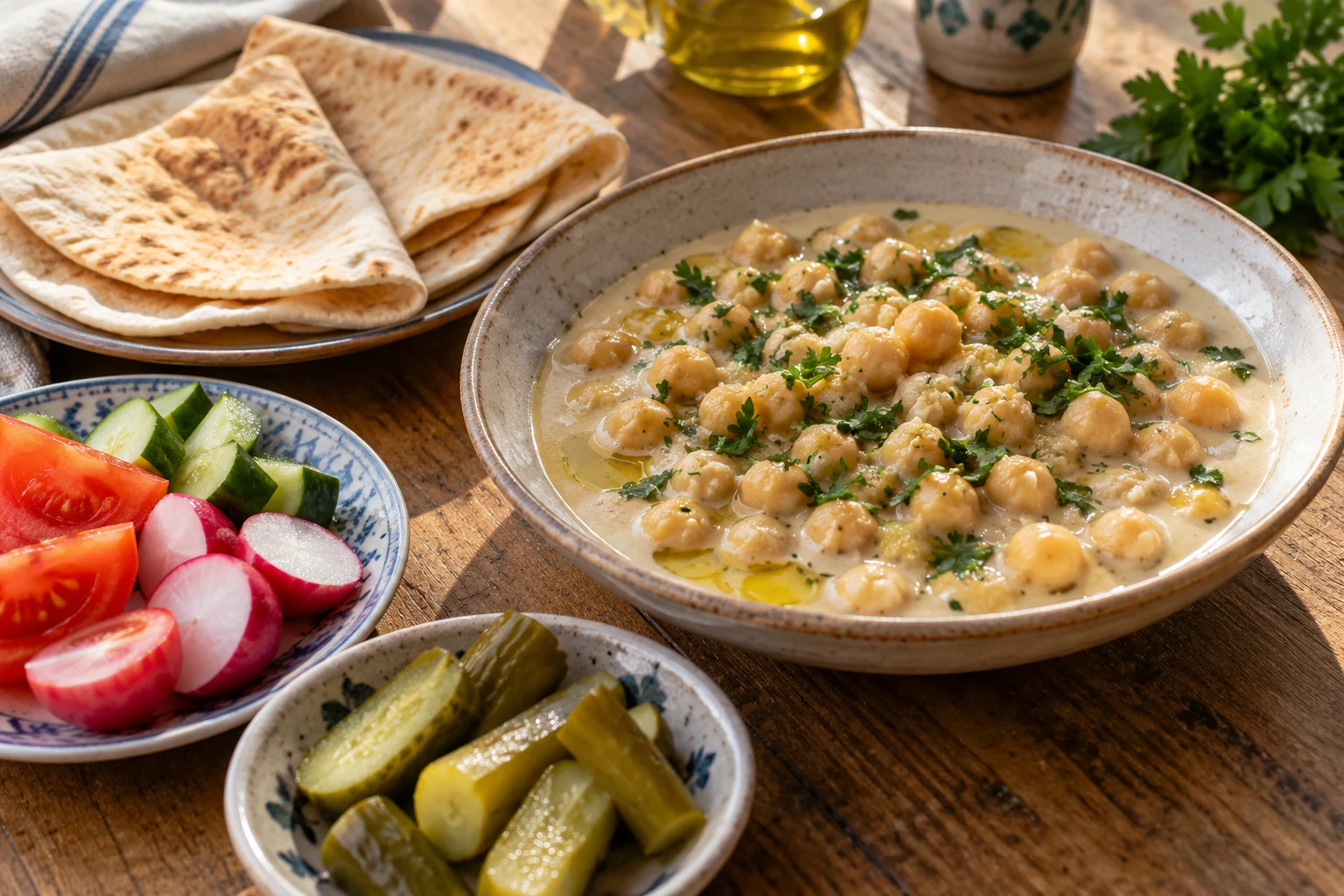
Yosra serves flatbread with pickles, radishes, tomatoes and herbs. Vidar pairs his bowl with a crunchy salad and discusses brighter toppings. These choices give a meal contrast without requiring a long garnish list. Keep the vegetables on another plate so a diner can choose a fresh bite between spoonfuls of the warm chickpeas.
Taste the chickpeas with their sauce before adding more lemon or salt. A bare spoonful of tahini sauce and a whole bean eaten separately will not describe the combined bowl. Serve when the mixture is comfortably warm, with the bread ready; the preparation is short enough to finish as people come to the table.
Research notes
Sources behind this article
- Hadia Zebib: Lebanese musabaha Whole or roughly crushed beans, a separately whisked tahini sauce and its initial thickening.
- Yosra, Zaatar and Zaytoun A canned-chickpea option, hand crushing and bread with crisp accompaniments.
- Agnieszka, Wholly Tasteful Further softening canned beans and combining a blended base with whole chickpeas.
- Daniel Gritzer, Serious Eats The importance of very tender chickpeas; current directions retain a chunky texture.
- Vidar Bergum, A Kitchen in Istanbul Fork-controlled texture, warm service and crunchy sides.
Keep exploring
More stories for your table
Lebanese cuisine Breakfast flatbread
Man’oushe: From Za’atar Paste to Breakfast
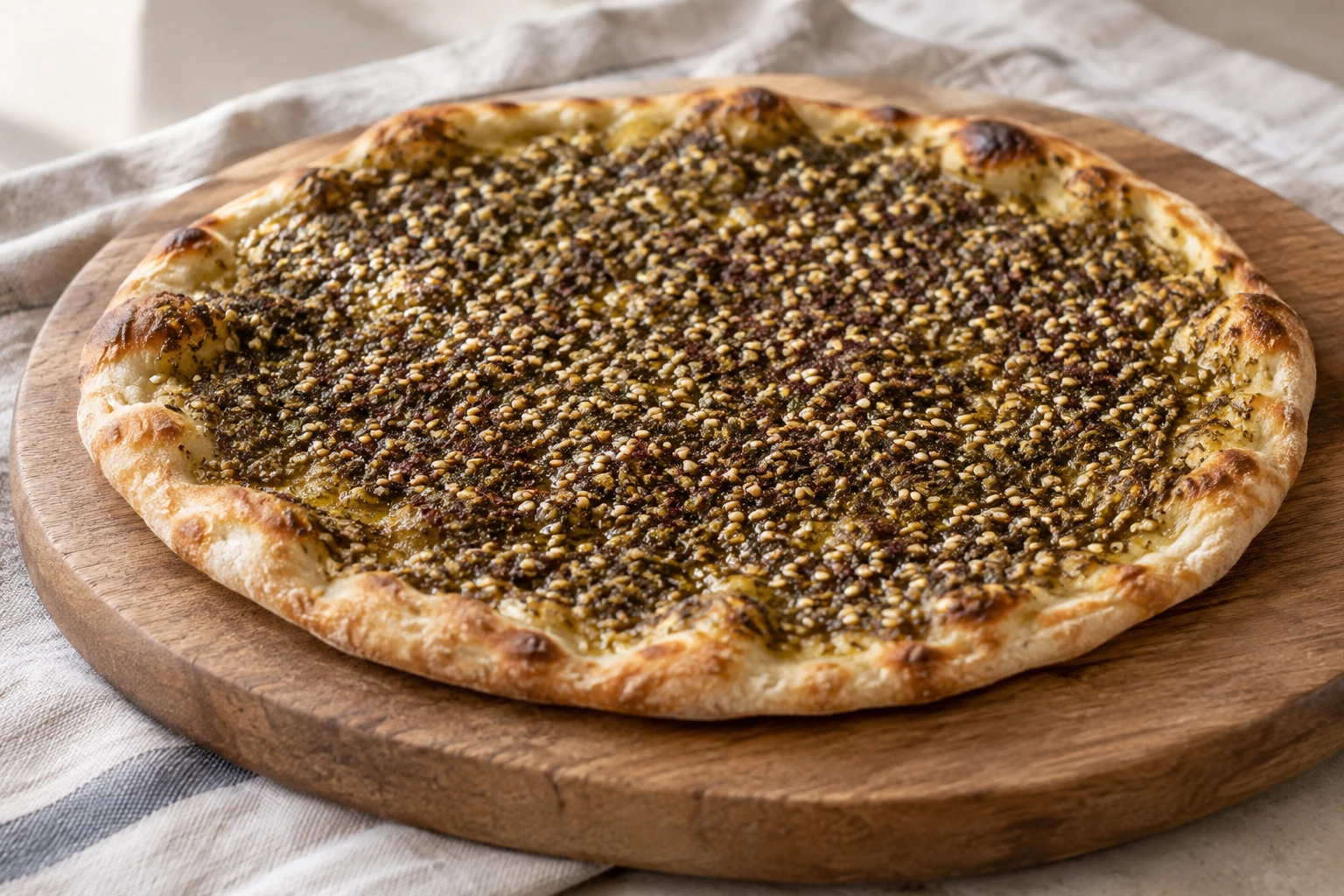
What makes Lebanese za’atar man’oushe work: the herb-and-oil topping, a supple bread, the heat beneath it, and the fresh accompaniments that turn it into breakfast.
Lebanese cuisine Sweet cheese dessert
Halawet el Jibn: When Cheese Becomes the Wrapper
How halawet el jibn turns cheese and semolina into a cream-filled sheet, with documented Tripoli serving styles and a practical mozzarella adaptation.
Greek cuisine Vegetable and rice dish
Spanakorizo: Let the Spinach Lead
Greek spinach rice depends on the water in its leaves, the choice of grain and a lemony finish. Compare the decisions behind its soft, vegetable-forward texture.