
Mok Pa: Rice Inside the Leaf
ໝົກປາ
Mok pa's banana leaf encloses fish, herbs and a rice binder. Compare the filling and wrapping choices before opening a Lao steamed-fish parcel.
The wrapper is only half the story
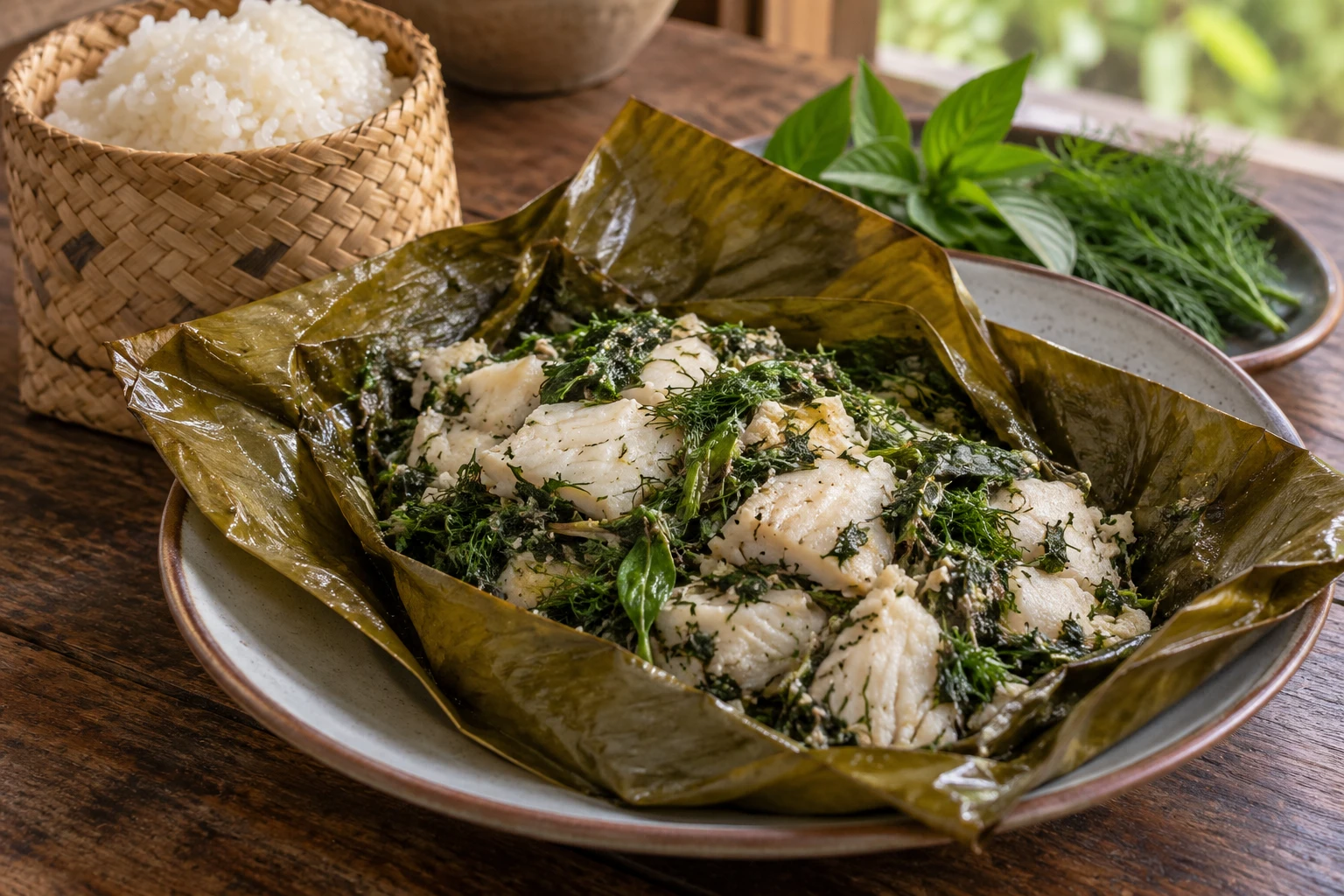
Mok pa arrives as a banana-leaf parcel, but the important work has already happened inside it. Fish is combined with aromatics and herbs, then steamed within the folded leaf. Opened at the table, the package reveals a moist filling rather than a fillet sitting alone beneath a decorative garnish.
Rice helps explain that filling. It can appear twice in the meal: ground into the mixture as a binder, and cooked separately as the accompaniment. These are different jobs. Seeing a basket of sticky rice beside a parcel should not distract from the smaller amount incorporated into the fish.
Meng's rice is an ingredient in the paste
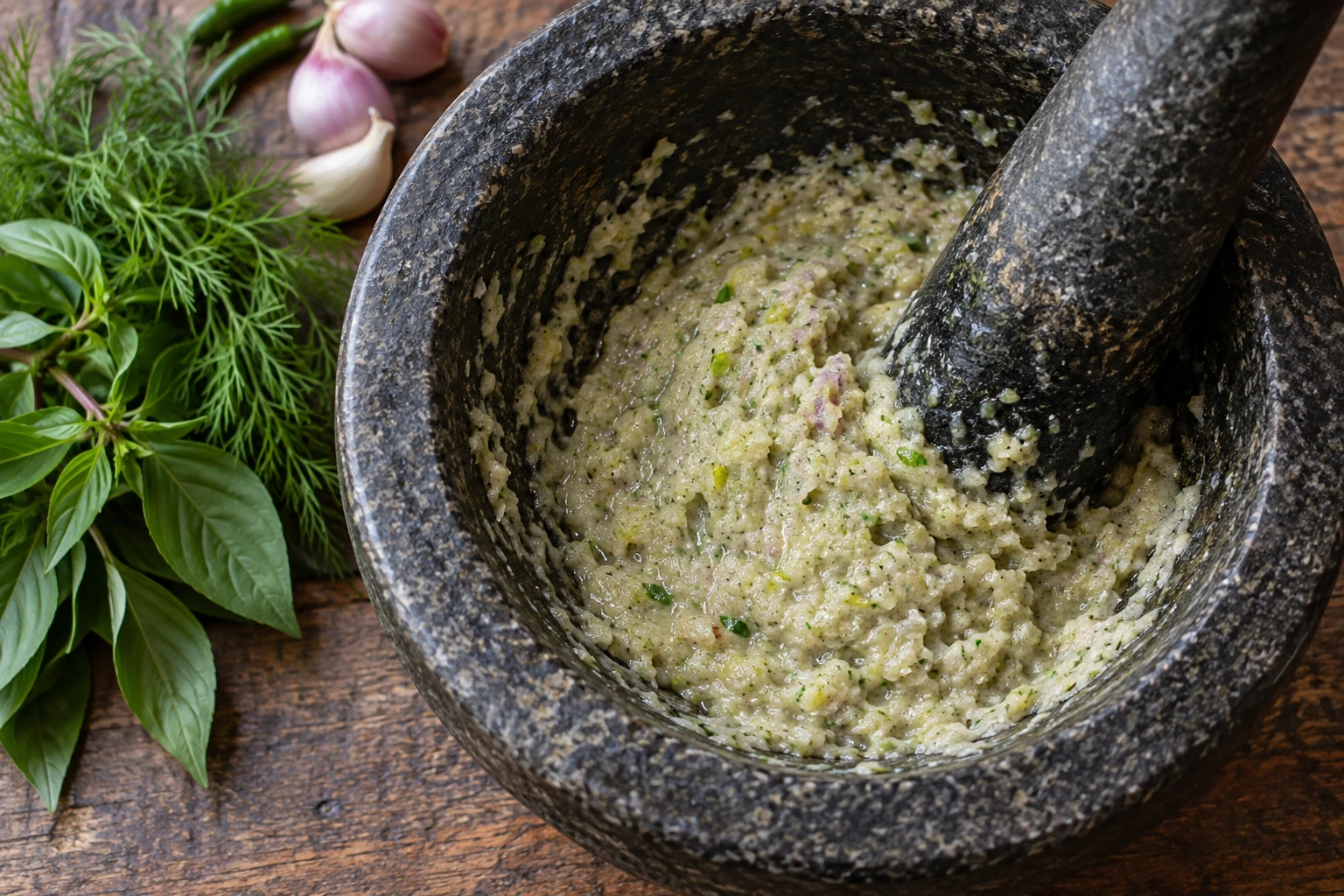
At Crafts to Crumbs, Lao American writer Meng pounds soaked, uncooked sticky rice with aromatics, then combines it with fish, dill and basil. The rice cooks within the parcel and adheres to the fish. Her family method keeps it a binder; too much would make a rice dish.
Meng also calls for a moist paste so the rice can cook, adjusting water according to the ingredients. She prefers cubed fish for the herb-filled spaces among the pieces, while accepting fillet or steak forms. This is more useful guidance than assuming every filling starts dry.
A binder choice belongs to its whole recipe
Soaked rice, ground before cooking
Meng uses a mortar. Monique Sourinho at Bee The Love instead blends soaked sticky rice with the seasonings in a food processor for her family's version. Both begin with uncooked rice that has absorbed water; neither is simply adding a spoonful of cooked rice.
A dry rice ingredient, with other changes
Wandercooks' written version uses sticky rice powder or glutinous rice flour and includes egg. Vicky Berman's Tamarind Cooking School recipe uses sticky rice powder without listing egg. These ingredient lists should be read individually: the powder's presence does not make every filling identical.
The fish can change without hiding the change
Sourinho uses cubed salmon and clearly frames the recipe as a family effort to reconnect with Lao roots, rather than claiming a definitive version. Meng names cod among the fish her family uses. Berman's cooking-class recipe calls for firm white fish. The photographs here illustrate a white-fish parcel; they are not a claim that every household chooses the same species.
That range offers a useful question at a restaurant: which fish is in today's mok pa? The answer tells you something more concrete than a broad promise of authenticity. It also lets the cook's adaptation remain visible instead of treating one photographed bowl as the standard for all others.
The folds need to hold the filling
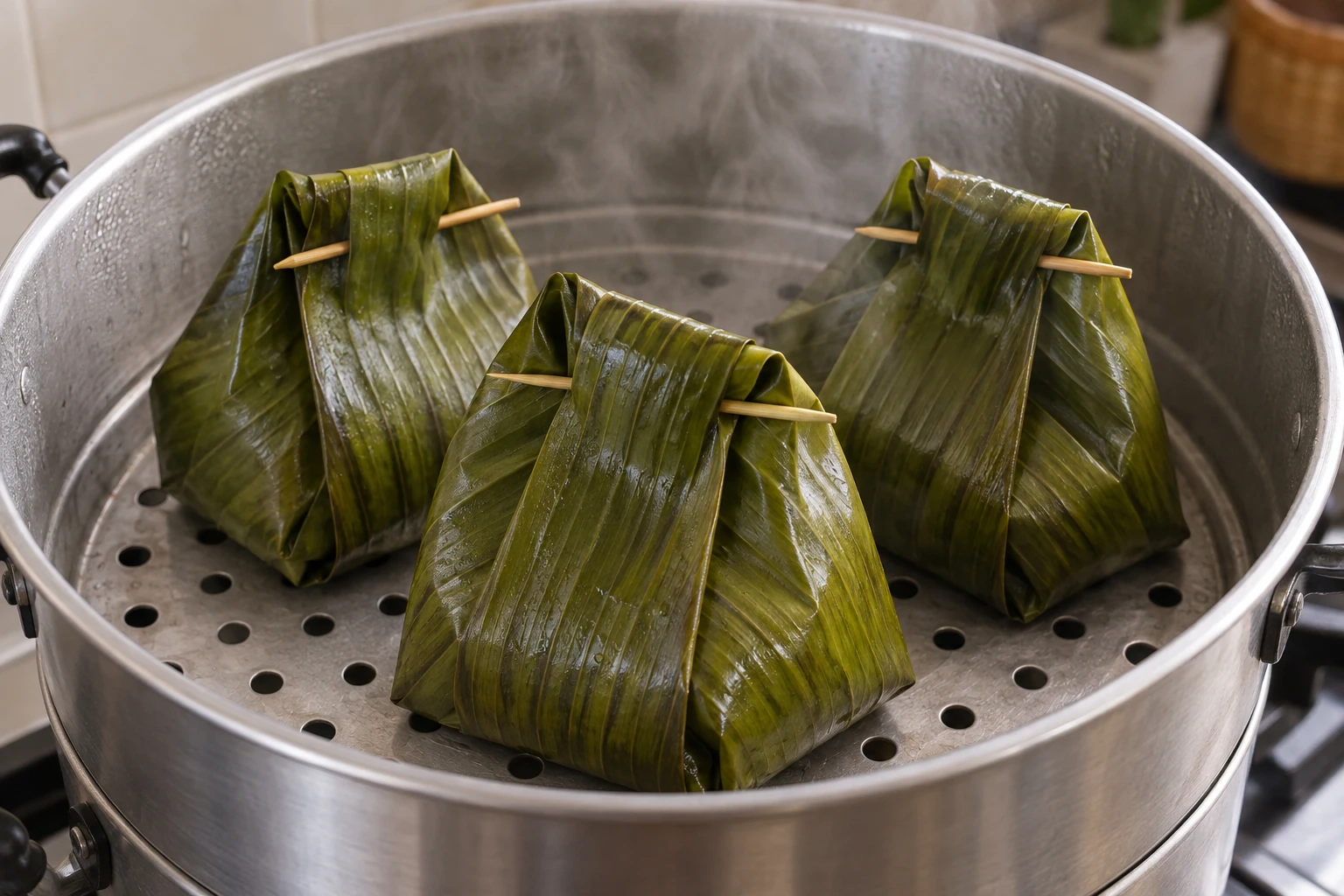
Berman records a wrapping method learned at Tamarind in Luang Prabang. Two leaves are layered with their tough stems on opposite sides; the fish is enclosed first, and the liquid and herbs added through the remaining opening before it is closed. The class used bamboo ties, while toothpicks are another closure in her instructions.
Wandercooks, whose authors learned from Vanpeng in Vientiane, use two leaf squares with their veins crossing. Their packet is folded and pinned at the top. These are two workable constructions described by their cooks. The shared aim is a parcel that contains the mixture, not a single mandatory silhouette.
Open it onto the rest of the meal
Wandercooks describe eating the steamed filling with a small ball of sticky rice, as Vanpeng showed them. That second rice component remains separate from the binder inside the parcel. A spoon can reveal the same distinction: pieces of fish, herbs throughout, and enough cohesion to gather a bite.
When choosing a recipe, settle the fish and rice preparation before learning the fold. Then keep its moisture, binder and cooking method together. The leaf makes mok pa recognisable at the table; the mixture makes opening it worthwhile.
Research notes
Sources and family methods
Four independently published cooking accounts explain the filling and folds; the temperature chart supplies the fish safety endpoint.
- Meng — Crafts to Crumbs Family method with soaked rice pounded into a moist paste, cubed fish and herbs.
- Monique Sourinho — Bee The Love A transparently described family adaptation using salmon, soaked rice and a food processor.
- Sarah and Laura — Wandercooks Method learned from Vanpeng in Vientiane; rice powder and egg, crossed leaf layers, and sticky-rice service.
- Vicky Berman — Tamarind class at Avocado Pesto A first-person cooking-school account with rice powder and a two-leaf wrapping sequence.
- FoodSafety.gov — safe internal temperatures Thermometer-based minimum for fish.
Keep exploring
More stories for your table
Russian cuisine Savory pie
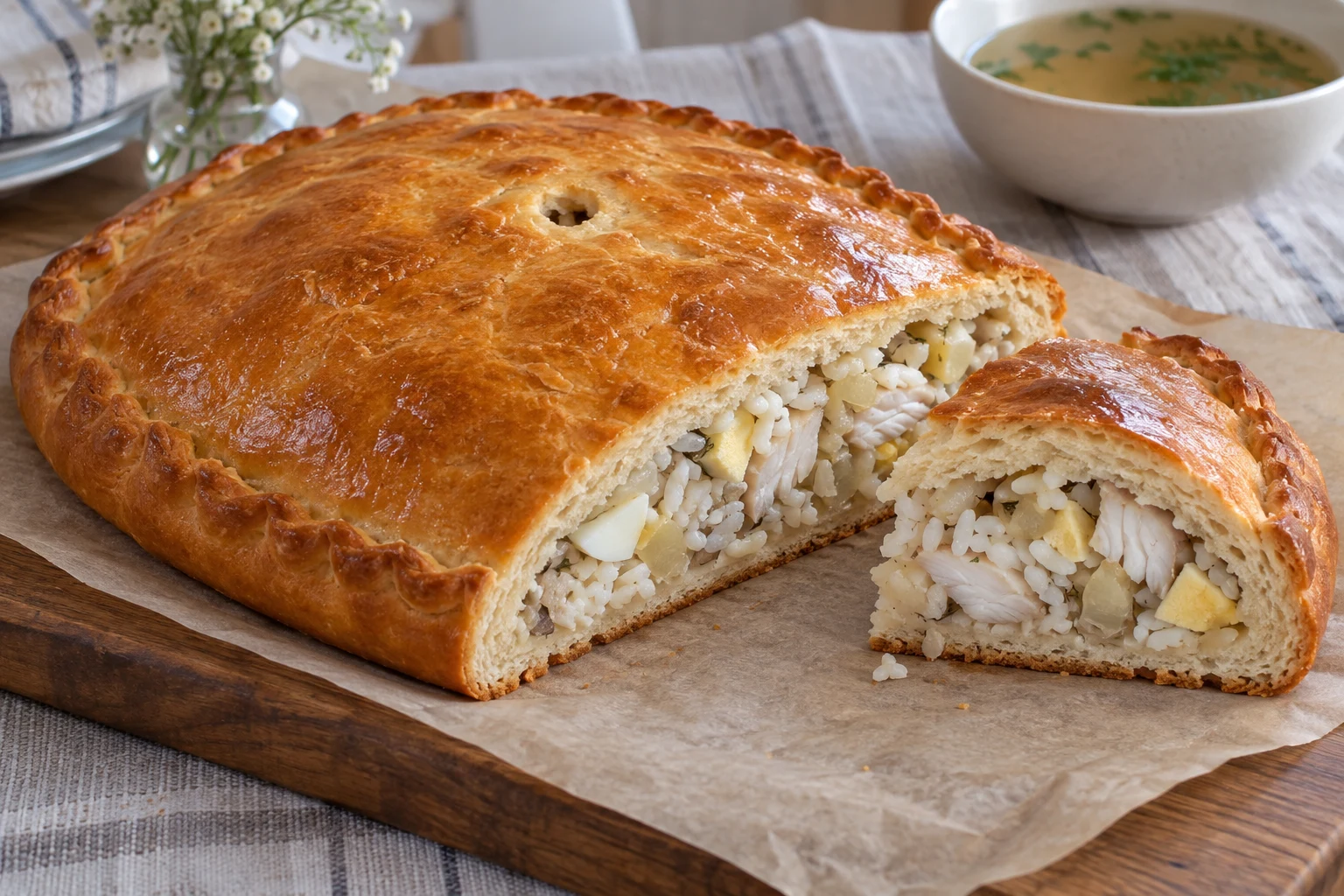
Fish Pirog: Decide What Goes Under the Lid
A closed yeast-dough fish pirog can begin with fillet, poached fish or a tin. Compare its filling, rice and steam vent before choosing a recipe.
Cuban cuisine Appetizer
Fish Croquetas: Choose the Binder First
Cuban fish croquetas can be bound with fish-stock paste, milk-based paste or potato. Read the filling before choosing the shape and coating.
Egyptian cuisine Stuffed cabbage
Mahshi kromb: preparing cabbage for rice and herbs
A guide to Egyptian mahshi kromb: prepare pliable cabbage pieces, choose an aromatic rice filling, and match the stock and fat to the meal you want.