
Chimaek: Korean Fried Chicken and Beer
치맥
Choose the chicken, keep the crust crisp, and put the cool accompaniments within reach. Chimaek is a pairing with room for more than one style.
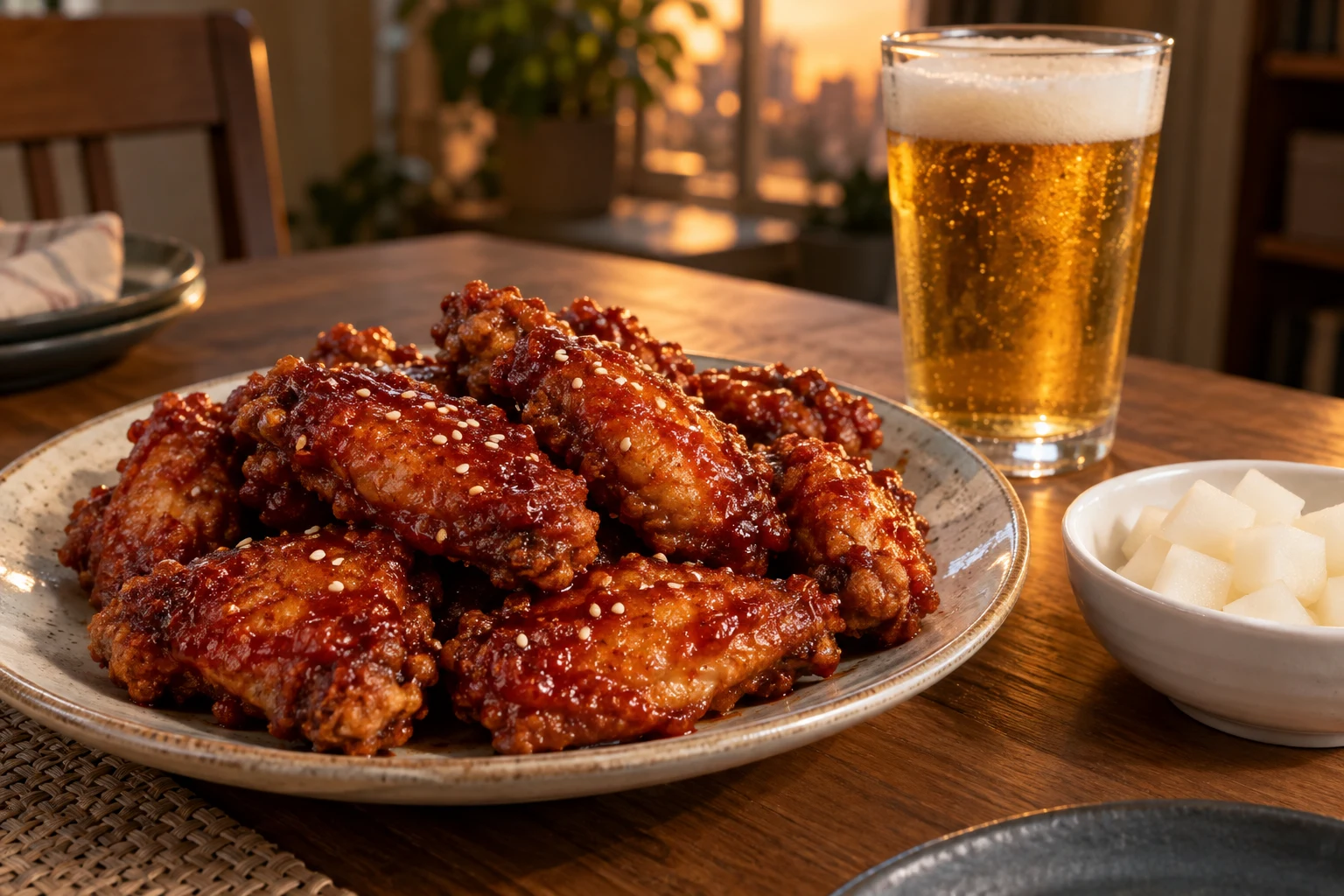
A pairing, many possibilities
Start with the table
Chimaek joins chicken and beer in a short Korean name: chi comes from chikin, chicken, and maek from maekju, beer. It describes a way to eat rather than a recipe with one compulsory batter, cut, or sauce. Korean fried chicken includes whole-bird preparations as well as coated pieces, and a sharing plate can mix several finishes.
The appeal is immediate: warm savory chicken, a cool drink, and another bite while the coating still crackles. For a home spread, decide which chicken style you want before choosing sides. Plain wings give the crust the most attention; glazed pieces bring sweetness, tang, and sometimes substantial chili heat. You can keep both on the table without requiring every diner to choose the same flavor.
Choose the finish
These useful distinctions help you read a menu or select a complete recipe. Individual cooks and shops have their own versions.
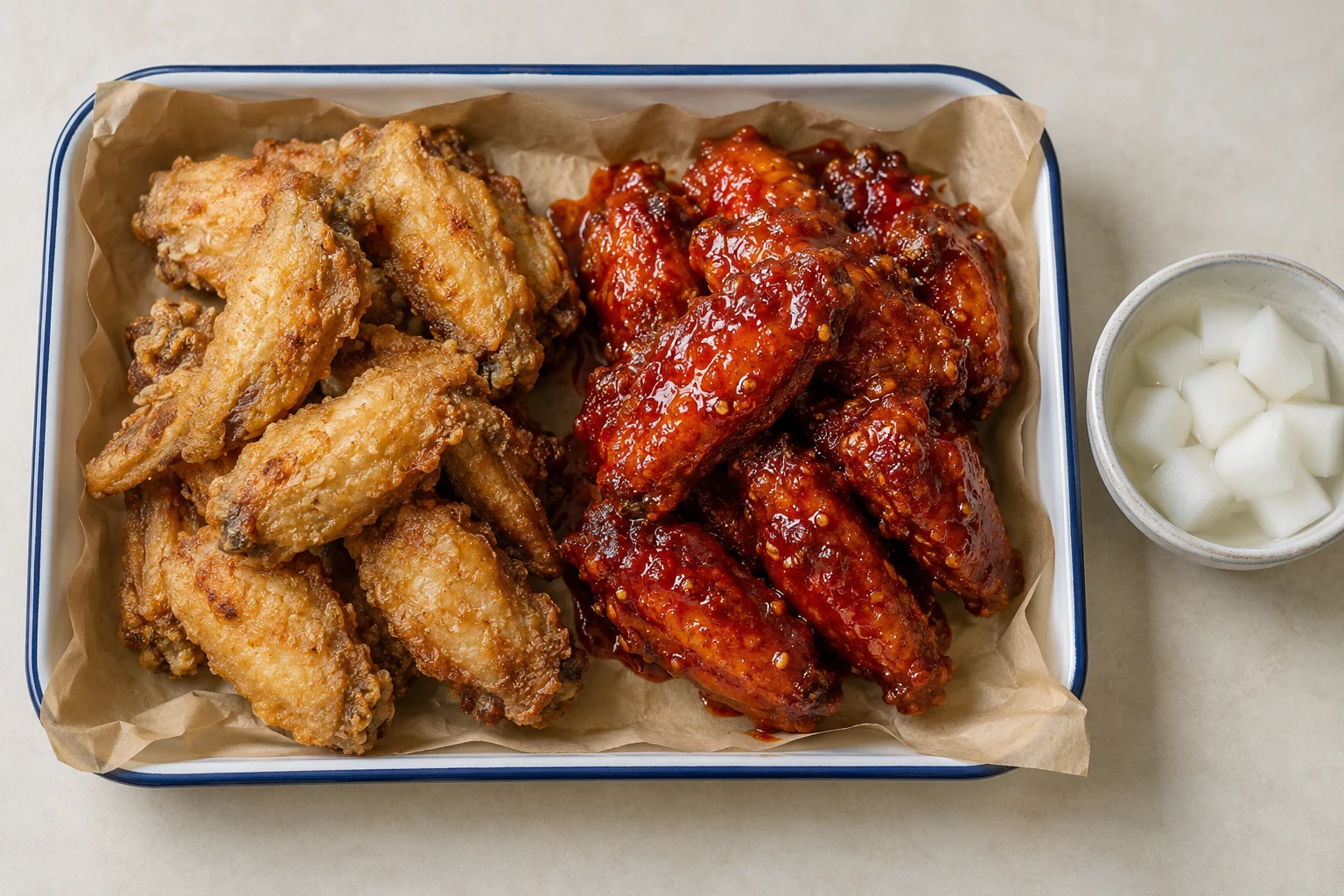
Plain fried chicken
Golden skin and coating remain exposed. Serve sauce separately if you want guests to control the amount. Look for an evenly cooked interior and a crust that feels crisp rather than weighed down by oil.
Yangnyeom chicken
Seasoned chicken wears a sweet, tangy, often spicy sauce. Maangchi’s version combines gochujang with ketchup, garlic, syrup, and vinegar; other cooks use different balances. The glaze should cling to the piece instead of collecting as a puddle beneath it.
Dakgangjeong
Fried chicken gets a sticky, syrupy finish. Korean Bapsang’s recipe uses small boneless pieces for convenient eating, though the name does not make that cut mandatory. Its sweetness, heat, and optional nut or seed garnish create another distinct option for the spread.
When cooking at home
Build the meal around the last batch
Follow one complete chicken recipe for its coating, oil temperature, and cut-specific timings. These serving decisions fit around that method.
- 01
Prepare the cool parts first
Put chilled drinks and a small bowl of chicken-mu, the sweet-tangy white pickled radish often served with fried chicken, within reach. Set out plates and napkins before frying so the finished chicken can move directly to the table.
- 02
Give the pan room
The cited home cooks fry in batches and restore the oil temperature between them. Crowding adds too much cool chicken at once and makes cooking less even. Double frying appears in their methods, but the exact temperatures and times differ; wing timings cannot simply be reused for tiny boneless pieces.
- 03
Check the center
Use a food thermometer to confirm chicken reaches 74°C / 165°F in its thickest part, keeping the probe clear of bone. A dark glaze or golden coating cannot establish that the meat is cooked through.
- 04
Finish lightly, serve promptly
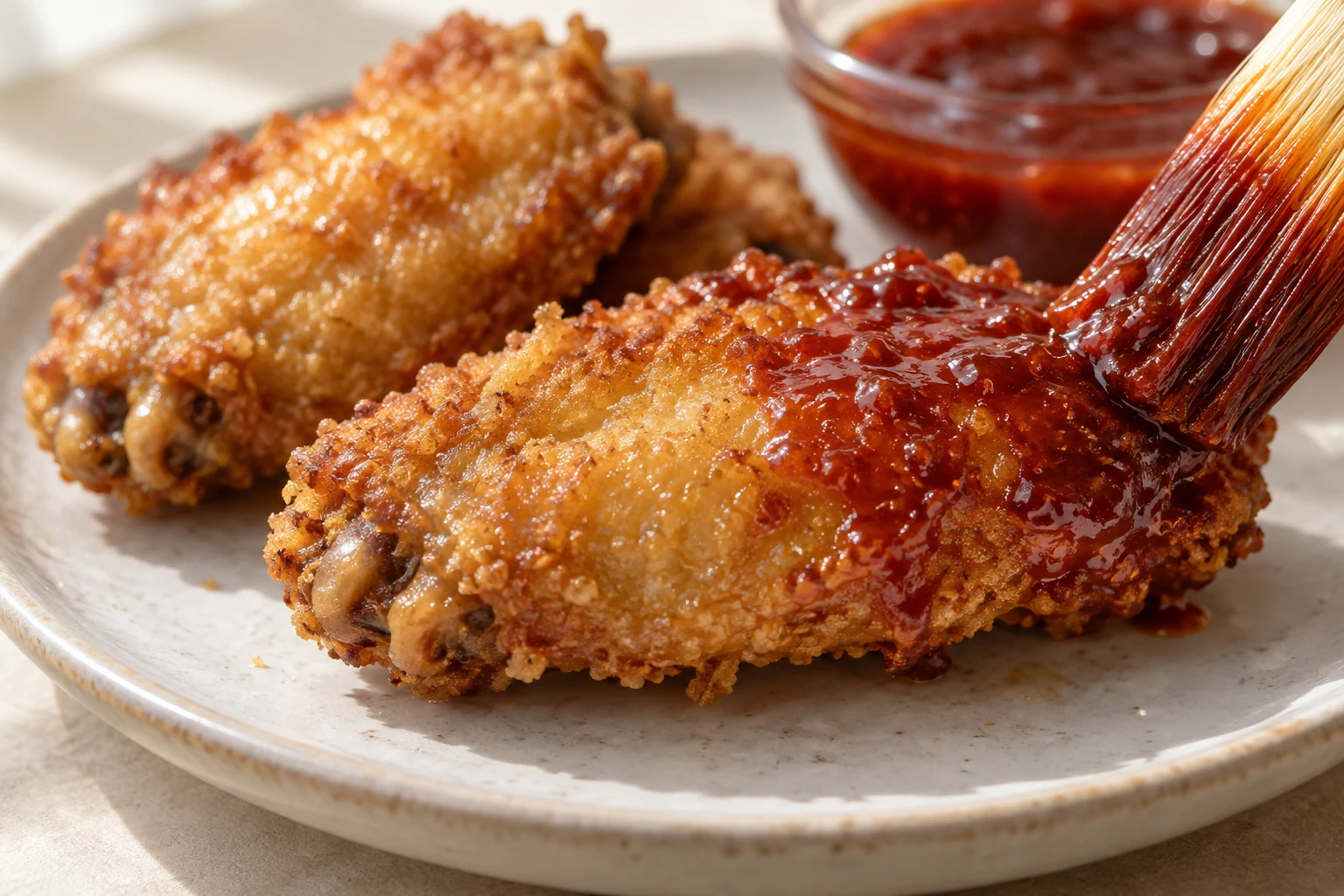
For sauced chicken, toss just enough glaze to coat it, or brush it on as Beyond Kimchee does. Keep a plain portion separate if serving both finishes. Bring out manageable batches while they are fresh rather than letting a large stack steam beneath a tight cover.
A cool contrast between bites
Pickled radish earns its place through texture as much as acidity: the little cubes supply a clean crunch beside the rich chicken. Keep the bowl separate so its brine does not wet the coating. A plain finish also gives anyone avoiding chili a useful alternative, although sauce-free chicken still needs an ingredient check.
A crisp lager is a familiar chimaek drink, as Korea Tourism Organization describes. Beer is optional at your table: Maangchi explicitly serves hers with a nonalcoholic version. Cold sparkling water is another practical choice when the goal is a refreshing contrast. Check coatings, gochujang, soy sauces, garnishes, and drinks for wheat or barley, soy, egg, sesame, or nuts according to the products and recipe used.
Research notes
Sources and cooking references
Three Korean home-cooking authors inform the styles and technique; Korea Tourism Organization documents the pairing, and FoodSafety.gov supplies the poultry temperature.
- Maangchi — Yangnyeom-tongdak Complete wing recipe, seasoned sauce, pickled radish, and explicitly nonalcoholic beer pairing.
- Korean Bapsang — Dakgangjeong Native 치맥 terminology, boneless home version, sticky sauce, and batch-frying method.
- Hyegyoung K. Ford — Korean Fried Chicken Cut choices, half-and-half servings, thin coating, glaze brushing, and radish accompaniments.
- Korea Tourism Organization — Korean Fried Chicken Substantive account of varied fried-chicken styles and the chicken-and-beer pairing.
- FoodSafety.gov — Safe Minimum Internal Temperatures Official thermometer guidance: chicken reaches 74°C / 165°F.
Keep exploring
More stories for your table
Indonesian cuisine Chicken
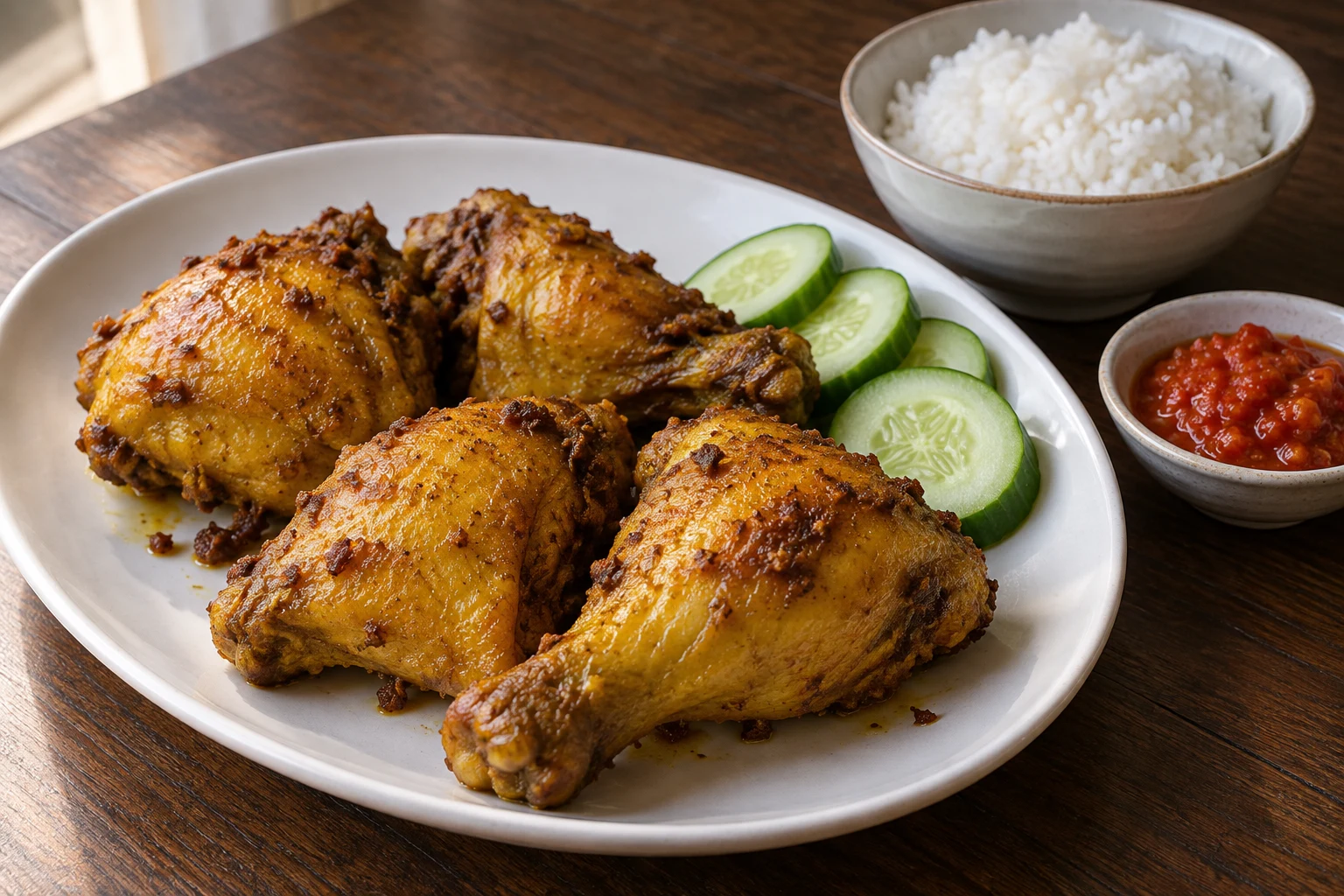
Ayam Goreng Kuning: Simmer First, Fry to Finish
Turmeric-spiced Indonesian fried chicken gets its flavor in the simmering pan and its crisp edges in hot oil. A guide and home recipe for the two stages.
Korean cuisine Stuffed perilla leaves
Kkaennip Jeon: Keep the Filling Thin
How thin filling, well-drained tofu and gentle pan heat work together in Korean perilla-leaf jeon, with a complete pork-and-tofu home adaptation.
Japanese cuisine Noodles
Soba: Read the Flour, Then the Serving
Soba describes a noodle family, not one flour ratio or one bowl. Ingredient labels, fresh noodle making and Izumo serving styles explain the differences.