
Omushenye: Sweet Potato Mash with a Bean-Flecked Bite
Omushenye
Sweet potatoes and tender beans make a substantial Kenyan mash. Its character lies in the texture: soft enough to bind, rustic enough to show the beans.
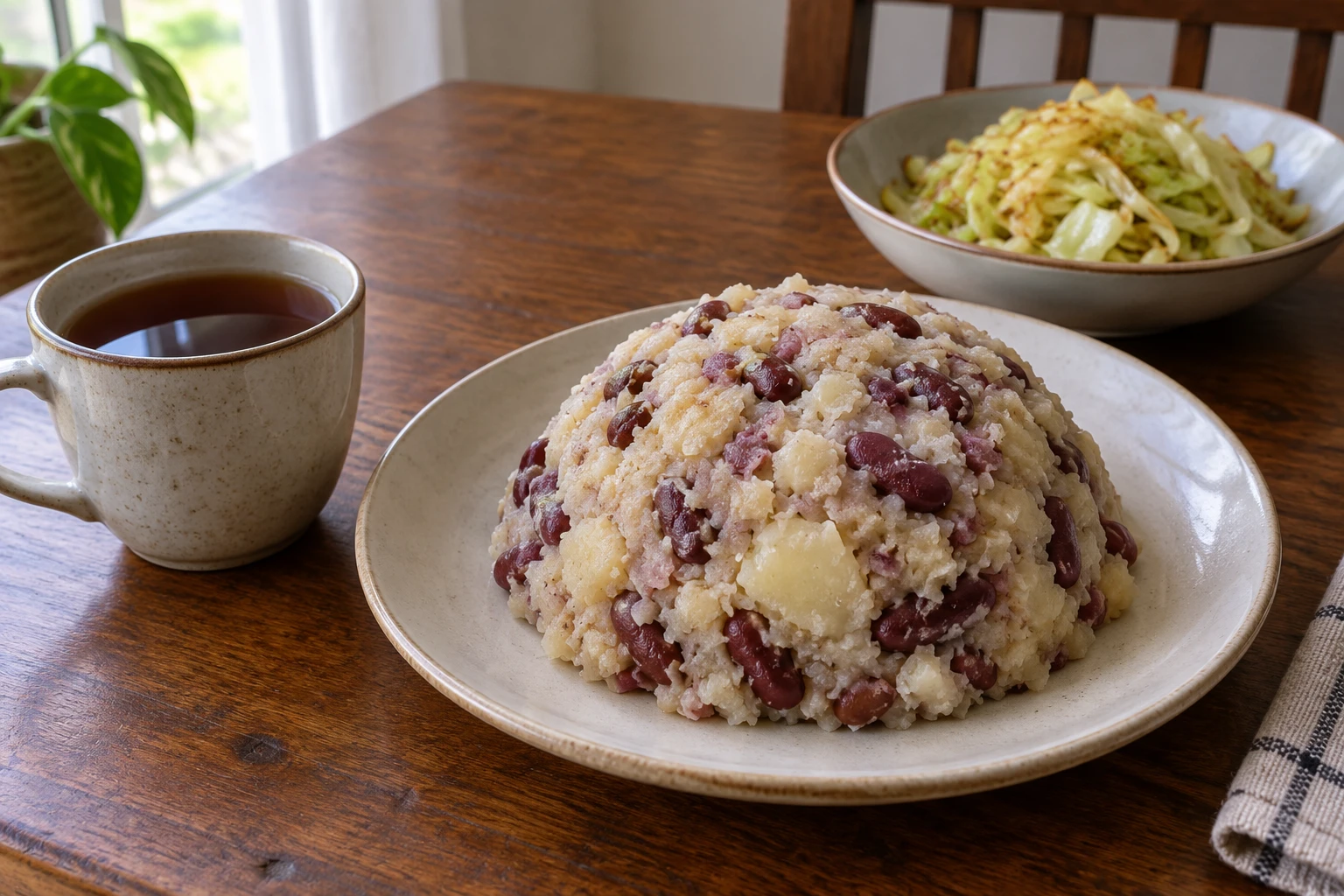
Two ingredients, more than one texture
Omushenye brings cooked sweet potatoes and beans together into a thick mash. The potato supplies the soft body; the beans leave small breaks in its sweetness and texture. It can sit in a mound on a plate rather than spread like a sauce, yet the first spoonful should still give easily.
Local sources spell the name Omushenye, Mushenye or Mshenye. A UNESCO-supported record of Isukha foodways in western Kenya documents the combination and lists several legumes, including kidney beans and cowpeas. This is a useful starting point: a sweet potato and legume preparation with room for variation, rather than one fixed bean colour or a bowl of green potato mash.
What the masher changes
A rustic finish
Mulunga Alukwe’s Nairobi Kitchen method uses a potato masher and then a wooden spoon. Some beans remain whole. The sweet potato binds the mixture while bean pieces give each mouthful a distinct interruption.
A softer finish
Gwen Jikoni allows the mash to be smooth or more textured. Her method warms already cooked ingredients together, drains them and keeps the liquid available for adjusting the consistency.
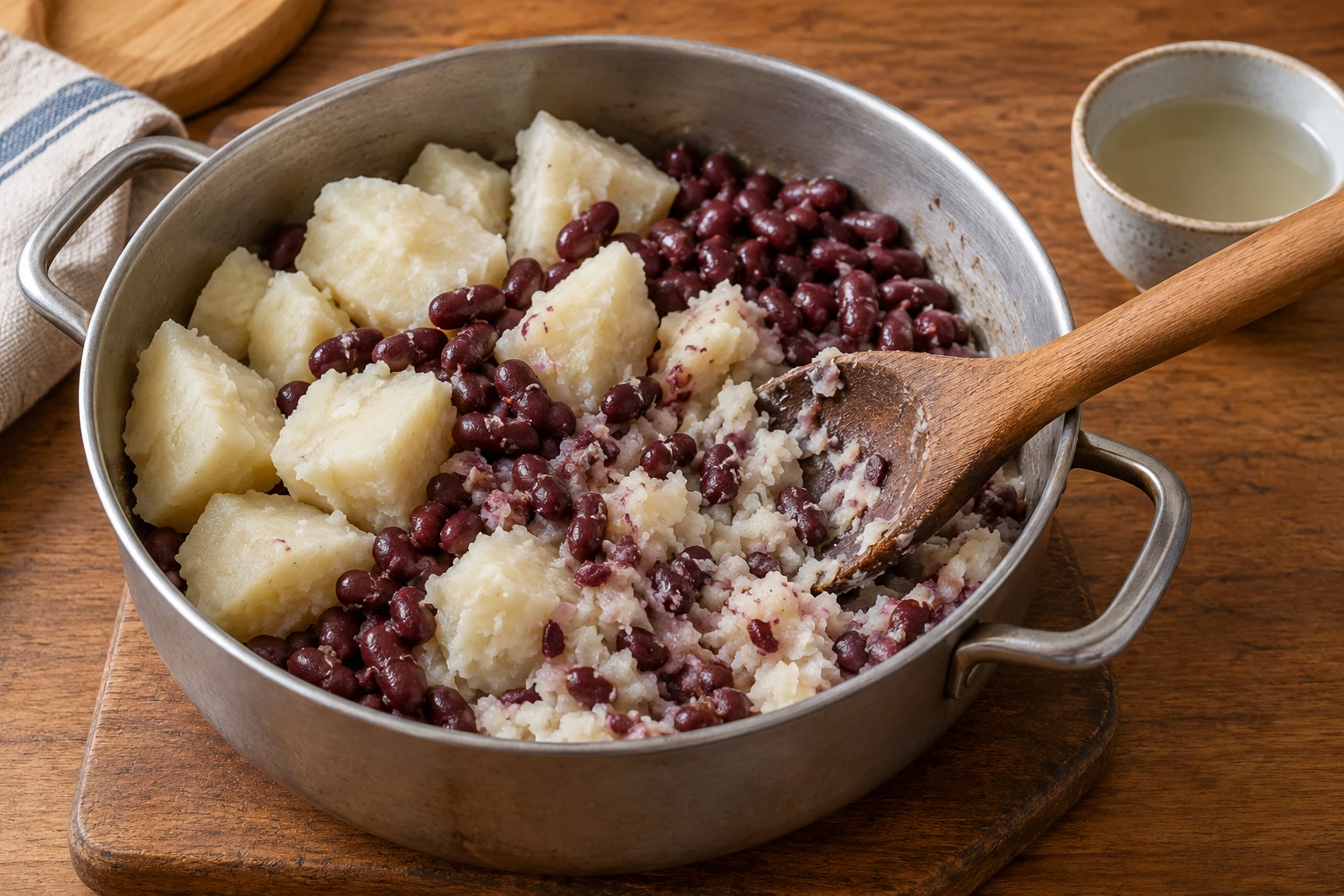
Water belongs in the adjustment, too
Winnie’s PureHealth cooks the sweet potatoes first, drains them and adds hot cooked yellow beans. Its recipe returns some reserved potato water if the mash becomes too dry. That small detail matters when preparing a dish without milk or butter: water can loosen the mixture without turning it into a different style of mash.
Drain before judging the texture. Press and stir, then add a little liquid only where the mixture needs it. If it already holds together and yields to a spoon, further water is unnecessary. A wooden spoon gives control over the final consistency and lets you stop with bean pieces still visible.
A small household adaptation
Sweet potato and canned bean Omushenye
This version uses canned kidney beans and white-fleshed sweet potatoes for a pale, rustic mash. Orange-fleshed sweet potatoes also work, with a different colour and texture. Makes 2 main-dish portions or 4 sides. Allow about 10 minutes to prepare and 25 minutes to cook; these are estimates.
Ingredients
For the mash
- 600 g peeled sweet potatoes, cut into roughly 3 cm pieces
- 1 × 400 g can cooked kidney beans, drained and rinsed; about 240 g drained
- As needed water for cooking and a little reserved liquid for adjusting the mash
- To taste salt, optional
- 1 tablespoon chopped coriander, optional
Method
- 1
Cook the sweet potatoes
Put the sweet potato pieces in a saucepan and add water to cover. Bring to a boil, then reduce the heat and simmer until a knife passes easily through the pieces, approximately 15–20 minutes. Reserve a cup of cooking water and drain the potatoes.
- 2
Warm the beans
Return the potatoes to the saucepan. Add the canned beans and 2 tablespoons of the reserved water. Stir over low heat until the beans are hot, adding another small splash if needed to prevent sticking.
- 3
Mash and adjust
Take the pan off the heat. Crush the potatoes and beans with a masher, then press and mix with a wooden spoon. Keep a few recognizable bean pieces. If the mash feels stiff or crumbly, stir in reserved water a tablespoon at a time until it holds together softly.
- 4
Serve warm
Taste and add salt if wanted. Shape loosely into mounds or spoon into bowls. Add the optional coriander and serve warm, with cooked vegetables or a stew alongside.
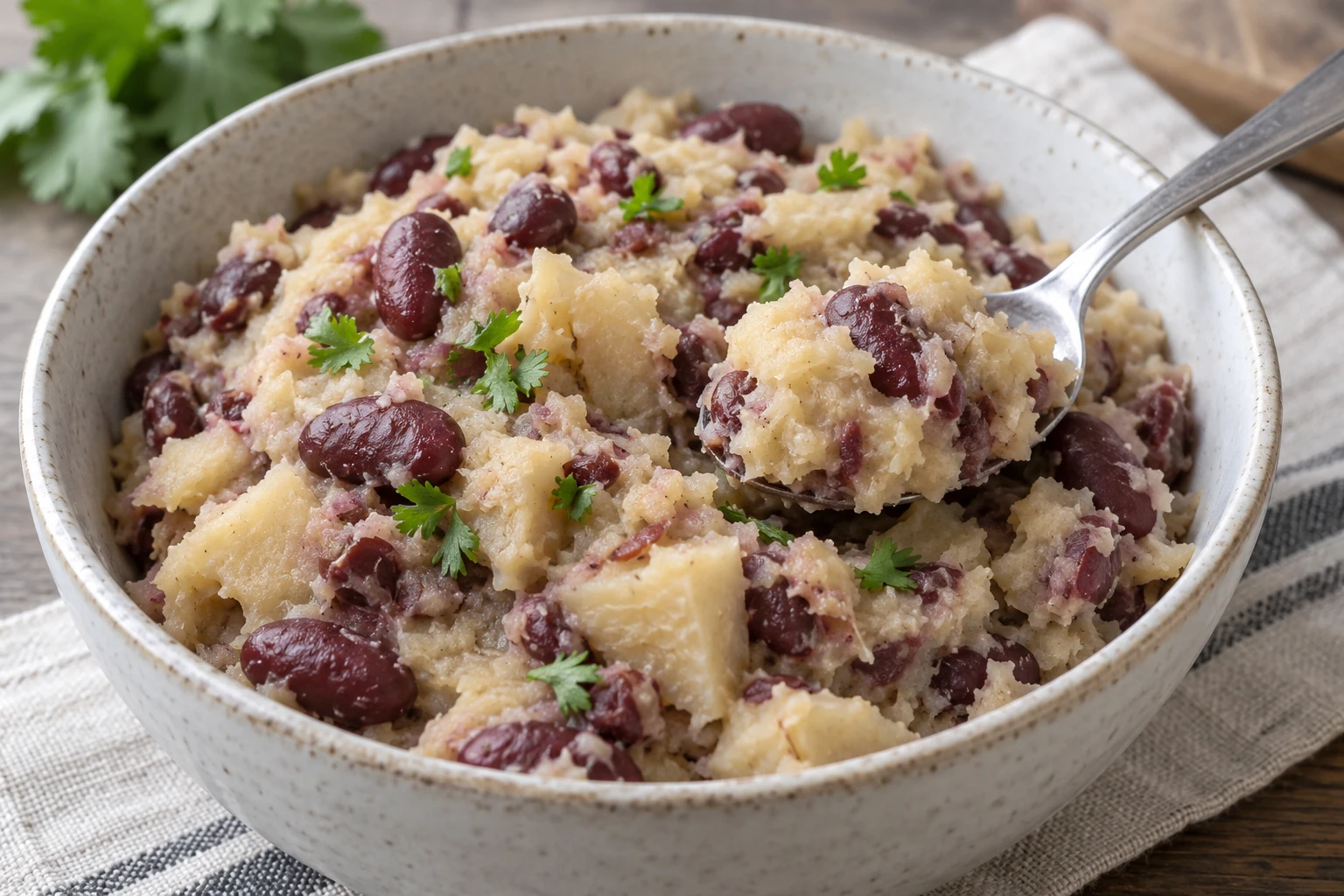
A mound, a cup of tea, a vegetable side
The Isukha documentation describes shaping the mash into a dome and serving it warm with black tea or meat stew. Nairobi Kitchen also pairs its version with tea. The plate can therefore be simple: the mash already contains both sweet potato and beans, and its texture is the main event.
Contemporary cooks add their own finishes. Gwen Jikoni offers chopped chives or coriander and suggests sautéed cabbage or other vegetables. The optional coriander here follows that route; it is a choice, not a requirement for the dish. Plain or lightly garnished, leave the mash thick enough to gather on a spoon and soft enough for the beans to settle into it.
Research notes
Sources behind this article
- Traditional Foodways of the Isukha Community of Kenya The 2013 community documentation project records mushenye as cooked sweet potatoes mashed with legumes, shaped into a dome and served warm; pages34–36.
- Nairobi Kitchen — Mulunga Alukwe’s Omushenye The original method mashes cooked sweet potatoes and beans, finishes with a wooden spoon and allows some beans to remain whole.
- Gwen Jikoni — Mushenye, sweet potato and bean mash Uses cooked yellow beans and sweet potatoes, reserves cooking water for texture adjustment and offers chives or coriander with vegetables.
- Winnie’s PureHealth — Mshenye A Kenyan producer’s distinct method drains cooked sweet potatoes and combines them with hot cooked yellow beans, returning water only if needed.
- FDA — Natural toxins in food Explains the lectin hazard in raw or undercooked kidney beans and distinguishes canned and properly cooked beans.
Keep exploring
More stories for your table
Ethiopian cuisine Fermented flatbread
Injera: read the grain, the eyes and the soft fold
A guide to Ethiopian injera: teff colours and flour blends, the cooked batter called absit, one-sided covered cooking, and serving a soft porous bread.
Argentinian cuisine Cold vegetable salad
Argentine Ensalada Rusa: Keep the Vegetable Cubes Intact
Potato, carrot and peas make a familiar Argentine cold side. Cook and drain the vegetables separately, then coat gently in this four-serving ensalada rusa.
Japanese cuisine Seasonal vegetables
Edamame: Season the Pod, Eat the Bean
The pod shapes how Japanese edamame is salted, cooked and eaten. Compare fresh and frozen beans, two boiling methods, and Niigata’s seasonal varieties.