
Zaru Soba: The Water Before the Dip
ざるそば
For Japanese cold buckwheat noodles, rinsing and draining matter as much as the dipping sauce. Follow the three roles water plays from the pot to the final cup.
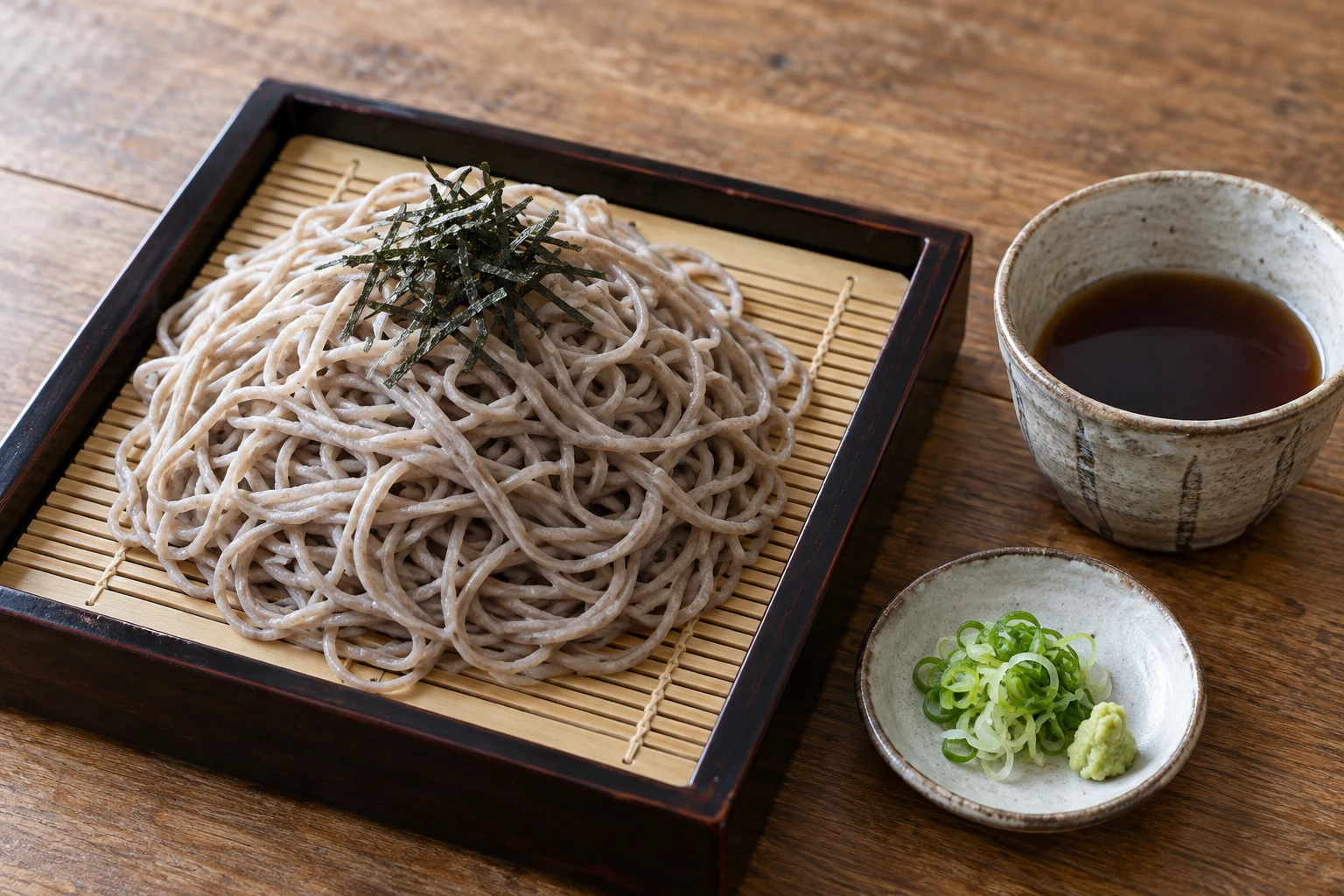
A tray, a cup, and a useful separation
Zaru soba is Japanese cold buckwheat noodles served with a separate dipping sauce. The slotted bamboo mat is more than a visual cue: it keeps the noodles out of the moisture that drains from them. The arrangement lets each small mouthful meet the sauce just before it is eaten.
Japan National Tourism Organization describes separate service partly in terms of avoiding dilution from noodle water. Kikkoman’s culinary researcher Yuko Ihara likewise explains the bamboo zaru and the soy-and-dashi tsuyu. Taken together, these accounts make water management a useful way to understand an apparently simple meal.
First water: give the noodles room
- 01
Choose the noodles before choosing a clock
Fresh and dried soba are not interchangeable packages. Kikkoman and the Japanese home cooks at Japanese Cooking 101 direct readers to the noodle maker’s cooking instructions. Use those instructions rather than treating one published timing as universal.
- 02
Separate the strands in the pot
Kikkoman explains that ample boiling water allows circulation and accommodates the flour on the noodles’ surface. The point is evenly cooked strands with a little resilience, rather than a tightly packed clump that cooks unevenly.
Second water: rinse, chill, then let it leave
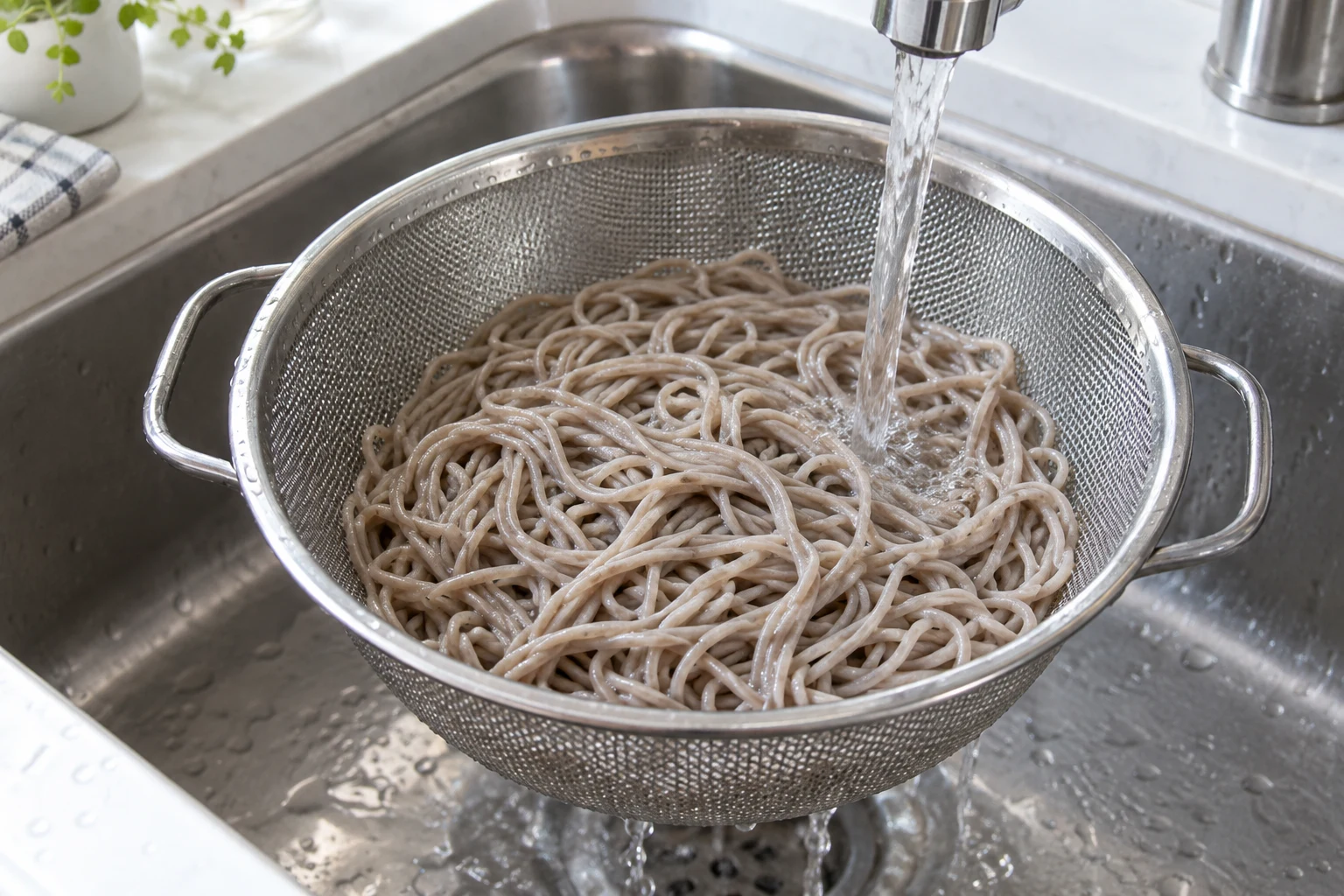
Just One Cookbook and Kikkoman both make rinsing a distinct stage after boiling. The rinse removes the slippery surface starch; cooling alone is not the whole purpose. Namiko Hirasawa Chen follows it with a brief ice-water chill and thorough draining. Japanese Cooking 101 also cools, chills and strains its noodles.
That sequence answers a common practical question: why can cold noodles still feel sticky? The preparation needs to address both temperature and what remains on the surface. Once rinsed and chilled, the noodles should drain before they reach the tray, so excess water does not follow every mouthful into the sauce.
The dipping cup has its own balance
- Tsuyu
- Soy sauce and dashi
- Bottled mentsuyu
- Read the dilution directions
- Condiments
- Small additions
- The dip
- A brief meeting
The linked preparations use bonito-based dashi. The sauce is savory and concentrated enough for dipping.
Just One Cookbook notes that brand concentrations differ. A bottle’s stated ratio matters more than a guessed splash of water.
Green onion and wasabi let the diner vary individual mouthfuls; they need not bury the noodle’s flavor.
Kikkoman recommends dipping lightly so that the sauce supports the aroma of the soba.
Third water: the pot returns to the table
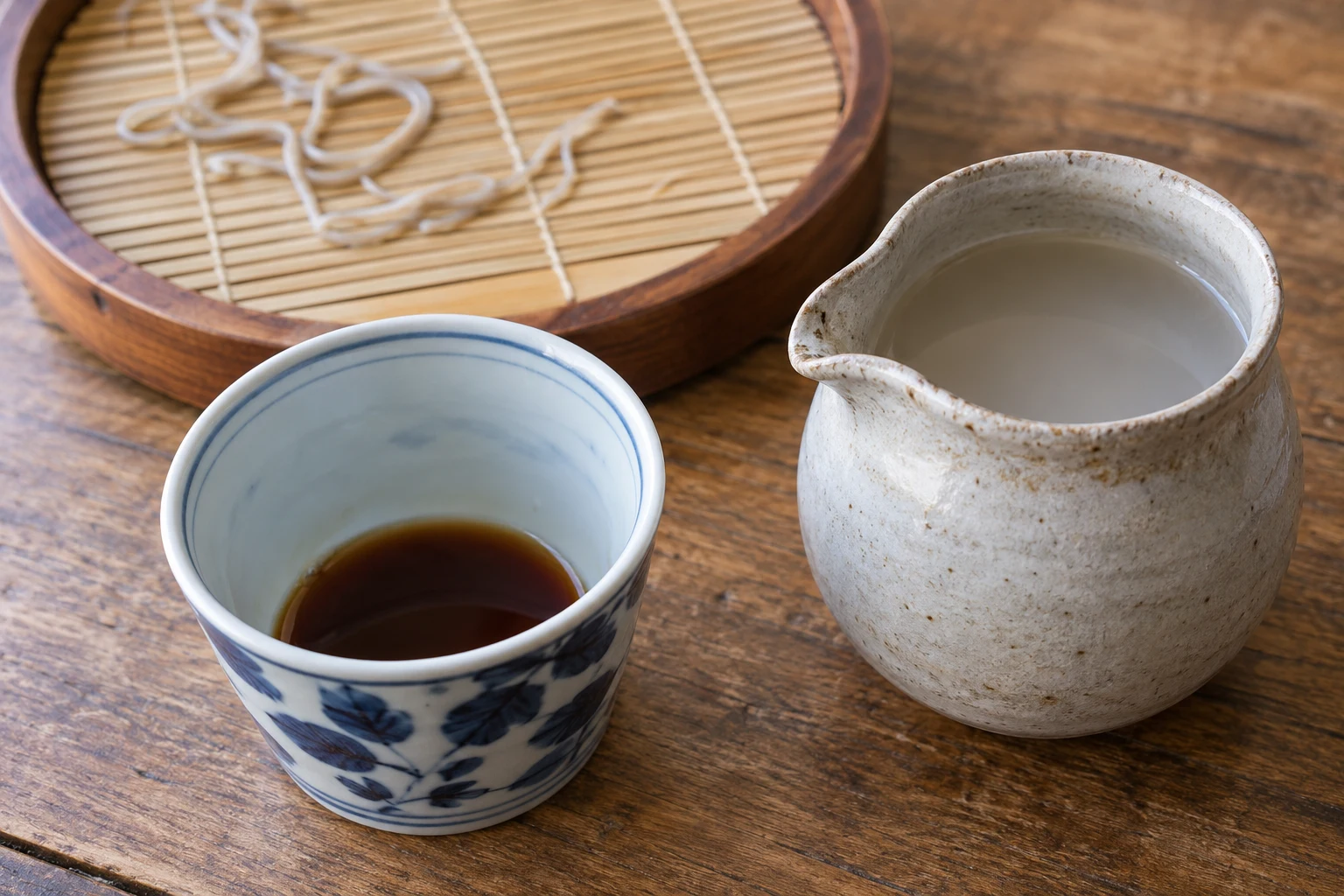
At some soba restaurants, the meal ends with sobayu, the warm water used to boil the noodles. Japanese Cooking 101 describes adding it to leftover dipping sauce; Kikkoman documents the same practice and its serving vessel. The final cup transforms the remaining strong sauce into something gentler to drink.
This is cooking water reserved from the pot, before the cold rinse—not water collected from the sink or the draining tray. Its place at the end of the meal connects two stages that otherwise seem unrelated: the hot water that cooked the soba and the separate cup that flavored it.
Research notes
Sources for the noodle, rinse and cup
Four independent original or institutional accounts support the service and technique. Complete recipes provide quantities where needed.
- Yuko Ihara for Kikkoman: Zaru Soba Detailed producer-published lesson covering ample cooking water, washing, draining, light dipping and sobayu service.
- JNTO: Udon / Soba National tourism guidance distinguishing soba ingredients and separate noodle-and-sauce service.
- Namiko Hirasawa Chen: Zaru Soba Japanese recipe creator’s rinse, ice-water chill, concentrated sauce and brand-specific dilution instructions.
- Japanese Cooking 101: Zaru Soba Noriko and Yuko’s original recipe, buckwheat versus wheat blends, package cooking guidance and final sobayu drink.
Keep exploring
More stories for your table
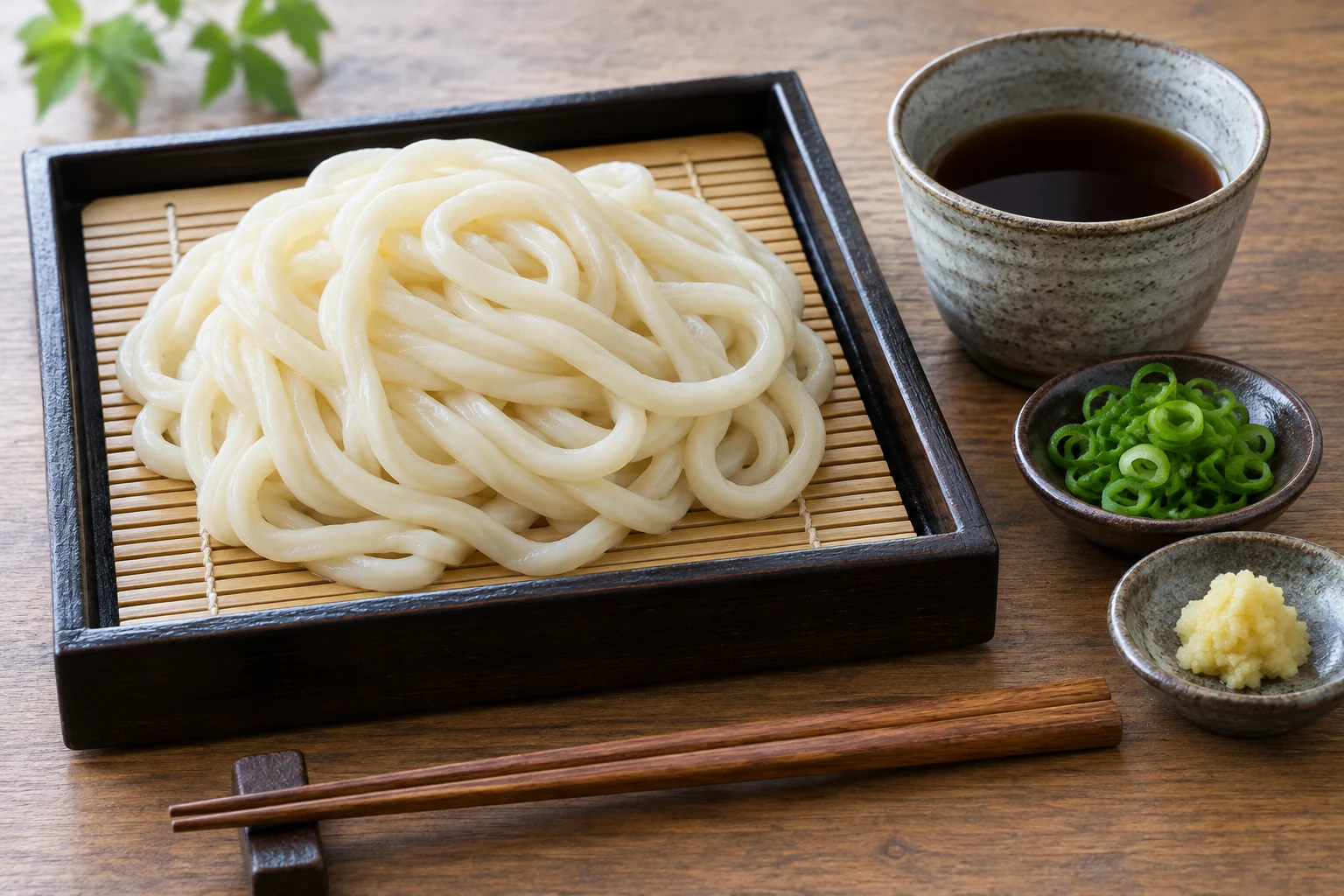
Japanese cuisine Wheat noodles
Udon: choose the serving before the topping
Hot soup and chilled dipping reveal different sides of udon. Read regional styles, noodle handling and sauce choices before choosing a topping.
Japanese cuisine Noodles
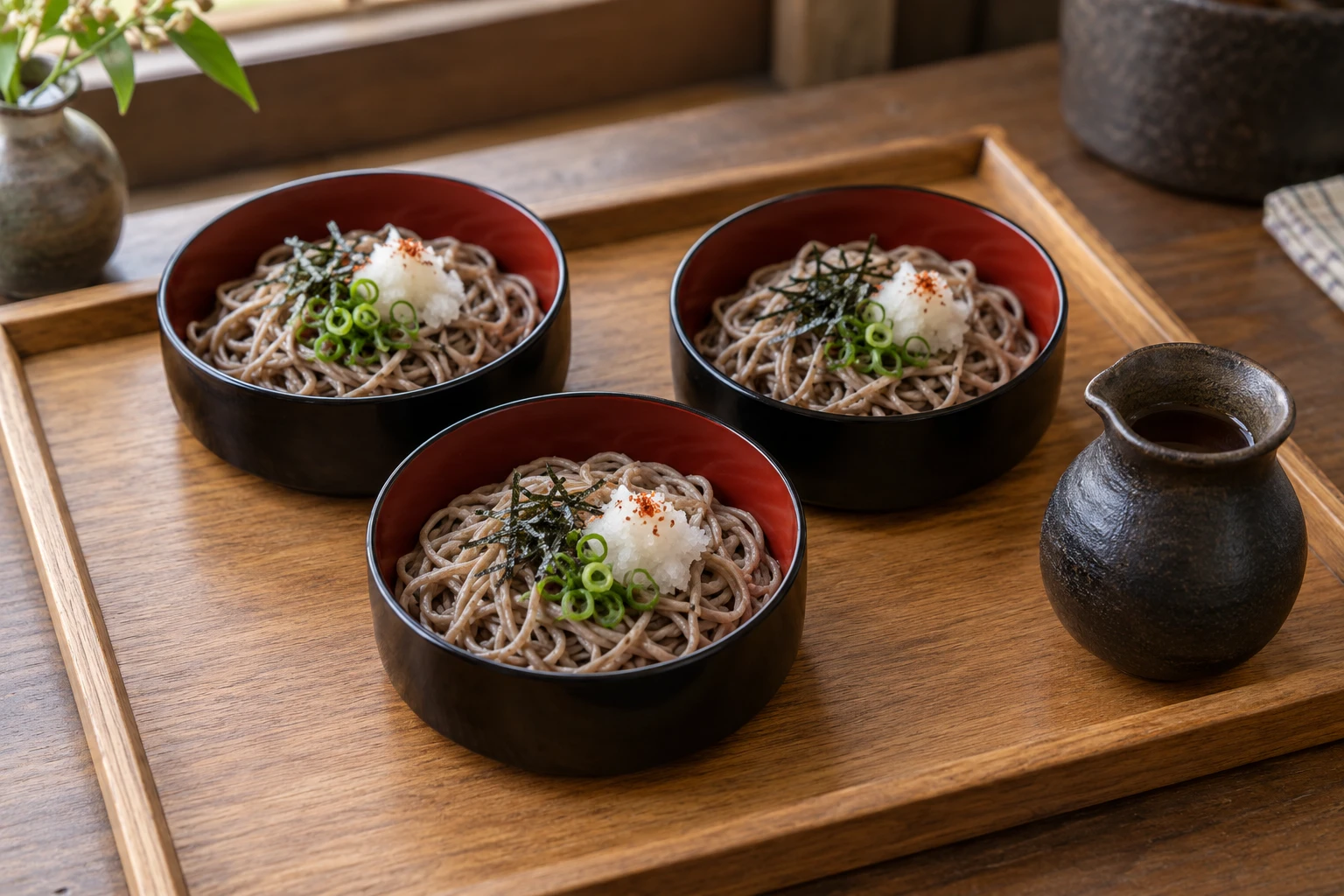
Soba: Read the Flour, Then the Serving
Soba describes a noodle family, not one flour ratio or one bowl. Ingredient labels, fresh noodle making and Izumo serving styles explain the differences.
Japanese cuisine Steamed egg custard
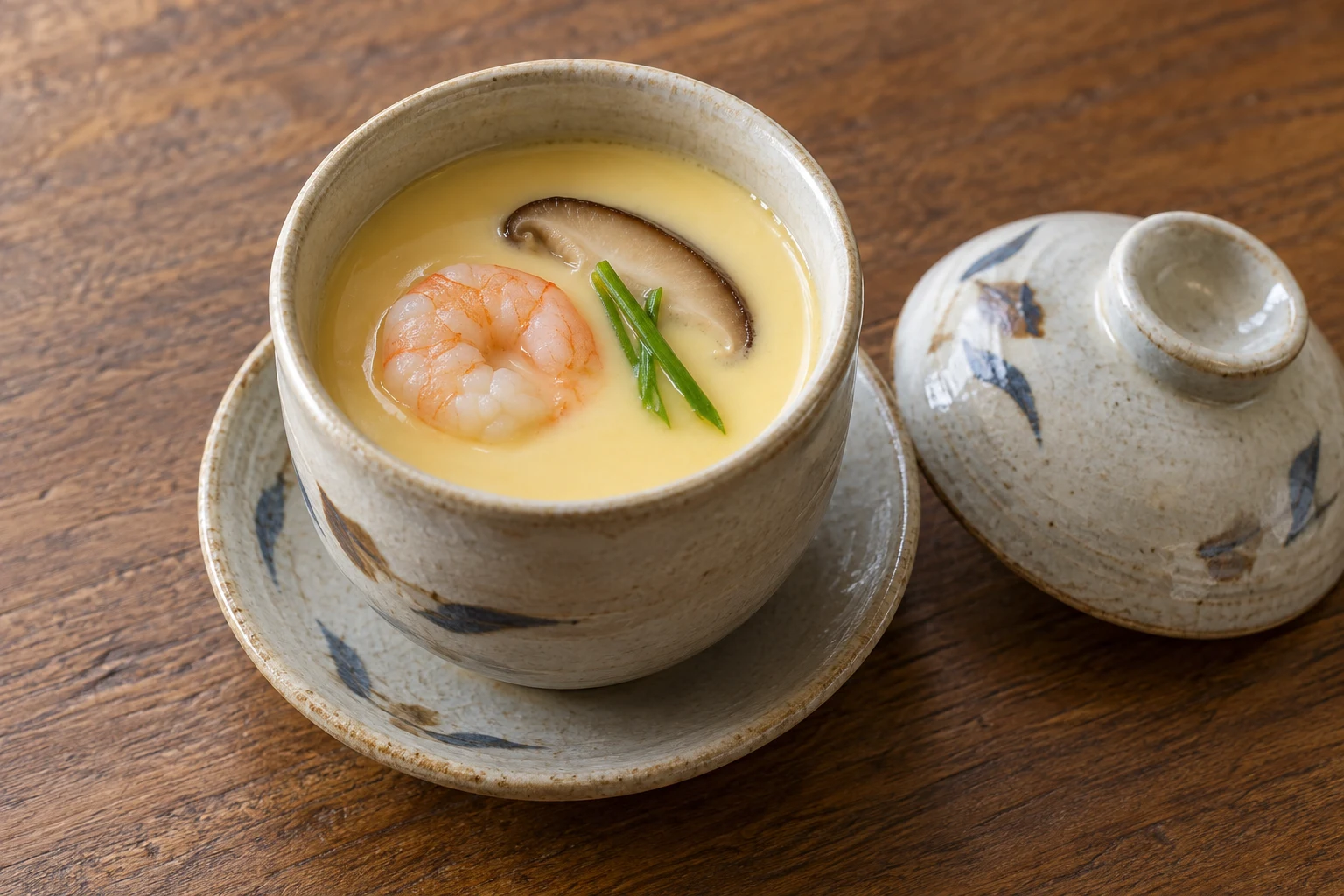
Chawanmushi: Dashi Held in a Spoon
Why Japanese steamed egg custard tastes like broth, how gentle heat preserves its smooth texture, and what different fillings reveal about the dish.