
Udon: choose the serving before the topping
うどん
Hot soup and chilled dipping reveal different sides of udon. Read regional styles, noodle handling and sauce choices before choosing a topping.
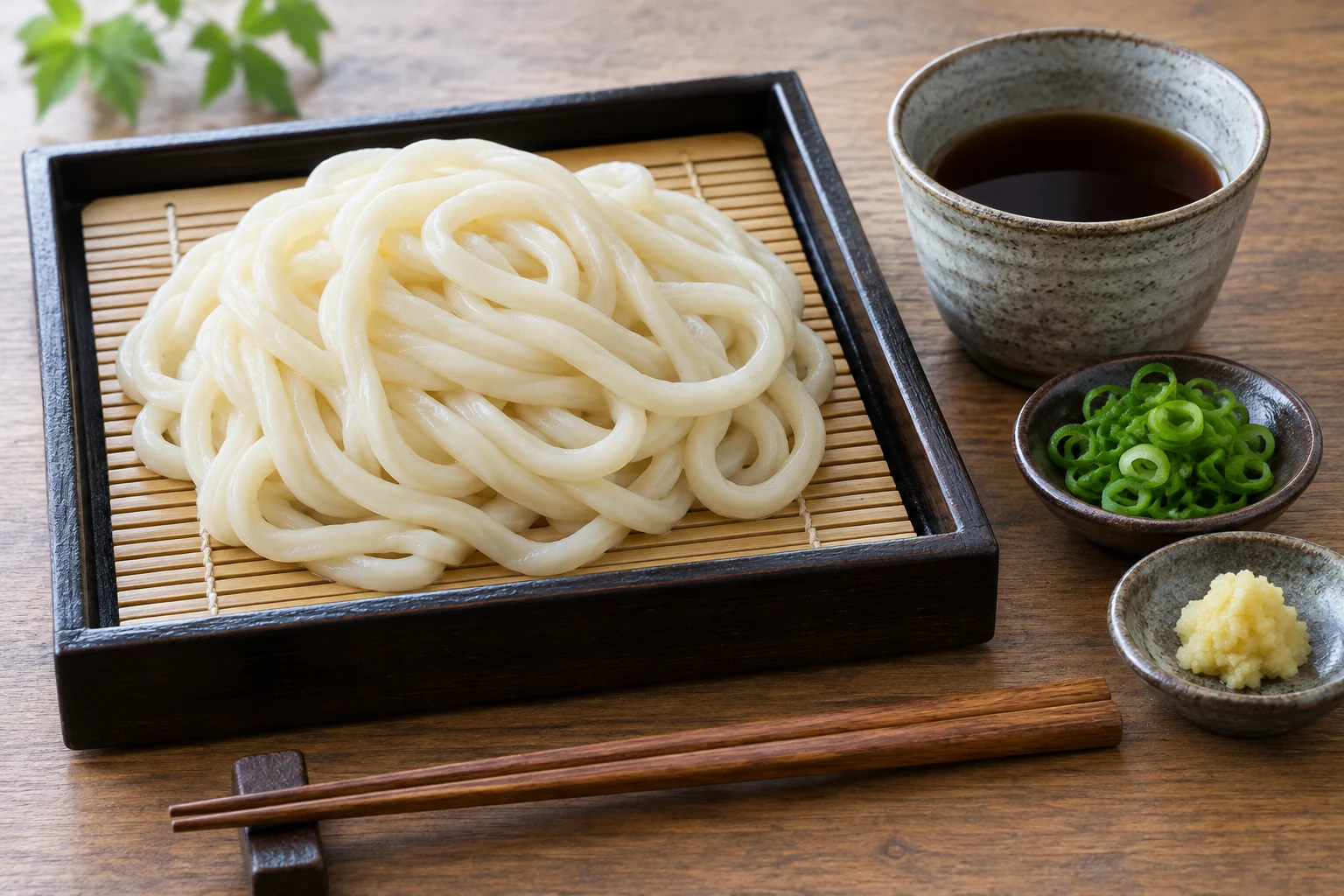
The noodle is the starting point
A thick pale noodle can carry a bowl of warm broth or sit almost unadorned beside a dipping cup. Both servings make sense for udon. The decision changes the meal's rhythm: hot soup gives you noodle and broth together, while a chilled serving lets you dip small mouthfuls as you go.
Kikkoman's Yuko Ihara describes udon made from wheat flour and salt water, with a chewy texture at the centre of its appeal. That ingredient description is useful, but a single photograph cannot represent every regional style. Before choosing a topping, consider how you want to eat the noodles and what the particular bowl or tray promises.
Two ways the sauce meets the noodle
Hot soup: the bowl is assembled
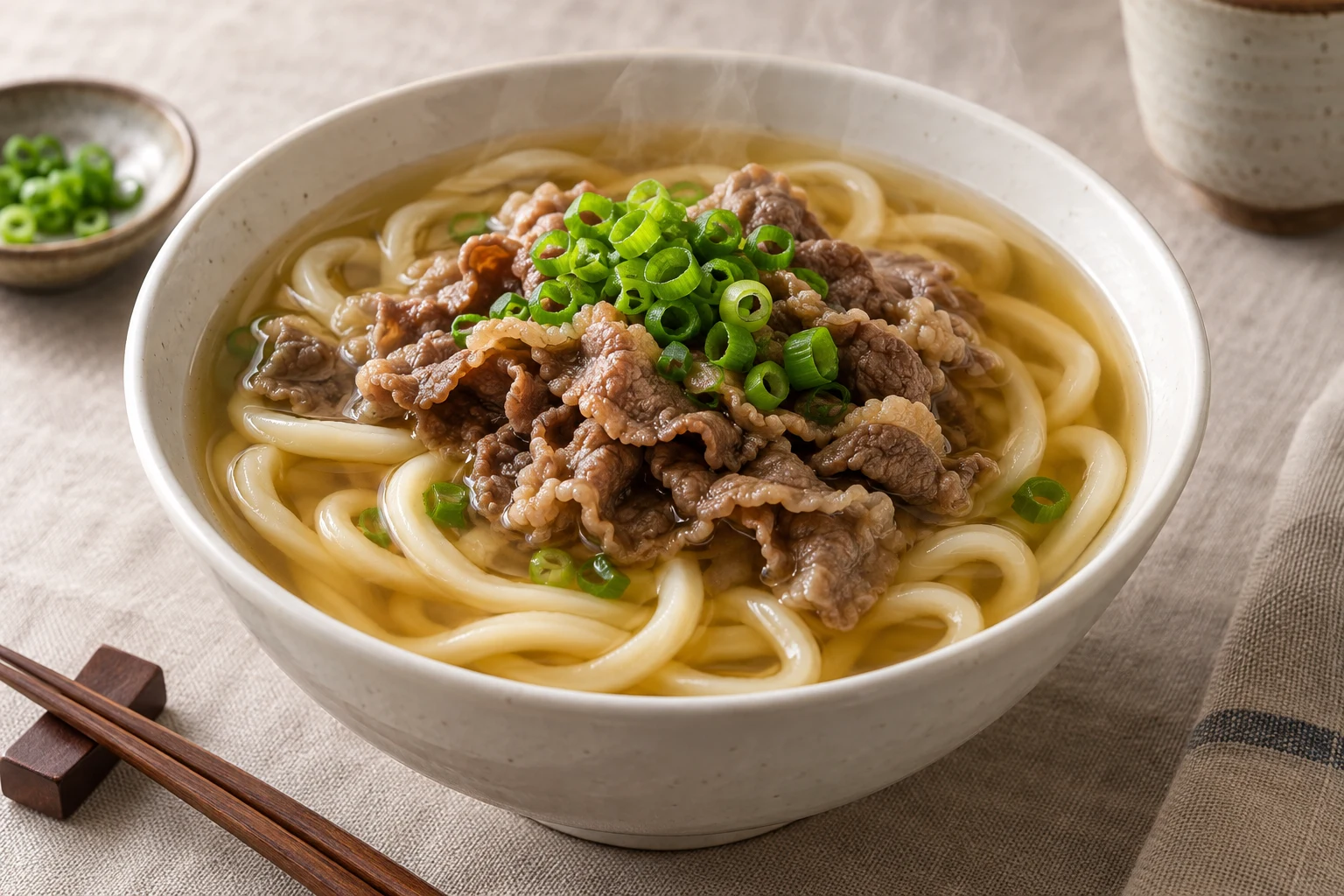
Ihara's beef udon briefly warms prepared noodles in its tsuyu, then serves them with soup, separately seasoned beef and green onion. The topping is a specific addition to the noodle-and-broth combination.
- Look at the broth as well as the visible topping.
- Niku identifies the beef version shown here.
Chilled dipping: the cup stays separate
Chen's zaru udon serves rinsed, chilled noodles with cooled dipping sauce. Condiments such as scallion and grated ginger sit alongside, ready to join the cup according to preference.
- Dip a manageable mouthful rather than treating the sauce as a whole bowl of soup.
- Taste the first noodles before adding every condiment.
Regional names tell you more
Sanuki udon is associated with Kagawa, whose former provincial name supplies the label. JNTO's regional feature describes chunky noodles served hot or cold, in broth or with sauce on the side. It also highlights iriko, dried small anchovies, in the local broth. This is a useful example of why the noodle and soup need separate attention: a pale or simple-looking serving can still have a fish-based stock.
Gunma's official Mizusawa guide offers another close view. It interviews local noodle makers about flour, resting and the day's conditions, and reports their recommendation to try the noodles chilled. The point is not that cold is the only correct serving; it is that this particular presentation lets their noodle texture take the foreground.
The packet and the serving both matter
Home recipes often start with purchased noodles, but dried, frozen and parboiled products are not one cooking instruction. Ihara's method follows the packet's boiling time, loosens the noodles in ample water, and rinses them before briefly returning them to warm soup. Keep that sequence attached to the recipe instead of converting it into a rule for every udon dish.
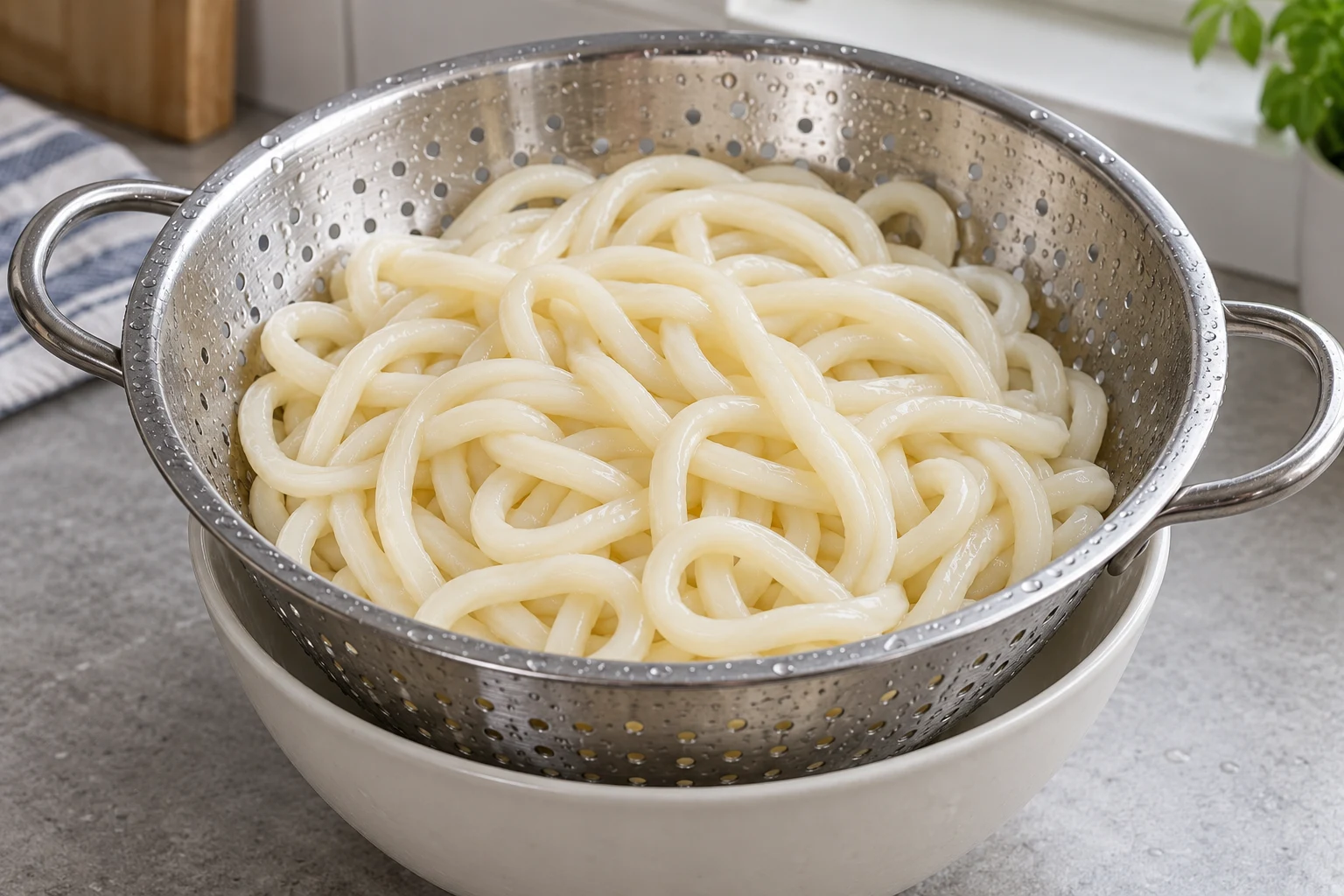
Chen's cold method also rinses away excess starch, then chills and drains. That is the preparation shown in the colander illustration. If you change the noodle product, read its directions alongside the chosen recipe. A familiar shape does not establish that the new packet needs the same time as the old one.
Let the noodle have a clear first taste
For a chilled serving, begin with the dipping sauce and just one condiment. For hot soup, try some broth before the topping. Either approach gives you a baseline, so additions become choices you can notice instead of a crowd of flavours arriving at once.
Mizusawa's local guide describes soy-based and sesame-miso dipping sauces across its restaurants. They offer another useful comparison for a future meal, rather than a universal formula to combine at home. This guide supplies neither a tested dough recipe nor interchangeable stock amounts; the linked methods provide the complete instructions for their specific servings.
Research notes
Regional accounts and complete home methods
Two official regional guides and two original recipes explain noodle identity, hot and cold service, handling and sauce choices.
- JNTO: the Sanuki Road Kagawa's Sanuki noodles, multiple serving styles and iriko broth.
- Gunma tourism: Mizusawa udon Local noodle-maker interviews, chilled presentation and differing dipping sauces.
- Yuko Ihara: beef udon Wheat-noodle identity and a specific boil, rinse and hot-soup assembly sequence.
- Namiko Hirasawa Chen: zaru udon Rinsing and chilling, separate dipping sauce and product-specific mentsuyu dilution.
Keep exploring
More stories for your table
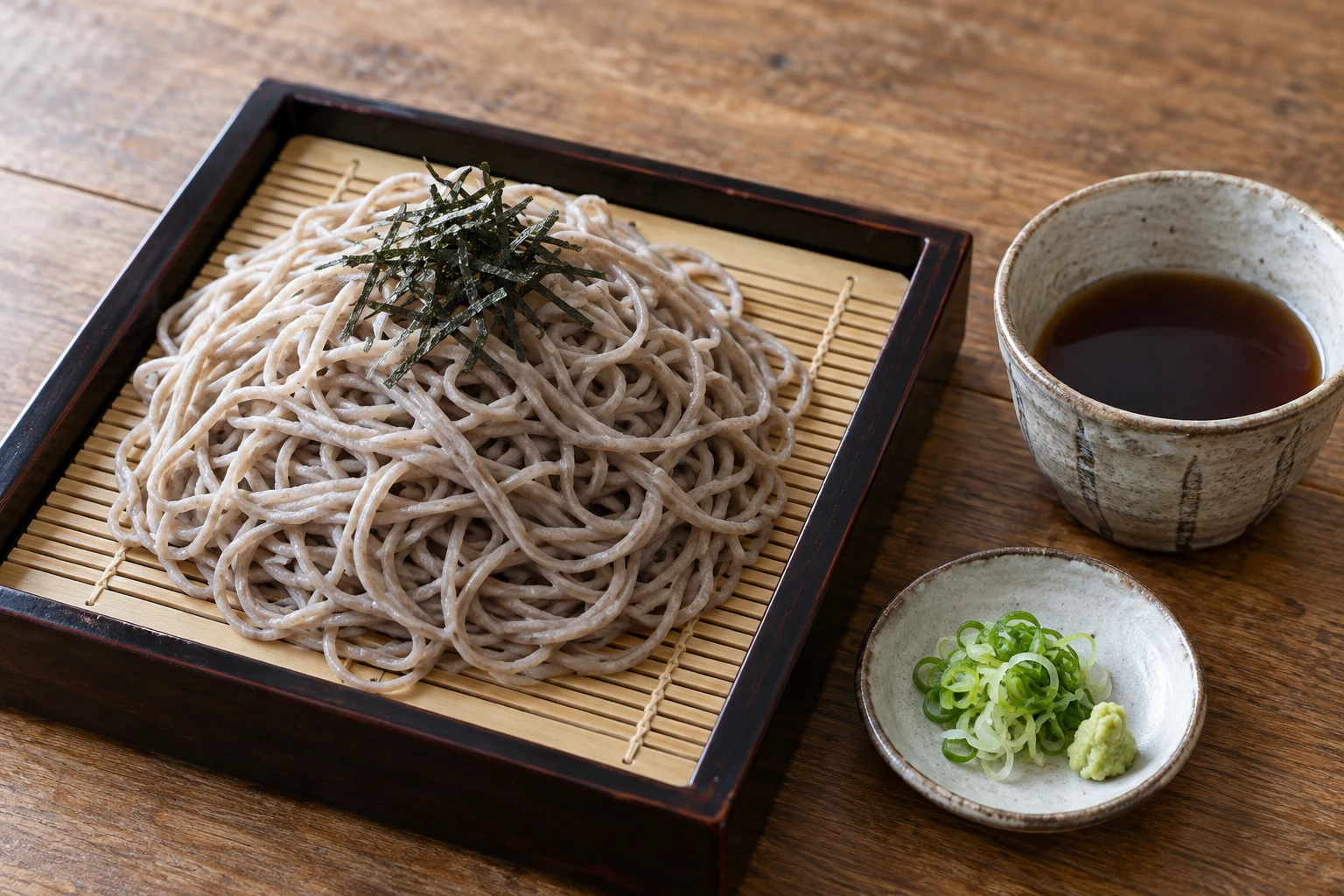
Japanese cuisine Cold noodles
Zaru Soba: The Water Before the Dip
For Japanese cold buckwheat noodles, rinsing and draining matter as much as the dipping sauce. Follow the three roles water plays from the pot to the final cup.
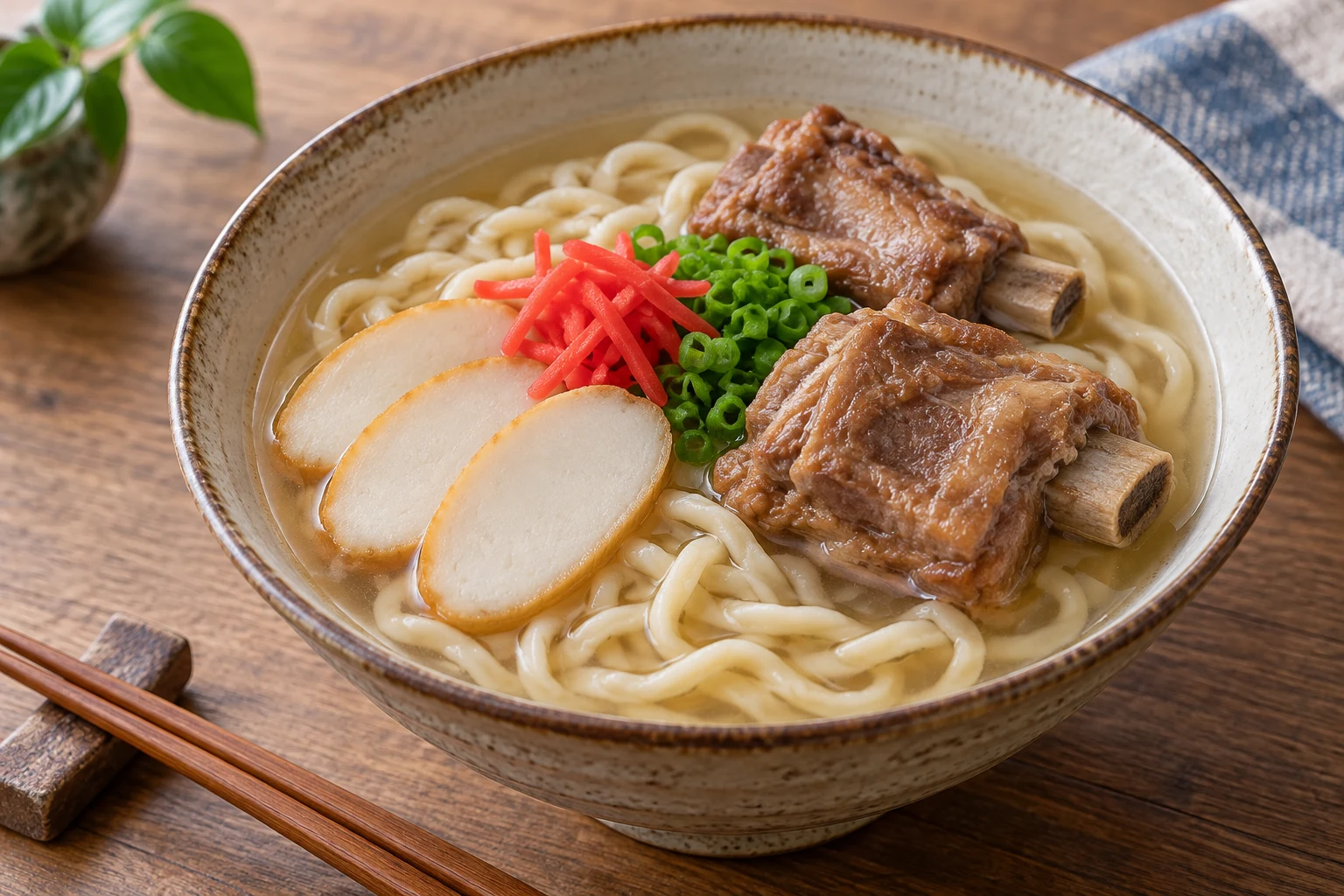
Japanese cuisine Okinawan noodle soup
Soki soba: read the ribs, noodles and broth
Wheat noodles, pork-and-bonito broth and a tender rib topping explain soki soba. Learn its place in Okinawa's wider noodle-soup family.
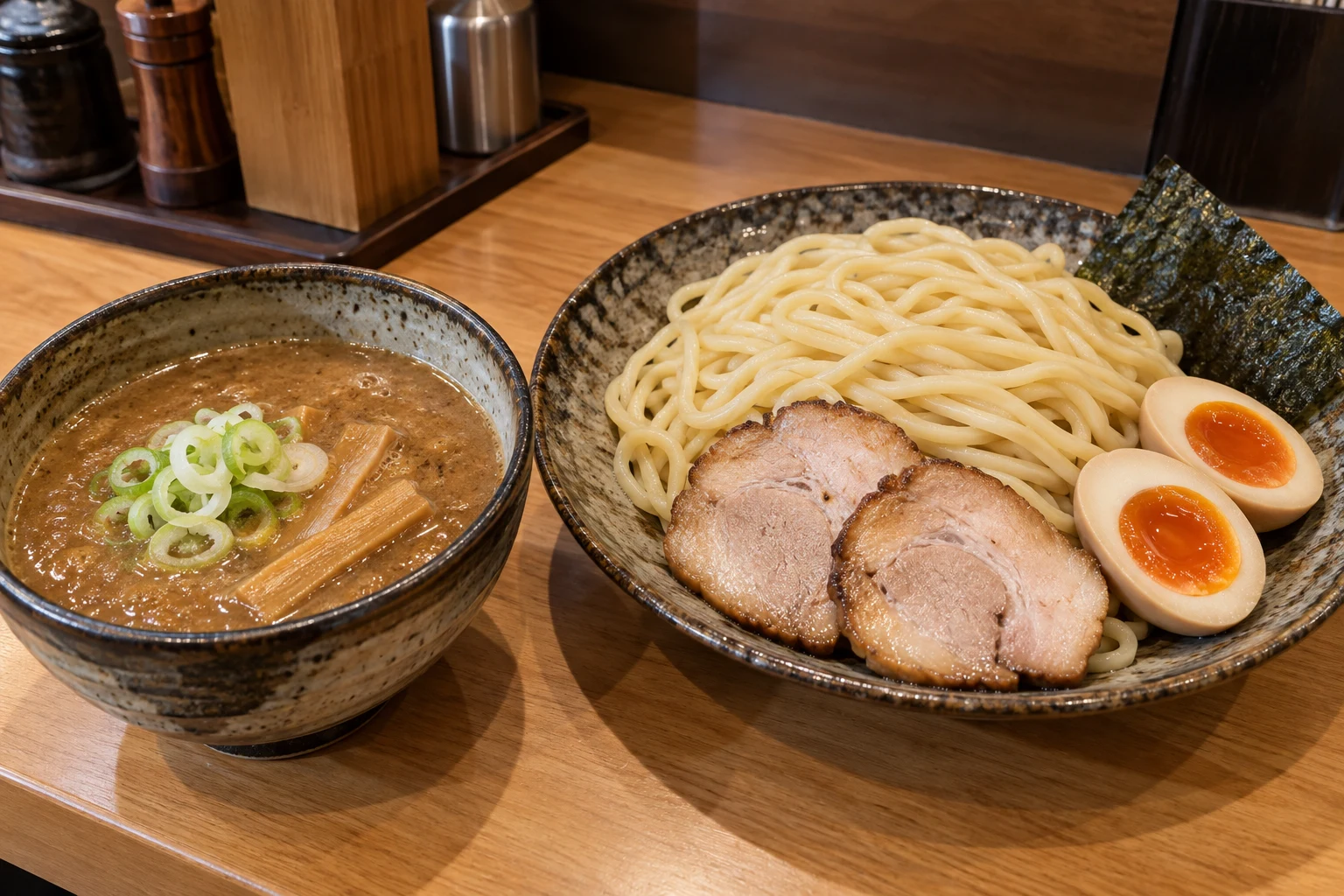
Japanese cuisine Dipping noodles
Tsukemen: follow the noodles, then finish the broth
Tsukemen gives noodles and broth separate roles. Learn the dipping rhythm, warm-noodle option, soup-wari finish and Hiroshima’s spicy variation.