
Tsukemen: follow the noodles, then finish the broth
つけ麺
Tsukemen gives noodles and broth separate roles. Learn the dipping rhythm, warm-noodle option, soup-wari finish and Hiroshima’s spicy variation.
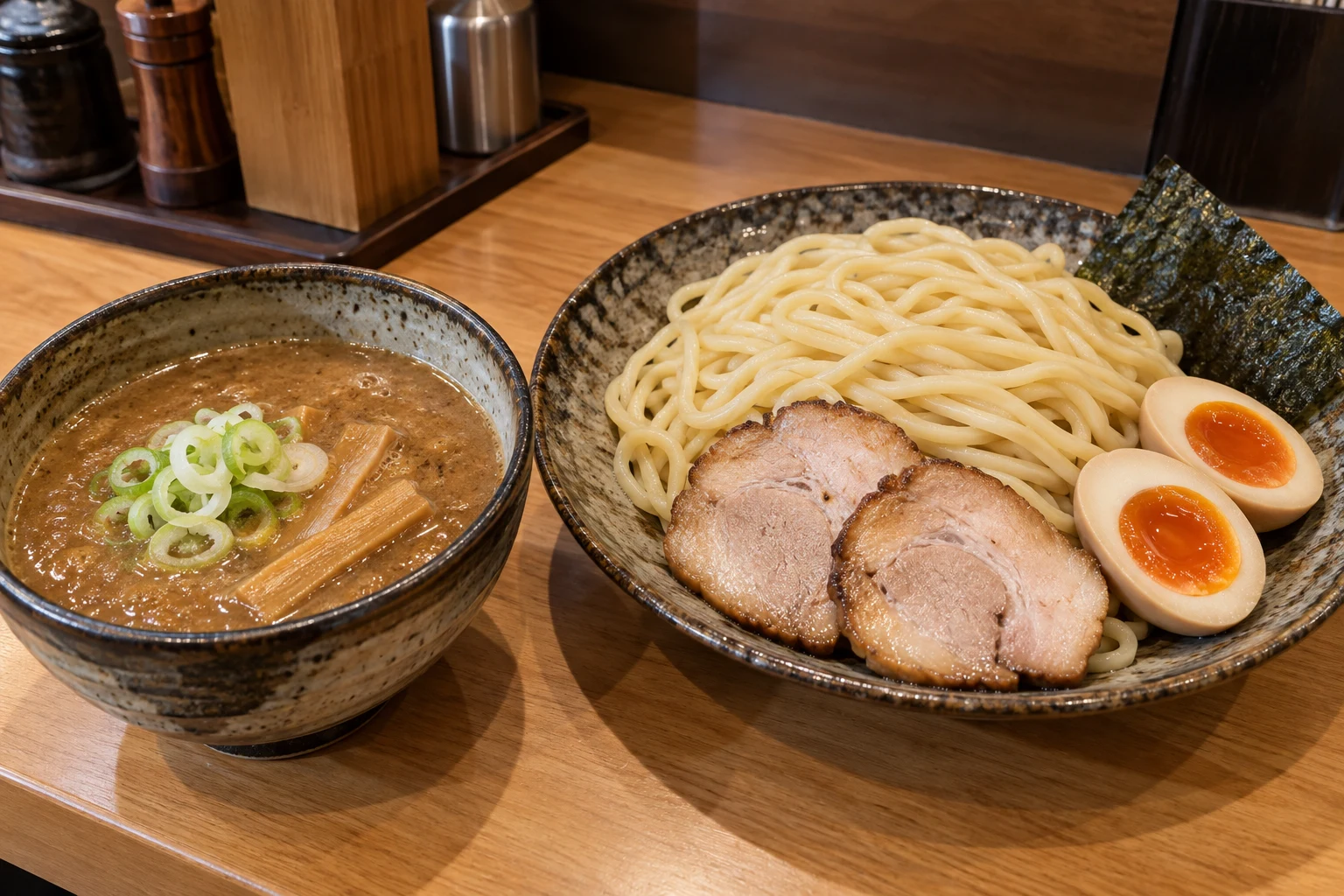
The two vessels are the first clue. With tsukemen, the noodles arrive separately from the dipping broth, so each mouthful begins with a choice about how much noodle to lift and how much broth to bring with it. The meal has a rhythm that becomes clear after the first few bites.
Namiko Hirasawa Chen of Just One Cookbook describes noodles typically served chilled or at room temperature alongside hot broth. Her explanation puts the noodle’s springy texture at the centre of the experience. That is a useful starting point, while leaving room for warm-noodle requests and regional variations.
Start with a small mouthful
- 01
Notice the noodles themselves
Taishoken’s published 2019 menu guide suggests tasting some noodles before dipping them, to appreciate their wheat flavour and texture. Try that if you are curious about what the noodle contributes on its own.
- 02
Dip one bite at a time
Rokurinsha’s own menu instructs diners to dip the noodles a bite at a time. Lift an amount you can manage comfortably, dip it, then eat it before picking up the next portion.
- 03
Let the toppings vary the meal
Taishoken’s guide offers toppings either as they are or dipped into the broth. Keeping them separate gives you a way to vary the sequence instead of stirring every component together immediately.
The dipping broth has a different job
Chen explains that her broth is intentionally more strongly seasoned to accompany plain noodles. Rokurinsha describes its own dipping broth as especially thick. These details explain why a small bowl of dip should not be assessed exactly like a large bowl of soup that already contains all the noodles.
Begin with the arrangement served to you. A small dip lets you notice how much broth accompanies the noodle; the next mouthful can be dipped a little differently. If you would like to drink the remaining broth at the end, check whether the restaurant offers a finishing stock rather than assuming it is meant to be consumed at its original strength.
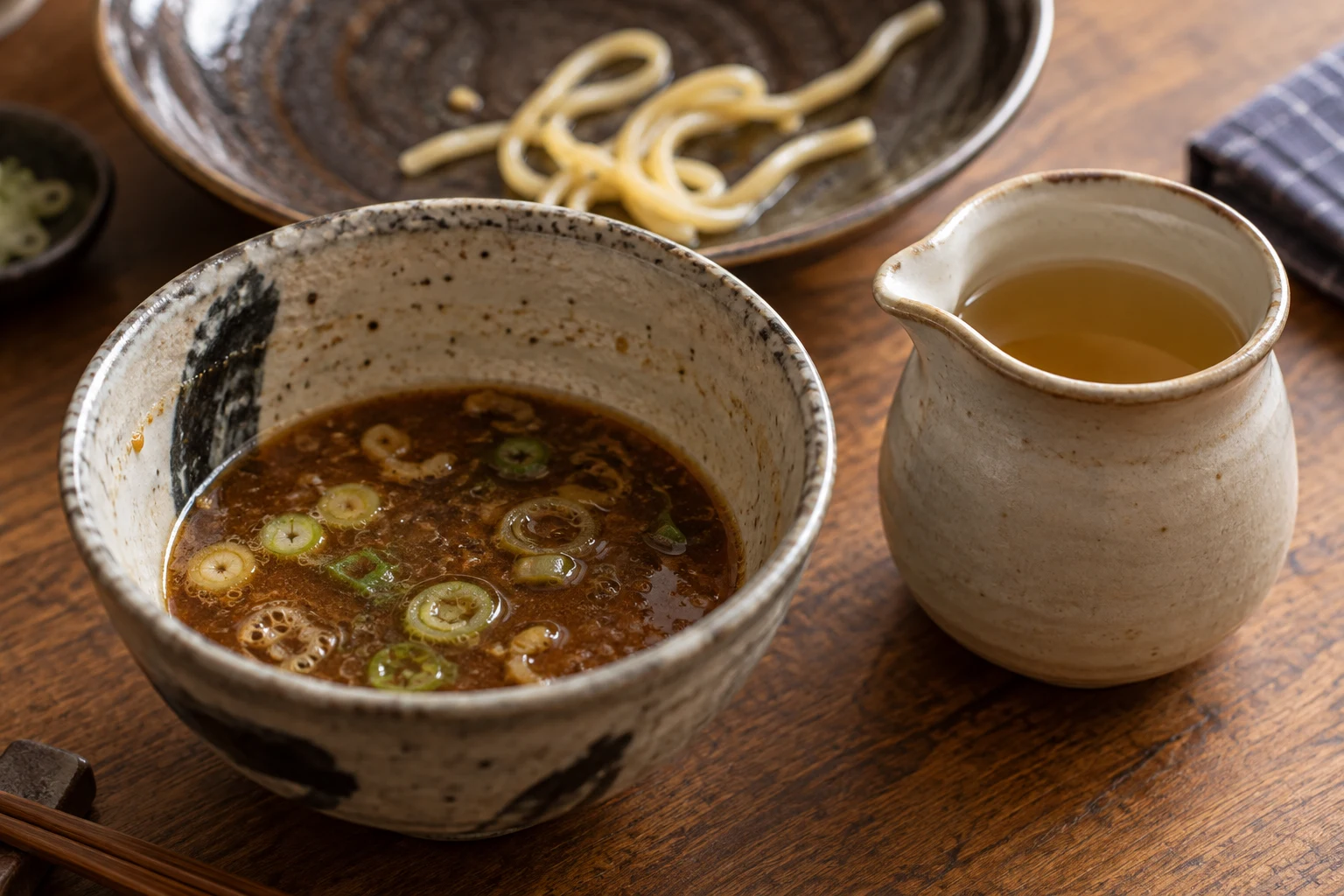
Soup-wari changes the final course
Soup-wari is the dilution of the remaining dipping broth with stock. Taishoken’s menu guide describes asking the server for its dashi near the end of the noodles. Rokurinsha offers a finish called wari-jiru, made with fish stock and yuzu. The finishing liquid has its own ingredients and flavour.
Ask whether soup-wari is available and how the kitchen serves it. A pitcher on the counter, stock brought to the table and staff finishing the bowl are different arrangements; follow the one the restaurant provides. Taste the diluted result as a new stage of the meal, after the noodles have done their part.
Warm noodles can still be tsukemen
Rokurinsha’s menu allows an atsumori version: its noodles are served warm after their cold-water treatment. This is a specific option at that restaurant, rather than a promise that every tsukemen shop offers it. The vessels remain separate even when the noodles are warm.
If noodle temperature matters to you, ask before ordering. “Can I have the noodles warm?” communicates the practical choice without requiring you to know every menu term. Keep noodle temperature and sauce style as separate questions: a warmer noodle does not, by itself, identify the ingredients in the broth.
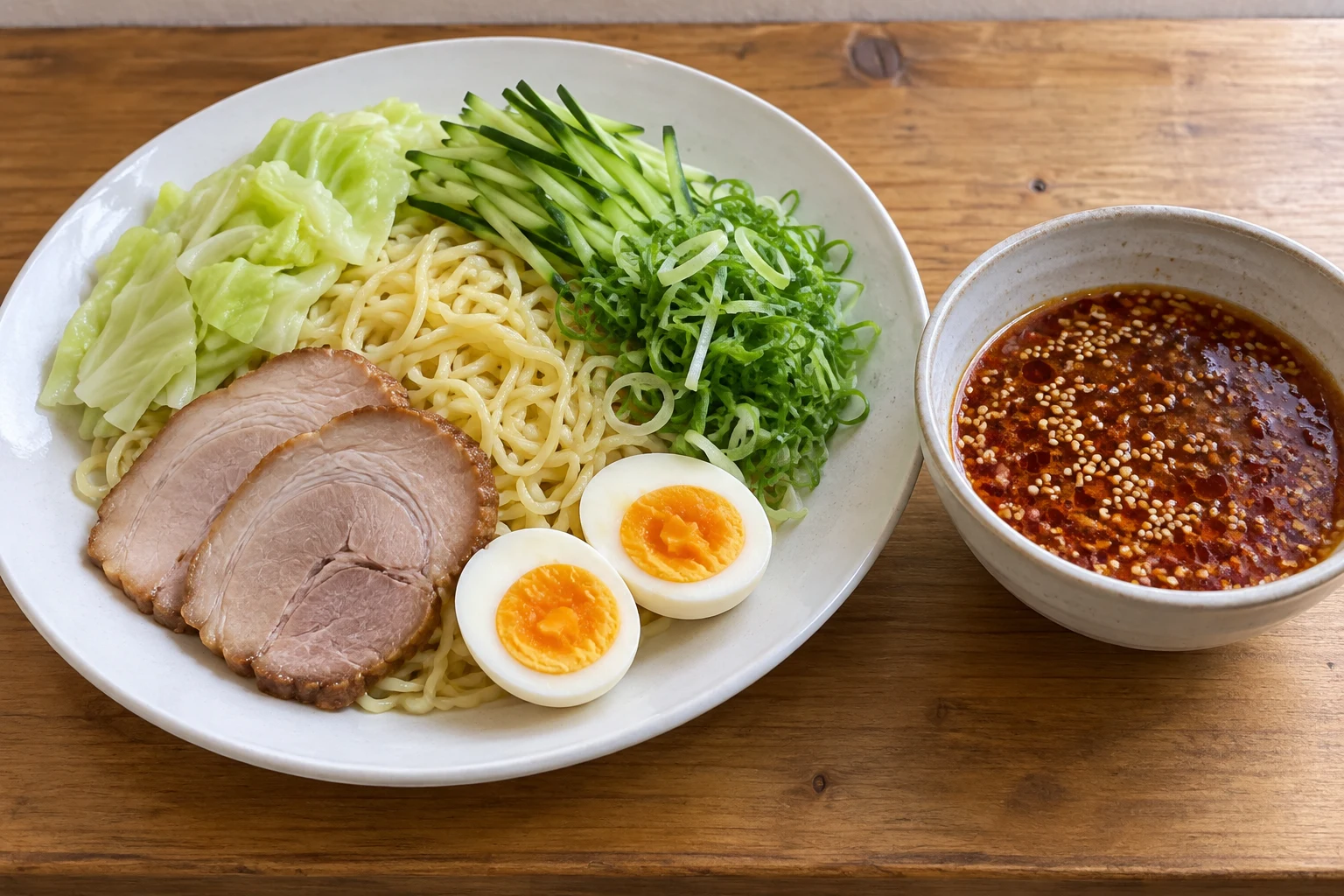
Hiroshima leads with a different dip
The official Dive! Hiroshima guide describes chilled noodles with shredded green onion and boiled cabbage, dipped in a spicy sauce. Its soy-based sauce includes chilli, chilli oil, vinegar and sesame, with seafood stock contributing flavour. Cucumber, pork and boiled egg also appear among the toppings described.
That is a different expectation from the thick brown dip in the opening illustration. Ask which style a menu means when the name alone is unclear. In Hiroshima-style versions, the guide notes that some restaurants provide a scale of spiciness, so choosing heat can be part of the order. Start by asking how that particular kitchen’s scale works.
At home, plan two preparations and one finish
Chen’s home method cooks the broth separately, boils and cold-rinses the noodles, drains them, and serves the components in individual vessels. Her advice to check the seasoning recognises that packaged condiments differ. Read those stages before starting so the noodles and dip can reach the table together.
Set out the noodle plate and smaller broth bowl in advance. Decide whether toppings need earlier preparation, and whether the chosen recipe includes stock for the final dilution. This turns the unfamiliar presentation into a practical sequence: prepare, serve separately, dip, then finish if desired.
Research notes
Sources from cooks, restaurants and Hiroshima
A home-cooking reference, two restaurants’ own explanations and Hiroshima’s official tourism guide support the eating and preparation details.
- Just One Cookbook — Namiko Hirasawa Chen’s tsukemen Separate serving, noodle treatment, concentrated dipping broth and home preparation sequence.
- Rokurinsha — official menu and eating instructions One-bite dipping, atsumori and fish-stock-and-yuzu wari-jiru.
- Taishoken — published 2019 menu guide The dated menu’s noodle tasting, topping options and soup-wari instructions are used as eating guidance, without current price or service claims.
- Dive! Hiroshima — official Hiroshima tsukemen guide Cold noodles, vegetables, spicy soy-based sauce and restaurant-specific heat choices.
Keep exploring
More stories for your table
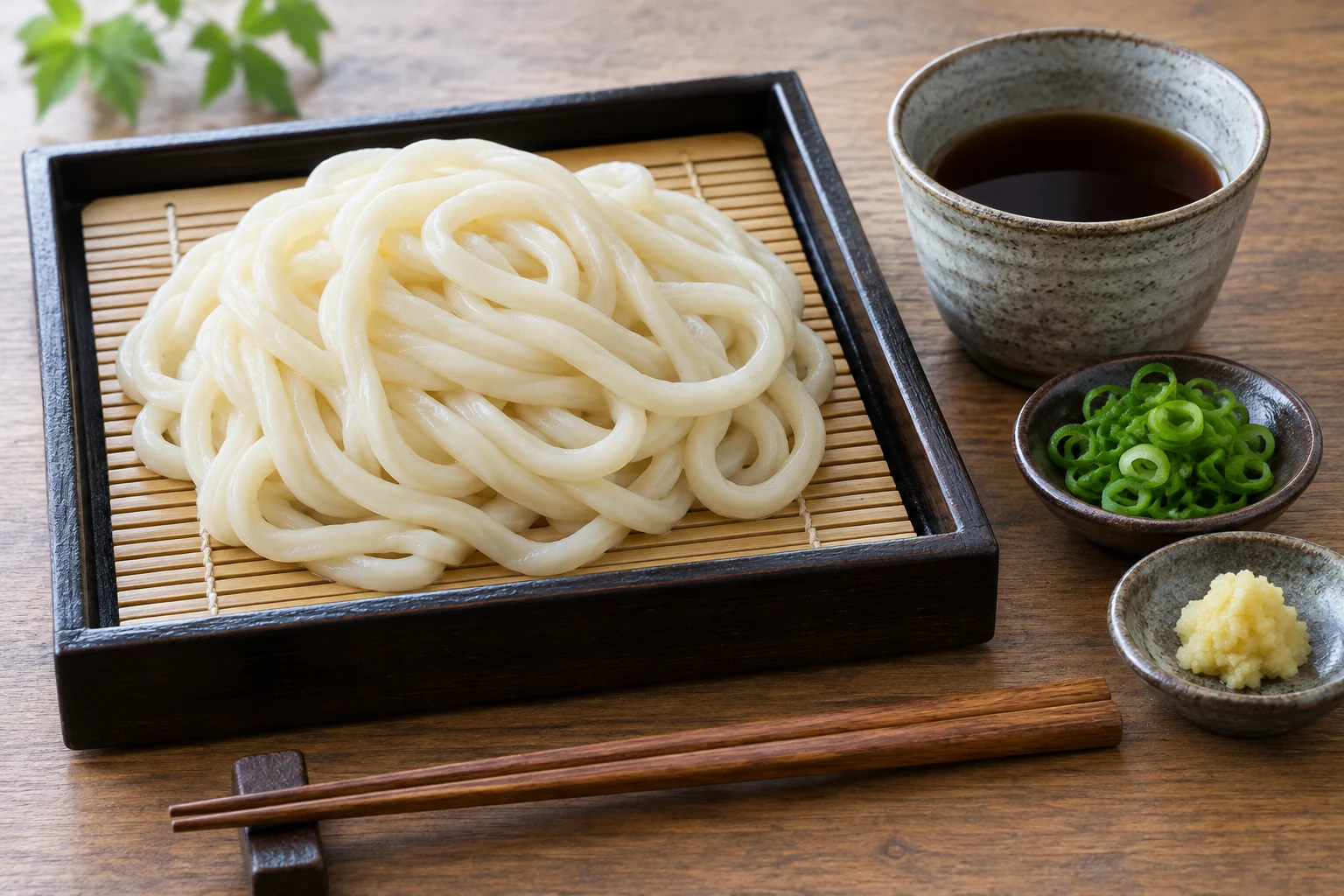
Japanese cuisine Wheat noodles
Udon: choose the serving before the topping
Hot soup and chilled dipping reveal different sides of udon. Read regional styles, noodle handling and sauce choices before choosing a topping.
Japanese cuisine Cold noodles
Zaru Soba: The Water Before the Dip
For Japanese cold buckwheat noodles, rinsing and draining matter as much as the dipping sauce. Follow the three roles water plays from the pot to the final cup.
Japanese cuisine Steamed egg custard
Chawanmushi: Dashi Held in a Spoon
Why Japanese steamed egg custard tastes like broth, how gentle heat preserves its smooth texture, and what different fillings reveal about the dish.