
Soki soba: read the ribs, noodles and broth
ソーキそば
Wheat noodles, pork-and-bonito broth and a tender rib topping explain soki soba. Learn its place in Okinawa's wider noodle-soup family.
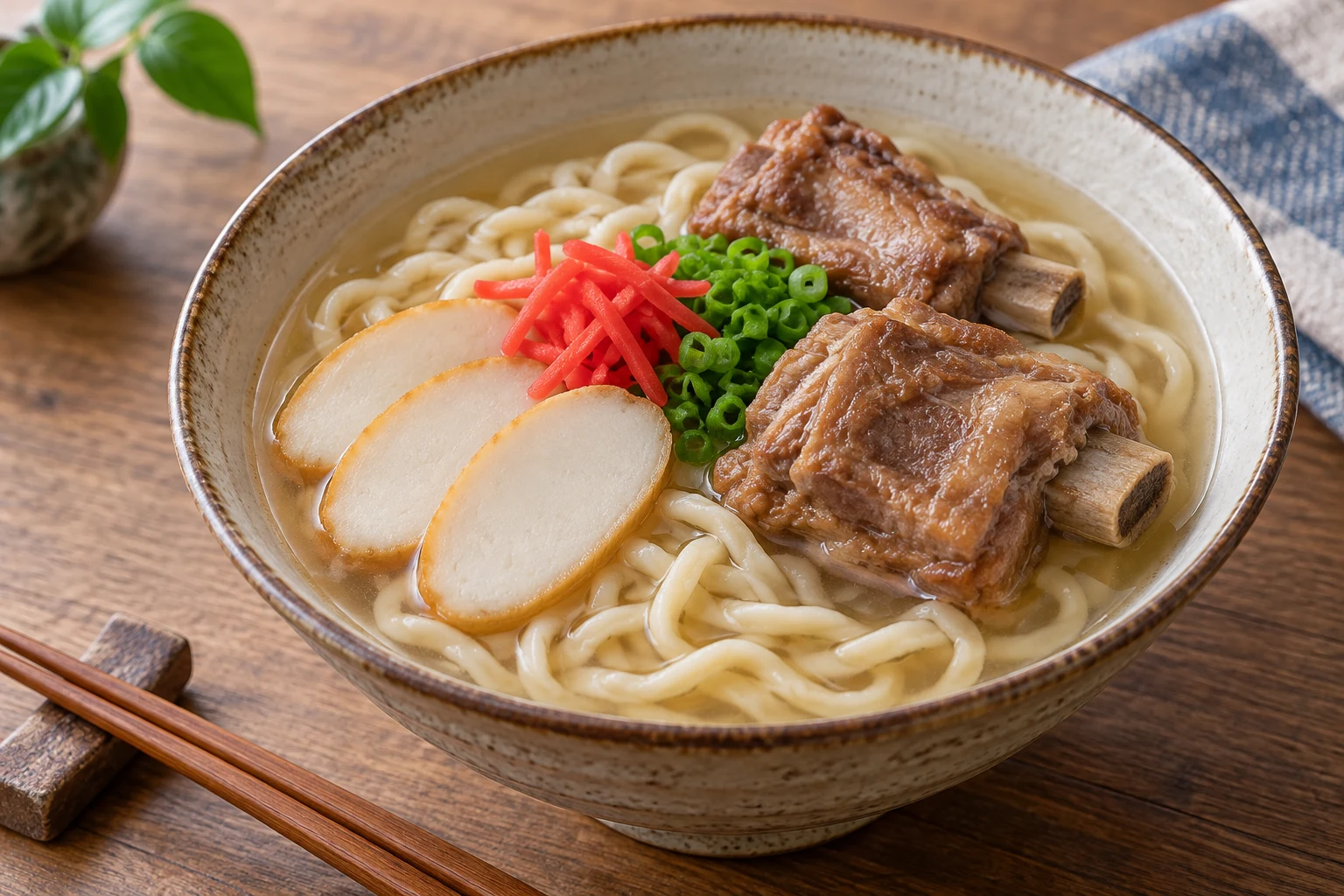
Start with the topping
The ribs sit above the noodles, but their role reaches into the whole bowl. Soki soba combines a meaty pork topping with wheat noodles and a savoury broth. Its appearance can be restrained: a few fish-cake slices, green scallions and red pickled ginger give you useful landmarks without crowding the soup.
Soki soba belongs to Okinawa soba, a broader local noodle-soup family. Japan's agriculture ministry describes that family's wheat noodles and pork-and-bonito stock, with variations in shape and topping across the prefecture. The most useful way to approach a menu is to read those components separately. The name gives a clue; the actual ingredients tell you what you will receive.
Three things to recognize
- Noodle
- Wheat, despite 'soba'
- Topping
- Soki means the rib version
- Broth
- Pork and bonito
MAFF explicitly describes Okinawa soba noodles made with wheat rather than buckwheat. Do not assume that a packet of buckwheat soba reproduces this noodle.
Chen distinguishes slow-stewed spare-rib soki soba from pork-belly Okinawa soba and pig-foot tebichi soba.
The opened regional and home recipes pair pork flavour with bonito stock. A clear-looking broth still carries meat and fish ingredients.
The meat and soup do different jobs
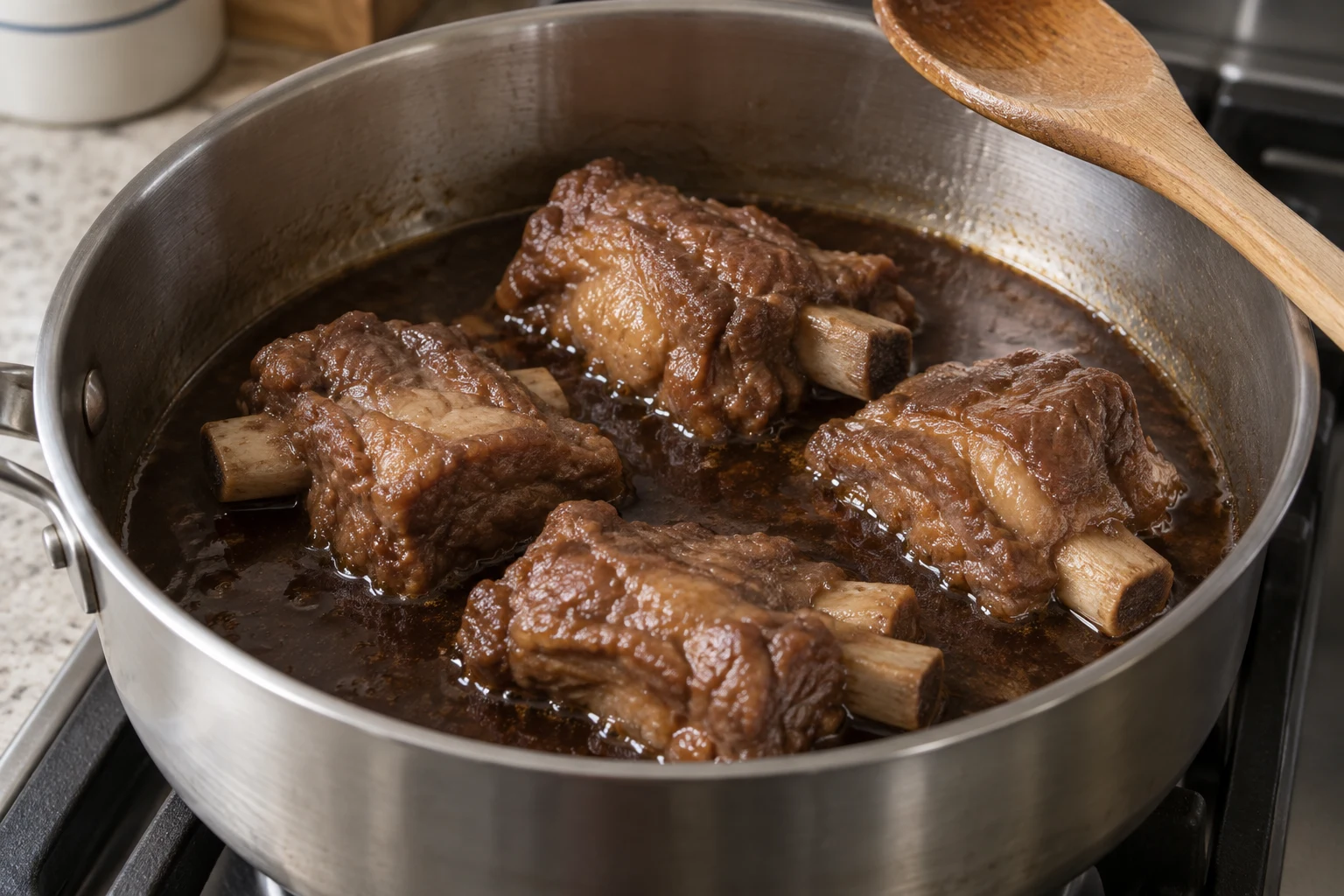
Yumiko's RecipeTin Japan method cooks ribs until tender, reserves their broth, then seasons the meat separately with soy, sake, mirin and sugar. Bonito joins the reserved broth. The rib's sweet-savoury surface and the soup's seasoning are related, but they are not one undifferentiated sauce.
Her initial pre-boil liquid is discarded; the later cooking broth is kept. Trace those stages carefully when reading a recipe. That sequence is easy to miss when skimming and matters more than copying its photograph's garnish.
Before the bowl is assembled
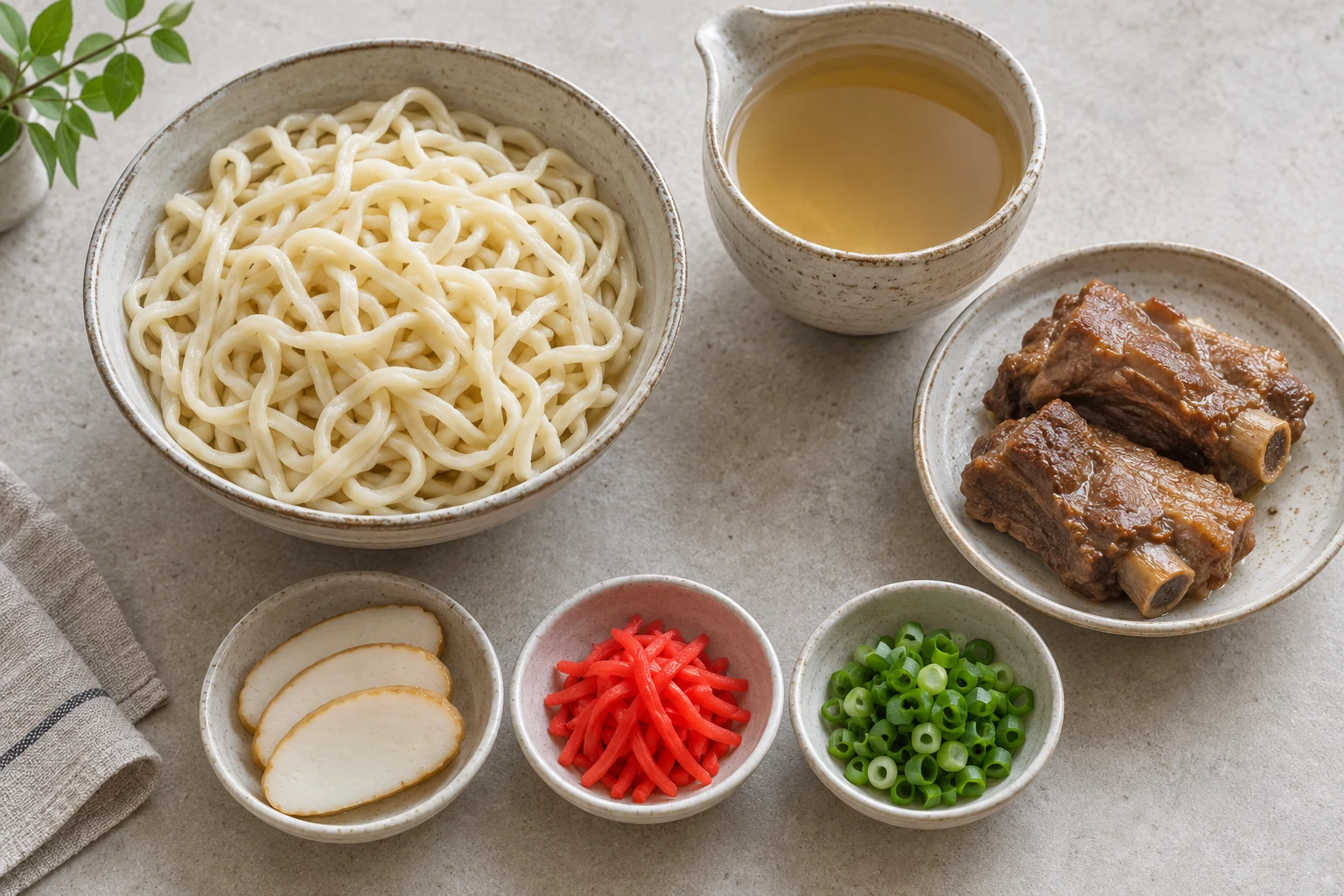
Two illustrative views separate the rib's seasoning stage from the ingredients gathered for service.
A rib label can still contain a choice
Ask what the particular preparation uses if you want a specific texture.
Bone-in spare ribs
Yumiko uses meaty rib pieces and discusses hard-bone and softer-bone strips. The illustrated bowl shows short visible rib bones; it is one representation of soki rather than a claim that every serving looks the same.
- Look for the actual meat cut in the description.
- Pork belly is a different topping, even within the same soup family.
Cartilage preparation
The Maritime Self-Defense Force's Naha Air Base recipe uses nankotsu, or cartilage, cooked until soft. Its instructions explicitly substitute cooking sake and mirin for Okinawan awamori in that kitchen.
- Cartilage signals a different eating texture.
- A declared adaptation is more useful than an unexplained authenticity label.
Choose the noodle with care
The ministry's local noodle description is a better starting point than broad comparisons with ramen or udon. Thickness and shape vary within Okinawa, and the word 'soba' does not establish buckwheat content here. If an ingredient matters to you, read the product's list rather than relying on the dish name.
Both opened home cooks discuss what they can obtain outside Okinawa. Yumiko offers alternatives including thicker egg noodles; Chen mentions dried udon as an option when the intended noodle is unavailable. Those are useful home adaptations, not proof that all noodle types give the same result. Use the selected recipe's advice and the packet's cooking instructions together.
Bring the components together near service
Chen's Okinawa soba method illustrates the assembly logic; its pork-belly topping should not be mistaken for a spare-rib recipe.
- 01
Prepare the garnishes
Slice fish cake and scallions and have the red ginger ready. Their distinct shapes give the bowl recognizable landmarks.
- 02
Cook and drain the noodles
Cook according to the noodle instructions, then drain well. Chen connects drainage with avoiding excess water in the soup.
- 03
Add broth, then the topping
Divide noodles into bowls, add soup, meat and garnishes, then serve promptly. Keep the noodle stage close to eating.
Research notes
Regional context and actual methods
Four independent sources explain the noodle family, a spare-rib home method, component assembly and a named cartilage adaptation. This is a guide to reading them, not a tested recipe.
- MAFF: Okinawa soba Wheat noodles, pork-and-bonito broth and regional topping variation.
- Yumiko: Okinawa soba, soki version Separate rib cooking, seasoning, broth and explicit noodle adaptations.
- Namiko Hirasawa Chen: Okinawa soba Topping names, noodle alternatives and draining before assembly.
- JMSDF Naha Air Base: soki soba Cartilage topping and the kitchen's declared sake/mirin adaptation.
Keep exploring
More stories for your table
Japanese cuisine Wheat noodles
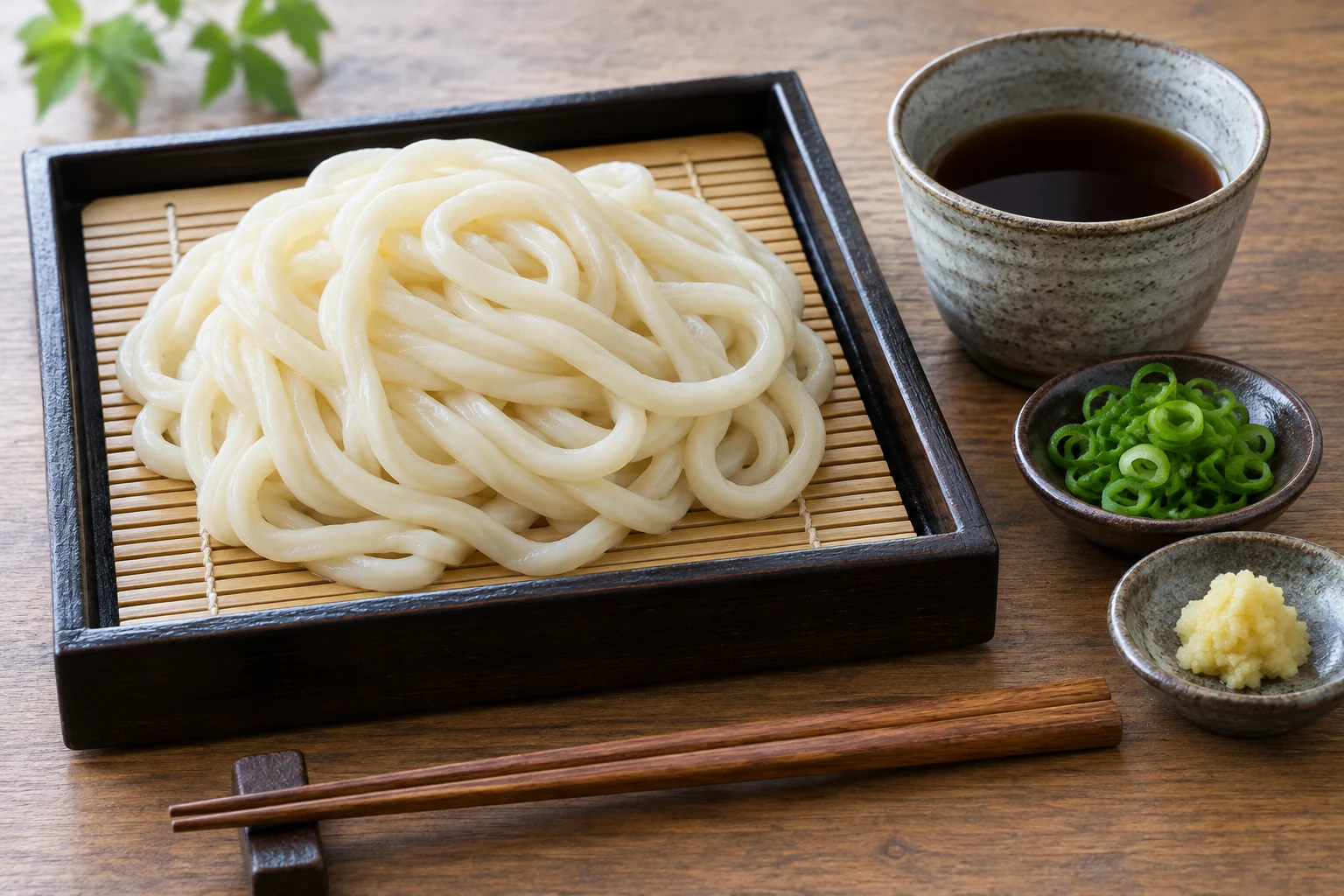
Udon: choose the serving before the topping
Hot soup and chilled dipping reveal different sides of udon. Read regional styles, noodle handling and sauce choices before choosing a topping.
Japanese cuisine Meat & potato simmer
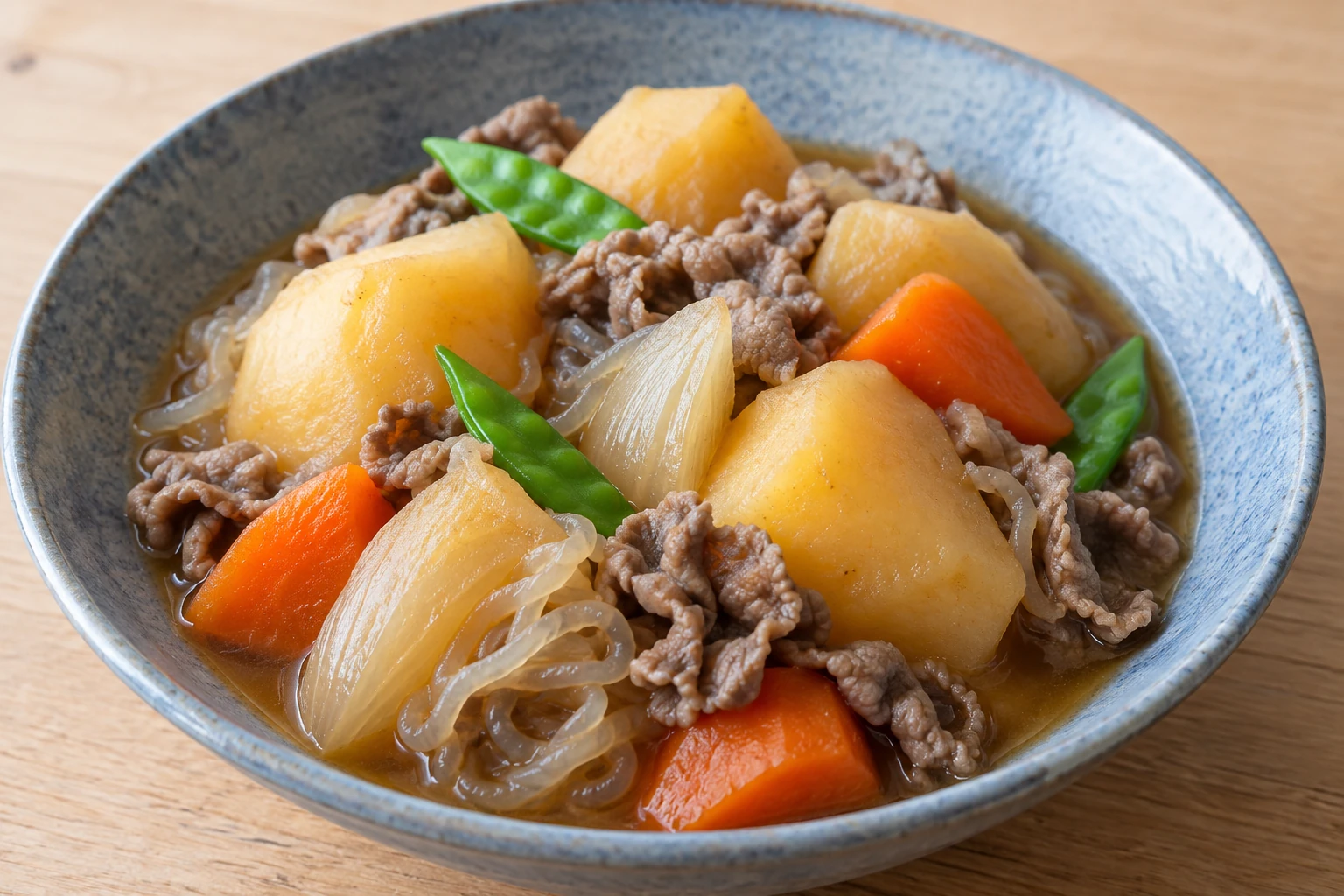
Nikujaga: Keep the Potatoes in One Piece
A gentle simmer, thin beef and a lid resting on the food help nikujaga’s potatoes stay intact. Learn the technique and make a complete four-serving home adaptation.
Mexican cuisine Noodle soup
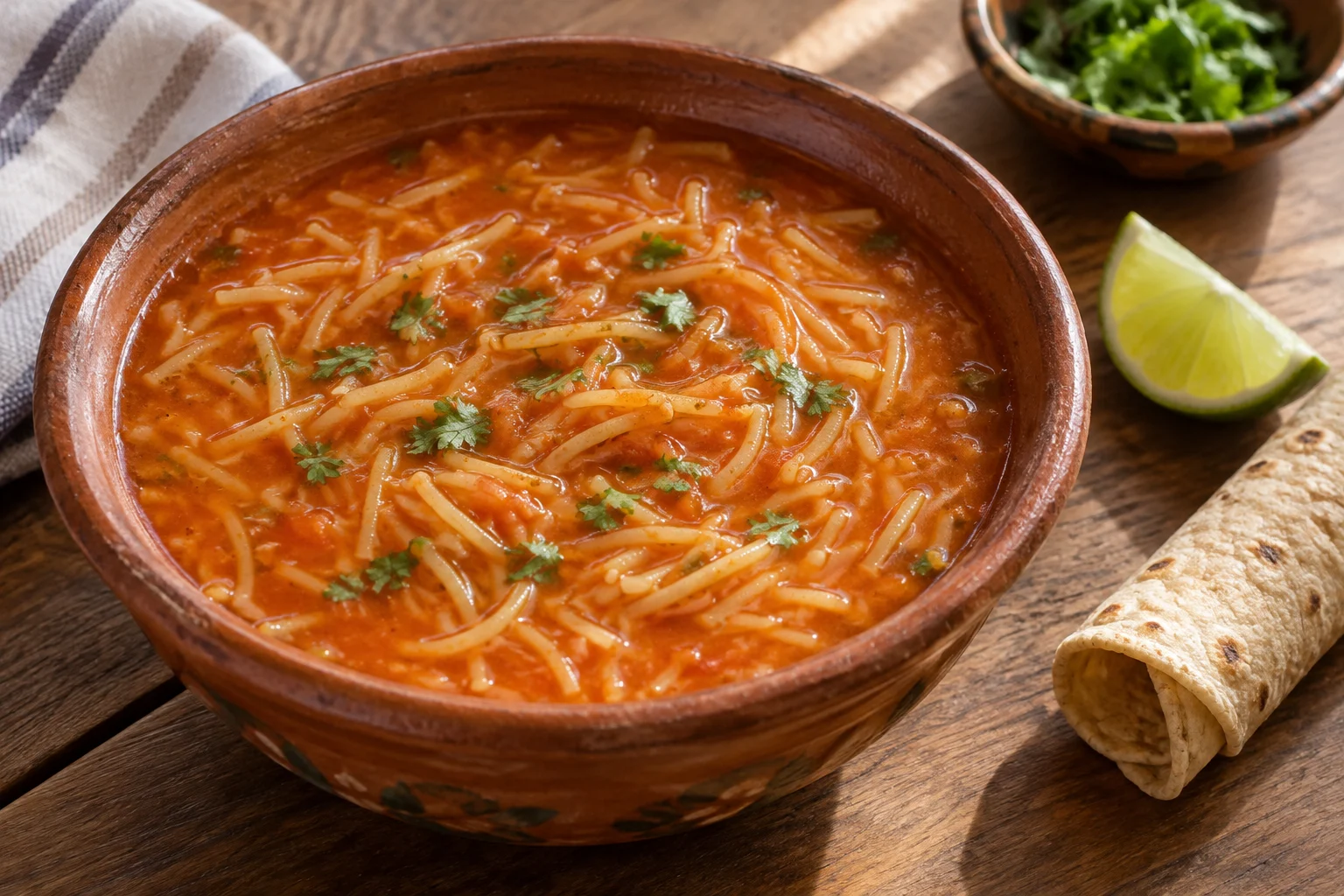
Sopa de Fideo: Have the Tomato Ready Before the Noodles Toast
A brothy Mexican sopa de fideo starts with short wheat noodles lightly toasted in oil. Prepare the tomato base first, then make this four-serving soup.