
Soba: Read the Flour, Then the Serving
そば
Soba describes a noodle family, not one flour ratio or one bowl. Ingredient labels, fresh noodle making and Izumo serving styles explain the differences.
A noodle name leaves questions open
A tray of soba can look wonderfully simple: brown-grey strands, a cup or jug of sauce, a few condiments. But the name leaves two useful questions unanswered. What flour went into the noodle, and how is that particular serving meant to be eaten? Knowing both makes an ingredient label or regional menu easier to understand.
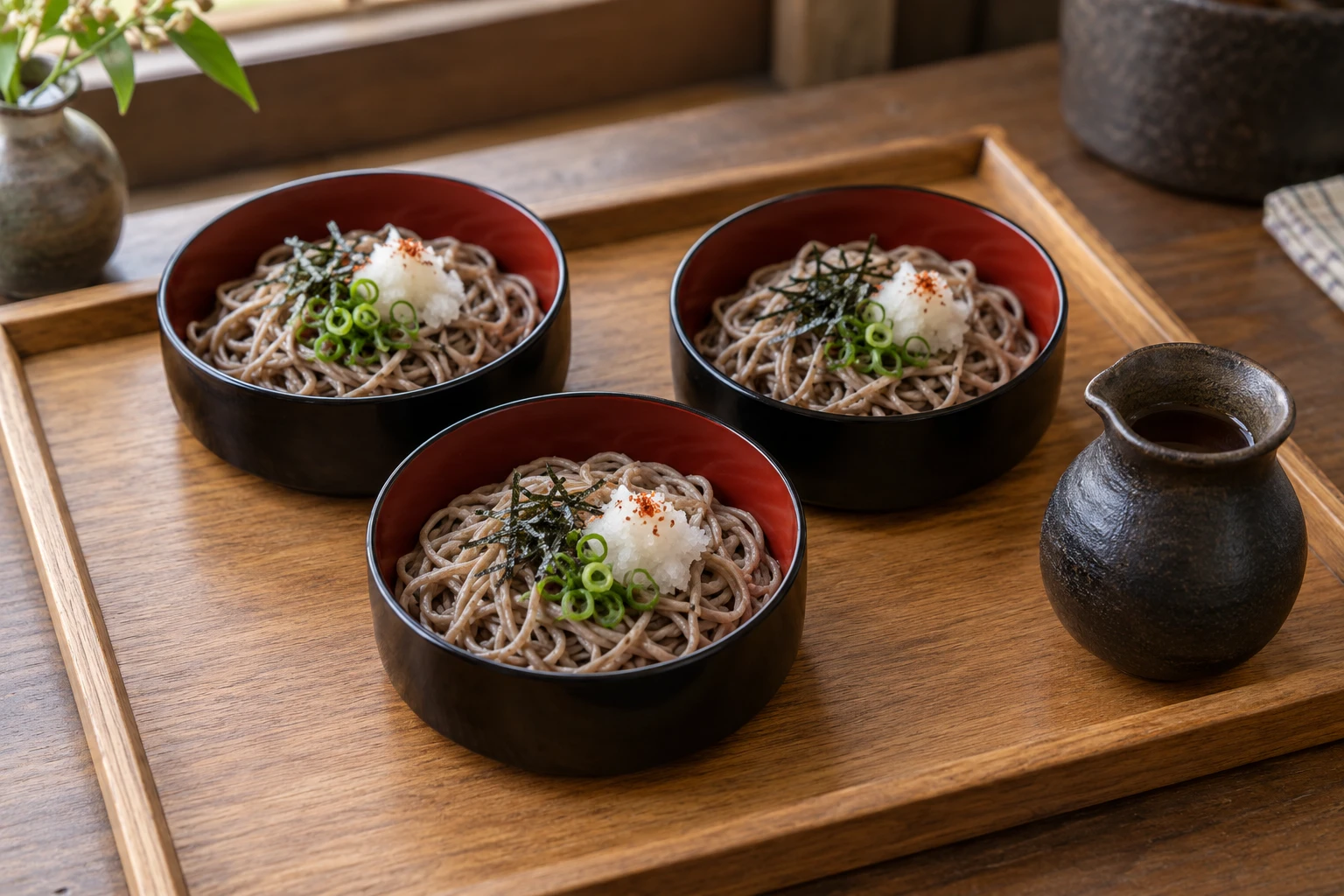
Buckwheat is the common thread, rather than a promise that every noodle is made from buckwheat alone. Nor does every soba meal use a separate dipping cup. The three bowls pictured here illustrate a Warigo-style serving from the Izumo tradition, one of several ways the noodle and sauce can meet.
The flour ratio is a separate decision
A packaged blend
Hakubaku's EU soba ingredient list specifies 69% wheat flour and 29% buckwheat flour, with salt accounting for the remainder. Its other market listings also include wheat, though the labels differ. Read the product in hand rather than treating one manufacturer's example as the definition of soba.
A higher buckwheat proportion
Just One Cookbook describes hachi-wari soba as an 80% buckwheat and 20% wheat blend, and ju-wari as entirely buckwheat. These terms tell you something a generic soba label may not: the stated relationship between flours.
Fresh making adds another distinction
In a JNTO interview, soba maker Yoshinori Shibazaki describes his te-uchi practice: milling buckwheat, kneading, rolling and cutting fresh noodles. He emphasizes daily milling and careful dough handling. This is a maker's account of fresh handmade soba, rather than a description of the dried noodles in every supermarket packet.
At home, separate that craft description from cooking instructions. A dried product has its own directions; Hakubaku lists a particular boiling time followed by rinsing and draining. That timing belongs to its product. Buying a different blend or fresh noodle is a reason to consult its instructions, rather than copy a number from an unrelated packet.
Cold soba can use different sauce arrangements
Zaru: dip from a separate cup
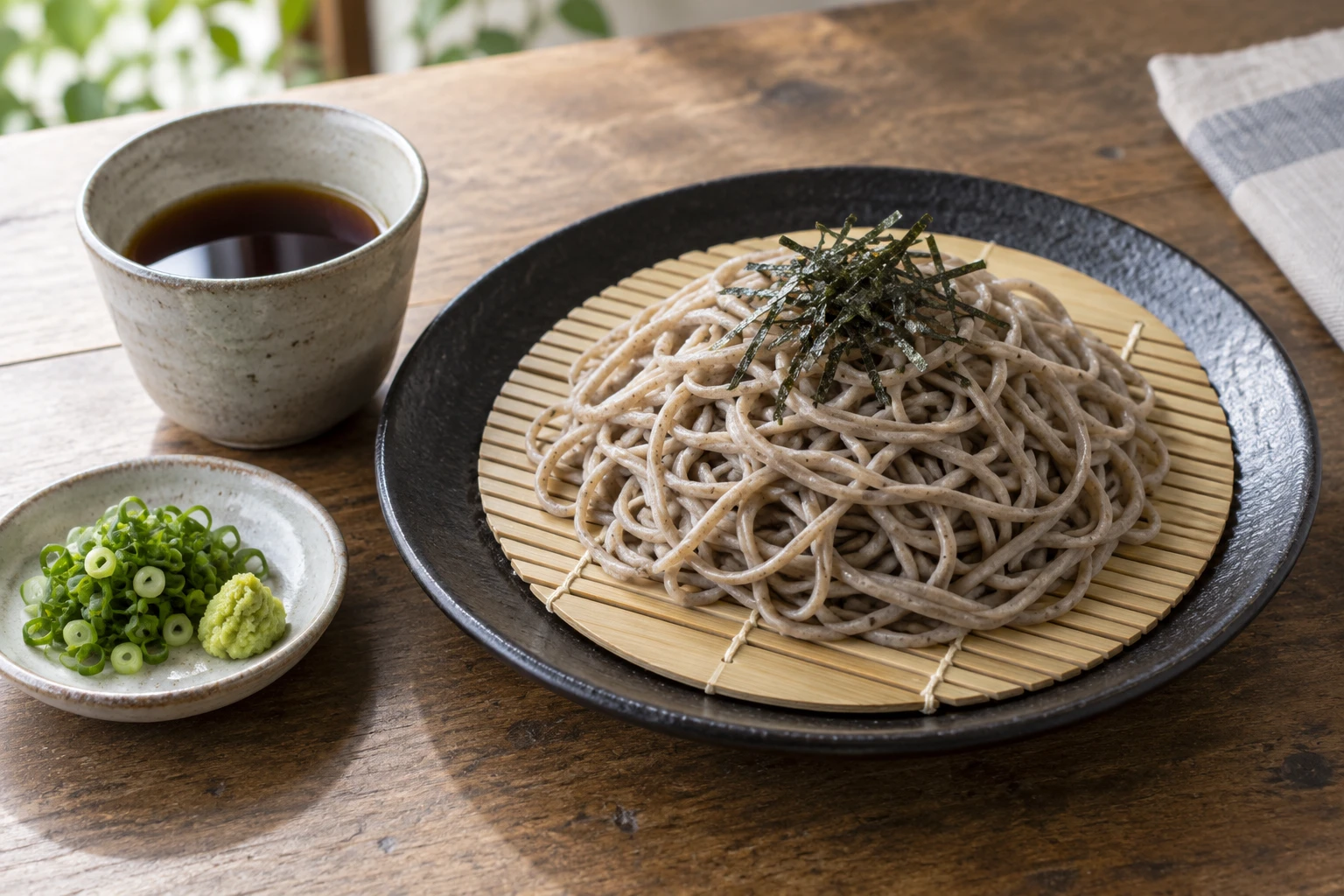
In Kikkoman's zaru lesson, cooked cold noodles sit on a bamboo tray or ordinary plate, with tsuyu in a small bowl. Diners dip the noodles and add onion or wasabi to taste. The separate liquid is part of that format.
Warigo: pour onto small portions
MAFF describes Izumo's cold Warigo meal as three lacquered bowls stacked in tiers. Sauce is poured over the noodles, and remaining sauce and condiments move into the next bowl as the meal proceeds. It is a different arrangement for cold noodles.
Kamaage: a hot Izumo counterpart
The same regional source describes Kamaage soba served in its cooking water, called sobayu. Sauce is added to the bowl according to taste. A hot soba serving therefore need not mean the same prepared broth used in another recipe.
Izumo also changes the milling
MAFF connects Izumo soba with hikigurumi: milling the hulled buckwheat together without the usual flour classifications. Its description also gives an approximate 20% binding-flour share. The regional identity involves both the noodle's manufacture and the bowls at the table; it cannot be reduced to garnish alone.
That gives a practical reading order. Look first for a named noodle or stated blend, then for the serving name. Warigo and Kamaage explain the sauce arrangement in the Izumo examples. Zaru explains a cold dipping presentation. Those words answer different questions from the flour percentage.
Read the sauce as well
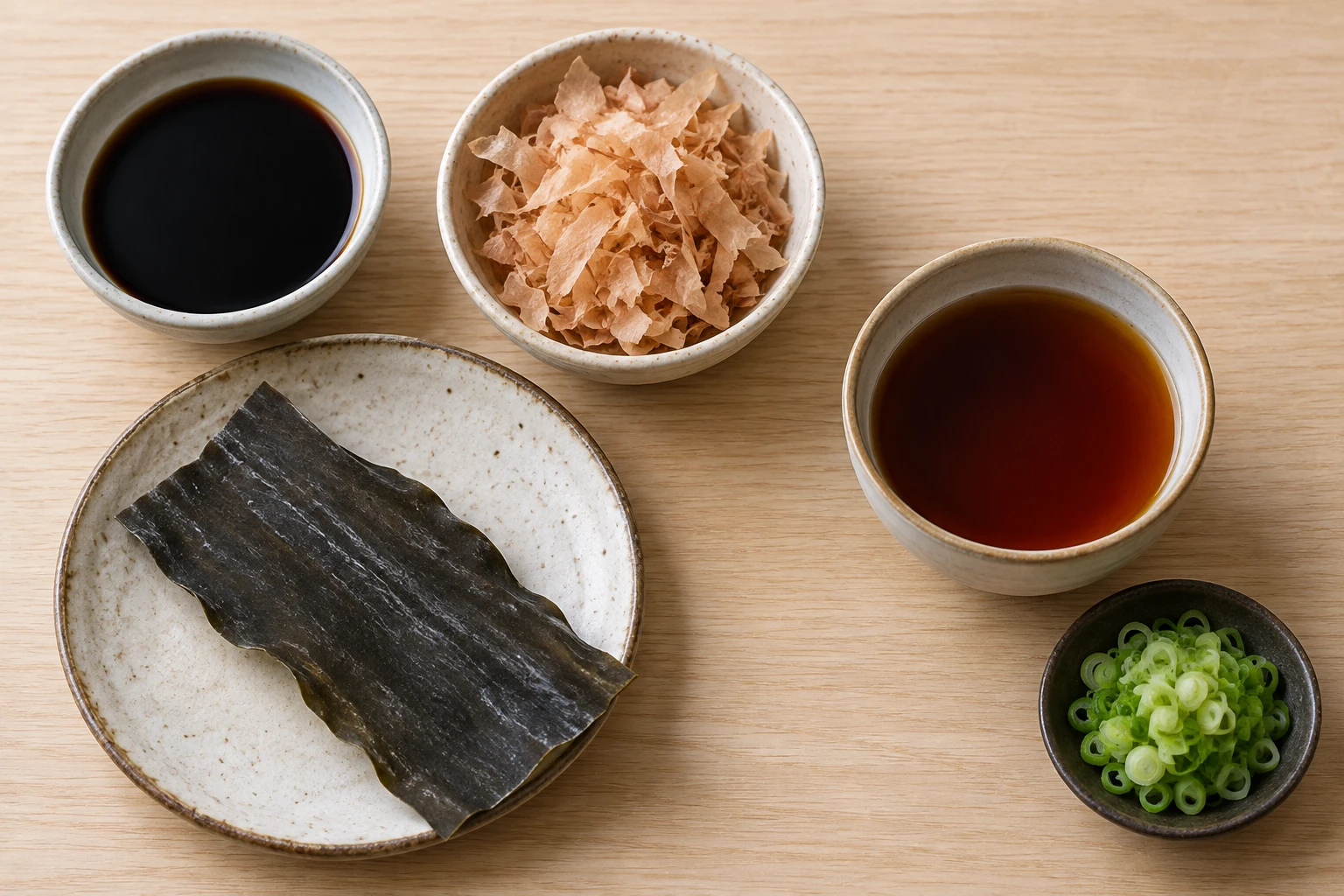
The noodle label is only part of the meal's ingredient story. Kikkoman's tsuyu uses soy sauce, mirin, sugar and dried bonito; Just One Cookbook's version also includes kombu. A bowl of plain-looking soba with sauce can therefore include fish. Do not infer a vegetarian meal from the absence of a visible meat topping.
Likewise, a buckwheat name does not establish a wheat-free noodle or sauce. Check the actual ingredient and allergen information before serving. For a home meal, choose a complete sauce recipe or follow the dilution instructions on a purchased concentrate. The flour, noodle form and sauce each deserve their own line of attention.
Research notes
Sources
A regional food record, a named maker interview, product ingredients and two Japanese cooking references support distinct parts of this guide.
- MAFF — Izumo Soba Hikigurumi milling, approximate binding share, Warigo tiers and hot Kamaage service.
- JNTO — An Insider's Guide to Soba Yoshinori Shibazaki's account of milling and making fresh te-uchi noodles.
- Hakubaku — Soba product information Market-specific flour labels, wheat allergen information and product cooking directions.
- Just One Cookbook — Zaru Soba Named flour ratios, dipping sauce ingredients and purchased concentrate directions.
- Kikkoman — Yuko Ihara's Zaru Soba lesson Bamboo tray or plate service, separate dipping sauce and tsuyu ingredients.
Keep exploring
More stories for your table
Japanese cuisine Cold noodles
Zaru Soba: The Water Before the Dip
For Japanese cold buckwheat noodles, rinsing and draining matter as much as the dipping sauce. Follow the three roles water plays from the pot to the final cup.
Japanese cuisine Wheat noodles
Udon: choose the serving before the topping
Hot soup and chilled dipping reveal different sides of udon. Read regional styles, noodle handling and sauce choices before choosing a topping.
Korean cuisine Beef bone soup
Seolleongtang: The Broth and the Bowl Have Different Jobs
Seolleongtang develops a pale beef-bone broth before each bowl is seasoned. Learn the cooking checkpoints, batch differences and rice-and-kimchi finish.