
Sekihan: Red Rice, Different Beans, Shared Celebrations
赤飯
Sekihan links red-tinted sticky rice with important occasions, but its sweetness and beans vary by region. Compare azuki rice, Hokkaido’s sweetened-bean version and Akita’s tenko azuki tradition.
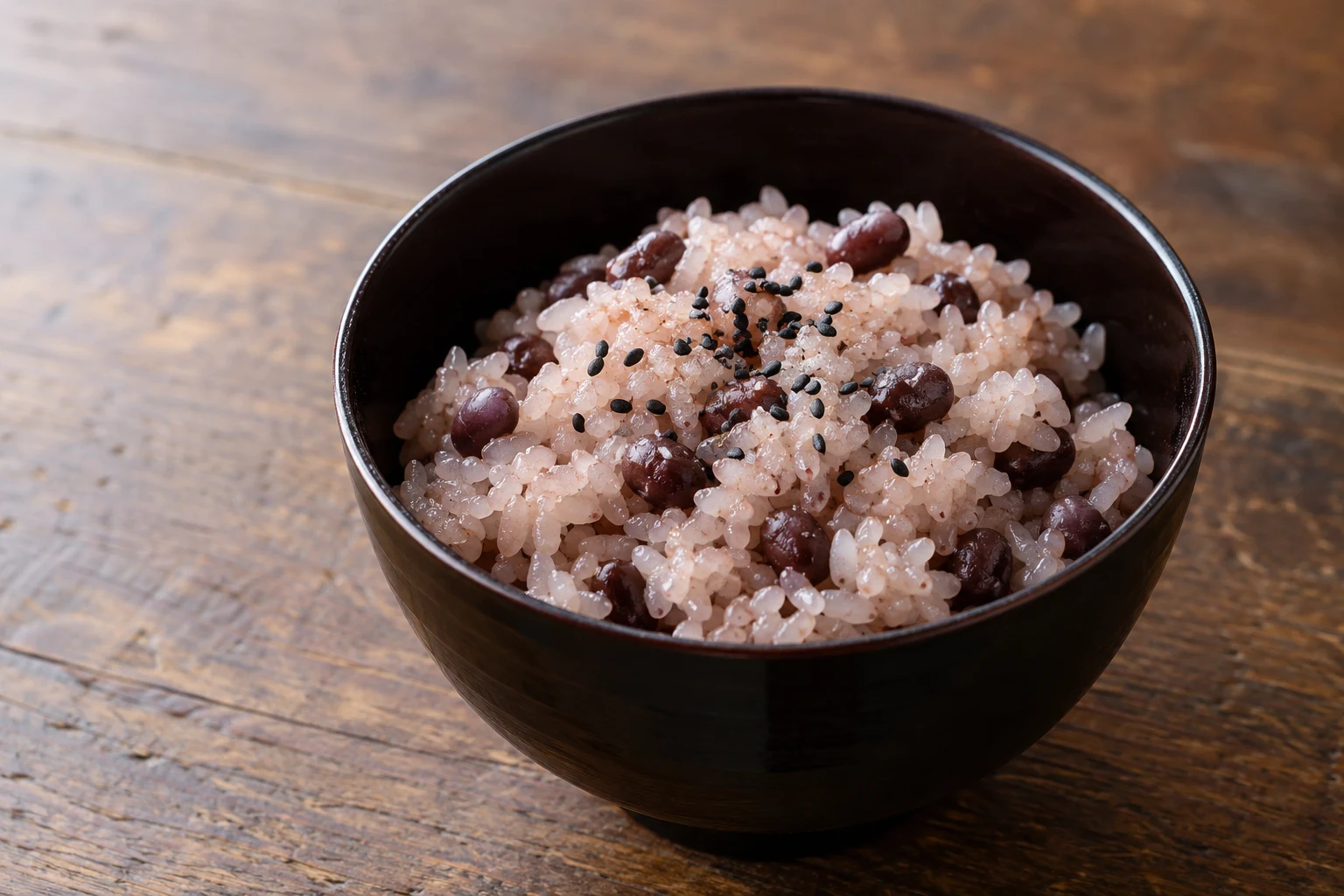
Is red rice necessarily sweet?
A bowl of sekihan can look festive before you know the occasion: pale pink to reddish rice, visible beans and a dark sesame sprinkle. Its name means red rice. Yet the color is a poor guide to sweetness. A familiar azuki version is savory, while some regional versions use sugar or sweetened beans.
The word glutinous can create another misunderstanding. Mochigome, the sticky rice used for sekihan, supplies the chewy, cohesive texture. Calling it sweet rice does not mean that every dish made with it contains sugar. To understand the bowl, ask two questions: which beans are in it, and how were they used?
Three paths to a festive bowl
Azuki-based sekihan
Japanese cooking writer Nami Chen describes glutinous rice tinted by azuki cooking liquid and finished with gomashio, toasted sesame and salt. Kikkoman’s traditional method likewise reserves the colored liquid and uses it in the rice preparation.
- Bean liquid supplies the color
- Sweetening is not required
Hokkaido’s amanatto version
Japan’s agriculture ministry documents a sweet version made with amanatto, a confection of sweetened beans. Ordinary rice and glutinous rice may be mixed, the color can come from food coloring, and the sweetened beans are mixed into the cooked rice.
- Amanatto brings sweetness
- Pink color need not come from beans
Akita’s tenko azuki tradition
The ministry’s Akita account records tenko azuki, described there as black-eyed peas, and sugar in the rice. The bean is valued for skins that hold together during cooking, and the local color is described as slightly purple-tinged.
- A locally named bean changes the preparation
- Sugar is a documented regional feature
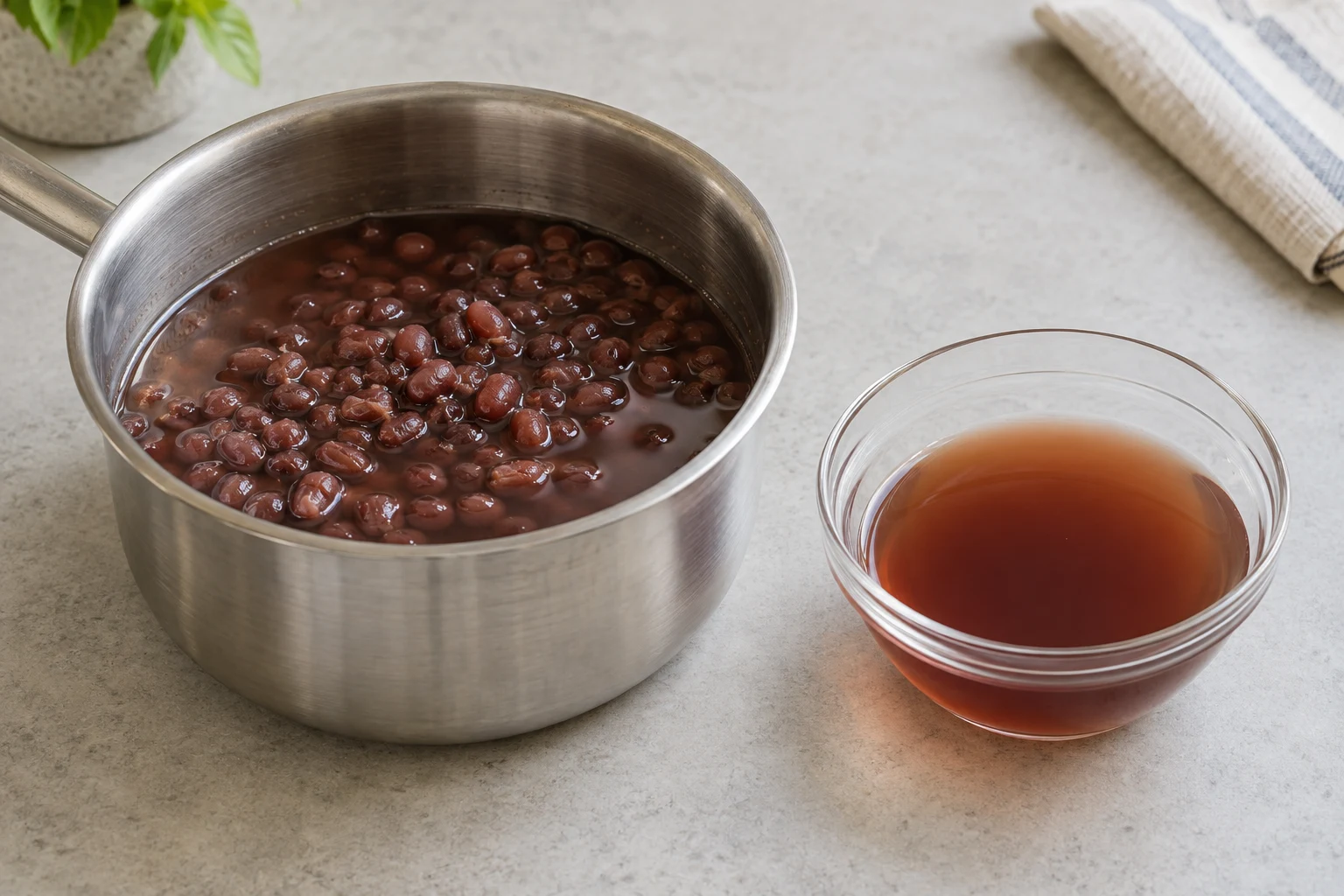
Color the rice without turning the beans to paste
In the azuki approach, the liquid is an ingredient rather than waste. Both Kikkoman and Just One Cookbook first cook the beans, discard an initial cooking liquid and retain a later one. The colored liquid then meets the rice. Treating all the bean water as interchangeable would miss a deliberate preparation step.
The beans should remain recognizable. This is rice with beans, rather than rice covered in the sweet azuki paste familiar from Japanese confectionery. The source methods differ in equipment and timing, so their liquid instructions should stay with their own recipes. A steamer method and a rice-cooker method cannot share an assumed water ratio merely because the finished bowls look similar.
Steaming and rice-cooker cooking are different routes
These are explanations of documented methods, not a single recipe assembled from incompatible instructions.
- 01
The cloth-lined steamer
Kikkoman soaks the glutinous rice in colored liquid under refrigeration, then drains it and places it on a clean damp steaming cloth. Beans sit over the rice; measured additions of reserved liquid are sprinkled in during steaming. The rice is cooked by steam while its moisture is managed in stages.
- 02
The pot or rice cooker
Just One Cookbook gives separate stovetop and rice-cooker directions, combining rinsed rice with measured bean liquid and the cooked beans. Choosing Japanese short-grain glutinous rice, following the chosen appliance method and keeping the beans intact matter more than copying a color from a photograph.
- 03
The finish
Gomashio places sesame and salt at the surface. It provides a contrasting finish without converting the bean-and-rice mixture into a sweet filling. Sesame is an allergen; a diner should ask whether it has already been mixed or sprinkled onto a serving.
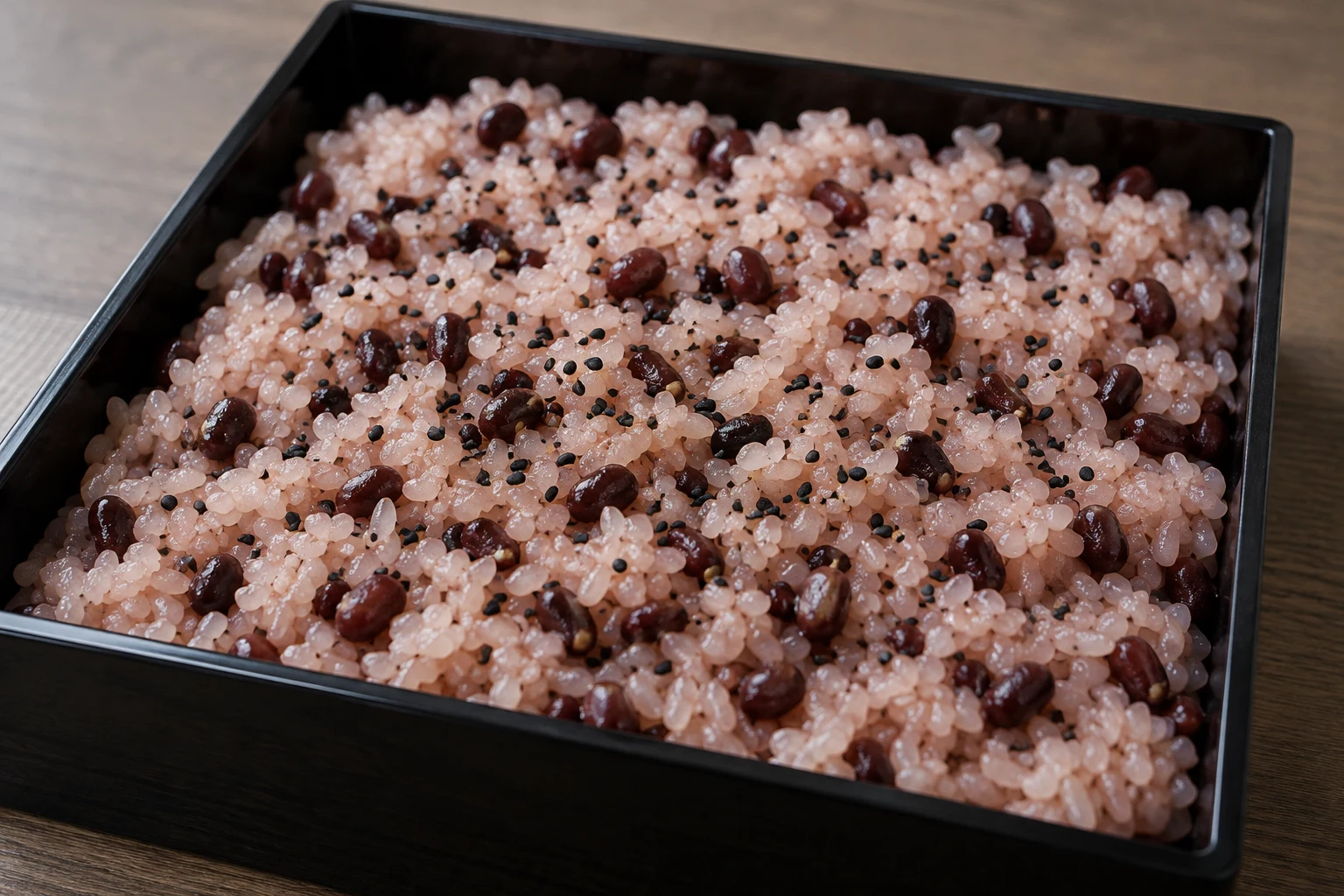
An occasion food with room for local differences
Japan’s Agency for Cultural Affairs places sekihan among foods served at milestones including coming-of-age and wedding ceremonies. It presents such meals as part of a broader practice in which particular foods suit particular events, and shared tables pass customs between generations. That gives the rice a role beyond its ingredients: it can mark a change in a person’s life.
JNTO’s account of the rice culture around Ichinoseki and Hiraizumi also identifies mochigome cooked with azuki as celebratory sekihan. That independent description helps separate the rice from mochi. Both can begin with sticky rice, but sekihan retains its grains and beans rather than being pounded into a cake.
Local practice is wider than a single rule that red rice appears only at happy events. The ministry’s Akita account includes both celebrations and Buddhist memorial observances. In Hokkaido, its sweetened-bean version is also an everyday food and can appear with side dishes or in school meals. The useful takeaway is to learn the place and occasion, rather than assign one meaning to every pink bowl.
Research notes
Sources for rice, beans and occasions
Institutional accounts establish regional and ceremonial context. Two Japanese cooking sources provide independent detail on color, grain texture and cooking methods. No full recipe is included because the equipment-specific methods should remain intact.
- MAFF — Hokkaido sekihan Documents sweetened-bean rice, mixed rice types, coloring, everyday service and household variation.
- MAFF — Akita tenko azuki sekihan Local bean identity, sugar, intact skins and regional celebration and memorial contexts.
- Agency for Cultural Affairs — Celebration foods Places sekihan among foods for life milestones and explains the transmission of food customs through shared meals.
- JNTO — Rice culture in Ichinoseki and Hiraizumi Identifies mochigome, celebratory azuki rice and the separate preparation of pounded mochi.
- Kikkoman Food Forum — Sekihan Traditional steamed method with reserved bean liquid, refrigerated soaking, staged moisture additions and gomashio.
- Just One Cookbook — Nami Chen’s sekihan guide Japanese short-grain glutinous rice, bean preparation, savory sesame finish and distinct rice-cooker and stovetop methods.
Keep exploring
More stories for your table
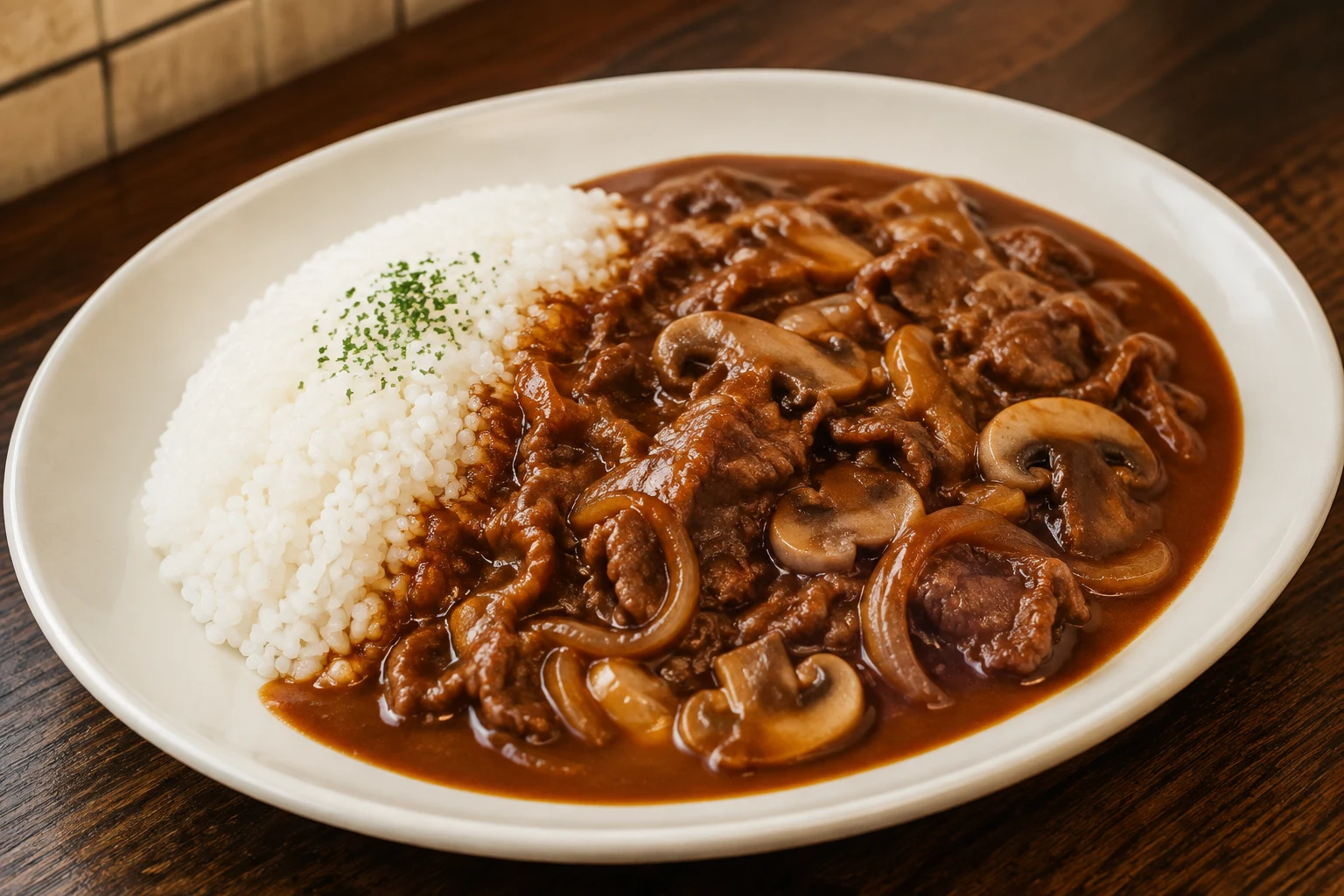
JapanYōshoku rice dish
Hayashi Rice: A Sauce Translated for Rice
Hayashi rice turned a Western-style brown meat sauce into Japanese yōshoku by changing the plate, the seasoning, and eventually the home pantry.
JapanSeasonal vegetables
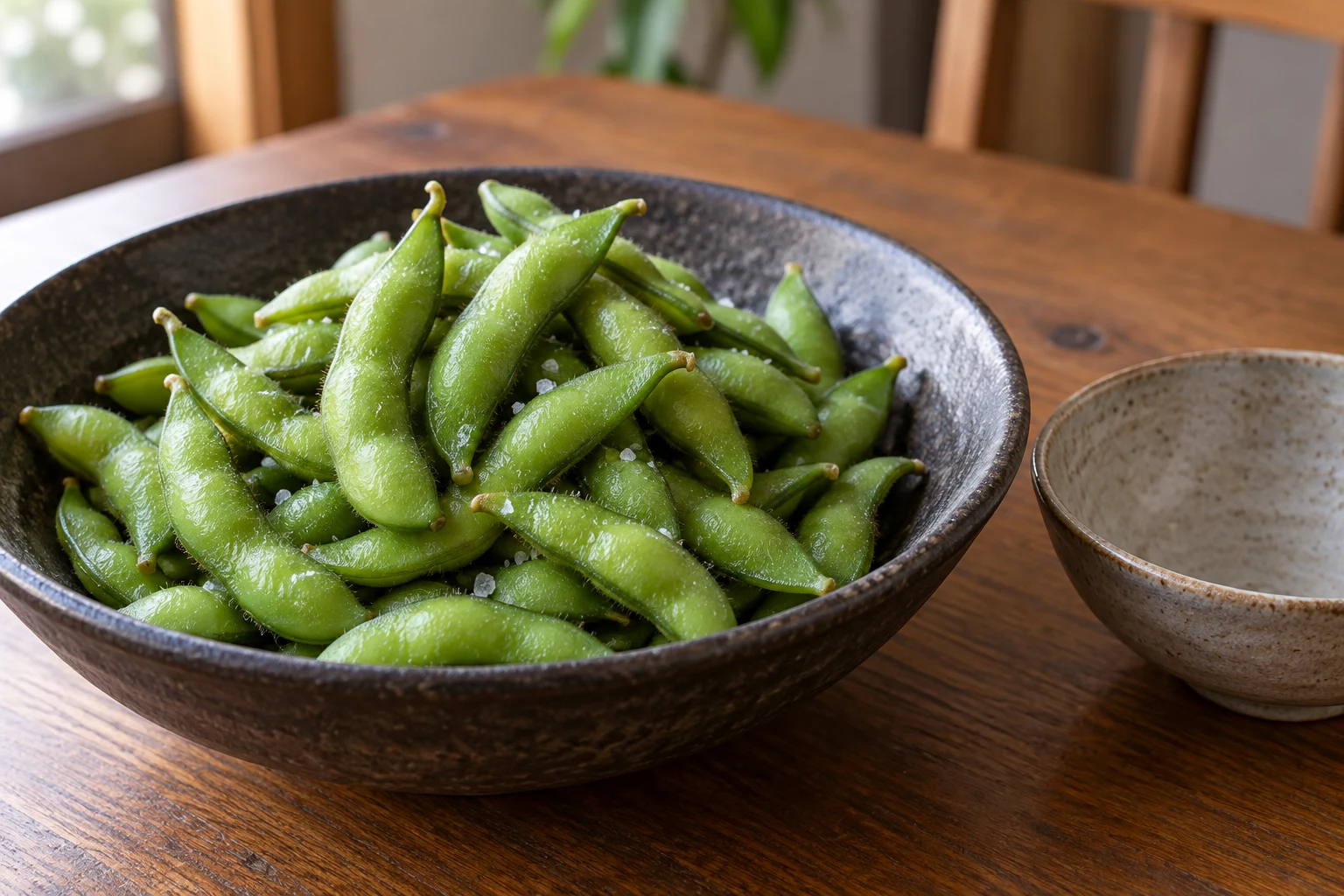
Edamame: Season the Pod, Eat the Bean
The pod shapes how Japanese edamame is salted, cooked and eaten. Compare fresh and frozen beans, two boiling methods, and Niigata’s seasonal varieties.
JapanRice-flour dumplings
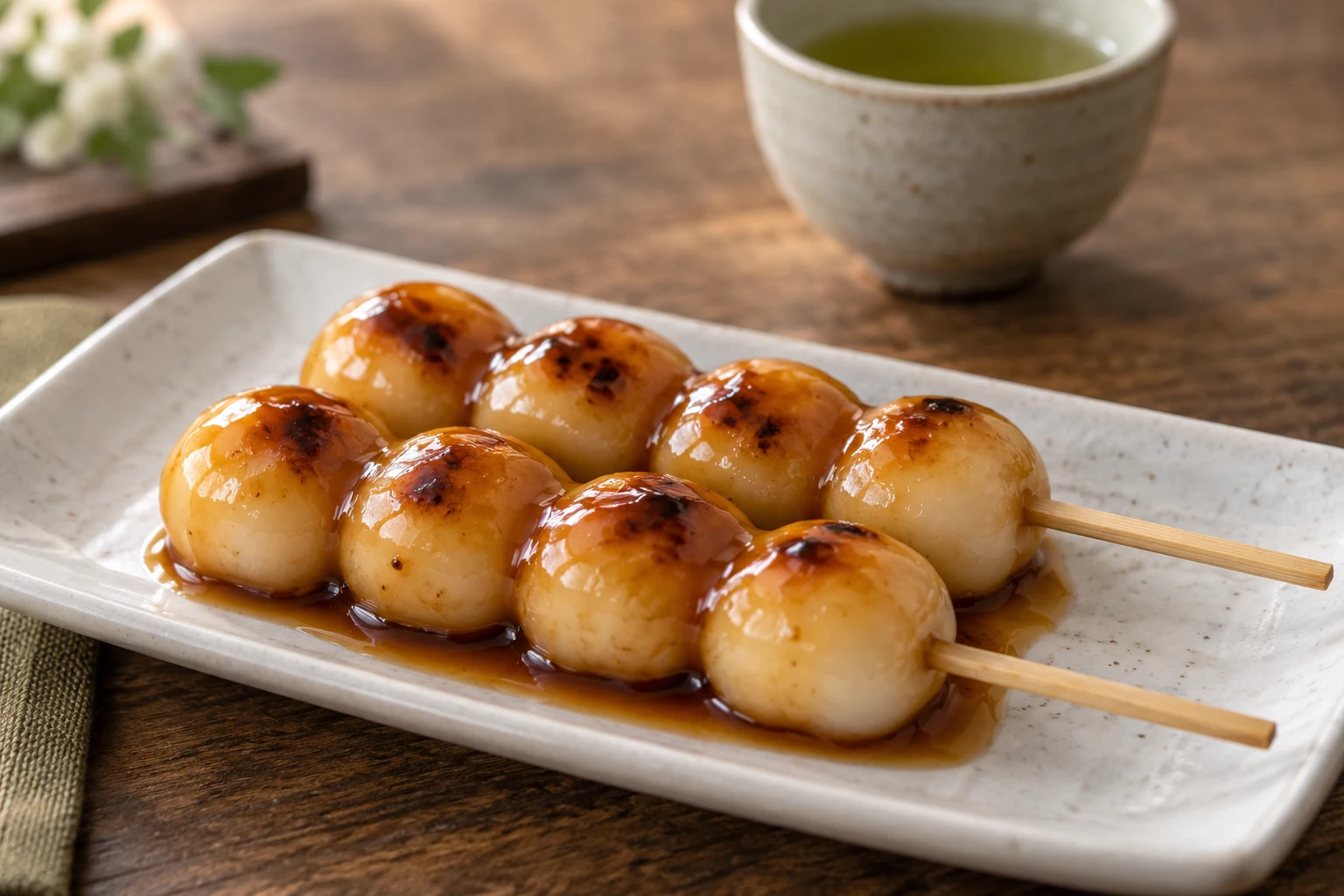
Dango: One Rice Dumpling, Several Ways to Meet It
A glossy soy-glazed skewer and pastel hanami dango share a rice-flour foundation. Learn the different finishes, seasonal displays and rice-flour names that help you choose or cook dango.