
Natto: The Beans, the Stir, the Bowl
納豆
Whole or split soybeans, a sticky coating and a few seasonings shape a natto serving. Start with the product, then decide how to stir and pair it with rice.
Already fermented, ready to arrange
Natto arrives with texture already built into it. The tan soybeans are soft, coated in a sticky material that draws out into fine threads. Stirring changes that coating again. The decisions at the table concern bean form, texture and seasoning, rather than cooking the beans from the beginning.
The familiar sticky natto described here is a fermented soybean food. MAFF's Ibaraki account describes controlled fermentation followed by cooling and maturation. A purchased portion is the result of that production process. For a first serving, it is useful to think about what is in the pack before deciding what to put beside it.
Read the bean form
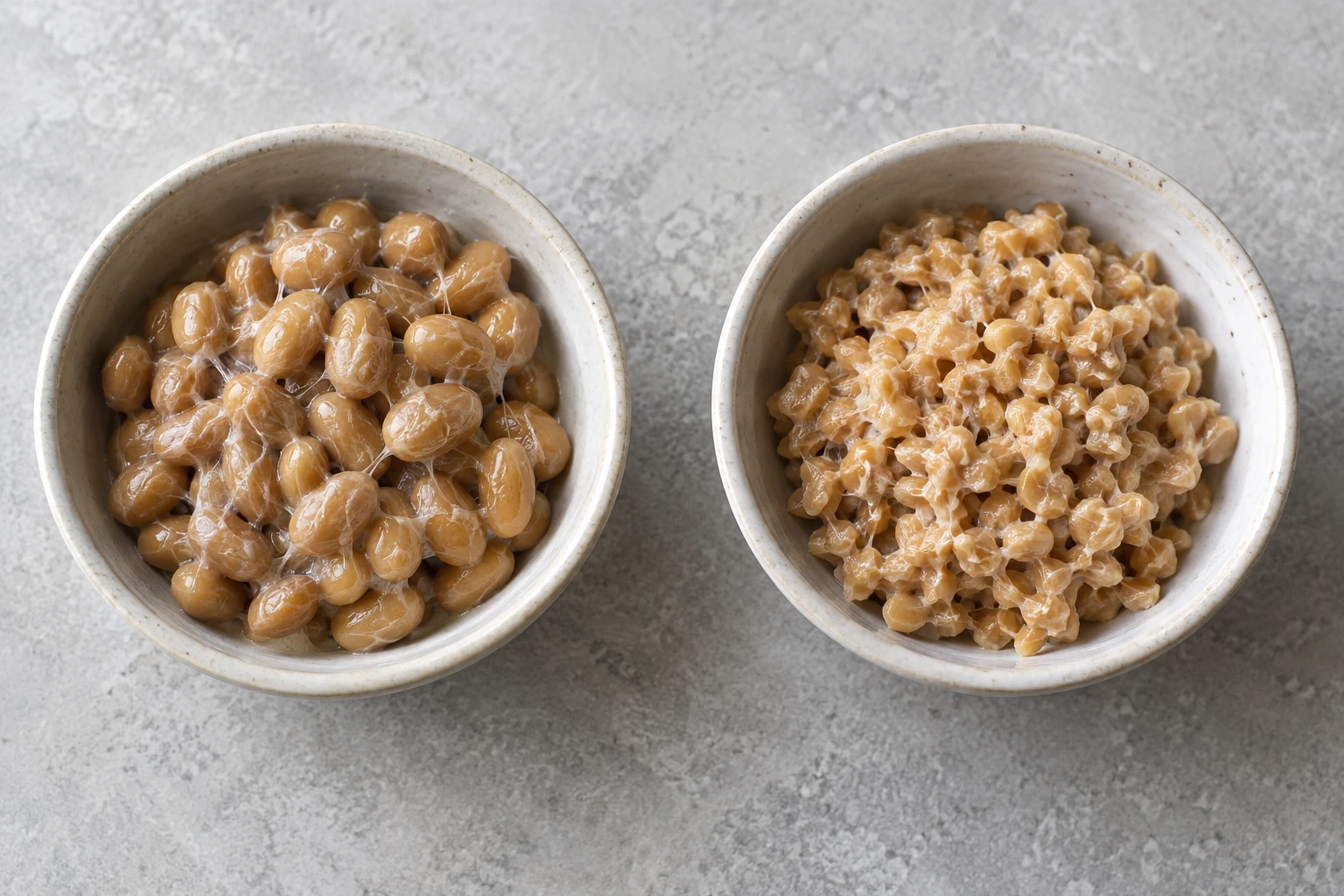
- Whole-bean natto
- The bean remains recognisable
- Hikiwari
- Split before fermentation
Whole beans keep their individual shape. Sizes vary; MAFF identifies small soybeans as a feature of Mito's natto tradition.
Takano Foods explains that dry soybeans are split and their skins removed before making this form. It is more than chopping an already finished whole-bean portion.
Let the stir be a texture choice
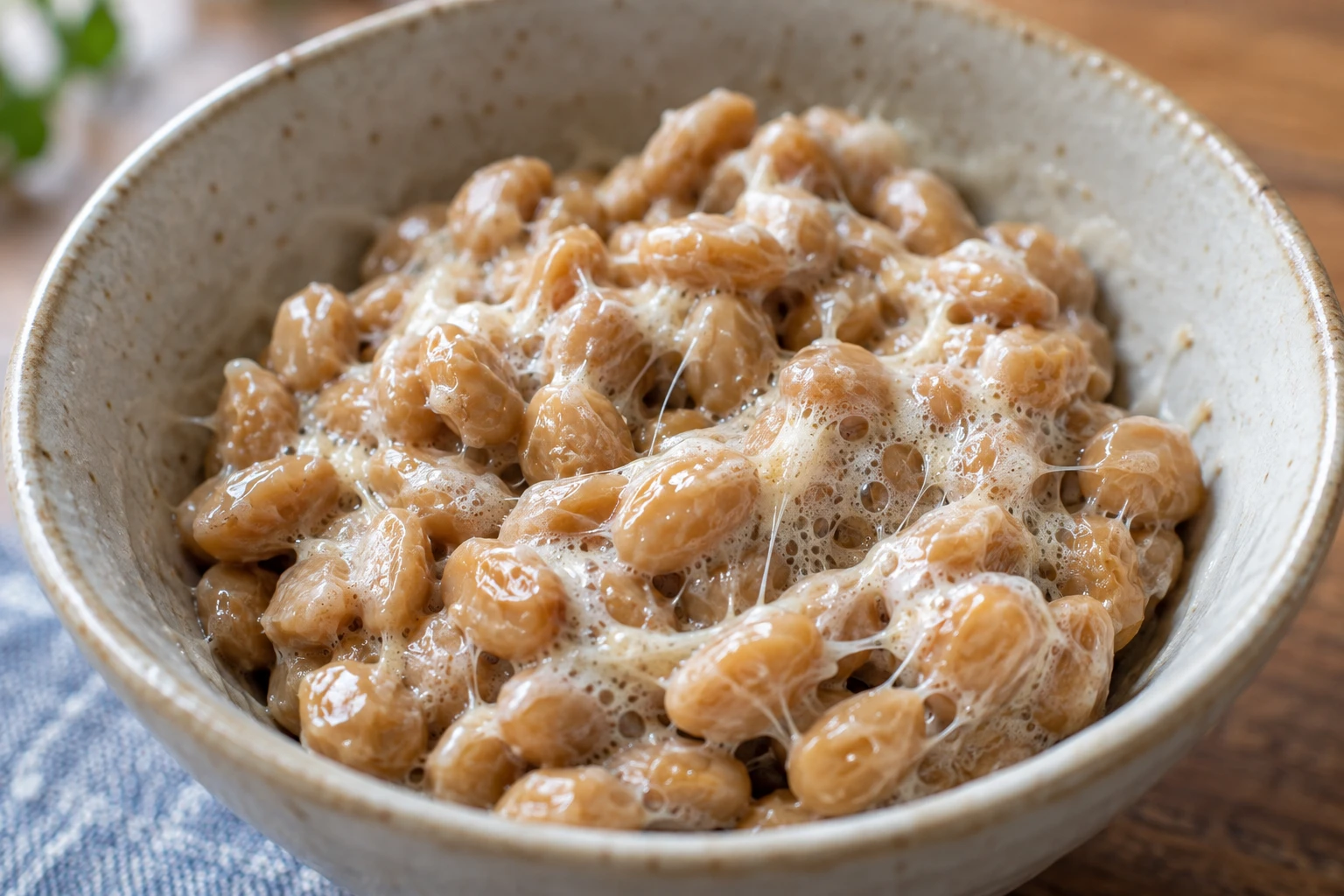
Takano's consumer guide describes stirring as gathering the sticky coating and incorporating air, which changes the feel in the mouth. Its advice is to stir according to preference. A rigid count is less useful than looking at the beans and deciding how much airy coating you enjoy.
Namiko Hirasawa Chen at Just One Cookbook also describes stirring to make the mixture lighter. The close view below shows the resulting pale, lightly bubbly material around still-visible beans. It remains a bean dish, with the coating connecting the pieces; it has not become a smooth paste.
If you are comparing two products, try them with similar seasoning so that bean size and texture remain easy to notice. Then adjust the stirring on the next portion. That is a simple tasting approach, not a claim that one bean form or amount of mixing is objectively best.
Build the serving in three decisions
- 01
Check the accompaniments
Just One Cookbook notes that store-bought natto often includes tare sauce and karashi mustard. Look at what your pack contains rather than assuming every product supplies both.
- 02
Season to the serving
Use the supplied seasoning as directed, or follow a chosen recipe. Chen offers scallions and nori among the additions. You can keep mustard separate while deciding how much of its sharpness you want.
- 03
Put rice within reach
JNTO describes natto with rice as a familiar breakfast arrangement. Spoon the seasoned beans onto rice or serve the portion alongside, keeping the preparation small enough to taste as you go.
The rice bowl is one route
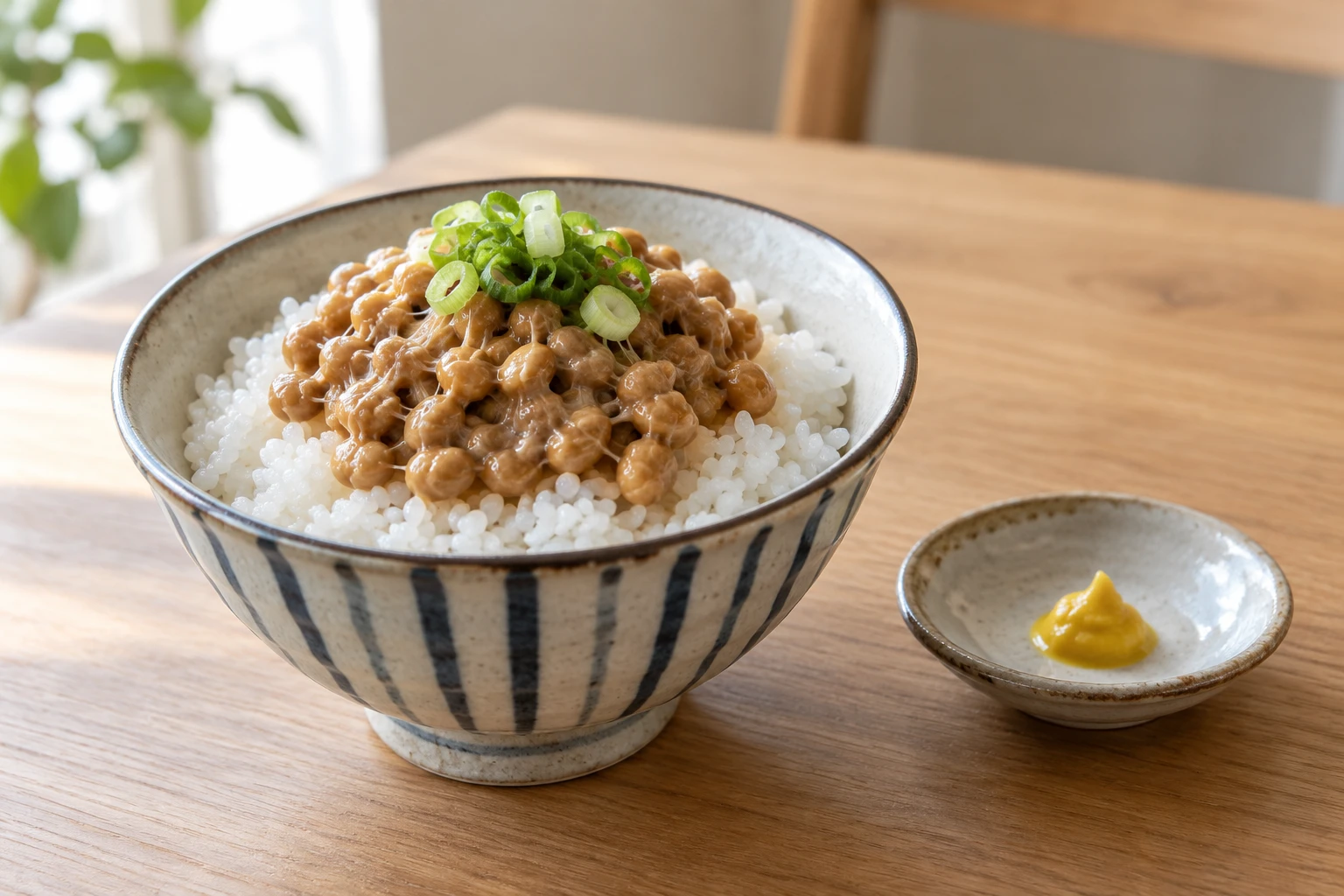
The pictured combination uses whole beans, cooked rice and scallions. It gives the sticky coating somewhere to spread while leaving the beans visible. There is no raw egg in this serving. The additions are choices: start simply if you want to learn the taste of a particular product before surrounding it with other ingredients.
Natto also has regional forms beyond the plain portion. MAFF describes Ibaraki's soboro or shoboro natto with dried daikon, giving a contrast between soft beans and the radish's firmer texture. It also records dried hoshi natto, eaten as a crunchy snack. Those products show why the word natto alone does not promise the same texture in every package.
Research notes
Sources
A regional food record, a producer's consumer guidance and two Japanese food references support the serving decisions.
- MAFF — Ibaraki Natto Production overview, Mito's small beans and regional soboro/hoshi forms.
- Takano Foods — Natto questions and answers Stirring as texture preference, hikiwari preparation and product handling.
- Just One Cookbook — Natto Pack seasonings, stirred texture and optional scallion/nori additions.
- JNTO — Natto and ways to enjoy it The familiar rice, mustard and sauce breakfast arrangement.
Keep exploring
More stories for your table
Japanese cuisine Seasonal vegetables
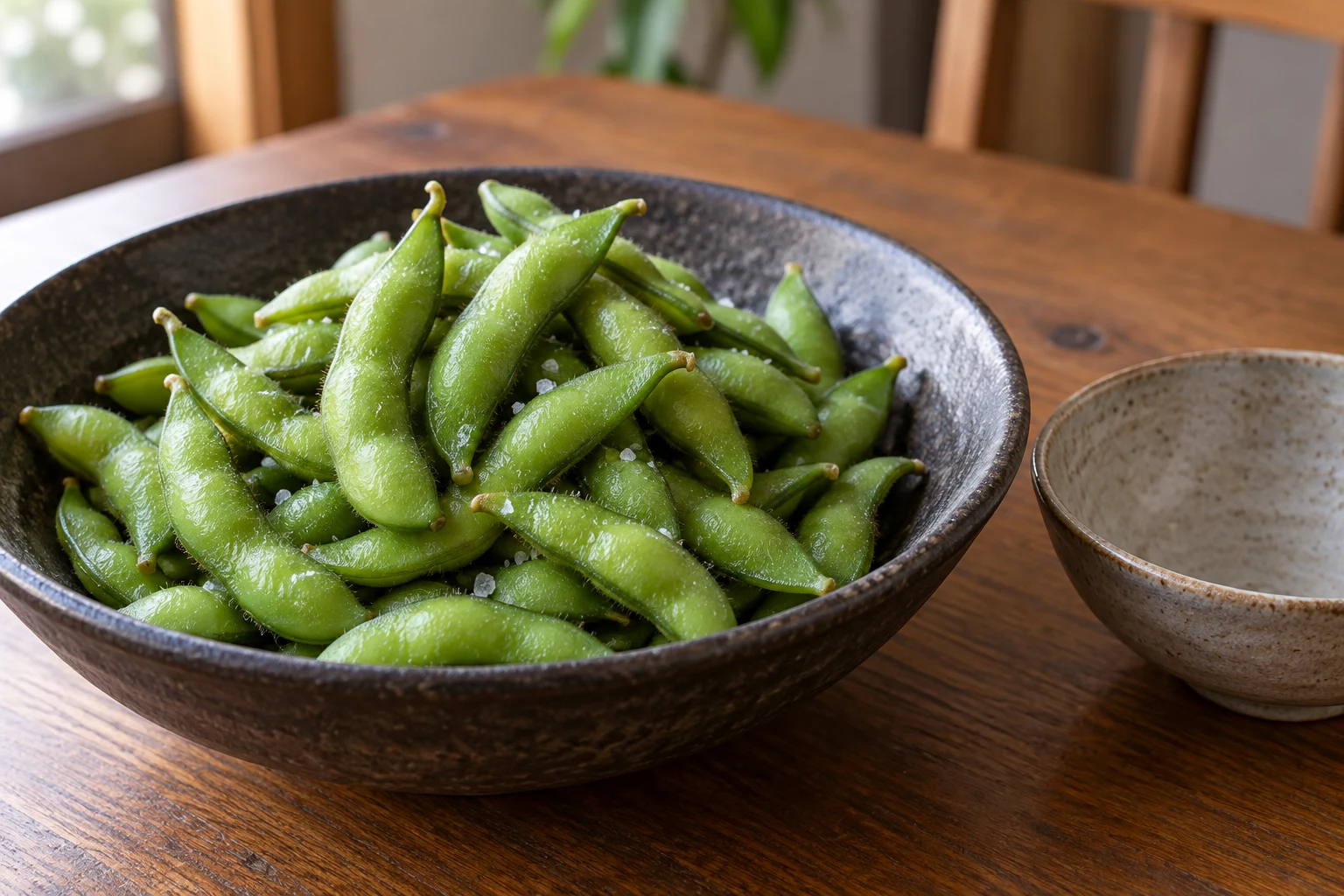
Edamame: Season the Pod, Eat the Bean
The pod shapes how Japanese edamame is salted, cooked and eaten. Compare fresh and frozen beans, two boiling methods, and Niigata’s seasonal varieties.
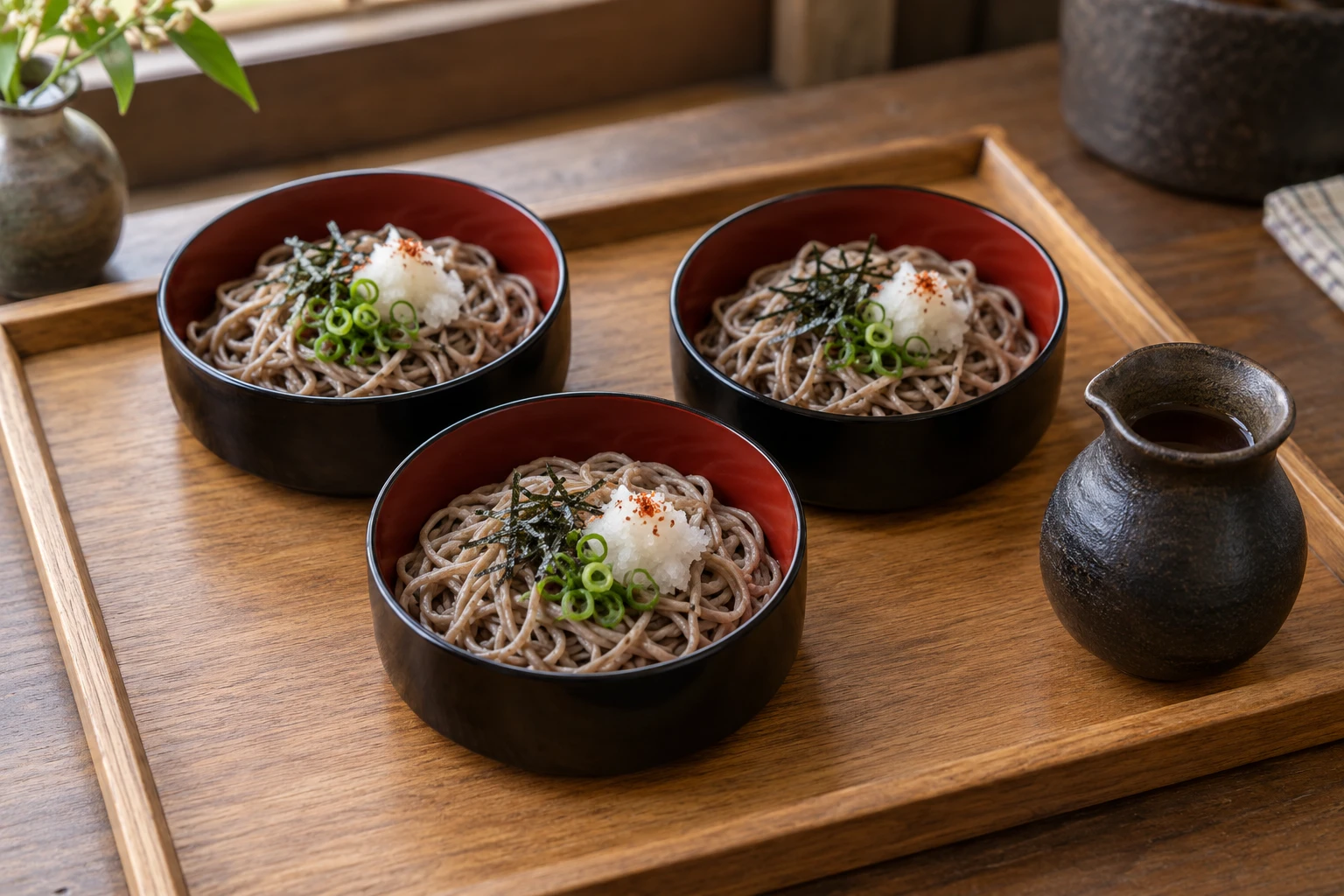
Japanese cuisine Noodles
Soba: Read the Flour, Then the Serving
Soba describes a noodle family, not one flour ratio or one bowl. Ingredient labels, fresh noodle making and Izumo serving styles explain the differences.
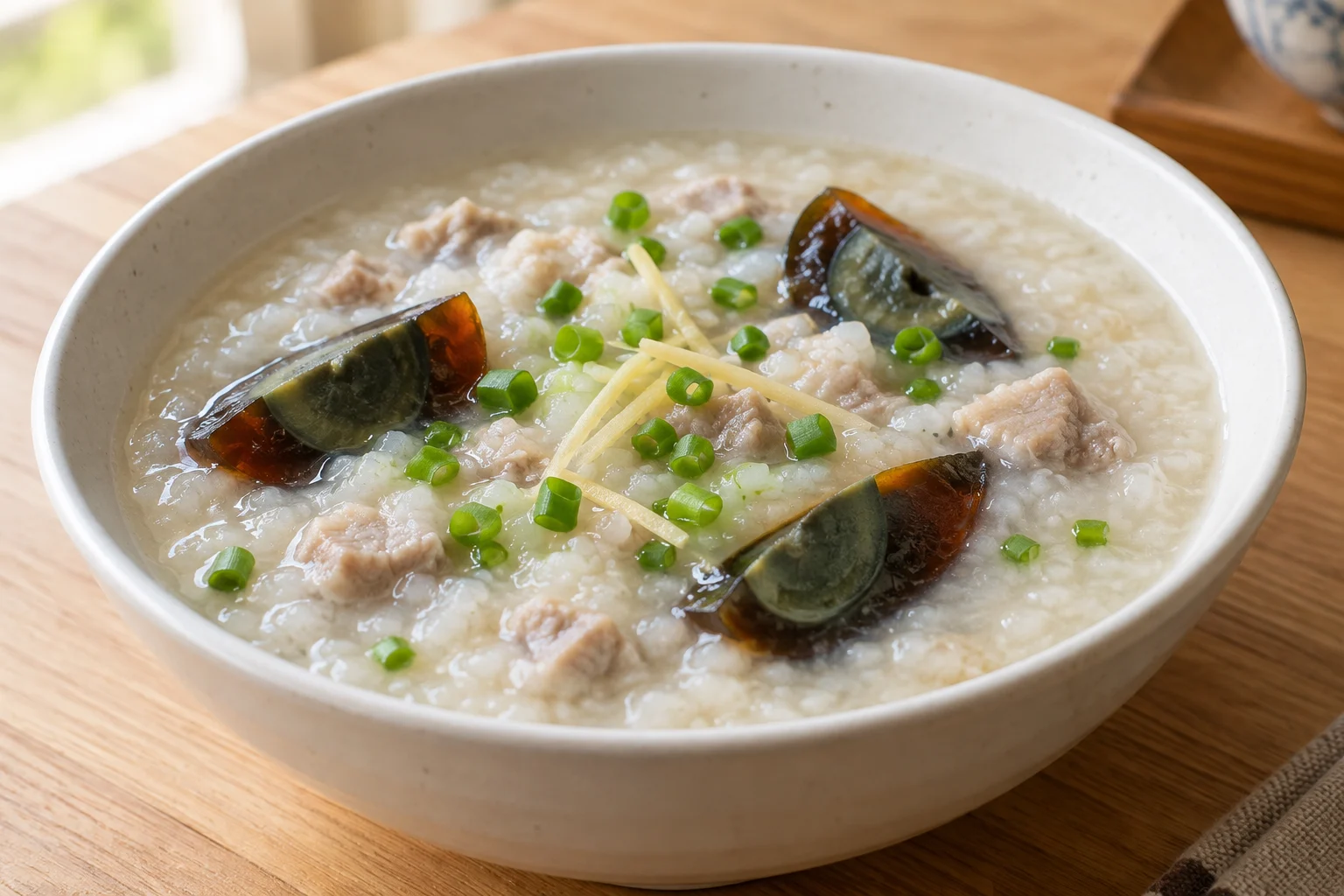
Chinese cuisine Cantonese rice congee
Century Egg and Pork Congee: Finish the Rice Base
Century egg and pork enter congee after the rice develops its texture. Compare three published rice methods, then coordinate meat, egg pieces and the final bowl.