
Dango: One Rice Dumpling, Several Ways to Meet It
団子
A glossy soy-glazed skewer and pastel hanami dango share a rice-flour foundation. Learn the different finishes, seasonal displays and rice-flour names that help you choose or cook dango.
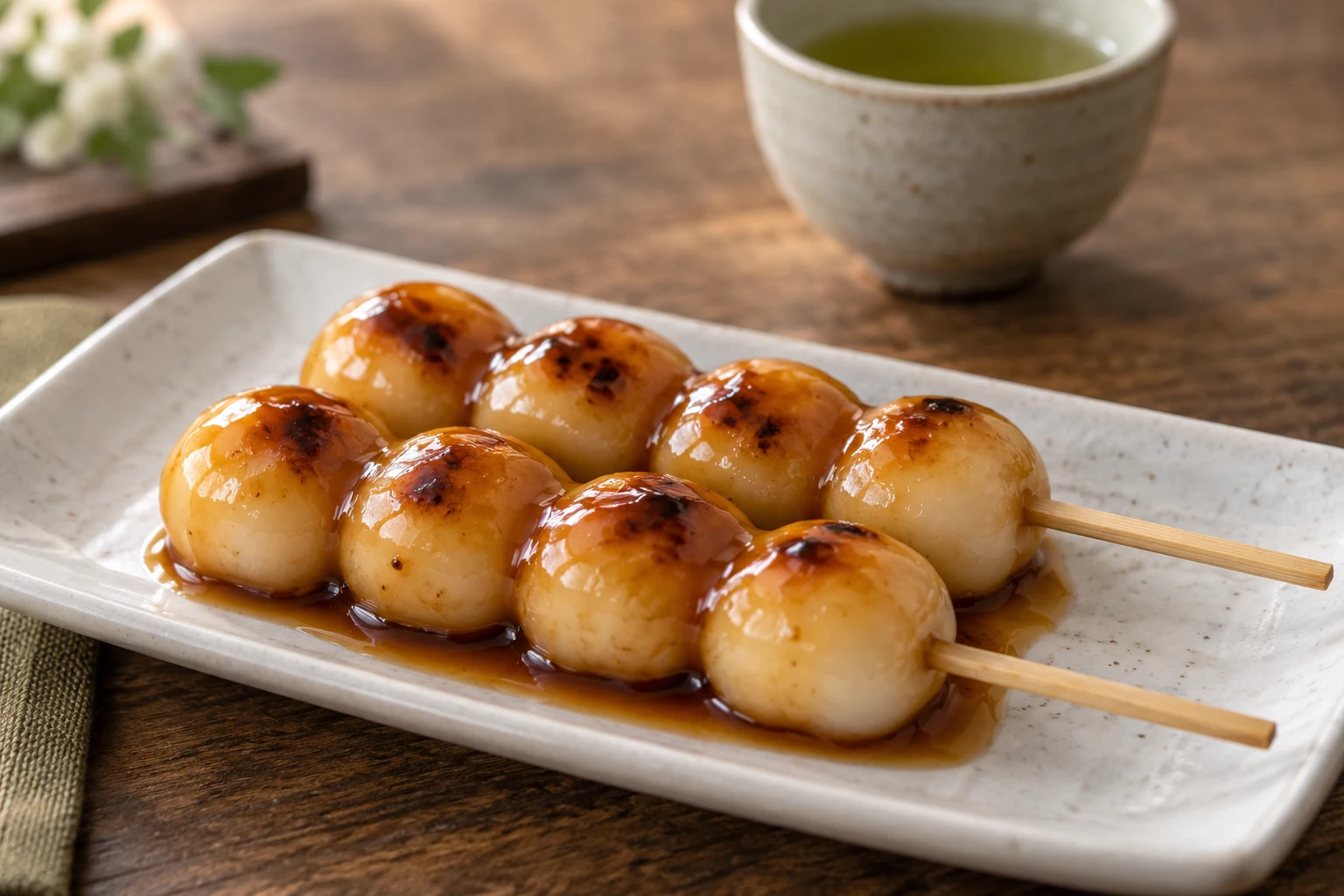
The name is broader than the glaze
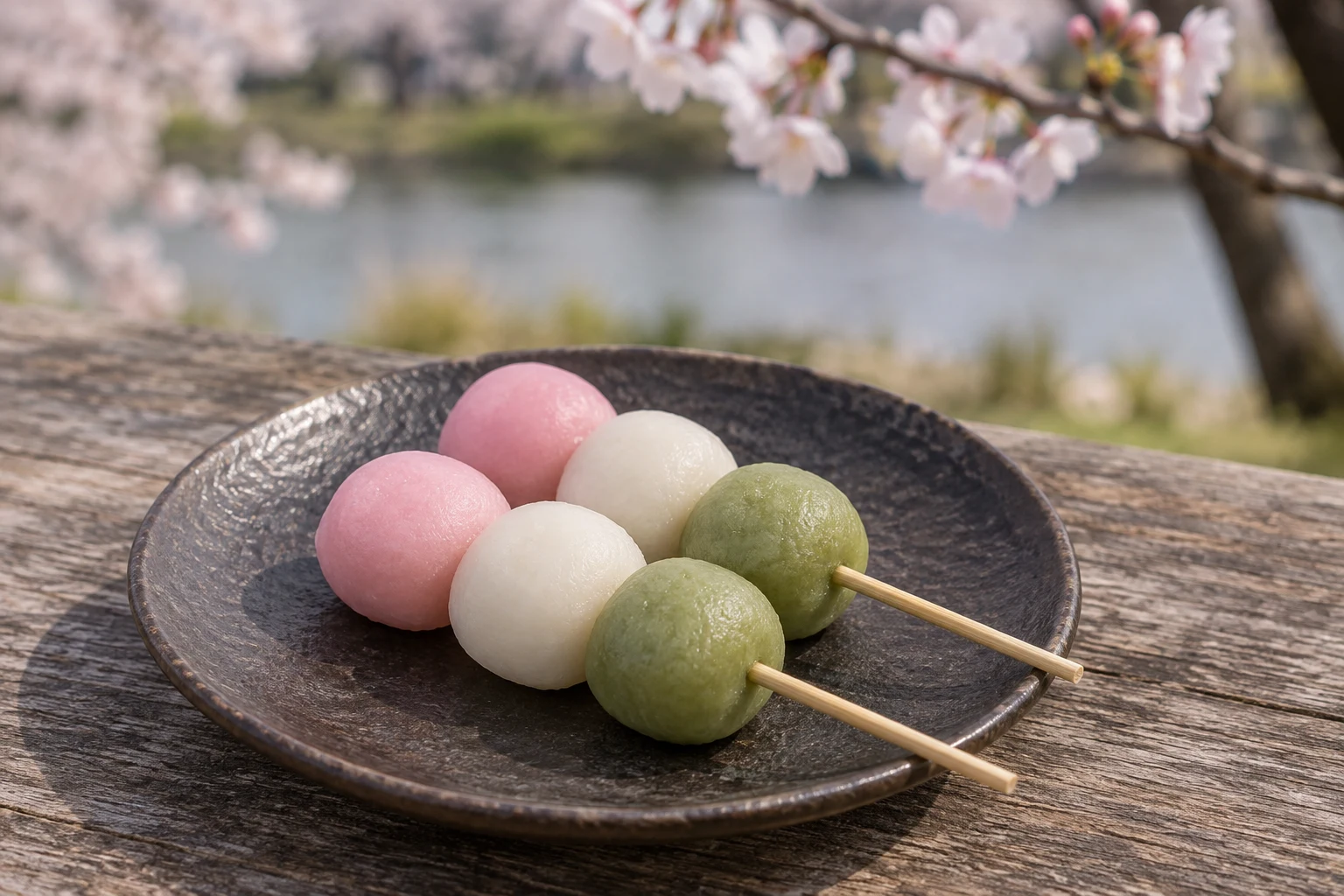
Dango are Japanese rice-flour dumplings, part of the world of wagashi sweets. A glossy amber skewer is one familiar encounter, but it is not the whole category. Pink, white and green dumplings, or plain white ones displayed without sauce, can tell a different story about the occasion and the finish.
The agriculture ministry’s Tokyo kushi-dango entry records toppings including sweet bean paste, mitarashi sugar-and-soy glaze and kinako, roasted soybean flour. The skewer holds the pieces together; the topping shapes the first impression. Ask which version you are looking at before assuming the colour predicts the flavour.
Three ways to recognise the dumpling
Mitarashi
The sweet soy glaze is the visible feature. The ministry lists it among the finishes for skewered dango, and Kikkoman’s recipe cooks a separate glaze before coating the dumplings.
- Amber, glossy finish
- Sweet soy sauce around the rice dough
Hanami
Nippon.com associates pink, white and green skewered dango with cherry-blossom viewing. The colours signal the seasonal form; they do not establish one mandatory flavouring for every maker.
- Three contrasting colours
- A spring flower-viewing association
Moon-viewing dango
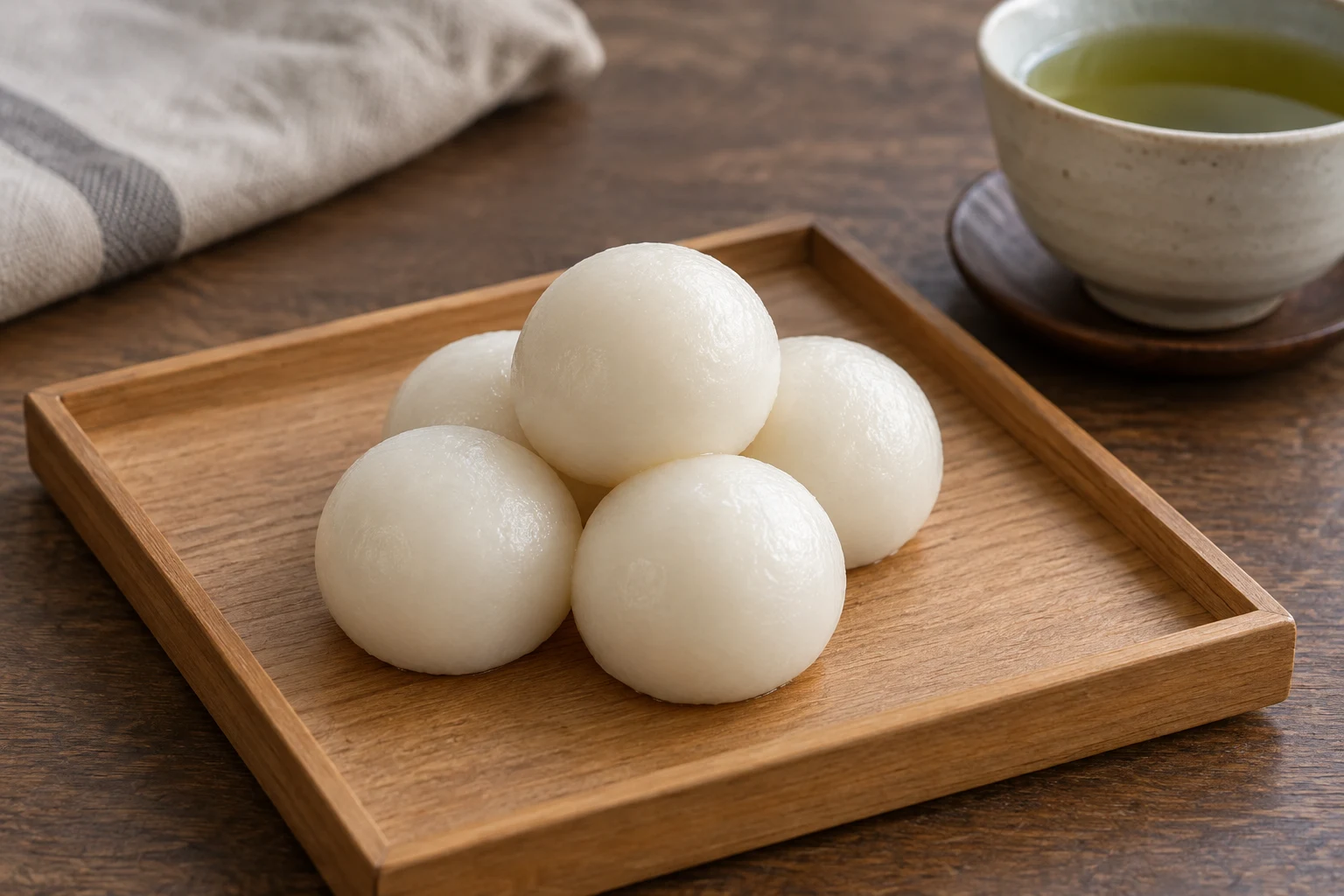
The same cultural guide records round white dango displayed for autumn tsukimi, or moon viewing. The plain circular shape is part of that seasonal encounter.
- White and round
- An autumn display as well as a sweet
Spring colour and autumn white
Seasonal service changes the appearance without reducing dango to a single festival food.
Rice flour is a starting point, not one interchangeable bag
Namiko Hirasawa Chen’s Just One Cookbook ingredient guide distinguishes joshinko, made from ordinary Japanese short-grain rice, from flours made from glutinous short-grain rice. The latter group includes mochiko and shiratamako, with processing differences between them. These names are useful information when buying ingredients for Japanese sweets.
Kikkoman’s dango recipe explains the roles of its two-flour blend: shiratamako contributes a soft, smooth, springy texture, while joshinko adds firmness. That gives a reason for a recipe to call for both. A bag that simply says rice flour may leave the relevant rice type and intended use unclear; the particular product named in the recipe matters.
Two names in a documented blend
- Joshinko
- Ordinary short-grain rice flour
- Shiratamako
- Glutinous short-grain rice flour
Chen identifies the rice as uruchimai, the short-grain rice eaten at meals. Kikkoman uses its flour to contribute firmness.
Chen identifies a distinct processing method; Kikkoman describes the soft and springy quality it contributes to the dumpling.
Choose a method along with the flour
The two documented recipes here do not assemble the dough in exactly the same way. The ministry’s Tokyo preparation hydrates the flours separately, combines them, cooks portions of dough and kneads again before forming the final pieces. Kikkoman instead mixes its flours with sugar, adds warm water, rolls individual balls and boils them before cooling and skewering.
These are complete methods with different proportions and sequences. Borrowing one flour ratio and another recipe’s shaping order removes the context that makes the instructions useful. For a first attempt, select a full recipe matched to the flours you can buy. Chen also cautions that replacing joshinko with a glutinous-rice flour changes the texture.
The seasonal images sit inside a year-round snack culture
The ministry records kushi-dango as an everyday snack available year-round in specialist shops, supermarkets and convenience stores. A spring picnic is one setting, rather than the only time the sweet belongs at the table.
Nippon.com recommends green tea alongside dango. When choosing a piece, look at the topping, the shape and the occasion; when making it, begin with the flour and a coherent cooking method. Those questions are more useful than expecting every round rice dumpling to have the same sweetness, firmness or presentation.
Research notes
Sources for the skewer, flour and season
Japan’s agriculture ministry documents Tokyo’s skewered form. A cultural guide supplies seasonal uses, a Japanese recipe creator distinguishes the rice flours, and Kikkoman’s original preparation explains their texture roles and separate glaze.
- MAFF — Tokyo kushi-dango Official regional-food account documents toppings, everyday availability and a specific dough method.
- Nippon.com — Japanese rice-flour dumplings Cultural guide associates three-colour hanami dango with spring and round white dango with autumn moon viewing.
- Just One Cookbook — Namiko Hirasawa Chen’s joshinko guide Original ingredient guide distinguishes ordinary and glutinous short-grain rice flours and texture-changing substitutions.
- Kikkoman Food Forum — Mitarashi dango, Summer 2023, page 7 Original preparation explains blend texture, rolled-ball method and separately cooked soy glaze.
- MAFF — Japanese original for kushi-dango Original Japanese text verifies 団子 and 串だんご terminology; not counted as a separate independent source.
Keep exploring
More stories for your table
Japanese cuisine Wheat noodles
Udon: choose the serving before the topping
Hot soup and chilled dipping reveal different sides of udon. Read regional styles, noodle handling and sauce choices before choosing a topping.
Japanese cuisine Meat & potato simmer
Nikujaga: Keep the Potatoes in One Piece
A gentle simmer, thin beef and a lid resting on the food help nikujaga’s potatoes stay intact. Learn the technique and make a complete four-serving home adaptation.
Spanish cuisine Caramel-topped custard
Crema catalana: the custard waits, the crust does not
Citrus-scented custard and brittle caramel run on different schedules. Learn the make-ahead and serving choices behind crema catalana.