
Chawanmushi: Dashi Held in a Spoon
茶碗蒸し
Why Japanese steamed egg custard tastes like broth, how gentle heat preserves its smooth texture, and what different fillings reveal about the dish.
A broth you eat with a spoon
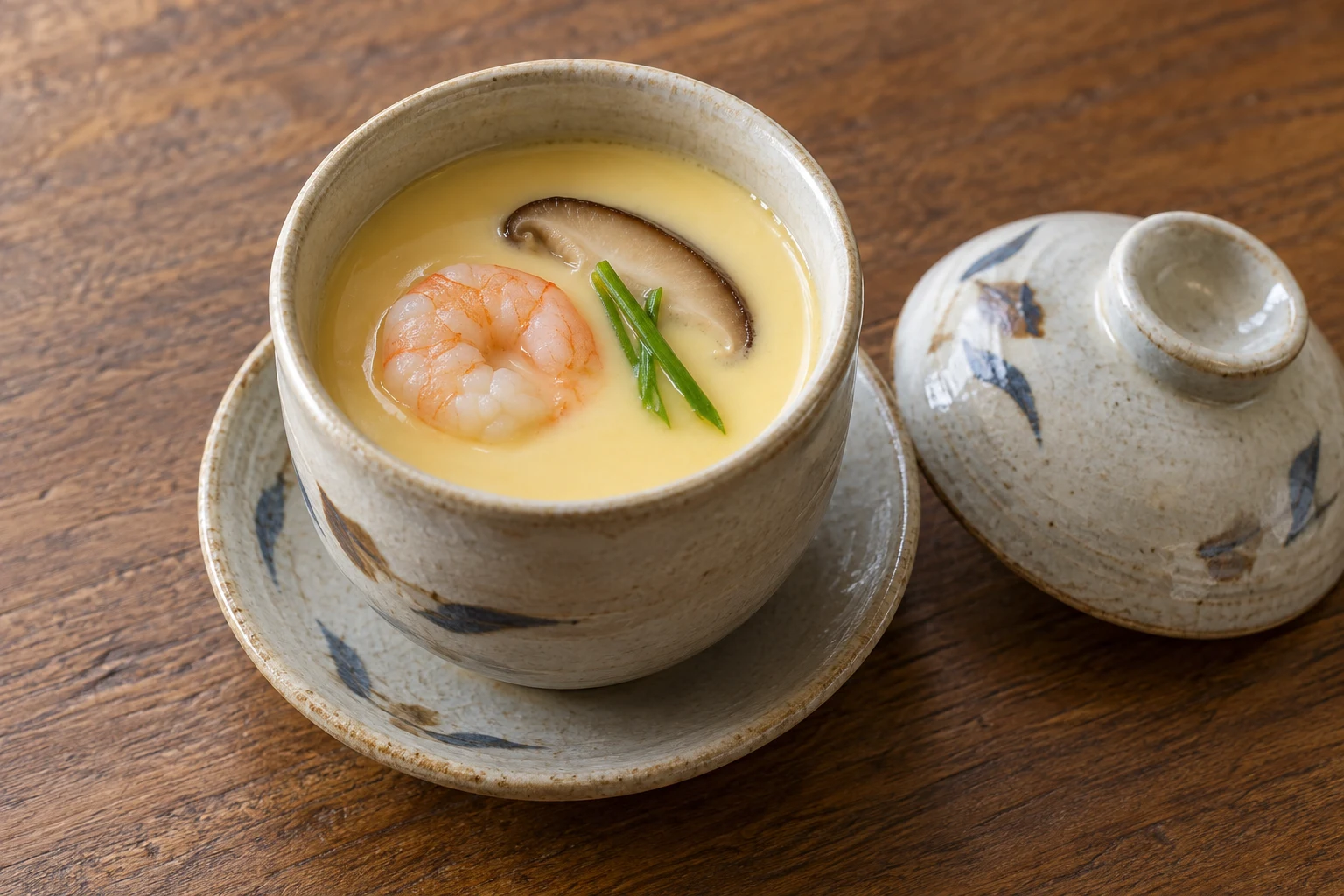
Lift the lid and the first impression is a pale, almost unbroken surface. Chawanmushi is savory Japanese egg custard, steamed in a small cup and eaten with a spoon. The egg gives the broth a delicate shape; shrimp, chicken, mushrooms or fish cake sit within it rather than turning it into a heavily topped bowl.
The name 茶碗蒸し refers to steaming in a bowl or cup. Australian Eggs describes its spoon service, while Japan’s Ministry of Agriculture, Forestry and Fisheries puts dashi at the center of the flavor. Thinking of the dish as softly set broth explains both its light texture and the attention cooks give to heat.
Three decisions inside the cup
- Flavor
- Dashi first
- Structure
- Measured egg and liquid
- Texture
- Gentle heat
The broth is a principal ingredient, so its seasoning shapes the whole custard.
Published preparations use different proportions; the balance determines the set.
A smooth surface needs careful mixing, straining and restrained cooking.
The ratio is a choice, not a garnish
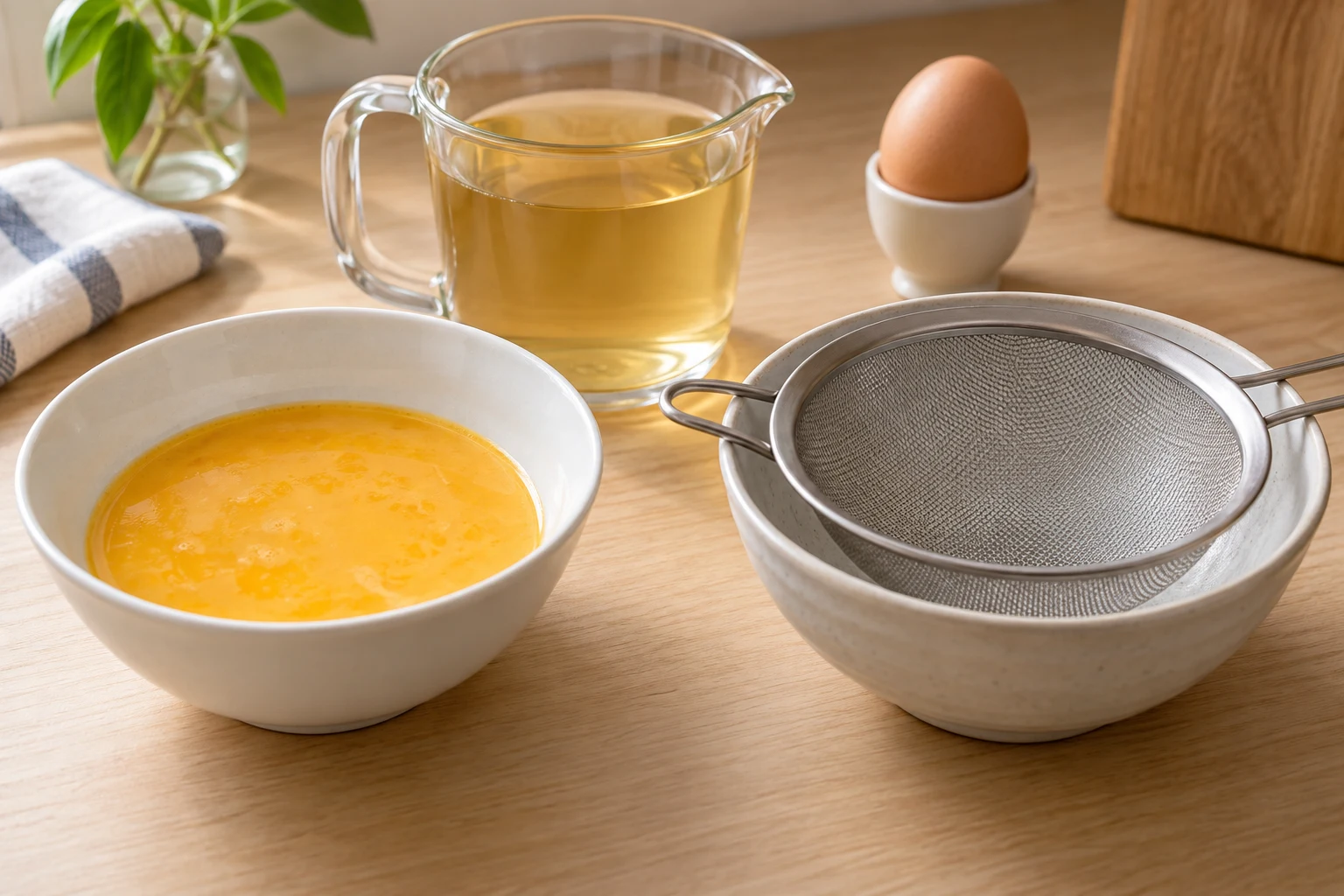
MAFF’s preparation combines one egg with 150 ml of dashi. Kikkoman’s mushroom version uses the same egg-and-water quantities with dashi powder. Australian Eggs describes measuring stock at three times the egg’s volume. These are useful reference points, rather than a reason to assume that every egg or every cup will behave identically.
Namiko Hirasawa Chen at Just One Cookbook deliberately chooses a richer 1:2.5 egg-to-dashi balance. Her instructions weigh the eggs before calculating the liquid. The important comparison is between complete methods: changing the liquid while keeping every other assumption may change the result. Follow one measured preparation rather than mixing proportions and timings from several.
Where smoothness is won
- 01
Mix without a froth
Combine the egg and broth gently. Australian Eggs advises avoiding bubbles, and MAFF strains the mixture before filling the cups. A sieve catches incompletely mixed egg strands; removing bubbles addresses a different problem at the surface.
- 02
Protect the individual cup
MAFF covers each container and cooks it in a shallow pan of water. Just One Cookbook also covers the cups in a water bath. The vessel and the method matter: a thin cup and a thick ramekin do not necessarily warm at the same rate.
- 03
Reduce the heat before it roughens the custard
MAFF lowers the heat before the pan boils. Just One Cookbook identifies excessive heat as a cause of pitted, spongy custard. Faster boiling cannot substitute for patient cooking when the desired finish is tender and smooth.
What the fillings change
Shrimp, chicken and shiitake
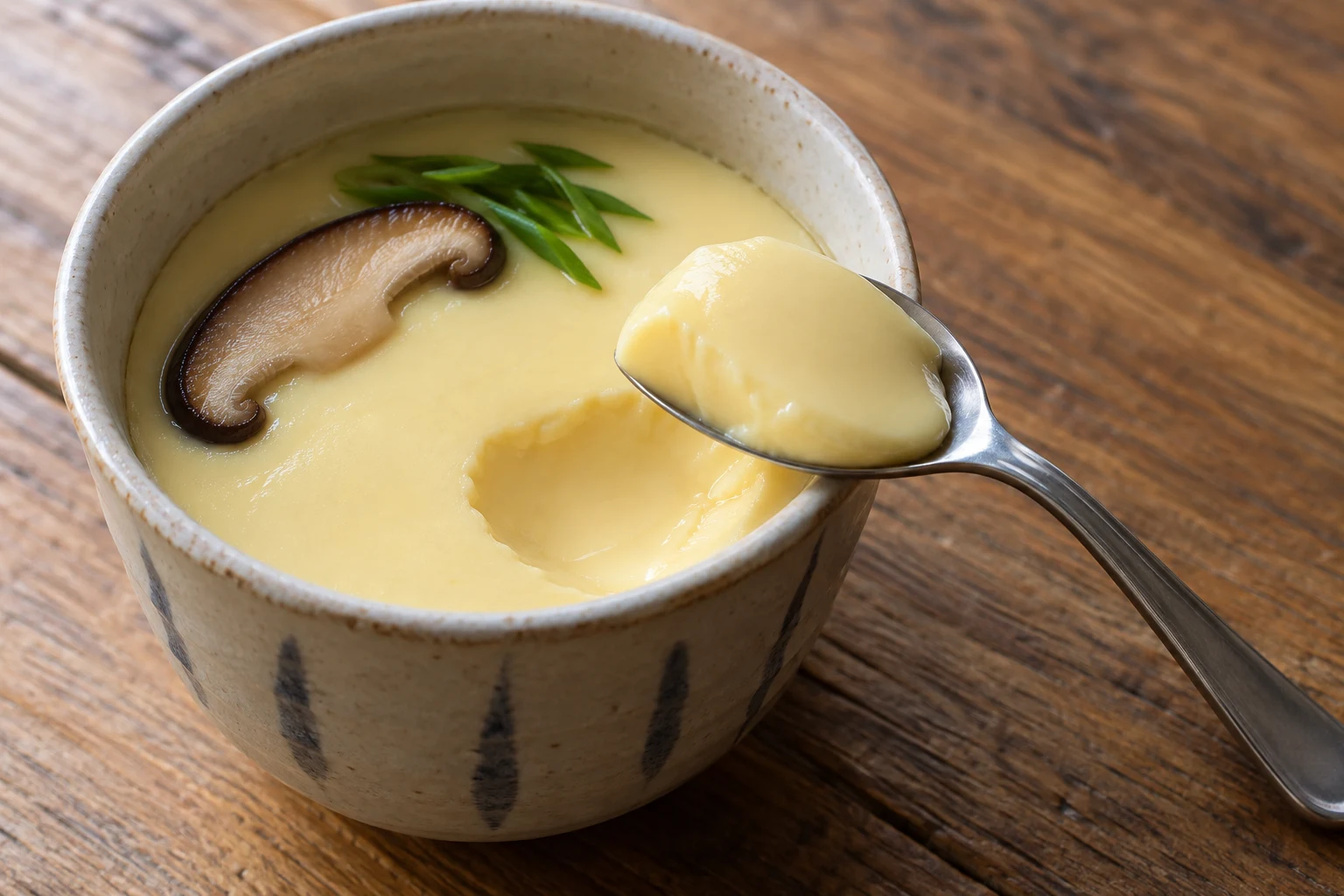
MAFF documents these additions in its preparation. They create small changes in bite and flavor within the gentle egg-and-dashi base. The fillings are part of a complete cooking method, not simply decorations to scatter on an otherwise finished custard.
A mushroom-focused cup
Kikkoman uses sautéed shiitake and enoki with leek. This gives another documented route to the same savory custard structure. A vegetable-looking cup is not automatically vegetarian: check the broth, because dashi may contain fish.
Read the cup before you read its toppings
At the table, look for a smooth, softly set custard and small inclusions that leave room for the broth’s flavor. A shrimp or mushroom on the surface tells only part of the story. The quieter details—the measured liquid, the strained egg and the restrained heat—explain why chawanmushi has its distinctive texture.
For cooking quantities and doneness instructions, use a complete linked preparation appropriate to its fillings. This guide compares the decisions those preparations document; it does not combine them into a new recipe or claim that one garnish defines every Japanese version.
Research notes
Sources and complete preparations
Four independently published preparations establish the dish, its broth-and-egg balance, cup service and contrasting fillings.
- MAFF: Chawanmushi Japanese government preparation with dashi, egg, chicken, shiitake and prawns; straining and lowered heat.
- Kikkoman: Chawan-Mushi Producer’s mushroom-focused preparation, with sautéed shiitake and enoki, leek and dashi.
- Australian Eggs: Chawanmushi Egg industry preparation describing the cup, spoon service, liquid ratio and gentle mixing.
- Namiko Hirasawa Chen: Chawanmushi Japanese recipe creator’s measured egg-to-dashi approach, straining, gentle water bath and filling variations.
Keep exploring
More stories for your table
JapanSeasonal vegetables
Edamame: Season the Pod, Eat the Bean
The pod shapes how Japanese edamame is salted, cooked and eaten. Compare fresh and frozen beans, two boiling methods, and Niigata’s seasonal varieties.
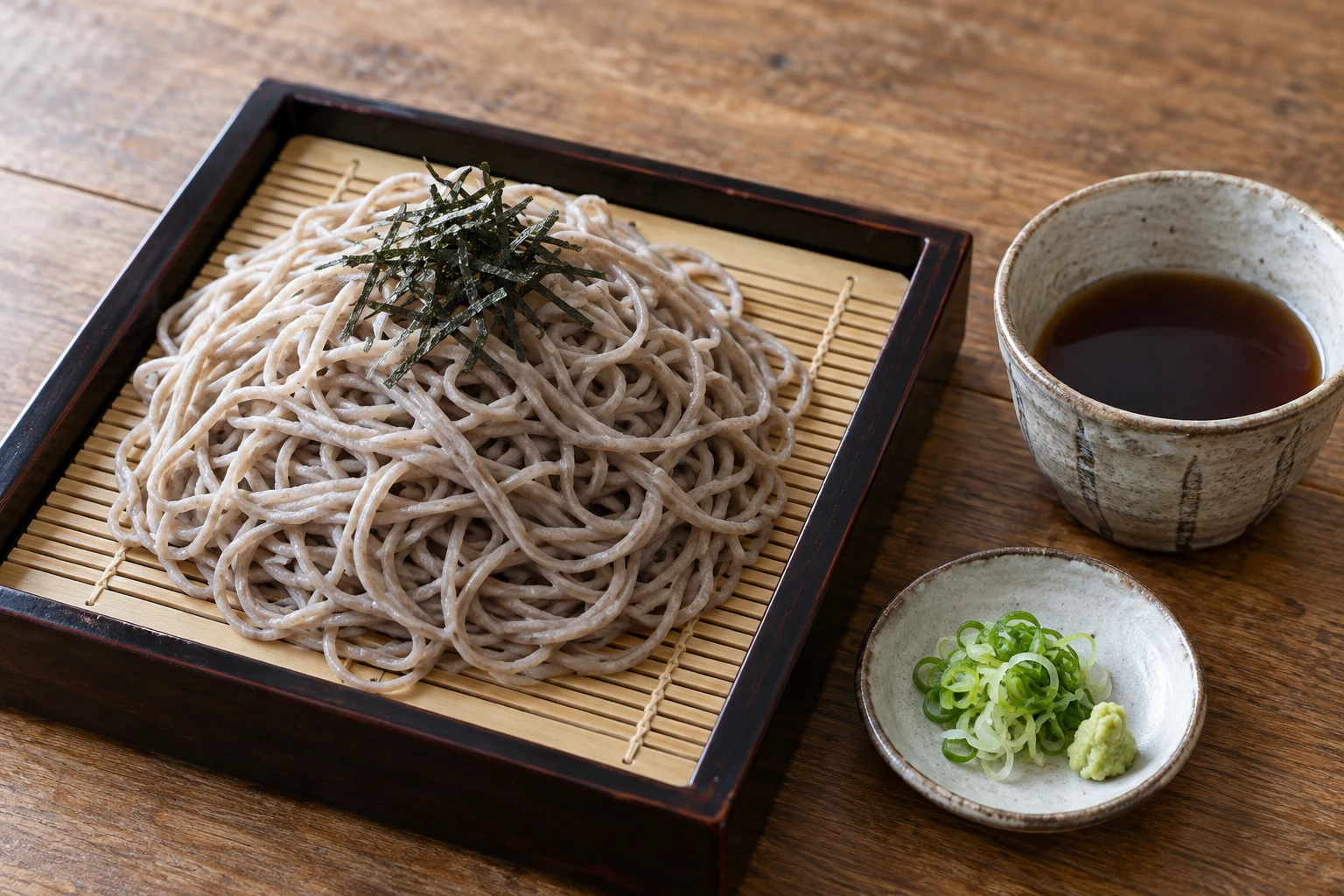
JapanCold noodles
Zaru Soba: The Water Before the Dip
For Japanese cold buckwheat noodles, rinsing and draining matter as much as the dipping sauce. Follow the three roles water plays from the pot to the final cup.
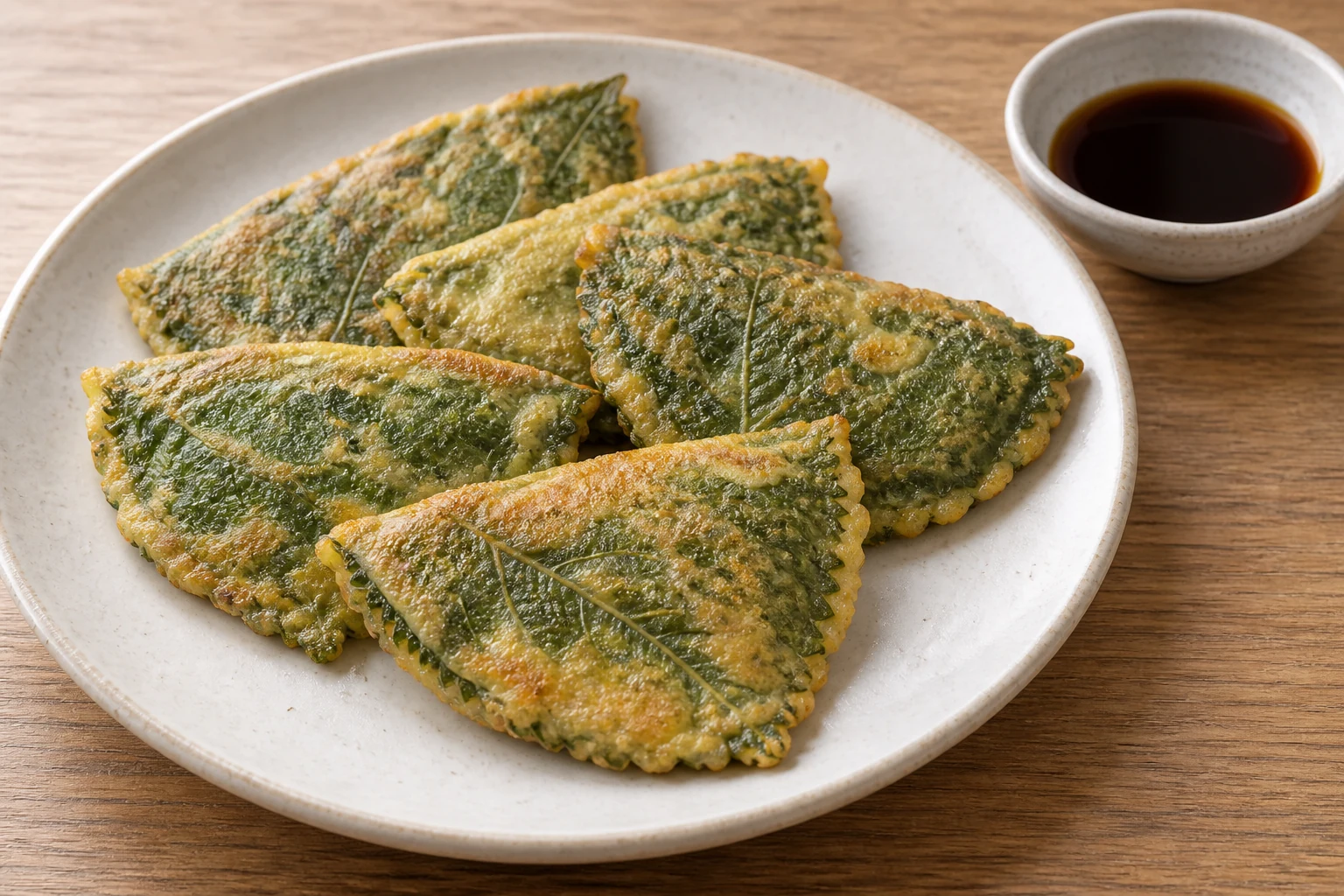
South KoreaStuffed perilla leaves
Kkaennip Jeon: Keep the Filling Thin
How thin filling, well-drained tofu and gentle pan heat work together in Korean perilla-leaf jeon, with a complete pork-and-tofu home adaptation.