
Venetian Cicchetti: Small Bites, Different Clocks
Cicchetti
Cicchetti can be fish on polenta, a dressed egg or a small dish of sardines. Build a varied spread by separating what rests from what crisps.
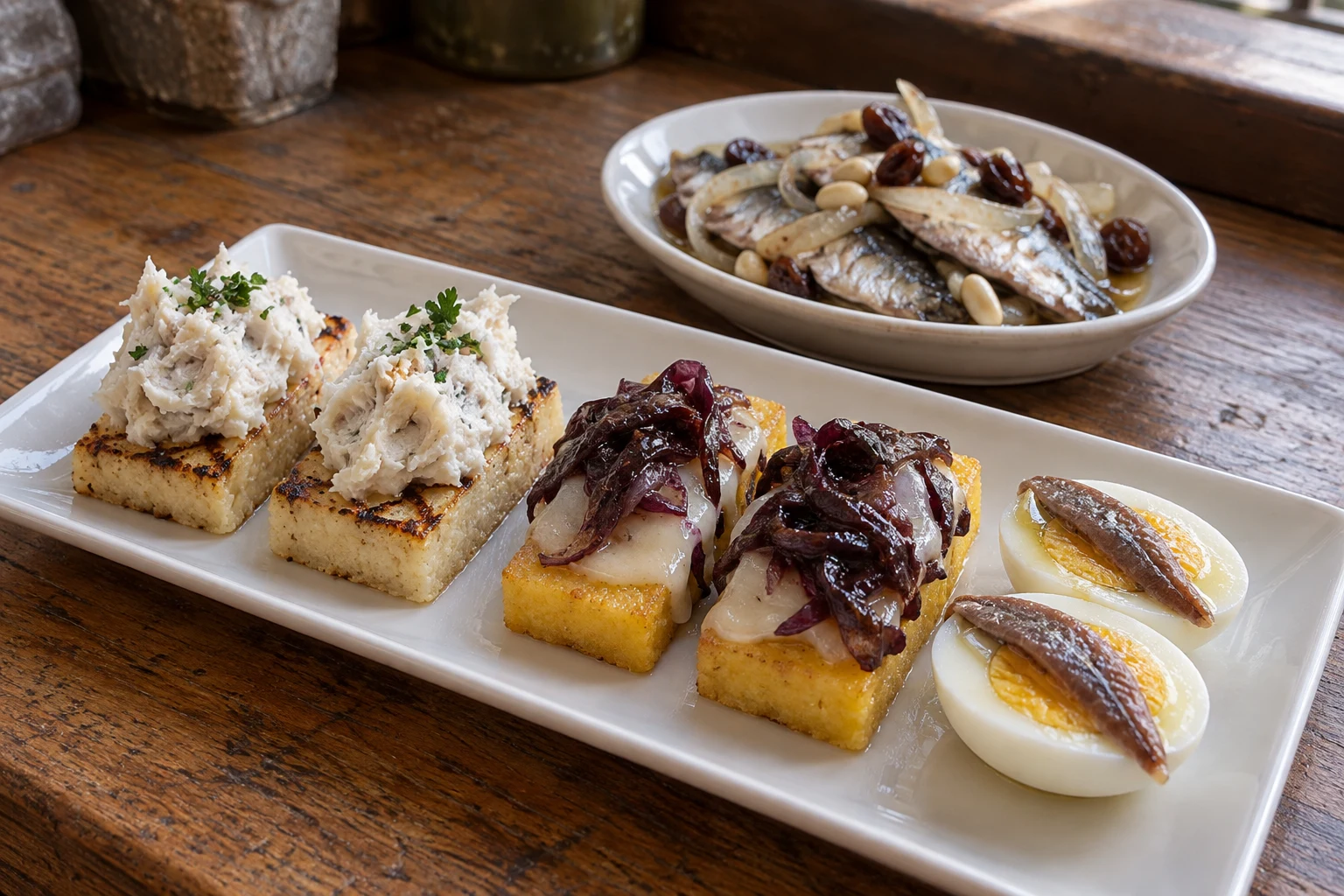
A way of serving, with room for several dishes
A Venetian bacaro can offer a counter of small savory portions rather than a single standardized dish. Cicchetti may be bread or polenta with a topping, half an egg, a fritter, a small sandwich or a spoonable portion of fish and vegetables. Choosing several lets different textures share a plate without forcing them into one recipe.
Visit Venezia’s account of the bacaro tour describes snacks displayed near the bar and a changing selection from place to place, often accompanied by an ombra, a small glass of wine. That describes a familiar setting, not a rule that every bite must sit on bread or every diner must order alcohol. At home, concentrate on portions that are easy to pick up or eat with a small fork.
Three bites with three jobs
A creamy topping
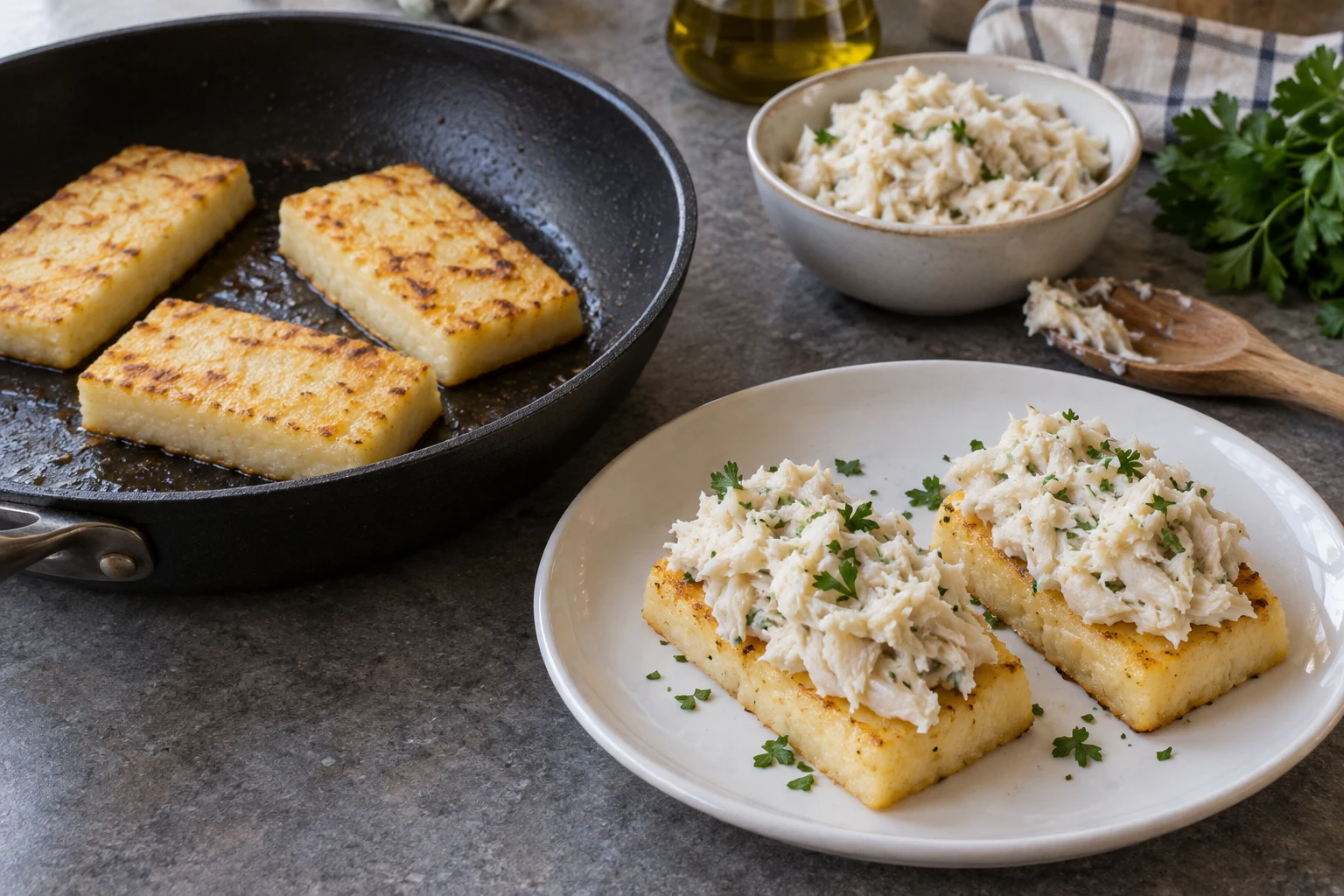
Baccalà mantecato offers cooked fish worked with oil into a soft mixture. Bread or firm polenta supplies structure underneath; keep the topping proportionate so the base can carry it.
A tangy small dish
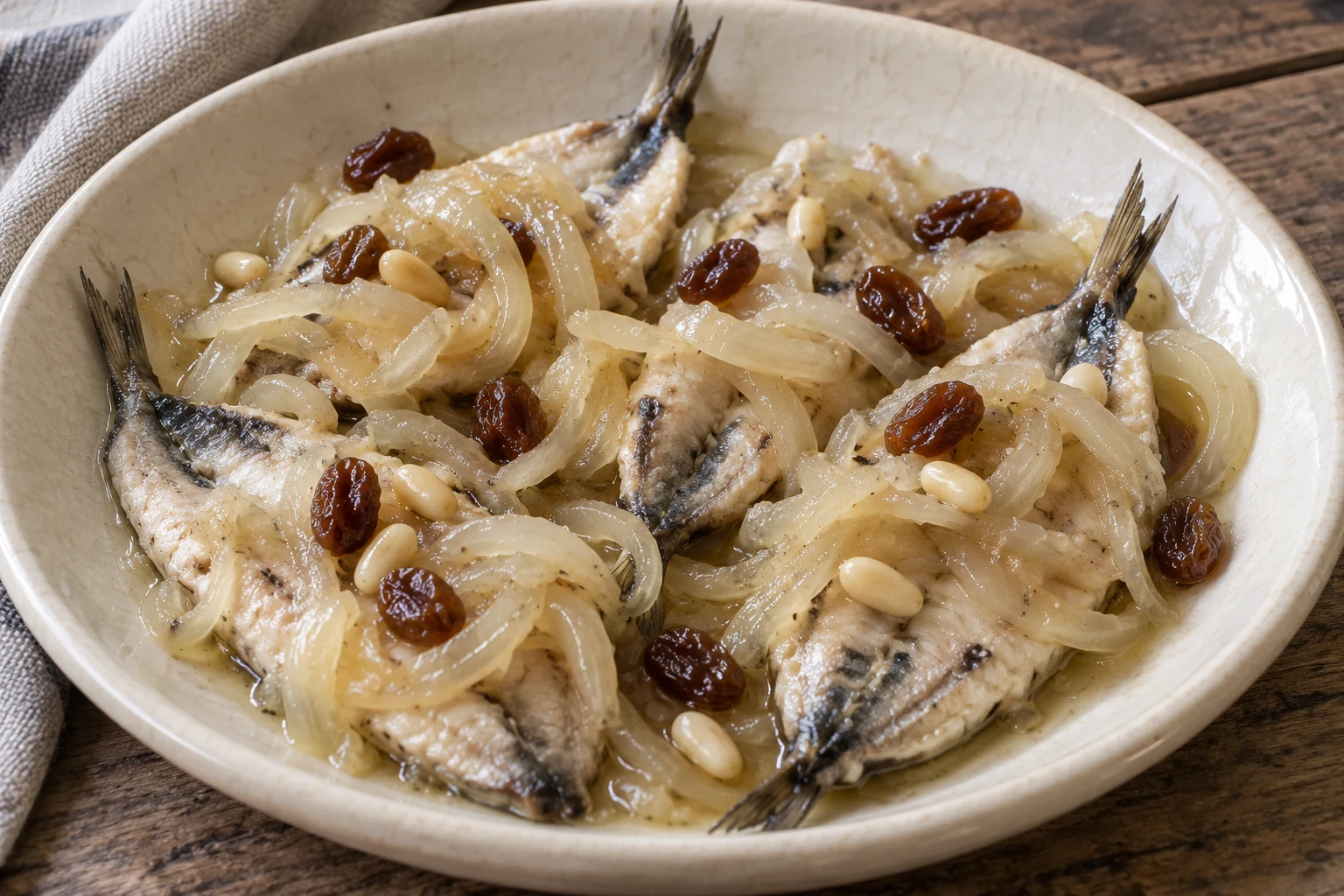
Sarde in saor combine cooked sardines with onion and vinegar, with raisins and pine nuts in the recipes here. A small plate preserves the dressing without soaking every crisp bite nearby.
A compact savory bite
Half a hard-boiled egg with an oil-packed anchovy needs no bread base. Elaine Trigiani’s teaching handout adds a little mayonnaise; Sanpellegrino’s version offers an olive. Either way, the egg should be firm enough to handle.
Prepare what needs to rest
Davide Brovelli’s recipe in La Cucina Italiana fries opened sardines, then covers them with an onion-and-vinegar mixture containing raisins and pine nuts. It gives the assembled fish a refrigerated rest. That step is part of the flavor and texture, so sarde in saor make more sense as an advance preparation than as the last job before guests arrive.
Vinegar does not turn this cooked fish into a shelf-stable preserve. Refrigerate promptly in a shallow container and keep it cold until serving. Cook fish to 145°F/63°C, or until its flesh is opaque and separates easily with a fork. Work from properly cleaned fish and check for remaining bones.
Polenta also benefits from advance planning. Cook it using the package’s guidance, spread it in a shallow layer and refrigerate promptly so it firms before cutting. Trigiani’s handout uses this chilled, sliceable base for frying. Soft polenta poured directly into a pan will not behave like a set rectangle.
Read baccalà as an ingredient question
The Dogale Confraternita del Baccalà Mantecato identifies its ingredient as stoccafisso, already soaked and deboned. That matters: dried stockfish and salted cod require preparation appropriate to the product. Check the supplier’s label rather than treating their soaking times as interchangeable. Keep fish refrigerated during soaking and follow the instructions for changing water.
The Confraternita cooks the fish, then works it with oil added slowly, using a wooden spoon or a mixer paddle. Its finished mixture deliberately retains a few pieces instead of becoming a completely smooth puree. Some versions use milk: Sanpellegrino’s recipe and Trigiani’s handout both include it, while the Confraternita’s ingredient list does not. Choose a complete method rather than quietly adding dairy to a preparation you intended to keep dairy-free.
The useful target is a cohesive topping that stays on its base. Check carefully for bones and taste before adding salt. The supplier’s fish, the chosen cooking liquid and any preserved garnish can change the seasoning.
Leave crispness and assembly until the end
Pan-brown the set polenta shortly before serving. For a different topping, Brovelli pairs polenta with Asiago and sautéed radicchio: melted cheese supports the bitter vegetable. This gives the plate another texture without requiring another seafood preparation. If serving vegetarians, check the cheese’s rennet as well as the other ingredients.
Prepare hard-boiled eggs with both white and yolk firm, chill them promptly, and halve them near assembly. Drain the anchovy so excess oil does not slide onto the platter. Add the optional olive or a modest amount of mayonnaise according to the version you chose.
Serve small batches and refill from refrigerated components. Fish and eggs are perishable, and cooked polenta needs prompt cooling too. Refrigerate within two hours, or one hour above 90°F/32°C; keep the refrigerator at 40°F/4°C or colder. Tell diners which bites contain fish, egg, dairy, wheat or pine nuts. Changing the base does not remove an allergen in the topping.
Research notes
Venetian bites and serving references
These sources document the bar setting and several distinct preparations; the safety references guide cooking, cooling and service.
- Visit Venezia — The Bacaro Tour A local visitor guide describes the counter display, varied snacks and ombra. Its commercial tour offers and price claims are separate from the food description.
- Davide Brovelli / La Cucina Italiana — Cicchetti veneti Original preparations for refrigerated sarde in saor and polenta with Asiago and radicchio.
- Dogale Confraternita del Baccalà Mantecato — La ricetta The Venetian association’s stockfish, oil and serving method, including a texture with some pieces retained.
- Sanpellegrino — Venetian cicchetti A milk-containing fish preparation and hard-boiled egg with anchovy and optional olive.
- Elaine Trigiani / Smithsonian Associates — Cicchetti teaching handout The educator’s chilled polenta base, fish emulsion and egg-and-anchovy bite.
- FoodSafety.gov — Safe minimum internal temperatures Fish cooking and firm-cooked egg guidance.
- FoodSafety.gov — Four steps to food safety Prompt cooling, cold storage and serving-time limits.
Keep exploring
More stories for your table
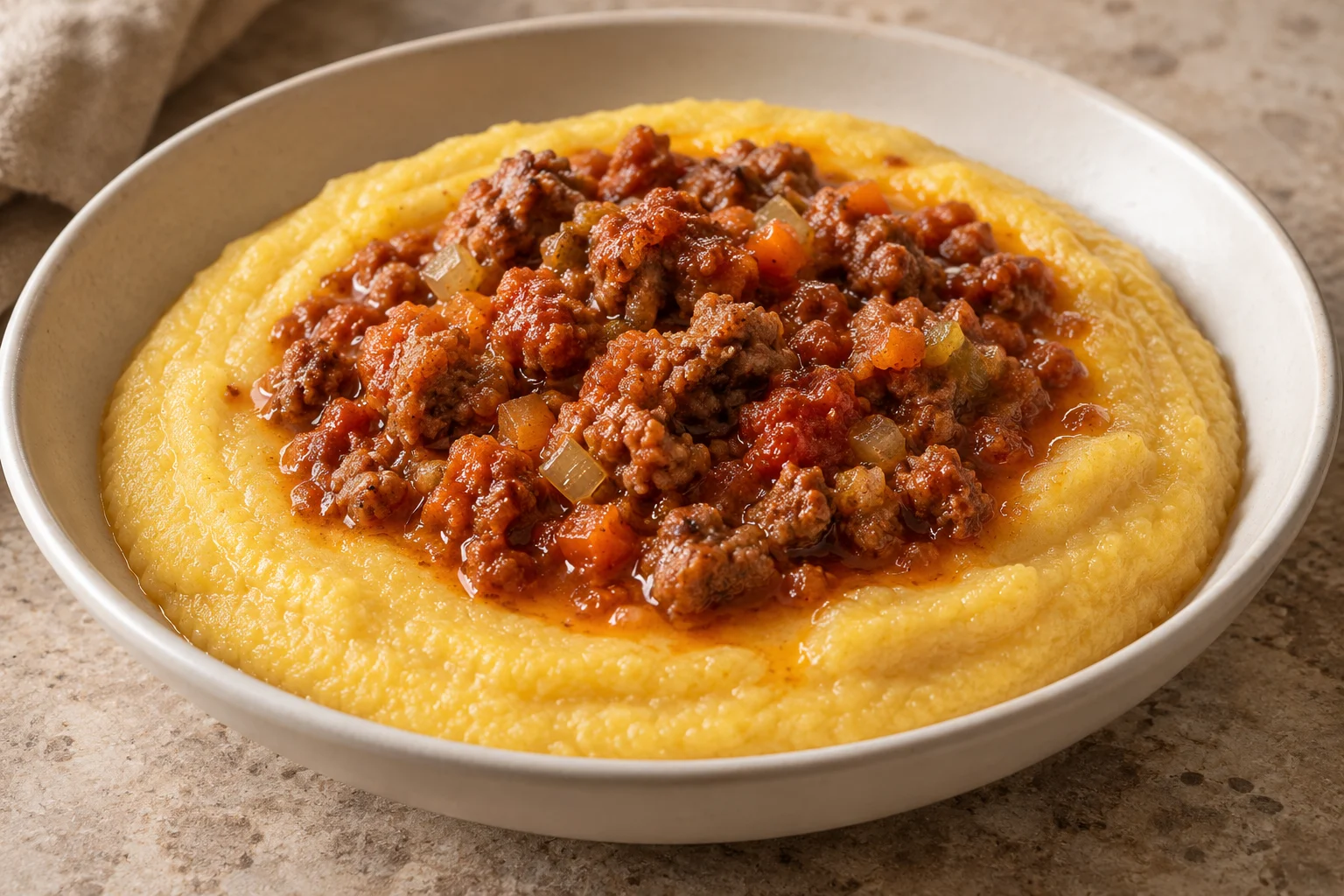
Italian cuisine Polenta with sausage
Polenta con Salsiccia: Get the Sauce Ready
Soft Italian polenta and sausage need a coordinated finish. Choose the cornmeal first, keep the topping moist and bring both components to the plate together.
Italian cuisine Street food
Lampredotto: Why the Bread Gets Dipped
Follow a Florentine lampredotto panino from tender cooked abomasum to the trippaio's final question: whether to dip the bread in its broth.
Hungarian cuisine Egg-barley pasta
Tarhonya: The Toasted Pasta Behind the Small Grains
Hungarian egg barley is pasta. Follow its change from pale crumbs to a toasted side dish, then decide when potatoes and sausage belong in the pot.