
Polenta con Salsiccia: Get the Sauce Ready
Polenta con salsiccia
A soft cornmeal base and a sausage topping meet at the plate. The useful question is which one needs to be ready first.
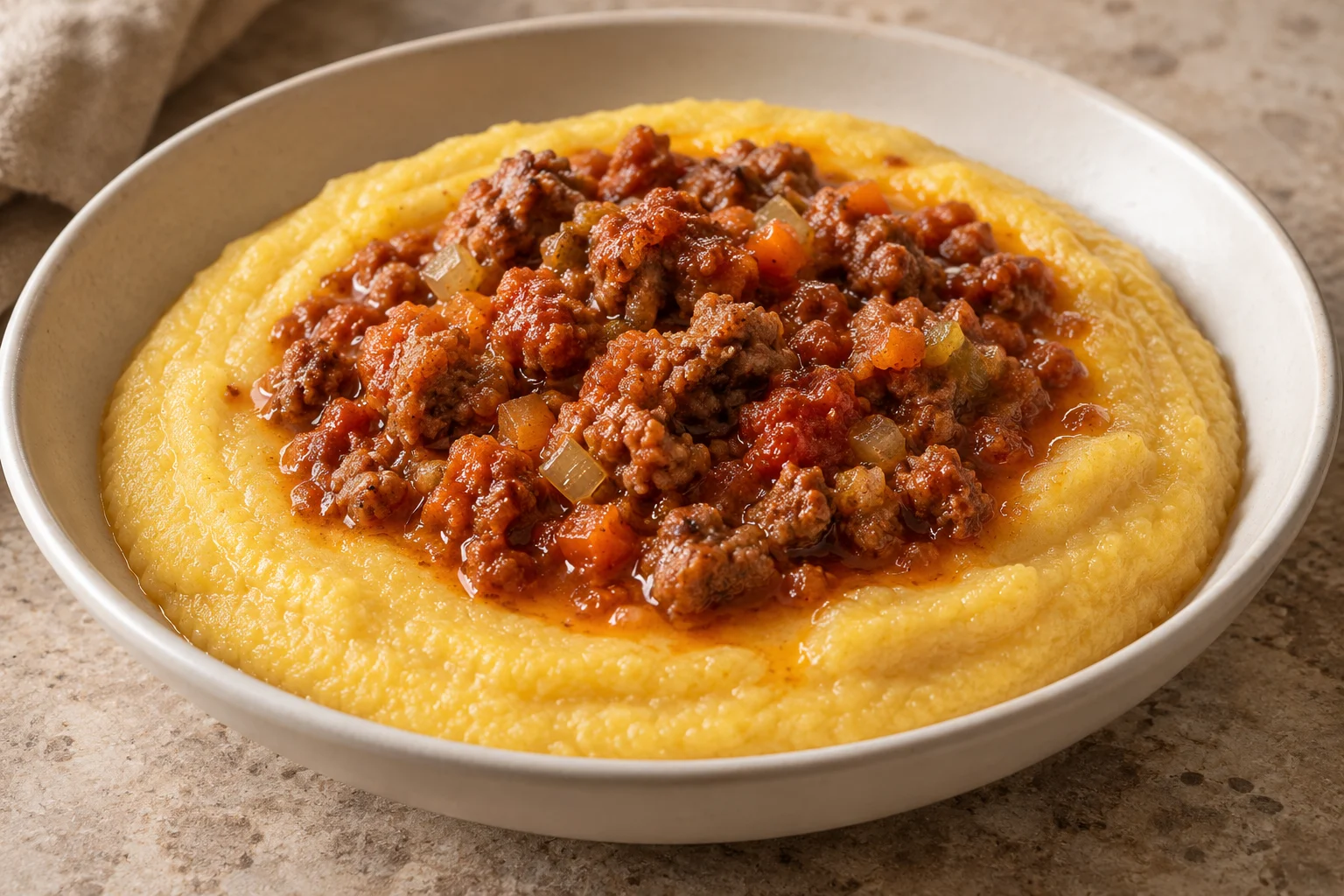
Give each component its own job
Polenta con salsiccia pairs cooked cornmeal with sausage, but that simple description leaves several decisions open. The sausage can arrive in pieces with its pan juices or as crumbles in a ragù. The polenta can spread softly across a plate or be cooked and cooled into a form that holds its shape. Decide which result you want before starting the stove.
For the soft bowl pictured here, think about the meeting point: tender cornmeal, fully cooked sausage and enough sauce to carry the meat into a spoonful. A topping that has become completely dry makes that meeting less generous. Starting with the sausage is especially useful when the polenta takes only a few minutes.
Read the cornmeal packet first
Published recipes demonstrate why “polenta” does not supply one universal cooking time. Cucchiaio d’Argento cooks bramata cornmeal for about 40 minutes in its method. Barbara Farinelli’s recipe for Lo Spicchio d’Aglio uses a steam-precooked flour with a five-minute cooking time. La Cucina Italiana cooks its precooked polenta for ten minutes before molding it.
Those are different products and different intended results. Use the liquid quantity and cooking instructions for the cornmeal you have, then plan the topping around them. A quick product gives the sausage pan very little time to catch up once the cornmeal goes into the water; a longer-cooking meal leaves a much broader preparation window.
Choose a sausage preparation
Two published approaches show how the same pairing can deliver a different mouthful.
Crumbled sausage ragù
Cucchiaio d’Argento removes the casing and browns crumbled sausage with aromatic vegetables, tomato concentrate and white wine. Its method allows broth when needed. The small pieces distribute readily through a spoonful of polenta.
Sausage pieces with pan juices
Farinelli cuts luganega into short lengths and cooks it with garlic, rosemary and white wine. The sausage stays recognizable as separate pieces, and all its cooking juices accompany it onto the polenta. The fork does more of the dividing at the table.
Check the pot and the pan separately
For a soft serving, assess the cornmeal texture and the moisture around the sausage before bringing them together.
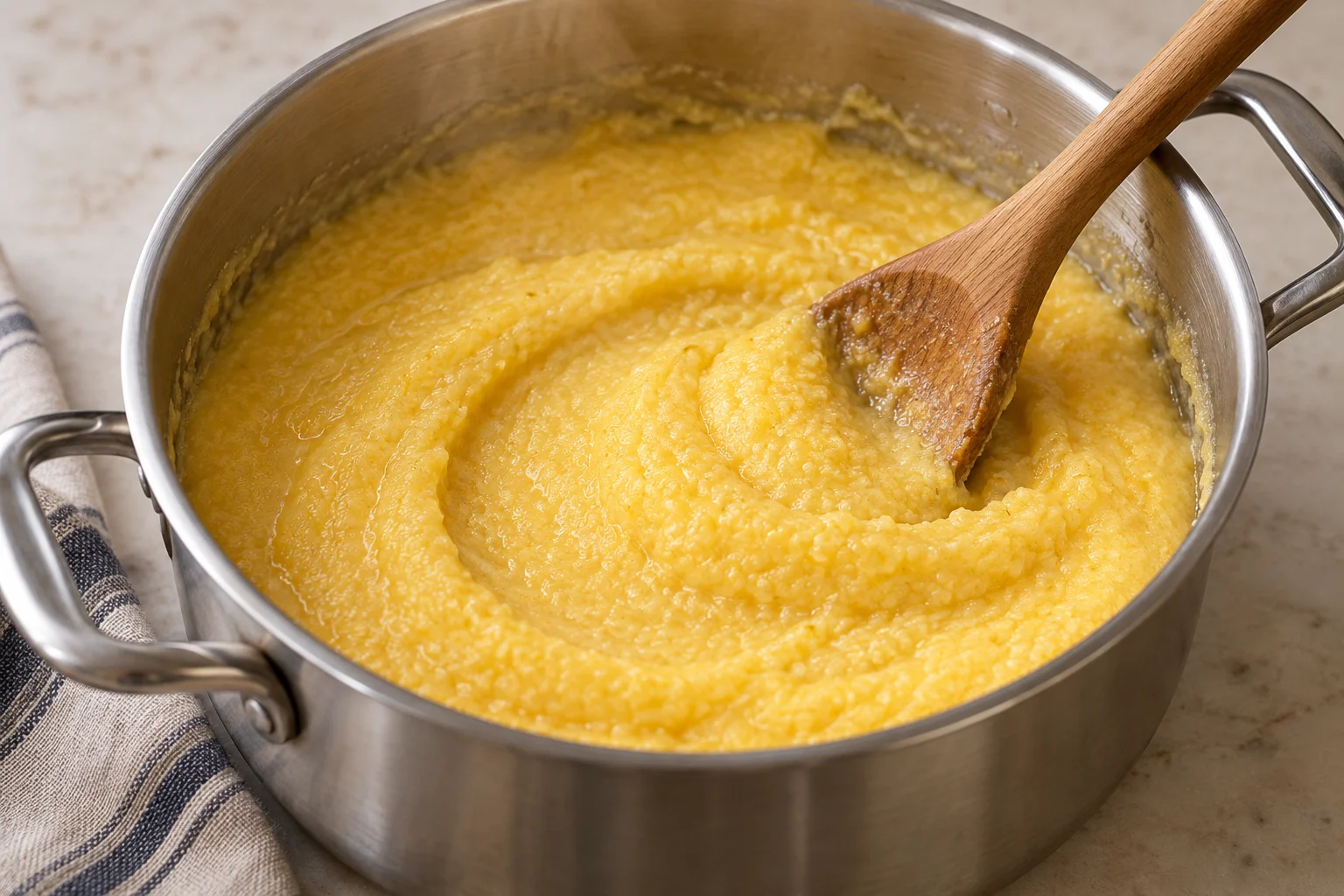
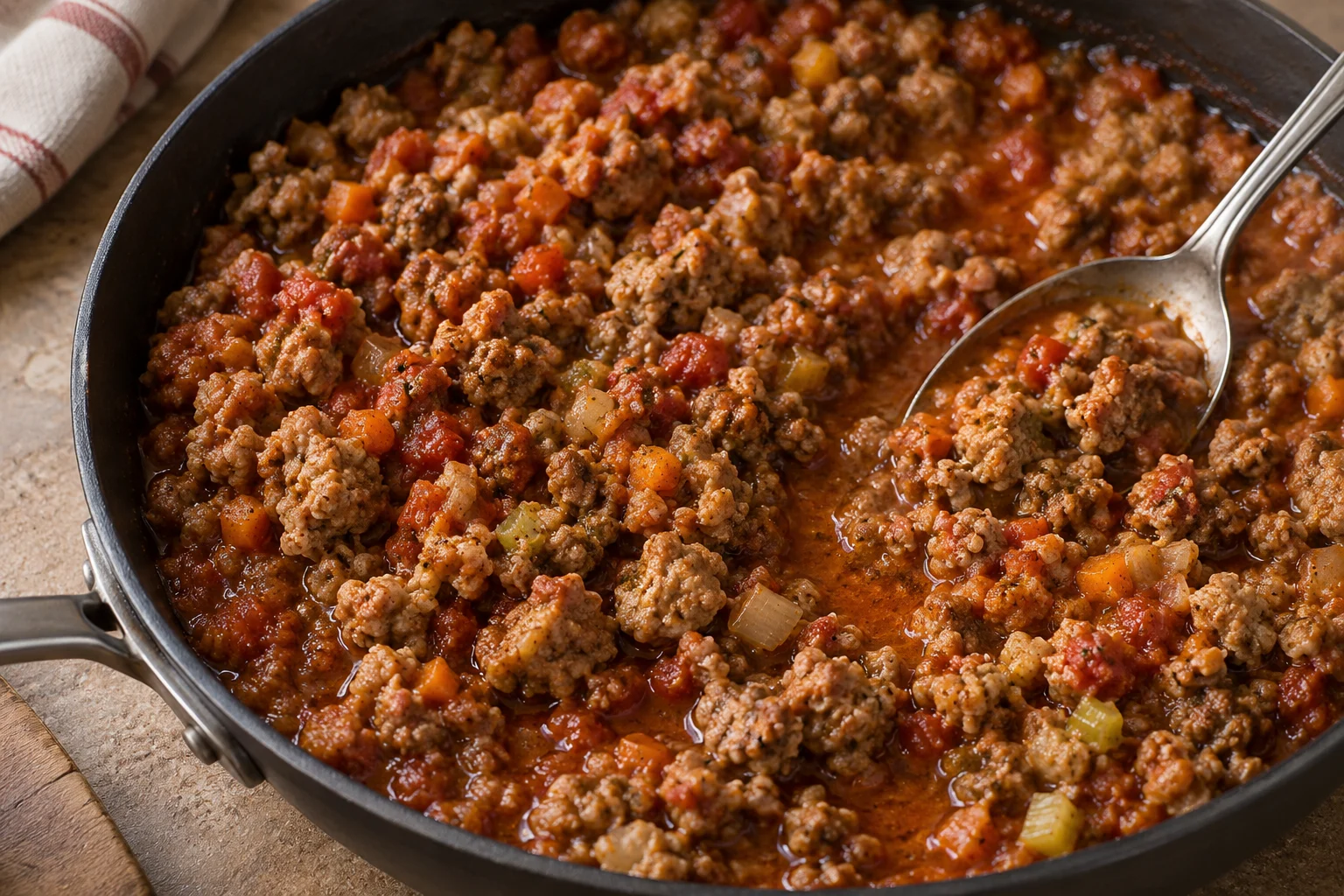
A practical sequence for a soft bowl
This is a planning guide rather than a complete recipe. Keep the quantities and cooking instructions from your chosen sausage and cornmeal methods.
- 01
Start with the slower preparation
Prepare the sausage and its aromatics before you need them. With quick polenta, finish the topping first and keep it covered while the cornmeal cooks, as Farinelli does. With regular cornmeal, schedule the two pans so neither waits dry on the stove.
- 02
Protect the sauce’s serving texture
Polenta Valsugana makes a soffritto with sage, adds crumbled sausage, then wine and tomato before preparing its cornmeal according to the packet. Notice that the sauce is already a separate cooked component. Before plating, check that a spoonful carries juices as well as meat; follow the chosen method if it needs a little more liquid.
- 03
Plate both components together
Spread a portion of hot soft polenta into a shallow bowl and place the cooked sausage at its center. Include the sauce or pan juices rather than lifting out only the meat. Start with enough topping for several mixed spoonfuls, leaving some yellow polenta visible around the edge.
Firm polenta can be a deliberate choice
La Cucina Italiana’s sausage-and-toma appetizer takes another route: precooked polenta cools in molds, then the resulting cups hold sausage and cheese for an oven finish. Here, setting is the preparation’s purpose. A firm base is useful because it becomes a container.
That example is a reminder to match texture with the intended serving. A shallow bowl asks for a soft base that shares a spoon with its topping. A molded or baked preparation asks for structure. Choose the form deliberately, and let the cornmeal instructions and the accompanying sauce support it.
Research notes
Sources and product choices
Four independent original recipe sources were opened and read. This article is a method and planning guide, with generated illustrations; it does not present a single regional or kitchen-tested formula.
- Cucchiaio d’Argento — polenta with sausage ragù Original recipe supports the two-component preparation, crumbled sausage with aromatic vegetables and moist ragù. Ingredient and method water quantities differ, so no ratio is reproduced.
- Lo Spicchio d’Aglio — Barbara Farinelli’s polenta with sausage Original recipe uses luganega pieces with garlic, rosemary and wine, reserves the cooked topping while quick polenta cooks and serves all the cooking juices.
- La Cucina Italiana — polenta cups with sausage and toma Editorial recipe shows precooked polenta cooled into molded cups and baked with sausage and cheese: a deliberate structural variation.
- Polenta Valsugana — polenta with sausage Manufacturer’s own recipe makes a tomato-and-sausage ragù separately, then follows packet instructions for its precooked cornmeal.
Keep exploring
More stories for your table
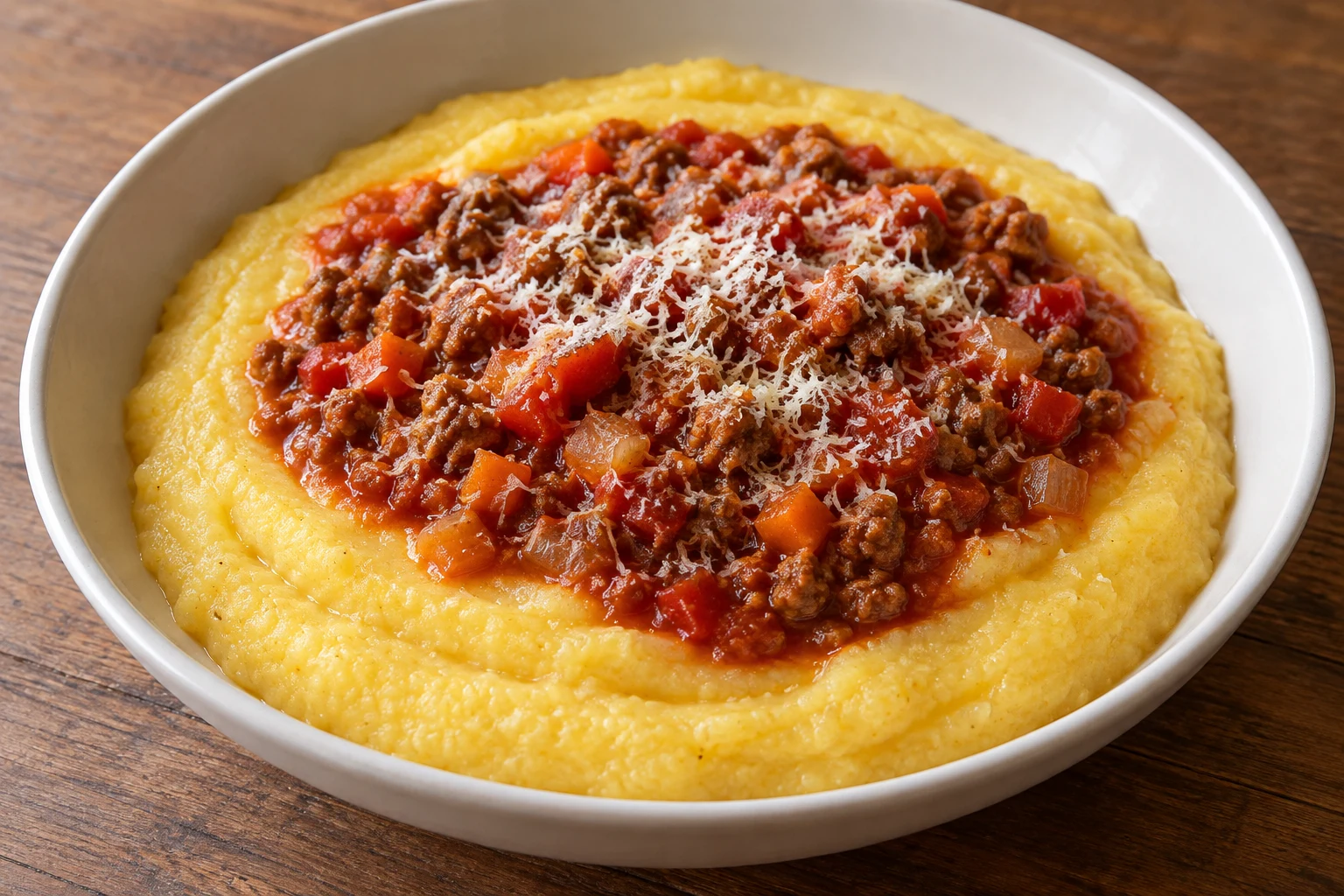
Argentinian cuisine Polenta
Polenta con Tuco: Spoon It, Slice It, Bake It
Explore Argentine polenta with tuco through a family recollection and three serving textures, from a soft bowl to firm squares and an oven-melted cheese topping.
Italian cuisine Venetian small bites
Venetian Cicchetti: Small Bites, Different Clocks
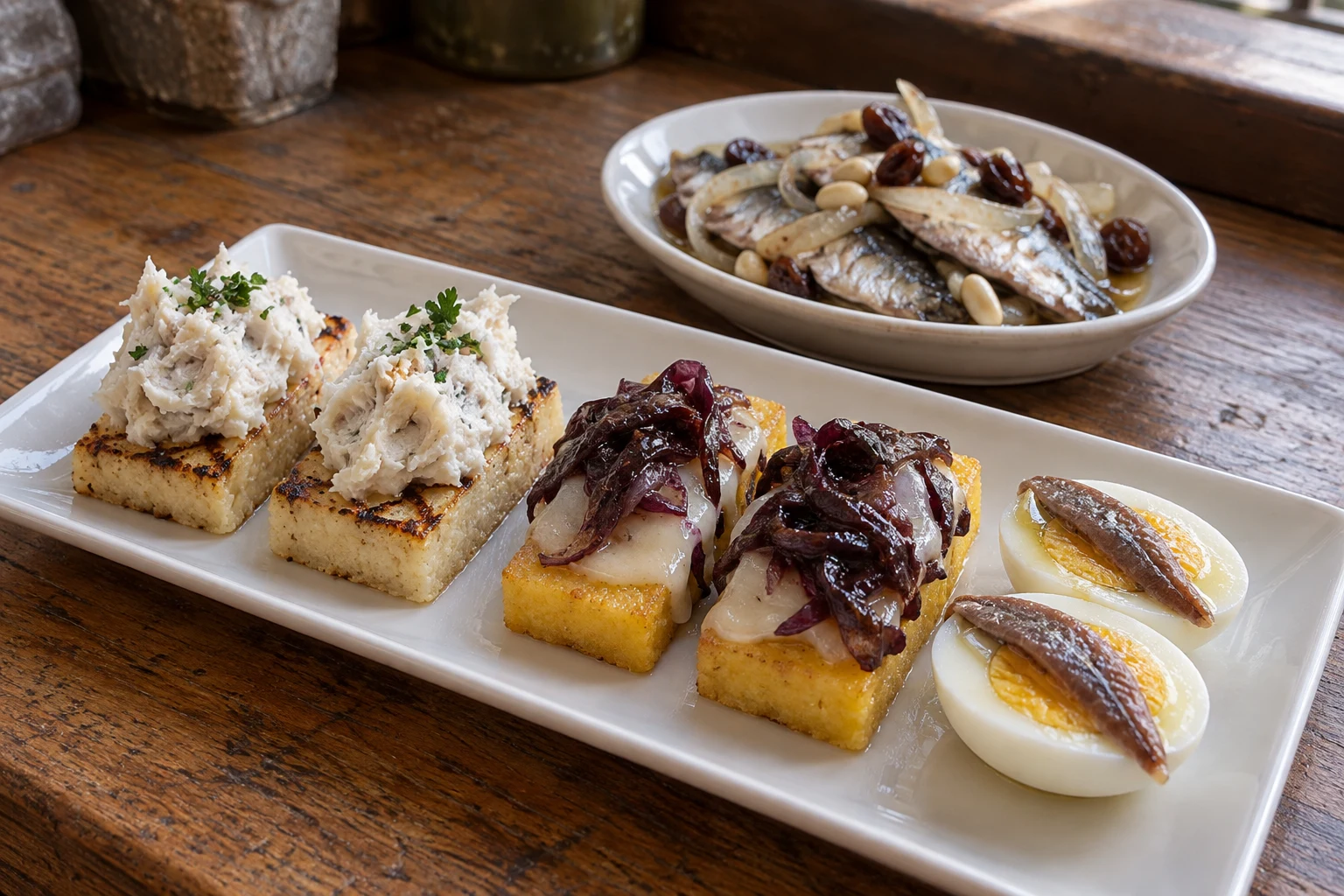
Cicchetti can be fish on polenta, a dressed egg or a small dish of sardines. Build a varied spread by separating what rests from what crisps.
Brazilian cuisine Stews
Rabada: Keep the Watercress for the Finish
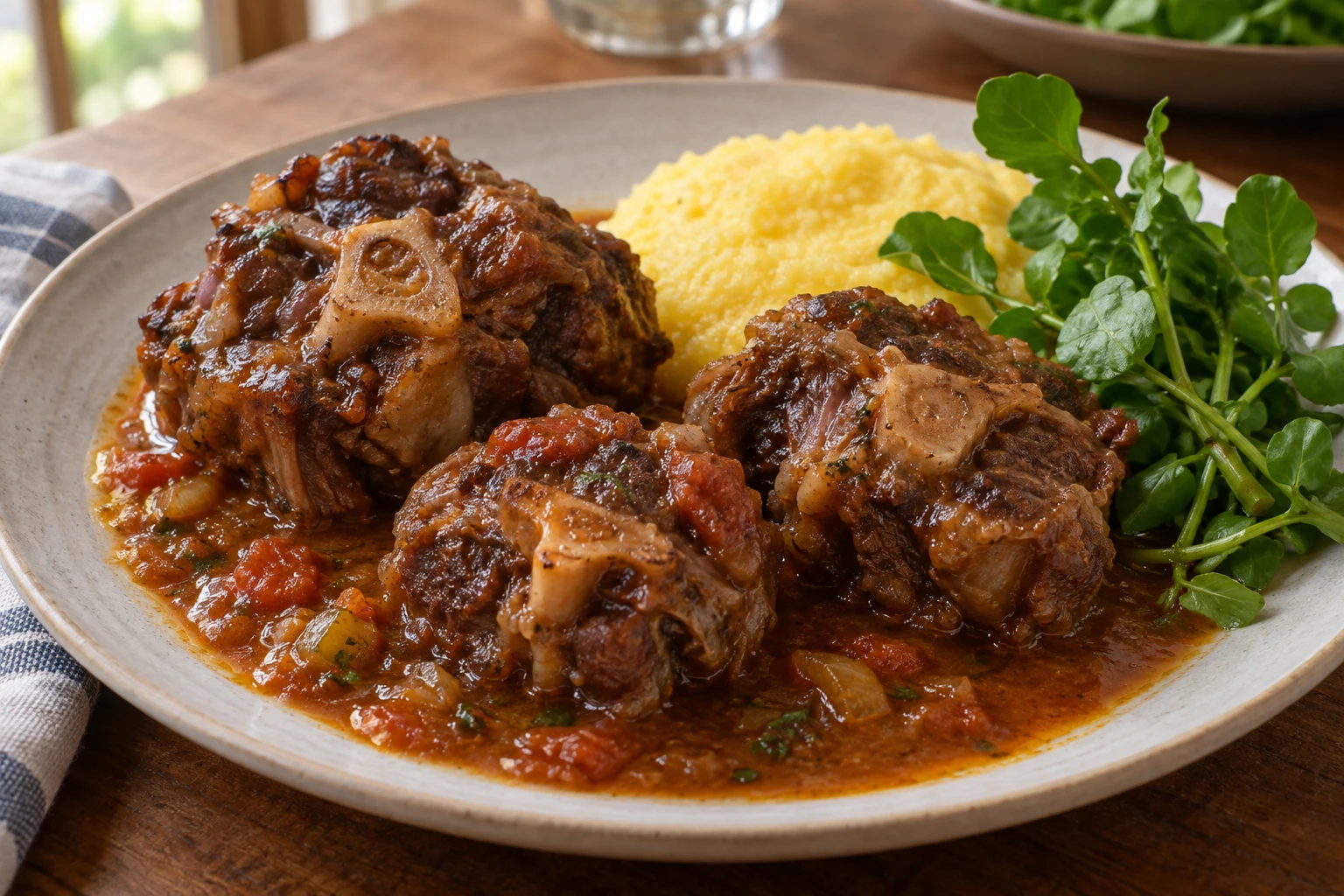
Brazilian oxtail stew has more than one route to tender meat. Follow the braise, then see why watercress and creamy cornmeal belong at the finish.