
Lampredotto: Why the Bread Gets Dipped
Panino con il lampredotto
The last question at a Florentine trippaio's counter can be bagnato? The answer decides whether the top of your roll is dipped in warm broth before the sandwich is closed.
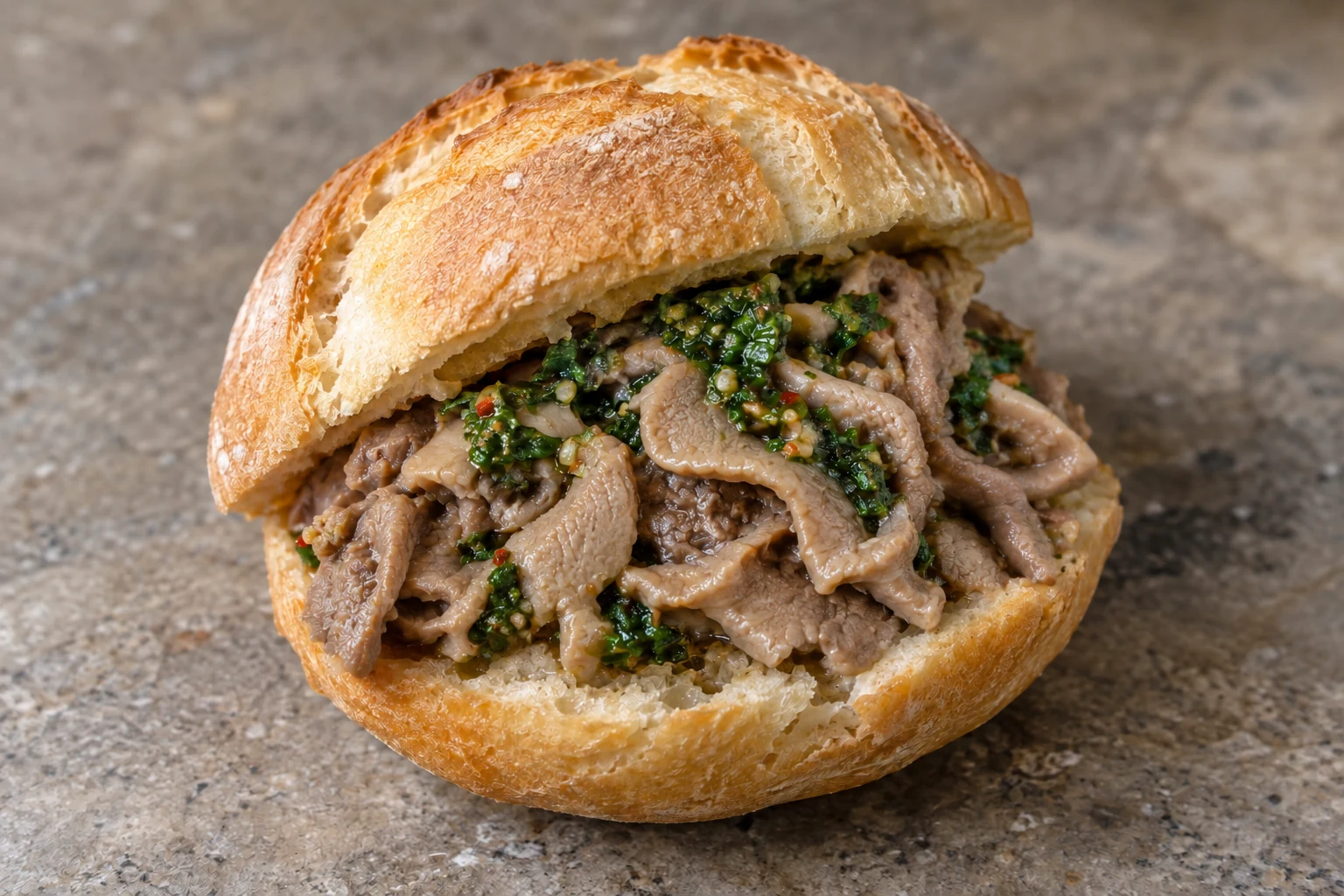
At the counter
What does bagnato change?
The hot filling is already in the roll when the Florentine trippaio may ask: bagnato? Tuscany's official tourism site describes the upper half of the bread going briefly into the pot's broth. Vendor interviews also describe stalls preparing a separate vegetable broth for this dip. Either way, the roll is closed with warm broth in its crumb.
The filling has a precise name. Lampredotto is the abomasum, the fourth compartment of a cow's single stomach. Florentine sources distinguish it from trippa made with other stomach parts. The cut is cooked slowly in broth, then lifted out and sliced for a small roll.
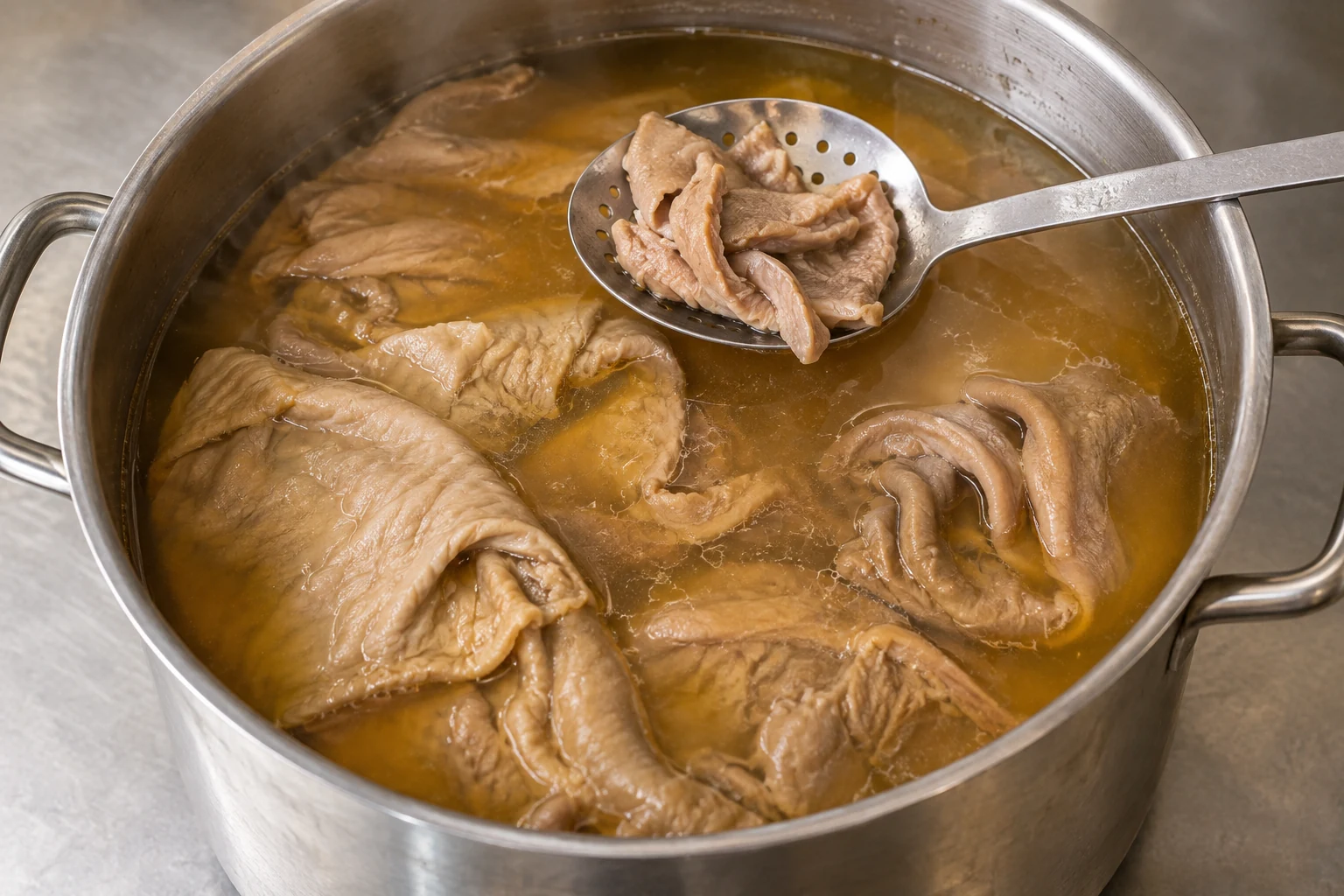
The serving sequence
Broth enters twice
Local descriptions and vendor interviews show how a simmered cut becomes a handheld lunch.
- 01
Hold the cooked lampredotto in broth
Lampredotto is cooked with aromatic vegetables. A Florentine vendor describes leaving the cooked abomasum in its broth until service.
- 02
Cut it into the roll
At the stall, the hot cooked piece is lifted and chopped into strips for a small round roll. Salt and pepper, green sauce or heat can then be chosen to taste; there is no one compulsory sauce formula.
- 03
Decide on the bread
For bagnato, the upper half of the roll is dipped in broth before closing the sandwich. Some accounts use the cooking pot; named vendors also describe making a separate vegetable broth for the bread.
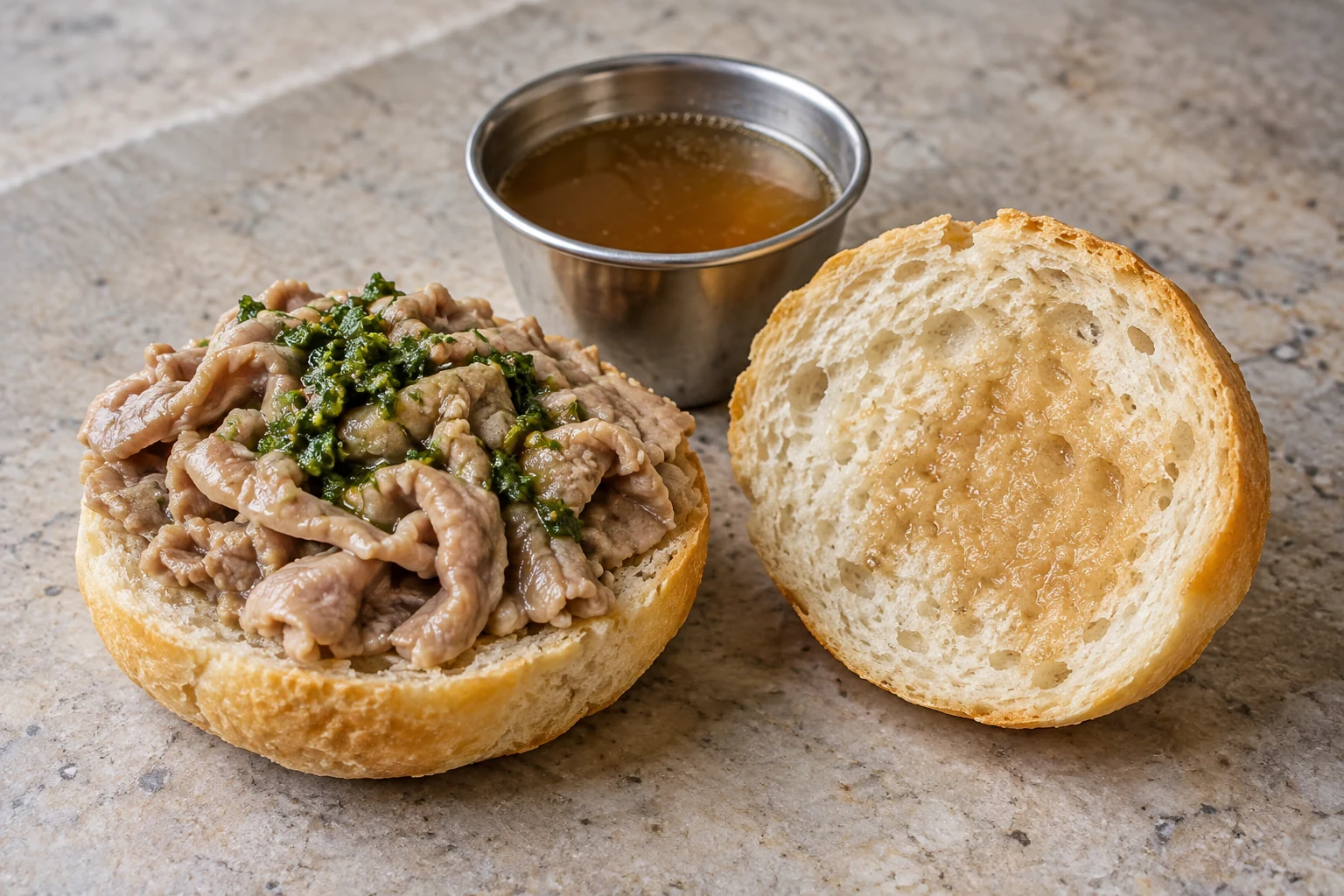
Three useful words
Make the order your own
- Bagnato
- The bread cap is dipped
- Salsa verde
- Green sauce
- Piccante
- A spicy option
Say yes if you want the upper half touched to the cooking broth before the sandwich is closed.
A parsley-rich condiment offered by many trippai; its exact ingredients differ from stall to stall.
Hot sauce or chili oil is a choice in the regional accounts, not a required part of every panino.
The street around the sandwich
A brief exchange is part of the meal
Florence's municipal tourism office describes trippai at fixed street kiosks, where the cooked filling is drawn from a steaming pot, sliced and served to people eating at the counter. It is a small act of preparation done to order, not just a prefilled roll waiting in a case.
The shared sequence still leaves room for the person behind the counter. In La Cucina Italiana's interviews, one trippaio says his green sauce leaves out capers, anchovies and egg, while another emphasizes the broth made each morning for dipping the bread. Ask about sauce and bagnato, then let that stall's answer shape your sandwich.
Research notes
Sources behind this story
Florentine and Tuscan sources establish the street-counter service; independent culinary reporting supplies named vendors' accounts. A university anatomy source clarifies the cut. The sources do not establish a precise invention date or one compulsory sauce recipe.
- FeelFlorence — Lampredotto e trippai Florence's official tourism site describes the trippai kiosks, long cooking, slicing into a small roll and counter service.
- Visit Tuscany — Trippa e lampredotto The regional tourism site describes the panino, seasoning choices and the bagnato question, including dipping the top of the roll.
- La Cucina Italiana — Lampredotto a Firenze Named vendor interviews cover the abomasum, fresh broth, bread, green-sauce variation and the wet-roll service.
- MICHELIN Guide — Florence Street Food Independent food reporting corroborates the abomasum sandwich at Florentine carts, simmered broth, crusty roll and optional green or spicy sauce.
- University of Alaska Fairbanks Extension — Ruminant Gastrointestinal Anatomy The veterinary extension reference confirms that cattle have one stomach with four compartments, including the abomasum.
Keep exploring
More stories for your table
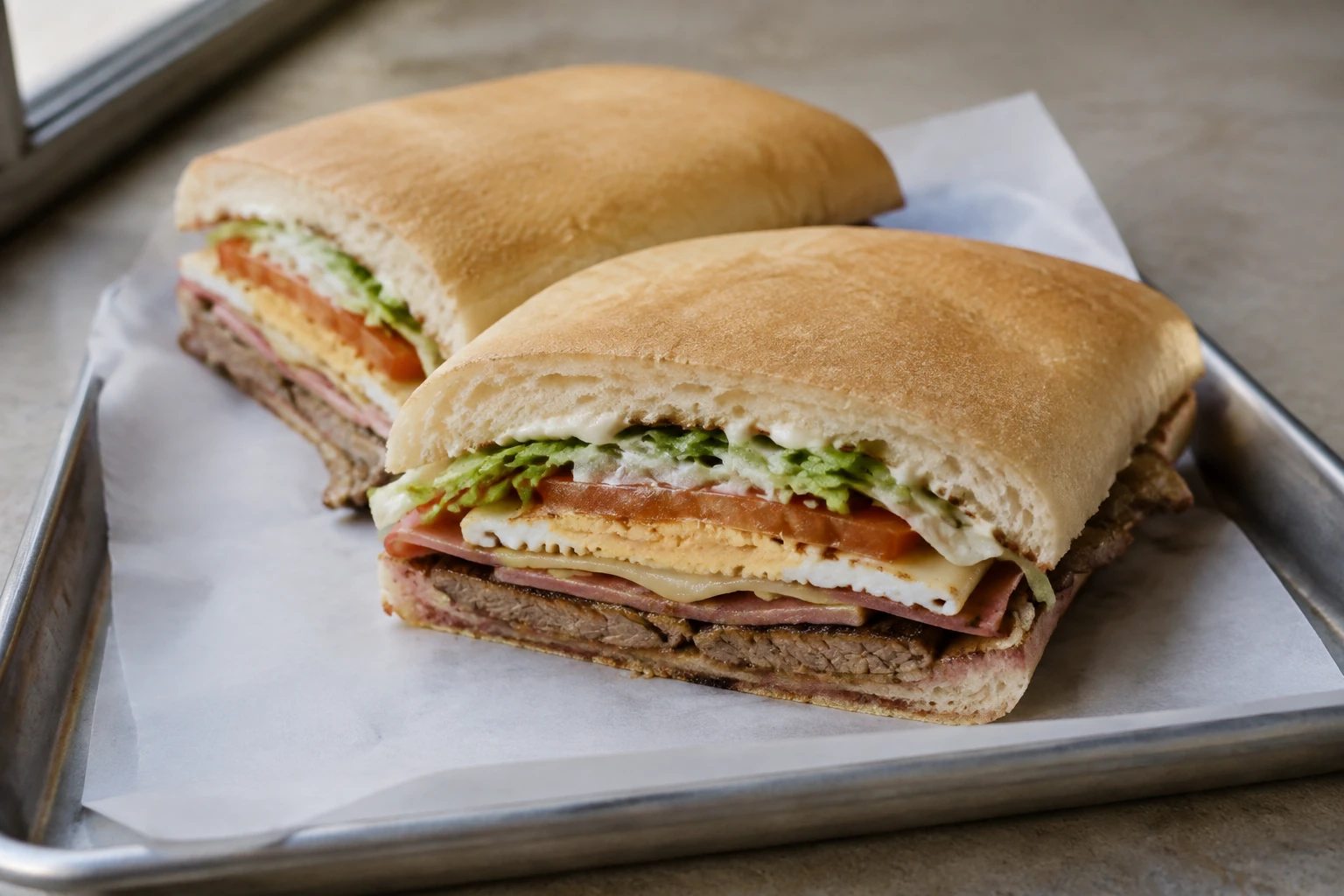
ArgentinaSteak sandwich
Córdoba’s Lomito: Start with the Bread
Explore Córdoba’s Argentine steak sandwich through its soft bread, thin beef and complete filling, with a practical lomito recipe for two.
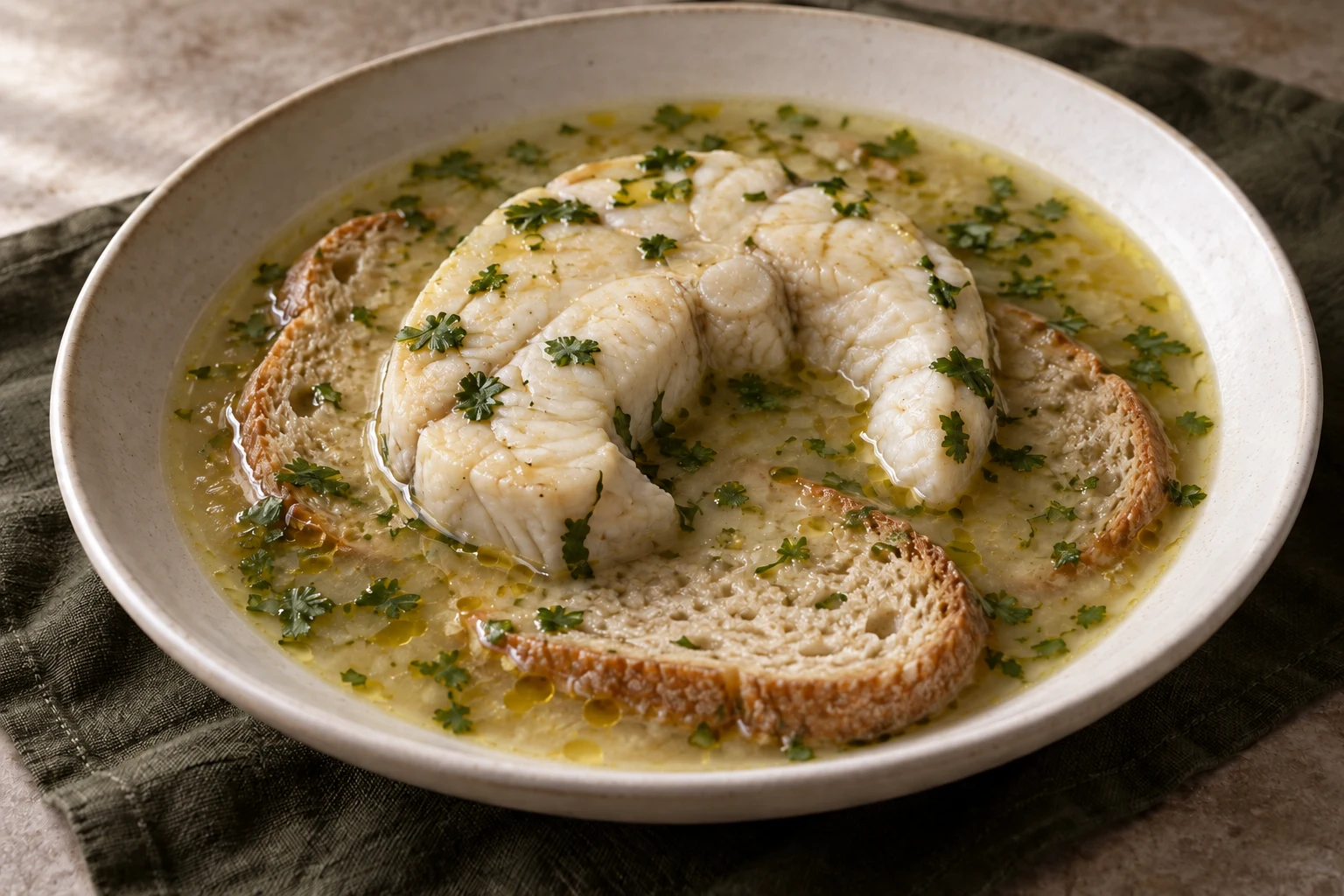
PortugalFish soup
Sopa de Cação: Bread Beneath the Broth
Why Alentejo’s sopa de cação arrives over plain or toasted bread, or beside fried triangles—and how its vinegar-seasoned broth holds the dish together.
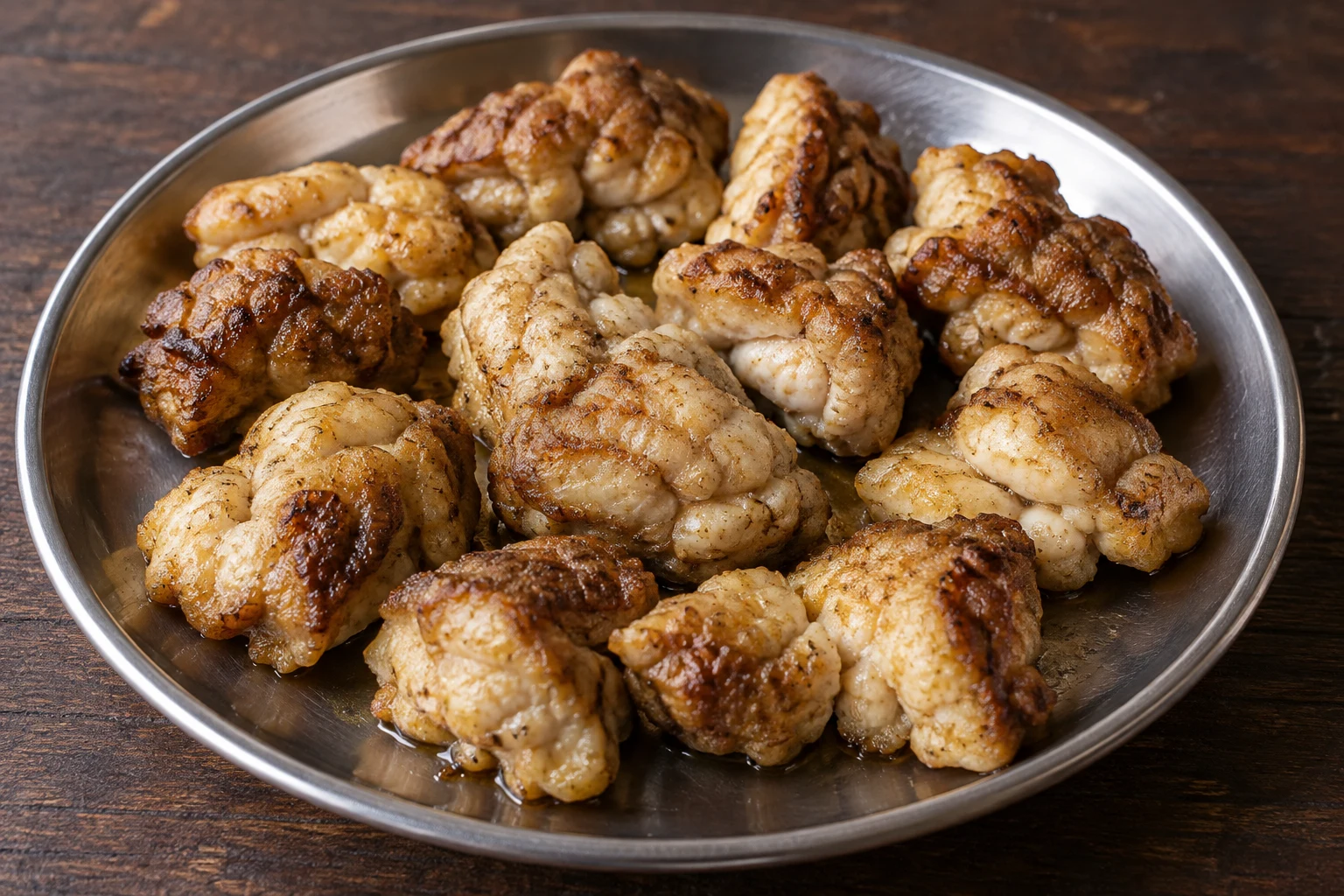
NepalOffal dish
Nhepu: Brain Fry at the Newar Table
Boiled, then fried, buffalo brain belongs to a varied Newar table. Follow its names, its tender texture and its place in feasts and neighborhood bhattis.