
Calzone: Leave Room for the Seam
Calzone
An oven-baked calzone needs room to close. Filling preparation, an empty border and a coherent dough schedule turn the half-moon into a workable parcel.
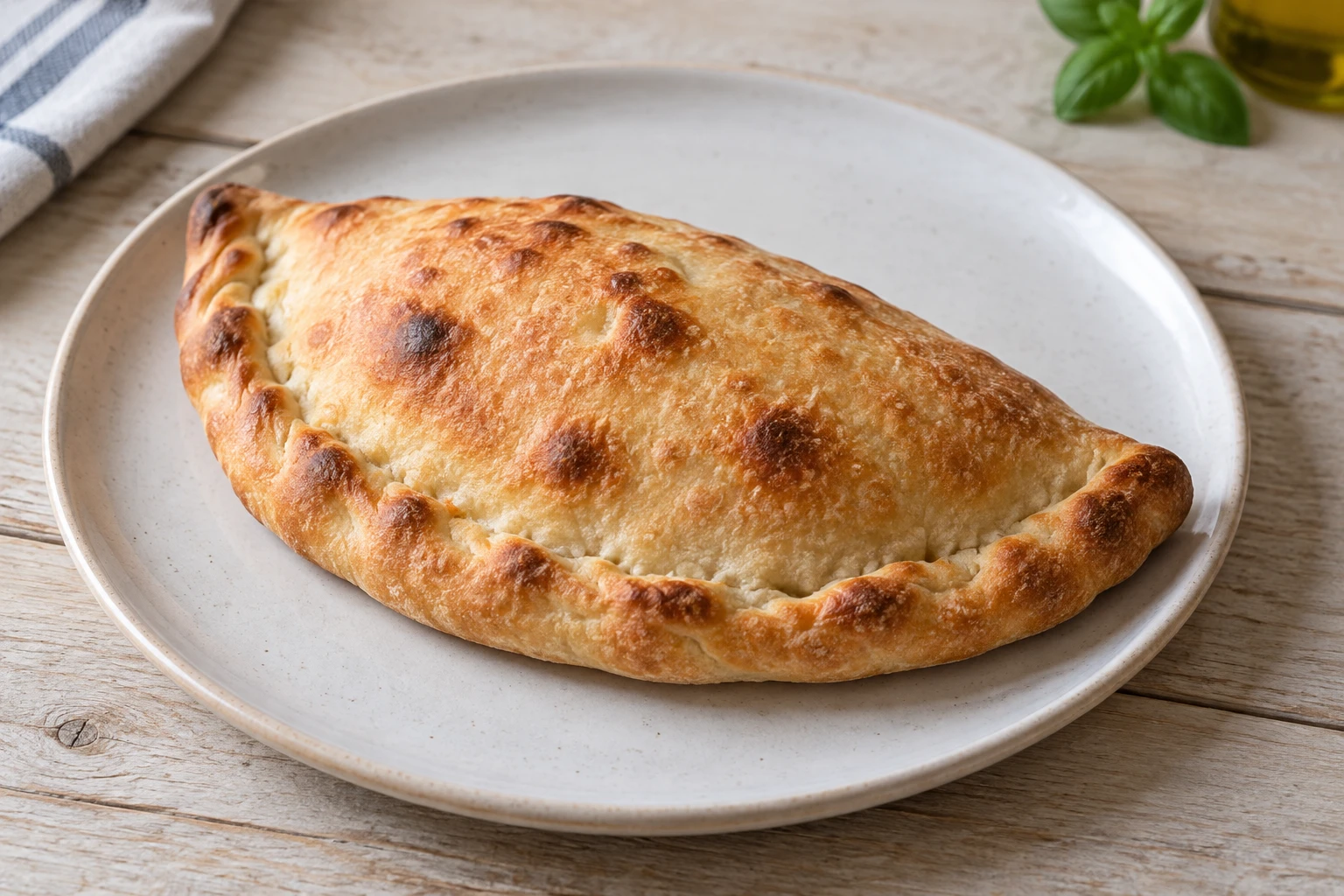
A fold changes the job of the dough
The half-moon calzone looks like a pizza folded over itself. That simple movement changes the practical problem: the filling is now inside a parcel, and the dough must meet around it. A crowded edge makes the seam difficult before the calzone ever reaches the oven.
This feature follows the oven-baked, folded form. La Cucina Italiana distinguishes the usually larger baked calzone from the smaller fried panzerotto in its panzerotto guide. Naming is not perfectly uniform: GialloZafferano also links fried preparations called calzones. Read the method, as well as the name, when choosing what to cook.
Choose the dough schedule first
GialloZafferano's radicchio-and-gorgonzola version includes a long refrigerated rise and another rise after dividing the dough. Good Food's mushroom-and-goat's-cheese version starts with a packaged pizza base mix prepared according to its directions. They reach a similar folded shape by different schedules.
That distinction helps with planning. The preparation time on a recipe card may leave proofing outside the headline number. Read the whole sequence before beginning the filling, and allow the dough its stated rests. There is no benefit in having everything chopped if the dough still needs the evening or overnight stage of the recipe you selected.
Prepare the filling for a closed pocket
Drain the cheese
GialloZafferano cuts fior di latte mozzarella into sticks and lets it drain before filling. Gorgonzola and shredded radicchio complete that particular combination; they are the ingredients illustrated here.
Cook the mushrooms
Good Food fries its mushrooms until golden before adding aromatics and a little crème fraîche. The filling's preparation happens in the pan before it goes onto the dough.
Remove excess water from greens
Good Food's spinach-and-ricotta alternative first wilts the spinach and squeezes out water. King Arthur's broader filling advice similarly warns against an overly juicy mixture.
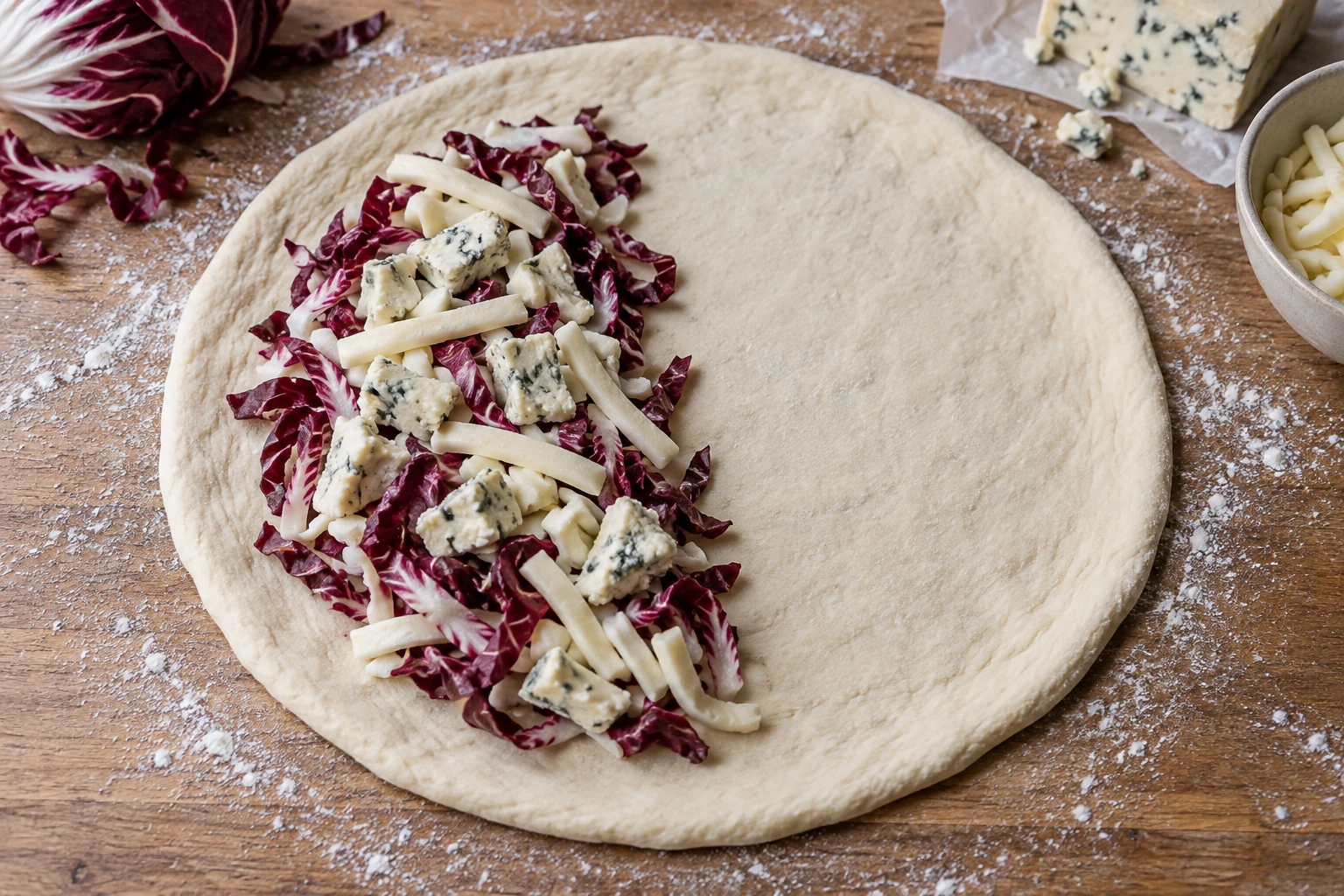
The border is part of the design
- 01
Put the filling on one half
Good Food spreads its mixture across half the circle, keeping a bare border. GialloZafferano likewise fills a disc before folding it in half.
- 02
Keep enough dough to meet
Good Food specifies a 2 cm border in its recipe. King Arthur emphasizes leaving enough room at the edge and avoiding so much filling that sealing becomes impossible.
- 03
Close carefully
Fold the empty half over and press the edges together as your chosen recipe directs. Check the whole curve, rather than relying on a pinch at the middle.
Keep shape and baking directions together
King Arthur's Susan Reid offers a different construction: a filled rectangle rolled into a long loaf, with the seam and ends tightly pinched. Her recipe includes a further rise and a slashed top. It is useful baking guidance, but the pictures here show folded half-moons rather than that rolled loaf.
Shape is a reason to preserve a complete method. Do not copy a loaf's timing or surface treatment automatically onto a small folded parcel. GialloZafferano preheats a baking stone for its calzones, while Good Food uses a baking sheet. Follow the equipment, heat and readiness directions attached to the dough and portion you are making.
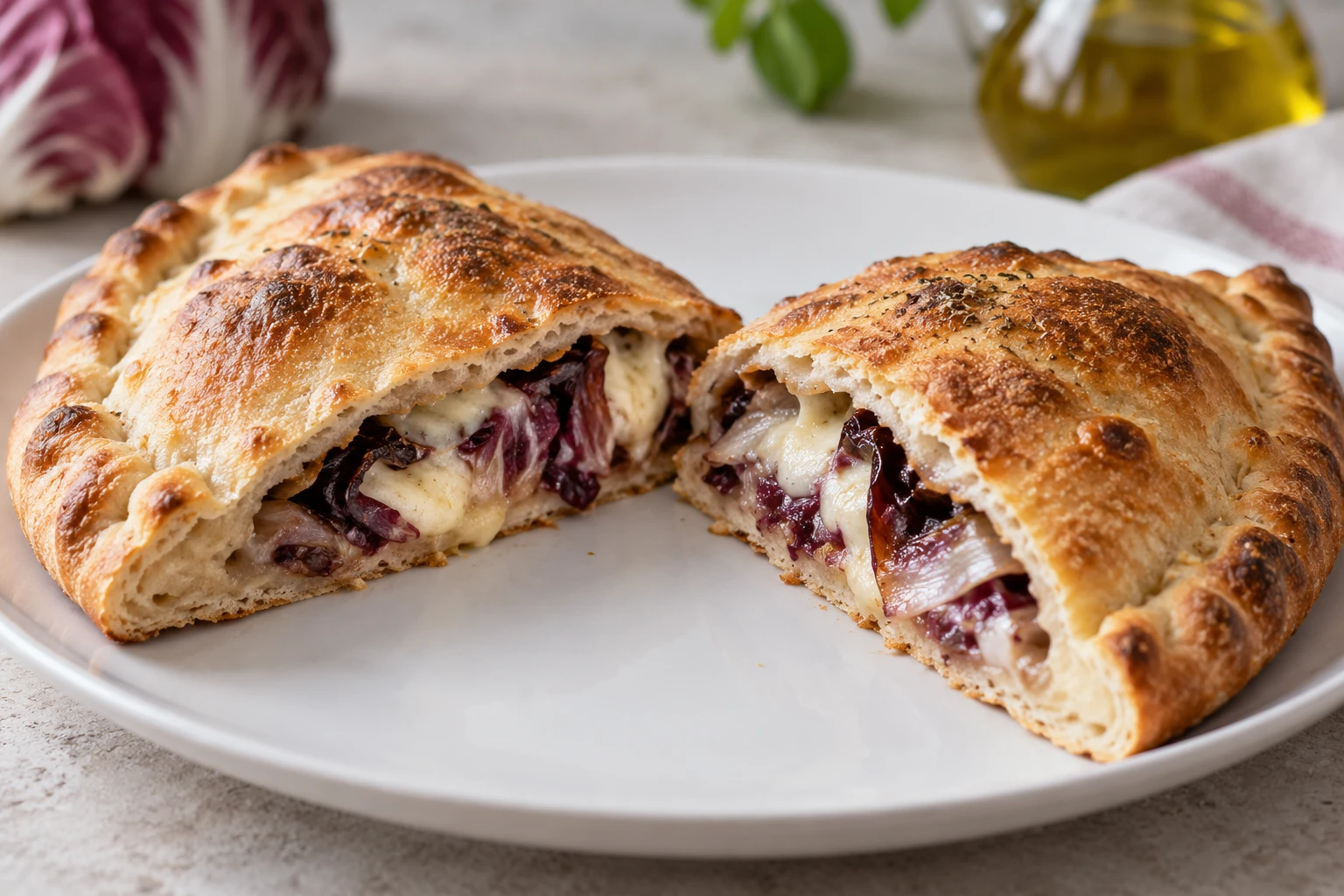
Give the finished pocket attention too
The outside can conceal a filling quite different from the next calzone's. Cutting one open reveals how much bread and filling you have put together, and whether the edge stayed closed. Use that observation when deciding the quantity for a later batch; increasing the filling is useful only while there is still room to seal.
Cheese and wheat are present in this illustrated version. Other fillings and toppings can add meat or egg, so the folded shape does not specify a diet. Pick the combination you want, prepare its filling before assembly and leave the border clear. A well-closed parcel begins with that empty space.
Research notes
Sources and complete methods
Named baking and cooking references supply distinct dough schedules, filling preparation and construction choices.
- GialloZafferano — Stuffed Calzone Radicchio/gorgonzola/mozzarella filling, cheese draining, long-rise dough and half-moon seal.
- Good Food — Mushroom & goat's cheese calzone Prepared mushroom filling, bare border and spinach-water removal alternative.
- King Arthur Baking — Susan Reid's Calzone A distinct rolled-loaf construction and useful filling-moisture/edge-space guidance.
- La Cucina Italiana — Panzerotto, ricetta classica The usual baked-calzone versus fried-panzerotto distinction.
Keep exploring
More stories for your table
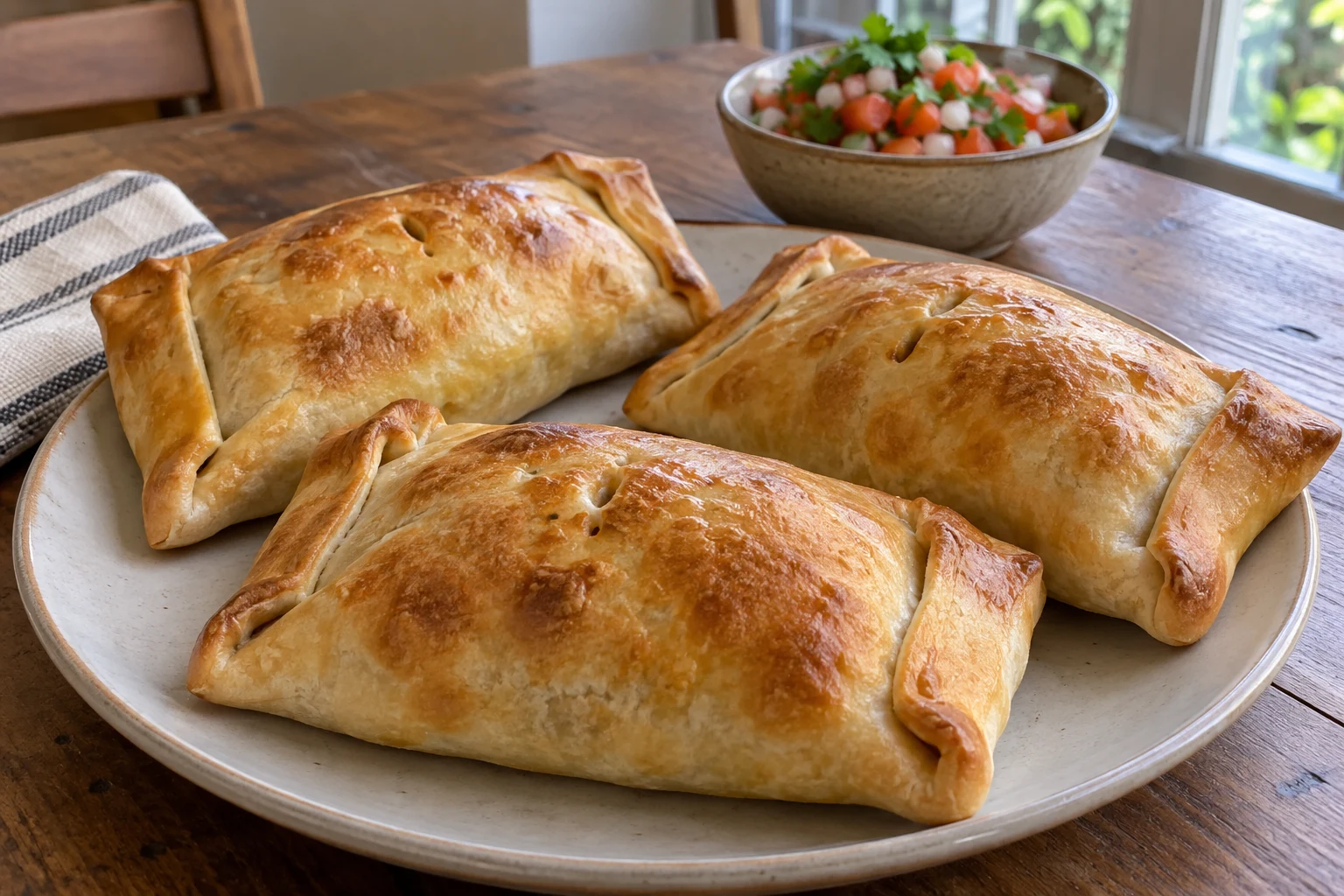
Chilean cuisine Baked savory pastries
Empanadas de Pino: The Filling Comes Before the Fold
A Chilean oven empanada begins with cooked beef-and-onion pino. Compare filling methods, chilled assembly, folded edges and the separate egg-and-olive pieces.
Italian cuisine Venetian small bites
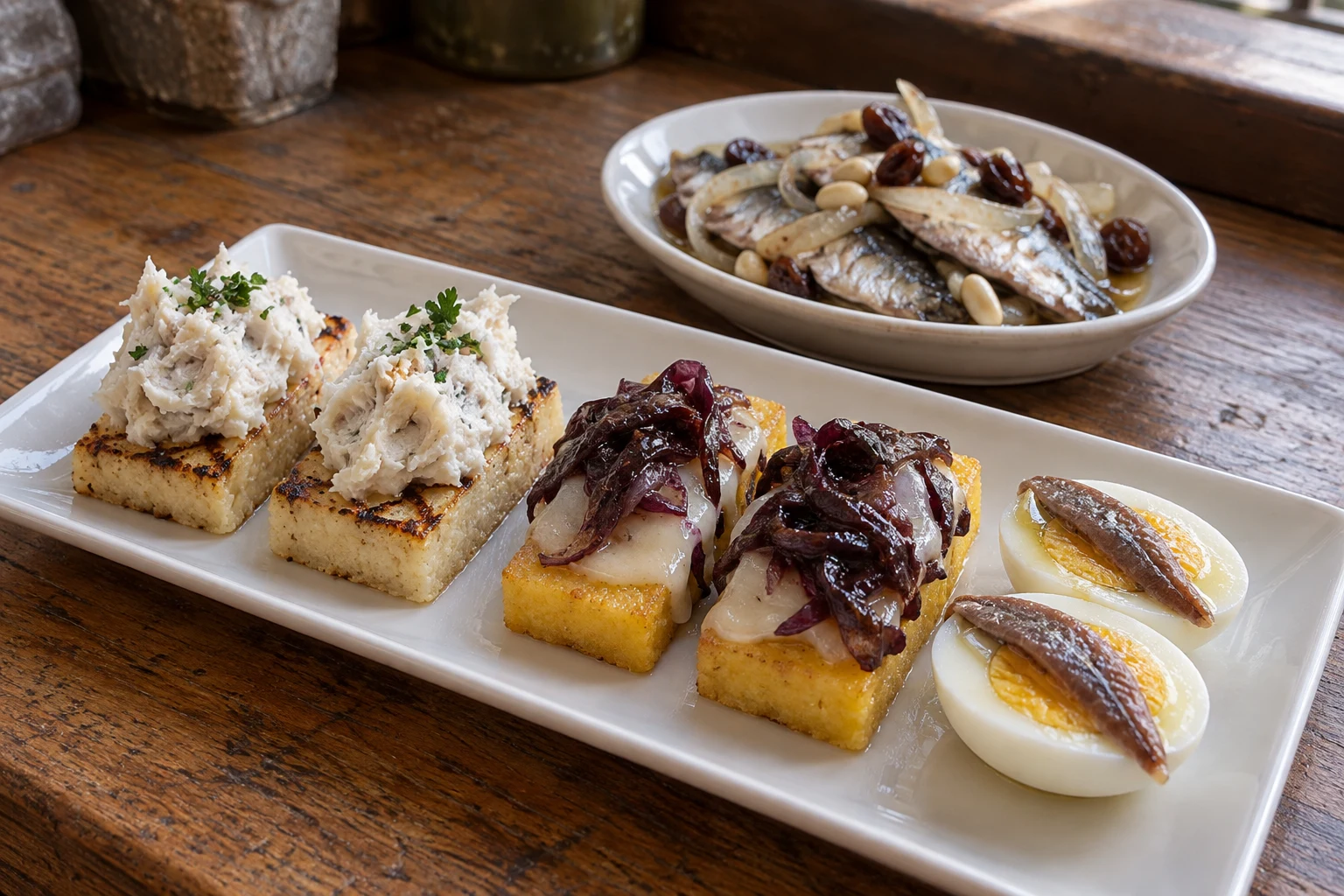
Venetian Cicchetti: Small Bites, Different Clocks
Cicchetti can be fish on polenta, a dressed egg or a small dish of sardines. Build a varied spread by separating what rests from what crisps.
Spanish cuisine Pastry
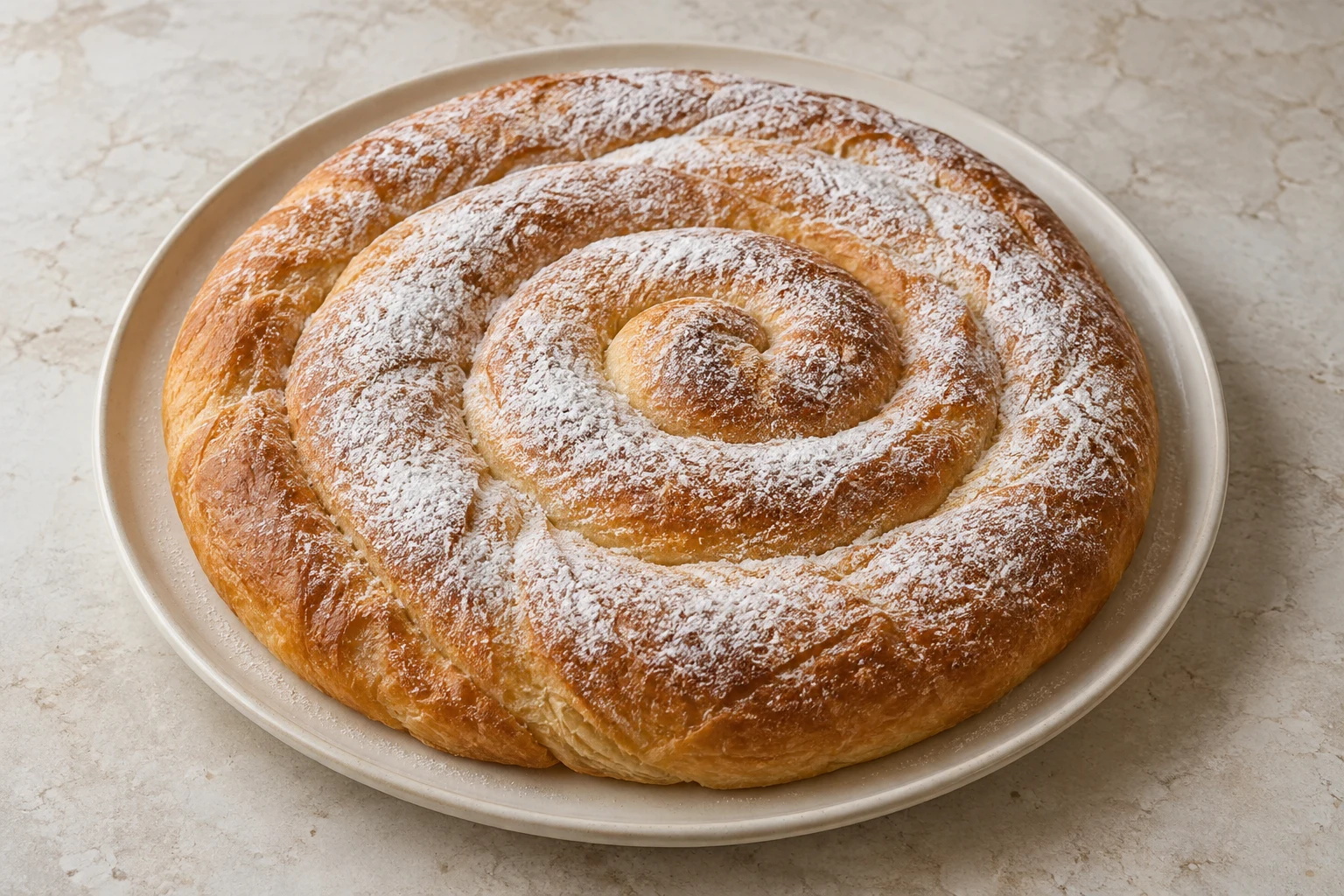
Ensaïmada: The Layers Inside Mallorca’s Spiral
How thin dough, pork lard and a long rest shape Mallorca’s ensaïmada—and why squash preserve and cream become part of the pastry in different ways.