
Orez ve-shu’it: rice and beans, two pots and one plate
אורז ושעועית
Soft white beans, red tomato sauce and a spoonful of rice: a familiar home meal whose small cooking choices make a large difference.
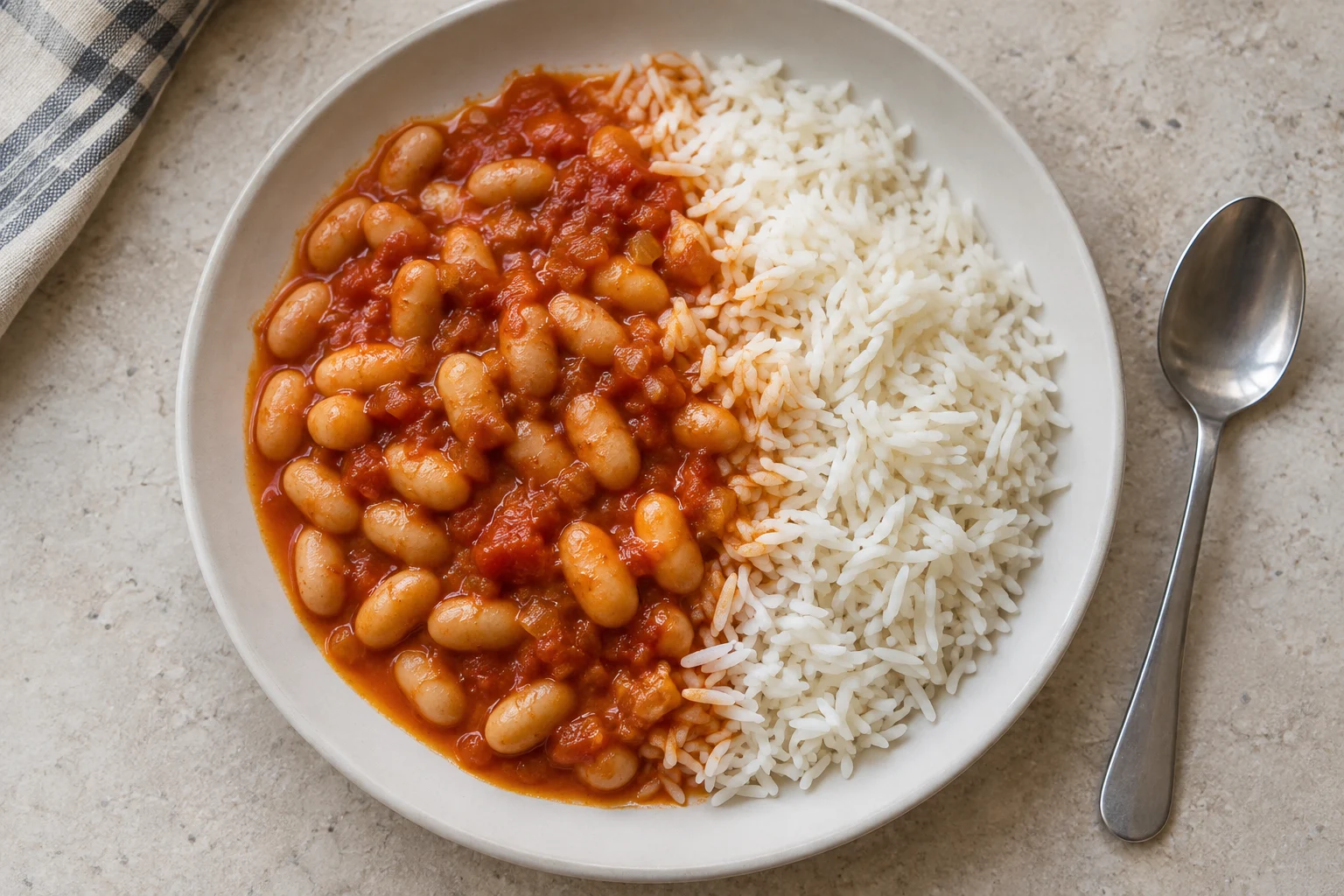
Rice and beans
A familiar pairing, with room for variation
Orez ve-shu’it means rice and beans. In the Israeli recipes gathered here, that plain name becomes a particular plate: white beans cooked in tomato sauce, spooned over rice prepared in another pot. The beans should be soft enough to yield readily, while the rice remains a light bed for the sauce.
The household details differ. Sina Mizrahi writes about a plain onion-and-tomato version alongside a more elaborate family stew. Eddie Mizrahi describes beans with rice through his Jerusalem food memories, adding root vegetables and spices. Israel and Tamara Aharoni pair their beans with rice and browned vermicelli. These accounts describe a shared meal across several kitchens, rather than one fixed formula or a single proven point of origin.
Our adaptation uses canned white beans and plain basmati rice. It keeps the tomato, onion and paprika foundation, adds a modest amount of cumin, and puts both pots on the stove during the same half hour. The short simmer builds the sauce around beans that are already cooked.
Our adaptation
White beans in tomato sauce over basmati rice
Serves four. Use cooked canned white beans, such as cannellini or navy beans. The listed bean weight is after draining; buy enough tins to provide it. This timing does not apply to dried beans.
Ingredients
For the beans
- 480 g drained canned white beans, rinsed gently
- 2 tbsp (30 ml) olive oil
- 150 g onion, finely chopped
- 3 cloves garlic, finely chopped
- 1 tbsp (15 g) tomato paste
- 1 tsp sweet paprika
- ½ tsp ground cumin
- 400 g canned crushed tomatoes
- 200 ml water, plus a little more if needed
- ½ tsp fine salt, then adjust to taste
- ¼ tsp ground black pepper
For the rice
- 250 g white basmati rice
- 450 ml water
- 1 tsp (5 ml) olive oil
- ¼ tsp fine salt
Method
- 1
Start the rice
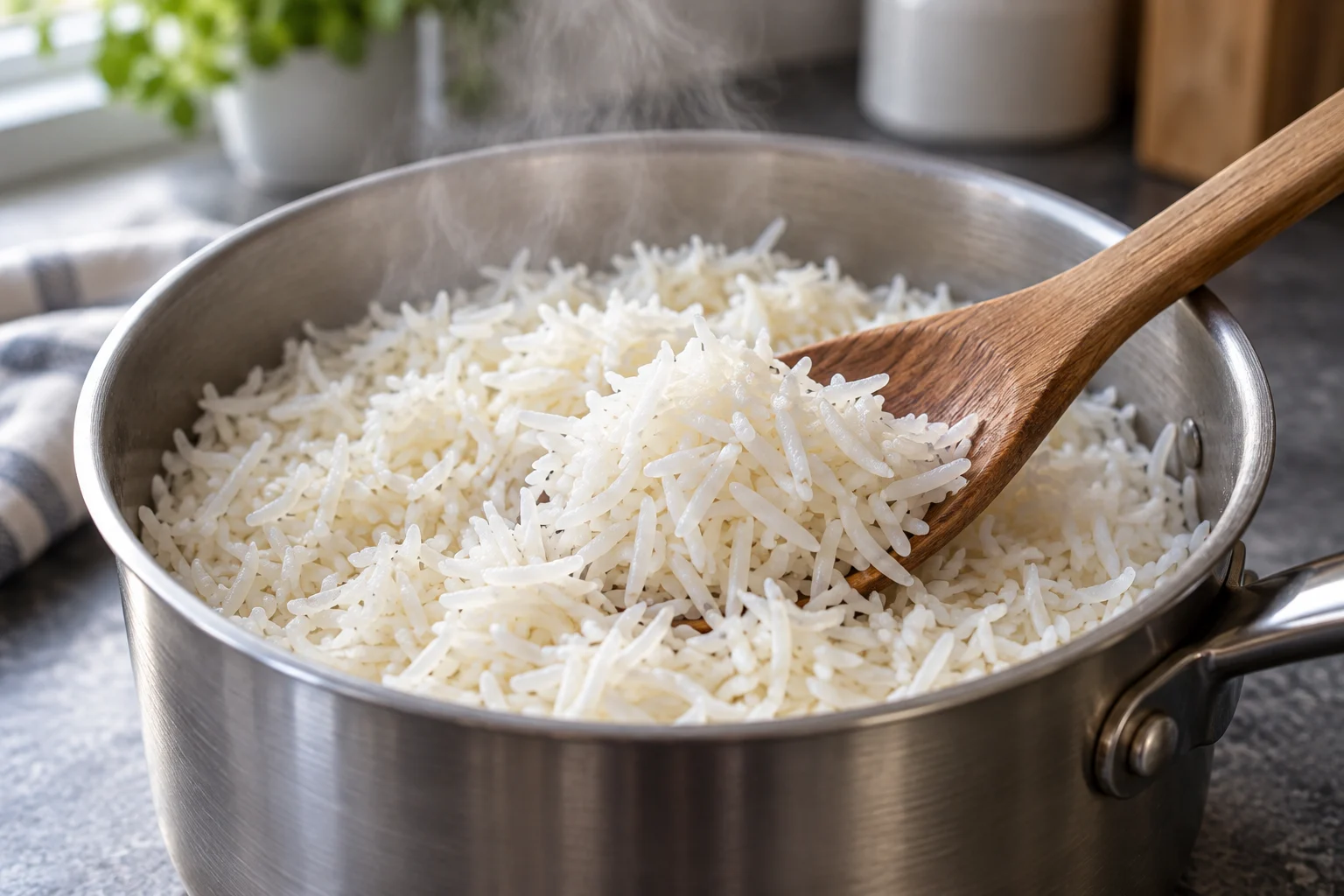
Use a small saucepan with a snug lid for the rice and a medium saucepan for the beans. Rinse the rice in a sieve until the water is mostly clear and drain thoroughly. Put it in the small saucepan with 450 ml water, 1 teaspoon oil and the rice salt. Bring to a boil, stir once, cover tightly and turn the heat to its lowest setting. Cook for 12–15 minutes, until the water is absorbed and the rice is tender, then take off the heat and rest covered for 10 minutes. Start the beans while the rice cooks.
- 2
Build a soft onion base
Heat the 2 tablespoons of oil in the bean saucepan over medium heat. Add the onion and cook for about 7 minutes, stirring, until softened without dark edges. Add garlic, tomato paste, paprika and cumin; stir for 1 minute, lowering the heat if the paste catches.
- 3
Simmer the bean sauce
Add crushed tomatoes, 200 ml water, the bean salt and pepper. Bring to a boil, then stir in the drained beans. Reduce to a gentle simmer and cook uncovered for 18–20 minutes. Stir occasionally and carefully so the beans remain mostly whole. The sauce should flow from a spoon and settle around the beans.
- 4
Rest and adjust
Taste the bean sauce for salt. If it is too thick, stir in water a tablespoon at a time; if noticeably watery, simmer it a few minutes longer. Check the rested rice. If it still feels firm, add 2 tablespoons boiling water, cover and cook gently for another 2–3 minutes, then rest covered for 5 minutes.
- 5
Bring the pots together
Fluff the rested rice gently with a fork. Divide between four plates or shallow bowls, then spoon the hot beans and sauce over part of each portion. Leave a little rice uncovered, rather than mixing everything in the pan. Serve immediately.
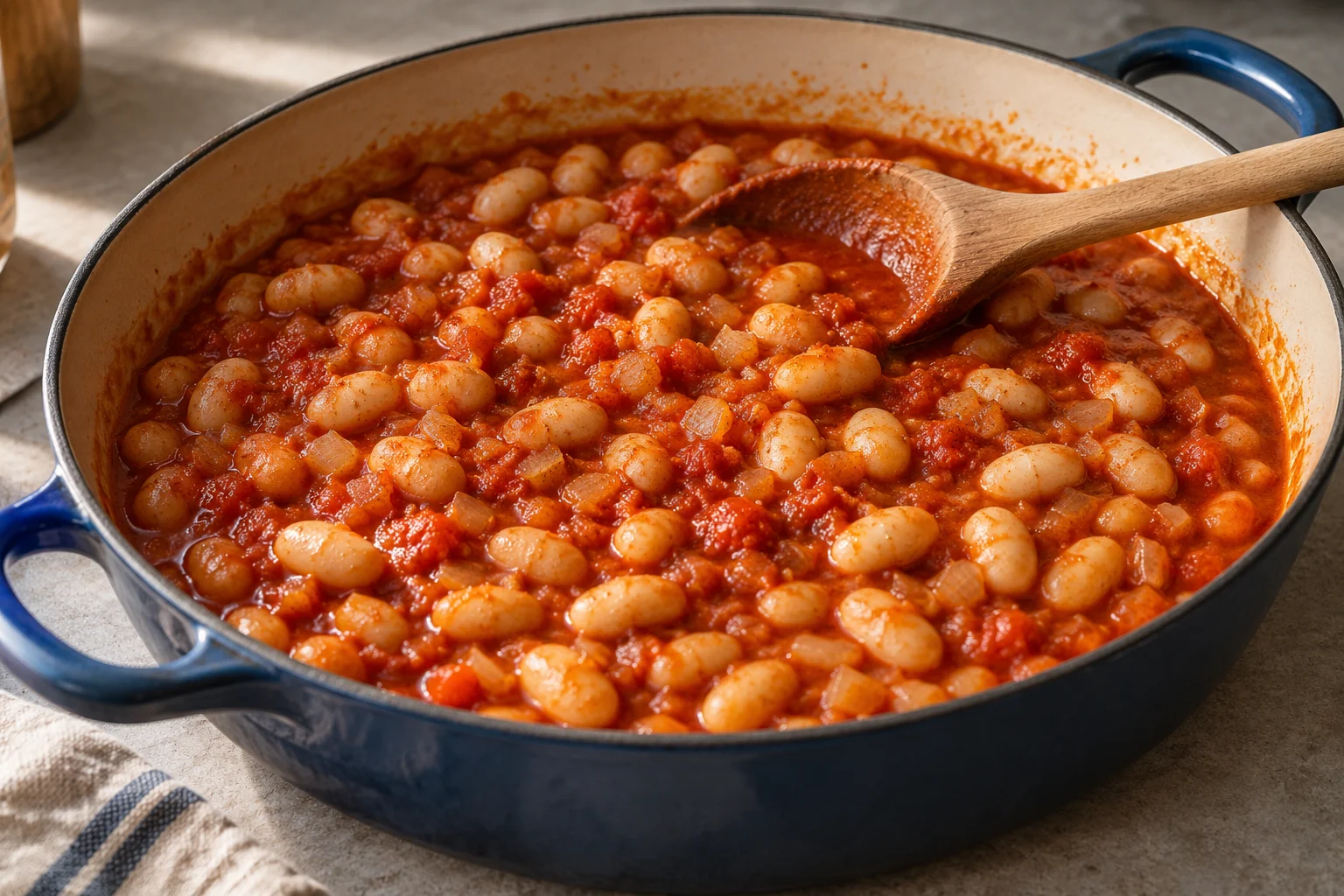
Let the sauce move; let the rice rest
A useful sauce check happens at the spoon. Lift beans with a little liquid: both should slide back into the pot without leaving a dry mound. A tomato sauce that clings heavily can be loosened with a small splash of water. When the sauce runs far ahead of the beans, give it more uncovered simmering time. Reduce gradually instead of boiling hard, which can split the beans.
Rice asks for a different kind of attention. Its covered rest finishes the texture without repeated stirring. Keep the tomato sauce out of the rice saucepan; add it at the plate, where you can control how much each serving absorbs. This also makes the meal easy to adjust for someone who likes more beans or a larger patch of plain rice.
Two changes that preserve the pairing
A lighter, more brothy bowl
ElissaBeth at The Taste of Kosher describes her version as deliberately soup-like. For a lighter serving of this adaptation, add hot water to the finished beans in small amounts, taste again, and use a shallow bowl to hold the extra liquid.
Rice with browned vermicelli
The Aharonis’ recipe uses browned thin noodles with the rice. It offers another texture beneath the beans. Follow their complete linked rice method for that version, since noodles change the quantities; plain basmati remains the rice used here.
Research notes
Recipes and reading
Original household and chef recipes show the range of this pairing; the adaptation above uses cooked canned beans and its own quantities.
- Israel and Tamara Aharoni: beans and rice, Mako Hebrew cookbook extract pairing tomato-paprika white beans with rice and browned vermicelli.
- Eddie Mizrahi: white bean stew, Reshet 13 A Jerusalem chef’s account and recipe with tomato, root vegetables and spices, served with rice.
- Sina Mizrahi: simple bean stew over white rice A personal account of orez ve-shuit and contrasting family approaches to its tomato sauce.
- ElissaBeth: Israeli rice and beans, The Taste of Kosher White beans, tomato, paprika and cumin; the author also explains the intended brothy consistency.
- Food Standards Agency: home food fact checker Current guidance on cooling, refrigerating and reheating cooked rice.
Keep exploring
More stories for your table
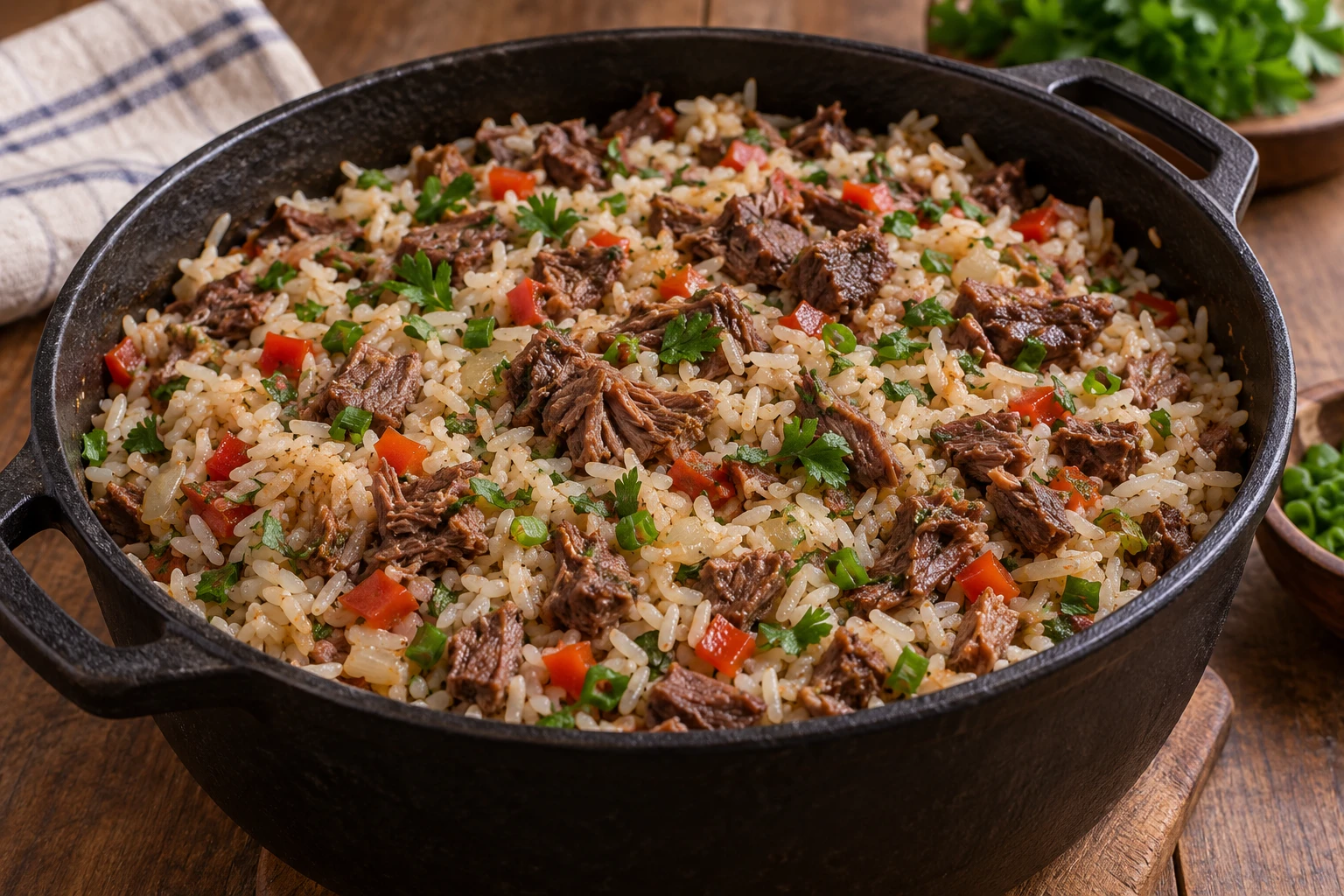
Brazilian cuisine Rice
Arroz Carreteiro: Before the Rice Enters
Prepared charque, browned meat and the order of additions shape Brazil’s arroz carreteiro. Four cooks show how tomato, extra meats and fresh finishes change the pot.
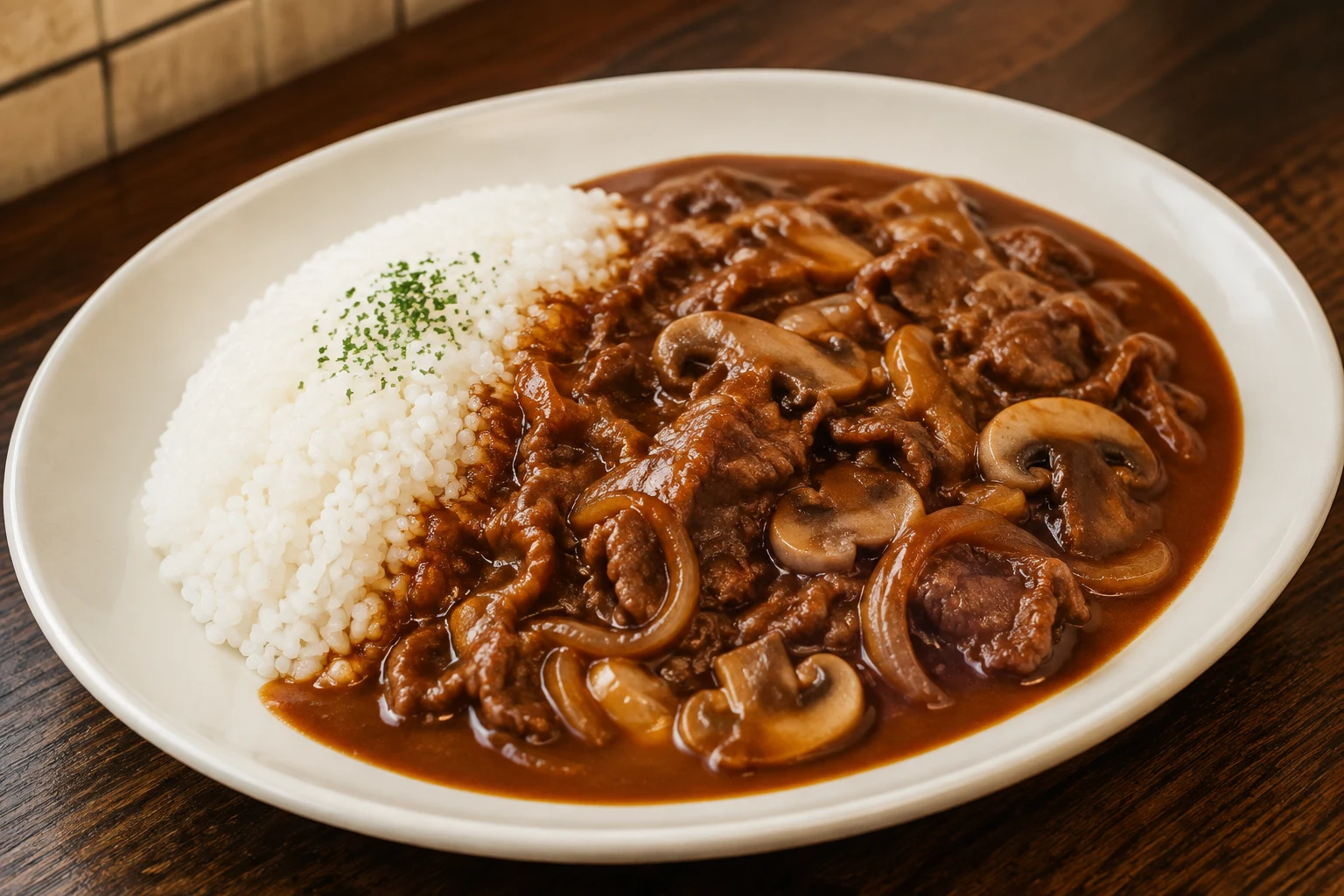
Japanese cuisine Yōshoku rice dish
Hayashi Rice: A Sauce Translated for Rice
Hayashi rice turned a Western-style brown meat sauce into Japanese yōshoku by changing the plate, the seasoning, and eventually the home pantry.
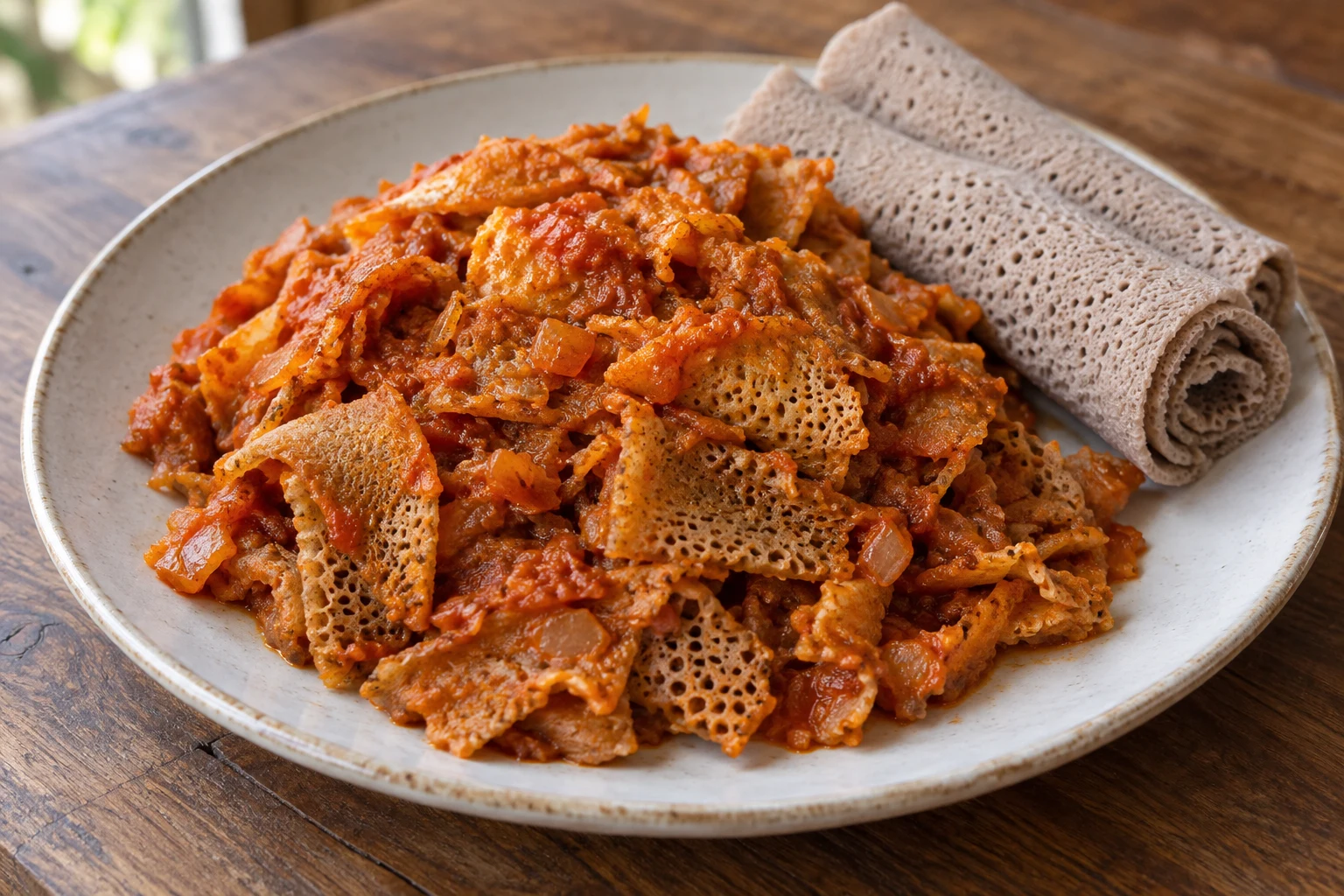
Ethiopian cuisine Injera breakfast
Injera firfir: sauce first, torn bread last
A tomato-and-berbere injera firfir adaptation for two, with clear guidance on bread texture, moisture and reheating leftovers.