
Sambal Matah: Let the Knife Do the Work
Sambal matah
Fine shallot slices, tender lemongrass and citrus leaves make a relish with a visible structure. A small spoonful brings that structure to the rest of the meal.
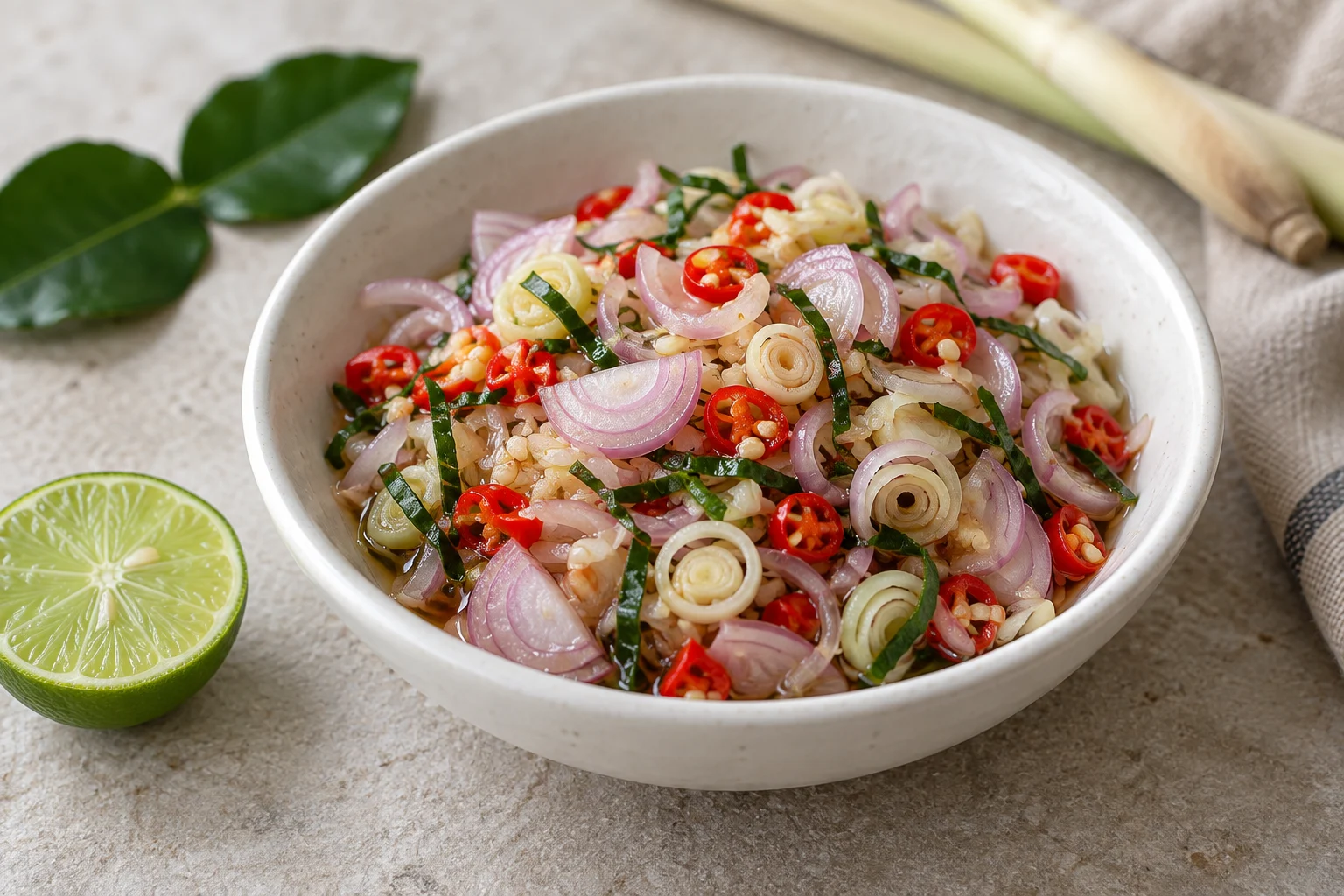
A sliced sambal from Bali
Sambal matah is a Balinese condiment built from sliced aromatics. Indonesia’s tourism ministry describes shallot, bird’s-eye chili, lemongrass and citrus leaf dressed with hot coconut oil, and lists grilled fish, ayam betutu and nasi campur Bali among its companions. The pieces remain identifiable, carrying crunch and aroma into a meal.
Nunuk Sri Rahayu of Cook Me Indonesian explains matah as “raw” in Balinese, while her method still includes pouring hot coconut oil over the mixture. Read the name alongside the process: the distinction concerns the fresh aromatic mixture, and the published recipes do not all apply oil in exactly the same way.
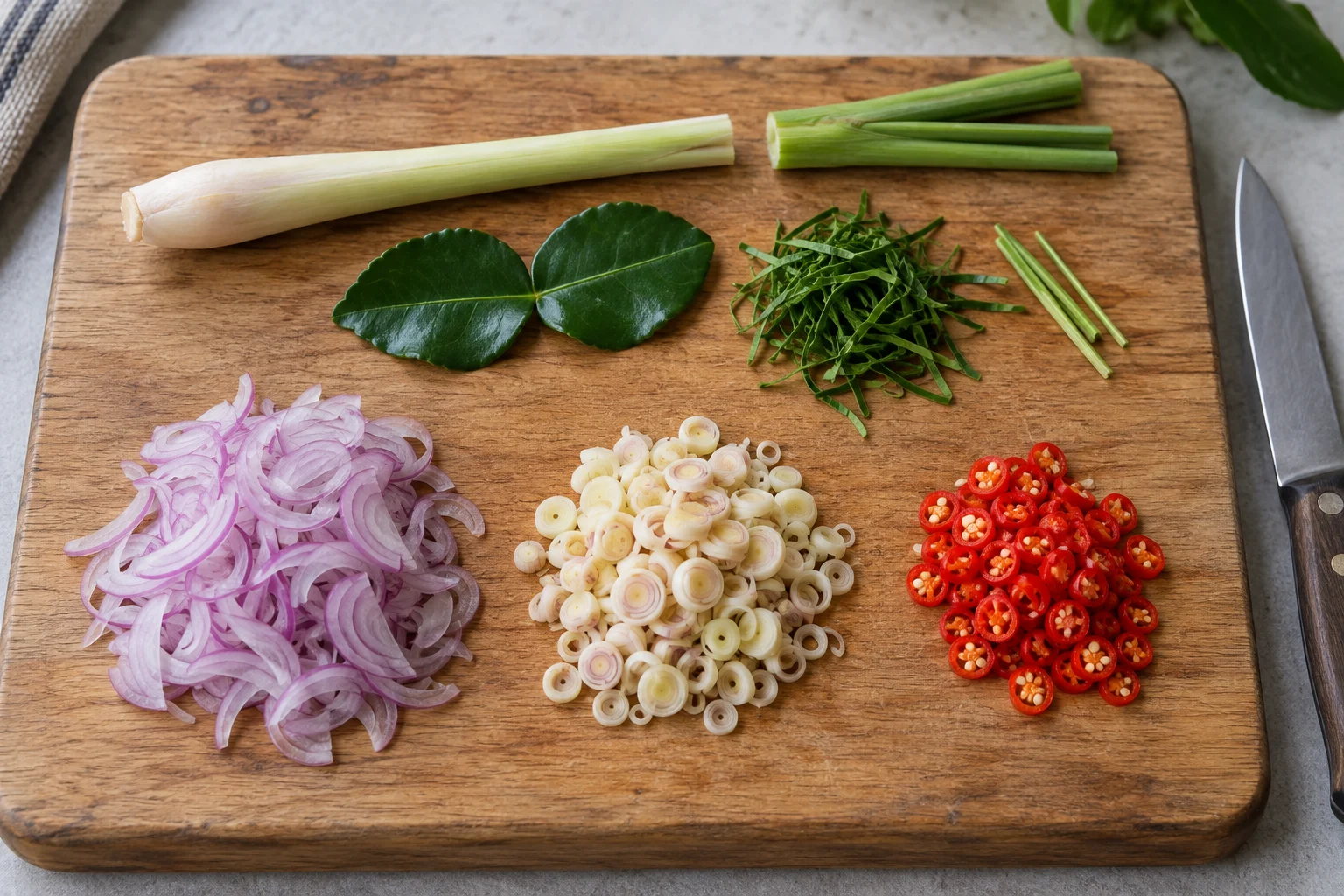
Prepare the tender parts
Rahayu uses only the tender white part of lemongrass and removes the stalk from the citrus leaves before fine slicing. Pemulan Bali Farm Cooking School also specifies the white lemongrass portion. A fragrant ingredient still needs to be comfortable to chew; the tough upper stalk does a different job from the tender heart used here.
Keep the cuts small enough to share a spoonful. A coarse chunk of lemongrass or a broad intact leaf would dominate the mouthful, while thin slices distribute the aromatics among the shallots. The knife work is therefore part of the condiment’s texture, not simply an attractive way to prepare an ingredient photograph.
Home version
Sambal matah with hot coconut oil
A small editorial home version of the hot-oil approach, drawing on the common preparation in the sources. Makes four condiment portions. Allow about 20 minutes for fine cutting and 5 minutes to heat, dress and finish; this version has not been kitchen-tested.
Ingredients
Slice and season
- 100 g small shallots, peeled
- 2 stalks lemongrass, using only the tender white hearts
- 4 makrut lime leaves, central ribs removed
- 3–5 bird’s-eye chilies, according to the heat you want
- 1 small clove garlic, finely chopped, optional
- ¼ tsp roasted shrimp paste (terasi), optional
- ¼ tsp fine salt, then adjust to taste
- 1 pinch sugar, optional
Dress the relish
- 3 tbsp / 45 ml coconut oil
- 1 tbsp / 15 ml fresh lime juice
Method
- 1
Cut finely
Rinse the lemongrass, leaves and chilies and dry them. Slice shallots into very thin half-rings, the tender lemongrass into fine rings, chilies into small rounds and citrus leaves into narrow ribbons. Put them in a heatproof stainless steel or ceramic bowl.
- 2
Combine the aromatics
Add the optional garlic, roasted terasi and sugar, plus the salt. Toss and lightly press the mixture with a spoon to distribute the seasoning. Keep the slices intact rather than working them into a smooth paste.
- 3
Dress with hot oil
Heat coconut oil in a small saucepan over medium heat for about 1–2 minutes, until hot and fluid; do not let it smoke. Take it off the heat, carefully pour it over the aromatic mixture and stir with a spoon. Let the mixture settle for a minute before tasting.
- 4
Finish with lime
Add lime juice, toss and adjust the salt. Serve a small spoonful alongside the meal, leaving the remaining sambal available for diners to add. Prepare the condiment close to serving so the fresh slices remain the focus.
Oil has more than one route
Pemulan’s school recipe mixes coconut oil directly into the cut ingredients and suggests hot oil when a softer result is wanted. Bali.com’s published recipe combines finely sliced aromatics with coconut oil and offers a brief sauté as an optional variation. Those are specific cooking choices, rather than reasons to insist that every version must share a single oil temperature.
The home recipe above chooses hot oil, with lime added afterward. Follow that sequence as a whole. The optional roasted shrimp paste supplies another distinct choice: several sources include it, while the tourism description treats it as one variation. Keep its shellfish content in mind when deciding who will eat the sambal.
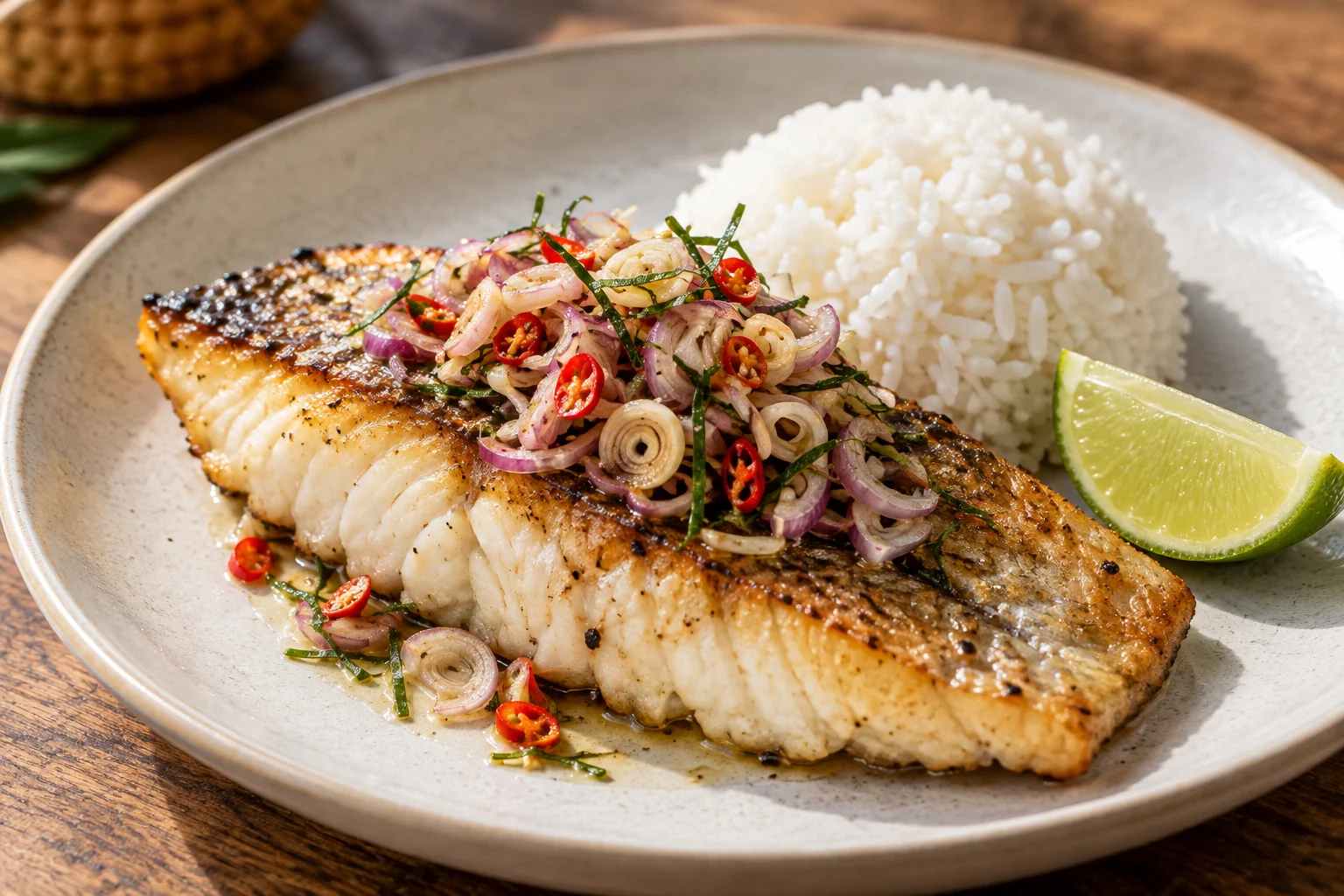
Start with a small spoonful
Grilled fish is a useful setting for the relish because the sliced mixture stays visible over the cooked surface. Offer rice alongside and begin with a modest amount of sambal. Each bite can then carry a little shallot, citrus leaf and chili without turning every forkful into the same concentration of heat.
Taste the sambal with the food it will accompany before deciding to add more salt or lime. A condiment has a partner: its final balance is easier to judge in that mouthful than from a bowl tasted entirely on its own.
Research notes
Sources and oil choices
Four independent sources were opened and read. The recipe is an editorial home synthesis, not a kitchen-tested or universal Balinese formula. All images are generated illustrations.
- Indonesia.travel — sambal matah Tourism ministry description supports Bali framing, the sliced aromatic structure, hot coconut oil and grilled-fish pairing.
- Cook Me Indonesian — Nunuk Sri Rahayu’s sambal matah Original cook’s recipe specifies tender white lemongrass, fine citrus-leaf slicing, roasted shrimp paste and a hot-oil mixture finished with lime.
- Pemulan Bali Farm Cooking School — sambal recipes School’s own sambal matah method uses fine cuts, white lemongrass and coconut oil, with hot oil suggested for a softer version.
- Bali.com — published sambal matah recipe Local recipe specifies fine slices, coconut oil, lime and roasted terasi; a brief sauté is described as an optional variation.
Keep exploring
More stories for your table

Indonesian cuisine Vegetable sides
Plecing Kangkung: Greens First, Sambal Last
Cook the stems before the leaves, drain thoroughly, then add coarse tomato sambal. A guide to Lombok’s plecing kangkung, with a peanut-topped home adaptation.

Indonesian cuisine Coconut-milk dessert
Kolak Pisang Ubi: A Sweet Bowl, Cooked in Stages
Make Indonesian kolak with banana, sweet potato, palm sugar and coconut milk. Learn its Ramadan context and a gentle cooking sequence that keeps each piece intact.
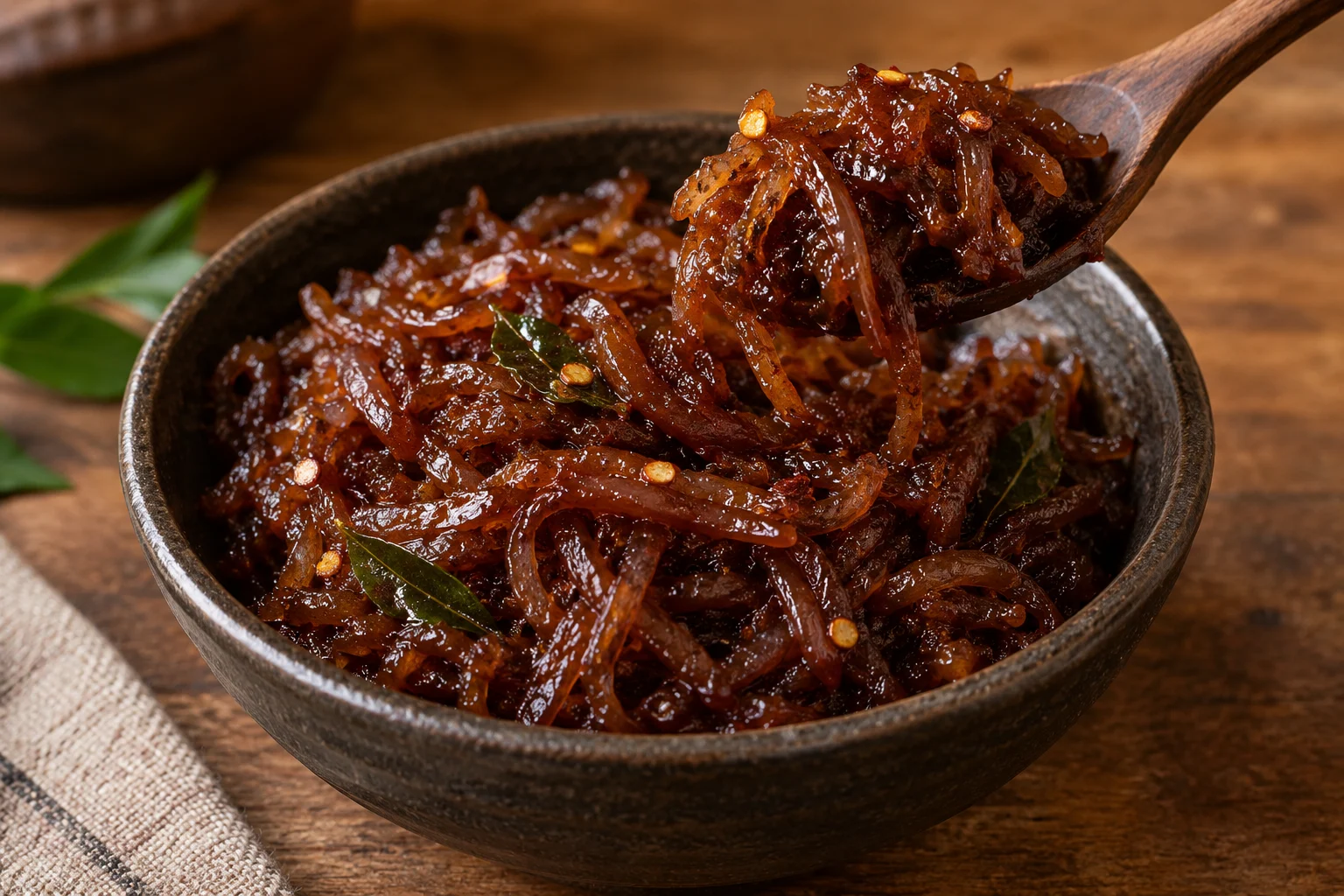
Sri Lankan cuisine Sweet onion relish
Seeni Sambol: Give the Onions Room to Soften
Sri Lankan seeni sambol turns sliced onions into a sweet, tangy relish. A small-batch recipe explains the pan, moisture endpoint and optional Maldive fish.