
Sate Padang: the broth becomes the sauce
Sate Padang
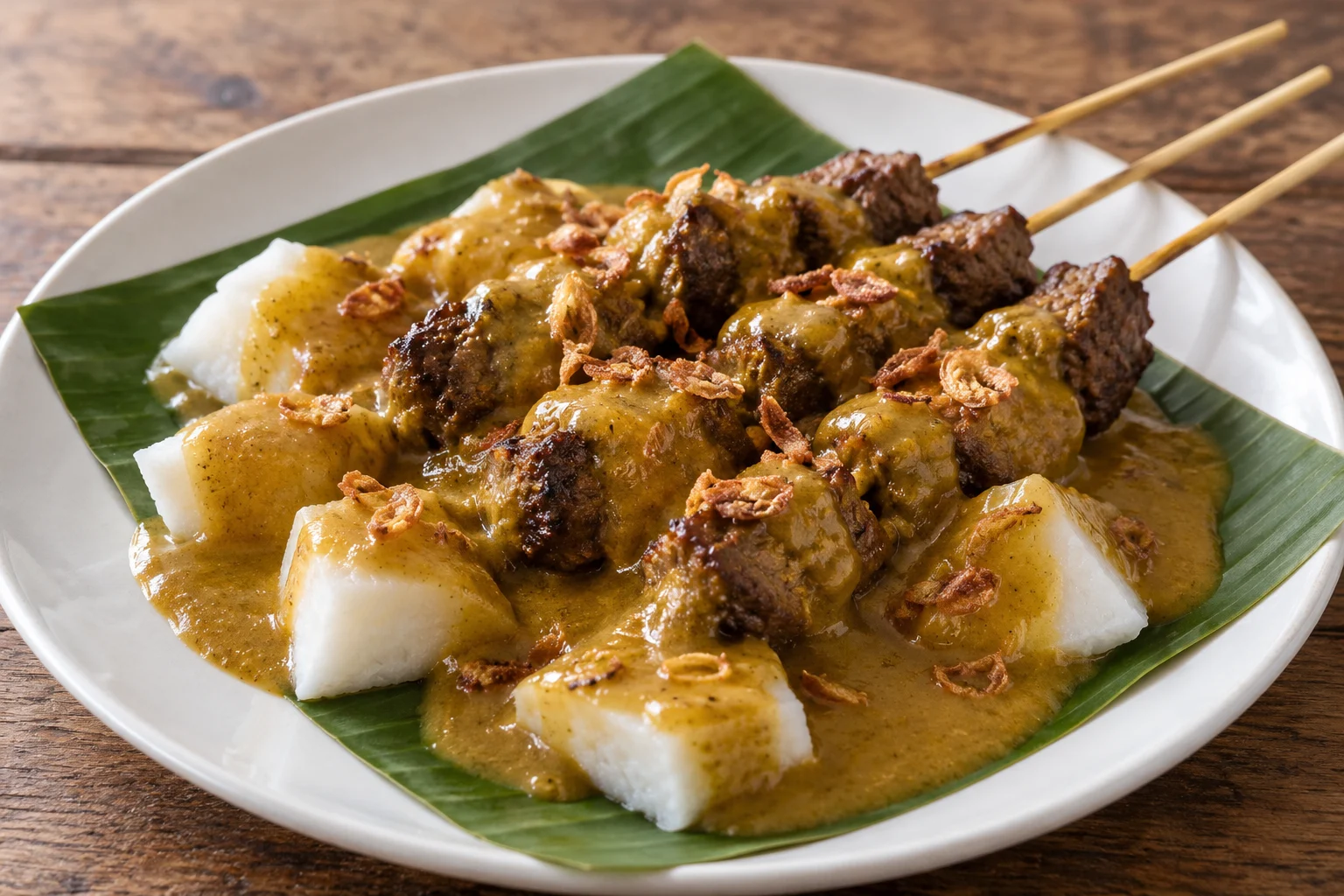
In this West Sumatran satay, the skewers share the plate with a generous, aromatic gravy. The cooking liquid is as valuable as the beef.
Minangkabau cooking
Follow the sauce back to the pot
Sate Padang belongs to the Minangkabau food traditions of West Sumatra. Beef, tongue or other beef parts may appear on the skewers; a defining feature is the generous spiced gravy made from broth and rice flour. Alongside it, ketupat or lontong offers pieces of compressed rice cake, and fried shallots add a crisp finish.
The gravy does not have one compulsory shade. Padang Gastronomy’s local cultural guide distinguishes the turmeric-led yellowish sauce of Padang Panjang from the redder, chili-heavy Pariaman style and a darker Padang version. The golden sauce in our adaptation is one practical approach within that wider family.
The useful cooking idea is shared across the recipes: cook the meat until tender in liquid before its brief time on the grill, and keep the flavorful broth for the sauce. Marvellina’s home version, Sari Bundo’s recipe and RASA’s cooking-show method each connect those stages. Our beef-only adaptation uses chuck and a grill pan, with a measured amount of broth as a clear starting point for thickening.
Our adaptation
Beef skewers with spiced rice-flour gravy
Four servings, about 12 small skewers. Allow roughly two and a quarter hours of cooking, with extra time if the chuck needs it. Use ordinary rice flour, rather than glutinous rice flour. Have 12 short metal skewers ready, or soak bamboo skewers in water for an hour while the beef simmers.
Ingredients
Beef and spice paste
- 650 g boneless beef chuck, cut into roughly 2.5 cm cubes
- 100 g peeled shallots, chopped
- 4 cloves garlic, chopped
- 20 g peeled ginger, chopped
- 15 g galangal, chopped
- 2 mild red chilies, seeded and chopped
- 1 tsp ground turmeric
- 1½ tsp ground coriander
- ½ tsp ground cumin
- ¼ tsp ground white pepper
- 2 tbsp (30 ml) neutral oil, plus 1 tbsp (15 ml) for brushing
- 1 litre water, plus more as needed
Whole aromatics and seasoning
- 2 stalks lemongrass, trimmed and bruised
- 4 makrut lime leaves, torn
- 1 small cinnamon stick
- 2 cloves
- 1 tsp fine salt, then adjust to taste
To thicken and serve
- 40 g ordinary rice flour
- 80 ml cool water
- 600 g cooked, ready-to-eat ketupat or lontong, reheated according to its packet and cut into pieces
- 2 tbsp crispy fried shallots
Method
- 1
Cook the paste
Blend shallots, garlic, ginger, galangal, chilies and ground spices with a little water taken from the litre. Heat 30 ml oil in a heavy saucepan. Add the paste and cook over medium heat for 6–8 minutes, stirring, until aromatic and no longer watery. Add lemongrass, lime leaves, cinnamon and cloves; stir for 1 minute.
- 2
Simmer until tender
Add beef, salt and the remaining water from the litre. Bring to a boil, reduce to a gentle simmer and cover partly. Cook for 75–105 minutes, adding hot water if needed to keep the beef covered. Continue until a fork enters easily, but the cubes still hold together. Tenderness, rather than the clock alone, decides when this stage ends.
- 3
Measure the cooking liquid
Lift the cooked beef onto a clean plate and remove the whole aromatics from the pot. Pour the broth into a heatproof measuring jug. You need 750 ml: add hot water if there is less, or return excess broth to the pan and simmer it down. Taste for salt after adjusting the volume.
- 4
Thicken to a pouring gravy
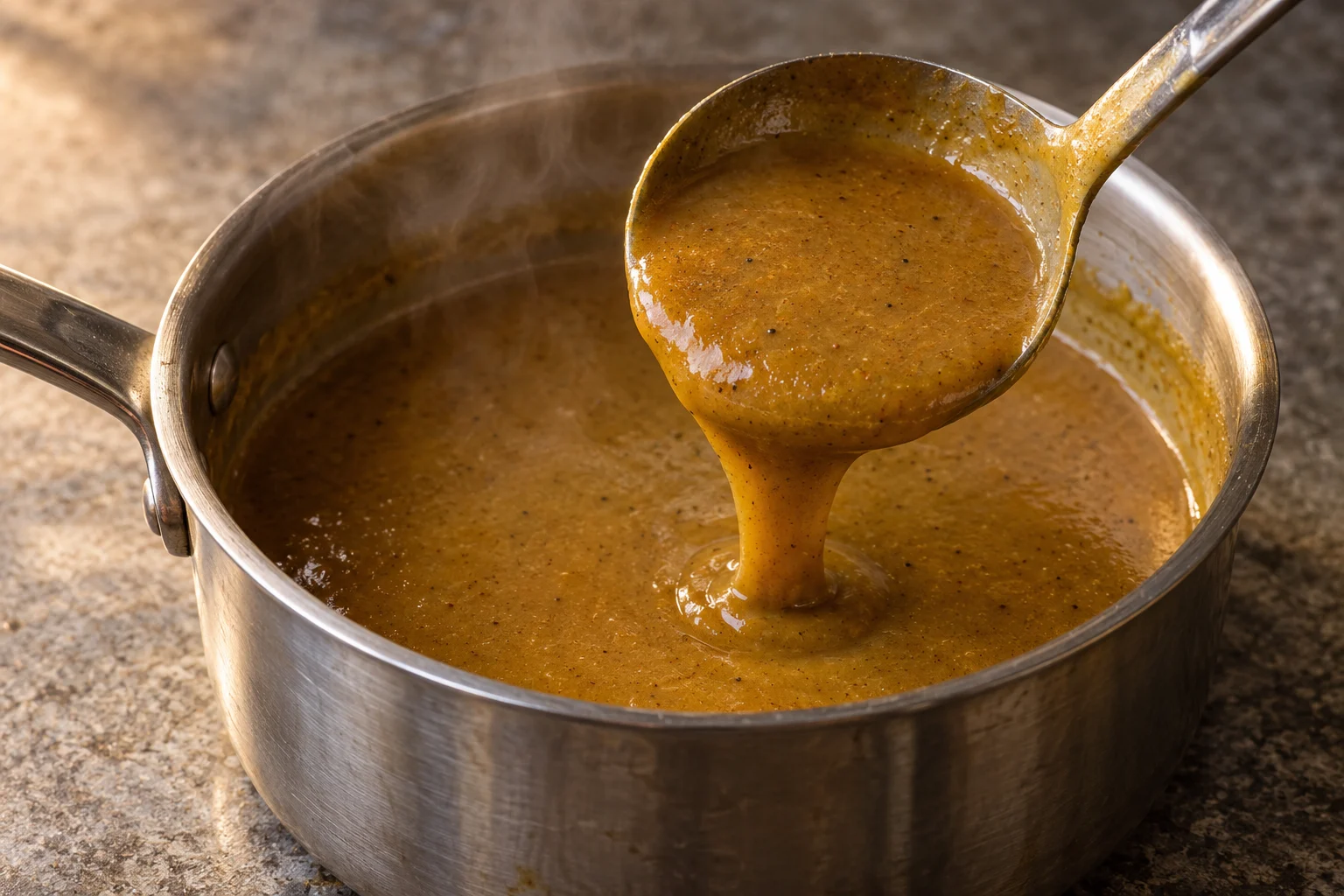
Return the measured broth to the pan. Whisk rice flour with 80 ml cool water until smooth. Stir this slurry again immediately before gradually whisking it into the hot broth. Bring to a gentle bubbling simmer and stir for about 8 minutes, scraping the base, until smooth and thickened. Add hot water a tablespoon at a time if it becomes stiff. Keep hot over low heat.
- 5
Brown and assemble
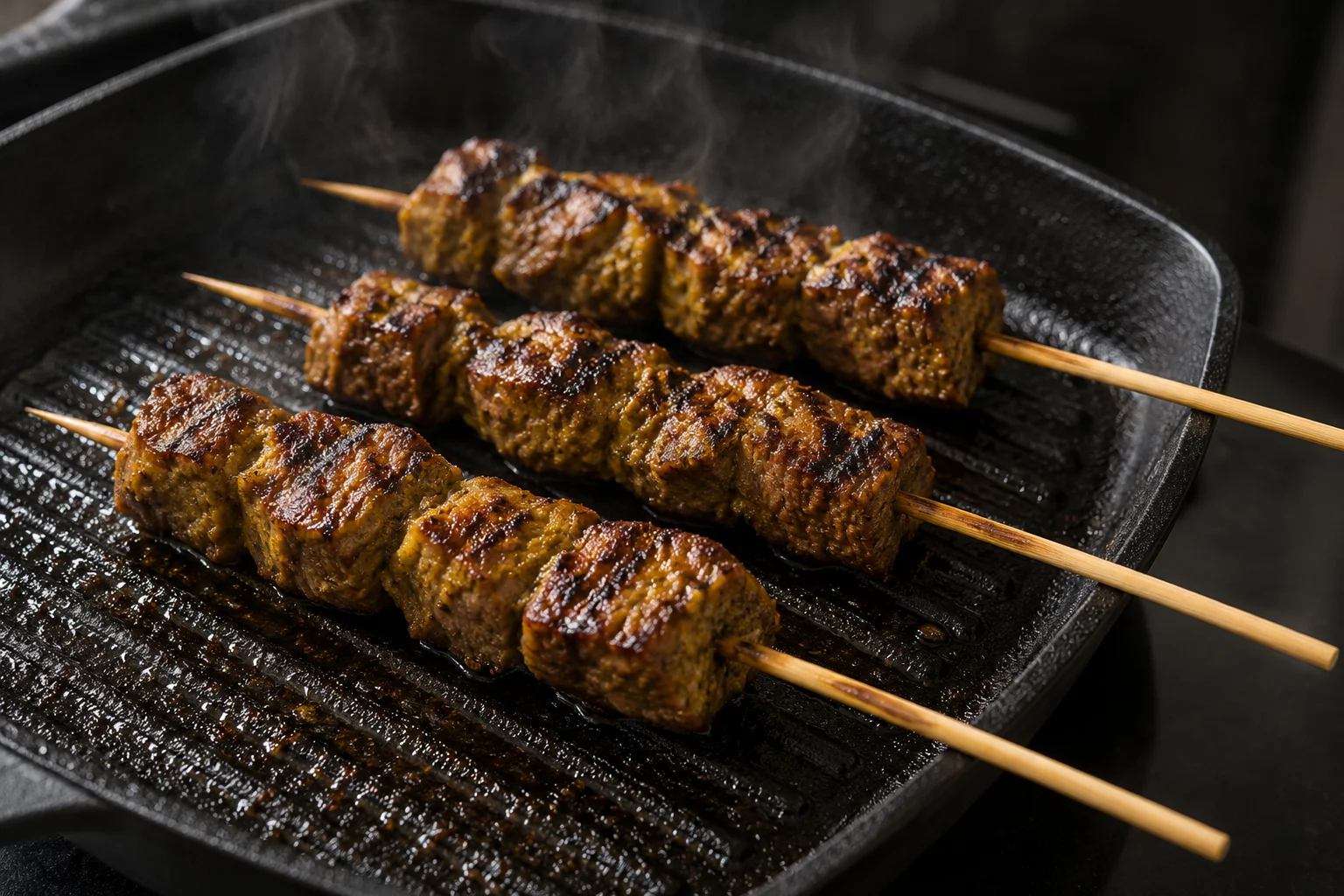
When the beef is cool enough to handle, divide it between the skewers, about 3–4 cubes each. Brush with the remaining 15 ml oil. Heat a grill pan over medium-high heat and brown the already-cooked beef for 2–3 minutes per side, in batches if needed. Serve three skewers per person with hot rice-cake pieces, pour the hot gravy over, and scatter fried shallots. Serve immediately.
Give the gravy its own attention
Measuring the broth keeps the same amount of flour from meeting a very different amount of liquid each time. Taste before thickening: the broth needs a clear aroma of spices and enough salt, because flour supplies texture rather than seasoning. Remove tough lemongrass pieces and whole spices so the finished sauce is pleasant to spoon over the meal.
Mix flour with cool liquid first, and stir the slurry again before pouring; settled flour at the bottom of the bowl can otherwise arrive as one heavy addition. Keep the pan moving with the whisk as the mixture heats. Marvellina also notes that the gravy thickens further as it cools. Aim for a flowing coat while it is hot, and loosen it gently if it sits for a few minutes.
Research notes
Recipes and regional reading
These sources document the broth-and-skewer sequence and its different expressions. The quantities and beef-only method above are our adaptation.
- Marvellina: sate Padang, What To Cook Today Original home recipe, beef-cut alternatives and detailed rice-flour sauce handling.
- Sari Bundo: sate Padang and its preparation Indonesian restaurant account and recipe using spiced cooking liquid and rice flour.
- RASA: sate Padang in Jelajah Rasa Nusantara The cooking-show method simmers beef before grilling and uses its broth for the sauce.
- Padang Gastronomy: sate Padang Local cultural guide describing the Minangkabau dish, rice cakes and regional sauce differences.
Keep exploring
More stories for your table
Indonesian cuisine Chicken
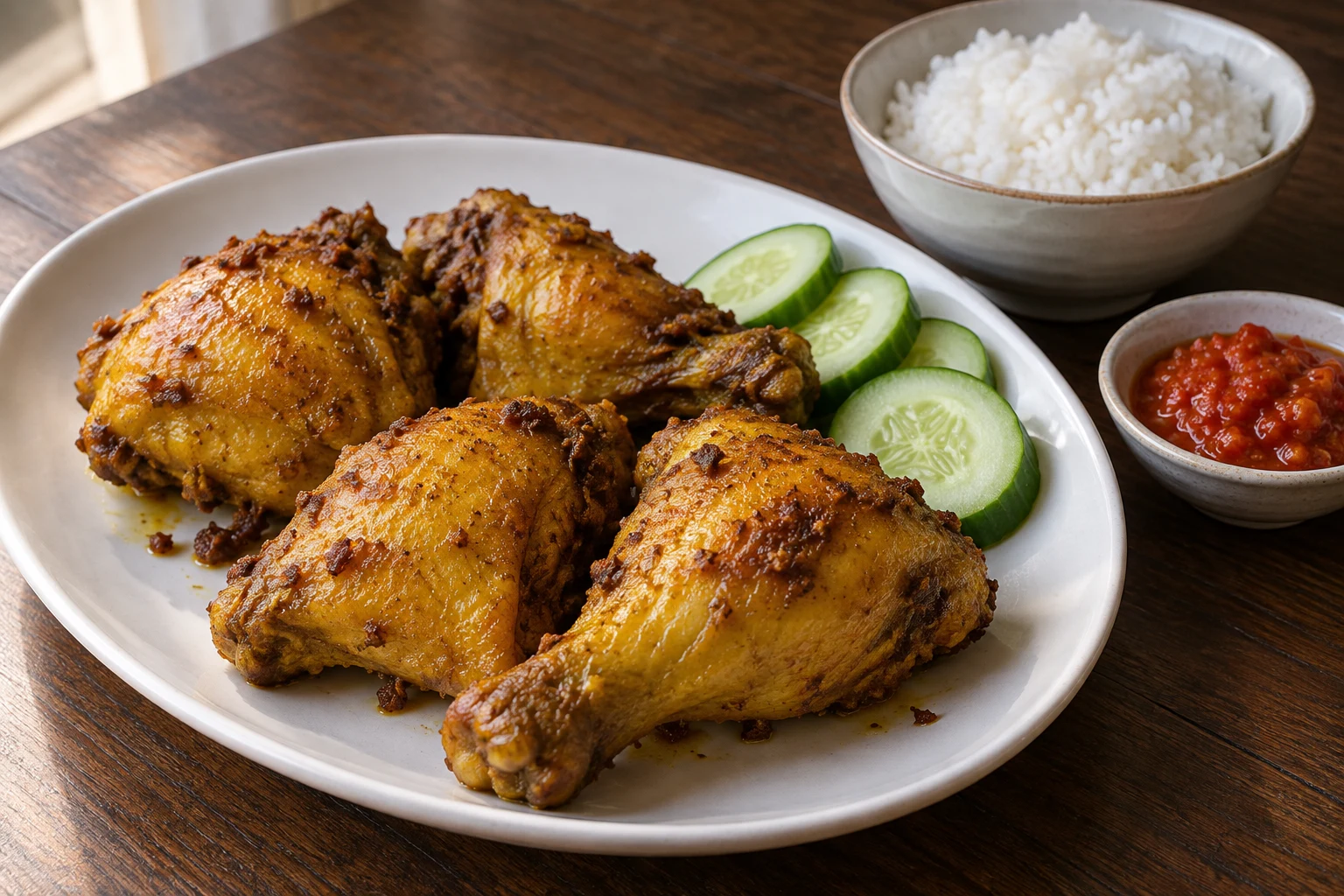
Ayam Goreng Kuning: Simmer First, Fry to Finish
Turmeric-spiced Indonesian fried chicken gets its flavor in the simmering pan and its crisp edges in hot oil. A guide and home recipe for the two stages.
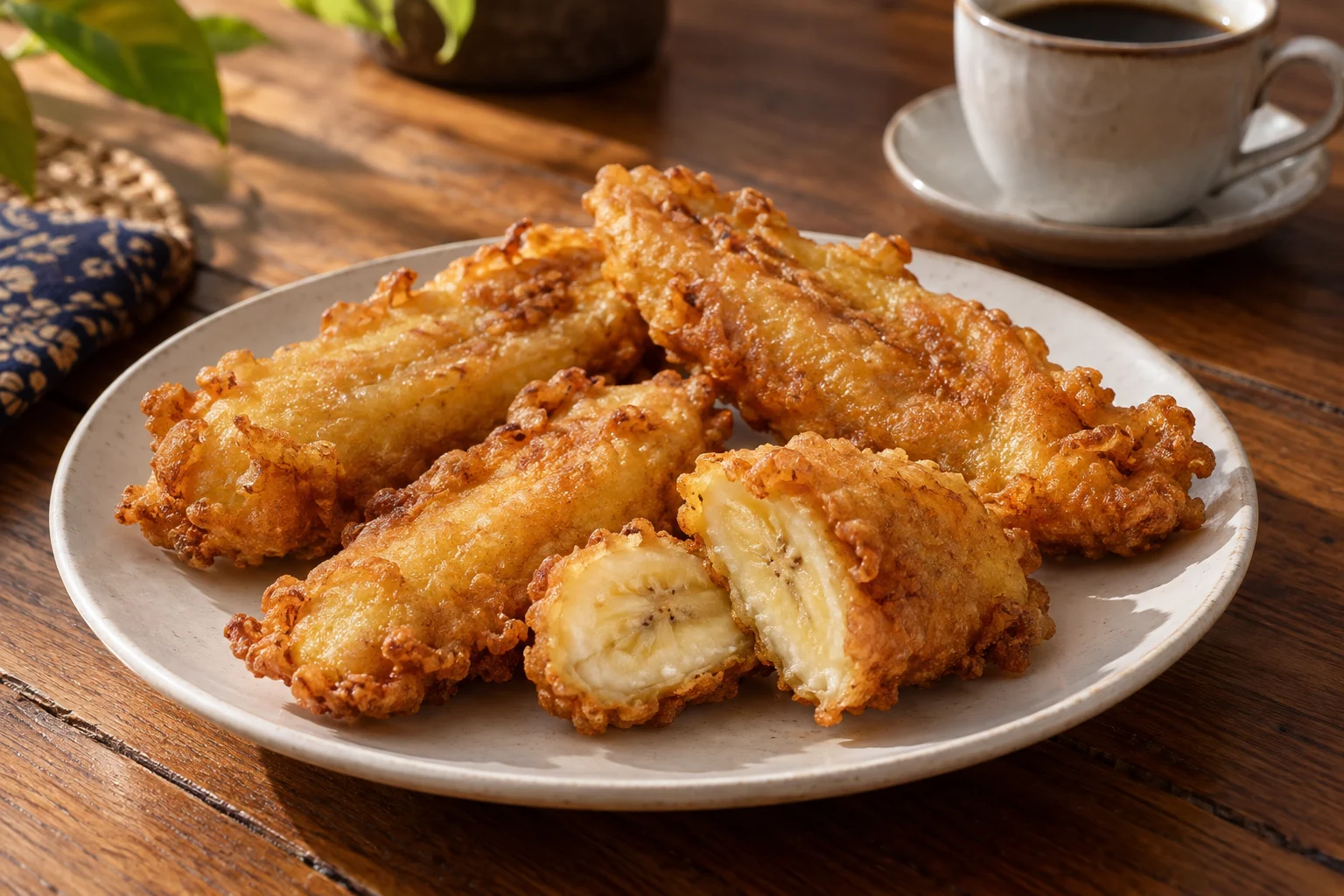
Indonesian cuisine Banana fritters
Pisang Goreng: Start with Fruit That Holds Its Shape
Choose ripe bananas that stay intact, follow one batter recipe and fry a small batch. A guide to the fruit, coatings and serving choices of Indonesian pisang goreng.
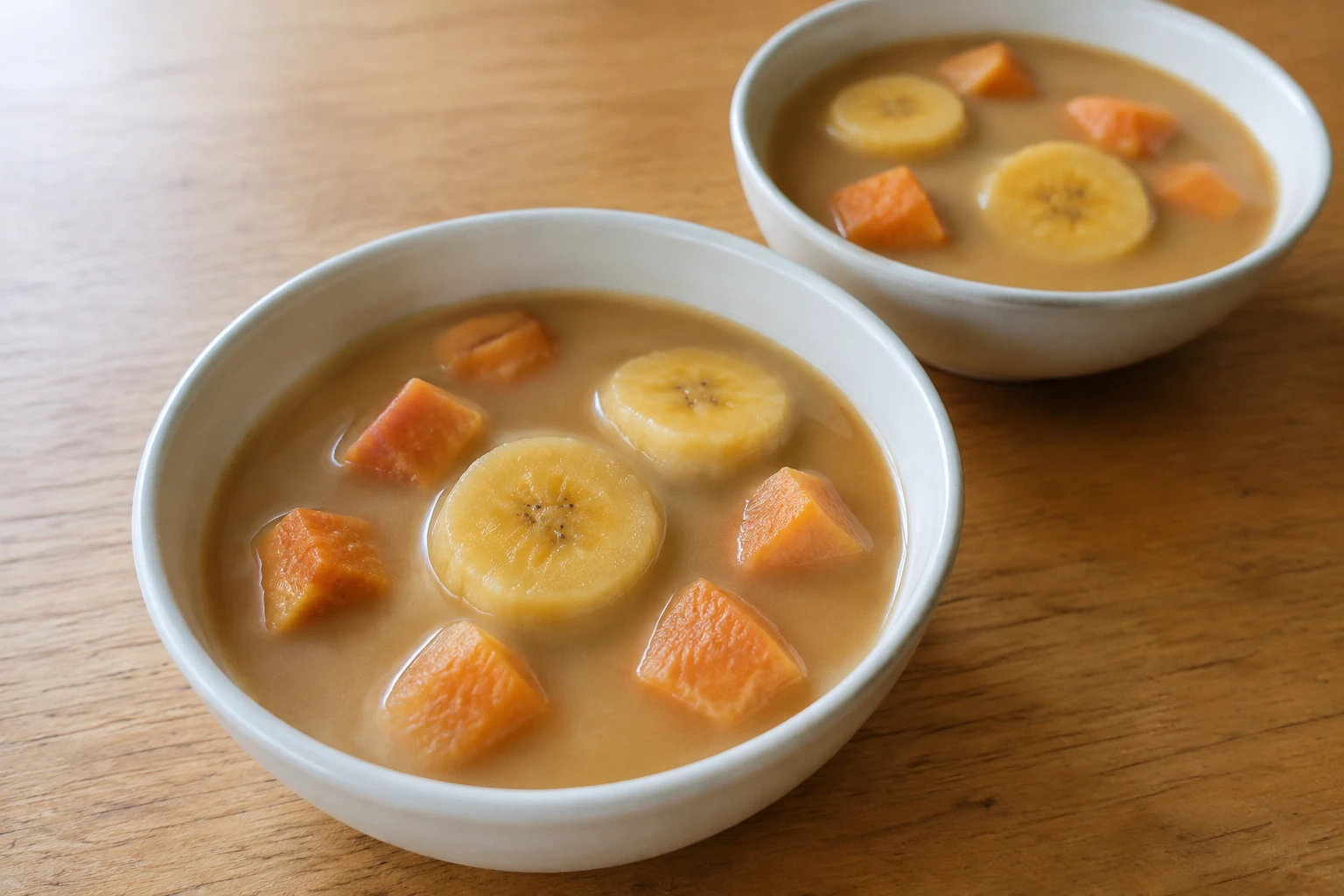
Indonesian cuisine Coconut-milk dessert
Kolak Pisang Ubi: A Sweet Bowl, Cooked in Stages
Make Indonesian kolak with banana, sweet potato, palm sugar and coconut milk. Learn its Ramadan context and a gentle cooking sequence that keeps each piece intact.