
Rujak buah: firm fruit meets spicy palm-sugar sauce
Rujak buah
Choose crisp fruit, understand palm-sugar dressing variations and make a complete vegetarian adaptation of Indonesian rujak buah.
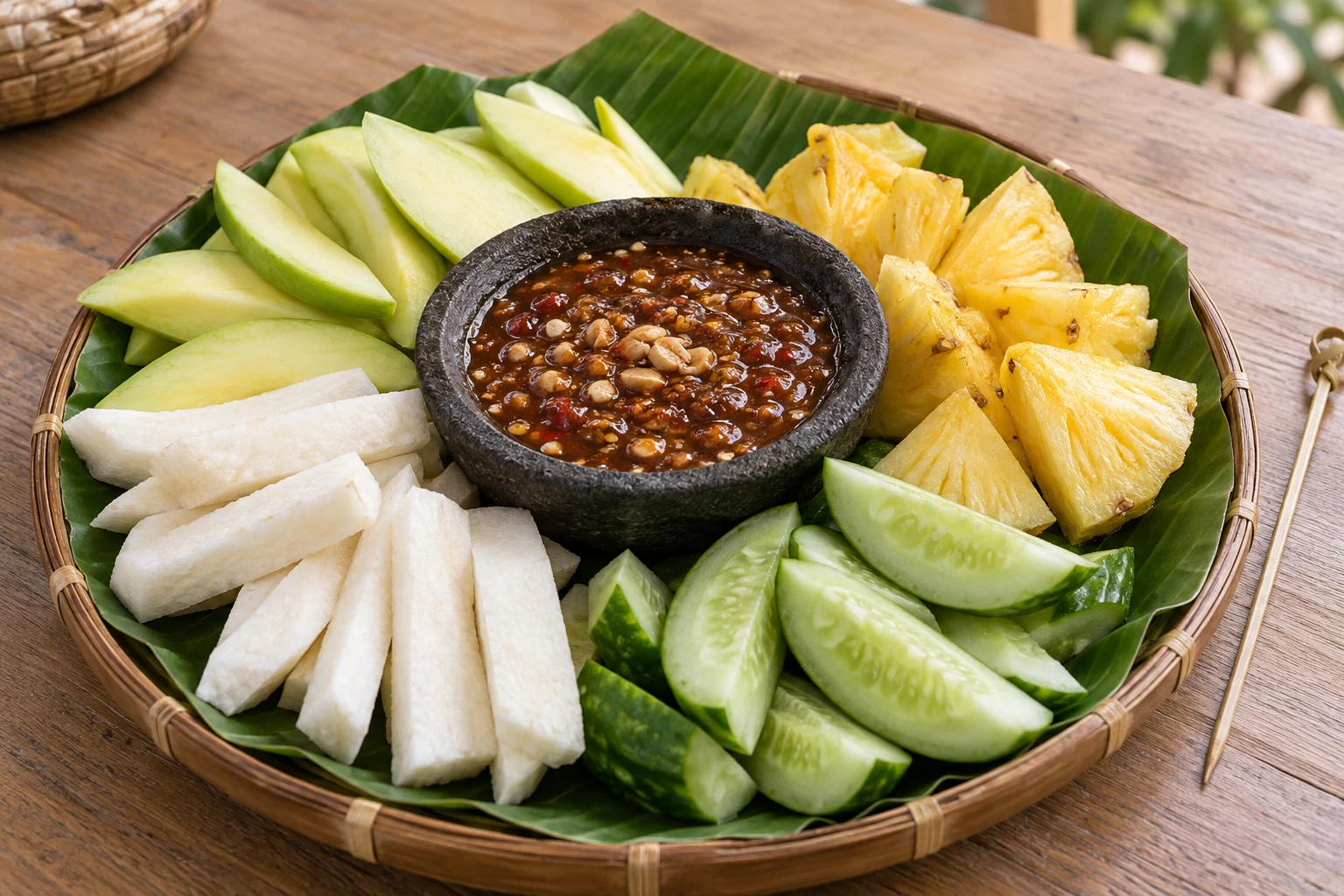
Rujak buah pairs fresh fruit and vegetables with a dressing that is sweet, sour and hot. The pieces need some resistance: a mango wedge or jicama stick should reach the mouth intact, carrying a little sauce with it. Palm sugar brings the sweetness, tamarind contributes acidity, and chili shifts the bite away from an ordinary dessert fruit bowl.
There is room for choice inside that description. Some sauces are smooth, some retain crushed peanuts, and some include terasi, Indonesian shrimp paste. The version below is a clearly labelled vegetarian adaptation with peanuts in the sauce. It is one way to assemble the snack, not a claim that all Indonesian rujak uses those ingredients.
Give each piece a job
- Mango
- Firm, slightly tart wedges
- Jicama
- Peeled, crisp white sticks
- Pineapple
- Small, tidy pieces
- Cucumber
- Skin-on spears
Use fruit that holds a cut edge. A very soft ripe mango changes the eating texture.
Its clean crunch gives the darker sauce a contrasting surface.
Remove skin, eyes and the tough central core so each piece is ready to eat.
Scrub and rinse the outside before cutting; choose firm pieces rather than thin floppy slices.
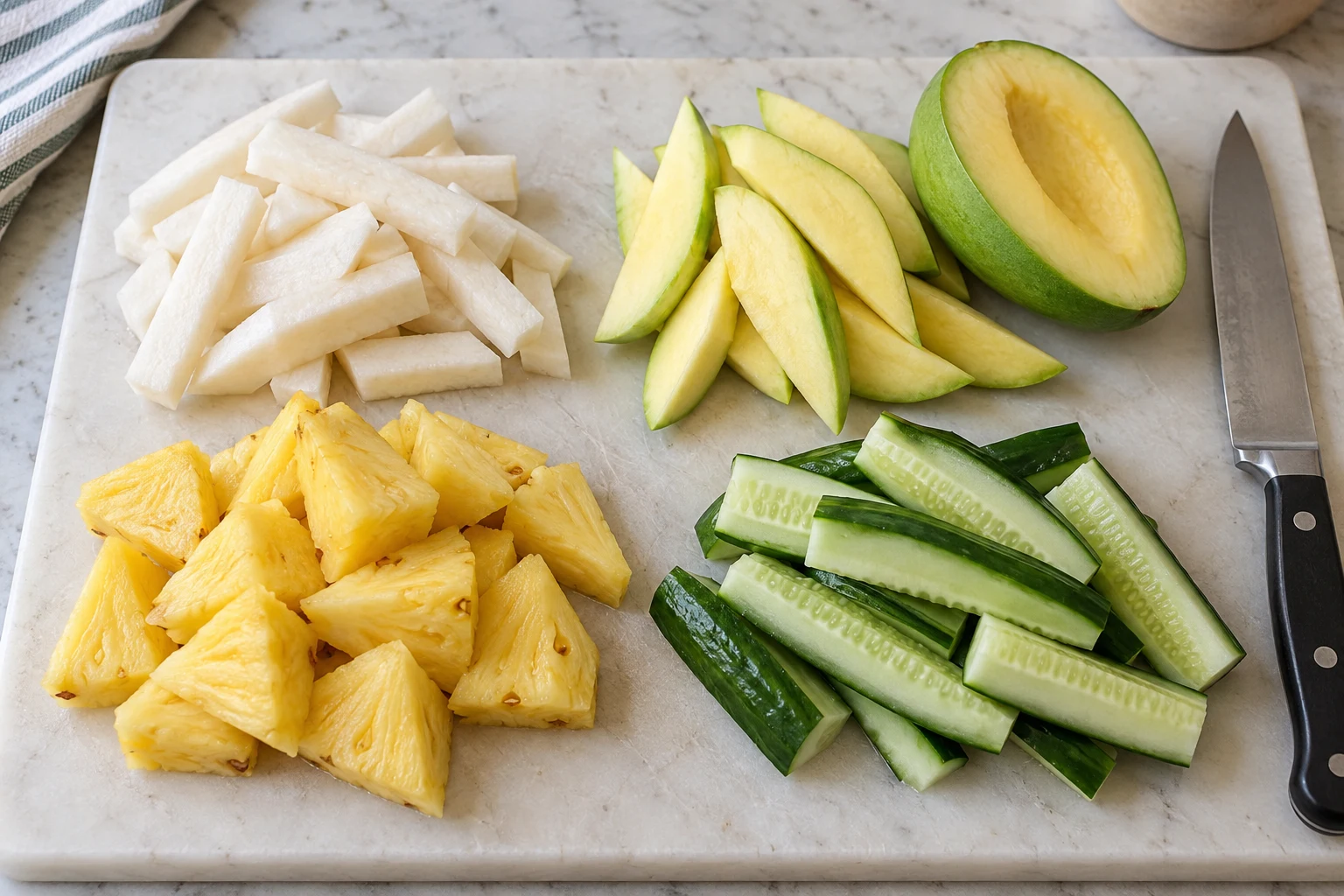
Anita Jacobson's useful selection rule is firmness: fruit should stay together when picked up on a skewer. Her list includes green mango, pineapple, cucumber and jicama, but she also offers firm apples or pears when specialist produce is unavailable. That gives a cook a practical substitution test instead of a shopping list that must be followed at any cost.
Taste the fruit before balancing the dressing. An especially tart mango and a sweeter pineapple already bring different flavors to the plate. Try a small piece with a little sauce before changing the whole batch. Add chili cautiously if diners have different preferences, and keep the dressing separate until the table is ready.
Cook it at home
A vegetarian rujak buah adaptation
An original four-snack-portion adaptation with a coarse peanut dressing and no shrimp paste. Weigh the fruit after peeling and trimming.
Ingredients
Fruit and vegetables
- 250 g prepared pineapple
- 200 g peeled jicama
- 200 g firm green mango flesh
- 150 g cucumber
Dressing
- 60 g dark palm sugar, finely shaved
- 30 g unsalted roasted peanuts
- 10 g tamarind pulp
- 50 ml warm drinking water, plus a little extra if needed
- 1 small red chili, or less to taste, stem removed
- ⅛ tsp salt
Method
- 1
Prepare the produce
Rinse whole produce under plain running water before peeling. Scrub cucumber with a clean brush, then dry everything with a clean towel. Peel and trim as needed; cut into short sticks, wedges or bite-size pieces.
- 2
Extract the tamarind
Soak tamarind pulp in the measured warm water for 5 minutes. Mash it, then strain through a fine sieve, pressing out the liquid and discarding seeds and tough fibers.
- 3
Grind the dressing
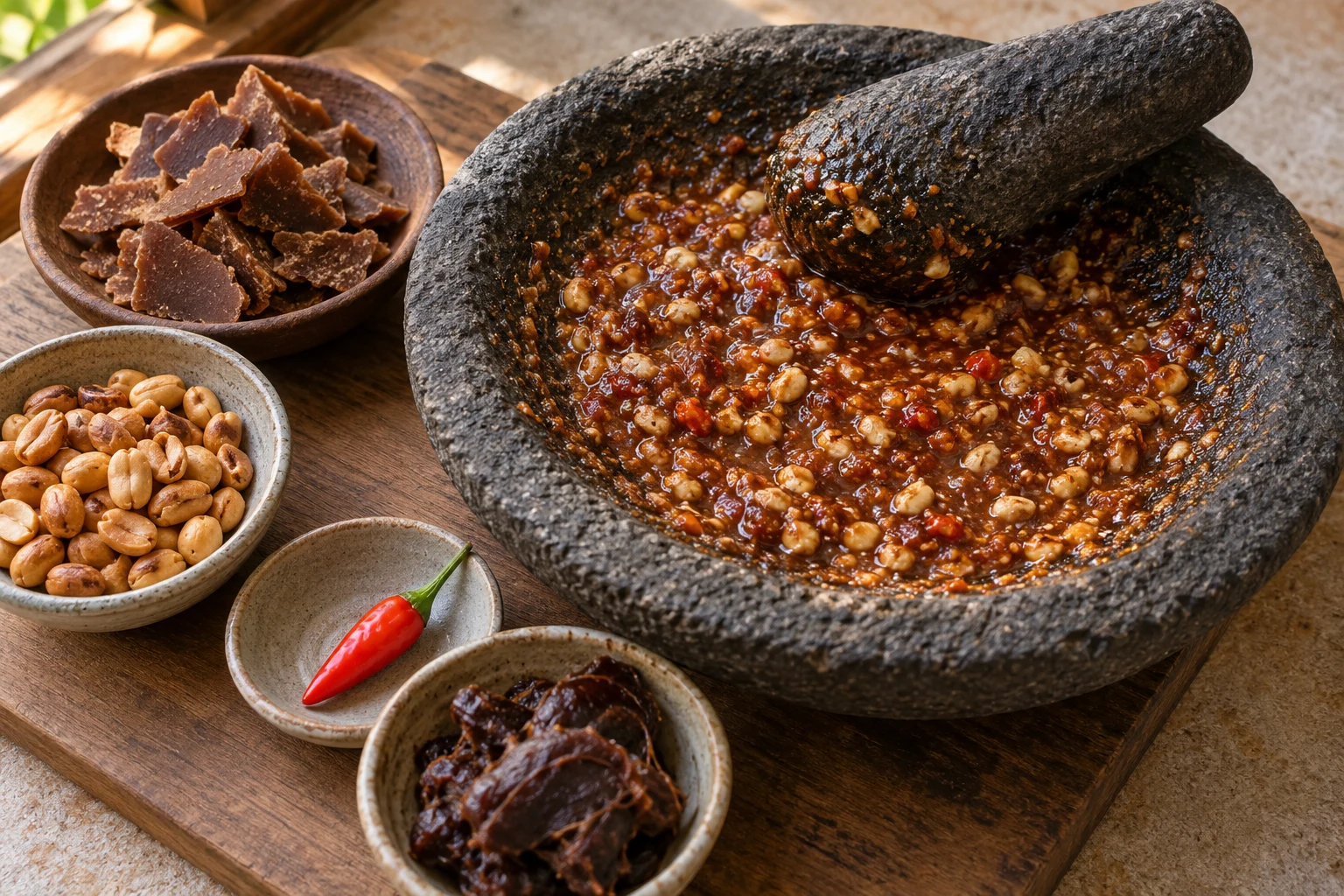
Pound chili and salt in a mortar, then add peanuts and crush coarsely. Work in palm sugar and the strained tamarind liquid gradually until the sugar dissolves and the sauce is spoonable. Add extra water a teaspoon at a time only if needed.
- 4
Taste and serve
Taste a fruit piece with dressing; adjust the chili or salt cautiously if wanted. Arrange the prepared produce on a platter and serve the sauce separately for dipping, or spoon a little over individual portions just before eating.
Read the sauce, not just its color
Anita blends her dressing and offers crushed peanuts as an optional topping. Marvellina pounds peanuts into her rujak uleg sauce and prefers leaving some coarse pieces. Resep Koki adds a little pineapple to its pounded seasoning. The first-person MyKitchenAdventure version lists chili, optional garlic, salt, palm sugar and tamarind without peanuts or shrimp paste. These are meaningful differences in texture and ingredients, even when the finished sauce looks similarly brown.
For a bought serving, ask about both shrimp paste and peanuts if either matters to you. Terasi and the darker liquid shrimp paste called petis are also distinct ingredients in Anita's explanation; neither should be assumed absent merely because the visible plate contains fruit. A sauce description is more useful than treating every rujak or rojak name as an interchangeable formula.
Research notes
Sources behind this article
- Anita Jacobson · Daily Cooking Quest Original Indonesian fruit-selection guide, blended palm-sugar dressing, optional peanut topping and terasi/petis distinction.
- Marvellina · What To Cook Today Original mortar-ground sauce with roasted peanuts, shaved sugar, gradual water and adjustable coarseness.
- caseysav · MyKitchenAdventure First-person Indonesian preparation with sour fruit and a sticky chili–palm-sugar sauce listing neither shrimp paste nor peanuts.
- Resep Koki · Rujak buah manis Indonesian home-cooking recipe with peanuts and a small amount of pineapple pounded into the seasoning.
- FDA · Cleaning fresh produce Official guidance on rinsing before peeling, plain water, clean brushes, drying and refrigerated perishable produce.
Keep exploring
More stories for your table
Indonesian cuisine Iced dessert drink
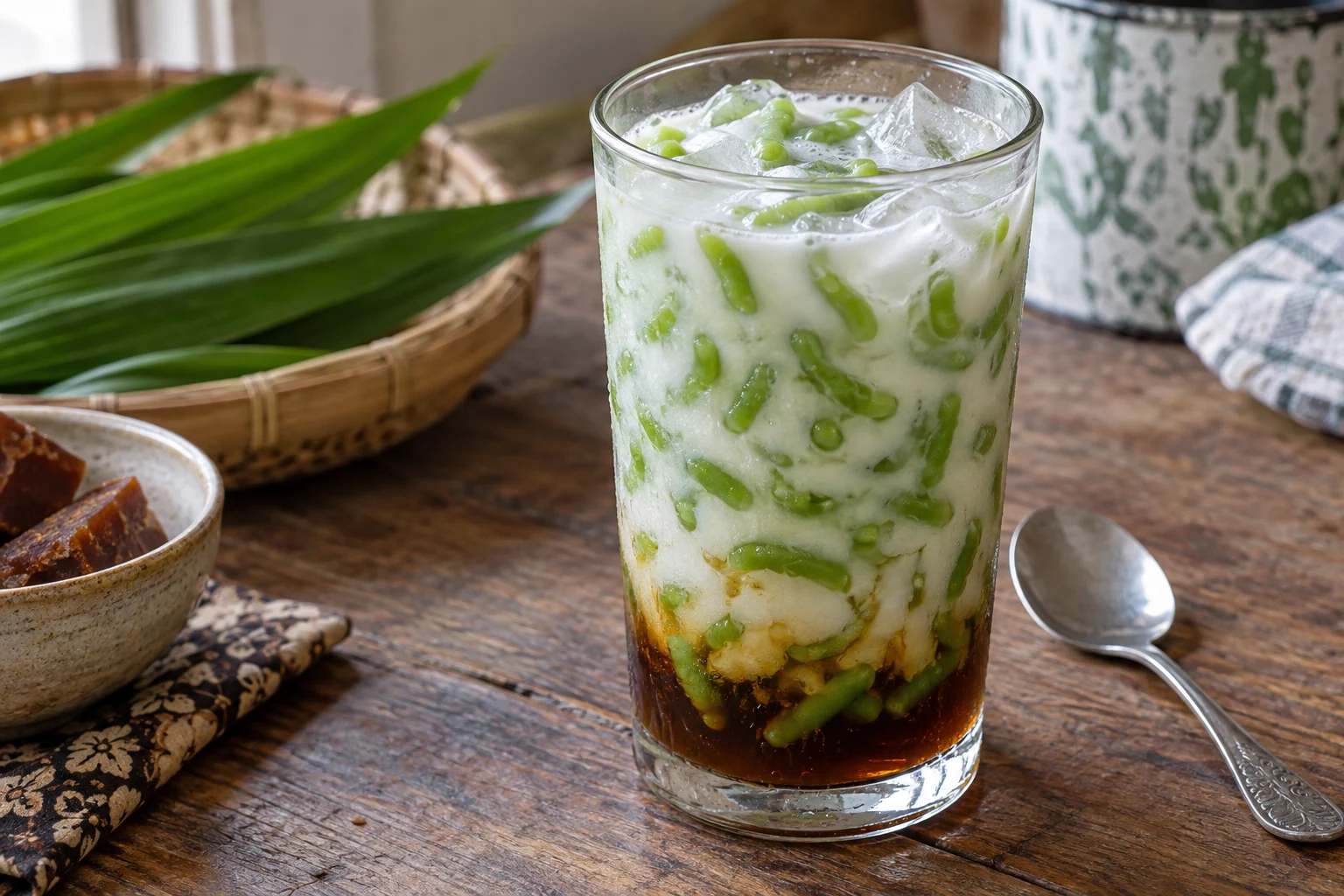
Es cendol: choose the jelly texture, then build the glass
A guide to the soft or chewy green jellies in Indonesian es cendol, their starch mixtures, and the balance of coconut milk, palm sugar syrup and ice.
Indonesian cuisine Coconut-milk dessert
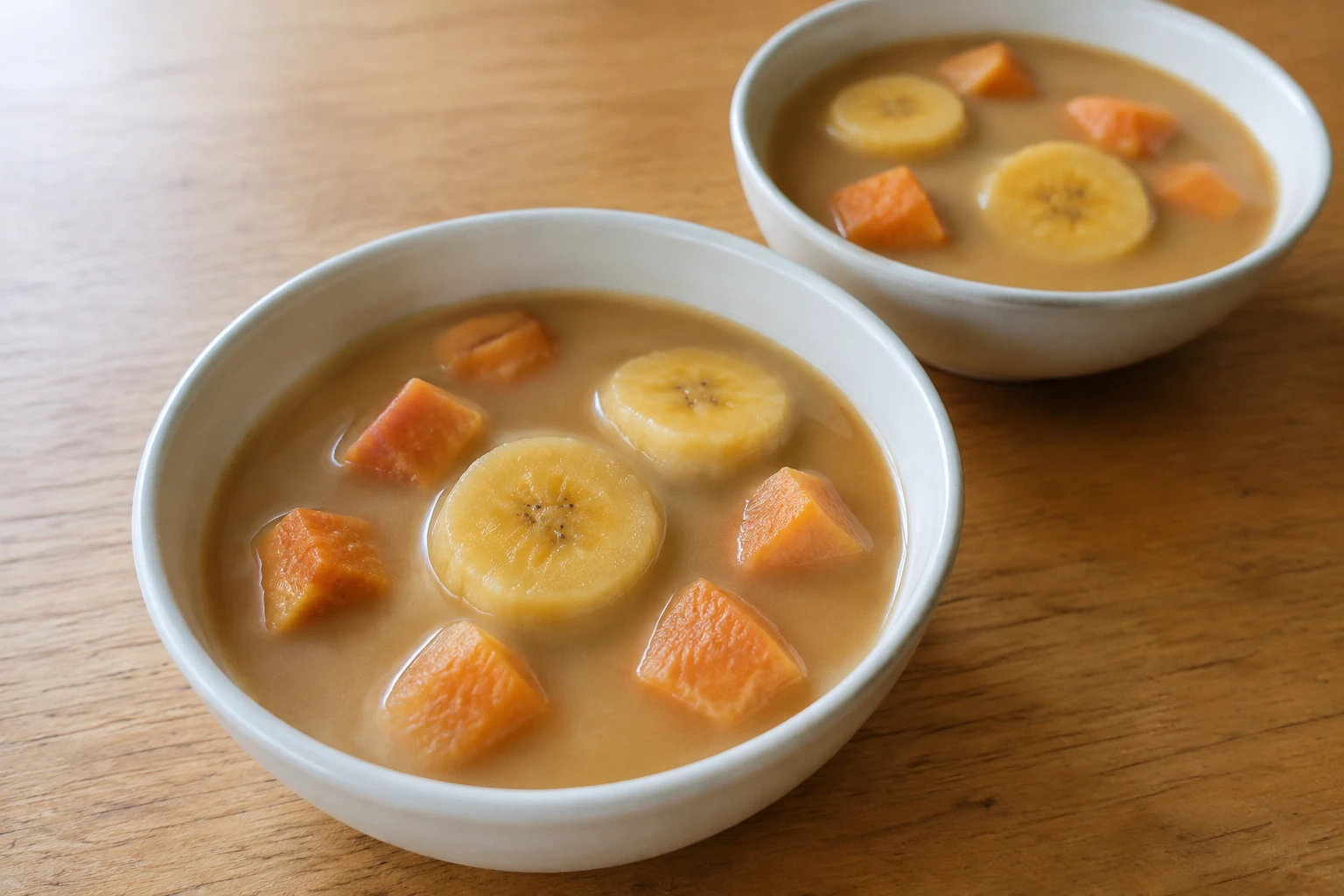
Kolak Pisang Ubi: A Sweet Bowl, Cooked in Stages
Make Indonesian kolak with banana, sweet potato, palm sugar and coconut milk. Learn its Ramadan context and a gentle cooking sequence that keeps each piece intact.
Vietnamese cuisine Papaya salad
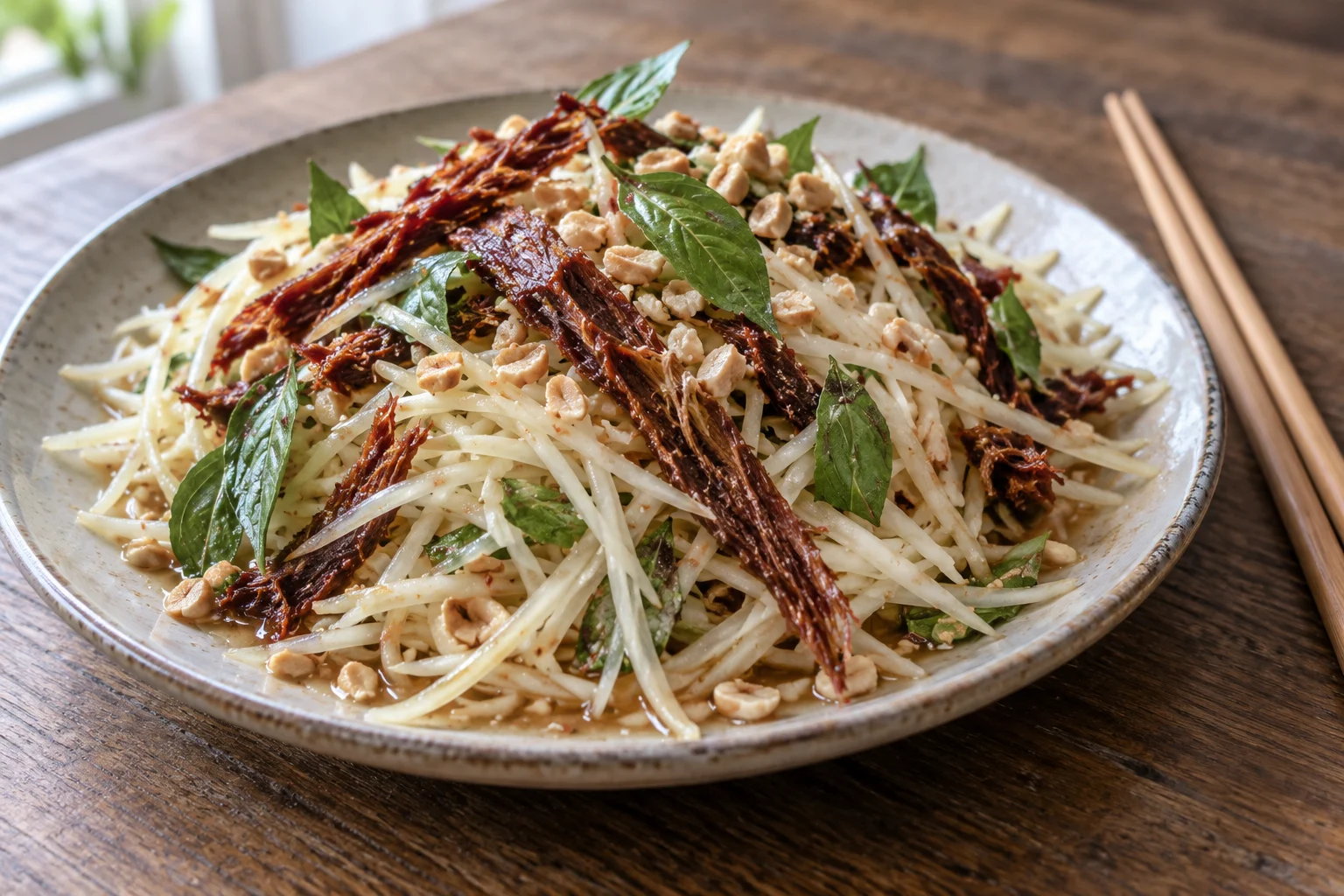
Vietnamese Green Papaya Salad: Choose the Dressing with the Topping
Firm green papaya supplies the crunch. Compare documented Vietnamese jerky and prawn-and-pork versions, then balance the dressing against the topping.