
Opor Ayam: The Paste Before the Coconut
Opor ayam
A pale coconut gravy can hold a deeply aromatic chicken dish. Reading opor ayam through its spice paste, coconut timing and rice-cake companions.
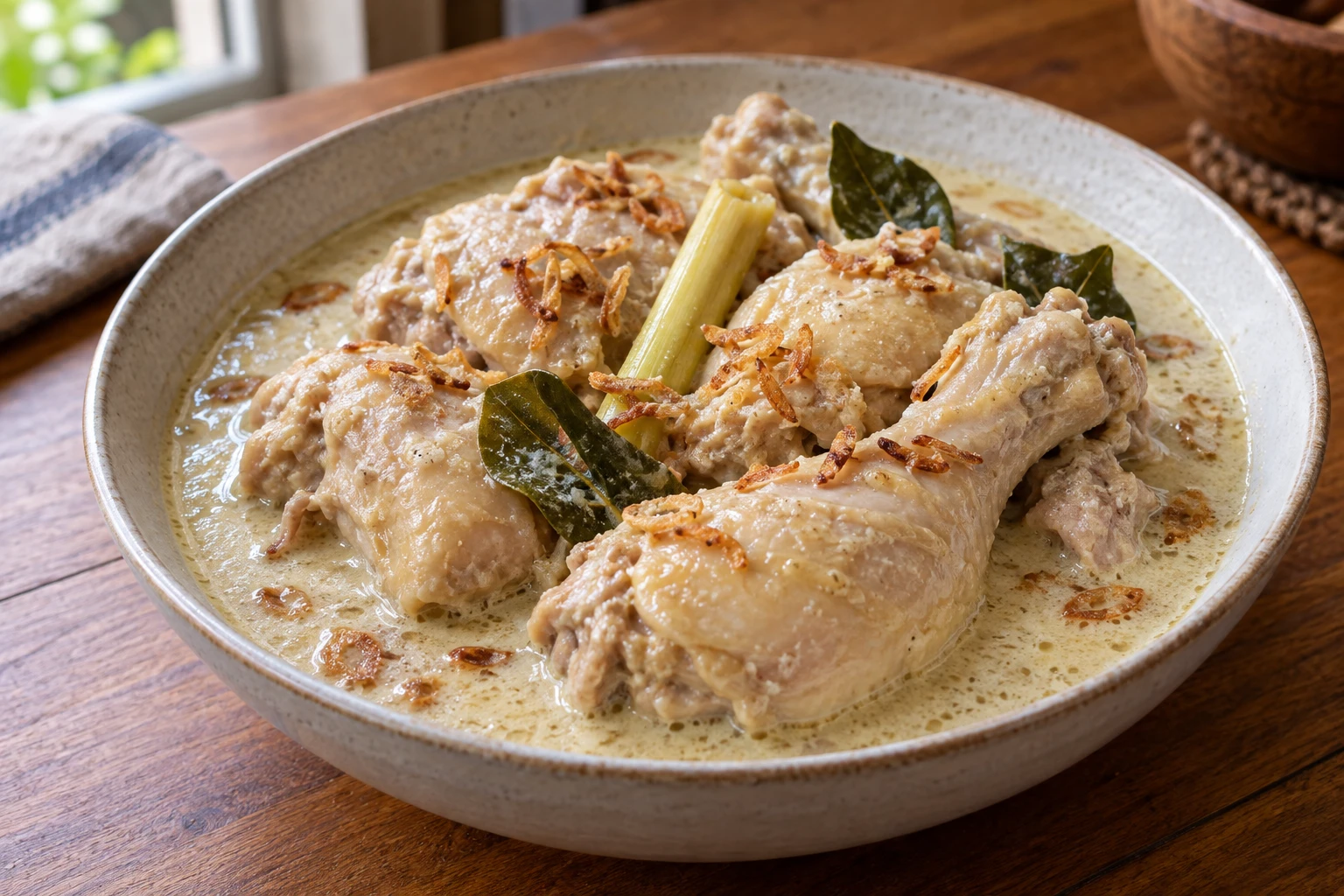
A quiet-looking bowl with several decisions inside
Opor ayam is chicken cooked with coconut milk and aromatics, strongly associated with Java and familiar on Indonesian home tables. In a white version, the sauce can look almost restrained: pale gravy, tender pieces of chicken, perhaps a scattering of fried shallots. Yet the useful question is what happened before that gravy arrived. The cook has ground and fried a spice paste, chosen the surrounding leaves and roots, and decided how coconut milk will meet the chicken.
Those decisions also explain why two recipes bearing the same name can behave differently. Looking for one universal shade, heat level or coconut-milk sequence can obscure the method a particular cook actually uses.
White and yellow both belong
Marvellina, writing at What To Cook Today, makes a pale opor without turmeric and explicitly recognises versions coloured by it. Devy Dar's family recipe at So Yummy Recipes includes turmeric as an option and calls the yellow form opor kuning. Colour is therefore a useful description of the bowl, rather than a test of whether it deserves the name.
The same care applies to chilli. Dar's version leaves it out and can be served with sambal separately. Odilia WS publishes a deliberately spicy adaptation at detikFood, using chilli powder with boneless chicken thighs. A menu that says simply 'coconut chicken curry' leaves these choices unresolved. Asking whether the opor is white or yellow, and whether chilli is in the sauce or beside it, gives a clearer expectation.
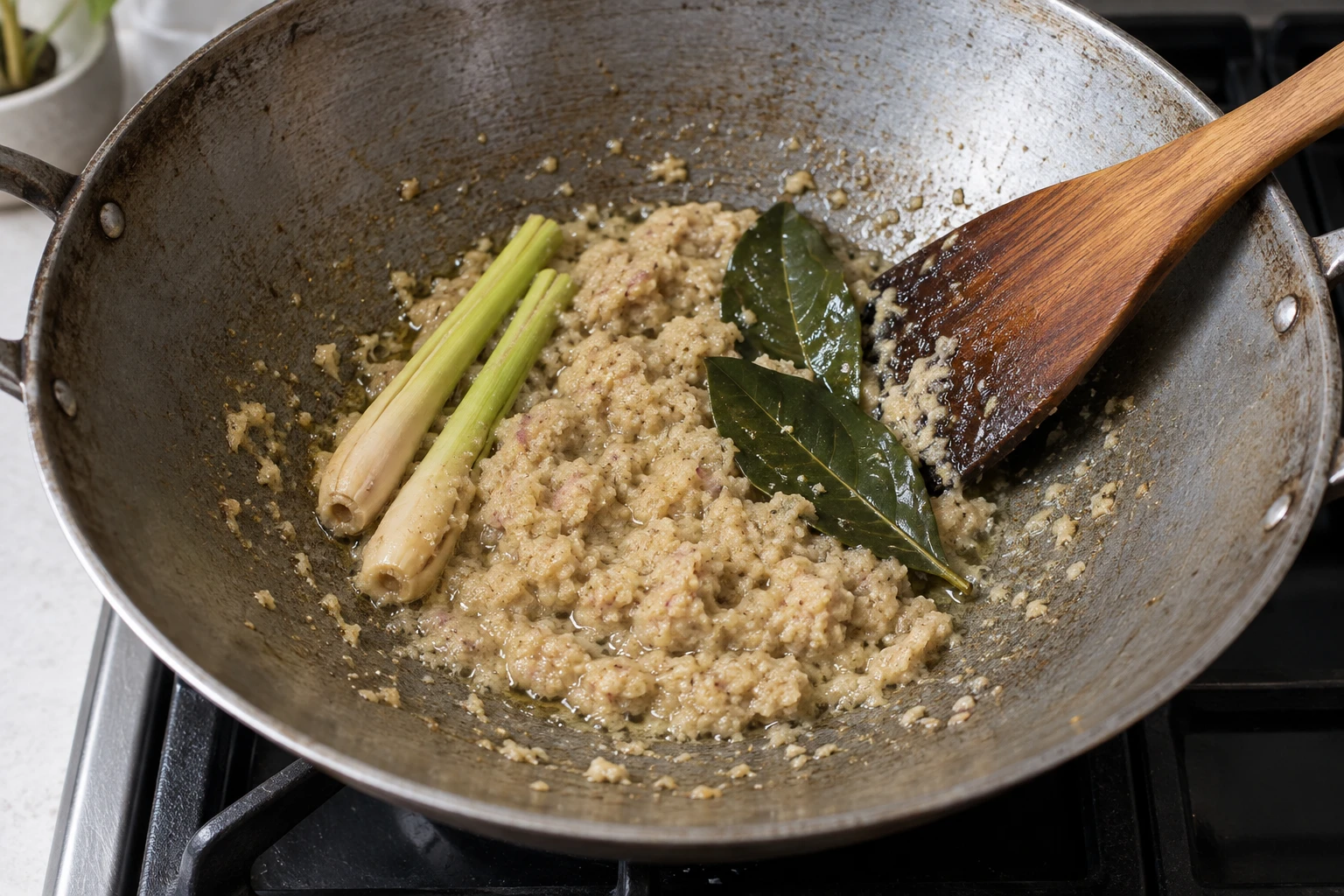
Read the paste as a particular cook's mixture
Dar grinds onion or shallots with garlic, coriander, cumin, ginger and galangal; her version does not require candlenuts. Marvellina's paste includes candlenuts and coriander, with ginger and galangal among its aromatics. Odilia's spicy recipe has another combination, including kencur. These are useful differences to retain when choosing a recipe. An ingredient appearing in one author's list does not establish that every opor must contain it.
Across those three methods, the ground mixture is fried before the coconut sauce is built. Dar cooks it with salam leaves and lemongrass, then coats the chicken in it. Odilia likewise cooks the paste before adding the surrounding aromatics and chicken. This makes the paste a cooked part of the dish, rather than a raw seasoning stirred into a finished bowl.
Two coherent coconut-milk sequences
Dar: coconut accompanies the braise
Dar adds water and coconut milk after the paste and chicken stage, then cooks gently. Her endpoint permits slight oil separation; a uniformly silky sauce is not her only definition of success.
Marvellina: coconut comes near the end
Her stovetop method first braises the chicken with stock after frying the paste. Coconut milk follows near the finish, with a gentle simmer. Her pressure-cooker version also adds it after pressure cooking. This sequence should be followed as a whole, rather than having its liquid amounts borrowed for another method.
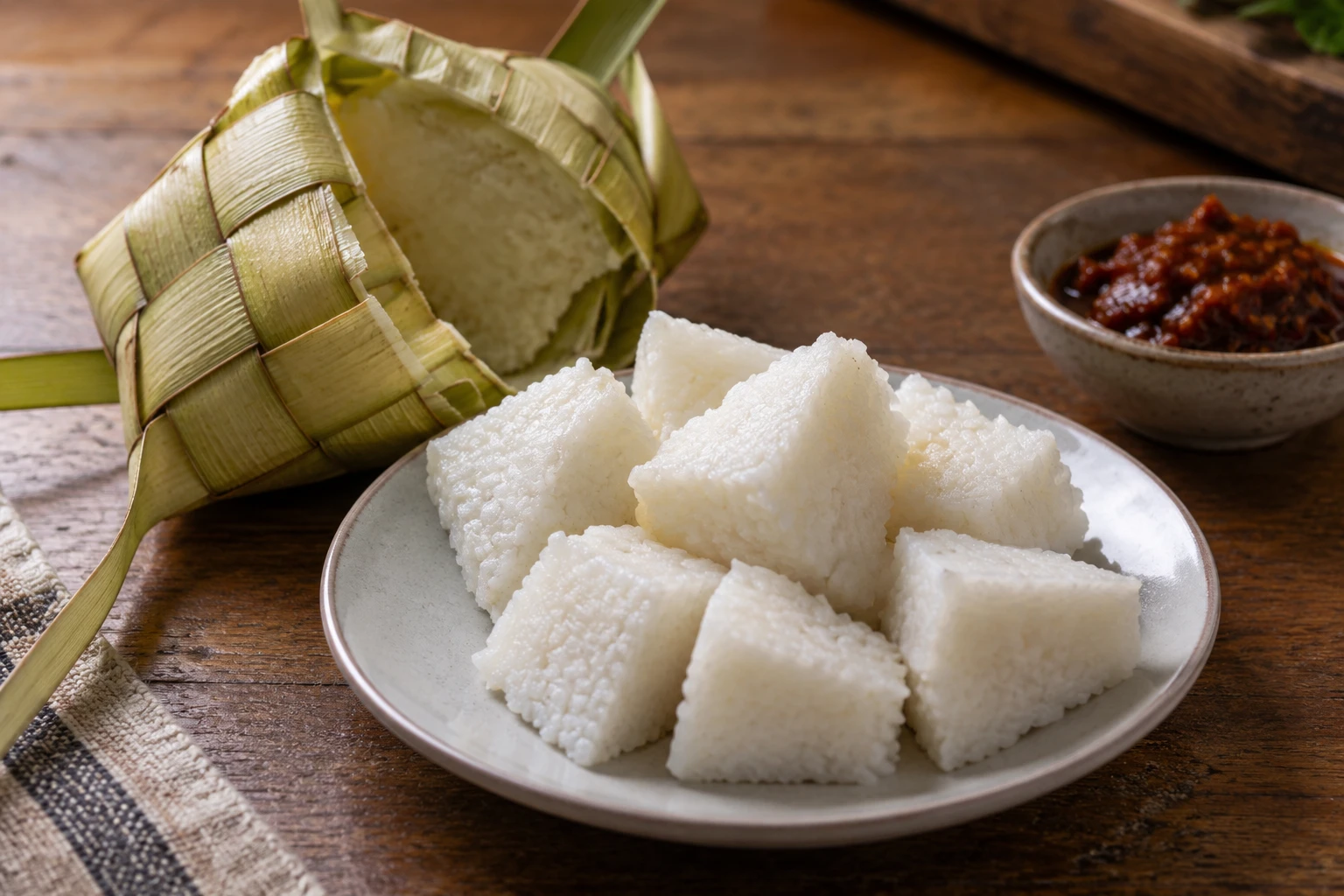
The rice cake changes how the sauce is served
Indonesia's tourism ministry places opor alongside ketupat in its account of Lebaran food. Ketupat is rice cooked inside a woven coconut-leaf casing and served as a firm rice cake. With the casing removed and the cake cut, the plate has pieces around which the chicken gravy can gather. The association belongs to a larger festive spread, rather than making opor the only food of the occasion.
Dar also describes opor as an everyday meal with plain rice. That is a useful reminder when reading a restaurant menu or cooking for a small table: the holiday association does not restrict the dish to one date. Choose a recipe for its particular paste and liquid sequence, then choose the rice or rice cake that suits the meal.
Research notes
Sources and cooking perspectives
These references distinguish named cooks' methods from the broader serving context.
- Marvellina — What To Cook Today Pale and yellow versions, candlenut paste, and separate stovetop and pressure-cooker coconut timings.
- Devy Dar — So Yummy Recipes Her family method cooks chicken with coconut milk and water; turmeric is optional.
- Odilia WS — detikFood A specifically spicy adaptation with boneless thigh, chilli powder and kencur.
- Indonesia's Ministry of Tourism — Lebaran foods The relationship between opor, ketupat and the festive table.
- FoodSafety.gov — safe cooking temperatures Poultry temperature verified with a food thermometer.
Keep exploring
More stories for your table
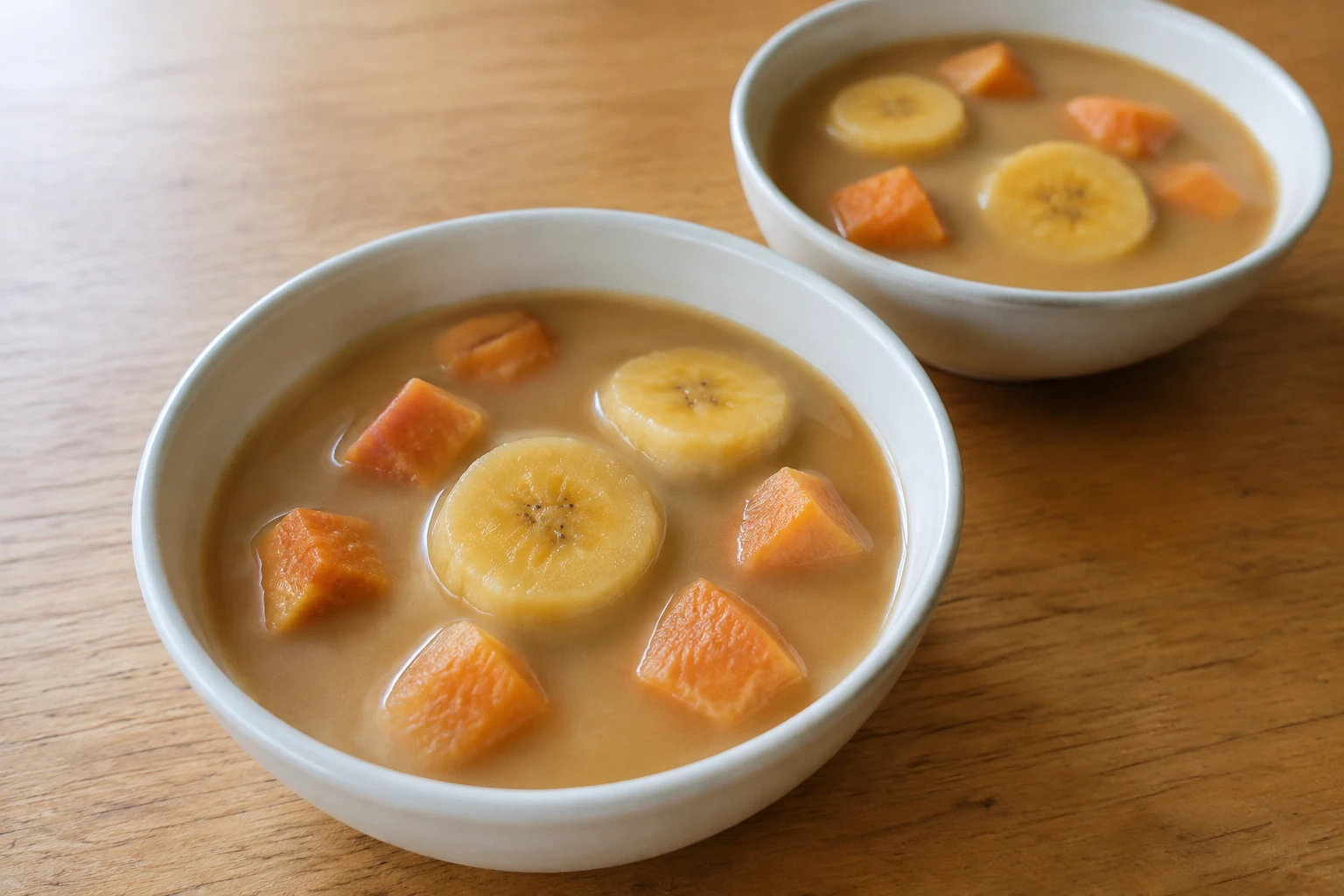
Indonesian cuisine Coconut-milk dessert
Kolak Pisang Ubi: A Sweet Bowl, Cooked in Stages
Make Indonesian kolak with banana, sweet potato, palm sugar and coconut milk. Learn its Ramadan context and a gentle cooking sequence that keeps each piece intact.
Sri Lankan cuisine Coconut curries
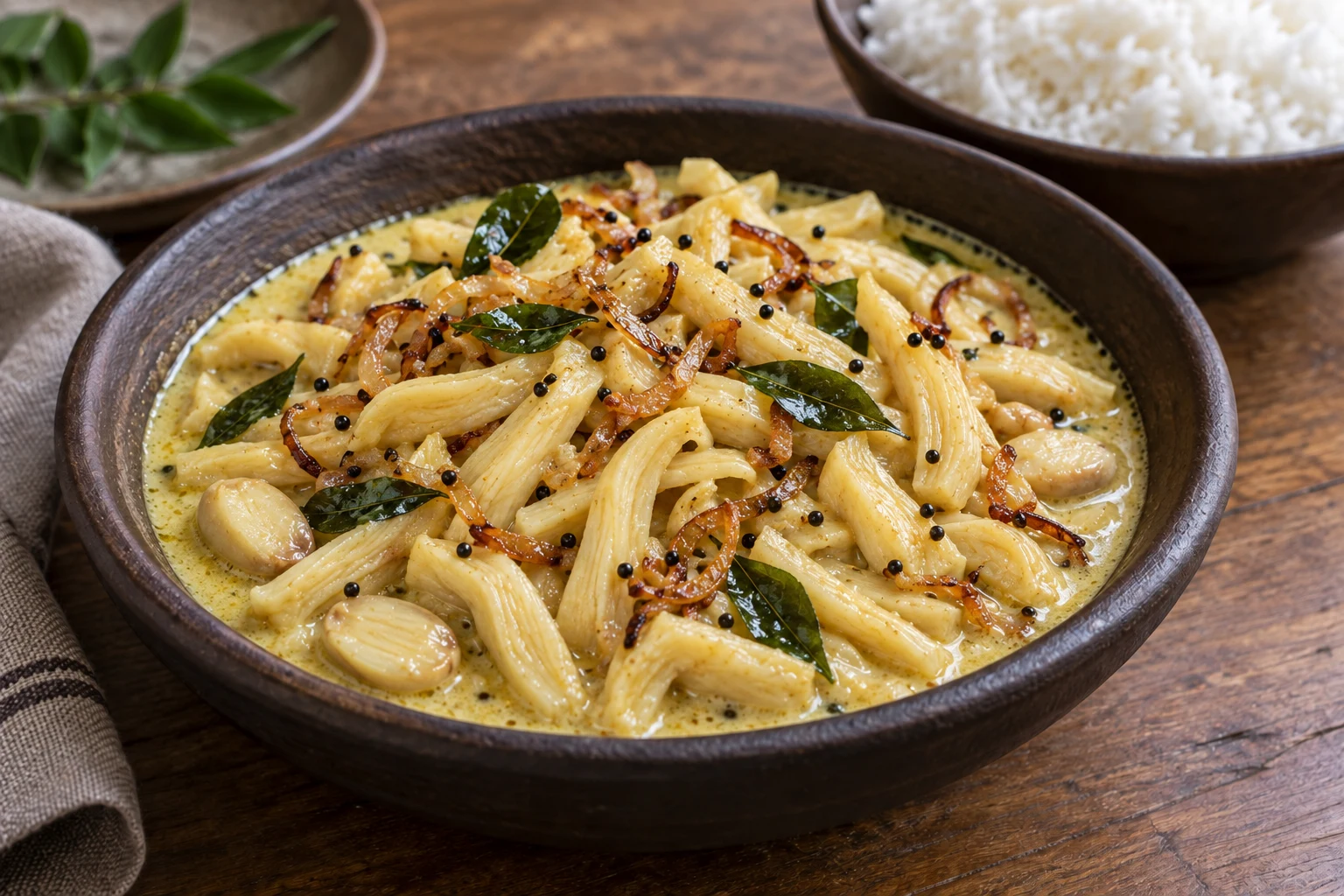
Kiri Kos: Choose the Jackfruit Before the Spice
Sri Lankan kiri kos uses mature, unripe jackfruit bulbs and seeds in coconut milk. Compare it with young polos, then follow the milk and tempering stages.
Colombian cuisine Chicken stew
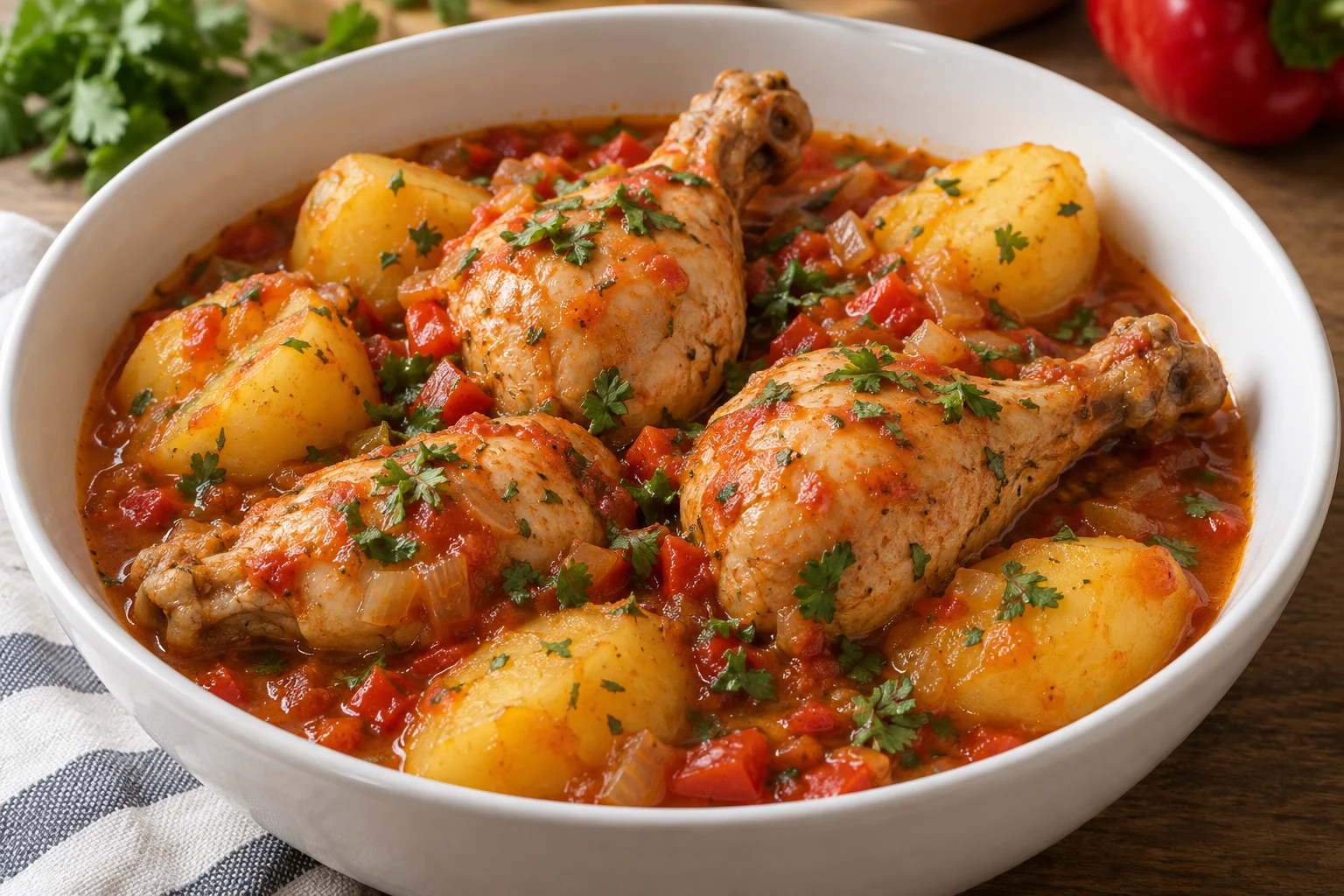
Sudado de Pollo: Read the Potato Schedule
Cook a Colombian-style sudado de pollo with a tomato base and a separate potato stage. Includes a complete stovetop adaptation and documented household variations.