
Es cendol: choose the jelly texture, then build the glass
Es cendol
A guide to the soft or chewy green jellies in Indonesian es cendol, their starch mixtures, and the balance of coconut milk, palm sugar syrup and ice.
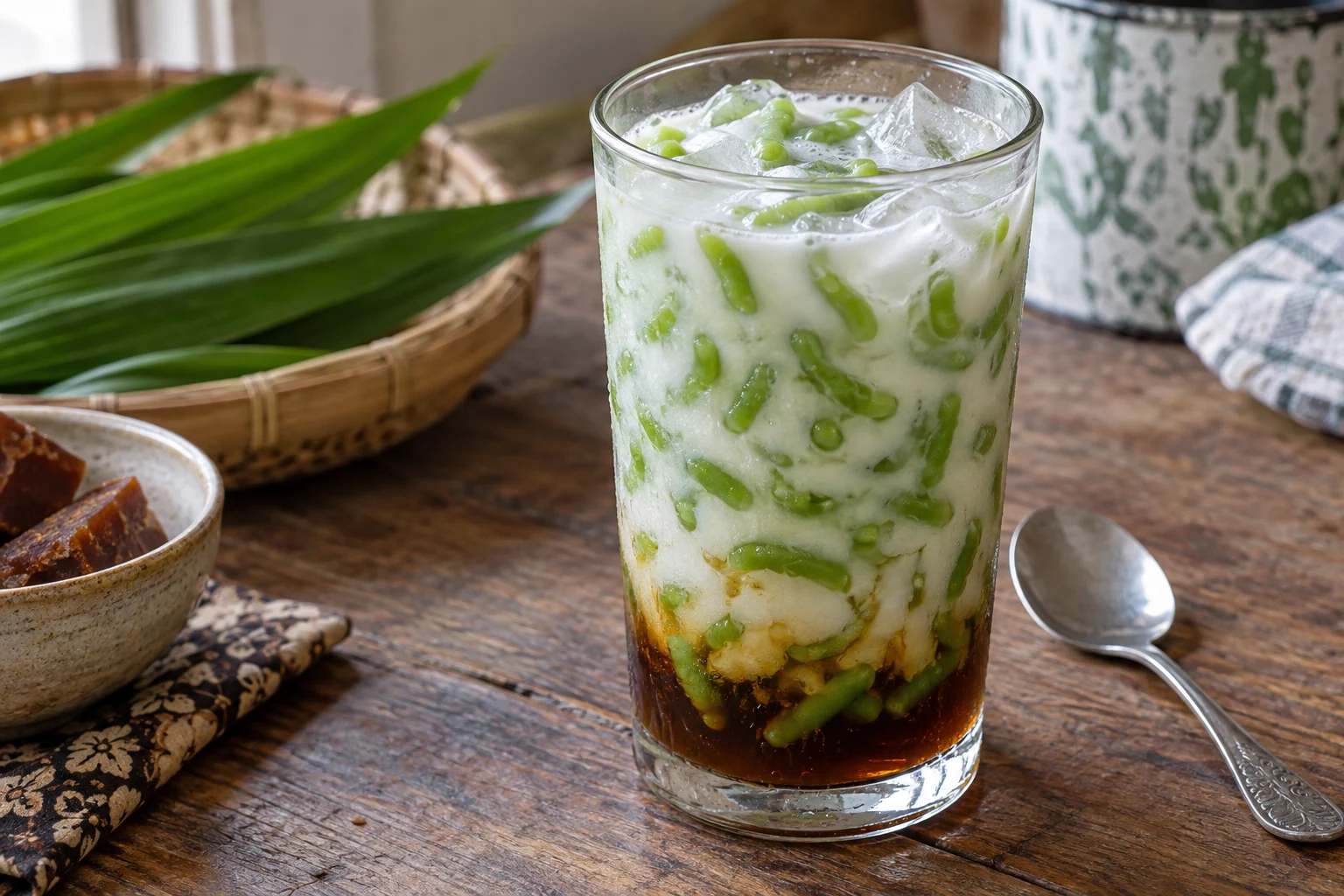
A cold drink with a texture choice
Es cendol brings green pandan jellies, coconut milk, palm sugar syrup and ice together in a glass. The spoon matters as much as the drink: the little strands add a soft or chewy bite to the milky liquid. Anita Jacobson's Indonesian recipe treats the jellies, milk and syrup as separate preparations, each with its own job.
The first decision is therefore not how much to pile into the glass. It is which jelly texture you want. Recipes use different starch mixtures, and the green color alone does not tell you whether a strand will be tender or firm. Read the ingredient list before choosing a method.
Two routes to the green strands
A firmer bite
Jacobson combines mung bean starch with cornstarch for her cendol. She describes this version as firmer and chewier than her rice flour mixture. It is a texture preference, with a complete formula attached to it.
- Look for mung bean starch or tepung hun kwe in the recipe.
- Keep that recipe's starch and liquid measurements together.
A softer strand
Pauline Chavannes de Senerpont Domis compares three mixtures in her Pisang Susu account. Adding rice flour to her hun kwe mixture produces a more tender result than her hun kwe-only version; a third blend also includes tapioca.
- Rice flour can be part of a deliberate softer texture.
- A mixed-starch recipe is a separate formula, not a spoon-for-spoon substitution.
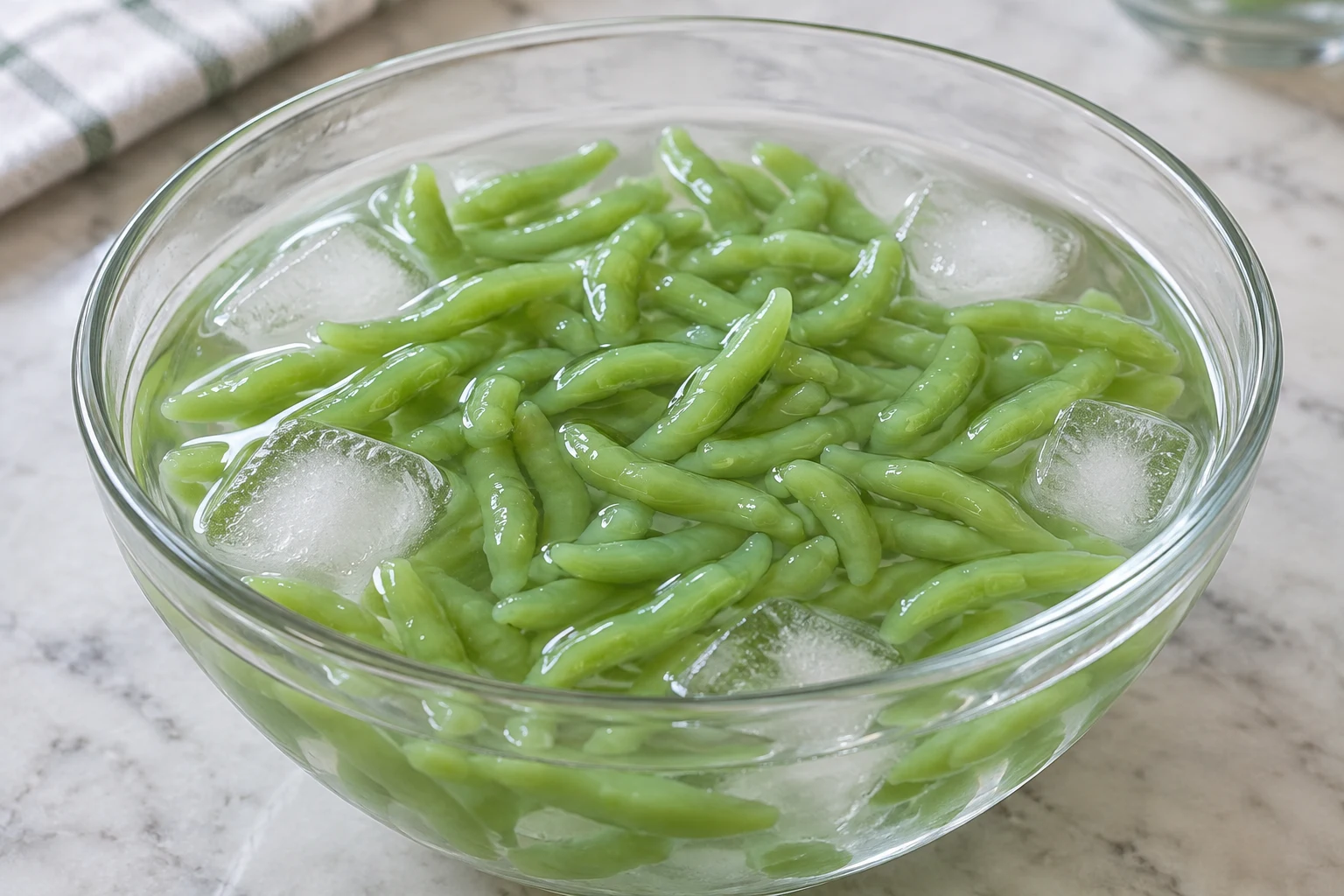
The paste is cooked before it takes its shape
Marvellina's method starts with a smooth starch mixture and cooks it while stirring. She follows its change into a thick, translucent paste and continues through bubbling before shaping. Her instructions make a useful distinction: the first sign of thickening is a stage in the cooking process, rather than a reason to stop immediately.
The cooked paste is pushed through holes into ice water to form short strands. Marvellina describes a dedicated two-part press as well as utensils with larger holes, including a colander and potato ricer. Her makeshift strainer produces shorter pieces, so tool choice affects appearance without requiring a different dessert.
Jacobson uses a steamer basket over a pot of ice-cold drinking water. Set up the receiving water and the chosen tool before cooking the paste. Use the complete recipe's cooking and cooling instructions; neither a photograph nor the first strand through the holes can replace them.
What the other components bring
- Coconut milk
- A creamy partner
- Palm sugar syrup
- The main sweet finish
- Ice
- A cold serving element
Jacinta of Taste of Nusa explains how the coconut milk complements the mildly flavored green jellies.
Pauline keeps the jelly mixture only lightly sweetened and brings in sweetness through gula Jawa syrup.
Pauline serves with ice cubes; other recipes use crushed or shaved ice. Choose the form specified by the serving method.
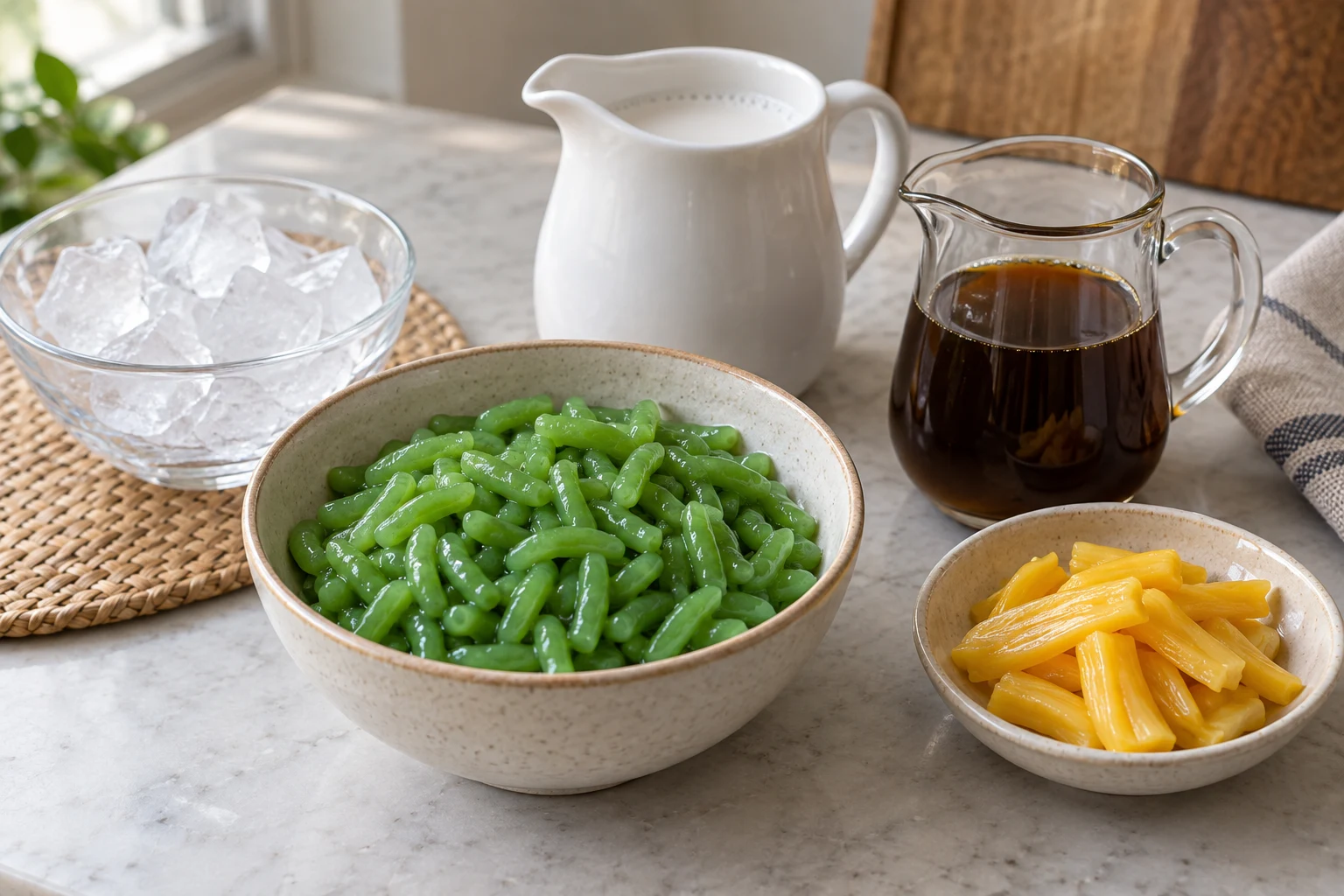
Build the glass around the jellies
Jacinta cools the coconut milk and syrup separately, then drains and portions the cendol for serving. Her assembly begins with syrup in the glass, adds ice if wanted and follows with the jellies and milk. Keeping the components separate until this point makes the final arrangement straightforward and avoids mistaking the shaping water for another principal ingredient.
The layered glass is attractive, but it is only the starting arrangement. In Pauline's serving account, the layers are mixed before the green strands are lifted with a spoon. That is a helpful way to approach the dessert: the coconut milk and syrup are meant to meet the jellies, rather than remain isolated bands.
Jacinta lists diced jackfruit among Indonesian additions. A little fruit can give the glass another distinct element, while the basic jelly, milk and syrup combination remains complete on its own. Choose additions because you want their contribution, rather than assuming that every example needs the same crowded topping list.
Research notes
Sources
Four original culinary accounts support the starch comparison, shaping methods and serving choices. Follow their individual recipes for measured formulas.
- Anita Jacobson: Es Cendol Indonesian starch choices, pandan preparation and a steamer-basket shaping method.
- Marvellina: Ice Cendol / Es Dawet Cooking cues, shaping tools and short jelly strands.
- Pisang Susu: Es Cendol or Dawet A firsthand comparison of three flour mixtures and a glass serving approach.
- Jacinta: Es Cendol The components' flavor relationship, separate cooling and Indonesian topping examples.
Keep exploring
More stories for your table
Indonesian cuisine Coconut-milk dessert
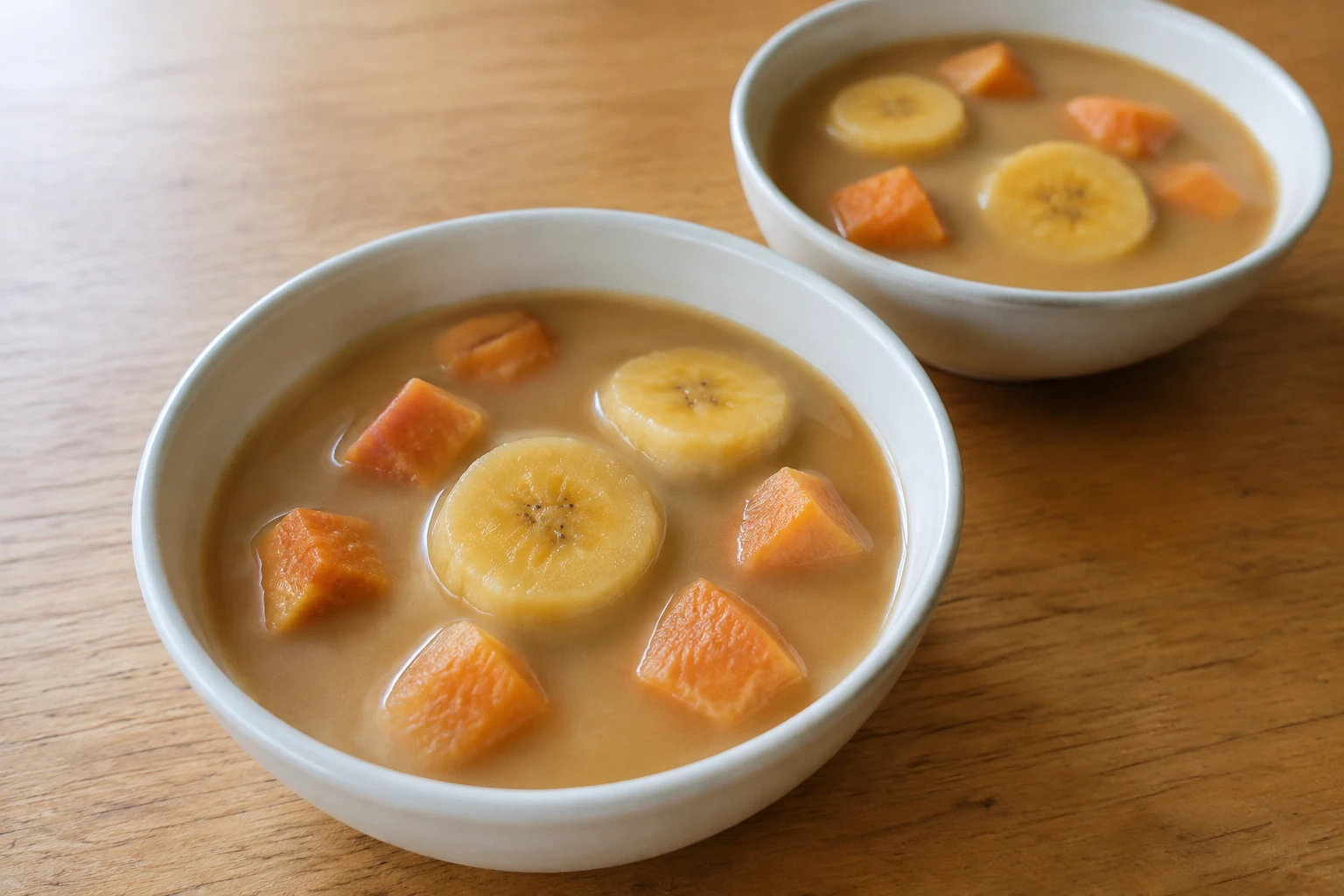
Kolak Pisang Ubi: A Sweet Bowl, Cooked in Stages
Make Indonesian kolak with banana, sweet potato, palm sugar and coconut milk. Learn its Ramadan context and a gentle cooking sequence that keeps each piece intact.
Indonesian cuisine Fruit salad
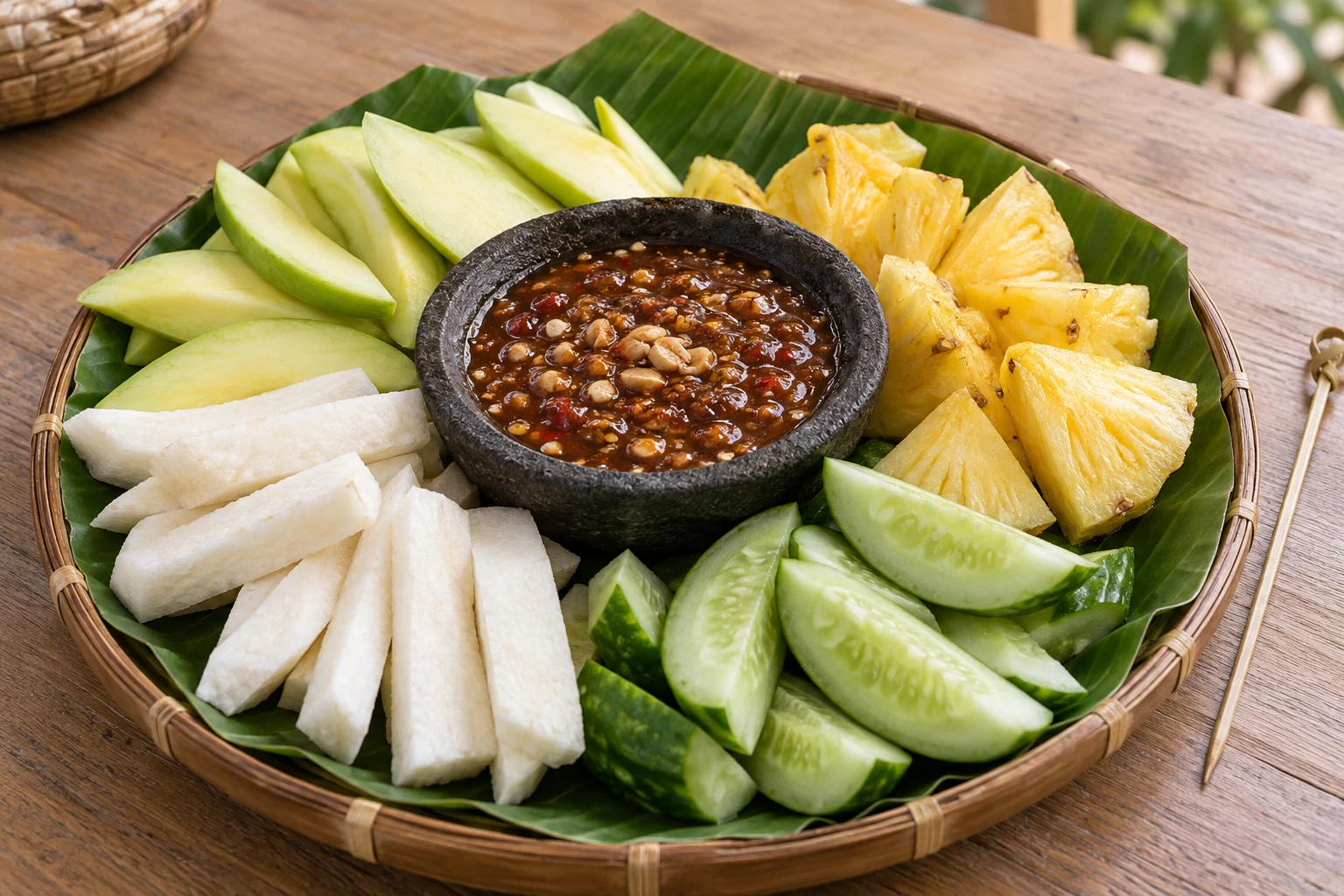
Rujak buah: firm fruit meets spicy palm-sugar sauce
Choose crisp fruit, understand palm-sugar dressing variations and make a complete vegetarian adaptation of Indonesian rujak buah.
Malaysian cuisine Rice dessert
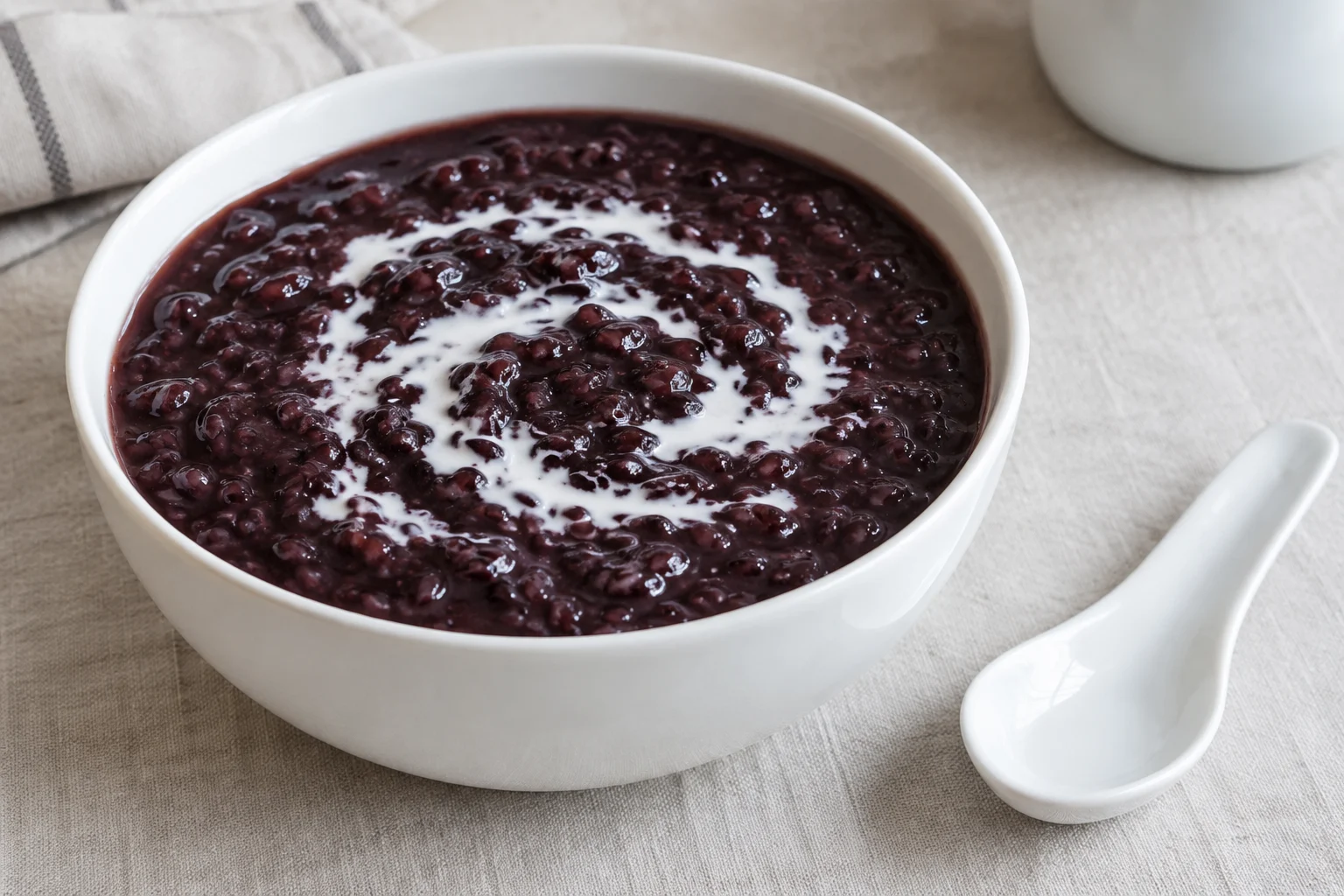
Bubur Pulut Hitam: A Dark Bowl, a White Finish
Malaysian cooks show how black glutinous rice becomes a spoonable dessert, with different soaking methods and a separate coconut finish.